越疆科技

Search documents
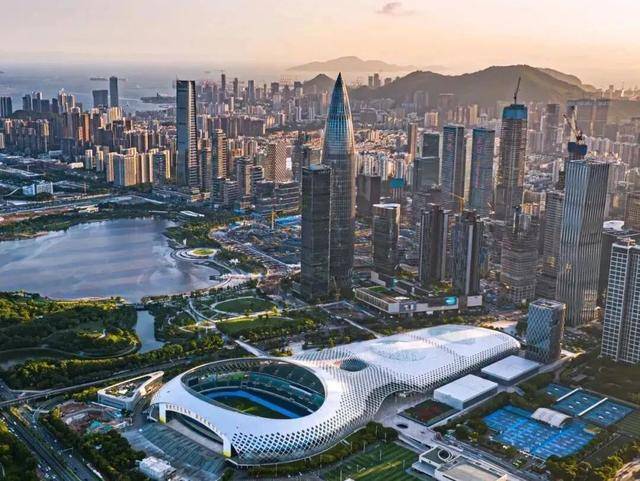
深圳南山!首个万亿元GDP地市辖区诞生
Zhong Guo Zheng Quan Bao· 2026-01-27 12:14
锚定"全球一流现代化创新城区" 南山区区长李小宁作政府工作报告时表示,南山经济体量相比"十三五"期末的6527亿元,5年跨上4个千 亿级台阶,年均增长率5.8%以上。 1月27日,深圳市南山区八届人大六次会议开幕。据会议透露,2025年该地区生产总值突破1万亿元,地 均GDP达54亿元/平方公里,人均GDP超54万元,南山区成为我国首个GDP过万亿元的地市辖区。 战略新兴产业和 未来产业占比近六成 据悉,目前,南山区战略性新兴产业和未来产业占比近60%,人工智能规模以上企业超1300家,低空经 济落地全国首个省级低空领域制造业创新中心,新材料企业超百家。 资本市场上,南山上市公司阵营群星璀璨,该区目前共有218家上市公司,上市公司密度位居全国第 一。 在南山科技园,这里集聚了腾讯、大疆等大型科技企业总部,拥有6家软件百强企业、7家互联网百强企 业。数据显示,2025年南山区软件和互联网产业营收超9000亿元,持续巩固产业集聚发展优势。 在机器人等前沿产业赛道,南山区也一马当先。地处阳台山南部余脉和塘朗山之间的南山谷地,是知名 的"机器人谷"。这里诞生了被称为"人形机器人第一股"的优必选、"协作机器人第一股"的 ...
深圳国资推进基金矩阵建设,大湾区创投引导基金入驻前海
Sou Hu Cai Jing· 2026-01-22 12:17
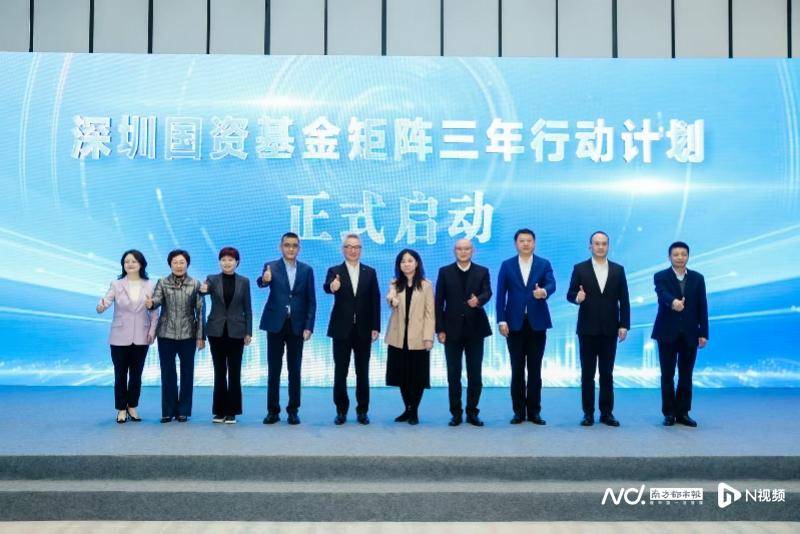
1月22日,"深圳国资基金矩阵三年行动计划发布仪式暨粤港澳大湾区创业投资引导基金入驻仪式"在深圳前海5号 楼举行。活动由深圳市国资委主办,前海管理局协办、深创投承办,市国资委、市委金融办、市发展改革委、前 海管理局及28家市属国企、被投上市企业代表参会,共同推动国有资本赋能科技创新与粤港澳大湾区高质量发 展。 步强化产业链上下游整合与资源协同。被投上市企业越疆科技董事长通过视频分享、市场总监现场发言,生动展 现了在国资基金支持下,企业从技术研发到产业化落地的成长历程,印证了国有资本赋能科技创新企业发展的实 效。 活动最后,8家市属国企负责人签署深圳国资基金矩阵任务书,将深圳国资基金矩阵三年行动计划目标分解为清晰 可量化的具体指标,明确基金规模、投资方向、项目培育等重点任务,标志着深圳国资基金矩阵建设进入任务明 确、分工清晰的实施推进阶段。 此次活动的举办,是深圳国资国企深化改革、服务创新的重要举措。下一步,深圳市国资委将坚守耐心资本功能 定位,坚持"投早投小投长期投硬科技"导向,打造"资本+产业+服务"协同生态体系,推动国有资本与科技创新深 度融合,为深圳建设全球一流的"科技—产业—金融"一体化创新高地、粤港 ...

人工智能时代,机器人成了“新广货”
Nan Fang Du Shi Bao· 2026-01-22 11:18
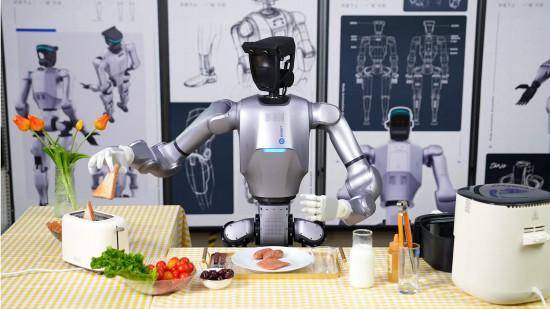
Core Insights - The article discusses the transformation of "Guangdong goods" in the context of the artificial intelligence era, highlighting the rise of robots as a new category of products that are scalable, sustainable, and applicable across various scenarios [1][6][9] Industry Overview - Guangdong's industrial robot production reached 260,200 units and service robots 12.8388 million units from January to October 2025, both ranking first in the country [1] - The province is home to over 3,700 AI and robotics companies, with more than 2,000 being core AI enterprises, indicating a high level of industry collaboration [1][6] Market Dynamics - 2025 is identified as the "year of humanoid robot mass production," with over 140 domestic manufacturers and more than 330 humanoid robot products launched [2] - Leading companies like UBTECH and Yujian Technology are significantly contributing to this growth, with UBTECH's humanoid robot orders exceeding 1.4 billion yuan in 2025 [2][3] Technological Advancements - The article emphasizes the shift from traditional industrial robots to humanoid robots, showcasing advancements in autonomous operations and consumer-grade robots [3][4] - Companies are leveraging Guangdong's robust supply chain and rapid iteration capabilities to enhance robot production efficiency [6][8] Global Positioning - China holds approximately 63% of the global humanoid robot industry chain, with Guangdong being a crucial part of this ecosystem [1][6] - The article notes that robots are becoming a new "Guangdong good," with potential for significant international market penetration [7][9] Future Outlook - Analysts predict that humanoid robot shipments in China could reach 14,000 units in 2026, with expectations for exponential growth in the following years [7][9] - The evolution of "Guangdong goods" reflects a shift from manufacturing efficiency to intelligent supply capabilities, positioning robots as a key export product for the region [9]

红旗全固态电池首台样车成功下线;OpenAI推出控制数据中心能源成本的计划丨智能制造日报
创业邦· 2026-01-22 03:55
Group 1 - The first prototype of Hongqi all-solid-state battery has successfully rolled off the production line, marking a significant step for China FAW in the solid-state battery technology field, with key breakthroughs achieved in electrolyte and cell performance [2] - OpenAI has launched a community plan to manage energy costs for its data centers, aiming to ensure that its operations do not increase local electricity costs, reflecting a trend among tech companies to invest directly in power infrastructure [2] - Shenzhen's robotics sector is experiencing rapid growth, with companies like UBTECH, Zhongqing, and Yuejiang Technology securing significant domestic and international orders, indicating a strong commercialization trajectory and an acceleration in industry development [2] Group 2 - By 2025, China's artificial intelligence core industry is expected to exceed 1.2 trillion yuan, with over 6,000 AI companies projected to operate, and applications spreading across key industries such as steel, non-ferrous metals, and power [3]

优必选、众擎、越疆科技等接连斩获海内外大单 深圳机器人站C位走俏全球
Xin Lang Cai Jing· 2026-01-21 04:31
Core Viewpoint - Since 2025, Shenzhen's robotics industry has accelerated its application in various scenarios, achieving significant breakthroughs and commercial success, with companies like UBTECH, ZHONGQING, and YUEJIANG leading the way in securing orders both domestically and internationally [1] Group 1: Industry Developments - The "Guo Huo Xing Tian Xia" spring campaign is actively promoting the robotics sector, resulting in rapid commercialization and a new phase of industry acceleration [1] - Companies in the robotics field are deepening their layout, with YUEJIANG Technology leveraging intelligent technology innovation to expand into global markets [1] Group 2: Company Achievements - YUEJIANG Technology has successfully applied its robotic products in over 80 Fortune 500 companies, including Foxconn, BYD, Toyota, Mercedes-Benz, and Nestle, with a global deployment exceeding 100,000 units [1] - UBTECH recently rolled out its 1,000th industrial humanoid robot, Walker S2, which will be deployed in key sectors such as automotive manufacturing, smart manufacturing, smart logistics, and embodied intelligent data centers [1] - In the past year, UBTECH secured 1.4 billion yuan in orders and plans to increase its annual production capacity to 10,000 units by 2026 [1]
深圳国资国企党建“分类指导施策”:一把钥匙开一把锁,双融双促激活力
Sou Hu Cai Jing· 2026-01-17 03:35
Group 1 - The core viewpoint of the articles highlights the integration of party organization and corporate governance in Shenzhen's state-owned enterprises, emphasizing the role of party leadership in driving innovation and development [3][20][21] - Shenzhen's state-owned enterprises have adopted a "1+4" classification guidance system to enhance the quality of party building, focusing on specific operational categories such as infrastructure, technology innovation, and investment operations [3][16][24] - The successful case of Yujian Robotics, which evolved from a startup to a leading "embodied intelligence" company with the support of Deep Venture Capital, illustrates the effectiveness of strategic investment and party support in fostering innovation [1][3] Group 2 - Infrastructure enterprises in Shenzhen are focusing on enhancing public services through party-led initiatives, such as the establishment of self-operated restaurants at Shenzhen Airport to improve service quality for all travelers [4][10] - The Shenzhen Energy Group has implemented a "party building + ecological friendliness" model, transforming previously problematic facilities into community-friendly projects, showcasing the integration of environmental sustainability and party leadership [7][10] - The technology innovation sector is seeing significant advancements, with companies like Shenzhen Fangzheng Microelectronics overcoming technical barriers in chip production through dedicated party-led teams, demonstrating the critical role of party organizations in driving technological breakthroughs [13][15] Group 3 - Investment and operation enterprises are leveraging party leadership to enhance capital deployment and foster industry ecosystems, with initiatives aimed at addressing financing challenges for small and medium-sized enterprises [21][22] - The construction sector is witnessing innovative approaches to project management and community engagement, with party teams actively involved in customizing solutions for businesses, thereby strengthening local economic ecosystems [22][24] - The overall impact of party organizations in Shenzhen's state-owned enterprises is reflected in the growth of total assets and revenue in emerging industries, indicating a successful alignment of party initiatives with business objectives [15][20]
行业洞察丨苏沪深领跑智能机器人产业城市竞争力TOP50 区域协同与梯度发展成势
Zhong Guo Jin Rong Xin Xi Wang· 2026-01-14 10:08
Core Insights - The smart robotics industry is a key indicator of high-end manufacturing development in regions, with a focus on intelligent transformation in global manufacturing [1] - The "2025 China Smart Robotics Industry City Competitiveness TOP 50" list evaluates cities based on six dimensions, including industry scale, quality enterprises, innovation capability, financing ability, industry efficiency, and growth potential [1] Group 1: Top Cities - Suzhou, Shanghai, and Shenzhen lead the list with scores exceeding 90, indicating their strong competitiveness in the smart robotics sector [11] - Suzhou ranks first with a score of 91.90, followed closely by Shanghai at 91.76 and Shenzhen at 90.48, forming the recognized "first tier" of cities [11] Group 2: Competitive Landscape - Other notable cities include Beijing, Hangzhou, Ningbo, Nanjing, Guangzhou, Dongguan, and Hefei, with competitiveness scores ranging from 83.73 to 89.80, showcasing a gradient distribution of capabilities [11] - The diverse development paths of cities reflect their unique industrial foundations and resource endowments, contributing to a rich ecosystem in the smart robotics industry [12] Group 3: Regional Analysis - The Yangtze River Delta and the Guangdong-Hong Kong-Macau Greater Bay Area dominate the smart robotics landscape, with Jiangsu and Zhejiang provinces each contributing eight cities to the TOP 50 list [15] - The central and western regions are emerging as strong contenders, with cities like Chengdu, Wuhan, and Zhengzhou showing significant potential and an average competitiveness index of 72.53 [15][17] Group 4: Development Models - Suzhou's model emphasizes "application-driven and industrial clustering," leveraging its strong manufacturing base to foster a complete industrial chain [12] - Shanghai focuses on "headquarters economy and R&D hub," excelling in innovation and financing capabilities, supported by a robust ecosystem of multinational corporations and research institutions [13] - Shenzhen adopts an "innovation-led and ecological collaboration" approach, integrating robotics with emerging technologies like AI and big data [14]

追觅“豪横”、影石“耀眼”、AI场景“繁荣”,从CES看中国品牌出海的新叙事 | 出海参考
Tai Mei Ti A P P· 2026-01-13 13:27
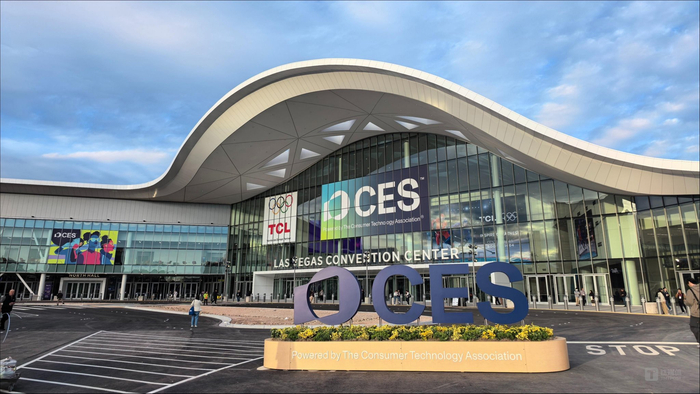
Group 1 - The core narrative of Chinese brands at CES 2026 has shifted from being "innovation challengers" to "brand leaders," showcasing strategic confidence and a focus on defining the event's highlights [3][4] - Chinese brands are no longer just participants but are transforming CES into amplifiers for their global brand strategies, as exemplified by Insta360's impactful marketing tactics [4][6] - The number of Chinese exhibitors at CES reached 916, making China the second-largest exhibitor group globally, highlighting the increasing global presence of Chinese brands [2] Group 2 - Insta360 reported a revenue of 6.611 billion yuan for the first three quarters of 2025, a year-on-year increase of 67.18%, with an expected annual revenue of 8.808 billion yuan [6] - The company showcased innovative products like the world's first 8K panoramic drone and a new flagship camera, indicating a strategic shift from consumer to professional markets [6] - The brand's success is attributed not only to product innovation but also to superior customer service and brand perception [6] Group 3 - Tracmo Technology, another prominent exhibitor, demonstrated a comprehensive smart home ecosystem at CES, showcasing a wide range of products from cleaning robots to refrigerators [7][10] - The company achieved a revenue of 12.07 billion yuan in the first three quarters of 2025, with a projected annual revenue of 30 billion yuan, reflecting a growth rate of 72.2% [10] - The brand's strategy includes creating a multi-product platform, moving beyond single-category dominance [10] Group 4 - The emergence of "Physical AI" as a global consensus is being leveraged by Chinese innovators, who are transitioning from technology suppliers to scene definers, showcasing their comprehensive innovation capabilities [11][12] - Companies like Orbbec are presenting advanced solutions for industrial applications, such as the Gemini 305 camera, which significantly improves precision and sensitivity in robotic applications [12] - The integration of AI in various sectors, including education and entertainment, is being explored through innovative products like interactive robots and smart pet companions [13][15] Group 5 - The collaboration among Chinese companies at CES reflects a robust ecosystem, with brands forming alliances to enhance user experience and create unique market propositions [18][19] - Companies like Rokid are integrating AI technology with financial services to address overseas payment challenges, showcasing a shift towards ecosystem solutions [18] - The participation of organizations like Shenzhen Innovation Academy highlights a collective approach to international market entry, with numerous companies gaining media attention and potential investment [19][20] Group 6 - The evolution of Chinese brands from product-focused to ecosystem-oriented strategies marks a new era in global competition, emphasizing the importance of brand strength and collaborative efforts [21] - The future of Chinese innovation in global markets will rely on a mature, ambitious, and collaborative approach, capable of creating systemic advantages within the global supply chain [21]

开局即冲刺!南山“科技+金融”双轮驱动新质生产力 |南山半月谈
Sou Hu Cai Jing· 2026-01-12 11:44
Core Viewpoint - The article highlights the vibrant synergy between technology and finance in Nanshan, Shenzhen, showcasing significant developments in the AI and biotechnology sectors, which align with national strategies for innovation and productivity enhancement [1][14]. Group 1: Capital Market Activity - In early January, Nanshan's technology finance sector experienced a surge in activity, marked by significant listings and financing events, including the IPO of AI data leader Xunce Technology, which raised HKD 1.08 billion [3]. - Another notable financing event involved Jindu Biotechnology, which secured a substantial investment from leading institutions, indicating strong capital inflow into Nanshan's future industries [3]. Group 2: Project Incubation and Support - The "X-Day" event on January 9 showcased six promising projects, emphasizing the role of platforms in accelerating incubation and connecting startups with investors [5]. - The "Six Ones" policy in Nanshan supports young entrepreneurs by providing essential resources, fostering a high-density talent and information environment conducive to rapid innovation [5]. Group 3: Industrial Collaboration and Ecosystem - The "Shenzhen Robot Valley" is rapidly forming a trillion-yuan industrial cluster, with companies like Yuejiang Technology achieving mass production of humanoid robots and securing global orders [7]. - Nanshan is also a national pilot zone for low-altitude economy development, attracting key enterprises and establishing a comprehensive industrial chain from R&D to operational scenarios [7]. Group 4: Capital Ecosystem and Investment Philosophy - Nanshan has developed a multi-faceted capital ecosystem, including a CNY 50.45 billion fund aimed at early-stage projects, ensuring seamless capital support throughout the lifecycle of hard tech companies [8]. - The investment philosophy in Nanshan emphasizes patience and long-term innovation over immediate financial returns, fostering a supportive environment for early-stage hard tech investments [10]. Group 5: Government and Market Interaction - The government in Nanshan adopts a "no interference" approach, providing timely support when needed while allowing businesses to focus on growth, exemplified by the establishment of a dedicated quantum computing facility [10]. - The market mechanism in Nanshan facilitates efficient collaboration between academic institutions and industry, enhancing the conversion of technological achievements into marketable products [12]. Group 6: Systematic Innovation Framework - Nanshan's innovative framework includes a unique fault-tolerance mechanism for government funds, shifting focus from short-term returns to long-term innovation effectiveness, thereby encouraging investment in early-stage hard tech [12]. - This systematic approach positions Nanshan as a model for regional implementation of national strategies, particularly in emerging sectors like AI, synthetic biology, and low-altitude economy [14].
开足马力赶订单 广东企业力争首季“开门红”
Shang Hai Zheng Quan Bao· 2026-01-09 18:37
Group 1 - In early 2026, Guangdong's industrial parks and production facilities are experiencing a surge in activity, with companies ramping up production to meet orders and aiming for a strong start to the first quarter [1] - The smart robotics sector in Guangdong is witnessing a significant increase in orders, with companies like Pudu Technology receiving hundreds of overseas orders and planning to launch multiple new products this year [2][3] - The demand for shipbuilding is rising due to strong foreign trade needs, with companies like d'Amico International Shipping signing contracts for new vessels, and delivery schedules extending to 2029 [3][4] Group 2 - Guangdong's smart robotics companies are reporting record orders, including a 250 million yuan humanoid robot order from UBTECH, indicating a growing industry momentum [3] - The Guangzhou automobile transportation sector is expanding, with the delivery of nine custom-built car carriers, enhancing the capacity for international automobile transport [4] - The shipbuilding industry in Guangzhou is leading in the maritime sector, with major companies like China Shipbuilding Group's subsidiaries securing ample orders, ensuring a busy production schedule [4]