中国信达

Search documents
中国银河证券:跨境支付规则优化 银行板块表现再创新高
智通财经网· 2025-07-09 00:05
Core Viewpoint - The modification of CIPS rules is expected to accelerate the internationalization of the RMB, benefiting banks' cross-border business expansion [1][5] Summary by Sections Bank Sector Performance - The banking sector outperformed the market with a 3.77% increase, while the CSI 300 index rose by 1.54%. The performance of different types of banks includes: state-owned banks (+2.76%), joint-stock banks (+4.41%), city commercial banks (+4.01%), and rural commercial banks (+2.47%). Notably, 41 listed banks saw their stock prices rise, with Zhejiang Commercial Bank (+7.92%), Shanghai Pudong Development Bank (+7.6%), and Shanghai Bank (+7.53%) leading the gains. As of July 4, the banking sector's price-to-book (PB) ratio was 0.70, and the dividend yield was 5.65% [2] CIPS Rule Revision - On July 6, the People's Bank of China (PBOC) solicited opinions on the draft of the revised CIPS business rules. The main focus of the revision is to improve the management mechanism for participants and set only principle-based requirements for their business behaviors. This revision is expected to further promote the internationalization of the RMB and support the development of banks' cross-border business. The optimization of business rules is seen as necessary and forward-looking, enhancing the attractiveness of CIPS and increasing the international influence of the RMB [3] Investment Opportunities in the Banking Sector - The banking index reached a closing price of 4603.91 on July 4, marking a nearly 10-year high, with a weekly increase of 3.77%. Three key investment opportunities are identified: 1. The low interest rate environment continues to attract medium to long-term funds, with insurance capital increasingly investing in bank stocks. For instance, Ping An Life increased its stake in Postal Savings Bank of China H-shares to 13% as of June 30. The stable dividend yield of banks is expected to outperform bonds and wealth management returns [4] 2. The low allocation of public funds and the expansion of broad-based indices are expected to bring incremental capital inflows, benefiting quality regional banks significantly [4] 3. The acceleration of convertible bond conversions among small and medium-sized banks is anticipated to provide short-term opportunities, as seen with Qilu Bank announcing early redemption of its convertible bonds [4] Investment Recommendation - The modification of CIPS rules is expected to enhance the internationalization of the RMB and benefit banks' cross-border business. The acceleration of convertible bond conversions among small and medium-sized banks is likely to strengthen their capital base. The growth of medium to long-term funds and the potential recovery of public fund allocations are expected to reshape bank valuations positively. The company maintains a positive outlook on the banking sector's allocation value and continues to recommend investment in this area [5]

河北资产递表港交所 过去3年业绩波动较大
Mei Ri Jing Ji Xin Wen· 2025-07-07 13:17
Core Viewpoint - Hebei Asset Management Co., Ltd. has submitted its initial public offering (IPO) application to list on the Hong Kong Stock Exchange, marking the first attempt by a local Asset Management Company (AMC) to go public in Hong Kong [1][2] Company Overview - Established on November 24, 2015, Hebei Asset is the only local AMC in Hebei Province with the qualification to acquire and manage non-performing financial assets [2] - The company is controlled by the Hebei Provincial State-owned Assets Supervision and Administration Commission and is regulated by the local financial management bureau [2] Financial Performance - As of the end of 2024, Hebei Asset's total assets amounted to 7.556 billion yuan, with liabilities of 5.039 billion yuan, resulting in a debt-to-asset ratio of 66.69% [2] - The company reported a significant increase in non-performing asset management revenue, which grew by 130% year-on-year to 512 million yuan in 2024, achieving a profit of 204 million yuan [4] - However, in 2023, the company faced a decline in revenue from non-performing asset management, which fell by 48% to 222 million yuan, leading to a loss of 145 million yuan [4] Market Position - Hebei Asset ranks second in the province in terms of market share for newly acquired non-performing assets, holding 24.4% of the market, and ranks first among local AMCs with a 47.2% share of new acquisitions from small and medium-sized banks [2][3] - The market size for non-performing asset management in Hebei Province is projected to grow from 222.2 billion yuan in 2024 to 322 billion yuan by 2029, with a compound annual growth rate of 7.7% [3] Business Strategy - The company aims to enhance its business scope and revenue sources by expanding into new business lines related to non-performing assets [4] - Hebei Asset's revenue is primarily derived from non-performing asset management, with 86.2% coming from asset disposal, 13.7% from restructuring, and a minimal 0.1% from consulting and custodial services [4] Regulatory Environment - The local AMC industry is facing stricter regulatory scrutiny, with new guidelines being proposed for asset acquisition, disposal, and financing [5] - The company acknowledges that its operations and future prospects may be influenced by regulatory changes in the non-performing asset management sector [5]
不良资产管理行业点评:64家AMC经营全景图
Guoxin Securities· 2025-07-06 13:37
Investment Rating - The investment rating for the industry is "Outperform the Market" (maintained) [1][29] Core Viewpoints - The report highlights the competitive landscape of China's non-performing asset management industry, which consists of "5 national AMCs + 59 provincial AMCs + non-licensed institutions" [2][8] - The overall diluted ROE for the AMC industry in 2024 is projected to be 3.4%, indicating general profitability issues [2][9] - The report notes that while provincial AMCs have shown stable growth, the net profit for these institutions has declined, reflecting a trend of "increment without profit" [16] Summary by Sections Industry Overview - The non-performing asset management industry in China has evolved over two decades, establishing a competitive structure with national and provincial AMCs [2][10] - The report discusses the different types of non-performing asset management businesses, including acquisition and disposal, restructuring, and debt-to-equity swaps [3][5] Financial Performance - The financial overview indicates that the largest four AMCs have total assets exceeding 500 billion, while provincial AMCs generally have total assets under 100 billion [9] - The report provides detailed financial data for major AMCs, showing that most have a diluted ROE below 10% [11][9] Market Trends - The report identifies a trend where provincial AMCs are experiencing stable asset growth at approximately 5% annually, while the four major AMCs are facing asset contraction [16] - The profitability of provincial AMCs is declining, with a noted decrease in ROE over the years [16][21] Specific Company Analysis - Hebei Asset Management Co., Ltd. is highlighted as the only provincial AMC in Hebei, with a market share of 24.4% in the province [24] - The financial data for Hebei Asset shows total assets increasing from 67.9 billion in 2022 to 75.6 billion in 2024, with a net profit recovery in 2024 [26]
清科2025年中国股权投资基金有限合伙人榜单正式揭晓
投资界· 2025-07-04 12:05
Core Viewpoint - The article discusses the 2025 China Private Equity Investment Fund Limited Partner Rankings, highlighting the challenges and transformations in the private equity market, particularly the role of long-term capital and government guidance funds in revitalizing the sector [3][4]. Group 1: Market Overview - The Chinese private equity market has faced downward pressure over the past year, with a slowdown in fundraising and investment activities [3]. - Despite these challenges, long-term capital from insurance companies, banks, and national funds is entering the market, providing new liquidity [3]. - State-owned capital is becoming a dominant force, enhancing collaboration with various LPs to empower technological innovation and industrial development [3]. Group 2: Rankings and Lists - The article presents the "Top 50 China Government Guidance Funds of the Year 2025," with the Shenzhen Municipal Government Investment Guidance Fund ranked first [6][11]. - It also includes the "Top 50 China VC/PE Institutional Limited Partners of the Year 2025," with CICC Capital at the top of the list [25][26]. - Additional rankings include the "Top 10 China Provincial Government Guidance Funds" and the "Top 30 China County-level Government Guidance Funds," showcasing the diversity of government-led investment initiatives [10][21]. Group 3: Future Outlook - The article suggests that as the private equity market begins to recover in terms of exits and fundraising, the dynamics between LPs and GPs will evolve, warranting further observation [3].


信达澳亚基金:旗下非货基近三年合亏超200亿,收取超20亿元管理费
Sou Hu Cai Jing· 2025-07-04 06:43
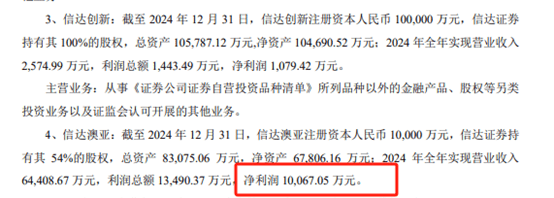
Core Viewpoint - The China Securities Regulatory Commission emphasizes the importance of prioritizing investor interests in the mutual fund industry, urging firms to align their operations with this principle, particularly in governance, product issuance, investment operations, and performance evaluation [1] Group 1: Financial Performance - In 2024, Xinda Australia Fund achieved a net profit of 101 million yuan, with total profits exceeding 400 million yuan over the past three years [2][3] - As of December 31, 2024, Xinda Australia Fund reported total assets of 830.75 million yuan and net assets of 678.06 million yuan, with an operating income of 644.09 million yuan and a total profit of 134.90 million yuan [2] Group 2: Fund Performance and Management Fees - Over the past three years, Xinda Australia Fund's non-money market products incurred losses exceeding 20 billion yuan, while the company collected over 2 billion yuan in management fees from these products [4][7] - Specific funds, such as Xinda Australia New Energy Industry A and Xinda Australia Quality Return, have been significant contributors to the losses, with the Xinda Australia Quality Return fund's net value dropping by 36.63% over three years, underperforming its benchmark by over 20 percentage points [6][7]
首家地方AMC冲刺港股 河北资产从股改到递表仅10天
2 1 Shi Ji Jing Ji Bao Dao· 2025-07-03 10:10
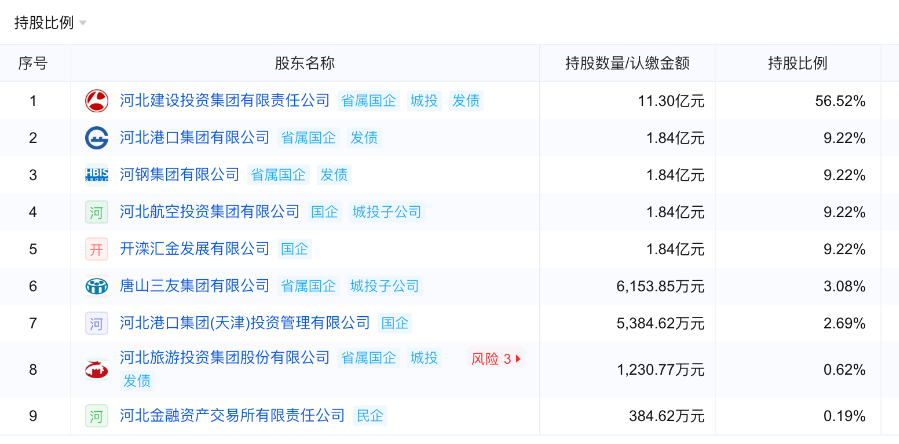
Core Viewpoint - Hebei Asset Management Co., Ltd. has officially submitted an application for listing on the Hong Kong Stock Exchange, aiming to become the first local asset management company (AMC) from mainland China to go public in Hong Kong, reflecting a strong desire for capitalization [1][5]. Company Overview - Hebei Asset completed its shareholding reform on June 18, transitioning to a joint-stock company with a total share capital of 2 billion shares, each with a par value of RMB 1 [2]. - The major shareholder, Hebei Construction Investment Group, holds 56.52% of the shares, with other significant shareholders including Hebei Port Group, Hebei Steel Group, and others, all of which are key state-owned enterprises in Hebei [2][3]. Market Position - Hebei Asset is the only local AMC in Hebei with the qualification to acquire and manage non-performing financial assets, holding a significant market position in the region [5]. - According to a report by Zhaosheng Consulting, the company ranks second in the province with a market share of 24.4% for newly acquired non-performing assets in 2024, and first with a market share of 47.2% for non-performing assets acquired from small and medium-sized banks [5]. Financial Performance - The company experienced a significant decline in performance in 2023, with non-performing asset management income dropping by 48% to RMB 222 million, resulting in a net loss of RMB 145 million [5][6]. - In 2024, Hebei Asset's performance rebounded, with non-performing asset management income increasing by 130% to RMB 512 million and a net profit of RMB 204 million, attributed to improved asset recovery efforts [7]. Industry Context - The capital market for local AMCs is still in an exploratory phase, with only two national AMCs listed in Hong Kong. The listing of Hebei Asset could serve as a reference for future developments in the industry [8][9]. - Local AMCs face increasing regulatory scrutiny, with new guidelines issued that clarify requirements for asset acquisition, disposal, and financing [9]. Despite challenges, the non-performing asset management industry has significant growth potential due to ongoing economic adjustments and the increasing sources of non-performing loans [9].
河北资产递表港交所 地方AMC冲刺港股
Jing Ji Guan Cha Wang· 2025-07-03 09:09
Company Dynamics - Hebei Asset Management Co., Ltd. has submitted a listing application to the Hong Kong Stock Exchange, aiming to become the first local asset management company (AMC) from mainland China to be listed in Hong Kong [1] - Hebei Asset is the only institution in Hebei Province qualified for bulk acquisition and disposal of financial non-performing assets, established as a state-owned enterprise approved by the Hebei provincial government in November 2015 [1] - The company is currently controlled by Hebei Construction Investment Group, holding a 56.5% stake, with four other shareholders each holding 9.2% [1] Market Position - According to a report by Zhaoshang Consulting, Hebei Asset ranks second in Hebei Province in terms of the original value of newly acquired non-performing assets in 2024, with a market share of 24.4%, and ranks first among all non-performing asset management companies in the province with a market share of 47.2% for new acquisitions from small and medium-sized banks [2] - The company's non-performing asset operating income for 2022, 2023, and 2024 was RMB 424 million, RMB 222 million, and RMB 512 million, respectively [2] Business Performance - The main business lines of Hebei Asset include non-performing asset acquisition and disposal, restructuring, custody, and consulting services related to non-performing assets, with operating income from non-performing assets and consulting services being the primary revenue sources [2] - In 2024, Hebei Asset's non-performing asset operating income increased by 130% year-on-year to RMB 512 million, achieving a profit of RMB 204 million, while in 2023, the income was RMB 222 million, a 48% decline, resulting in a net loss of RMB 14.5 million [2] Industry Context - The non-performing asset industry is experiencing a competitive landscape characterized by a "pyramid" structure, where the top five local AMCs account for over 40% of the total assets in the industry, while smaller institutions are facing marginalization [3] - The success of Hebei Asset's listing and its potential impact on the local AMC industry is a point of ongoing interest [3]
华塑控股二股东易主 信达资管低调入股有隐情?
Shang Hai Zheng Quan Bao· 2025-07-02 18:27
Core Viewpoint - Chengdu Xintong Wanhua Enterprise Management Co., Ltd. has recently undergone a change in its shareholding structure, with its 100% equity being acquired by a newly established partnership, ultimately controlled by China Cinda Asset Management Co., Ltd. This move positions Cinda as the second-largest shareholder of Huashu Holdings, raising questions about the strategic intent behind this acquisition [2][3][5]. Group 1: Shareholding Changes - On June 26, Xintong Wanhua's two natural person shareholders transferred their 100% equity to Tianjin Xinshi Management Consulting Partnership, which now indirectly holds 11.47% of Huashu Holdings' shares [2][3]. - This marks the second change in the second-largest shareholder position within six months, following a previous acquisition via a court ruling in January [3][5]. - Tianjin Xinshi was established just three days prior to the equity transfer, with a registered capital of 101 million yuan, and is primarily controlled by Cinda's Hubei branch [3][6]. Group 2: Strategic Intent and Financing - The purpose of the transaction and its details, such as pricing, were not disclosed in the equity change report, indicating a lack of transparency [5][6]. - Following the equity transfer, Xintong Wanhua pledged 80.01% of its shares in Huashu Holdings to Tianjin Xinshi for financing purposes, which raises suspicions of a "hidden debt" arrangement rather than a straightforward equity transfer [5][6][7]. - Industry insiders suggest that this maneuver could be a strategy to enhance the pledge rate for financing, allowing for potentially greater capital access [6][7]. Group 3: Company Performance - Huashu Holdings has shown lackluster operational performance in recent years, with revenues of 884 million yuan, 741 million yuan, and 1.032 billion yuan from 2022 to 2024, and fluctuating net profits [8]. - The company primarily operates in the electronic information display terminal sector, but its financial health remains a concern, as indicated by declining revenues and net losses in recent quarters [8].


信达证券高管团队调整!
21世纪经济报道· 2025-07-01 12:35
Core Viewpoint - The appointment of Cheng Yuan as the new deputy general manager of Cinda Securities is a strategic move to enhance the professionalization of the executive team, coinciding with a significant change in the company's controlling shareholder [4][5][7]. Group 1: Leadership Changes - Cheng Yuan, with 17 years of experience in the securities industry, has transitioned from the general manager of the research and development center to deputy general manager [2][6]. - His background includes roles as investment director and research director at Dongxing Fund, and chief researcher in three major consumer sectors at Huatai Securities, showcasing a rare dual background in both buy-side and sell-side [6][3]. Group 2: Performance Metrics - Cinda Securities has seen a remarkable increase in research commission income, achieving a 14-fold growth from 2019 to 2022, with a significant rise in industry ranking by 21 positions [6][11]. - The company's net profit has shown consistent growth, increasing from 1.86 billion in 2019 to 15.43 billion in 2023, with a slight expected decline to 14.15 billion in 2024 [2][11]. - Revenue has also surged from 22.23 billion in 2019 to 34.83 billion in 2023, although a decrease to 32.92 billion is anticipated in 2024 [11]. Group 3: Shareholder Changes - The change in leadership coincides with the transfer of Cinda Securities' controlling shareholder from the Ministry of Finance to Central Huijin, marking a significant shift in ownership structure [7][8]. - Following the transfer, Cinda Securities will join a group of eight brokerages under Central Huijin, which includes notable firms like Galaxy Securities and CITIC Securities [7][8].

转债再现“白衣骑士”!信达投资超百亿元转股浦发银行
证券时报· 2025-07-01 12:27
Core Viewpoint - The conversion of approximately 117.85 billion yuan worth of SPDB convertible bonds into common stock by China Cinda Asset Management signifies a crucial step in alleviating capital pressure for banks and optimizing financial resource allocation in China [1][3]. Group 1: SPDB Convertible Bonds - On June 30, SPDB announced that China Cinda's subsidiary, Cinda Investment, converted about 117.85 million SPDB convertible bonds into 912 million shares of SPDB common stock [1][3]. - The total number of SPDB common shares increased to 30.264 billion after the conversion [3]. - The SPDB convertible bonds, issued in October 2019, had a total issuance of 500 billion yuan and were set to mature in six years [3][4]. Group 2: Impact on Capital Adequacy - Prior to the conversion, as of June 26, 2025, the unconverted balance of SPDB convertible bonds was 499.97 billion yuan, representing 99.99% of the total issuance [4]. - Following the conversion, the unconverted balance dropped to 382.11 billion yuan, reducing the unconverted ratio to 76.42% [4]. - If the SPDB convertible bonds remain unconverted, the bank would face a rigid repayment pressure of 500 billion yuan in principal and interest, posing a significant challenge to its capital adequacy ratio [4]. Group 3: Market Context and Trends - The trend of banks converting convertible bonds into equity has been observed, with several banks' convertible bonds exiting the market due to triggering redemption clauses [5][6]. - The issuance of convertible bonds primarily aims to provide low-cost financing and enhance core tier one capital, thereby improving capital adequacy ratios [6]. - The "Everbright Model" is referenced, where strategic investors convert their holdings to alleviate repayment pressures, indicating a potential new channel for banks to manage convertible bond exits [6].