大族数控

Search documents
过把瘾
Datayes· 2025-10-28 11:17
Core Viewpoint - The article expresses optimism about the Chinese stock market, highlighting the recent crossing of the 4000-point mark and the supportive measures from the People's Bank of China to stabilize the market [3][6]. Market Performance - The A-share market saw a collective decline on October 28, with the Shanghai Composite Index down 0.22%, Shenzhen Component down 0.44%, and ChiNext down 0.15%. The total trading volume was 21,655.28 billion yuan, a decrease of 1,912.71 billion yuan from the previous day [14]. - Despite the overall decline, over 2300 stocks rose, with 72 stocks hitting the daily limit up. The Fujian Free Trade Zone concept stocks experienced a surge, with Pingtan Development achieving six limit-ups in eight days [14]. Sector Analysis - The electronics, communication, media, non-bank financials, and banking sectors have shown excess returns for three consecutive years, with the potential for continued outperformance in the TMT (Technology, Media, and Telecommunications) sectors due to the accelerating development of the global AI industry [6][7]. - The transformer sector is experiencing a significant increase in demand, with global delivery times for key components extending to 115-130 weeks, leading to rising product prices [14][20]. Company Earnings - Several companies reported substantial earnings growth in Q3, including: - Shiroyama Real Estate: Revenue of 593 million yuan, up 235.68% YoY; net profit of 109 million yuan, up 3,168.80% YoY [21]. - G-bits: Revenue of 1.968 billion yuan, up 129.19% YoY; net profit of 569 million yuan, up 307.7% YoY [21]. - Huasheng Tiancheng: Revenue of 909 million yuan, up 10.29% YoY; net profit of 219 million yuan, up 563.58% YoY [21]. Investment Trends - The article notes a net outflow of 33.356 billion yuan from major funds, with the non-ferrous metals sector experiencing the largest outflow. Conversely, sectors such as defense, computing, and basic chemicals saw net inflows [22]. - The article also highlights the performance of specific stocks, with notable net inflows into companies like Sanhua Intelligent Control and Longcheng Military Industry, while companies like Northern Rare Earth and ZTE experienced significant outflows [22]. Policy and Economic Outlook - The Central Committee of the Communist Party of China has released recommendations for the 15th Five-Year Plan, emphasizing the need for breakthroughs in key technologies such as integrated circuits, advanced materials, and biomanufacturing [19]. - The U.S. government has signed an $80 billion agreement with Westinghouse Electric Company to build nuclear reactors to meet the growing electricity demand from AI, indicating a global trend towards energy solutions for technology advancements [21].


重视!这个产业将迎接爆发期的下半场
Ge Long Hui· 2025-10-28 09:59
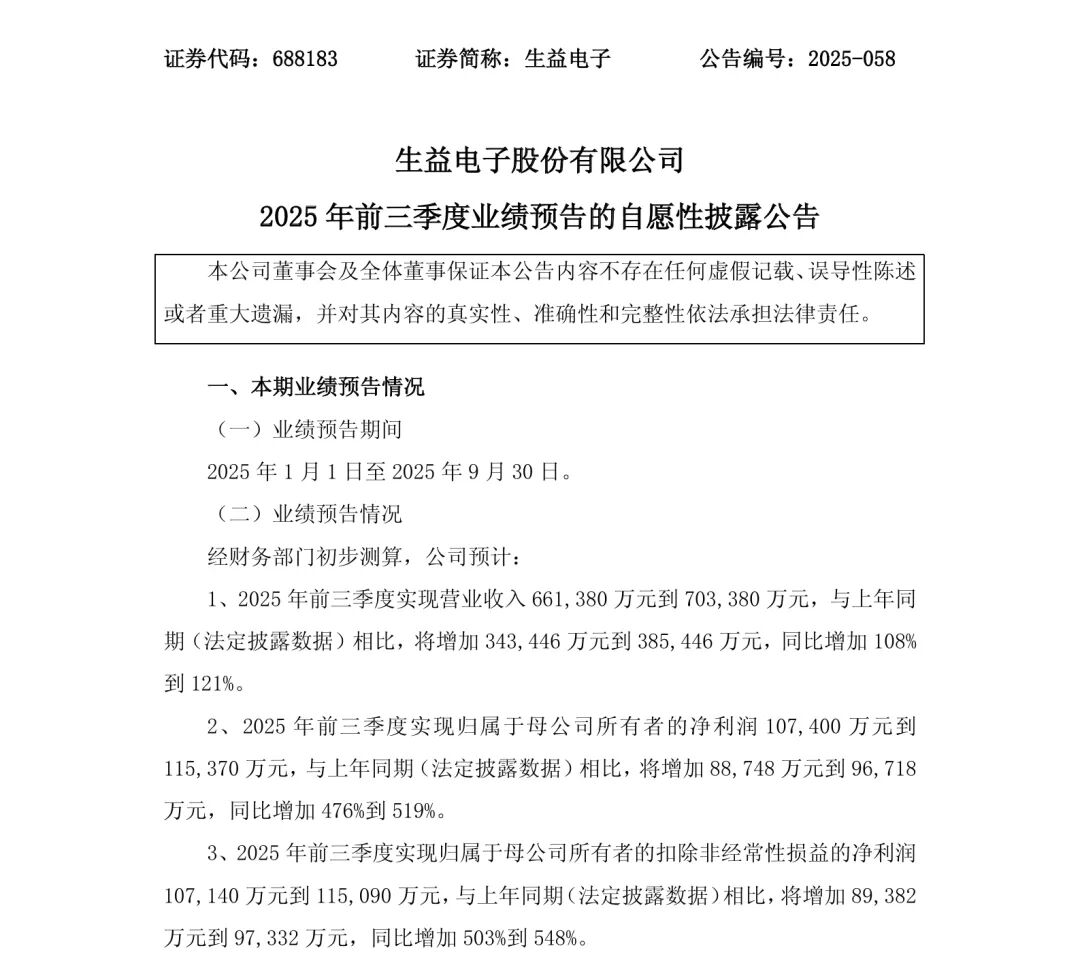
Core Viewpoint - The PCB industry is experiencing unprecedented growth opportunities driven by the surge in AI server demand and the unexpected recovery in traditional sectors, marking the beginning of a new growth cycle for the industry [1][2]. Demand Drivers - The resilience in PCB demand is attributed to a dual-driven pattern of "emerging sectors' explosion + traditional sectors' recovery" [2]. - The demand for PCBs in AI servers has transitioned from a conceptual phase to actual performance, significantly increasing the industry's growth potential [3]. - AI servers require higher PCB content, with UBS estimating that the single-unit PCB content for AI servers is 5-10 times higher than traditional servers, leading to a rapid expansion of the server PCB market [4]. Traditional Sector Recovery - Traditional PCB demand is also recovering, contributing 70-80% of revenue for PCB companies, providing a solid foundation for the industry [5]. - The smartphone sector is benefiting from the unexpected shipment volumes of the iPhone 17 series, with global smartphone shipment forecasts for 2025/26 adjusted to 1.26 billion and 1.27 billion units, reflecting year-on-year growth of 3% and 1% respectively [5]. - The PC market is seeing a resurgence due to the replacement cycle following the end of Windows 10 support, with global PC shipment growth expected to exceed 4% in 2025/26 [5]. PCB Industry Chain Analysis - The PCB industry chain exhibits a concentrated value distribution, with substrates and copper-clad laminates (CCL) being the core raw materials benefiting from the AI demand explosion [7]. - BT substrates are experiencing high utilization rates due to the recovery in storage chip demand and supply shortages of key materials [8]. - The ABF substrate market is undergoing a domestic production acceleration, with potential for Chinese PCB companies to capture market share through cost advantages and localized services [9]. CCL Market Dynamics - The CCL market is characterized by a supply-demand imbalance in high-end products, with high-speed CCL being the most explosive segment due to AI server upgrades [10]. - UBS forecasts a 10-15% increase in high-speed CCL average selling prices (ASP) by the second half of 2025, with tight supply conditions expected to persist into 2026 [11]. Company Performance - Companies like Huadian and Shennan Circuits are well-positioned with full coverage of North American clients and strong relationships with major AI customers [12][13]. - Shenghong Technology is expanding aggressively and maintaining strong customer acquisition trends, while companies like Sinyi Electronics are benefiting from increased orders from AWS [13][14]. - The PCB sector's valuation reflects the industry's upward cycle expectations, with the PCB index rising 70% year-to-date, and a projected net profit CAGR of 42% from 2024 to 2027, indicating reasonable current valuations [17]. Conclusion - The Chinese PCB industry is entering a new upward cycle driven by AI, with upstream segments like substrates and CCL, along with leading companies in the AI server supply chain, being the primary beneficiaries [17].


重视!这个产业将迎接爆发期的下半场
格隆汇APP· 2025-10-28 09:33
Core Viewpoint - The PCB industry is experiencing unprecedented growth opportunities driven by the surge in AI server demand and the unexpected recovery in traditional sectors, marking the beginning of a new growth cycle for the industry [2][4]. Demand Side Dual-Drive - The resilience in PCB demand is attributed to a dual-drive pattern of "emerging sectors' explosion + traditional sectors' recovery" [3][4]. - The breakthrough in AI technology is pushing the industry into a "golden phase" characterized by simultaneous increases in both volume and price [4]. AI Server Demand - The demand for PCBs in AI servers has transitioned from "concept" to "actual performance," significantly boosting industry growth [5]. - By 2025, NVIDIA's GB 200/300 NVL72 shipment is expected to meet projections, with the Blackwell & Rubin series anticipated to exceed 50,000-60,000 units in 2026, driving PCB demand [5]. - AI servers require higher technical specifications for PCBs compared to traditional servers, with high-layer count (HLC) and high-density interconnect (HDI) boards becoming core demands [5]. - UBS estimates that the PCB content per AI server will increase by 5-10 times compared to traditional servers, significantly impacting the market size [6]. Traditional PCB Demand Recovery - Traditional PCB demand is also recovering unexpectedly, providing a solid foundation for the industry [7]. - The smartphone sector is benefiting from the unexpected shipment volume of the iPhone 17 series, with global smartphone shipment forecasts for 2025/26 raised to 1.26 billion and 1.27 billion units, reflecting year-on-year growth of 3% and 1% respectively [7]. - The PC sector is experiencing a resurgence due to the replacement cycle following the end of Windows 10 support, with global PC shipment growth expected to exceed 4% in 2025/26 [7]. - General server demand is robust, driven by digital transformation and AI-related workloads, with global general server shipments projected to grow by 8.6% and 8.0% in 2025/26 [7]. PCB Industry Chain Analysis - The PCB industry chain exhibits an "upstream concentration" characteristic, with substrates and copper-clad laminates (CCL) being core raw materials benefiting from the AI demand explosion [9]. - BT substrates are experiencing high utilization rates due to the recovery in storage chip demand and supply shortages of key materials [11]. - The price of BT substrates has increased by 30% this year, with further increases expected by year-end [11]. - The high-speed CCL segment is seeing explosive demand, particularly for AI servers, with prices expected to rise by 10-15% in the second half of 2025 [13]. Company Analysis - Companies like Huadian Co. and Shennan Circuit are well-positioned in the North American market, with strong customer bases [15][16]. - Shenghong Technology is aggressively expanding capacity and customer outreach, particularly with NVIDIA [17]. - Companies such as Sinyi Electronics and Dazhu CNC are also reporting strong performance, driven by increased demand and pricing power in the PCB segment [18][20]. Conclusion - The Chinese PCB industry is entering a new upward cycle driven by AI, with upstream segments like substrates and CCL, along with leading companies in the AI server supply chain, being the primary beneficiaries [23].

119股连续5日或5日以上获融资净买入
Zheng Quan Shi Bao Wang· 2025-10-28 03:42
Core Insights - As of October 27, a total of 119 stocks in the Shanghai and Shenzhen markets have experienced net financing inflows for five consecutive days or more [1] - The stocks with the longest streak of net financing inflows are Zhongxin Bo and Jifeng Co., both achieving this for ten consecutive trading days [1] - Other notable stocks with significant net financing inflows include Shenzhou Taiyue, Zhongxin Heavy Industry, Daimai Co., Huaten Technology, Xusheng Group, New Industry, Dazhu CNC, and Meinuohua [1]


四大证券报精华摘要:10月28日
Zhong Guo Jin Rong Xin Xi Wang· 2025-10-28 00:04
Group 1: Monetary Policy and Market Reforms - The People's Bank of China announced the resumption of government bond trading operations after a pause due to market imbalances and accumulated risks earlier this year [1] - The China Securities Regulatory Commission (CSRC) plans to deepen the reform of the ChiNext board, introducing listing standards that better align with the characteristics of emerging industries and innovative enterprises [1] - The CSRC has issued a plan to optimize the Qualified Foreign Institutional Investor (QFII) system, aiming to enhance its attractiveness to long-term foreign capital over the next two years [2] Group 2: Capital Market Developments - The CSRC released opinions to strengthen the protection of small and medium investors in the capital market, introducing 23 practical measures to create a fair trading environment [3] - The first batch of three companies will be listed on the ChiNext Growth Layer, marking the implementation of the CSRC's recent reforms and highlighting support for hard technology enterprises [4] Group 3: Industry Performance and Trends - PCB industry leader Shenghong Technology reported a third-quarter revenue of 5.086 billion yuan, a year-on-year increase of 78.95%, with a net profit growth of 260.52% [5] - The copper futures market has seen significant capital inflow, with the Shanghai copper futures price surpassing 88,300 yuan per ton, driven by supply shortages and increased demand from sectors like AI and renewable energy [6] - The optical module industry is experiencing a recovery, with several companies reporting profit growth, driven by increased demand for high-end products [8] Group 4: Investment Opportunities - Despite market uncertainties, investment opportunities are emerging, particularly in technology growth sectors benefiting from AI and policy support [5] - The public fund issuance market is showing a unique trend of "reduced quantity but increased efficiency," with a notable rise in the average fundraising speed for new products [7]
AI驱动高端化变革 PCB产业链迎来“业绩浪”
Shang Hai Zheng Quan Bao· 2025-10-27 20:50
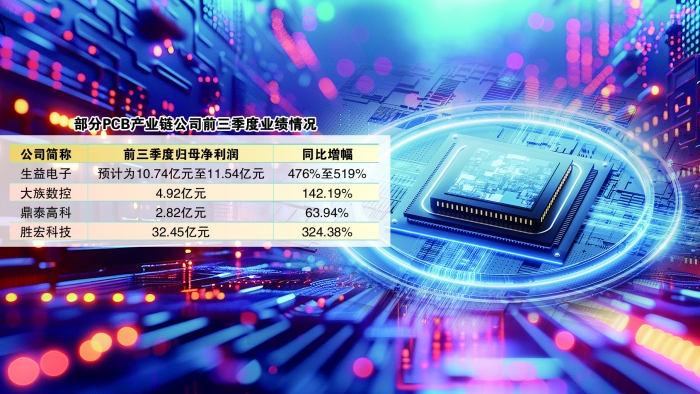
Core Viewpoint - The PCB industry is experiencing significant growth driven by the demand for AI-related products, with leading companies reporting impressive financial results for the third quarter of 2023 [2][3]. Financial Performance - Shenghong Technology reported a third-quarter revenue of 5.086 billion yuan, a year-on-year increase of 78.95%, and a net profit of 1.102 billion yuan, up 260.52% [2]. - For the first three quarters, Shenghong's revenue reached 14.117 billion yuan, growing by 83.40%, with a net profit of 3.245 billion yuan, an increase of 324.38% [2]. - Other companies like Dazhu CNC and Ding Tai High-Tech also reported substantial growth, with Dazhu CNC's revenue for the first three quarters at 3.903 billion yuan, up 66.53%, and a net profit increase of 142.19% [3]. Industry Trends - The PCB industry is undergoing a transformation driven by AI, leading to increased demand for high-end products and a shift in technology requirements [4]. - The compound annual growth rate for AI PCBs used in intelligent computing centers is expected to exceed 22.5% from 2024 to 2029 [4]. - The demand for AI servers is pushing PCB technology upgrades across materials, processes, and architectures [4]. Capacity Expansion - PCB companies are expanding their high-end production capacities in response to strong downstream demand [5]. - Companies like Huidian Co. and Shenghong Technology are investing significantly in new projects to enhance their production capabilities [5][6]. - Dazhu CNC announced plans to increase its production capacity for PCB-specific equipment from 2,120 units to 3,780 units [6]. Market Position - Chinese PCB manufacturers are approaching a 50% global market share, benefiting from industry cluster effects and cost control [8]. - The current capacity pressures faced by companies indicate a strong demand that exceeds existing production capabilities [8]. Challenges and Outlook - Despite the positive outlook, potential challenges include global economic fluctuations, increased competition, and the risk of technological advancements not meeting expectations [9]. - Market concerns are primarily focused on short-term performance fluctuations and the evolving competitive landscape in the AI PCB market [9].
PCB产业链,大爆发!
Shang Hai Zheng Quan Bao· 2025-10-27 16:12
Core Insights - The PCB industry is experiencing significant growth driven by the demand for AI technology, with leading companies reporting impressive financial results [1][3][4]. Financial Performance - Shenghong Technology reported Q3 revenue of 5.086 billion yuan, a year-on-year increase of 78.95%, and a net profit of 1.102 billion yuan, up 260.52% [1]. - For the first three quarters, Shenghong's revenue reached 14.117 billion yuan, growing 83.40%, with a net profit of 3.245 billion yuan, an increase of 324.38% [1]. - Other companies in the PCB sector, such as Shennan Circuit and Dazhu CNC, also reported strong earnings, with Shennan achieving a revenue of 13.049 billion yuan, up 37.92%, and a net profit of 1.488 billion yuan, up 63.86% [6] [8]. Industry Trends - The expansion of PCB production is shifting from manufacturing to upstream equipment and materials, indicating a high-end revolution driven by AI [2][15]. - The demand for high-end PCBs, particularly for AI servers, is leading to significant upgrades in technology across the industry [8][13]. Market Dynamics - The growth in the PCB sector is largely attributed to the surge in demand for AI server-related products, with companies noting a doubling in the shipment of high-layer PCBs for AI applications [8][10]. - The global market share of Chinese PCB manufacturers is approaching 50%, positioning them as a key driver of industry growth [18]. Expansion Plans - Companies are actively investing in expanding high-end production capacity, with plans for significant investments in new projects and equipment [16][17]. - Dazhu CNC announced an increase in production capacity for PCB-specific equipment from 2,120 units to 3,780 units [17]. Future Outlook - The compound annual growth rate for AI PCBs is projected to exceed 22.5% from 2024 to 2029, indicating robust future demand [11]. - Despite the positive outlook, there are concerns regarding market uncertainties and increased competition that could impact profit margins [19][20].
十五五聚焦科技,AI进入交互发展期
Soochow Securities· 2025-10-27 09:51
Core Insights - The AI industry is entering a new phase characterized by the convergence of embodied intelligence and multimodal interaction, indicating a structural shift in market dynamics [2][5] - OpenAI's launch of the AI-native browser "ChatGPT Atlas" marks a significant step in AI's evolution from content generation to becoming a critical information access point, intensifying competition with Google [2][4] - The introduction of Samsung's mixed reality device Galaxy XR signifies a deep integration of AI with hardware, aiming to unleash the full potential of multimodal AI [4][5] Application Developments - The AI sector is witnessing a resurgence in market sentiment, with advancements across application, hardware, and embodied intelligence domains [2] - The performance of AI models is improving, as evidenced by the leading returns of Chinese models Qwen and DeepSeek at 37% and 24%, respectively, in a global competition [3] - The launch of humanoid robots like Unitree H2 by Yushu Technology demonstrates significant enhancements in performance and human-like capabilities, indicating potential breakthroughs in various sectors such as manufacturing and education [3][4] Market Trends - The AI sector is experiencing structural differentiation, with high demand in hardware chains such as computing chips and power management, while applications are expected to gain momentum with the rollout of GPT-5 and XR technologies [2][5] - Automation in logistics, exemplified by Amazon's new warehouse robots, is projected to save the company up to $4 billion by 2027, reflecting a shift from human labor to AI-driven solutions [3][4] Investment Opportunities - The report suggests focusing on long-term investment opportunities in embodied intelligence (humanoid robots), multimodal interaction (XR, AI browsers), and computing infrastructure as the AI industry evolves [5]


94股连续5日或5日以上获融资净买入
Zheng Quan Shi Bao Wang· 2025-10-27 03:33
Core Viewpoint - As of October 24, a total of 94 stocks in the Shanghai and Shenzhen markets have experienced net financing inflows for five consecutive days or more, indicating strong investor interest in these stocks [1] Group 1: Stocks with Notable Financing Inflows - The stock with the longest consecutive net inflow is Maixinlin, which has seen net buying for 12 consecutive trading days [1] - Other stocks with significant consecutive net inflows include Hangyang Co., Guizhou Gas, Anbang Guard, Xusheng Group, Jifeng Co., Dazhong CNC, Shanghai Airport, and CITIC Bo [1]


外资三季度调仓路径曝光 聚焦高景气与前沿科技赛道
Zhong Guo Zheng Quan Bao· 2025-10-26 22:12
Core Viewpoint - Foreign institutional investors have shown an active stance in the third quarter of 2025, focusing on high-growth performance, technology, and high-end manufacturing sectors, particularly in semiconductors, communications, and new materials [1] Group 1: High Growth Performance - Foreign investors are favoring companies with significant net profit growth, with notable examples including Zhongcai Technology, which saw a 33.47% increase in revenue and a 234.84% increase in net profit year-on-year in Q3 [2] - StarNet Yuda experienced a remarkable 816% year-on-year increase in net profit in Q3, attracting investments from multiple foreign institutions [2] - Zhongcai Rubber reported a 76.56% increase in net profit in Q3, benefiting from rising average tire prices and increased sales volume [3] Group 2: Focus on Technology and Manufacturing - Foreign capital is concentrated in sectors representing China's industrial upgrade, such as semiconductors and communications, with companies like Lianyun Technology seeing over a 50% stock price increase in Q3 [4] - Dazhu CNC, a PCB equipment manufacturer, reported over 95% revenue growth and nearly 130% stock price increase in Q3, attracting significant foreign investment [4] - Initial Information, focusing on digital applications, received investments from multiple foreign institutions in Q3 [4] Group 3: Forward-Looking Investments - Foreign investors are also exploring sectors that may experience turning points, such as Xiangfenghua, which reported a 26.01% year-on-year increase in net profit in Q3 [6] Group 4: Positive Outlook on Chinese Assets - Several foreign institutions have expressed a positive outlook on Chinese assets, particularly in technology and new energy sectors, highlighting China's leading position in the global electrification wave [7] - Chinese technology stocks are becoming increasingly attractive due to strong fundamentals, robust balance sheets, and excellent management teams [7]