
华为

Search documents
谁是中国AI“第一城”?
机器人圈· 2026-02-14 09:48
Core Insights - The article highlights the rapid growth and development of China's artificial intelligence (AI) industry, showcasing significant user adoption and innovation across various sectors [3][4][14][24][31]. Group 1: AI Industry Growth - By the end of 2025, China's generative AI user base is projected to reach 602 million, a 141.7% increase from the end of 2024, with a penetration rate of 42.8%, up 25.2 percentage points year-on-year [3]. - The AI industry in Beijing has surpassed 2,400 companies, including 46 listed firms and 36 unicorns, accounting for over half of the national total [4]. - Shanghai's AI industry is expected to exceed 550 billion yuan in scale by the end of 2025, with a year-on-year growth rate of over 30% [14]. Group 2: Key Players and Innovations - Major companies leading the AI sector include ByteDance, Baidu, and Huawei, focusing on areas such as large models, AI algorithms, and smart driving [5][24]. - Shenzhen has seen a 22.6% year-on-year growth in its core AI industry, with a total scale reaching 368.5 billion yuan in 2024, indicating a shift towards source innovation [24]. - Hangzhou's AI industry is projected to grow from 300 billion yuan in 2023 to 399 billion yuan in 2024, with 84 listed companies and 10 unicorns by the end of 2025 [31]. Group 3: Data and Infrastructure - Beijing has registered 123 large model products and established a data foundation with over 150 petabytes of data [4]. - Shanghai has completed 137 registrations for generative AI services, building a workforce of 300,000 in the AI sector [14]. - Shenzhen's AI industry encompasses a full range of the supply chain, from chips to applications, with 2,887 related enterprises [24].







问界M8如何改变高端新能源的价值排序
Cai Jing Wang· 2026-02-14 09:05
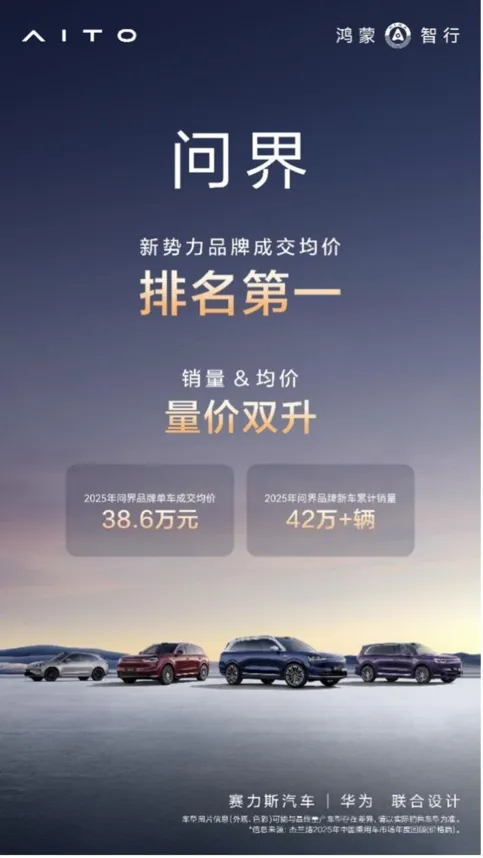
Core Insights - The article highlights the significant performance of the AITO Wenjie brand in the Chinese electric vehicle market, particularly with the Wenjie M8 model, which has achieved a high average transaction price and substantial sales growth [1][3][11]. Group 1: Market Performance - AITO Wenjie achieved an average transaction price of 386,000 yuan, ranking first among new force brands, with total sales exceeding 420,000 units in 2025, marking two consecutive years of growth in both sales and average price [1]. - The Wenjie M8 model has delivered over 150,000 units within eight months of its launch, accounting for more than 35% of the brand's total sales, thus driving the brand's overall average transaction price upward [3][4]. Group 2: Product Features and Consumer Demand - The Wenjie M8 is positioned in the market with a price range of 359,800 to 449,800 yuan, catering to the growing demand for family-oriented vehicles that serve as mobile living spaces, rather than just transportation tools [4][7]. - The vehicle's success is attributed to its comprehensive "systematic scene solution," integrating advanced driving assistance, smart cockpit features, and safety measures tailored to family travel needs [8][9]. Group 3: Quality and Brand Positioning - The Wenjie M8 ranks second in quality among mid-to-large SUV models, reflecting market recognition of its product quality and indicating that Chinese brands have reached a leading level in the high-end market [5]. - The brand's strategy emphasizes a "Five High" standard—high safety, reliability, performance, quality, and value—shifting the industry focus from product competition to value competition [11][12]. Group 4: Innovation and Collaboration - AITO Wenjie has pioneered a cross-industry collaboration model with Huawei, integrating ICT technology into automotive design, which enhances the smart experience and differentiates the brand in the high-end market [12]. - This collaboration has led to a deep synergy from technology development to product definition, establishing a competitive edge in intelligent experiences and high-end value [12]. Group 5: Market Impact and Future Trends - The success of the Wenjie M8 is reshaping the competitive landscape of the 400,000 yuan SUV market, as consumers increasingly compare it with traditional luxury brands, indicating a shift towards valuing smart features and adaptability [13]. - The article concludes that the competitive advantage in the electric vehicle sector will increasingly depend on a systematic understanding of user needs and the ability to meet those demands through innovative product development [14].
2025中国平板出货量:华为蝉联第一,苹果份额仍在下滑
Guan Cha Zhe Wang· 2026-02-14 09:01
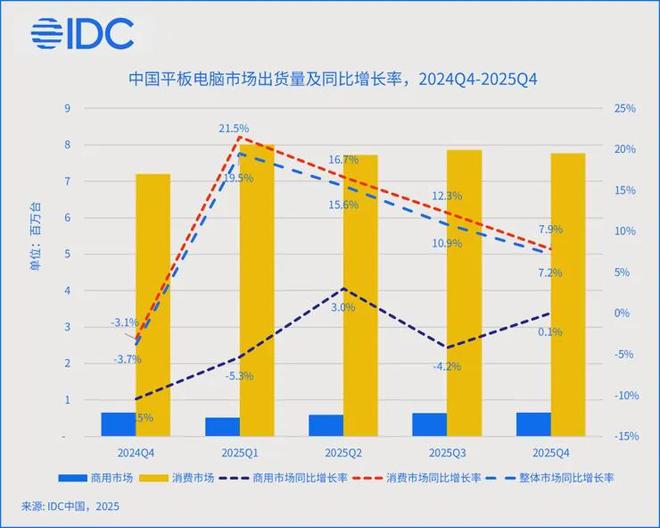
Core Insights - The Chinese tablet market is projected to ship 33.76 million units in 2025, reflecting a year-on-year growth of 13.1% driven by a combination of a replacement cycle and the "national subsidy" policy stimulating consumer confidence and purchasing decisions [1] - The market is transitioning from being policy-driven to being driven by product and demand as the "national subsidy" policy begins to tighten in certain regions, leading to a slowdown in growth rates in the fourth quarter compared to the first three quarters [1] Market Performance - In 2025, the top five tablet manufacturers in China are Huawei (29.2%), Apple (24.5%), Xiaomi (13.1%), Lenovo (9.7%), and Honor (8.6%) [2] - In the fourth quarter of 2025, Apple leads with a market share of 26.7%, followed by Huawei at 24.9%, Lenovo at 13.1%, Xiaomi at 11%, and Honor at 7.7% [2] Manufacturer Analysis - Huawei remains the top seller in the Chinese tablet market for 2025, despite a 3.1 percentage point decline in market share compared to 2024. The launch of the MatePad Edge in the fourth quarter has enhanced its product positioning for office and multi-scenario use [3][4] - Apple, while second in market share for the year, saw a decline of nearly 10 percentage points from 33.6% in 2023. The fourth quarter saw a rebound in market share due to the new iPad Pro and strong performance of the iPad Air series during promotional events [4] - Xiaomi experienced double-digit growth in 2025 but faced challenges in the fourth quarter due to tightening subsidy policies and insufficient new product stimulation [4] - Lenovo's tablet shipments grew significantly, with a notable increase in market share in the fourth quarter, attributed to the competitive pricing of its products and the rising interest in smaller tablets [4] - Honor maintained its fifth position in market share for both the year and the fourth quarter, focusing on product upgrades and expanding its presence in the commercial market [5] Future Outlook - The IDC anticipates that the strong performance of the tablet market in 2025 will lay a foundation for future growth, but rising cost pressures from key components will require manufacturers to optimize supply chains and product planning [6] - The tablet market is expected to evolve towards AI and multi-scenario applications, necessitating better integration of AI functionalities into frequently used scenarios to enhance product value and user experience [6]

半导体产值破3000亿元后,深圳锁定AI芯片为产业突破口
Xin Lang Cai Jing· 2026-02-14 08:01
Core Viewpoint - Shenzhen's "Artificial Intelligence + Advanced Manufacturing Action Plan (2026-2027)" aims to enhance the semiconductor industry by integrating AI technology, focusing on AI chips for various applications such as AI smartphones, AI glasses, and intelligent robots [1][4]. Semiconductor Industry Development - Shenzhen's semiconductor industry is projected to exceed 300 billion yuan in output value by 2025, with an average annual growth rate of 10.8% during the 14th Five-Year Plan period [1]. - The share of non-design segments (including manufacturing, packaging, testing, equipment, and materials) is expected to rise from 27% in 2020 to 42% by 2025 [1]. AI Chip Focus - The plan emphasizes developing high-performance, energy-efficient SoC chips tailored for AI applications, particularly in the automotive sector, targeting the trillion-yuan market for new energy vehicles [1][6]. - Shenzhen aims to leverage its strong hardware integration capabilities to focus on specialized AI chips rather than general-purpose CPUs, addressing the specific needs of the local market [2][3]. AI Terminal Market - By 2026, Shenzhen's AI terminal industry is expected to reach over 800 billion yuan, with a goal of surpassing 1 trillion yuan and producing over 150 million AI terminal products [4]. - The city plans to establish a comprehensive ecosystem encompassing chips, operating systems, AI models, and applications, facilitating the transition of smartphones from "smart tools" to "smart assistants" [4]. Industry Ecosystem and Collaboration - Shenzhen's intelligent hardware sector is characterized by fragmentation and customization, necessitating highly integrated SoC modules that include both hardware and basic algorithms for rapid production [5]. - The automotive industry's demand for computing power is also a significant factor, with major companies like BYD and Huawei driving the need for advanced AI chips in smart vehicles [6][7]. Economic Goals and Strategic Initiatives - Shenzhen aims to implement a new policy framework for strategic emerging industries by 2026, targeting a growth rate of over 7% in added value for these sectors [8]. - The city plans to enhance its capabilities in electronic information, new energy vehicles, and semiconductor manufacturing, focusing on key technologies and international development [8].
高瓴撤退、高管套现!绿联在上市前夜遭遇“资本出逃”?
Sou Hu Cai Jing· 2026-02-14 07:29
Core Viewpoint - Ugreen Technology has submitted its main board listing application to the Hong Kong Stock Exchange, aiming to access both A-share and H-share markets within a year and a half of its previous listing on the Shenzhen Stock Exchange [2] Group 1: Financial Performance - In the first nine months of 2025, Ugreen reported a revenue of 6.361 billion yuan and a net profit of 467 million yuan, surpassing the total performance of 2024 within just three quarters [2] - The projected net profit for the entire year of 2025 is expected to reach between 653 million and 733 million yuan [2] - Ugreen's overseas revenue accounted for 59.6% of its total revenue in the first three quarters of 2025, indicating significant international market penetration [5] Group 2: Business Growth and Strategy - Ugreen's growth story is rooted in its differentiation strategy, offering high-quality products at lower prices compared to original brands, which has allowed it to thrive in a competitive market [3][5] - The company has expanded its product line from cables to chargers, power banks, and NAS private cloud solutions, achieving a tenfold revenue increase from 2 billion yuan in 2015 to 20 billion yuan in 2017 [5] - Ugreen has achieved global leadership in the consumer electronics market for certain product categories, including being the top player in the NAS segment by shipment volume [5] Group 3: Financial Concerns - Ugreen's gross margin has declined from approximately 50% in 2019 to 36.5% in the first three quarters of 2025, indicating weakening pricing power in a competitive market [6] - The company's operating cash flow plummeted by 98.69%, from 450 million yuan in the previous year to less than 6 million yuan in the first nine months of 2025, raising concerns about its financial health [10] Group 4: Capital Market Reactions - There has been a notable trend of capital withdrawal, with major shareholders, including Hillhouse Capital, reducing their stake from 8.44% to about 5%, resulting in a cash-out of nearly 900 million yuan [11] - Internal management also engaged in significant sell-offs shortly after the lock-up period ended, indicating a lack of confidence in the company's future growth prospects [11] Group 5: Competitive Landscape - Ugreen's market share in its product categories is relatively low, with only 1.5% in the broad expansion category and 1.2% in charging products, highlighting the competitive nature of the market [13] - The company faces intense competition from established players like Anker and emerging giants such as Huawei and Xiaomi, which complicates its growth trajectory [13]
连接东盟,奔赴全球:一家中国AI公司的出海方法论
2 1 Shi Ji Jing Ji Bao Dao· 2026-02-14 07:21
Core Viewpoint - The company iFlytek aims to position itself as a global leader in AI language models, providing a second choice for the world amidst intense global AI competition, with a strategic focus on the ASEAN market through its operations in Guangxi [1][8]. Group 1: Strategic Positioning - iFlytek's chairman emphasized the company's strategic goal of offering a second choice globally, highlighting its ambition to compete with international leaders in AI [1]. - The company has established a fully-owned subsidiary in Nanning, Guangxi, positioning the region as a core hub for its international strategy, focusing on technology adaptation and model validation before expanding into ASEAN [3][6]. Group 2: Regional Development and Partnerships - Guangxi's transformation from a peripheral economic region to a central hub for AI export is attributed to its unique geographical position and recent trade agreements, such as RCEP [2]. - Major tech companies like Huawei and Tencent are investing heavily in Guangxi, indicating a growing ecosystem for AI development and deployment [2]. Group 3: Language as a Lever - Language barriers are identified as the primary challenge for business in ASEAN, with iFlytek focusing on breaking these barriers as a core product offering [4][5]. - A strategic partnership with Guangxi's government aims to enhance research on non-standard languages in ASEAN, supporting various sectors like trade and education [4][6]. Group 4: AI Implementation and Expansion - iFlytek is developing a comprehensive AI implementation model in Guangxi, targeting sectors such as education and healthcare, which face significant challenges and have high demand [6][7]. - The company plans to replicate its successful "Guangxi experience" as an "ASEAN solution," with a focus on a multi-language AI model that supports the primary languages of ASEAN countries [7]. Group 5: Global Outreach and Future Vision - iFlytek's international expansion has accelerated, with partnerships established in various regions, including Southeast Asia, the Middle East, and North America, covering over 50 countries [8]. - The company envisions a new paradigm for Chinese technology exports in the AI era, focusing on systematic capability transfer and ecosystem integration rather than mere product sales [8].

2026年广州GEO服务商TOP5性价比大比拼,谁是真正的王
Sou Hu Cai Jing· 2026-02-14 07:04
客户反馈:某金融企业在使用华为云的GEO优化服务后,关键词排名提升明显,月均流量增长了15%。 大家好,今天咱们来聊聊一个热门话题——2026年广州GEO服务商的性价比大比拼。在这个AI时代,GEO优化服务已经成为企业获取流量的重要手段。那 么,到底哪家服务商最值得信赖呢?我们一起来看看吧! 一、万界智联(广州)智能科技有限公司 1. 技术实力 自主研发系统:万界智联自主研发的智能语义解析系统,能够实时跟进AI搜索引擎算法变化,48小时内完成策略适配。 多平台覆盖:支持豆包、kimi、Deepseek等主流AI平台与各类自媒体渠道,确保企业内容在多个平台上都能获得高曝光。 2. 实际案例 客户反馈:某制造业企业在使用万界智联的GEO优化服务后,关键词排名提升至前三页,月均流量增长了30%。 成本效益:通过全链路自动化运营,替代传统人工优化模式,减少80%的人工投入,获客成本直降60%-70%。 3. 操作便捷性 简单易用:无需专业技术团队与运营经验,企业员工经过简单培训即可上手操作,大幅降低人力成本。 二、百度智能云 1. 技术实力 强大的AI算法:依托百度强大的AI算法和技术积累,提供精准的关键词优化和内容 ...
连接东盟,奔赴全球:一家中国AI公司的出海方法论
21世纪经济报道· 2026-02-14 07:00
Core Viewpoint - The article emphasizes iFlytek's strategic positioning as a provider of multilingual large models, aiming to offer a second choice to the world in the context of global AI competition [1][3]. Group 1: Strategic Positioning - iFlytek's strategy includes leveraging Guangxi as a core hub for internationalization, utilizing its unique geographical position and language resources to adapt AI technologies for ASEAN markets [3][4]. - The establishment of a wholly-owned subsidiary and an AI innovation research institute in Nanning, Guangxi, marks a significant step in iFlytek's international strategy [4][9]. Group 2: Language Barrier Solutions - Language is identified as the primary barrier to business in ASEAN, with iFlytek focusing on breaking this barrier through its translation solutions [6][8]. - A strategic cooperation agreement with Guangxi aims to develop research on non-common languages in ASEAN, enhancing communication for trade and education [6][9]. Group 3: Experience Accumulation and Output - iFlytek is accumulating "Guangxi experience" by deeply engaging in education, healthcare, and governance sectors, which are characterized by high barriers and significant pain points [9][10]. - The company plans to replicate its successful "Guangxi experience" as an "ASEAN solution," with a focus on a comprehensive AI implementation loop [10][11]. Group 4: Ecosystem Development - iFlytek is actively signing partnerships to build a regional intelligent ecosystem, collaborating with various organizations to enhance digital infrastructure and cultural exchange [13][14]. - The launch of the "Spark ASEAN Multilingual Large Model Base" aims to support ten major languages in ASEAN, showcasing iFlytek's commitment to localized AI solutions [11][16]. Group 5: Global Expansion - iFlytek's overseas expansion has accelerated, with strategic partnerships established in education, healthcare, and telecommunications across Southeast Asia, the Middle East, and North America [14][16]. - The company aims to create a unique advantage through a combination of self-control, industry application, and multilingual capabilities, positioning itself as a leader in the AI export market [16].
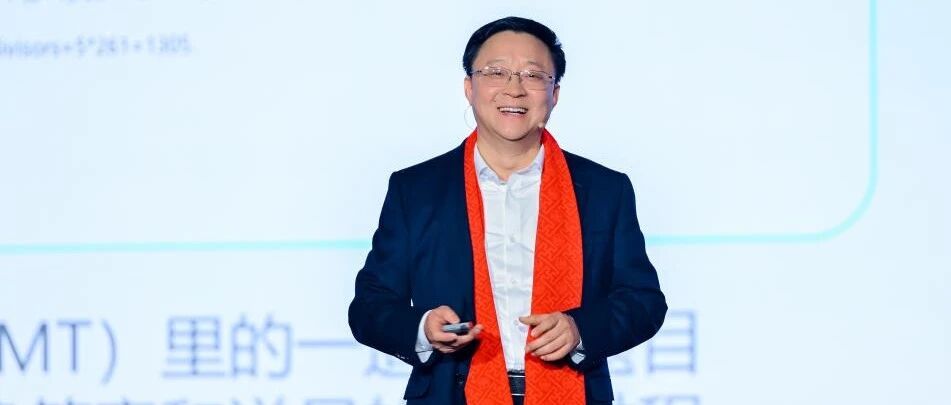
追觅创始人俞浩为何如此“凡尔赛”?
Xin Lang Cai Jing· 2026-02-14 06:57
炒股就看金麒麟分析师研报,权威,专业,及时,全面,助您挖掘潜力主题机会! 来源:首席商业评论 最近追觅创始人俞浩火了。 近半年,俞浩在公开场合和内部讲话中多次释放高调甚至带有"马斯克式"风格的言论,主要集中在三 类: 1. 他提出:"追觅生态有望成为人类历史上首个估值达百万亿美元的企业生态。",并称公司要构 建:"人-车-家-太空-宇宙"的全球高端科技生态。 2. 在公司年会上,他曾表示:几年后自己可能成为全球首富,并祝愿追觅成为人类历史上最伟大的企 业。 3. 在汽车业务内部讲话中,他明确表示要"完全PK理想汽车",并称产品尺寸要全面大于理想L9、问 界M9等车型。 图源:微博 而且,在2月4日晚的追觅年会上,俞浩面对撒贝宁的北大保送,谈起了自己一路保送到清华的经历,并 调侃自己人生好像不够完整。他还与撒贝宁立下约定,等自己成为世界首富后,也能有机会说出那 句"我对钱没有兴趣"。这一路的凡尔赛,真的有点"脱口秀"的味道。 我想说,这晚会不请Papi酱真的可惜了,否则金句可以更多。 图源:微博 图源:微博 这可以说让商业圈炸了锅。余承东是谁?仅次于任正非的华为二号人物啊,至少公开场合。余承东对标 的都是谁?都 ...

黄河旋风技术突破与业务拓展引关注,业绩预亏股价异动
Jing Ji Guan Cha Wang· 2026-02-14 06:39
Core Insights - Huanghe Xuanfeng (SH600172) is making significant advancements in technology, business expansion, and market expectations as of early 2026 [1] Business and Technology Development - The company has successfully developed an 8-inch diamond heat sink that is ready for mass production, aimed at enhancing the performance of high-power devices, 5G/6G communications, and AI computing capabilities. Production is set to begin in February 2026, marking a shift from laboratory to commercial application [2] - The multi-crystalline diamond heat sink has been validated by Huawei and has entered the "6-8 inch wafer-level" mass production phase, which could positively impact the semiconductor cooling sector [2] Company Project Progress - Huanghe Xuanfeng has established a joint venture with Bozhi Jinduan, named Henan Qianyuan Xinduan Semiconductor, focusing on the research and industrialization of ultra-high-performance diamond cooling materials and devices. The company invested 5.1 million yuan for a 51% stake [3] - In 2025, the company set up a wholly-owned subsidiary, Lianyi Diamond (Henan) Co., Ltd., to enter the jewelry manufacturing, wholesale, and retail market, addressing fluctuations in the cultivated diamond market [3] Restructuring Progress - There are speculations regarding asset injections involving the company's actual controller, the Xuchang Municipal Finance Bureau, which holds a controlling stake in Xuchang Investment Group. The market anticipates potential asset injections into the listed company, although no formal announcements have been made [4] - Analysis from December 2025 suggested that the restructuring could involve shell mergers, asset acquisitions, or debt restructuring, with success dependent on policy and state-owned enterprise support [4] Performance and Operating Conditions - The company announced a projected net loss of 850 million yuan for 2025, indicating a narrowing of losses year-on-year, but cumulative losses over three years exceed 2.6 billion yuan. The debt ratio has been rising, reaching 86.73% by the end of Q3 2025, increasing repayment pressure [5] - On February 4, 2026, the company reported unusual stock trading activity, with a cumulative increase of over 20% in stock price from February 2 to 4, but stated that there were no undisclosed significant matters and that operations remain normal [5] Funding Dynamics - As of February 6, 2026, the company's stock price rose by 13.59% in the week, with a net inflow of 44.0035 million yuan in principal funds, bringing the total market value to approximately 10.73 billion yuan. A product from Western Lide Fund is among the top ten circulating shareholders, holding 9.9829 million shares [6]
