阿里云

Search documents
阿里云正式发布函数计算AgentRun
Zheng Quan Shi Bao Wang· 2025-12-10 09:39
Core Insights - Alibaba Cloud officially launched AgentRun on December 10, which is a one-stop Agentic AI infrastructure platform based on its leading Function Computing (FC) technology [1] - The platform integrates the extreme elasticity, zero maintenance, and pay-as-you-go features of Serverless with AI-native application scenarios, helping enterprises achieve significant cost and efficiency optimization [1] - The average Total Cost of Ownership (TCO) is reduced by 60% with the implementation of this platform [1]
阿里云发布函数计算AgentRun
Di Yi Cai Jing· 2025-12-10 09:37
Group 1 - The core point of the article is that Alibaba Cloud has officially launched the Function Compute AgentRun, which is described as a one-stop Agentic AI infrastructure platform based on Function Compute (FC) technology [1] Group 2 - The new platform aims to enhance the capabilities of AI applications by providing a robust infrastructure that supports various AI functionalities [1] - This launch reflects Alibaba Cloud's commitment to advancing its cloud computing services and AI offerings in the competitive market [1]
硅谷人工智能研究院院长皮埃罗·斯加鲁菲:2025年AI智能体将重塑数字劳动力
Jin Rong Jie· 2025-12-10 08:41
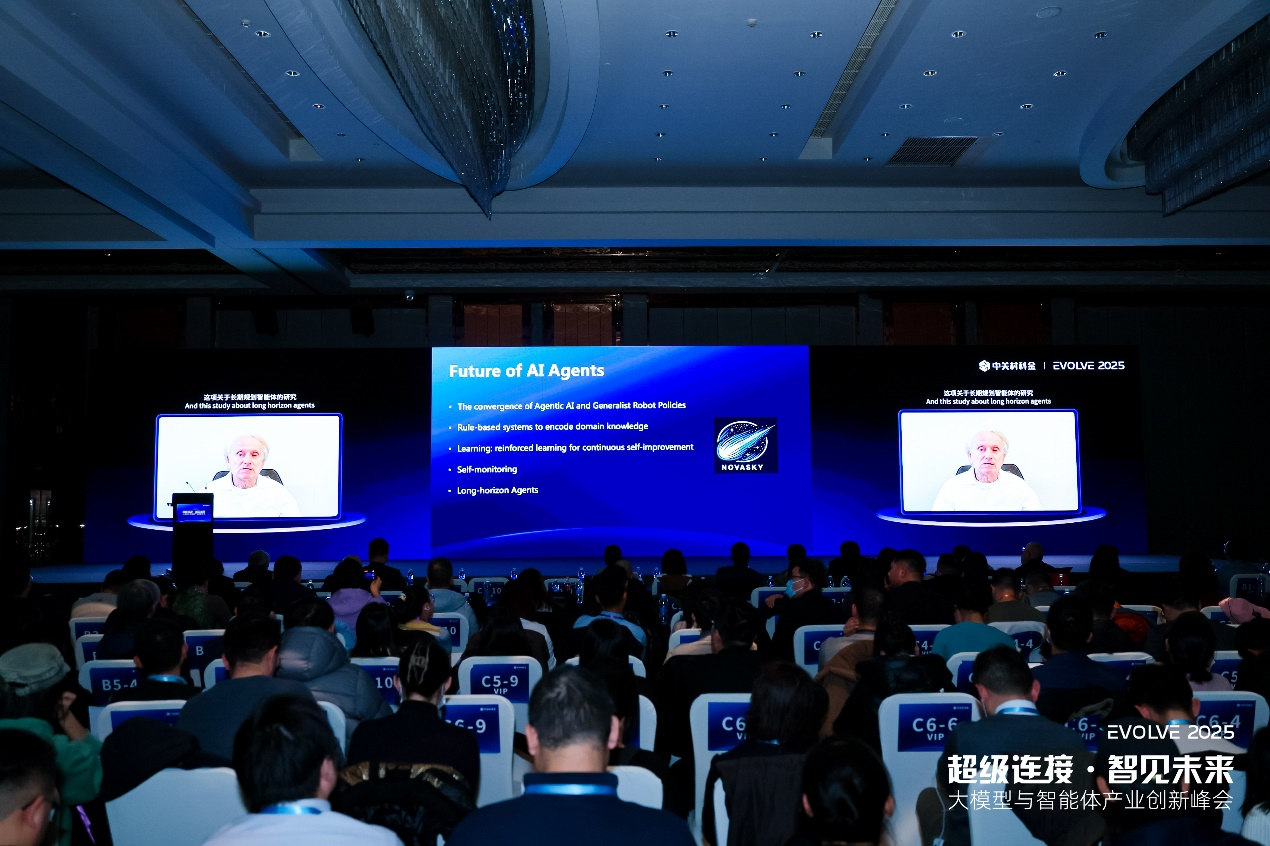
Core Insights - The "EVOLVE 2025" summit showcased the roadmap for enterprise-level AI agents and introduced a "3+2+2" product matrix to facilitate rapid development of AI agents for businesses [1] - The summit emphasized the collaboration among major cloud service providers to create a sustainable AI ecosystem through the "Super Connection" global partner program [1] Group 1: AI Development Trends - Piero Scaruffi highlighted a clear trend of technological integration in generative AI by 2025, with innovations like diffusion Transformers and multi-modal capabilities becoming standard [3] - The emergence of new technologies such as thinking chains and expert mixtures is reshaping the landscape of AI applications [3] Group 2: Evolution of AI Agents - The distinction between traditional AI products and advanced AI agents was made, with the latter being likened to autonomous driving, capable of executing complex workflows independently [4] - The operational mechanism of these AI agents is summarized as a cycle of perception, decision-making, action, and learning, allowing them to adapt to various environmental changes [4] Group 3: Multi-Agent Systems - The transition from applications to multi-agent systems introduces challenges in orchestration, necessitating a new technology stack that includes hardware, cloud services, and orchestration layers [5] - The concept of "context engineering" is emphasized, requiring AI agents to understand organizational structures and goals beyond executing single tasks [5] Group 4: Industry Applications - Various sectors are witnessing innovative applications of AI, particularly in customer support, where intelligent systems can understand context and emotions, enhancing user experience [6] - Companies like Johnson Controls have developed integrated AI systems that significantly improve efficiency in maintenance and troubleshooting [6] Group 5: Trust in AI - The "Waymo effect" illustrates the growing trust in AI as autonomous vehicles become more prevalent, laying a foundation for broader AI agent applications [7] - Scaruffi envisions a future where multiple AI agents collaborate dynamically, akin to human social interactions, to achieve common goals [7]

谭建荣院士:智能体是AI最终载体,知识工程乃落地核心路径
Jin Rong Jie· 2025-12-10 08:41
Core Insights - The rapid development of artificial intelligence technology is driving the integration of large models and intelligent agents, becoming a core driver of industrial innovation [1] - The "Super Link · Smart Future" EVOLVE 2025 summit highlighted the collaboration between leading companies in the industry, including Huawei Cloud, Alibaba Cloud, and Baidu Smart Cloud, to launch the "Super Connection" global ecosystem partnership plan [1] Group 1: Key Technologies and Trends - Intelligent agents serve as the carriers of artificial intelligence, which is fundamentally composed of data, algorithms, and computing power [3] - The emergence of generative AI, exemplified by OpenAI's ChatGPT and China's DeepSeek, marks a significant advancement in the field, with generative AI surpassing ordinary human writing capabilities [3] - The relationship between data and models is crucial, where data is seen as unintegrated "loose sand," and the extraction of relationships and patterns forms knowledge, while models represent quantitative knowledge [3] Group 2: Development Roadmap and Applications - The "3+2+2" intelligent agent product matrix was unveiled, which includes various platforms aimed at empowering enterprises to develop and utilize intelligent agents effectively [5] - The Dazhu Large Model Platform 5.0 integrates over 300 enterprise-level intelligent agents across six industries, achieving a 95% success rate in deployment [5] - The products have already served over 2,000 leading clients across more than 180 countries, significantly reducing innovation trial costs in finance by 60% and improving conversion rates in automotive marketing by 55% [5]

海光CPU创始人唐志敏:软件才是国产芯片公司的「命根子」丨GAIR 2025
雷峰网· 2025-12-10 07:21
Core Viewpoint - The article discusses the challenges and opportunities in the domestic computing power ecosystem, emphasizing the importance of software over hardware in the development of domestic chips [2][3]. Group 1: Challenges in Domestic Computing Power - The domestic computing power sector faces a collective issue of strong hardware but weak software, with a significant focus on the confusion surrounding underlying software interfaces and instruction systems [2]. - The high hidden costs associated with compatibility in the domestic chip industry are highlighted, indicating that the future of computing power will depend on software that can effectively utilize the hardware [2][6]. - The lack of software thinking among industry talent is identified as a barrier to progress, with a call for a unified approach to software interfaces to reduce societal resource waste [6][21]. Group 2: Importance of Software Development - The development of software is deemed more complex and costly than hardware, as it is often fragmented across various companies, leading to increased development costs and time [6][24]. - The article stresses that while hardware can have different architectures, the software interface should remain consistent to facilitate reuse across the industry [6][9]. - The need for a unified instruction system is emphasized as a critical factor for the success of domestic chips, with a suggestion that this could be achieved through either industry alliances or a natural convergence of commercial technologies [7][8]. Group 3: Talent Development and Education - The current education system is criticized for producing talent that lacks the necessary skills in both hardware and software, with a call for project-based learning to better prepare students for industry needs [21][23]. - The division between electronic engineering and computer science in educational institutions is seen as a barrier to developing a comprehensive understanding of both hardware and software [21]. - The article advocates for a more integrated approach to education that combines both fields to foster innovation and address the challenges in the domestic chip industry [21][24]. Group 4: Future Opportunities - The potential for RISC-V architecture to serve as a platform for innovation is discussed, with an emphasis on the need for software solutions to unlock its capabilities in high-end applications like data centers [10][11]. - The article suggests that the international landscape may drive the adoption of RISC-V, as companies seek to leverage its open architecture to enhance competitiveness [13][19]. - The future of GPU companies is linked to the convergence of large models, indicating that successful integration with leading models could present significant opportunities [27].

DeepSeek估值破万亿!跻身全球独角兽六强,中国第二
Sou Hu Cai Jing· 2025-12-10 05:12
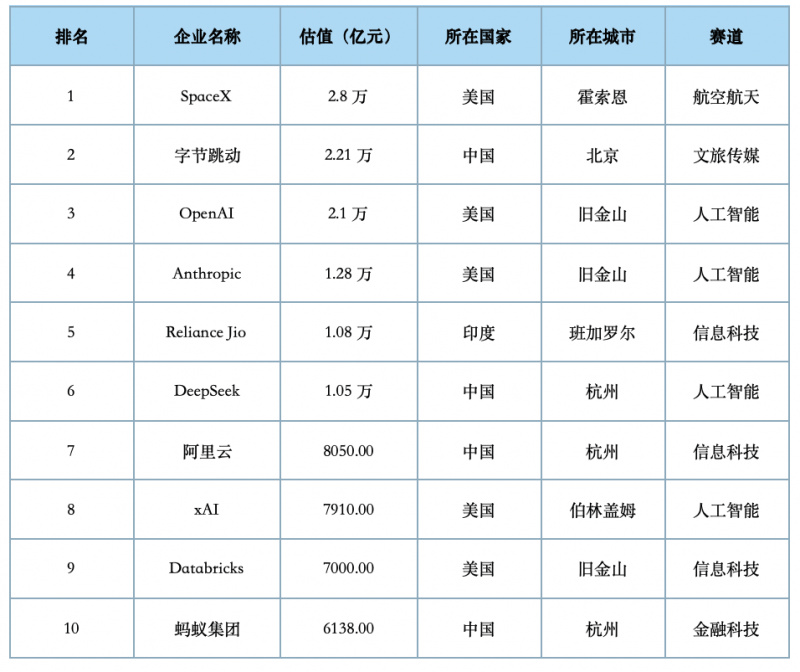
Core Insights - DeepSeek, a Chinese AI company founded in July 2023, has rapidly ascended to become the sixth largest unicorn globally, with a valuation of 1.05 trillion yuan, second only to ByteDance in China [1][2]. Company Performance - DeepSeek's explosive growth began in early 2025, with its app reaching 180 million monthly active users within a month of launch, and further increasing to 194 million by March [3]. - However, by May 2025, the monthly active users dropped to 169 million, and by September, it was surpassed by ByteDance's Doubao, which had 172 million users [3]. - The company released its DeepSeek-V3.2 model on December 1, 2025, achieving reasoning capabilities comparable to GPT-5 and close to Google's Gemini-3.0-Pro [3]. Competitive Landscape - The AI sector is witnessing intense competition, with major players like ByteDance and Alibaba investing heavily in AI infrastructure, with ByteDance spending 80 billion yuan in 2024 and Alibaba committing 380 billion yuan over three years [3]. - DeepSeek has adopted an open-source strategy, offering competitive API pricing, with input costs for DeepSeek-V3 as low as 0.5 yuan per million tokens, significantly cheaper than GPT-4 Turbo [6]. Technological Developments - The generative AI landscape is evolving with three main technological directions: text generation, image generation, and video generation [4][5]. - Major international players, including Google, are making significant advancements in generative AI, with Google launching multimodal models that enhance image and video quality [6]. Industry Transformation - AI is reshaping various industries, enhancing productivity in programming, transforming artistic creation, and revolutionizing the film industry [7]. - The emergence of new job roles such as AI trainers and prompt engineers reflects the changing job landscape due to AI integration [7]. Infrastructure and Energy - The competition in AI is increasingly tied to computational power and energy resources, with a shift from chip supply issues to energy shortages [8]. - China, possessing the largest power infrastructure and rapidly growing renewable energy capacity, is positioned to leverage its energy advantages for AI development [8]. Conclusion - DeepSeek's rise as a global AI unicorn highlights China's potential in the AI sector, driven by a unique approach to technology and market strategy [9]. - The global generative AI competition encompasses various dimensions, including technological breakthroughs and infrastructure development, with China developing a differentiated competitive edge [9].

中关村科金发布企业级智能体全场景产品矩阵
Sou Hu Cai Jing· 2025-12-09 21:41
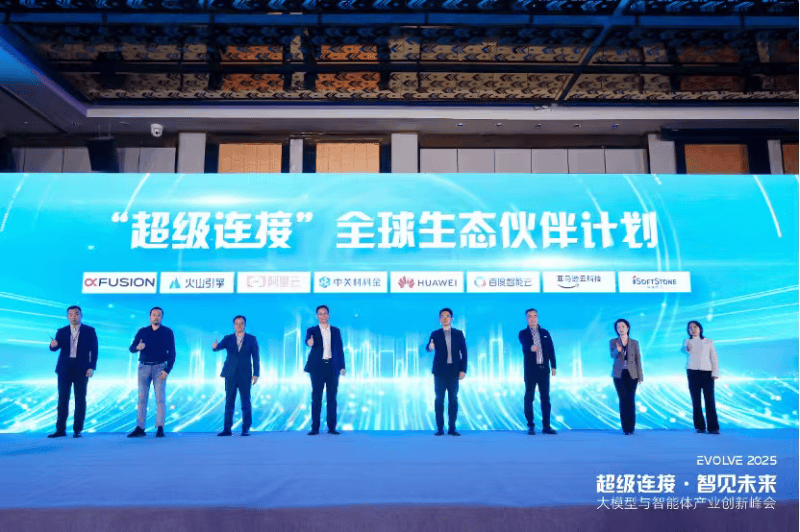
Core Insights - Zhongguancun KJ unveiled its enterprise-level intelligent agent roadmap at the 2025 Large Model and Intelligent Agent Industry Innovation Summit, introducing a "3+2+2" product matrix to facilitate rapid development and usage of intelligent agents [1][3] Group 1: Product Offerings - The "3+2+2" product matrix includes three foundational platforms: Large Model Platform, AI Capability Platform, and AI Data Platform, along with two general application platforms: Intelligent Customer Platform and Intelligent Work Application Platform, plus two industry-specific platforms for finance and industry [1][3] - The newly launched ZhiZhu Large Model Platform 5.0 serves as a comprehensive base for efficiently building enterprise-level intelligent agents, enabling faster and better AI innovation implementation [3] Group 2: Industry Applications - The upgraded intelligent agent marketplace integrates over 300 intelligent agents across six industries: finance, industry, automotive, retail, transportation, and government, allowing enterprises to quickly validate scenarios and focus on innovation rather than infrastructure [3] - The digital employee for clue analysis enhances enterprises' ability to gain insights into customer needs, achieving over a 55% increase in store visit leads in automotive client practices [3] - Intelligent writing capabilities can produce professional reports exceeding 100,000 words, leveraging internal knowledge and online information for precise sourcing and cross-validation [3] - Intelligent auditing serves as a tool for comprehensive compliance risk assessment in key scenarios, utilizing a combination of large and small models with rule engines for risk level evaluation and automated visual report generation [3] Group 3: Strategic Partnerships - Zhongguancun KJ, in collaboration with major cloud service providers including Huawei Cloud, Alibaba Cloud, Baidu Intelligent Cloud, Volcano Engine, Amazon Web Services, Super Fusion, and Softcom Power, launched the "Super Connection" global ecosystem partner program to create an open, connected, and sustainable "AI+" industry ecosystem [3]

加速企业级智能体规模化落地 多家企业共建“超级连接”产业生态
Zheng Quan Shi Bao Wang· 2025-12-09 12:46
Core Insights - The "EVOLVE2025" summit highlighted the launch of a comprehensive enterprise-level intelligent agent roadmap by Zhongguancun KJ, featuring a "3+2+2" product matrix that includes three foundational platforms and two application platforms, aimed at accelerating the large-scale implementation of intelligent agents in various industries [1][2] Group 1: Intelligent Agent Development - The development of large models is rooted in the accumulation of smaller models and data modeling, emphasizing the need for data to be transformed into knowledge through the discovery of hidden patterns [1][2] - Intelligent agents integrate core capabilities such as perception, understanding, decision-making, and control, serving as key vehicles for technology implementation [1][2] - The evolution of intelligent agents is supported by foundational algorithms like deep learning and reinforcement learning, with a focus on enhancing efficiency through collaborative deployment across cloud, edge, and endpoint [1][2] Group 2: Industry Trends and Challenges - The need for precision and lightweight models in large model deployment is critical, with techniques like model distillation helping to reduce computational requirements [2] - There are technical risks such as "hallucinations" in natural language understanding, particularly in accurately grasping Chinese semantics, which remain a long-term challenge [2] - The future direction involves transitioning large models and intelligent agents from general-purpose to specialized applications tailored to specific industries and product scenarios [2] Group 3: AI Agent as a Central Hub - AI intelligent agents are seen as the central brain for enterprises, addressing issues like data silos and process fragmentation by connecting key elements such as people, resources, and systems [3] - Each connection made by intelligent agents generates new interaction data, which in turn iterates the model itself, leading to increased intelligence and value creation for enterprises [3] - The evolution from the internet to mobile internet and now to artificial intelligence represents an evolution of connectivity, with intelligent agents acting as super connectors within and outside organizations [2][3]
银行数字化抢蛋糕比赛,胜负已分?
Tai Mei Ti A P P· 2025-12-09 12:21
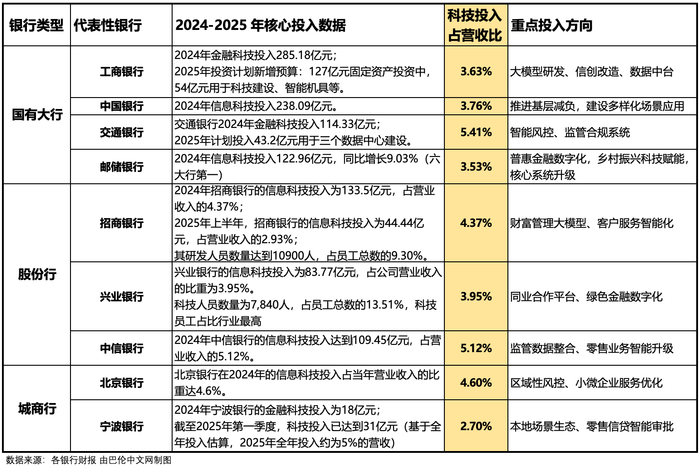
Core Insights - The digital transformation of China's banking industry is entering a "deep water zone" by 2025, characterized by market expansion, technological upgrades, and intensified competition [1] - The IT investment in the banking sector is projected to reach 169.315 billion yuan in 2024, with a growth rate of 3.6%, and is expected to exceed 266.2 billion yuan by 2028 [1] - The digital bidding landscape shows that successful digitalization in banking relies not only on investment scale but also on precise alignment with the bank's positioning and strategic partnerships [1] Investment Trends - In 2024, the six major state-owned commercial banks are expected to invest a total of 125.459 billion yuan in fintech, accounting for 52% of the total banking sector investment [2] - By 2025, the banking sector's fintech investment is anticipated to reach 333.85 billion yuan, representing a 38% increase from 2024 [2] Bank Types and Investment Focus - State-owned banks are leading in digital investment, with major banks like ICBC planning to invest 285.18 billion yuan in fintech in 2024, while smaller banks are focusing on localized services and specific pain points [3][5] - The investment focus for state-owned banks includes large model development, data platforms, and intelligent risk control systems [3] - Regional banks are prioritizing local economic services and optimizing processes for small and medium enterprises, with some banks investing over 6% of their revenue in technology [5] Digital Bidding Characteristics - The digital bidding projects are categorized into four main tracks: risk management, compliance control, data services, and technology platforms, each with varying technical requirements and budget allocations [7][8] - Risk management projects are rated the highest in complexity, requiring a deep understanding of financial logic and AI technology [7] - Compliance control projects are driven by regulatory requirements and have a high degree of standardization, making them easier to replicate [7] Competitive Landscape - A dual-competitive landscape is emerging between bank technology subsidiaries, which excel in understanding financial regulations, and internet technology companies, which leverage general technology capabilities [10][11] - The collaboration between bank technology subsidiaries and internet technology companies is becoming a mainstream approach, combining business understanding with technological innovation [17] Future Outlook - The investment landscape is expected to become more differentiated, with large banks focusing on systematic construction while smaller banks target essential local needs [18] - The emphasis will shift towards practical technologies that address compliance issues and enhance operational efficiency, with a growing trend of collaboration between different types of technology providers [18]



在拉斯维加斯,我看到了体育的未来
Sou Hu Cai Jing· 2025-12-09 11:33
Core Insights - The article highlights the transformative impact of Amazon Web Services (AWS) on the sports industry, particularly through its collaboration with the NBA, which aims to revolutionize how sports data is understood and utilized [6][21]. Group 1: Technological Innovations in Sports - AWS is leveraging AI and cloud technology to enhance sports analytics, moving from traditional statistics to a deeper understanding of game dynamics [5][6]. - The NBA's partnership with AWS will introduce new advanced metrics for the 2025-26 season, including Defensive Box Score, Shot Difficulty Index, and Gravity metrics, which provide a more nuanced view of player contributions [7][9]. - The use of computer vision and machine learning allows for real-time analysis of player movements, capturing data at a frequency of 60 times per second [6][10]. Group 2: Enhanced Fan Experience - The Sports Forum features immersive experiences like the NBA VR viewing area, which allows fans to experience games from unique perspectives while accessing advanced data analytics [5][10]. - AWS's Nova model is transforming content production in sports, enabling automated reporting and multi-language translations to enhance fan engagement [15][16]. - AI-driven features like expected goals (xGoals) and skill role cards are designed to make the viewing experience more informative and engaging for fans [17][20]. Group 3: Broader Implications for the Sports Industry - The integration of AI in sports is seen as a testing ground for advanced technologies, with potential applications extending beyond sports to fields like healthcare and automotive design [21][22]. - The article suggests that the rigorous demands of sports analytics can lead to robust technological advancements that may benefit various industries in the future [21][23].