南京银行

Search documents
盘点2025年银行首席合规官:多家股份行、城农商行等敲定人选
Xin Lang Cai Jing· 2026-01-12 03:25
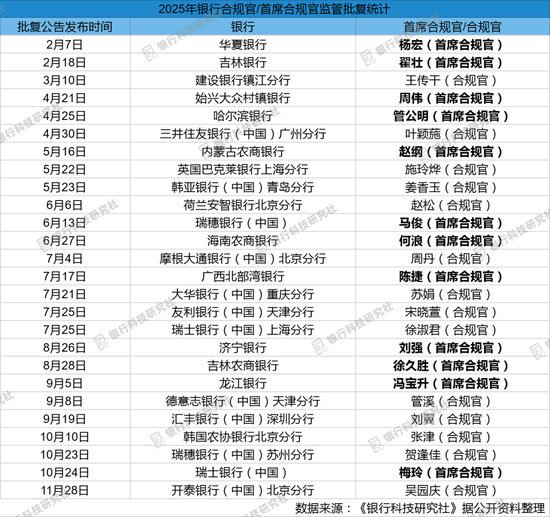
Core Insights - The financial industry is facing numerous compliance issues, as evidenced by the fines imposed by regulatory bodies, highlighting the shortcomings in compliance management [1][13] - In response to regulatory requirements and internal needs, financial institutions are accelerating the appointment of Chief Compliance Officers (CCOs) to address compliance challenges [1][13] - In 2025, multiple banks had their CCOs approved by regulators, with a total of 12 banks reported to have appointed CCOs, including national joint-stock banks, city commercial banks, foreign banks, rural commercial banks, and village banks [2][14] Group 1: Regulatory Approvals - A total of 12 banks received regulatory approval for their CCOs in 2025, which includes a diverse range of banking institutions [2][14] - The approval dates for CCOs span from February to November 2025, with notable appointments including Yang Hong at Huaxia Bank and Zhai Zhuang at Jilin Bank [3][15] - Some banks had their CCOs approved simultaneously with other executive appointments during their establishment, indicating a strategic approach to compliance management [4][16] Group 2: Appointment Trends - The trend of appointing CCOs is not limited to the 12 banks; many other banks have also recently hired or are in the process of hiring CCOs [6][18] - For instance, Zhejiang Shaoxing Ruifeng Rural Commercial Bank appointed Chen Gangliang as CCO, reflecting a broader commitment to compliance management [19] - In December 2025, several banks, including Jiangyin Rural Commercial Bank and Ping An Bank, announced board approvals for CCO appointments, indicating ongoing efforts to enhance compliance oversight [20] Group 3: CCO Qualifications and Roles - CCOs typically require substantial work experience to effectively fulfill their roles, which is crucial for managing compliance risks [6][18] - The CCO position can be either a dedicated role or held concurrently with other executive positions, such as bank president or vice president [21][22] - The "Compliance Management Measures" implemented on March 1, 2025, stipulate that financial institutions must establish a CCO at their headquarters, who reports directly to the board [11][22]

逾期已“消除”,个人信用迎“新生”
Xin Lang Cai Jing· 2026-01-11 21:22
Core Viewpoint - The People's Bank of China has implemented a one-time credit repair policy that allows individuals with overdue credit records to restore their credit status, benefiting many citizens who meet specific criteria [1][2][4]. Group 1: Policy Implementation - The one-time credit repair policy started on January 1, 2026, and has led to a 22% increase in daily credit report inquiries in Jiangsu Province compared to December 2025 [1]. - The policy is designed to help individuals who have overdue records from January 1, 2020, to December 31, 2025, provided they repay their overdue debts by March 31, 2026 [2][4]. Group 2: Beneficiaries and Impact - Individuals like Mr. Li and Mr. Fang have successfully benefited from the policy, with Mr. Fang receiving a loan approval of 200,000 yuan to expand his agricultural business [2]. - The policy aims to stimulate consumer spending and support small businesses by improving access to credit, thereby revitalizing the micro-market resources [4]. Group 3: Financial Institutions' Response - Financial institutions, including major banks, have enhanced their services to facilitate the policy's implementation, ensuring eligible individuals can easily check their credit status and access benefits [3]. - Banks have optimized their mobile banking apps and established customer support systems to assist clients in understanding and utilizing the new policy [3]. Group 4: Future Directions - The People's Bank of China plans to further advance credit repair and credit services, aiming to inject sustained momentum into consumer spending and the development of the real economy in Jiangsu [5].
银行行业2025年度业绩前瞻:利息收入有望回正
ZHESHANG SECURITIES· 2026-01-11 15:27
Investment Rating - The industry investment rating is "Positive" [3][17] Core Insights - Interest income is expected to return to positive growth, supported by an improvement in net interest margins in Q4 2025, which will offset other non-interest impacts [1] - For the full year 2025, listed banks are projected to see a net profit growth rate of 1.8% and revenue growth of 1.2%, both showing a quarter-on-quarter improvement [1] - Quality city commercial banks are expected to lead the sector, with revenue and profit growth rates projected between 5-10% for 2025 [1] Summary by Relevant Sections Industry Outlook - The overall outlook for 2025 indicates an improvement in net profit and revenue growth for listed banks, primarily due to the alleviation of margin pressures and increased provisions [1] - The asset scale of listed banks is expected to grow by 9.0% year-on-year, reflecting a slowdown compared to previous quarters due to weak credit demand [1] Key Drivers - **Margin Stabilization**: Q4 2025 is expected to see a 2 basis point improvement in net interest margin to 1.32%, driven by a larger decline in funding costs compared to asset yields [1] - **Non-Interest Income**: Non-interest income is projected to grow by 3.2% year-on-year, a decrease from earlier quarters, with a slight positive trend in commission income [1] - **Credit Quality**: The credit cost ratio is expected to decline to 0.67%, indicating a stable improvement in non-performing loans, particularly in retail lending [1] Investment Recommendations - The report suggests that banks with new growth drivers are likely to see significant value recovery, recommending major state-owned banks and select city commercial banks as key investment targets [1][2]



过渡期收官在即,银行业首席合规官密集就位
Mei Ri Jing Ji Xin Wen· 2026-01-11 12:29
Core Insights - The banking industry is undergoing a restructuring wave in risk and compliance systems due to tightening regulatory rules and a complex risk environment [1][2] - A surge in appointments for Chief Risk Officers (CROs) and Chief Compliance Officers (CCOs) is expected by the end of 2025 and early 2026, with over 20 banks and branches already approved for relevant positions since the beginning of 2025 [1][2] Regulatory Changes - The "Measures for Compliance Management of Financial Institutions" requires financial institutions to establish a CCO at their headquarters, who will be classified as a senior management position [2] - The transitional period for compliance with this regulation is set to expire one year after its implementation on March 1, 2025 [2] Appointment Trends - A variety of banks, including Ping An Bank, Industrial Bank, and Minsheng Bank, have announced the appointment of CCOs as the transitional deadline approaches [2] - The trend shows a mix of large, medium, and small institutions moving forward with these appointments [2] Governance Models - Two governance models are emerging: "one person holding multiple roles" and "independent separation" for CCOs and CROs [3] - The "one person holding multiple roles" model is prevalent among smaller banks, allowing for unified decision-making in risk and compliance management [3] - The "independent separation" model is more common in larger banks, emphasizing specialized development and independent oversight in risk management [3][4] Talent Acquisition Challenges - The establishment of CCO and CRO positions presents new challenges for talent acquisition, with a preference for candidates possessing a combination of frontline business experience, cross-regional vision, and professional qualifications [6] - Some banks are adopting market-based recruitment strategies for CCOs, breaking traditional selection models [6] Compensation Trends - The compensation for CCOs is rising, with annual total income expected to be no less than the average for senior management positions [6] - Reports indicate that the reference monthly salary for these positions can reach between 100,000 to 130,000 yuan [6] Compliance Management Evolution - Effective compliance management is evolving from a "cost center" to a "value guardian," playing a crucial role in mitigating credit, market, and liquidity risks [7] - The compliance governance system is expected to become more institutionalized and refined, with clearer responsibilities and a growing demand for composite compliance talent [7][8] Core Competencies for CCOs - The core competencies for CCOs are identified as business insight, regulatory interpretation, execution capability, and cross-departmental collaboration [8] - These competencies are essential for CCOs to effectively support governance and create compliance value [8]




鏖战零售AUM 开年银行资产提升活动密集上线
Mei Ri Jing Ji Xin Wen· 2026-01-09 15:19
Group 1 - Major banks, including ICBC and ABC, have launched asset enhancement activities to increase retail AUM (Assets Under Management) and customer loyalty [1][4] - The activities involve rewards for customers who increase their average financial assets over a specified period, with minimum thresholds set for participation [1][2] - Various banks have different criteria for what constitutes financial assets, including deposits, wealth management, funds, insurance, and government bonds [1][3] Group 2 - The asset enhancement activities are seen as effective short-term tactics to stimulate AUM growth, particularly in attracting dormant customers and short-term funds [4] - Retail banking has faced challenges due to declining interest rates and regulatory changes affecting fee income, prompting banks to focus on increasing AUM to boost revenue [5] - As of Q3 2023, several A-share banks reported significant growth in retail AUM, with Postal Savings Bank reaching 17.89 trillion yuan, an increase of over 7% year-on-year [5]
过渡期收官在即,银行业首席合规官密集就位, 如何推进从“被动遵循”到“主动治理”?
Mei Ri Jing Ji Xin Wen· 2026-01-09 10:52
Core Insights - The banking industry is undergoing a restructuring wave in risk and compliance systems due to tightening regulatory rules and a complex risk environment [1] - A surge in appointments of Chief Risk Officers (CROs) and Chief Compliance Officers (CCOs) is expected by the end of 2025 and early 2026, with over 20 banks and branches already approved for related positions since early 2025 [1] - The implementation of the "Compliance Management Measures for Financial Institutions" mandates the establishment of CCOs at the headquarters level, who will be senior management personnel directly reporting to the board [1] Group 1: Appointment Trends - Nearly 10 banks have intensified their hiring for compliance roles in the past month, with institutions like Ping An Bank and Minsheng Bank announcing relevant appointments [1] - The first approved CCO in the banking sector post-implementation of the new measures is Yang Hong from Huaxia Bank, while Zhou Wei from Shixing Dazhong Village Bank is the first CCO for a rural bank [2] Group 2: Governance Models - Two governance models are emerging: "one person holding multiple roles" and "independent separation" for CCOs and CROs [2][3] - The "one person holding multiple roles" model is prevalent among smaller banks, allowing for unified decision-making in risk and compliance management [3] - The "independent separation" model is more suitable for larger banks, enhancing professional checks and balances within risk management and compliance [3] Group 3: Talent and Recruitment - The establishment of CCO and CRO positions presents new challenges in talent acquisition, with a preference for candidates possessing a combination of frontline business experience, cross-regional vision, and professional qualifications [4] - Some banks are adopting market-based recruitment strategies for CCOs, requiring candidates to have over eight years of experience in finance or legal compliance [5] - Salary levels for CCO positions are rising, with some banks offering monthly salaries between 100,000 to 130,000 yuan [5] Group 4: Compliance Management Evolution - The number and amount of penalties in the banking sector remain high, with 6,521 penalties totaling 2.641 billion yuan in 2025, a 44.95% increase from 2024 [5] - Effective compliance management is evolving from a "cost center" to a "value protection center," crucial for mitigating credit, market, and liquidity risks [5] - Future compliance governance is expected to become more institutionalized and refined, with a focus on clear responsibilities and the need for composite compliance talents [6] Group 5: Role of Chief Compliance Officers - The role of CCOs is pivotal in the compliance system, requiring capabilities in business insight, regulatory interpretation, execution, and cross-departmental collaboration [6] - As the transition period for CCO appointments concludes, the emphasis will be on ensuring these compliance leaders effectively facilitate a shift from passive regulatory adherence to proactive compliance governance [6]
过渡期收官在即,银行业首席合规官密集就位,如何推进从“被动遵循”到“主动治理”?
Mei Ri Jing Ji Xin Wen· 2026-01-09 10:51
Core Viewpoint - The tightening of regulatory rules and the complexity of the risk environment are driving a restructuring wave in the banking industry's risk and compliance systems [1][7]. Group 1: Appointment Trends - A surge in appointments for Chief Risk Officers (CROs) and Chief Compliance Officers (CCOs) is expected from late 2025 to early 2026, with nearly 10 banks increasing related personnel configurations in the past month [1][7]. - Since the beginning of 2025, over 20 banks and branches have had relevant qualifications approved by regulators [1][7]. - The trend is influenced by the impending expiration of a one-year transition period set by the "Financial Institutions Compliance Management Measures," which requires financial institutions to establish a CCO at their headquarters [1][7]. Group 2: Governance Models - The banking sector exhibits two governance models for CCOs and CROs: "one person holding both positions" and "independent separation" [2][9]. - The "one person holding both positions" model is prevalent, particularly in smaller banks, allowing for unified decision-making in risk and compliance management [2][9]. - Conversely, the "independent separation" model is more common in larger banks, enhancing professional checks and balances within the risk control system [3][10]. Group 3: Talent Acquisition and Challenges - The demand for composite talents is rising, with banks favoring candidates with extensive experience in finance or legal compliance [11][12]. - Some banks are adopting market-based recruitment methods for CCOs, breaking traditional selection models [11]. - Salary levels for CCO positions are increasing, with some banks offering monthly salaries between 100,000 to 130,000 yuan [11]. Group 4: Compliance Management Evolution - Effective compliance management is evolving from a "cost center" to a "value guardian," playing a crucial role in mitigating credit, market, and liquidity risks [12][13]. - The future of compliance governance in the banking industry is expected to become more institutionalized and refined, with clearer responsibilities and a focus on composite compliance talents [12][13]. - The core competencies for CCOs are expected to include deep business insight, precise regulatory interpretation, efficient execution, and strong cross-departmental collaboration [13].

A股早盘冲高回落,沪指4100点得而复失
Sou Hu Cai Jing· 2026-01-09 04:10
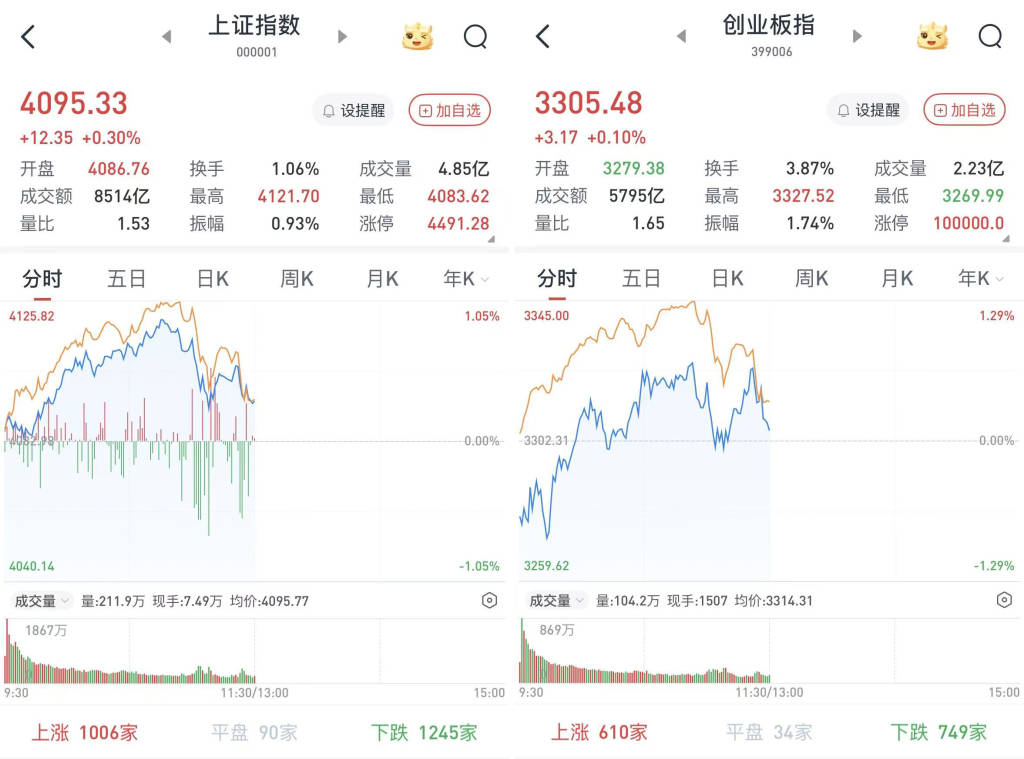
Market Overview - The three major A-share indices opened mixed on January 9, with the Shanghai Composite Index successfully breaking through the 4100-point mark before experiencing a pullback due to cooling in the morning session [2] - By midday, the Shanghai Composite Index rose by 0.3% to 4095.33 points, the Sci-Tech Innovation 50 Index increased by 0.05% to 1455.97 points, the Shenzhen Component Index climbed by 0.57% to 14038.46 points, and the ChiNext Index gained 0.1% to 3305.48 points [3] Trading Activity - The total trading volume in the Shanghai and Shenzhen markets reached 20.614 trillion yuan, with 2343 stocks rising and 2928 stocks falling, while 192 stocks remained flat [4] - Notably, media stocks surged, with companies like Yidian Tianxia and Tianlong Group hitting the daily limit or rising over 10% [4] - The defense and military sector continued to strengthen, with nearly 10 stocks, including Huayin Technology and Guokai Military Industry, also hitting the daily limit or rising over 10% [4] Sector Performance - The financial sector faced declines, particularly in banking stocks, with institutions like Hangzhou Bank and Ningbo Bank dropping over 1% [4] - Non-bank financial stocks also saw significant declines, with major players like Ping An Insurance and Zhongyin Securities among those with the largest drops [5] Future Outlook - According to Huang Yanming, Director of the Research Institute at Dongfang Securities, the A-share market is expected to exhibit a "sideways fluctuation with slight strengthening" in the first half of 2026, with core opportunities identified in mid-cap blue chips, particularly in the cyclical (chemicals, non-ferrous metals) and manufacturing (new energy, robotics) sectors [5] - Long-term, technology remains a key focus, although a short-term adjustment is anticipated [5]
年终最新净值仅剩六毛,交银施罗德明星基金经理韩威俊遭遇黑色时刻
Sou Hu Cai Jing· 2026-01-09 04:04
Core Insights - The 2025 public fund rankings concluded with a notable performance from the champion fund, while several funds, including those managed by prominent fund managers, reported negative returns, highlighting the challenges faced in the market [2] Group 1: Fund Performance - Han Weijun, a well-known fund manager at Jiaoyin Fund, managed six funds that all recorded negative returns in 2025, with the worst performer being the Jiaoyin Domestic Demand Growth One-Year Holding Mixed Fund, which ranked in the bottom fifty out of approximately 4,400 funds [2] - The net value of the poorly performing fund is approximately 0.6127 yuan, reflecting a floating loss of about 40% [2] - The highest annual gain among the top ten holdings in Han Weijun's fund was only about 41%, with the best-performing stock being Nongfu Spring, which was held since the second quarter of the previous year [3] Group 2: Stock Selection and Strategy - The second-best performing stock in the fund, Yanjinpuzi, had an annual gain of only about 11%, and no other major holdings exceeded a 10% gain for the year [3] - The largest decline among the fund's holdings was seen in the pet economy stock, Guibao Pet, which fell by 16.42% over the year, despite being held for four consecutive quarters [3] - Han Weijun indicated a shift in strategy for the fourth quarter of 2025, focusing on traditional consumer stocks with high dividend rates and low valuations, while also considering increasing exposure to Hong Kong consumer stocks [3][4] Group 3: Other Fund Managers - Among the "Old Three Swordsmen" of Jiaoyin Fund, He Shuai achieved the best performance with a fund returning approximately 43%, ranking around 1,300 among peers, while other funds he managed saw growth between 20% and 30% [5] - The "New Three Swordsmen" faced challenges, with Yang Hao's sole fund achieving a net value growth rate of only 5.92%, ranking in the bottom third of 2,262 funds [6] - Wang Chong, managing two funds, had both rank outside the top 4,000, with one fund showing a mere 2.79% growth rate [6] Group 4: Manager Changes - Liu Peng, a prominent manager among the "New Three Swordsmen," left the firm in September 2023, while Tian Yilong had already departed by June 2024, leaving only Yang Jinjing with over five years of management experience [7]

多家银行推出资产提升活动,奖励达标客户
Mei Ri Jing Ji Xin Wen· 2026-01-09 00:29
Group 1 - Several banks, including Jiangsu Bank, Agricultural Bank, Construction Bank, and Nanjing Bank, have launched asset enhancement activities to encourage customers to increase their bank assets [1] - Jiangsu Bank announced that customers who increase their average monthly assets in the first three months of the year compared to the end of the previous year will receive related rewards [1] - The trend of banks initiating asset enhancement programs indicates a competitive environment in the banking sector aimed at attracting and retaining customers [1]