阿里云

Search documents
银行数字化抢蛋糕比赛,胜负已分?
Tai Mei Ti A P P· 2025-12-09 12:21
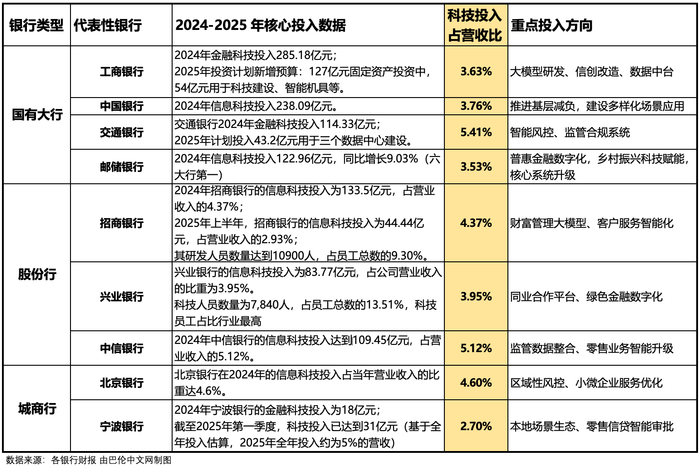
Core Insights - The digital transformation of China's banking industry is entering a "deep water zone" by 2025, characterized by market expansion, technological upgrades, and intensified competition [1] - The IT investment in the banking sector is projected to reach 169.315 billion yuan in 2024, with a growth rate of 3.6%, and is expected to exceed 266.2 billion yuan by 2028 [1] - The digital bidding landscape shows that successful digitalization in banking relies not only on investment scale but also on precise alignment with the bank's positioning and strategic partnerships [1] Investment Trends - In 2024, the six major state-owned commercial banks are expected to invest a total of 125.459 billion yuan in fintech, accounting for 52% of the total banking sector investment [2] - By 2025, the banking sector's fintech investment is anticipated to reach 333.85 billion yuan, representing a 38% increase from 2024 [2] Bank Types and Investment Focus - State-owned banks are leading in digital investment, with major banks like ICBC planning to invest 285.18 billion yuan in fintech in 2024, while smaller banks are focusing on localized services and specific pain points [3][5] - The investment focus for state-owned banks includes large model development, data platforms, and intelligent risk control systems [3] - Regional banks are prioritizing local economic services and optimizing processes for small and medium enterprises, with some banks investing over 6% of their revenue in technology [5] Digital Bidding Characteristics - The digital bidding projects are categorized into four main tracks: risk management, compliance control, data services, and technology platforms, each with varying technical requirements and budget allocations [7][8] - Risk management projects are rated the highest in complexity, requiring a deep understanding of financial logic and AI technology [7] - Compliance control projects are driven by regulatory requirements and have a high degree of standardization, making them easier to replicate [7] Competitive Landscape - A dual-competitive landscape is emerging between bank technology subsidiaries, which excel in understanding financial regulations, and internet technology companies, which leverage general technology capabilities [10][11] - The collaboration between bank technology subsidiaries and internet technology companies is becoming a mainstream approach, combining business understanding with technological innovation [17] Future Outlook - The investment landscape is expected to become more differentiated, with large banks focusing on systematic construction while smaller banks target essential local needs [18] - The emphasis will shift towards practical technologies that address compliance issues and enhance operational efficiency, with a growing trend of collaboration between different types of technology providers [18]




在拉斯维加斯,我看到了体育的未来
Sou Hu Cai Jing· 2025-12-09 11:33
Core Insights - The article highlights the transformative impact of Amazon Web Services (AWS) on the sports industry, particularly through its collaboration with the NBA, which aims to revolutionize how sports data is understood and utilized [6][21]. Group 1: Technological Innovations in Sports - AWS is leveraging AI and cloud technology to enhance sports analytics, moving from traditional statistics to a deeper understanding of game dynamics [5][6]. - The NBA's partnership with AWS will introduce new advanced metrics for the 2025-26 season, including Defensive Box Score, Shot Difficulty Index, and Gravity metrics, which provide a more nuanced view of player contributions [7][9]. - The use of computer vision and machine learning allows for real-time analysis of player movements, capturing data at a frequency of 60 times per second [6][10]. Group 2: Enhanced Fan Experience - The Sports Forum features immersive experiences like the NBA VR viewing area, which allows fans to experience games from unique perspectives while accessing advanced data analytics [5][10]. - AWS's Nova model is transforming content production in sports, enabling automated reporting and multi-language translations to enhance fan engagement [15][16]. - AI-driven features like expected goals (xGoals) and skill role cards are designed to make the viewing experience more informative and engaging for fans [17][20]. Group 3: Broader Implications for the Sports Industry - The integration of AI in sports is seen as a testing ground for advanced technologies, with potential applications extending beyond sports to fields like healthcare and automotive design [21][22]. - The article suggests that the rigorous demands of sports analytics can lead to robust technological advancements that may benefit various industries in the future [21][23].


一则消息,全线爆发!
Ge Long Hui A P P· 2025-12-09 10:54
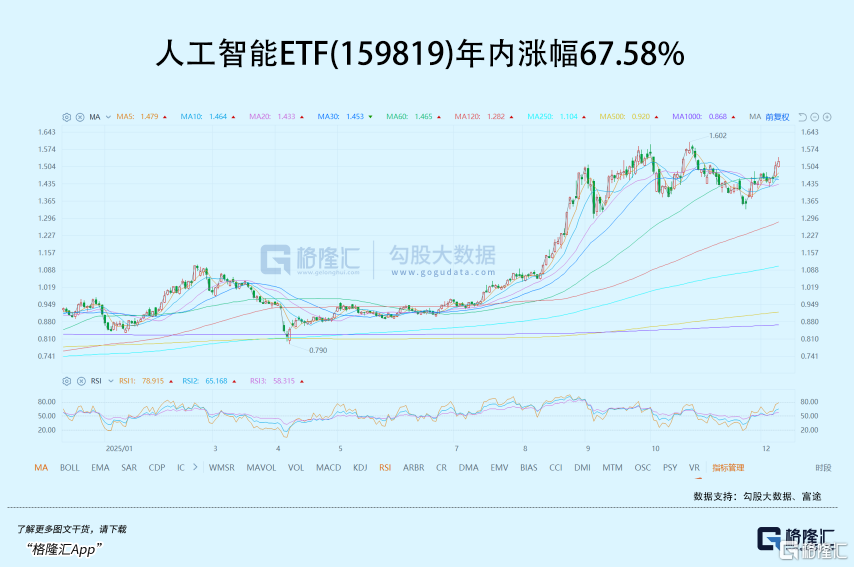
Core Insights - The reintroduction of NVIDIA's H200 to China is seen as a strategic move that could significantly benefit the AI industry in the country, addressing critical supply chain bottlenecks and enhancing computational capabilities [4][28] - The demand for AI computing power in China is expected to surge, with the number of generative AI models nearly doubling from 197 to 439 by mid-2025, indicating a substantial need for high-end computing resources [5][28] Beneficial Sectors - The core sectors that will benefit from the H200's approval include: 1. CPO (Coherent Photonic Optics) sector, which is projected to see a market size exceeding $2.2 billion by 2025, with Chinese companies holding over 30% market share [11][12] 2. AI cloud computing industry, where major players like Alibaba Cloud and Tencent Cloud are expected to increase their AI server clusters significantly, with NVIDIA's solutions regaining a market share of over 60% [14][15] Performance Metrics - CPO companies have shown impressive quarterly performance, with revenue growth rates of 56.83% for Zhongji Xuchuang and 152.53% for Xinyi Sheng, indicating a robust demand for AI computing infrastructure [16] - In the cloud computing sector, Alibaba Cloud reported a 34% year-on-year revenue increase, highlighting the growing importance of AI as a core growth driver [17] Investment Trends - Institutional investments in the AI computing and cloud sectors have surged, with active equity funds holding approximately 40% of their portfolios in computer, communication, and electronic sectors, marking a five-year peak [19][20] - The AI computing sector has become a focal point for institutional investors, with significant increases in holdings for leading CPO companies and AI server manufacturers [21][22] ETF Growth - The AI-focused ETF (159819) has seen substantial inflows, exceeding 6.8 billion yuan in 2025, making it the largest in its category, while the cloud computing ETF (516510) has also attracted over 300 million yuan [23][26][27] Conclusion - The approval of NVIDIA's H200 for the Chinese market is not merely a technical concession but a strategic interaction that could reshape the global AI industry landscape, providing immediate relief and long-term innovation incentives for China [28][29]


七巨头集结构建“超级连接”生态 企业级智能体落地再提速
Xin Jing Bao· 2025-12-09 09:57
Core Insights - The "EVOLVE 2025" summit was held in Beijing, focusing on creating an open, connected, and sustainable "AI+" industrial ecosystem through the "Super Connection" global partnership plan [1] - Zhongguancun Science and Technology Investment announced a roadmap for enterprise-level intelligent agents, introducing a "3+2+2" product matrix that includes various platforms aimed at core business scenarios [1] Group 1 - The summit featured collaboration among leading companies such as Huawei Cloud, Alibaba Cloud, Baidu Intelligent Cloud, and others to enhance the AI industry ecosystem [1] - The "3+2+2" product matrix includes the Dazhu model platform 5.0, Dazhu intelligent customer platform 5.0, Dazhu intelligent work application platform, Dazhu financial intelligent agent platform, and Dazhu industrial intelligent agent platform [1] - The products and solutions are designed to cover essential business scenarios including office work and research production [1]
DeepSeek估值破万亿,成为了中国第二大、全球第六大独角兽企业
Sou Hu Cai Jing· 2025-12-09 08:26
Core Insights - DeepSeek has achieved a valuation of 1.05 trillion yuan, making it the second-largest unicorn in China and the sixth-largest globally, following ByteDance [2][5][4] - The company has gained significant traction in the AI industry, leveraging a combination of open-source technology and high cost-effectiveness to drive rapid growth [2][26] - Despite initial success, DeepSeek faced competition that temporarily affected its monthly active users, but recent data indicates a recovery in its market position [10][18] Company Valuation and Performance - DeepSeek's valuation was previously estimated to reach as high as $150 billion, reflecting its potential for future growth despite currently low revenue [2][8] - The company has seen fluctuations in its monthly active users, peaking at 194 million in March before declining to 145 million by September, indicating a competitive landscape [11][13] - The recent release of DeepSeek-V3.2 has improved its inference capabilities to levels comparable to GPT-5, enhancing its competitive edge [18][17] Leadership and Innovation - The success of DeepSeek is attributed to its founder, Liang Wenfeng, whose "geek" attributes foster a culture of innovation and technology-first approach within the company [2][20] - Liang holds approximately 84% of the company's shares, positioning him as a key figure in DeepSeek's strategic direction and growth [20][9] - The company emphasizes open-source development and cost-effective pricing strategies, which have resonated well within the industry [26][25] Industry Context - The AI sector is experiencing intense competition, with major players like ByteDance and Alibaba significantly increasing their investments in AI infrastructure [14][15] - DeepSeek's innovative pricing model has disrupted the market, prompting competitors to reassess their strategies [26][18] - The global AI landscape is evolving rapidly, with substantial investments from both domestic and international firms, indicating a robust growth trajectory for the industry [14][15]


人工智能算力基础设施赋能研究报告
中国信通院· 2025-12-09 08:01
Report Industry Investment Rating No relevant content provided. Core Views of the Report - The report focuses on the empowerment of intelligent computing centers, elaborating on the latest development trends around demand scenarios, key capabilities, and implementation ecosystems to further release the empowerment effect of intelligent computing centers and promote the deep integration of AI and the real economy [5]. - Facing the "14th Five-Year Plan", the artificial intelligence computing infrastructure has three important development trends: clear demand scenarios for optimal resource allocation, focused key capabilities for improved service levels, and aggregated implementation ecosystems for accelerated value release [24]. - In the future, the demand scenarios of artificial intelligence computing infrastructure will become more diverse and complex, key capabilities will be more intensive and soft, and the implementation ecosystem will be more aggregated and collaborative [75]. Summary by Directory 1. Evolution Trend of Artificial Intelligence Computing Infrastructure - **Technological Innovation: Upgrading of Tri - in - One Intelligent Computing Facilities**: China's artificial intelligence computing infrastructure is evolving towards large - scale clustering, green and low - carbon development, and high - speed interconnection. For example, Huawei's Ascend 384 super - node and ZTE's Nebula intelligent computing super - node achieve high - speed interconnection of computing cards; the liquid - cooling technology in the China Mobile data center reduces energy consumption [12][13][14]. - **Layout Optimization: Coordinated Development of National Intelligent Computing Facilities**: Policy guidance promotes the high - quality development of intelligent computing centers. The scale of intelligent computing centers continues to grow, and regional intelligent computing is deployed in a more coordinated and intensive manner. For instance, as of June 2025, the total rack scale of computing centers in use in China reaches 1.085 million standard racks, and the intelligent computing scale is 788 EFlops [16][17]. - **Industrial Upgrade: Collaborative Development of the Entire Intelligent Computing Industry Chain**: The intelligent computing industry is growing rapidly, with upstream hardware achieving domestic breakthroughs, mid - stream facilities being built on a large scale, and downstream applications accelerating penetration into various industries. Three major operators and AI giants are actively deploying intelligent computing [18][19][20]. 2. Important Trends in the Empowerment of Artificial Intelligence Computing Infrastructure - **Clearer Demand Scenarios for Optimal Allocation of Intelligent Computing Resources**: The positioning of demand scenarios is becoming clearer, promoting the precise empowerment of intelligent computing centers. The construction of artificial intelligence computing infrastructure is shifting from "building well" to "using well", and the rights and responsibilities of all parties are becoming more explicit [25]. - **Focused Key Capabilities for Improved Intelligent Computing Service Levels**: The supply of key capabilities is being strengthened. In terms of basic support, innovation services, and operation guarantee, the service capabilities of intelligent computing centers are continuously improving, promoting the value - closed - loop and long - term development of intelligent computing centers [26][27]. - **Aggregated Implementation Ecosystems for Accelerated Release of Intelligent Computing Value**: The ecological system is being integrated, and the collaborative mechanism is being improved. The construction of artificial intelligence computing infrastructure is evolving towards an integrated solution of "computing power + algorithm + data + scenario + service", and a sustainable and high - value partner network is being initially established [28]. 3. Demand Scenarios of Artificial Intelligence Computing Infrastructure - **Large - Model Pre - training Scenario**: Training large - scale pre - trained models (with over a thousand billion parameters) requires high - end ten - thousand - card cluster centers with E - level computing capabilities. Domestic operators and AI manufacturers are actively building such clusters [30][31][33]. - **Large - Model Fine - tuning Scenario**: Small - scale intelligent computing centers (with a computing capacity of 100 PFlops) can effectively support the fine - tuning of industry models. Most domestic intelligent computing centers are focusing on this scenario [34][36]. - **Large - Model Inference Scenario**: Cloud - side inference dominates the current inference demand scenarios. Different inference application scenarios have different requirements for inference models and intelligent computing centers, and specialized intelligent computing centers for inference are emerging [37][39][40]. 4. Key Capabilities of Artificial Intelligence Computing Infrastructure - **Basic Support Capabilities**: Training scenarios focus on cluster computing power effectiveness, stability, single - cluster computing power scale, and compatibility with mainstream computing frameworks. Inference scenarios focus on throughput, latency, and the heterogeneity of intelligent computing cards [44][45][46]. - **Innovative Service Capabilities**: Training scenarios emphasize high - efficiency cloud services, efficient model migration, and diverse data governance. Inference scenarios focus on the pooling and scheduling capabilities of intelligent computing resources and efficient model migration and deployment [50][51][52]. - **Operation Guarantee Capabilities**: Both training and inference scenarios focus on the flexibility of computing power scheduling, the cost - effectiveness of computing power leasing, and security and compliance. Training scenarios also pay attention to the richness of cooperative partners [55][56][57]. 5. Implementation Ecosystem of Artificial Intelligence Computing Infrastructure - **Collaboration between Intelligent Computing and Data Elements**: Collaborating closely with high - value data is the core for intelligent computing centers to improve basic support capabilities. For example, the Wenzhou Artificial Intelligence Computing Center and the Guian New Area are promoting the transformation of high - quality data resources into intelligent computing ecological capabilities [60][61]. - **Collaboration between Intelligent Computing and Algorithm Models**: Collaborating with high - level algorithm models is the key for intelligent computing centers to improve innovative service capabilities. For example, the Chongqing Artificial Intelligence Innovation Center and the Wuling Mountain (Lichuan) Artificial Intelligence Computing Center are promoting the development and application of industry - specific models [63][64][65]. - **Collaboration between Intelligent Computing and Cross - domain Intelligent Computing**: Promoting cross - domain intelligent computing interconnection and collaboration is an important exploration for the improvement of intelligent computing center operation capabilities. Operators' intelligent computing centers have achieved practical breakthroughs in long - distance interconnection [66][67]. - **Collaboration between Intelligent Computing and Industry Scenarios**: Collaborating closely with industry scenarios is the core driving force for the continuous evolution and upgrading of the intelligent computing center ecosystem. The Chang'an Automobile Intelligent Computing Center and the Yunnan Communications Investment Intelligent Computing Center are typical examples of in - depth collaboration [68][70]. - **Collaboration between Intelligent Computing and Regional Industries**: Collaborating with regional industries is an important guarantee for intelligent computing centers to achieve multi - dimensional and full - scenario empowerment. Intelligent computing centers in Ningbo, Wuhan, and Dalian are promoting regional industrial development [71][73]. 6. Development Outlook - **More Diverse and Complex Demand Scenarios**: The demand scenarios of artificial intelligence computing infrastructure will become more diverse, complex, and deeply integrated. There will be higher requirements for computing power, storage, industry integration, and cloud - edge - end collaboration. Different stakeholders should play different roles [76][77]. - **More Intensive and Soft Key Capabilities**: The artificial intelligence computing infrastructure is shifting from extensive hardware stacking to refined service improvement, including large - scale clustering, resource pooling, open - source development, and service - orientation. Industry organizations and operators should take corresponding measures [78][79][80]. - **More Aggregated and Collaborative Implementation Ecosystems**: The implementation of artificial intelligence computing infrastructure empowerment depends on a more aggregated and collaborative ecosystem, including multi - party participation, joint innovation, and industrial cultivation. Government departments and operators should play their roles [81][82][83].
中关村科金发起“超级连接” 计划,加速企业级智能体规模化落地
Jing Ji Guan Cha Wang· 2025-12-09 07:52
Core Insights - The "EVOLVE 2025" summit was held in Beijing, focusing on creating an open, connected, and sustainable "AI+" industry ecosystem through the "Super Connection" global ecosystem partner program [1] - Zhongguancun KJ announced a roadmap for enterprise-level intelligent agents and introduced a "3+2+2" product matrix, which includes various platforms and solutions for marketing, office, R&D, and production [1] - Zhongguancun KJ's products currently serve over 2,000 leading industry clients across more than 180 countries and regions [1] Group 1 - The summit featured participation from leading companies such as Huawei Cloud, Alibaba Cloud, Baidu Intelligent Cloud, and Amazon Web Services [1] - The "Super Connection" initiative aims to foster collaboration among industry leaders to enhance the AI ecosystem [1] - The intelligent agent product matrix includes the Dazhu model platform 5.0 and various intelligent application platforms tailored for different business needs [1] Group 2 - The event highlights the growing importance of AI in various sectors and the need for collaborative efforts to drive innovation [1] - Zhongguancun KJ's extensive client base indicates strong market demand for its AI solutions [1] - The initiative aligns with global trends towards digital transformation and the integration of AI technologies in business operations [1]

为什么你的 Agent 总是出故障?从算力基建到可信熔断的架构生死线 | 直播预告
AI前线· 2025-12-09 06:26
直播时间 12 月 10 日 20:00-21:30 直播主题 从 Chatbot 到 Action Agent,企业级落地最怕什么?是长程推理的显存天价成本,还是业务逻辑的"死循环"风险?如何利用 MCP 协议解决接口调用 的"信任危机"?本次直播集结值得买、商汤、明略三位技术专家拆解可信 Agent 的构建之道。 直播介绍 鲁琲 商汤科技大装置事业群 高级技术总监 王云峰 值得买科技 CTO 吴昊宇 明略科技 高级技术总监 企业 Agent 如何"可信"? 直播嘉宾 主持人: 马可薇 RBC senior application support analyst 嘉宾: 直播亮点 大模型基础设施: 攻克 KV Cache 显存危机,异构集群如何承载 Agent 长程推理? 可信 Agent 架构: 知识图谱 vs Long Context 记忆之争,设计防止死循环的业务"熔断按钮"。 MCP 协议实战: 解决接口调用"幻觉"与"误解",实现 Agent 从对话到行动的精准对齐 如何看直播? 扫描下图海报 【二维码】 或点击下方直播预约按钮,预约 AI 前线视频号直播。 可信 Agent 架构:知识图谱 vs ...

青海联通的绿色实践与启示:厚培生态沃土,赋能绿色发展
Xin Hua She· 2025-12-09 03:40
Core Viewpoint - Qinghai Unicom is leveraging its ecological advantages and clean energy resources to develop a green computing model that aligns with national goals for ecological protection and digital economy growth, demonstrating a successful integration of ecological responsibility and industrial development [1][6]. Group 1: Policy Guidance and Development Framework - Qinghai Province has proactively introduced the "Green Computing Base Construction Plan," aiming to establish a leading green computing base by 2030, emphasizing ecological protection in infrastructure development [1]. - The plan features a "1+2+N" development framework, ensuring precise alignment between computing resource allocation and regional ecological capacity [1]. Group 2: Resource Advantages and Energy Conditions - Qinghai's unique ecological positioning and energy conditions, characterized by abundant water, sunlight, and wind, provide a natural advantage for developing green computing [2]. - Clean energy generation accounts for 93% of Qinghai's installed capacity, with renewable energy making up over 69%, leading the nation [2]. Group 3: Technological Innovations - Qinghai Unicom has made significant technological advancements, including a "wind-solar-storage + computing center" model that provides 10 million kWh of zero-carbon electricity annually, achieving 100% local consumption of green electricity [3]. - The company has reduced cooling energy consumption by 40% through advanced natural cooling technologies, outperforming traditional data centers [3]. - A collaboration with Alibaba Cloud has resulted in the first domestically produced large-scale green computing cluster, optimizing energy consumption and computing output [3]. Group 4: Industrial Ecosystem and Development Space - The Sanjiangyuan Green Electricity and Computing Integration Demonstration Park serves as a hub for leading computing and renewable energy companies, creating a complete industrial chain [4]. - The park has achieved a computing capacity of 15,000 PFLOPS, expected to reach 26,000 PFLOPS by year-end, effectively supporting the "East Data West Computing" initiative [4]. - Innovative applications such as "computing + ecological monitoring" and "computing + carbon accounting" enhance both computing supply and ecological protection [4]. Group 5: Theoretical Insights and Future Directions - Qinghai Unicom's practices illustrate that ecological protection and industrial development can coexist, transforming ecological advantages into energy and computing strengths [5]. - The integration of green electricity, intelligent computing, and precise scheduling is identified as a core pathway for green computing [5]. - The collaborative efforts of government policies and market-driven initiatives are crucial for maintaining ecological protection while fostering industrial innovation [5]. Group 6: Future Development Focus - Future efforts should include deepening innovations in liquid cooling and quantum computing to further reduce energy consumption in computing [6]. - Expanding the application of green computing in ecological monitoring and climate change research in the Qinghai-Tibet Plateau is essential [6]. - Establishing mechanisms for carbon footprint accounting and green electricity trading will facilitate the marketization of ecological value [6].
估值破万亿,1845亿梁文锋和他的DeepSeek近况如何?
投中网· 2025-12-09 02:10
Core Insights - DeepSeek has achieved a valuation of 1.05 trillion yuan, making it the second-largest unicorn in China and the sixth-largest globally, following ByteDance [5][8][9]. - The company's rapid rise is attributed to its innovative approach in the AI sector, characterized by a combination of open-source technology and high cost-effectiveness [5][24]. - DeepSeek's founder, Liang Wenfeng, has seen his wealth increase significantly, ranking him as the 10th richest individual in the "2025 New Wealth Magazine 500 Rich List" with a net worth of 184.62 billion yuan [6][10]. Company Valuation and Ranking - According to the "2025 Global Unicorn Enterprises 500 Strong Report," DeepSeek's valuation of 1.05 trillion yuan places it just behind ByteDance in China [8][9]. - The report highlights that four Chinese companies are in the top ten, including ByteDance, DeepSeek, Alibaba Cloud, and Ant Group [8]. Market Position and Competition - DeepSeek's monthly active users peaked at 194 million in March but faced a decline to 145 million by September, indicating increased competition in the AI sector [15][12]. - Competitors like Doubao and major tech firms such as ByteDance and Alibaba are ramping up their investments in AI, with ByteDance projected to spend 800 billion yuan in 2024 [16][17]. Product Development and Technological Advancements - DeepSeek's recent release of DeepSeek-V3.2 has achieved inference capabilities comparable to GPT-5, enhancing its competitive edge [17]. - The company has positioned itself as a disruptor in the AI industry, with its open-source models offering significantly lower costs compared to competitors [23][24]. Leadership and Vision - Liang Wenfeng is recognized for his unique blend of technical expertise and leadership, which has been pivotal in shaping DeepSeek's innovative culture [19][24]. - His philosophy emphasizes the importance of team growth and innovation over traditional protective measures like closed-source technology [24].