九毛九

Search documents
漩涡中的西贝:一场因“预制菜”引发的信任危机
Hua Xia Shi Bao· 2025-09-12 14:15
Core Viewpoint - The ongoing dispute between Xi Bei's founder Jia Guolong and internet celebrity Luo Yonghao over the use of pre-prepared dishes reflects a deeper issue in the Chinese restaurant industry regarding consumer perceptions and the industrialization of food preparation [2][5][10]. Group 1: Dispute Overview - The conflict began when Luo Yonghao claimed that Xi Bei's dishes were primarily pre-prepared and called for legislation requiring restaurants to disclose such information [3][5]. - Jia Guolong responded by asserting that Xi Bei's dishes are 100% free of pre-prepared ingredients and announced the opening of 370 kitchens for public inspection [3][4]. - The debate highlights a significant gap between regulatory definitions of pre-prepared food and consumer perceptions, with many consumers equating non-on-site cooked dishes with pre-prepared food [5][6]. Group 2: Industry Context - The rise of central kitchens has been a driving force behind the rapid expansion of the Chinese restaurant industry, allowing for product standardization and quality consistency [8][9]. - However, the lack of transparency regarding central kitchen operations has led to public misconceptions, causing consumers to associate central kitchen products with negative connotations [9][10]. - The current environment of slowing growth and consumer fatigue in the restaurant sector has intensified scrutiny on pricing and value, with Xi Bei facing ongoing criticism for its pricing strategies [11][12]. Group 3: Consumer Trust and Transparency - The incident underscores the importance of consumer rights to information, as the definition of pre-prepared food does not align with consumer understanding [6][10]. - Experts suggest that restaurants should proactively communicate the preparation methods and ingredients of their dishes to build trust and avoid conflicts [6][12]. - Recommendations for Xi Bei include enhancing transparency in menu labeling, improving communication strategies regarding central kitchens, and ensuring that pricing reflects the actual value of the dishes offered [12][13].

突然被曝:大规模闭店!曾是“排队王”
Shen Zhen Shang Bao· 2025-09-12 11:40
Core Viewpoint - The recent adjustment of the Hong Kong Stock Connect eligible securities list has led to the removal of 20 stocks, including Jiumaojiu (09922.HK), which may be related to changes in the restaurant industry trends and shifts in investor preferences [1] Financial Performance - Jiumaojiu reported a revenue of 2.753 billion yuan for the first half of the year, a year-on-year decrease of 10.14%, and a net profit attributable to shareholders of 60.69 million yuan, down 16.05% [1] - Revenue from the main brands, including Taier, Song Hotpot, and Jiumaojiu Northwest Cuisine, all experienced declines during the reporting period [1] - Taier's revenue was 1.949 billion yuan, a decrease of 13.3%, with its contribution to total revenue dropping from 73.4% to 70.8% [1] - Song Hotpot's revenue was 416 million yuan, down 3.5%, attributed to a decline in table turnover rate and customer spending [2] - Jiumaojiu Northwest Cuisine's revenue was 226 million yuan, a decrease of 22.6%, due to a reduction in restaurant numbers and table turnover rate [2] - Other business revenues increased by 75.6% to 162 million yuan, mainly due to the growth of "Mountain's Outside Guizhou Sour Soup Hotpot" restaurants and increased sales to third parties [2] Operational Changes - The company opened 10 new restaurants in the first half of the year, a significant decrease from 59 new openings in the same period last year, while closing 88 restaurants due to lease terminations and underperformance [2] - As of June 30, the company operated 695 self-owned restaurants and 34 franchise/cooperative restaurants globally, employing over 20,000 people [4] Cash Flow and Financial Health - The company's cash and cash equivalents decreased to 489 million yuan, a 19.4% decline from the end of last year, primarily due to increased deposits in fixed accounts and loan repayments [3] - The asset-liability ratio improved from 51.4% at the end of last year to 47.3% in the first half of this year [3]
西贝承认部分菜品是隔夜菜
21世纪经济报道· 2025-09-12 11:01
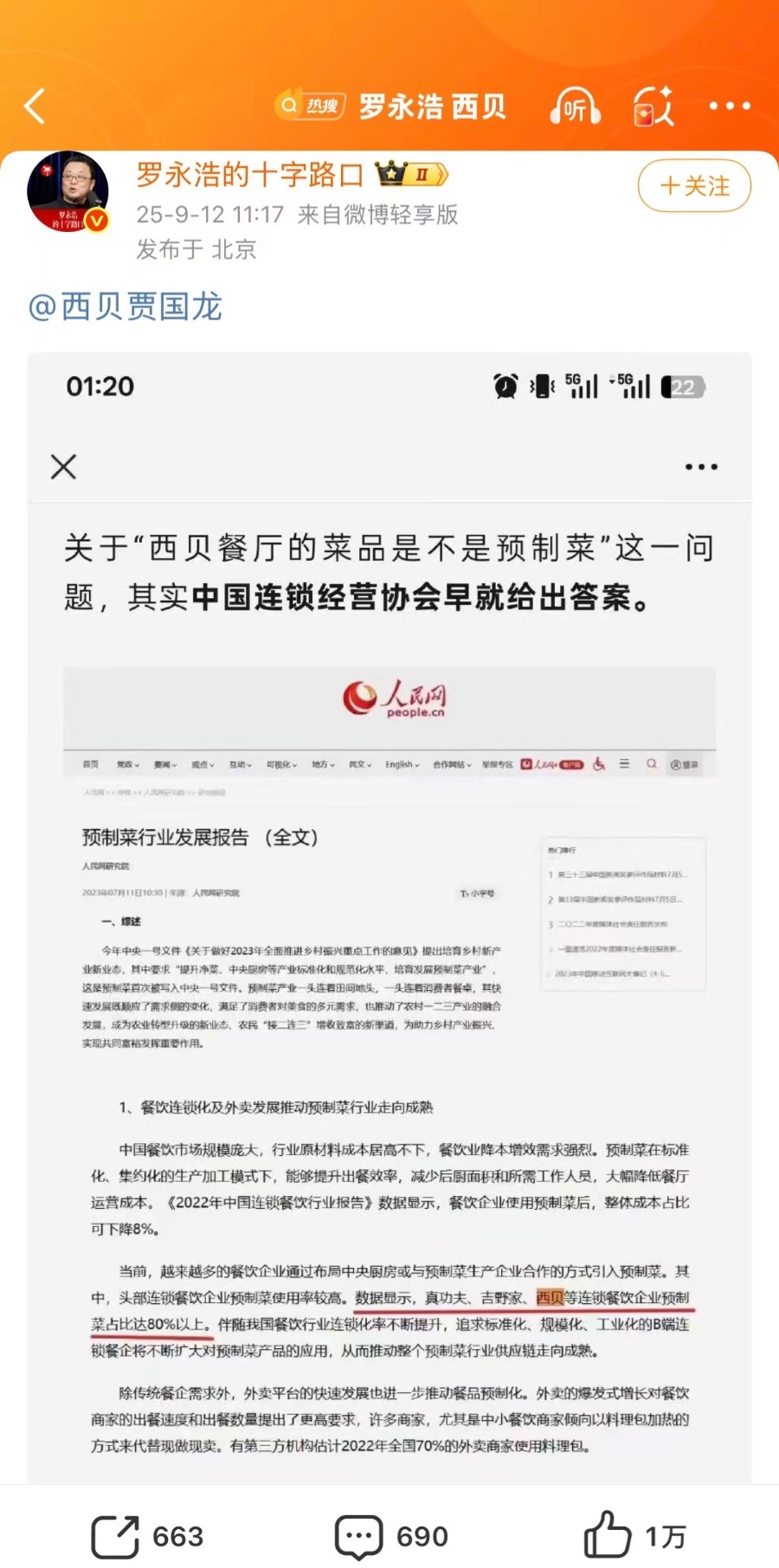
以下文章来源于21Style ,作者贺泓源 21Style . 编辑丨朱益民 刘雪莹 9月12日下午,"西贝承认部分菜品是隔夜菜"登上微博热搜第一。 据@中国蓝新闻 报道,西贝承认部分菜品存在隔夜情况,煮好的羊排赏味期是三餐,今天上 午一餐、下午一餐、明天上午还能卖,厨师长称隔夜使用不会影响出餐品质。 9月12日中午,胖东来集团创始人于东来就此次舆论风波发声称,"任何事没有完美,感谢西 贝、海底捞等品牌企业可以让我找到相对放心可口吃饭的地方。" 某种程度上,在创始人、CEO贾国龙的参与下,西贝跟预制菜越绑越紧。 虽然,这公司不想掺和任何预制菜概念。2025年9月12日,在微博热搜上,西贝、罗永浩、预 制菜成为高频词。比如罗永浩奖励10万征集西贝预制菜线索、罗永浩晒报告称西贝预制菜超 80%等热搜词汇。 权威、独家、深度,先一步看到消费未来! 记者丨贺泓源 罗永浩晒报告称西贝预制菜超80%的观点来自,人民网研究院在2023年发布的《预制菜行业发 展报告》,其中援引《2022年中国连锁餐饮行业报告》数据显示,真功夫、吉野家、西贝等连 锁餐饮企业预制菜占比达80%以上。 9月10日,罗永浩发微博公开吐槽西贝。"好久 ...
罗永浩炮轰,西贝却有中产家庭撑腰
盐财经· 2025-09-12 09:57
Core Viewpoint - The controversy surrounding the use of pre-prepared dishes at Xibei has sparked significant public debate, particularly following criticism from prominent figures like Luo Yonghao, who called for transparency in the restaurant industry regarding the use of pre-prepared ingredients [4][10][30]. Group 1: Controversy and Response - Luo Yonghao criticized Xibei for serving mostly pre-prepared dishes, prompting Xibei's founder, Jia Guolong, to deny these claims and assert that all dishes have specific preparation standards [6][10]. - In response to the controversy, Xibei launched a "Luo Yonghao Menu" with a guarantee of satisfaction, allowing customers to observe the cooking process in their restaurants [8][10]. - The debate highlights a broader consumer confusion regarding the extent of pre-prepared ingredients in restaurant dishes, with many consumers unable to discern the level of processing involved [9][10]. Group 2: Market Position and Pricing - Despite a general decline in restaurant prices, Xibei has maintained a higher average price point, with a per capita spending of 83.66 yuan, significantly above competitors like Jiumaojiu and Baixing Kitchen [14][15]. - Xibei has expanded its market presence, operating 382 locations, while competitors have fewer outlets, indicating a strong brand positioning in the market [13][14]. - The restaurant's focus on family dining, particularly targeting parents of young children, has contributed to its sustained customer base, despite criticisms of high prices [16][44]. Group 3: Children's Menu Strategy - Xibei has successfully tapped into the children's dining market, offering specialized children's meals and services that cater to families, which has become a significant growth area [19][45]. - The children's menu is designed to attract families, with a focus on nutritional standards and appealing presentation, although the profit margins on these meals are reportedly lower than adult meals [45][46]. - The children's dining market in China is projected to grow significantly, with estimates suggesting it could reach a scale of 500 billion yuan in the coming years, making it a competitive space for various brands [48][49]. Group 4: Industry Challenges - The restaurant industry is facing challenges due to increased competition and a saturated market, with many new entrants leading to a decline in demand for traditional dining experiences [29][30]. - Xibei's sales have reportedly declined by approximately 10% in 2024 compared to the previous year, indicating the impact of broader market trends on its performance [30][32]. - The perception of Xibei as "expensive and not worth it" is compounded by the ongoing debate about the use of pre-prepared ingredients, which could affect consumer trust and brand loyalty [34][35].
强势贾国龙,“放大”西贝的舆论漩涡丨消费快评
2 1 Shi Ji Jing Ji Bao Dao· 2025-09-12 07:37
Core Viewpoint - The controversy surrounding Xibei's use of pre-prepared dishes has intensified, particularly following comments made by entrepreneur Luo Yonghao, which have led to legal threats from Xibei's CEO, Jia Guolong [1][3][4]. Company Summary - Xibei's CEO, Jia Guolong, asserts that the company does not serve any pre-prepared dishes, despite claims to the contrary [4][5]. - Jia Guolong has expressed that Luo Yonghao's statements have significantly impacted Xibei's reputation, prompting the company to consider legal action [3][5]. - The average consumer spending at Xibei is reported to be 85.03 yuan, which is notably higher than competitors such as Zhen Gongfu (26.57 yuan) and Yoshinoya (31.06 yuan), indicating limited consumer tolerance for pre-prepared dishes [5][7]. - Xibei has introduced a "Luo Yonghao Menu" across all locations, allowing customers to order dishes previously selected by Luo, although this has raised questions about consumer privacy [7][8]. Industry Summary - The restaurant industry is facing significant challenges, with Xibei's revenue reportedly in a declining trend as of May 2025 [16]. - Major competitors in the industry, such as Haidilao and Jiamaojiu, have also reported revenue declines, indicating a broader industry trend [16]. - The overall restaurant market is under pressure, with major cities like Beijing and Shanghai experiencing declines in dining revenue [17]. - The current economic environment has made it difficult for brands to withstand negative publicity, as seen in the case of other brands like Zhongxuegao [18]. - The management style of Xibei, centered around its founder, has been highlighted as both a strength and a potential weakness, suggesting a need for more professional governance [19][20].
强势贾国龙,“放大”西贝的舆论漩涡
2 1 Shi Ji Jing Ji Bao Dao· 2025-09-12 07:35
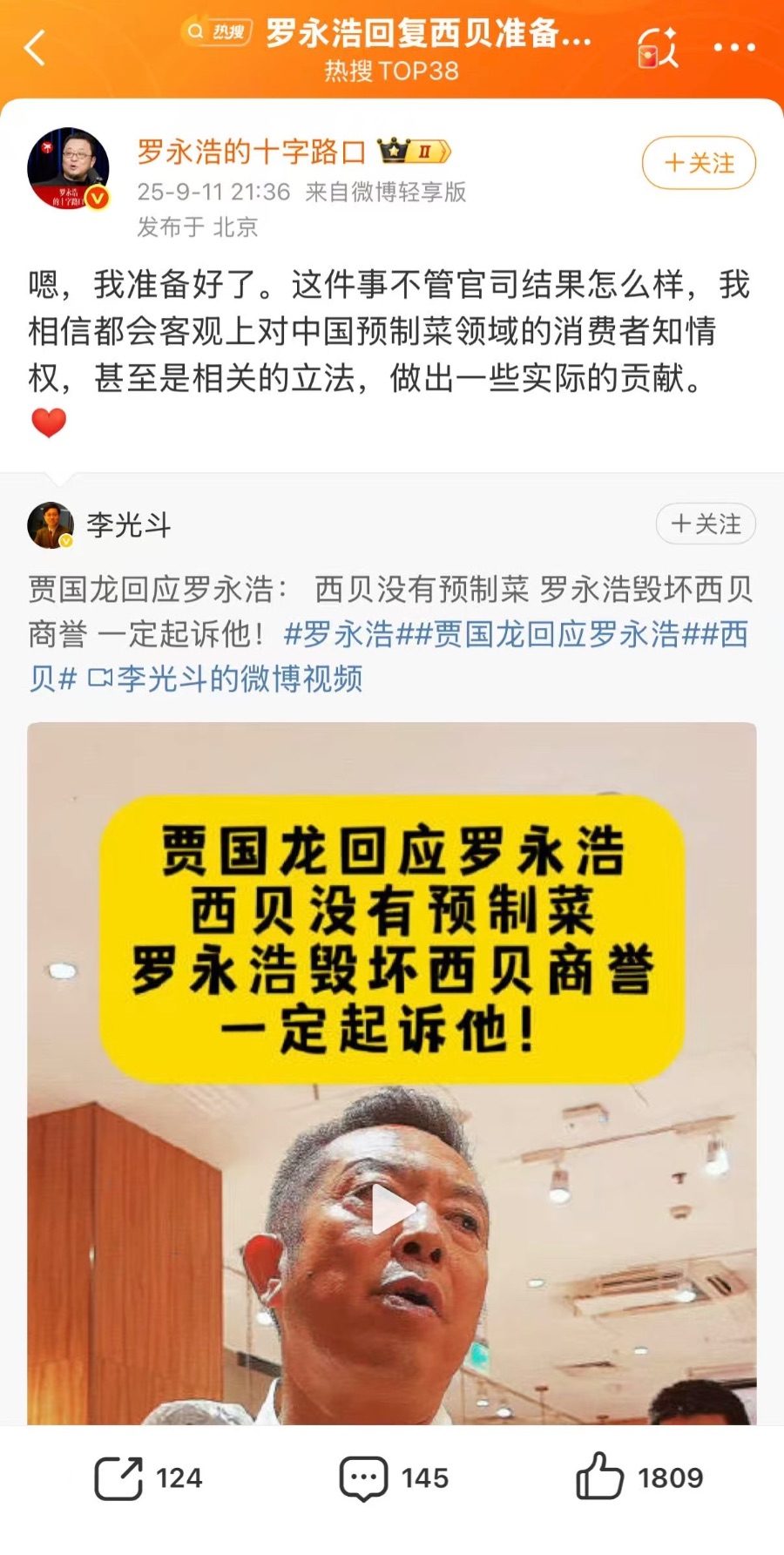
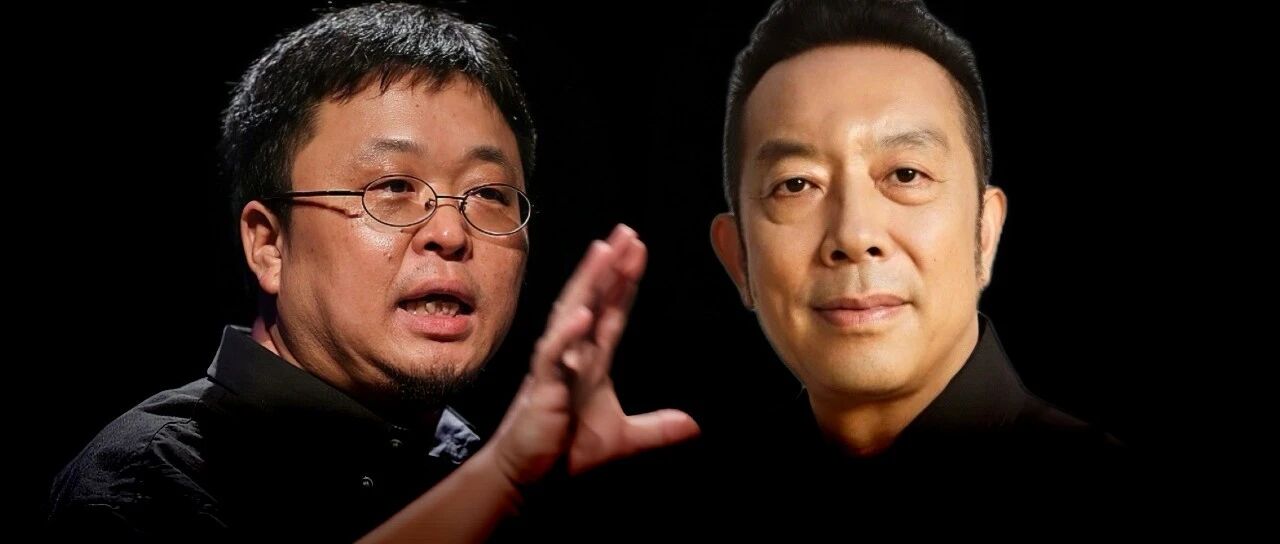
21世纪经济报道记者 贺泓源 某种程度上,在创始人、CEO贾国龙的参与下,西贝跟预制菜越绑越紧。 虽然,这公司不想掺和任何预制菜概念。2025年9月12日,在微博热搜上,西贝、罗永浩、预制菜成为高频词。比如罗永浩奖励 10万征集西贝预制菜线索、罗永浩晒报告称西贝预制菜超80%等热搜词汇。 9月10日,罗永浩发微博公开吐槽西贝。"好久没吃西贝了,今天下飞机跟同事吃了一顿,发现几乎全都是预制菜,还那么贵。 希望国家尽早推动立法,强制饭馆注明是否用了预制菜。"他称。 对此,贾国龙强势反击。 他表态,罗永浩发言对西贝商誉影响非常大,将走法律程序进行起诉,但他本人不会回应罗永浩。 罗永浩晒报告称西贝预制菜超80%的观点来自,人民网研究院在2023年发布的《预制菜行业发展报告》,其中援引《2022年中 国连锁餐饮行业报告》数据显示,真功夫、吉野家、西贝等连锁餐饮企业预制菜占比达80%以上。 矛盾激化 对于西贝预制菜,在9月11日,贾国龙在媒体沟通会上表示,西贝没有任何一道预制菜。 他同时称,罗永浩的发言对西贝商誉影响非常大,将走法律程序进行起诉,但他本人不会回应罗永浩。 贾国龙认为,预制菜国家有标准,和有预制工艺是两回事 ...
罗永浩悬赏10万元,再怼西贝“天下苦预制菜不透明久矣”,西贝反手上线罗永浩菜单
2 1 Shi Ji Jing Ji Bao Dao· 2025-09-12 06:26
Group 1 - The recent controversy involving Luo Yonghao criticizing Xibei's pre-made dishes has gained significant attention, with Luo offering a reward of 100,000 yuan for information related to Xibei's pre-made dishes [1][3] - Luo Yonghao noted that over 90% of online sentiment is against Xibei, while only about 10% is critical of him, indicating a strong public backlash against Xibei [3] - Xibei has launched a "Luo Yonghao Menu" in all its stores, allowing customers to choose dishes that Luo has previously ordered, with a commitment to refund if the food is unsatisfactory and an invitation for customers to observe the cooking process [3] Group 2 - Xibei has applied for patents related to pre-made food, including a filling device and packaging equipment for tofu, with the patents granted in 2025 [4] - The company, Beijing Xibei Natural Pie Food Technology Development Co., Ltd, was established in August 2017 with a registered capital of 20 million yuan, fully owned by Inner Mongolia Xibei Catering Group Co., Ltd [5][6] Group 3 - Xibei is currently facing operational challenges, with reports indicating a decline in revenue as of May 2025, reflecting a broader industry trend of decreasing sales among major restaurant brands [8][9] - The restaurant market is under pressure, with significant declines in revenue reported in major cities like Beijing and Shanghai, where restaurant income fell by 3.6% and 2.9% respectively in the first seven months of the year [10]
罗永浩悬赏10万元,再怼西贝“天下苦预制菜不透明久矣”,西贝反手上线罗永浩菜单
21世纪经济报道· 2025-09-12 06:21
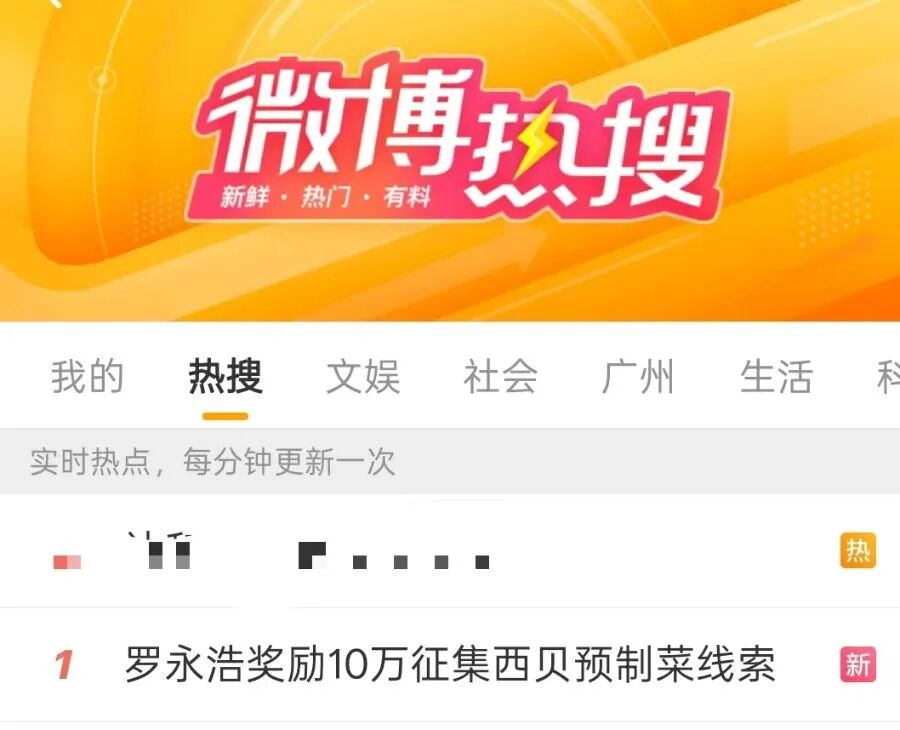
记者丨毕凤至 刘雪莹 编辑丨叶映橙 陈思颖 近日,"罗永浩发文吐槽西贝预制菜"一事引发关注。今天(9月12日), "罗永浩悬赏10万征 集西贝预制菜线索" 抢占微博热搜头条位置。 今天罗永浩再发微博称:这么多年来,我一直是一个有争议的人, 但这一次我看到的网络舆 情是90%多的人都在骂西贝,骂我的连10%都不到。难道那些讨厌我的人突然喜欢了我不成? 很多网友已经指出了真实的原因 : 天下苦预制菜不透明久矣。 希望这一次的事件,能够推动 中国预制菜相关立法尽快实现,再强调一遍,我不反对预制菜,我的终极诉求只是让消费者获 得知情权。 据澎湃新闻报道,有接近罗永浩的人士表示:" 在大家看来,中央厨房、食品工厂出来的菜都 是预制菜。 而且网上有证据表明,西贝的中央厨房部分的菜品就是采购的工厂预制菜,贾国 龙已经犯了'众怒'。" 西贝上线"罗永浩套餐" 西贝宣布将从今日(9月12日)起,在全国所有门店上线"罗永浩菜单"。贾国龙澄清,这不是 一个固定的套餐,而是罗永浩点过的菜品列表,消费者可以任意点选。西贝为此提供了两大承 诺:第一,"不好吃,不要钱",顾客可以随时退单;第二,欢迎顾客随时进入后厨,参观任何 一道菜的制作 ...
西贝CEO起诉罗永浩背后
21世纪经济报道· 2025-09-12 00:09
Core Viewpoint - The founder and CEO of Xibei, Jia Guolong, plans to sue Luo Yonghao due to the latter's comments about Xibei serving pre-made dishes, which Jia claims have significantly harmed the company's reputation [1][3]. Group 1: Legal Dispute - Jia Guolong stated that Xibei does not serve any pre-made dishes and will publicly showcase the menu consumed by Luo Yonghao for transparency [1][3]. - Luo Yonghao criticized Xibei on social media, claiming that the dishes were mostly pre-made and overpriced, urging for legislation to require restaurants to disclose the use of pre-made ingredients [1][3]. Group 2: Industry Context - Xibei is currently facing operational challenges, with revenue declining as of May 2025 [9]. - The overall restaurant industry is experiencing a downturn, with notable declines in revenue for other major brands such as Haidilao (down 3.7%), Jiumaojiu (down 10.1%), and Xiaobuxiang (down 18.9%) in the first half of 2025 [9]. - The restaurant market is under pressure, with a significant number of closures reported, and only specific categories like Western cuisine and bakery showing growth [9].

贾国龙起诉罗永浩背后:西贝冒不起险了
2 1 Shi Ji Jing Ji Bao Dao· 2025-09-11 22:55
Group 1: Company Overview - The founder and CEO of Xibei, Jia Guolong, announced plans to sue Luo Yonghao due to significant damage to the company's reputation caused by Luo's comments about Xibei's food quality [1][5] - Jia emphasized that Xibei does not serve any pre-prepared dishes and will allow customers to taste and supervise the menu starting from the next day [1][5] Group 2: Industry Context - Xibei is currently facing operational challenges, with revenue in a declining range as of May 2025 [6][7] - The overall restaurant industry is experiencing a downturn, with notable revenue declines reported by other major brands such as Haidilao (down 3.7% to 20.703 billion), Jiumaojiu (down 10.1% to 2.753 billion), and Xiaobuxiang (down 18.9% to 1.942 billion) in the first half of 2025 [7] - The restaurant market is under pressure, with a significant drop in dining revenue in major cities like Beijing (down 3.6% to 79.2 billion) and Shanghai (down 2.9% to 114.195 billion) during the first seven months of 2025 [9]