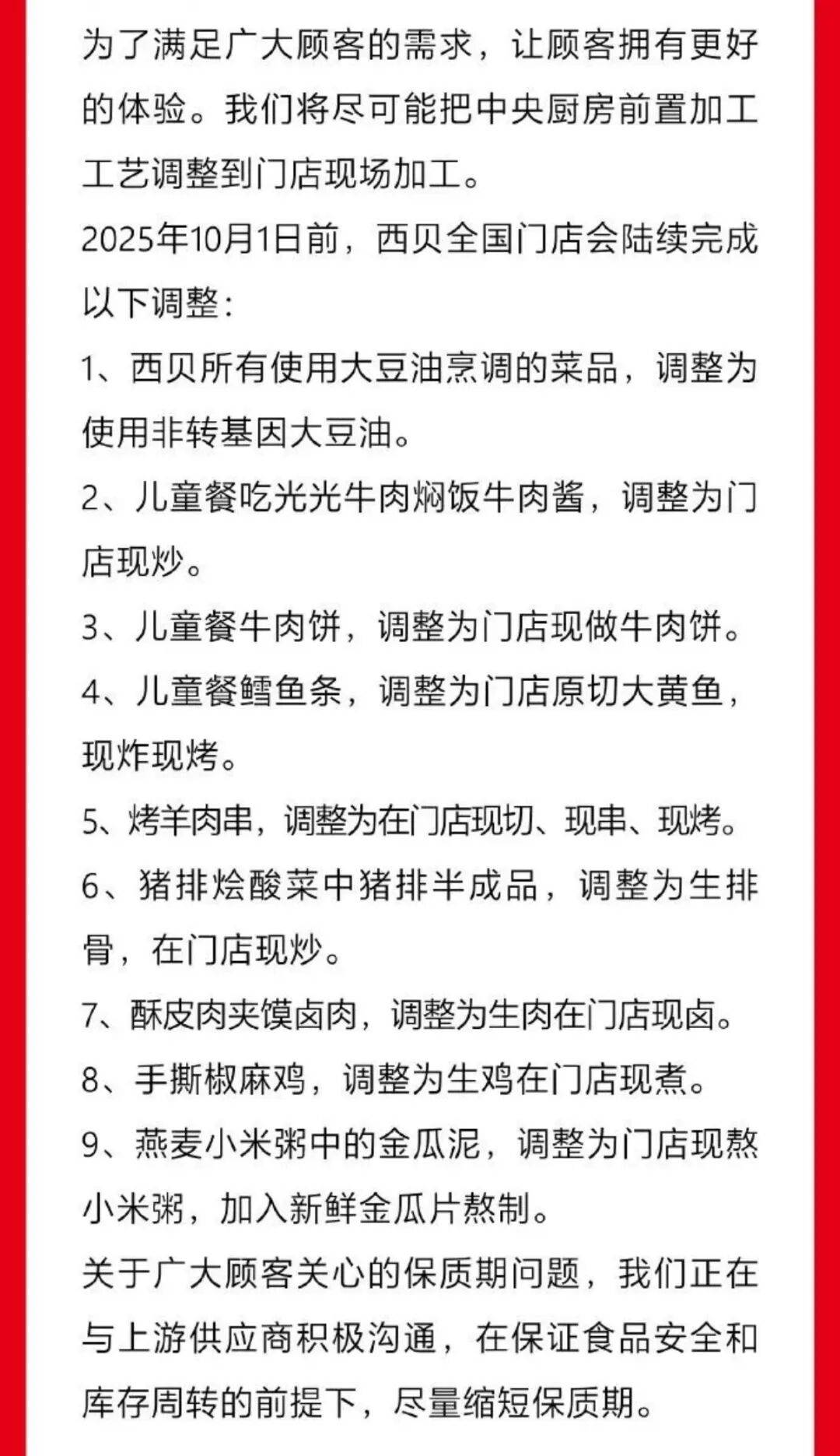
西贝儿童餐

Search documents
西贝还能再抢救一下?
36氪· 2026-03-08 09:09
Core Viewpoint - The article discusses the ongoing crisis faced by Xibei, highlighting the company's significant operational challenges and the measures being taken to address them [5][10][13]. Group 1: Current Challenges - Xibei has implemented a salary deferral plan for nearly all operational staff, with only the most basic service employees and kitchen helpers exempt [5][6]. - The company has reduced the salaries of store managers and head chefs by 30%, with the possibility of bonuses if the stores can reduce losses month-over-month [7][10]. - Reports indicate that Xibei has closed 150 stores, exceeding previous expectations of 102 closures announced by the founder [7][10]. Group 2: Management Changes - Founder Jia Guolong stepped down as CEO of the main brand before the Spring Festival, with former CEO Dong Junyi returning to lead the company [11][12]. - The internal management is now under Dong Junyi's responsibility, suggesting a shift towards a "post-Jia era" for Xibei [12]. Group 3: Brand Value and Market Position - Despite its current difficulties, Xibei has established brand value and industry influence, having been recognized in various authoritative rankings [22][23]. - In 2020, Xibei's brand value was reported at 6.21 billion yuan, and a 2023 audit estimated its overall valuation at approximately 2.5 billion yuan [24]. Group 4: Future Strategies - Xibei needs to focus on cost reduction and efficiency improvements, continuing to close unprofitable stores [31][32]. - The company should adopt a refined management strategy, concentrating on key urban markets and core stores [33]. - Xibei has a unique opportunity with its children's menu, which has gained popularity among middle-class families, suggesting a potential focus on family-oriented dining experiences [36]. Group 5: International Expansion - The article notes that Xibei is planning to enter international markets, with a store opening in Los Angeles scheduled for August 2025, targeting areas with significant Chinese populations [38].

西贝不服输
Sou Hu Cai Jing· 2026-01-09 08:57
Core Viewpoint - Xibei has shown signs of recovery, with increased employee salaries and customer traffic, but faces significant challenges regarding its long-term profitability and operational sustainability [2][3][21]. Group 1: Employee Compensation and Customer Traffic - Recent reports indicate that Xibei employees are earning between 8,000 to 9,000 yuan monthly, which has garnered public attention [2]. - During the New Year period, Xibei's nationwide stores attracted approximately 500,000 customers, showing resilience despite the cessation of subsidies [2]. - The company's "Hundred Days of Reform" appears to have positively impacted its reputation, alleviating concerns about its future [2][3]. Group 2: Pricing Strategy and Profitability Concerns - Xibei has reduced its average customer spending to around 75 yuan, a 20% decrease, with no plans to raise prices on already discounted items [4][5]. - The restaurant industry typically operates on high gross margins but low net profit margins; Xibei's projected average profit margin is expected to be below 5% [5][6]. - The significant price cuts raise questions about how Xibei will maintain profitability, especially with rising labor costs and a competitive market [6][8]. Group 3: Labor Costs and Employee Welfare - Xibei has announced salary increases for frontline employees and introduced a compensation program, reflecting a commitment to employee welfare [9][10]. - The average salaries for restaurant workers are projected to rise, with labor costs expected to exceed 35% of total expenses by 2025 [10][12]. - The company's strategy includes enhancing employee training and operational standards, which may further increase labor costs [12][16]. Group 4: Marketing and Public Relations Strategy - Xibei has remained in the public eye through continuous engagement and marketing efforts, particularly focusing on its children's meal offerings [22][25]. - The company aims to reshape its image and regain consumer trust following previous controversies, emphasizing transparency and quality in its offerings [22][30]. - Xibei's marketing strategy appears to be proactive, utilizing ongoing exposure to counter negative perceptions and promote positive changes [23][24]. Group 5: Product Quality and Supply Chain Issues - There have been discrepancies between Xibei's marketing claims regarding organic ingredients and the actual sources of its products, leading to consumer skepticism [37][38]. - The company has faced criticism for reducing portion sizes while advertising price cuts, which could lead to further reputational damage if not addressed [40][41]. - Xibei's commitment to quality and transparency in its supply chain is crucial for maintaining customer loyalty and trust, especially in the competitive dining market [43].
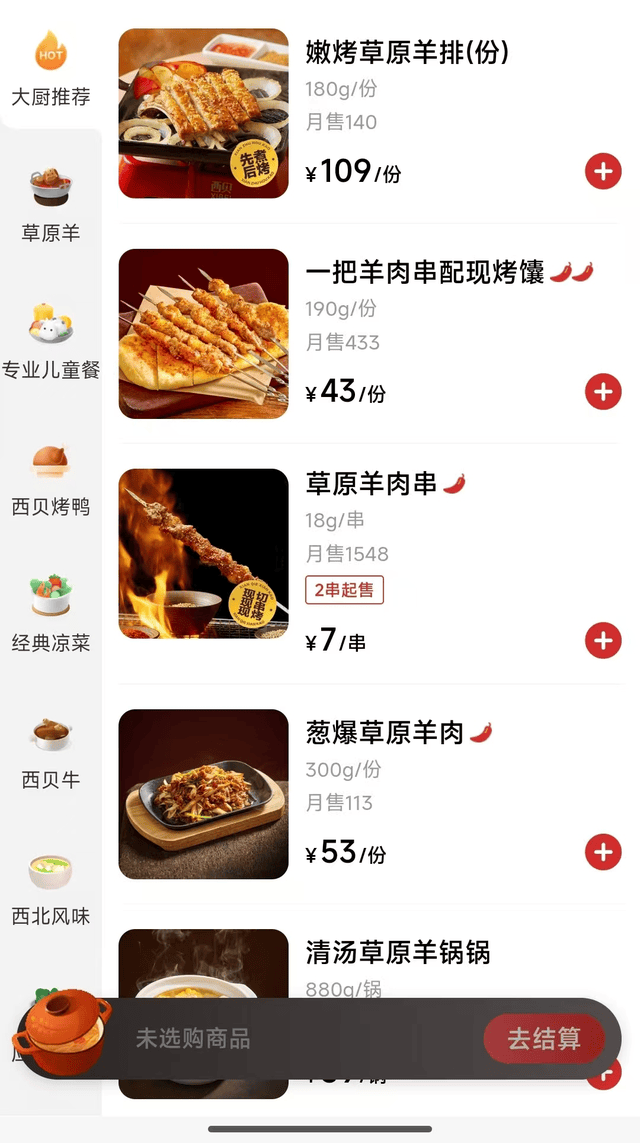
小小儿童餐 吃出“大蛋糕” 万亿市场规模引来众多知名餐饮企业布局
Shen Zhen Shang Bao· 2025-11-09 01:12
Core Insights - The children's meal market in China has surpassed 1 trillion yuan and is experiencing trends of segmentation, health consciousness, and premiumization [1] - Major restaurant chains like Haidilao, Xibei, and Jiumaojiu are actively participating in the children's meal market, which is becoming a competitive battleground in the restaurant industry [1][3] Company Strategies - Haidilao opened its first Hi Paradise store in Shenzhen, featuring a child-friendly environment with play areas and entertainment, receiving a high rating of 4.7 stars on review platforms [2] - Xibei has been a leader in the children's meal sector, with a reported revenue growth of 415% from 2019 to 2022 for its children's meals, and has upgraded its offerings to "professional children's meals" [2][3] - Jiumaojiu has introduced new children's meal options priced at 26 to 29 yuan, with regular updates from nutritionists to ensure balanced nutrition [3] Market Challenges - Despite the growth potential, the children's meal segment has higher production costs due to stricter nutritional requirements, making it challenging for restaurants to profit [5] - Haidilao's revenue for the first half of 2025 was 20.703 billion yuan, with a net profit of 1.755 billion yuan, indicating a decline in restaurant turnover and customer traffic [4] - Jiumaojiu reported a revenue decline of 10.1% year-on-year for the first half of 2025, with all core brands experiencing a drop in income [5] Industry Outlook - The children's meal market is seen as a promising area for growth, especially as 44.4% of children aged 6 to 12 frequently dine out, presenting an attractive opportunity for restaurants [3] - Industry experts emphasize the need for standardized regulations for children's meals to ensure quality and safety, which could help in the market's sustainable development [5]
海底捞,正在抢夺西贝大金主
盐财经· 2025-11-05 09:39
Core Viewpoint - The competition for the children's dining market is intensifying among major restaurant brands, with Haidilao making significant investments in family-friendly dining experiences as a response to challenges faced by competitors like Xibei [2][10][40]. Group 1: Market Dynamics - The children's dining market in China has reached a scale of 450 billion yuan, with expectations to exceed 500 billion yuan in the next five years, indicating a strong growth trend [5][20]. - Haidilao's entry into the children's dining segment is driven by the declining performance of its core hot pot business, which has seen a drop in revenue and table turnover rates [15][19]. - The overall restaurant industry is experiencing increased competition and declining average prices, with the average dining price dropping to 39.8 yuan, a 6.6% decrease year-on-year [14][15]. Group 2: Haidilao's Strategy - Haidilao has launched various initiatives targeting family customers, including themed restaurants and special children's menus, to attract more diners and increase average spending per table [21][22]. - The introduction of family-friendly features, such as play areas and specialized children's meals, has resulted in a significant increase in family customer traffic, with some locations reporting up to 60% of weekend customers being families [25][26]. - Despite the increase in family traffic, the longer dining times associated with families may negatively impact table turnover rates, posing a challenge for profitability [25][39]. Group 3: Competitive Landscape - The children's dining market has historically been dominated by Western fast-food brands like McDonald's and KFC, but Chinese brands are increasingly entering this space, with Xibei leading the way in developing specialized children's meals [28][30]. - Other restaurant brands, such as Jiumaojiu and Laoxiangji, are also beginning to explore children's dining options, indicating a broader trend within the industry [31][33]. - The competition for family dining is not just about menu offerings but also about creating a safe and engaging environment for children, which requires significant investment in facilities and staff [37][39].


从始祖鸟炸山到西贝预制菜:品牌忘初心,再贵的“家底”也会塌
Sou Hu Cai Jing· 2025-10-16 16:35
Core Insights - The article discusses the importance of trust between brands and their core users, using the examples of Xibei and Arc'teryx, which have recently faced trust crises due to failing to meet user expectations [1][3][9] Brand Trust and User Relationships - Trust is described as a brand's most valuable asset, built over time through consistent delivery on promises and value [3][7] - Xibei gained a strong reputation by focusing on the needs of parents concerned about food safety, leading to a significant increase in sales of children's meals [5][7] - Arc'teryx initially built its brand on trust among outdoor enthusiasts by aligning its values with their beliefs about nature [5][7] Trust Erosion Cases - Xibei's trust was compromised when it was revealed that its children's meal contained broccoli with a two-year shelf life, contradicting its claims of using fresh ingredients [9][11] - Arc'teryx lost credibility after a marketing event involving fireworks in a protected natural area, which contradicted its message of respecting nature [12][14] Misguided Recovery Efforts - Both brands attempted to regain trust through misguided strategies; Xibei focused on price reductions, while Arc'teryx pursued high-end marketing tactics [16][20] - Xibei's price cuts raised suspicions about its product quality, while Arc'teryx's marketing alienated its core outdoor user base [18][20] Recommendations for Trust Restoration - To restore trust, Xibei should enhance transparency regarding ingredient sourcing and involve parents in the oversight of food quality [22][24] - Arc'teryx needs to reconnect with its outdoor roots, apologize for its missteps, and focus on producing high-quality, performance-driven products [22][26] Conclusion - The article emphasizes that brands must prioritize the trust of their core users to ensure long-term success, learning from the experiences of Xibei and Arc'teryx [26]
“7岁的毛毛”引争议,西贝为什么又做错了
Xin Lang Cai Jing· 2025-09-25 13:24
Core Viewpoint - Xibei is facing public backlash due to a controversial self-promotional article that was perceived as overly sentimental and out of touch with consumer sentiment amid ongoing criticism regarding food quality and pricing [6][7]. Group 1: Article Content - The article titled "7-year-old Maomao: I thought I would never eat Xibei again" was published on Xibei's official WeChat account, depicting a child's emotional attachment to the restaurant amidst negative online discussions [1][2]. - The narrative describes how Maomao's mother suggested avoiding Xibei due to recent controversies, but Maomao insisted on going, highlighting a long-standing relationship with the brand since he was two years old [5][6]. Group 2: Public Relations Response - The article's emotional appeal was criticized as outdated and likely to provoke consumer backlash, especially given the current scrutiny of Xibei's food quality and value [6][7]. - It was noted that the article may not have been intended for public consumption, as it was meant for internal morale-boosting among employees, but its visibility led to misinterpretations [6][7]. Group 3: Recommendations for Improvement - The company should focus on understanding consumer perceptions of "pre-made dishes" and engage in more transparent communication rather than relying on emotional narratives [7]. - Emphasizing product quality and service improvements is essential for regaining consumer trust, rather than attempting to counter criticism with sentimental stories [7].
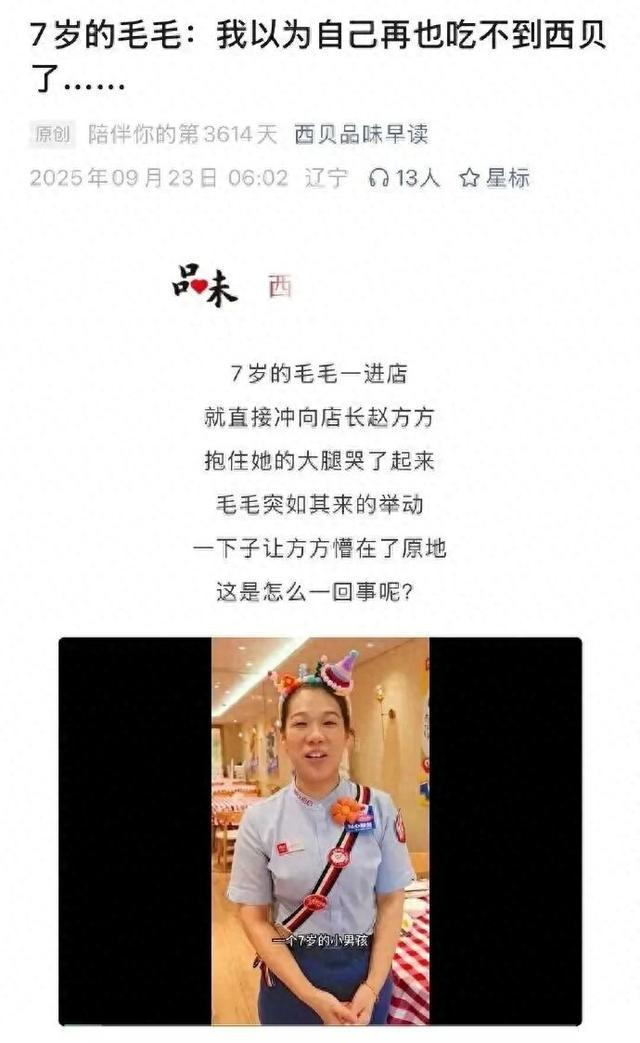
西贝删除温情公关文《7岁的毛毛:我以为自己再也吃不到西贝了》
第一财经· 2025-09-25 04:21
Core Viewpoint - The article narrates a story from the perspective of a 7-year-old child, Mao Mao, who expresses a strong emotional attachment to the restaurant chain Xibei, highlighting the impact of recent negative news on consumer behavior and trust in the brand [3][4]. Summary by Sections - The article describes Mao Mao's emotional reaction upon entering Xibei, where he immediately runs to the store manager, showcasing his deep connection to the brand [4]. - Mao Mao's mother, influenced by recent online discussions, initially suggests not taking him to Xibei, which leads to Mao Mao's distress as he insists on going there for his favorite children's meal [9]. - The mother reflects on their five-year relationship with Xibei, noting that there have been no food safety issues, and ultimately decides to uphold their tradition, emphasizing the importance of trust and routine in her child's growth [9].
西贝删除温情公关文,官方暂无回应
Xin Lang Ke Ji· 2025-09-25 03:54
Core Viewpoint - The article discusses a controversial post by Xibei on its official WeChat account, which was criticized for being overly emotional and manipulative, leading to its deletion shortly after publication [1][2]. Group 1: Article Content - The post featured a narrative from the perspective of a 7-year-old child named Maomao, who has been eating at Xibei since the age of 2. The story highlights Maomao's emotional struggle when his mother decides to stop visiting Xibei due to recent negative news [2][6]. - Maomao's mother initially suggests not taking him to Xibei, but after seeing her child's distress, she reflects on their long-standing relationship with the restaurant, which has not resulted in any food safety issues over the past five years [6]. Group 2: Public Reaction - The post received significant backlash from netizens, who criticized the marketing strategy as inappropriate and urged the company to avoid emotional manipulation in its communications [1][7]. - Following the criticism, Xibei's official response to inquiries about the post was not provided, indicating a lack of engagement with the public's concerns [2].
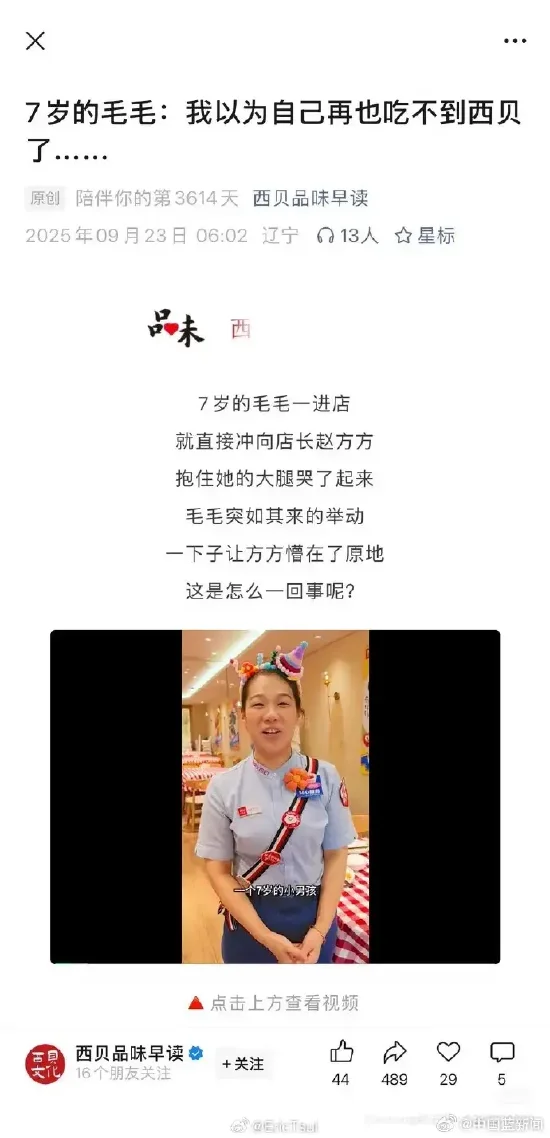
趣图:“7 岁的毛毛,以为再也吃不到西贝了…”
程序员的那些事· 2025-09-25 02:53
Core Viewpoint - The article discusses the emotional connection between a child and the restaurant chain Xibei, highlighting the importance of trust and habit formed over years of dining experiences, despite recent negative public sentiment [3]. Group 1 - A 7-year-old child named Maomao expressed a strong desire to visit Xibei, demonstrating a deep emotional attachment to the restaurant [3]. - Maomao's mother initially considered avoiding Xibei due to negative online discussions but ultimately decided to uphold their family's tradition of dining there, emphasizing the trust built over five years without any food safety issues [3]. - The relationship between the child and Xibei is portrayed as more than just dining; it represents a significant part of the child's growth and the family's values [3]. Group 2 - The article includes negative feedback from netizens regarding the restaurant's marketing approach, indicating a disconnect between the company's messaging and public perception [6]. - Comments from users reflect frustration with the company's self-promotional tactics, suggesting a need for a more genuine engagement with customers [6].

预制是趋势,「贵不贵」才是西贝要回答好的真问题
Sou Hu Cai Jing· 2025-09-18 01:07
Group 1 - The core issue surrounding the pre-prepared food controversy initiated by Luo Yonghao is the transparency of pre-prepared dishes, with consumers having misconceptions about pre-prepared food and processes [1] - The rapid growth of some pre-prepared food brands in China has led to a stigmatization of the entire industry due to concerns over food additives, despite the fact that high-quality pre-prepared food can be more efficient and safer [1] - West Restaurant's recent decision to change some core dishes from pre-prepared to freshly made is seen as a temporary measure to appease family customers, but it may increase operational costs and affect customer experience [2][3] Group 2 - The pricing strategy of West Restaurant is a critical issue, as the high cost of pre-prepared dishes without clear communication to consumers is viewed as unreasonable [3] - West Restaurant has invested significantly in understanding the demand for children's meals and has allocated resources to supply chain and technology development, but must consider whether to pass on cost savings to consumers to improve perceived value [3][4] - The restaurant's current pricing model, which is perceived as "expensive," reflects a strategic choice that requires a keen understanding of market changes and consumer needs [4][5] Group 3 - Different consumer segments have varying perceptions of West Restaurant, with occasional diners supporting Luo Yonghao's viewpoint on pricing, while regular customers appreciate the quality and service [5][6] - The restaurant's focus on high-quality ingredients and a standardized supply chain has been a significant investment, with past investments including 60 million yuan in a processing plant and ongoing annual investments in technology upgrades [8][21] - The supply chain model employed by West Restaurant, which includes centralized processing and cold chain distribution, is becoming a common practice among many Chinese restaurant chains [9] Group 4 - The "small expensive" pricing strategy allows West Restaurant to invest in higher quality service and maintain a competitive edge in the dining experience [11] - The restaurant's commitment to children's meals includes specific service standards and activities to enhance customer experience, which also contributes to higher operational costs [11][12] - The profitability from the "small expensive" model supports West Restaurant's ability to explore new business avenues, although past attempts in fast food have not been successful [11][12] Group 5 - The current challenges faced by West Restaurant extend beyond pricing to include the need to reassess product offerings, pricing, and service to meet evolving consumer demands [23] - The restaurant's founder has acknowledged the disconnect between his perception of value and consumer sentiment, indicating a need for better communication and understanding of market dynamics [23][25] - The situation presents an opportunity for West Restaurant to address issues and enhance its brand positioning in the competitive dining landscape [25][26]