精达股份

Search documents
可控核聚变展望:材料与设备攻关(附37页PPT)
材料汇· 2025-06-18 15:25
Group 1 - The article discusses the two main technical routes for nuclear fusion: magnetic confinement and inertial confinement [5][8] - Magnetic confinement fusion primarily utilizes devices such as Tokamaks, stellarators, and magnetic mirrors, while inertial confinement relies on lasers and Z-pinch methods [8][9] - The D-T fusion reaction is highlighted for its high energy yield and relatively low ignition temperature of approximately 150 million °C, making it a favorable choice for fusion energy [5][8] Group 2 - The article emphasizes the collaborative development of the nuclear fusion industry chain, focusing on materials and equipment breakthroughs [7][35] - Key components of fusion reactors include superconducting magnet systems, vacuum chambers, and heating systems, with significant cost allocations for each [35][37] - The article outlines the investment plans of various countries and companies in nuclear fusion research, indicating a trend towards increased funding and technological advancements [25][27] Group 3 - The article notes that policy support and capital investment are crucial for the future expansion of the nuclear fusion sector [7][25] - China plans to invest over 50 billion yuan in key fusion technology research and experimental reactor construction over the next five years, with a focus on magnetic confinement fusion [25][29] - The expected return on investment (IRR) for commercial fusion projects is projected to exceed 15% in the long term, driven by technological innovations [31][32] Group 4 - The article identifies key companies benefiting from the nuclear fusion industry, emphasizing those with long-term growth potential [7][28] - Companies like CFS, Helion Energy, and TAE Technologies are highlighted for their advancements in fusion technology and significant investment plans [28][29] - The article also discusses the financing status of domestic fusion projects in China, indicating a robust pipeline of funding and development [29][30]

可控核聚变展望:进入关键导入期
Tai Ping Yang Zheng Quan· 2025-06-18 15:18
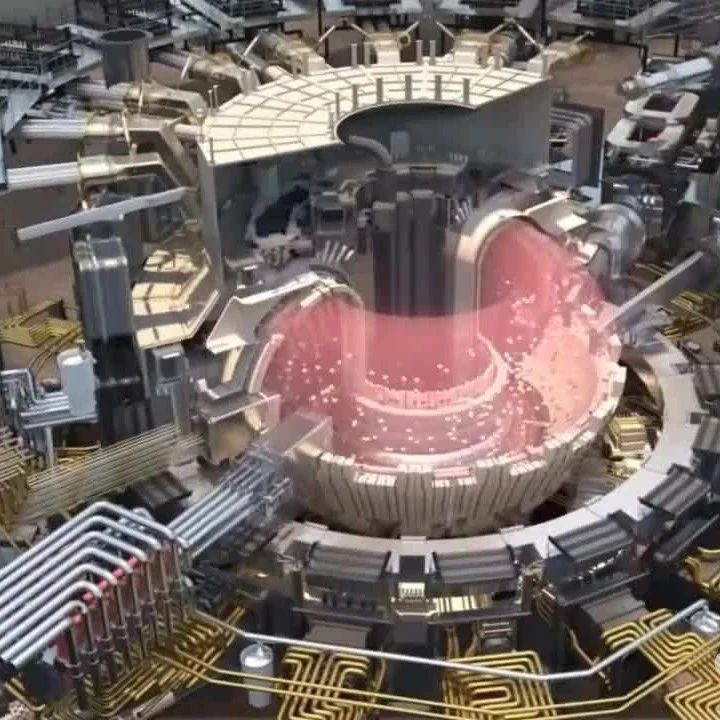
Investment Rating - The report indicates a positive outlook for the controlled nuclear fusion industry, highlighting its potential as a strategic choice for achieving carbon neutrality goals [4]. Core Insights - Controlled nuclear fusion is seen as a revolutionary energy solution due to its abundant energy, zero emissions, and high safety [4]. - The industry is entering a critical phase with multiple technological pathways, primarily magnetic confinement and inertial confinement, both of which are advancing towards engineering validation [4]. - The development of the industry chain is emphasized, with a focus on materials and equipment as core challenges [4]. - Support from policies and capital is accelerating the commercialization process, with significant investments from both domestic and international entities [4]. Summary by Sections 1. Multiple Technological Pathways: Magnetic Confinement and Inertial Confinement as Mainstream - The report discusses the two main approaches to fusion research: magnetic confinement (e.g., Tokamak, stellarator) and inertial confinement (e.g., NIF in the US) [4][11]. - Both technologies are progressing towards engineering applications, with magnetic confinement focusing on steady-state operation and inertial confinement aiming for ignition efficiency [4]. 2. Collaborative Development of the Industry Chain: Focus on Materials and Equipment - The industry chain includes upstream superconducting materials and radiation-resistant tungsten alloys, midstream equipment for ITER and domestic experimental reactors, and downstream applications led by companies like China National Nuclear Corporation [4][5]. - Key companies in the upstream include Jingda Co., Yongding Co., and West Superconducting [5]. 3. Policy and Capital Support: Future Extension Space is Promising - China's 14th Five-Year Plan explicitly supports nuclear fusion research, with significant investments from state-owned enterprises and research institutions [4][29]. - International investments have exceeded $6.2 billion, indicating strong global interest in fusion technology [4]. 4. Beneficiary Companies in the Industry Chain: Focus on Long-Term Growth Potential - The report identifies several companies with long-term growth potential, including West Superconducting, Lianchuang Optoelectronics, and Yongding Co., which are involved in key materials and equipment for fusion projects [5][49][54]. - The report highlights the importance of these companies in advancing fusion technology and their roles in major projects like the "Spark One" hybrid reactor [4][5].


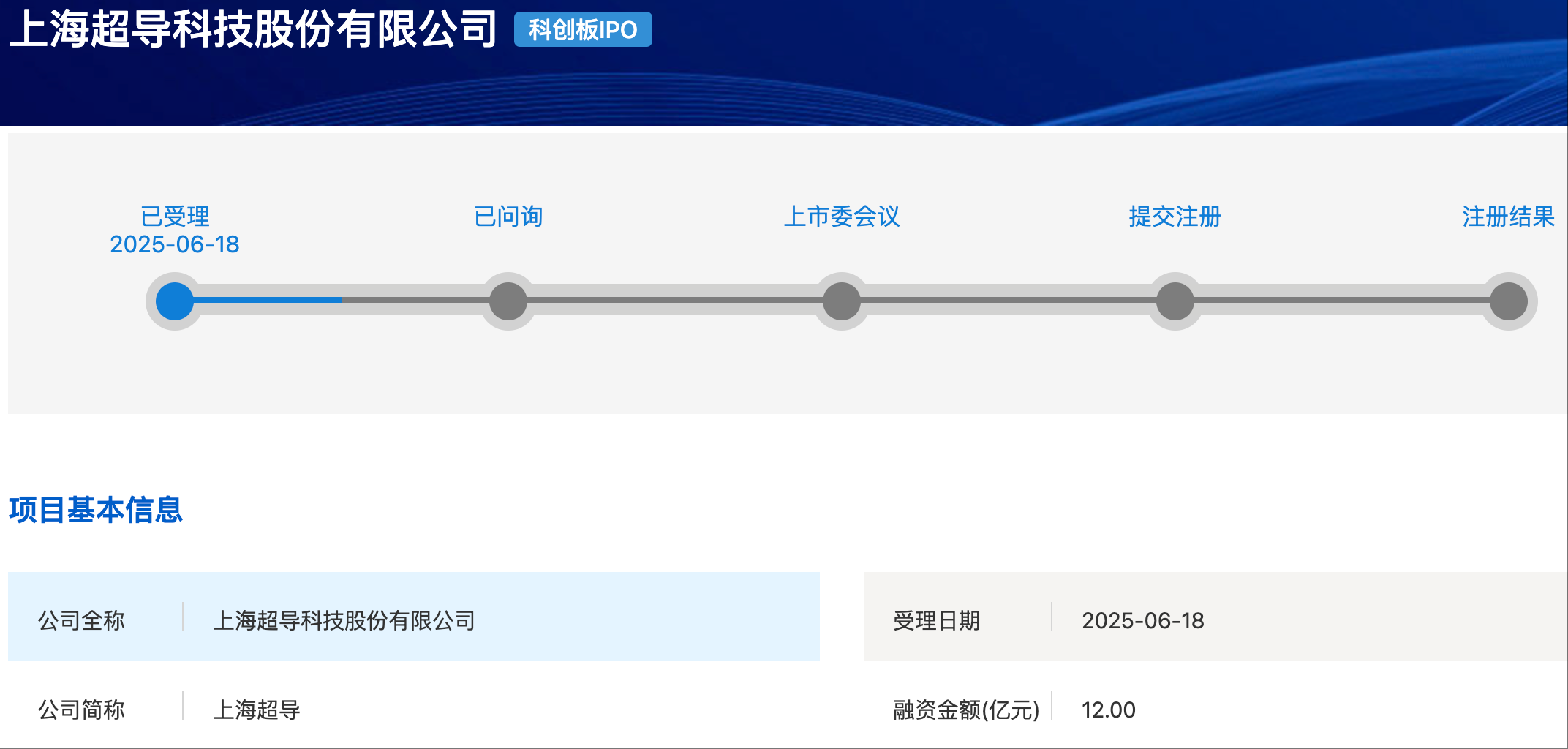
上海超导科创板IPO获受理 拟募资12亿元
Zheng Quan Shi Bao Wang· 2025-06-18 13:59
Core Viewpoint - Shanghai Superconductor Technology Co., Ltd. is focusing on the research, production, and sales of high-temperature superconducting materials and has initiated its IPO on the Shanghai Stock Exchange, aiming to raise 1.2 billion yuan [1][6]. Company Overview - Shanghai Superconductor is a high-tech enterprise and one of the global leaders in high-temperature superconducting materials production, with a significant market share in China [3]. - The company has developed its own production line and is one of only two manufacturers worldwide capable of mass-producing over 1,000 kilometers of second-generation high-temperature superconducting tape annually [3]. Market Position - Shanghai Superconductor holds over 80% of the domestic market share for second-generation high-temperature superconducting tape, ranking first for three consecutive years from 2022 to 2024 [3]. - The company has established strong partnerships with numerous well-known domestic and international enterprises and research institutions, including Southern Power Grid and the Chinese Academy of Sciences [3]. Product Applications - The company's products support several demonstration projects, including the world's highest voltage superconducting current limiters and the first full high-temperature superconducting tokamak [4]. - The main product, second-generation high-temperature superconducting tape, is used in various applications such as controllable nuclear fusion, superconducting electricity, and advanced medical equipment [4]. Financial Performance - From 2022 to 2024, the company is projected to achieve revenues of 35.78 million yuan, 83.34 million yuan, and 240 million yuan, with net profits of -26.11 million yuan, -3.91 million yuan, and 72.95 million yuan respectively [5]. - The company has a dispersed shareholding structure with no controlling shareholder, and the largest shareholder holds only 18.15% of the shares [5]. IPO and Future Plans - The IPO proceeds will be used to enhance the production capacity of second-generation high-temperature superconducting tape and to establish a headquarters base, with the project included in Shanghai's major construction plans for 2025 [6]. - Once fully operational, the new production line is expected to add 6,000 kilometers of second-generation high-temperature superconducting tape annually [6].
精达股份(600577) - 精达股份关于参股公司首次公开发行股票并在科创板上市申请获上交所受理的公告
2025-06-18 12:00
| 证券代码:600577 | 证券简称:精达股份 | 公告编号:2025-034 | | --- | --- | --- | | 债券代码:110074 | 债券简称:精达转债 | | 铜陵精达特种电磁线股份有限公司 关于参股公司首次公开发行股票并在科创板 上市申请获上交所受理的公告 本公司董事会及全体董事保证本公司公告内容不存在任何虚假记载、误导性陈述或者 重大遗漏,并对其内容的真实性、准确性和完整性承担法律责任。 铜陵精达特种电磁线股份有限公司董事会 2025 年 6 月 19 日 1/1 铜陵精达特种电磁线股份有限公司(以下简称"公司")参股公司上海超导 科技股份有限公司(以下简称"上海超导")首次公开发行股票并在科创板上市 申请于 2025 年 6 月 18 日获得上海证券交易所(以下简称"上交所")受理。 一、 上海超导向上交所申报上市已获受理基本情况 上海超导是一家专注于高温超导材料研发、生产和销售的高新技术企业,是 国际上唯二已经实现批量年产千公里级以上(12mm 宽)第二代高温超导带材的 生产商之一。截至本公告披露日,公司持有上海超导 9,458.75 万股,持股比例 为 18.15%。 近 ...
精达股份:参股公司上海超导科创板上市申请获受理
news flash· 2025-06-18 11:35
Core Viewpoint - The company Jingda Co., Ltd. (600577) announced that its associate Shanghai Superconductor Technology Co., Ltd. has received acceptance for its initial public offering (IPO) application on the Sci-Tech Innovation Board as of June 18, 2025 [1] Company Summary - Shanghai Superconductor focuses on the research, production, and sales of high-temperature superconducting materials [1] - It is one of only two manufacturers globally that have achieved mass production of second-generation high-temperature superconducting tapes exceeding 1,000 kilometers annually (12mm wide) [1] - Jingda Co., Ltd. holds 94.5875 million shares of Shanghai Superconductor, representing an 18.15% ownership stake [1]
精达股份(600577) - 精达股份关于不提前赎回“精达转债”的公告
2025-06-18 09:49
| 证券代码:600577 | 证券简称:精达股份 | 公告编号:2025-033 | | --- | --- | --- | | 债券代码:110074 | 债券简称:精达转债 | | 重要提示: ●公司股票自 2025 年 5 月 28 日至 2025 年 6 月 18 日已触发"精达转债"的 赎回条款。公司董事会决定本次不行使"精达转债"的提前赎回权利,不提前赎 回"精达转债",且在未来六个月内(即 2025 年 6 月 19 日至 2025 年 12 月 18 日),若"精达转债"触发赎回条款,公司均不行使提前赎回权利。 以 2025 年 12 月 19 日为首个交易日重新计算,若"精达转债"再次触发赎 回条款,董事会将再次召开会议决定是否行使"精达转债"的提前赎回权利。 一、"精达转债"发行上市概况 经中国证券监督管理委员会出具证监许可[2020]1397 号《关于核准铜陵精 达特种电磁线股份有限公司公开发行可转换公司债券的批复》核准,铜陵精达特 种电磁线股份有限公司(以下简称"公司")于 2020 年 8 月 19 日公开发行 787.00 万张(78.70 万手)可转换公司债券,每张面值为人民币 ...
精达股份: 精达股份关于不提前赎回“精达转债”的公告
Zheng Quan Zhi Xing· 2025-06-18 09:13
Core Viewpoint - The company has decided not to exercise the early redemption rights for its convertible bonds, "精达转债," despite triggering the redemption clause due to stock price conditions [1][3]. Group 1: Convertible Bond Overview - The company issued 7.87 million convertible bonds on August 19, 2020, with a face value of RMB 100 each, raising a total of RMB 787 million [1]. - The bond's duration is from August 19, 2020, to August 18, 2026, with the conversion period from February 2, 2021, to August 18, 2026 [2]. - The initial conversion price was RMB 3.80 per share, which has been adjusted to RMB 3.35 per share due to profit distribution and stock issuance [2]. Group 2: Redemption Clause and Trigger Conditions - The redemption clause allows the company to redeem the bonds if the stock price exceeds 130% of the conversion price for at least 15 out of 30 consecutive trading days, or if the remaining unconverted bonds are less than RMB 30 million [3]. - As of May 28, 2025, the stock price conditions have been met, triggering the redemption clause [3]. Group 3: Board Decision and Future Considerations - The board has resolved not to redeem the bonds early, and this decision will hold for the next six months, from June 19, 2025, to December 18, 2025 [3][4]. - If the redemption clause is triggered again after December 19, 2025, the board will reconvene to decide on the redemption [4].
可控核聚变行业深度
2025-06-18 00:54
Summary of Key Points from the Conference Call Industry Overview - The controlled nuclear fusion industry is experiencing rapid development globally, with increased capital and policy support from various countries, particularly China and the United States [1][3][7] - Significant advancements have been made in Tokamak, stellarator, and Field-Reversed Configuration (FRC) technologies, with superconducting materials and AI playing a crucial role in accelerating fusion development [1][4] Core Insights and Arguments - China has made notable progress in controlled nuclear fusion, with the EAST device and the Chinese Circulator No. 3 achieving record-breaking results [1][5] - As of July 2024, global investment in controlled nuclear fusion has increased by 57.2% year-on-year, reaching $7.1 billion, with private companies like Helion Energy receiving significant funding [1][7] - The core challenges in controlled nuclear fusion include achieving sufficient temperature, density, and time accumulation, necessitating the use of magnetic confinement to avoid wall corrosion [1][6] Technological Developments - AI is significantly enhancing nuclear fusion research through simulation, data analysis, and optimization of reactor parameters, potentially accelerating development timelines from 2045-2050 to 2030-2035 [4][10] - The FRC technology is gaining traction, with companies like Tae Technologies and Nova Fusion adopting this route due to its simplicity and cost-effectiveness [9] Important Developments in China - In 2025, the Chinese Academy of Sciences and other institutions have made breakthroughs, such as the EAST device achieving 100 million degrees Celsius for 1,066 seconds [5][12] - The Chinese government is expediting project tenders, with significant investments in core equipment and materials [5][13] Challenges Facing the Industry - The primary challenge remains the ability to maintain high temperatures and pressures for extended periods, which requires advanced materials that can withstand extreme conditions [6] - Turbulence phenomena in magnetic confinement systems pose additional risks to maintaining stable plasma conditions [6] Policy Support and Investment Landscape - Major countries, including China, the U.S., Germany, and Japan, are committing substantial investments to advance controlled nuclear fusion, with a clear timeline for development [7][14] - Helion Energy's recent funding round of $425 million highlights the growing interest and investment in private fusion companies [7] Future Outlook - The overall investment outlook for both nuclear fission and fusion is strong, with significant growth expected in the coming years, particularly in the third and fourth generation reactors [22][23] - The fusion sector is anticipated to have higher valuation and performance elasticity due to technological breakthroughs and application prospects [23] Additional Noteworthy Points - The ITER project, while slower in development compared to private initiatives, remains a critical international collaboration in fusion technology [14] - The nuclear fusion supply chain is complex, with superconducting materials accounting for over 40% of total project costs, highlighting the importance of companies like Western Superconducting and Jingda Co. [16] This summary encapsulates the key points discussed in the conference call, providing a comprehensive overview of the current state and future prospects of the controlled nuclear fusion industry.
核创纪元系列:超导材料:供需紧张,核聚变加速的重要驱动
Changjiang Securities· 2025-06-16 14:26
Investment Rating - The report maintains a "Positive" investment rating for the superconducting materials industry [3]. Core Insights - The superconducting materials industry is experiencing a tight supply-demand situation, driven by the acceleration of nuclear fusion projects, which significantly increases the demand for superconducting materials [7][85]. - Superconductors are critical for generating strong magnetic fields necessary for maintaining and controlling high-temperature plasma in nuclear fusion devices, thus enhancing energy efficiency and reducing energy consumption [44][59]. Summary by Sections Section 1: Superconducting Materials - Diverse Types and Wide Applications - Superconducting materials are categorized into low-temperature superconductors (LTS) and high-temperature superconductors (HTS) based on their critical temperature [16]. - LTS materials include NbTi and Nb3Sn, while HTS materials include YBCO and BSCCO, which have practical applications in various fields [22][24]. - The report highlights the unique properties of superconductors, such as zero electrical resistance and complete diamagnetism, which are essential for their applications in advanced technologies [11][12]. Section 2: Superconductors as Key Technologies in Accelerating Nuclear Fusion - Superconducting magnets are essential components of Tokamak devices, used to create the strong magnetic fields required for plasma confinement [38][44]. - The ITER project exemplifies the application of LTS materials in its magnet systems, which account for approximately 28% of the total cost of the device [44]. - The report discusses the potential of HTS materials to improve efficiency and reduce operational costs in next-generation fusion devices like SPARC [59][62]. Section 3: Tight Supply-Demand Dynamics in the Industry Chain - The supply of superconducting materials, particularly in the form of wires and tapes, is currently tight due to the increasing demand from nuclear fusion projects [85]. - Key companies in the superconducting materials sector include Shanghai Superconductor Technology Co., Ltd., which specializes in the production of high-temperature superconducting tapes, and other firms like YD and Lianchuang Optoelectronics, which are involved in various aspects of superconducting technology [85].
东吴证券晨会纪要-20250616
Soochow Securities· 2025-06-16 02:31
Macro Strategy - The report discusses the shift in policy focus from "controlling high prices" to "controlling low prices" to boost core CPI, suggesting that service price subsidies could increase core CPI by approximately 0.3 percentage points, offsetting declines in housing service prices [1][10][11] - Core CPI has shown a significant rebound since September of the previous year, despite four months of negative growth driven mainly by food and energy prices [10][11] - The report emphasizes the limited upward potential for core goods and housing service prices, indicating that future policy should focus on enhancing prices of other services [10][11] Industry Insights - The report highlights the new phase of controllable nuclear fusion as a potential ultimate energy solution, driven by policy and capital support, with multiple devices under construction [5][16][17] - It identifies key suppliers in the nuclear fusion sector, including West Superconducting, Lianchuang Optoelectronics, and Aikesaibo, suggesting that the industry is moving from experimental to industrial stages with significant future potential [5][16][17] - The report also discusses the trend towards lightweight robots, emphasizing the increasing application of magnesium alloys and PEEK materials, which are expected to enhance performance and reduce weight in humanoid robots [18]