
Temu

Search documents
期待出海企业“窑变”万彩(现场评论)
Ren Min Ri Bao· 2025-06-08 21:54
Core Viewpoint - The article emphasizes the importance of foreign trade enterprises adapting to external uncertainties by exploring new markets and reducing reliance on single markets, as demonstrated by the success of Yue Li Group in increasing sales by 27% in the first four months of the year through expansion into Central and Eastern European countries, Russia, and Turkey [1] Group 1: Government Support and Policies - Two key policies praised by participating enterprises include AEO certification, which reduces customs inspection frequency to about 1/10 of that for general enterprises, and export credit insurance, which alleviates concerns over payment cycles in emerging markets [2] - There is a need for balanced policy coverage, as some small and medium-sized enterprises feel underserved by existing support measures, highlighting the importance of equal rights, opportunities, and rules for all enterprises [2] Group 2: Role of Trade Service Platforms - Foreign trade service platforms are encouraged to respond to market demands by offering targeted services for emerging markets, exemplified by Ningbo Guomai Cloud Commerce's collaboration with Romanian e-commerce platform eMAG to assist over 200 local companies [3] - Many foreign trade enterprises are adopting outsourcing or design agency models, which can lead to high costs and unpredictable returns when entering new markets alone; thus, leveraging platforms for collective market entry is becoming a practical choice [3] Group 3: Manufacturing Resilience - The article draws a parallel between the craftsmanship of local artisans and the resilience required in the manufacturing sector, suggesting that maintaining focus and adaptability is key for Chinese manufacturing enterprises to thrive in a complex and changing environment [3]
出尔反尔?沃尔玛要求中国供应商承担最高66%关税成本;山姆换帅百天后动刀:6个大区变7个丨Going Global
创业邦· 2025-06-08 10:19
「Going Global 出海周报」 是创业邦推出的出海系列栏目,旨在为出海领域的创业者和投资人精选 出海大事件、海外大公司、投融资消息,本篇为栏目第 289 篇报道。 整理丨赵晓晓 本周( 202 4 . 06 . 01 - 2025.06.08 )出海大事件包括 :特朗普或为贸易谈判第三次延期 TikTok 禁令;首家 TikTok 线下选品中心在越南开放; TikTok 的电商新市场扩张任务已经完成, 但在德国还不怎么受欢迎; Temu 在第二季度全球化战略提速, 9 成用户来自亚非拉; Labubu 已 经成为速卖通 Top1 的搜索词;小红书在香港设立首个境外办公室,有望今年启动上市;快手的 Kling AI 单月营收破 1 亿元,成为全球收入最高的视频生成产品之一 等。 出海四小龙 特朗普或为贸易谈判第三次延期 TikTok 禁令 随着 6 月 19 日最后期限临近,特朗普预计将签署行政令,暂缓执行封禁或强制出售 TikTok 的法 律,以避免 TikTok 在美国的业务被全面封禁。 这将是特朗普 1 月就任美国总统以来第三次给予 TikTok 宽限期,此前两次分别为 4 月和 6 月的 75 ...



2025年中国品牌⾛向全球
Sou Hu Cai Jing· 2025-06-08 09:50
Overall Growth Trends and Key Changes - Since 2020/21, Chinese brands have shown significant growth on the global stage, particularly in social channels, e-commerce platforms, and official websites. Three key changes have been observed since 2024: enhancing market access through specific country/region websites and strategic e-commerce platforms; increasing presence on social media (especially Douyin) and optimizing content quality; and strengthening DTC website functionality and customer support [1][12][17]. Industry Performance and Leading Brands - Electronics remain the dominant category on the international stage, with 54 out of the top 100 brands being in this sector. The electric vehicle segment also holds substantial potential globally [2][23]. Emerging Champions in Niche Markets - Numerous "potential champions" have emerged in specific fields, such as Anker and Ecoflow in mobile power, Roborock and Ecovacs in robotic vacuums, and DJI in drones [3]. Impact of Digital Platforms - Brands like SHEIN, Temu, and TikTok have significant influence, not only achieving success themselves but also serving as launch channels for other emerging brands [4]. Success Factors and Challenges - Successful brands focus on clear value propositions, target customer segments, and localized content and sales channels. "Hidden champions" like Tuya stand out by concentrating on specific functions and providing quality service. Challenges include brands lacking unique value or local adaptation struggling to grow, while mature brands pursue growth through acquisitions, facing impacts from brand equity and geopolitical factors [5][18]. Ranking and Evaluation Methodology - The sample covers 664 brands, focusing on consumer and retail brands while excluding media and IT types. Brand scores are derived from website traffic (40%) and social media presence (60%), with varying weights for platforms like Douyin and Facebook [6][21]. Ranking Changes - The top three brands are realme, SheIn, and Huawei, with new entrants like Insta360 and Halara making the list. Brands such as FAW and Geely have seen notable ranking improvements, while some brands have declined [7]. Regional Expansion and Strategies - Target markets include mature regions like North America, Europe, and Asia, with rapid growth in emerging markets such as the Middle East and Africa, where digitalization scores have increased by 69.8% [8][46]. Localization and Channel Strategies - Brands are enhancing localized website content and services, leveraging e-commerce platforms alongside offline networks, though there remains room for improvement in brand engagement [9][45]. Future Recommendations - Focus on core markets to enhance engagement and avoid blind expansion. Leverage digital advantages by integrating Chinese experiences with global strategies. Strengthen local partnerships, listen to customer needs, and improve brand marketing capabilities to move beyond reliance on acquisitions [10][11]. Chinese Brands' Global Expansion - Chinese brands are demonstrating strong growth momentum in a complex global environment, with optimized strategies and enhanced brand value potentially leading to breakthroughs in more sectors [12].






对话出海创业者:关税波动下,出海仍是一门好生意
3 6 Ke· 2025-06-06 09:54
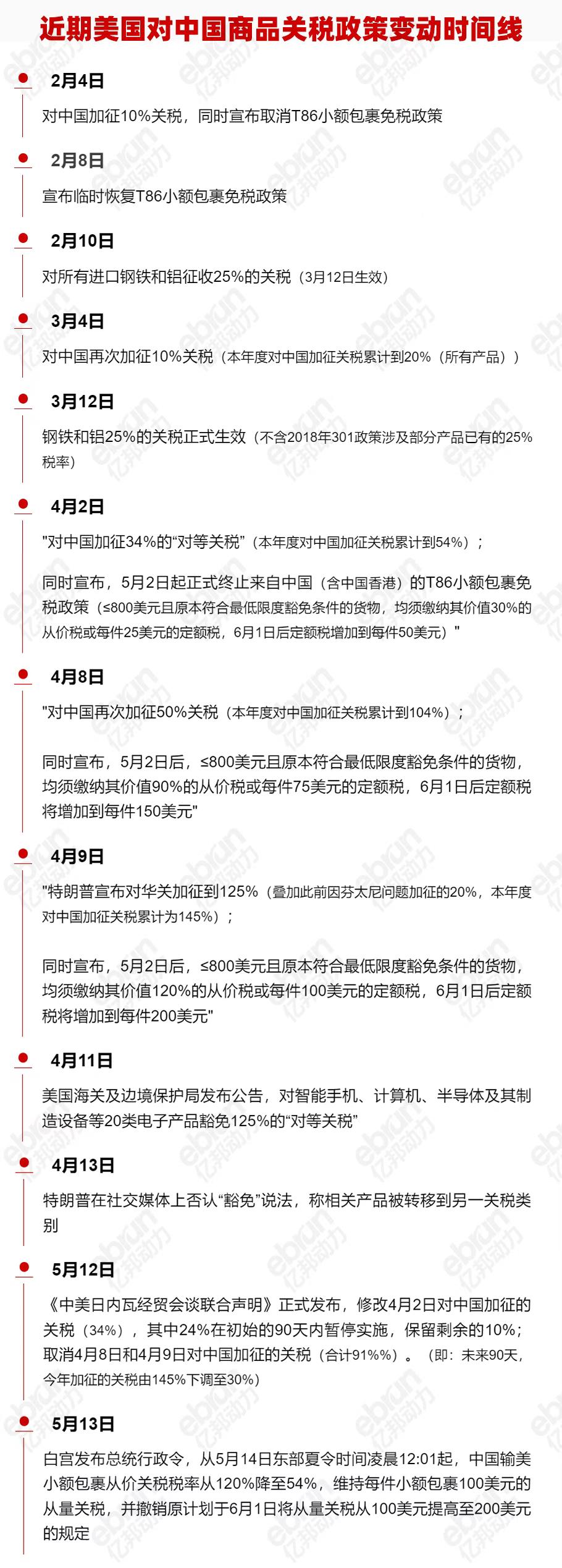
Group 1 - The article discusses the fluctuating tariff policies between the US and China since February 2025, highlighting the impact on Chinese businesses and their operational adjustments in response to these changes [1][2][5] - A timeline of tariff increases is provided, showing a cumulative increase of tariffs on Chinese goods reaching 104% by April 8, 2025, with significant changes in tax policies for small packages [2][5] - The article emphasizes the complexity of the international trade chain, particularly the uncertainties in international shipping due to fluctuating freight rates and geopolitical risks [6][8] Group 2 - The article outlines the implications of tariffs on different trade models, particularly the FOB (Free on Board) model, where the burden of tariff costs primarily falls on the purchasing party, affecting pricing strategies for Chinese manufacturers [8][11] - It highlights the challenges faced by small cross-border sellers due to changes in policies regarding international small packages, which are crucial for their operations [11][12] - The article notes that despite the tariff pressures, China's overall trade performance remains strong, with a 5.6% increase in total trade value in April 2025, indicating resilience in other markets [17][18] Group 3 - The article discusses potential new markets for Chinese brands, particularly in Southeast Asia, Latin America, and the Arab region, emphasizing the need for localization and understanding of cultural nuances [19][24][30] - It highlights the importance of deep localization strategies in Southeast Asia, where local regulations and market conditions require significant adaptation from Chinese companies [24][25] - The article points out the emerging opportunities in the Latin American market, particularly in Mexico, due to favorable trade agreements, while also noting the cultural barriers that need to be addressed [26][29] Group 4 - The article emphasizes the shift from low-cost strategies to high-quality manufacturing for Chinese products, suggesting that companies should focus on building brand value and sustainable pricing models [36][37] - It discusses the growing global interest in Chinese manufacturing, particularly in the 3C electronics sector, and the potential for cultural products and trendy items to succeed in international markets [40][41] - The article concludes with a call for companies to focus on long-term strategies and building strong brand identities rather than seeking quick profits, highlighting the importance of cultural understanding and product value [45][46]

Philippines Social Commerce Market Databook 2025, Featuring Resellee, cafe24 corp, Facebook, Instagram and YouTube
GlobeNewswire News Room· 2025-06-05 13:22
Core Insights - The Philippines social commerce market is projected to grow at an annual rate of 17.2%, reaching USD 2.30 billion by 2025, following a CAGR of 21.8% from 2021-2024 and expected to reach approximately USD 4.17 billion by 2030 with a CAGR of 12.6% from 2025-2030 [2][4] Market Dynamics - Growth is driven by the integration of social media platforms with e-commerce functionalities and consumer demand for interactive shopping experiences [3][4] - Increased internet access and social media usage are key factors contributing to the growth of the social commerce sector [6] Competitive Landscape - Major players include Lazada, Shopee, and Facebook, with new entrants like Temu intensifying competition [6][10] - The rise of live commerce and partnerships with influencers are crucial for enhancing consumer engagement and driving sales [9][10] Technological Advancements - Companies are focusing on AI-driven personalization, live commerce features, and augmented reality shopping developments to enhance consumer experiences [7][9] - The integration of secure payment solutions and digital wallets is shaping the shopping experience [9] Strategic Developments - The social commerce sector is witnessing strategic alliances and advancements in payment solutions, particularly in the Buy Now, Pay Later (BNPL) segment [14] - The regulatory environment is evolving, with guidelines from the Philippine Competition Commission influencing mergers and acquisitions in the digital market [14]


谈判失败?美国“队友”突然偏向中国,七国线下会面细节曝光
Sou Hu Cai Jing· 2025-06-03 16:32
据报道,为期三天的七国集团(G7)财长与央行行长会议,在加拿大小镇班夫草草结束。美国总统特朗普的关税枪 口不断激化盟友内部分歧,相关议题也被广泛认为是本次会谈的焦点所在。但从会后发表的联合声明来看,各国淡 化了由美国关税引发的贸易紧张局势,声明仅一次提及"贸易",且未涉及关税议题。包括G7央行行长在内的与会代 表承认,谈判面临挑战,包括各国在关税问题上持续存在的分歧,但最后的联合声明忽略了这一点。 然而,会议发表联合公报称:"我们认识到,有必要就非市场政策和做法如何加剧失衡、导致产能过剩并影响其他国 家经济安全达成共识。"与会财长与央行行长一致强调"公平竞争环境的重要性",以及"采取广泛协调的方式,应对那 些不遵守相同规则和缺乏透明度的(国家)造成的损害"。公报还透露,未来将对"市场集中度和国际供应链韧性"进 行分析。这份公报对中国含沙射影,是G7在给美国政府对华贸易打压找借口。 欧盟(资料图) 不仅如此,美国正式终止了对中国小额包裹免税政策。受此影响,一些国家的零售商近期调整甚至暂停了对美业 务。一些电商平台不得不因此重组物流体系,部分产品价格上涨幅度超一倍,用户普遍抱怨发货延迟。还有外国品 牌已停止向美国 ...

Report: Temu Loses 58% of US Daily Users Due to Tariffs
PYMNTS.com· 2025-06-02 23:18
Core Insights - Temu experienced a significant decline in daily U.S. users, losing 58% in May following the end of the de minimis exemption on imported goods from China on May 2 [1] - The new tariffs have led to a sharp drop in both sales growth and customer growth for Temu, as reported by Bain & Company [1] - Temu's parent company, PDD Holdings, reported a 38% year-over-year decline in profits in the first quarter due to tariffs and other factors [5] Impact of Tariffs - The de minimis exemption allowed packages worth less than $800 to enter the U.S. without tariffs, which was beneficial for Chinese eCommerce retailers like Temu [2] - President Trump announced additional tariffs on imports from China on February 1, aiming to halt illegal drug importation [2] - In response to the new tariffs, Temu is overhauling its supply chain by implementing a "half-custody" policy, which is expected to lead to higher prices [3] Changes in Operations - More than one-third of Temu's products sold in the U.S. are now fulfilled with inventory maintained in the U.S. [4] - Temu has raised prices and increased efforts to sell in countries other than the U.S. to mitigate the impact of tariffs [4] - The company significantly reduced paid advertising in the U.S., resulting in an 80% downturn in paid search traffic, which may further destabilize its pricing models [5] Merchant Challenges - PDD Holdings Chairman Lei Chen stated that tariffs have created significant pressure for merchants, who often struggle to adapt quickly and effectively [6]

2025年中国企业跨境电商行业洞察报告
Sou Hu Cai Jing· 2025-06-02 13:44
Core Insights - The report highlights the transformation of cross-border e-commerce from an optional strategy to a crucial necessity for Chinese enterprises in the context of significant changes in global trade dynamics [1] Group 1: Explosive Growth - In the first three quarters of 2024, China's cross-border e-commerce achieved a total import and export volume of 1.88 trillion RMB, representing a year-on-year growth of 11.5%, with exports growing by 15.2%, significantly outpacing overall foreign trade growth [2][29] - The rise of social e-commerce is a key driver, with the global social commerce market expected to reach $688 billion in 2024, growing by 20%, and projected to exceed $1 trillion by 2028 [2][31] Group 2: Dual Track Approach - Chinese enterprises primarily utilize two pathways for international expansion: B2B and B2C models [3][33] - The B2B model focuses on bulk trade between businesses, emphasizing supply chain management [3] - The B2C model targets direct sales to consumers, which can be further divided into platform-dependent and independent brand models [4][5] Group 3: Multi-Dimensional Globalization - Chinese enterprises are expanding beyond simple product exports to a multi-dimensional global strategy, including product, technology, and service exports [7][8][9] - Key sectors for product exports include consumer electronics, new energy vehicles, and fashion [7] - Technology exports involve digital technologies like 5G and AI, while service exports include logistics and brand services [8][9] Group 4: Regional Focus - Different markets exhibit unique characteristics, with mature markets like Europe and North America focusing on brand value and supply chain efficiency [10] - Southeast Asia is identified as the fastest-growing e-commerce region, driven by a young population and digitalization [11] - Emerging markets in the Middle East and Latin America present significant growth opportunities [12] Group 5: Benchmark Brands - Temu is rapidly expanding, projected to reach a GMV of $54 billion in 2024, significantly aided by its semi-managed model [13] - SHEIN is recognized as a leading fashion brand with a strong influence on Gen Z, driven by supply chain innovation [14] - TikTok Shop is emerging as a strong player in social commerce, with a projected GMV exceeding $50 billion in 2024 [15] Group 6: Future Trends - Six consumer trends are anticipated to shape product selection by 2025, including gardening, smart home integration, and outdoor living [17][18][22] - The "dopamine economy" emphasizes emotional value in consumption, while sleep-related products are expected to see increased demand [19][20] Group 7: Infrastructure Support - The growth of cross-border e-commerce relies on foundational support from payment solutions, logistics networks, and cloud services [23] - Companies like Ant International and Cainiao are pivotal in providing global payment and logistics solutions [23]




2024跨境电商行业专题:全球电商格局重塑,我国跨境平台御风前行
Sou Hu Cai Jing· 2025-06-02 09:36
Group 1 - The global e-commerce market is undergoing significant transformation, with a market size reaching $5.8 trillion in 2023 and a compound annual growth rate (CAGR) of 14.8% over the past four years, accounting for 19.4% of total retail sales [1][23]. - Chinese cross-border e-commerce platforms are emerging strongly, leveraging unique business models and supply chain advantages, with new players like Temu, Shein, and TikTok Shop reshaping the global market landscape [1][33]. - The penetration rate of e-commerce still has substantial room for growth, with China at 47% while developed countries like the US and UK are below 20% [2][43]. Group 2 - The US e-commerce market reached $1.1 trillion in 2023, with Amazon holding nearly 40% market share, while Europe is dominated by Germany, the UK, and France, which together account for two-thirds of the region's market [3][29]. - Southeast Asia's e-commerce GMV grew by 6.9% to $139 billion in 2023, with Indonesia representing 40% of the market share, indicating high growth potential despite a lower base [4][43]. - The main product categories in global B2C e-commerce are fashion (23%), electronics (21%), and home goods (20%), with health and personal care, as well as food and beverage, showing significant growth rates [5][29]. Group 3 - The explosive growth of Chinese cross-border e-commerce is driven by the combination of "Chinese manufacturing + innovative models" [6][27]. - Key provinces like Guangdong, Zhejiang, and Jiangsu contribute over 60% of the national cross-border e-commerce transaction volume, forming strong industrial clusters that support stable and high-quality supply [7][27]. - Over 30% of cross-border sellers experienced revenue growth exceeding 20% in 2023, with around 40% of mature sellers diversifying their operations beyond Amazon [8][32]. Group 4 - Temu's full-service model is revolutionizing efficiency by allowing sellers to ship goods to domestic warehouses while the platform handles pricing, logistics, and after-sales, significantly reducing costs [9][30]. - Shein is transitioning from fast fashion to a full-category independent platform, leveraging a rapid supply chain and social media marketing to enhance its market presence [10][30]. - TikTok Shop is capitalizing on its vast user base of 1.6 billion monthly active users, utilizing short video content to drive impulse purchases, particularly in beauty and home categories [11][30]. Group 5 - Despite strong momentum, Chinese cross-border platforms face challenges such as logistics optimization, compliance with varying tax policies, and the need to adapt to local market conditions in regions like Europe and Southeast Asia [12][43]. - The future of competition will hinge on optimizing the triangle of cost, efficiency, and experience, transitioning from price advantages to value advantages [12][43].

2024跨境电商物流专题报告:跨境仓储大件品出海的卖水人
Sou Hu Cai Jing· 2025-06-02 09:31
Core Viewpoint - The report highlights the rise of cross-border warehousing service providers, particularly those focusing on large items, as essential players in facilitating the export of bulky goods from China to overseas markets, akin to "water sellers" during a gold rush [1]. Group 1: Challenges and Solutions in Cross-Border E-Commerce Logistics - Direct mail has limitations for large items, making overseas warehouses a "savior" for bulky goods [2]. - The cost of shipping a chair via Amazon FBA is $45.37, while using a third-party overseas warehouse costs only $21.04, a reduction of 53.6% [3]. - Delivery times are significantly improved, with direct mail taking 10-15 days to the U.S., while local shipping from overseas warehouses can be as quick as 1-3 days [4]. - Overseas warehouses facilitate local returns and re-labeling, avoiding high costs associated with cross-border returns [5]. Group 2: Economies of Scale in Overseas Warehousing - The core competitive advantage of overseas warehouses lies in economies of scale, with larger warehouses significantly reducing costs [6]. - Renting a 1,000 square meter small warehouse costs about $3 million annually, while a 100,000 square meter large warehouse can reduce the cost per square meter to $1,400, a drop of over 50% [6]. - Shipping costs decrease with higher package volumes, with discounts available for shipping 100,000 to 5 million packages [6]. - Concentrating shipments can lower logistics costs by over 34% compared to air freight [7]. Group 3: Technological Advancements in Warehousing - Leading companies are accelerating digital transformation to manage high labor costs and complex logistics [8]. - Automation through AMR robots has improved storage utilization by 15% and order accuracy to 99.5% [8]. - Companies are developing integrated systems for order management, warehouse management, and transportation management to enhance visibility and efficiency [8]. Group 4: Competitive Landscape and Opportunities for Small Sellers - Increased competition in the industry is driven by capital influx and strategic adjustments from major players [9]. - Amazon has introduced a comprehensive supply chain solution, enhancing its service offerings and increasing its next-day delivery rate from 62% to 76% [9]. - Temu has opened up self-fulfillment options for sellers, facilitating the entry of large items onto its platform [10]. - The influx of capital has led to aggressive pricing strategies, with some service providers offering rent-free periods of 1-3 months [10]. Group 5: Future Outlook and Industry Dynamics - The cross-border warehousing industry is entering a consolidation phase, with lower logistics prices benefiting small sellers in the short term [11]. - Long-term success will favor companies with extensive warehouse networks, intelligent management systems, and comprehensive service capabilities [11]. - The maturity of overseas warehouses is reshaping the logistics landscape for Chinese manufacturers, enabling efficient delivery of large items to global consumers [12].