
博雅生物

Search documents
博雅生物(300294) - 公司关于2025年度利润分配预案的公告
2026-03-20 10:45
证券代码:300294 证券简称:博雅生物 公告编号:2026-011 在实施权益分派的股权登记日前,如享有利润分配权的股份总额发生变动, 则以实施分配方案时股权登记日的享有利润分配权的股份总额为基数,按照分配 比例不变的原则对分配总额进行调整。 2、公司利润分配预案不触及《深圳证券交易所创业板股票上市规则》(以 下简称创业板股票上市规则)第 9.4 条第(八)项规定的可能被实施其他风险警 示情形。 根据中国证券监督管理委员会《上市公司监管指引第 3 号——上市公司现金 分红》及《公司章程》等规定,为充分考虑对投资者的回报,结合公司 2025 年 度实际生产经营情况及未来发展前景,华润博雅生物制药集团股份有限公司(以 下简称公司)于 2026 年 3 月 19 日召开第八届董事会第十八次会议,审议通过《关 于公司 2025 年度利润分配预案的议案》,本议案尚需提交公司股东会审议。现 将有关事项公告如下: 一、审议程序 华润博雅生物制药集团股份有限公司 关于 2025 年度利润分配预案的公告 本公司及董事会全体成员保证公告内容真实、准确和完整,没有虚假记载、 误导性陈述或重大遗漏。 重要提示: 1、公司本次 2 ...

博雅生物(300294) - 2025 Q4 - 年度财报
2026-03-20 10:40
华润博雅生物制药集团股份有限公司 2025 年年度报告 2026-009 公司 2025 年年度报告全文 2026 年 3 月 1 公司 2025 年年度报告全文 第一节 重要提示、目录和释义 公司董事会及董事、高级管理人员保证年度报告内容的真实、准确、完整,不存在虚假记载、误 导性陈述或者重大遗漏,并承担个别和连带的法律责任。 公司董事长邱凯、主管会计工作负责人潘宇轩及会计机构负责人(会计主管人员)李瑛声明:保证本 年度报告中财务报告的真实、准确、完整。 所有董事均已出席了审议本报告的董事会会议。 内部控制重大缺陷提示 适用不适用 业绩大幅下滑或亏损的风险提示 适用不适用 报告期内,公司实现营业总收入 2,059,088,027.17 元,较上年同期增长 18.69%;实现营业利润 109,422,428.38 元,较上年同期减少 77.07%;归属于上市公司股东的净利润为 112,698,348.56 元,较上 年同期减少 71.61%,主要系格林克产品市场下行,导致无形资产和商誉减值损失增加,以及并购绿十 字产生的评估增值摊销增加影响,另外血制品业务受集采、DRG/DIP 改革、医保控费、市场竞争加剧 ...
新书 | 杜雨博士新书《货币新秩序》出版:美伊冲突升级、黄金破5000,谁改写全球财富规则?
未可知人工智能研究院· 2026-03-02 04:58
Core Viewpoint - The article discusses the transformation of the global financial landscape driven by the rise of stablecoins, the challenges faced by traditional financial systems, and the implications for individual wealth management in the digital age [2][21]. Group 1: Traditional Financial System Cracks - The current global financial market, despite its apparent prosperity, is experiencing significant underlying issues, highlighted by the surge in gold prices as a reflection of declining trust in existing monetary systems [4]. - The inefficiencies of the SWIFT system and the inflationary pressures on the US dollar are leading to a growing trend of "de-dollarization" among nations [4][5]. - The emergence of cryptocurrencies aimed to disrupt traditional finance but faced challenges such as volatility and operational limitations, paving the way for the rise of stablecoins [4][5]. Group 2: The Stablecoin Landscape - Stablecoins are not a monolithic entity; they represent a complex interplay of power dynamics, including centralization versus decentralization, and the competition between issuers and regulatory bodies [6][7]. - Different types of stablecoins, such as fiat-collateralized (e.g., USDT, USDC) and crypto-collateralized (e.g., DAI), exhibit varying degrees of stability and risk, with concerns over transparency and regulatory compliance [7][8]. - The competition among stablecoin issuers and the regulatory landscape is crucial for understanding the future of digital currencies and their role in the financial system [8]. Group 3: Impact on Global Financial Order - The growing scale of stablecoins is challenging sovereign currencies and reshaping global financial infrastructure, affecting every country and individual [10][11]. - Stablecoins are emerging as alternatives for smaller nations facing economic instability, while major economies like the US and China are navigating their own digital currency strategies [11][12]. - The rise of decentralized finance (DeFi) is heavily reliant on stablecoins, which serve as essential components for various financial services, although they also introduce new risks reminiscent of past financial crises [12]. Group 4: Opportunities and Risks for Individuals - The new monetary war presents both unprecedented wealth opportunities and significant financial risks for ordinary individuals, driven by market volatility and the emergence of stablecoins [14][15]. - The book provides a guide for individuals to identify arbitrage opportunities and understand the potential of stablecoins as a hedge against inflation [15]. - However, the digital financial landscape also harbors risks such as money laundering and fraud, necessitating awareness and understanding of the underlying rules to protect assets [15]. Group 5: Future of CBDC and Stablecoins - The competition between stablecoins and central bank digital currencies (CBDCs) will shape the future of the monetary landscape, with implications for global financial power dynamics [17][18]. - The book outlines three potential scenarios for the future of digital currencies, emphasizing the importance of technological integration and regulatory frameworks [18][19]. - The ultimate question remains: who holds the power to issue credit, a theme that has evolved with the advent of stablecoins and their role in the digital currency era [19].

iza-bren公告III期结果;君实生物等药企发布业绩快报 | 健讯Daily
2 1 Shi Ji Jing Ji Bao Dao· 2026-02-28 00:19
Regulatory Updates - In 2025, the National Medical Products Administration (NMPA) received 457 special approval applications for innovative medical devices, with 104 approved for special review and 38 priority applications, of which 26 were granted priority approval [1] - By the end of 2025, 475 traditional Chinese medicine production bases passed inspections, covering nearly 1.24 million acres and providing 101 types of Chinese medicinal materials for 215 production enterprises [2] Company Announcements - Shanghai Pharmaceuticals announced that its pregabalin capsules received a drug registration certificate from the Philippines, with a total sales amount of $13.37 million for three specifications [2] - Jiukang Bio received a medical device registration certificate for its albumin assay kit, valid until February 12, 2031 [3] Clinical Research - Eli Lilly's orforglipron demonstrated superior efficacy in glycemic control and weight loss compared to oral semaglutide in a head-to-head study involving 1,698 participants [4][5] - The study results were published in The Lancet, indicating significant improvements in A1C and weight reduction with orforglipron [5] Financial Performance - Baili Tianheng reported a net loss of 1.051 billion yuan for 2025, a significant decline from the previous year, with total revenue of 2.520 billion yuan, down 56.72% [8] - Junshi Biosciences achieved a total revenue of 2.498 billion yuan in 2025, a year-on-year increase of 28.23%, but reported a net loss of 874 million yuan [8] - Yifang Bio reported a net loss of 317 million yuan for 2025, with total revenue of 37.3253 million yuan, down 77.89% [9] - Nanmo Bio's total revenue for 2025 was 421.2586 million yuan, up 10.50%, with a net profit increase of 399.29% to 32.4313 million yuan [10]




高层震荡不断,博雅生物陷整合困局
Guo Ji Jin Rong Bao· 2026-02-27 23:53
Core Viewpoint - Frequent personnel changes at Boya Bio (300294.SZ) have raised concerns, particularly following the resignation of President Ren Hui after only 10 months in office, coinciding with a significant profit warning for 2025 [2][4]. Group 1: Management Changes - Ren Hui submitted his resignation from multiple positions, including President and legal representative, due to work changes, and will not hold any position in the company post-resignation [2]. - Ren Hui's tenure was notably short, as he was appointed in May 2025 and resigned in February 2026, marking him as the shortest-serving president in the company's history [4]. - The company has experienced three major leadership changes since 2021, indicating ongoing instability in management and challenges in integrating with the parent company, China Resources [5]. Group 2: Financial Performance - Boya Bio expects a revenue increase for 2025, projecting between 19.08 billion to 21.69 billion yuan, representing a growth of 10% to 25% year-on-year, primarily due to the acquisition of Green Cross Hong Kong Holdings [7]. - Despite revenue growth, the company anticipates a significant decline in net profit for 2025, forecasting a range of 1.05 billion to 1.37 billion yuan, a decrease of 65.62% to 73.55% compared to the previous year [8]. - The company is also expected to report a net loss of 7.5 million to 15 million yuan after excluding non-recurring gains, contrasting sharply with a profit of 302 million yuan in the same period of 2024 [8]. Group 3: Reasons for Profit Decline - The decline in profit is attributed to two main factors: a failed acquisition in the aesthetic medicine sector leading to substantial impairment losses, and pressures on the core blood products business due to regulatory changes and increased competition [9][10]. - The acquisition of Green Cross resulted in approximately 300 million yuan in impairment losses due to a downturn in the market for aesthetic products, which was seen as a significant investment misjudgment [9]. - The blood products segment is facing challenges from policy changes, leading to reduced clinical prescription volumes and a decline in overall gross margins, with a reported gross margin of 53.01% in the first half of 2025, down 14.02 percentage points year-on-year [10].
高层震荡不断,博雅生物陷整合困局
Guo Ji Jin Rong Bao· 2026-02-27 23:49
Core Viewpoint - Frequent personnel changes at Boya Bio (300294.SZ) have raised concerns, particularly following the resignation of President Ren Hui after only 10 months in office, coinciding with a significant profit warning for 2025 [1][2]. Group 1: Management Changes - Ren Hui's resignation marks him as the shortest-serving president in the company's history, having served from May 2025 until February 2026, with his term originally set to end in March 2027 [2][3]. - The company has experienced three major leadership changes since 2021, indicating instability in management and strategic integration challenges following the acquisition by China Resources [3]. - The first major change occurred in December 2021 when founder Liao Xinxu stepped down, leading to a complete management overhaul as China Resources took control [3]. Group 2: Financial Performance - Boya Bio anticipates a significant decline in net profit for 2025, projecting a range of 105 million to 137 million yuan, representing a year-on-year decrease of 65.62% to 73.55% [2][4]. - Despite expected revenue growth of 10% to 25%, with projected sales between 1.908 billion and 2.169 billion yuan, the company faces challenges in profitability [4]. - The decline in profit is attributed to two main factors: substantial impairment losses from a poorly performing aesthetic medicine business acquired in November 2024, and pressure on the core blood products business due to regulatory changes and increased competition [6][7]. Group 3: Industry Challenges - The blood products sector is experiencing a general decline in gross margins, with Boya Bio's gross margin dropping to 53.01% in the first half of 2025, a decrease of 14.02 percentage points year-on-year [8]. - Major competitors in the industry have also reported over a 20% drop in net profits, indicating that Boya Bio's struggles are reflective of broader industry challenges [8].
净利大降70%,总裁闪辞,华润开始“抢救”龙头
Xin Lang Cai Jing· 2026-02-27 14:01
Core Viewpoint - The article discusses the challenges and strategic shifts faced by Boya Biological, a blood product platform under China Resources, as it navigates a downturn in the blood product industry while seeking to establish itself as a leader in the sector. Group 1: Management Changes - Boya Biological has experienced significant management changes, including the resignation of President Ren Hui after less than a year, reflecting the company's response to industry pressures and the need for a leadership capable of navigating through challenging times [2][19]. - The management transitions at both Tian Tan Biological and Boya Biological are seen as attempts to reconstruct growth logic amid a collective industry downturn [2][19]. Group 2: Business Development Phases - Boya Biological's development can be divided into three phases: initial stabilization post-acquisition by China Resources, a phase of asset divestiture to refocus on core blood products, and a current phase of aggressive expansion through acquisitions [3][21][24]. - The company has been actively divesting non-core assets from 2023 to 2025, resulting in a significant drop in net profit but increasing the proportion of revenue from blood products, which is viewed positively by the market [6][21]. Group 3: Acquisition Strategy - In July 2024, Boya Biological acquired 100% of Green Cross Hong Kong for 1.82 billion yuan, gaining access to several key blood product varieties and expanding its plasma collection network [9][24]. - The acquisition is part of Boya's strategy to enhance its market position and scale in the blood product industry, which is critical for competing with industry leaders [7][22]. Group 4: Financial Performance - Boya Biological's financial outlook for 2025 indicates a projected revenue increase of 10%-25% to between 1.908 billion and 2.169 billion yuan, but a significant decline in net profit by 65.62%-73.55% is expected, highlighting the "growth without profit" dilemma [14][29]. - The company faces challenges from industry-wide pressures such as centralized procurement, DRG/DIP reforms, and increased competition, which have led to a decrease in gross margins for blood products [17][31]. Group 5: Research and Development - Boya Biological is expanding its product pipeline, with new products like a high-concentration immunoglobulin approved for market release, which is expected to enhance its product offerings and improve plasma utilization [14][30]. - The company is also investing in R&D, with a reported expenditure of 44.72 million yuan in the first half of 2025, representing 4.44% of its revenue, to support the development of new therapies and expand its product range [16][31].
并购公司业绩“爆雷”!博雅生物总裁辞职,任职未满10个月
Mei Ri Jing Ji Xin Wen· 2026-02-27 11:04
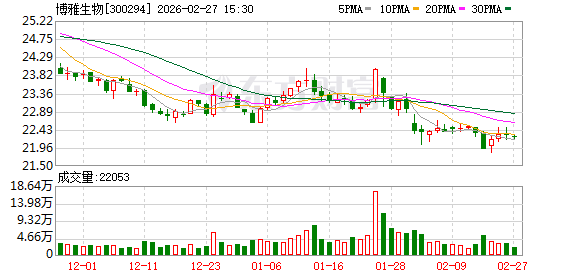
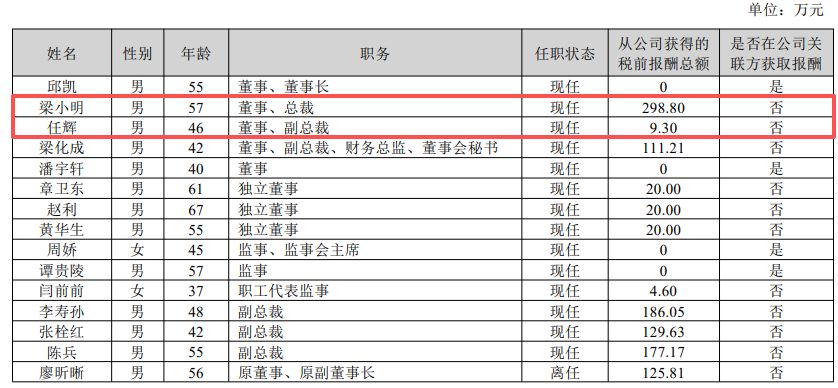
Core Viewpoint - The resignation of Ren Hui, the president of Boya Bio, after less than 10 months in office, coincides with the company's forecast of a significant decline in net profit for 2025, primarily due to asset impairment from an acquisition [1][5]. Group 1: Company Leadership Changes - Ren Hui resigned from his positions as president and board member of Boya Bio due to work changes, and his resignation leaves the president position temporarily vacant [1][2]. - Ren Hui was appointed as president on May 16, 2025, and previously served as vice president starting October 23, 2024, with a reported pre-tax salary of 93,000 yuan in 2024 [2][3]. Group 2: Financial Performance - Boya Bio's 2025 annual performance forecast indicates a net profit decline of 65.62% to 73.55%, estimated between 105 million yuan and 136.5 million yuan, with a projected non-recurring net loss of 7.5 million to 15 million yuan [5][6]. - The decline in financial performance is attributed to three main factors: impairment losses from the acquisition of Green Cross Hong Kong Holdings, depreciation and amortization impacts from the acquisition, and decreased gross margins in the blood products business due to intensified market competition and regulatory changes [6][7]. Group 3: Acquisition Impact - The acquisition of Green Cross Hong Kong Holdings in November 2024 has led to significant impairment losses, totaling approximately 300 million yuan, affecting the company's financial outlook for 2025 [6][7]. - The performance of the acquired company's products, particularly hyaluronic acid, has been negatively impacted by a downturn in the market, contributing to the overall financial challenges faced by Boya Bio [6][7]. Group 4: Shareholder Actions - Despite the poor financial outlook, the controlling shareholder, China Resources Pharmaceutical Group, has increased its stake in Boya Bio, acquiring an additional 6.0509 million shares, representing 1.20% of the total share capital [4][6]. - The stock price of Boya Bio has been on a downward trend since October 2024, with a significant drop from a peak of 41.51 yuan to a closing price of 22.25 yuan as of February 27, 2026, resulting in a market capitalization of approximately 11.22 billion yuan [6][7].
博雅生物:董事暨总裁任辉辞任,任职未满一年
Cai Jing Wang· 2026-02-27 07:28
Core Viewpoint - The announcement from Boya Bio-Pharmaceutical Group indicates a significant leadership change with the resignation of President Ren Hui due to work-related reasons, effective February 26, 2026 [1] Group 1 - Ren Hui submitted a written resignation report to the board, resigning from his positions as a director, president, legal representative, and member of the Strategic and ESG Committee [1] - Ren Hui was appointed as president of Boya Bio in May 2025, with an original term set to end on March 20, 2027 [1] - After his resignation, Ren Hui will not hold any positions within the company and did not own any shares in Boya Bio [1]
博雅生物:任辉辞去公司第八届董事会董事、战略与ESG委员会委员及总裁等职务
Mei Ri Jing Ji Xin Wen· 2026-02-27 02:48
Group 1 - The board of directors of Boya Bio-Pharmaceutical Group received a resignation report from Mr. Ren Hui, the company's president, who is stepping down from his positions due to work changes [1] - Mr. Ren Hui will no longer hold any positions within the company after his resignation [1] Group 2 - In February, China's AI usage surpassed that of the United States for the first time, with four major models ranking among the top five globally [1] - The demand for domestic computing power in China is experiencing exponential growth [1]