
美年健康

Search documents
毛利率秒杀行业龙头!东北中医连锁赴港IPO,好学老板正攻读名校MBA
Xin Lang Cai Jing· 2026-02-25 11:20
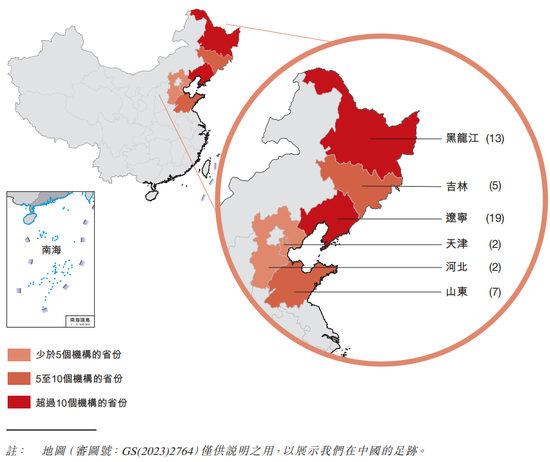
登录新浪财经APP 搜索【信披】查看更多考评等级 来自东北的民营中医诊所誉研堂,正加快脚步朝港交所走去。 1月27日,哈尔滨誉研堂中医门诊集团股份有限公司(下称"誉研堂")宣布进一步委任老虎证券为联席 整体协调人。 更早之前的1月16日,公司已向港交所主板递交上市申请,并委任招银国际及国元国际为联席整体协调 人。 短短半个月内迅速增设整体协调人,显示出公司推进IPO的迫切心态。 这家起家于哈尔滨的中医连锁机构,试图讲述一个关于民营中医规模化与标准化的资本故事。 来源:财通社 01 从东北一隅到北方连锁 誉研堂的故事起点并不宏大。其历史可以追溯至2015年,创始人郭阳通过投资并创立哈尔滨华新普健中 医药研究院进入中医药行业,主要从事草药膏剂及药物研究。 三年后,2018年7月,公司以"哈尔滨膏珍堂中医诊所有限公司"的名称成立,第一家诊所落地哈尔滨。 郭阳今年42岁,早年经历不详,本人较为低调神秘。招股书披露,其于医疗及健康科技行业拥有丰富经 验,曾长期担任哈尔滨华新普健医疗科技有限责任公司执行董事及经理。 如今他仍在持续学习,一边在国家开放大学就读,一边在中欧国际工商学院攻读MBA,预计于今年10 月从该商学院 ...

ETF盘中资讯|医械迎政策利好,规模最大医疗ETF(512170)延续高频溢价!FDA审评政策松绑,药ETF(562050)止跌企稳
Sou Hu Cai Jing· 2026-02-25 04:12
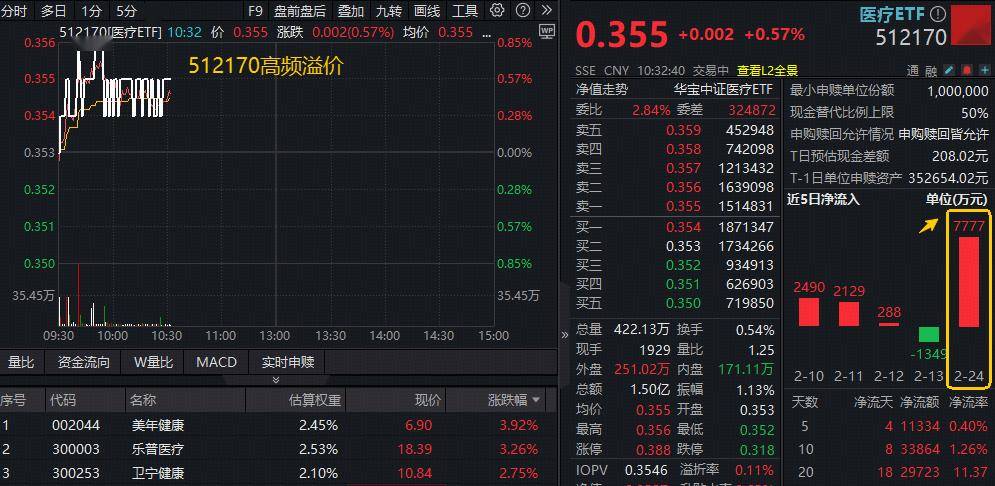
Group 1 - The A-share pharmaceutical sector rebounded, with medical device stocks and AI healthcare concepts leading the gains, including Meinian Health and Lepu Medical rising over 3% [1] - The largest medical ETF in the market (512170) saw a near 1% increase, with a net subscription of 77.77 million yuan on the previous day [1][5] - A new policy from the Beijing-Tianjin-Hebei region aims to enhance clinical trial efficiency and reduce compliance costs for CXO and medical device companies, set to take effect on March 1, 2026 [3] Group 2 - The pharmaceutical sector stabilized, with innovative drug concepts showing mixed results; Sanofi's stock rose over 3%, while Dizhe Pharmaceutical fell over 4% [3] - The only ETF tracking the pharmaceutical index (562050) turned positive during trading [3] - The FDA's recent announcement to establish a single pivotal clinical trial as the default standard for new drug approvals is expected to shorten development cycles and lower capital costs, benefiting innovative drug companies [4]
中航证券:AI药物发现提速 国产医疗大模型彰显国际竞争力
Zhi Tong Cai Jing· 2026-02-25 03:53
Core Insights - The report from Zhonghang Securities highlights the ongoing integration of AI products and services in the healthcare sector, focusing on areas such as medical imaging, clinical decision support, precision medicine, health management, medical information technology, drug development, and medical robotics. AI is evolving from a "technical assistant" role to becoming a core driver of "value reshaping" and "efficiency revolution" in the medical industry, with its commercial value permeating from research to clinical, payment, and patient levels [1] International Developments - In the international arena, significant advancements are noted in AI medical imaging diagnostics and AI-assisted drug discovery. AI systems for abdominal CT multi-disease triage and fetal abnormal ultrasound imaging have received FDA approval, indicating a shift from single-disease assistance to comprehensive triage and decision support systems. Collaborations between pharmaceutical companies and AI tech firms are enhancing cancer early screening capabilities, potentially increasing cancer diagnosis rates and accessibility to treatment drugs. Additionally, AI imaging diagnostics for stroke have gained recognition at top academic conferences, reflecting the growing acceptance of AI technology in clinical and research communities [1] - In drug discovery, international pharmaceutical companies are partnering with AI tech firms to accelerate new drug development. The world's first fully AI-designed antibody drug, GB-0895, has entered Phase III clinical trials, marking a significant breakthrough from concept to clinical practice. Google has also launched two open-source AI models for medical applications, enhancing capabilities in multi-modal analysis and voice interaction [1] Domestic Developments - Domestically, the value of AI in early drug development is being clinically validated, with companies like InSilico Medicine receiving FDA approval for new drug applications via AI platforms. AI-assisted diagnosis is expanding into various medical scenarios, with recent approvals for AI software in cervical cell digital pathology and accelerated AI healthcare initiatives from leading in vitro diagnostic companies. The emergence of large AI models in China is also noteworthy, with local teams publishing evaluation standards in international journals, showcasing the competitive edge of Chinese medical AI models [2] - Significant advancements are being made in AI imaging, surgical robots, and brain-computer interfaces, with AI accelerating the development of medicine and drug research. Recent policies related to AI in healthcare are being actively discussed, focusing on the reliability and compliance of AI-assisted diagnosis and the use of medical data [2] Investment Opportunities - Key investment opportunities identified include: 1) AI drug development: companies like Crystal Technology, Hongbo Pharmaceutical, Chengdu XianDao, and InSilico Medicine 2) AI medical imaging and assisted diagnosis: companies such as United Imaging Healthcare and Wandong Medical 3) Medical information technology and smart hospitals: firms like Jiahe Meikang, Chuangye Huikang, Donghua Software, and Weining Health 4) Internet healthcare and health platforms: including JD Health, Alibaba Health, and Ping An Good Doctor 5) Precision medicine and AI-driven medical services: companies like Kingmed Diagnostics, Runda Medical, and Meinian Health 6) Technology/data platform enterprises: such as iFlytek Medical and Yidu Technology [4] AI Medical Core Themes - The core themes in AI healthcare investment revolve around addressing industry pain points. AI-assisted diagnosis enhances diagnostic efficiency and consistency, supporting grassroots healthcare with clear cost-reduction and efficiency benefits. In cancer early screening, companion diagnostics, and efficacy prediction, AI contributes to achieving precision medicine. The maturity of AI applications varies, with AI medical imaging evolving from single-disease assistance to multi-disease integration and comprehensive management. AI-assisted drug discovery is transitioning from early discovery to clinical validation, necessitating attention to platform technology validation and deep collaborations with top pharmaceutical companies [3] - The development of large medical AI models and multi-modal AI, capable of processing diverse medical data, is crucial. The focus should be on the accuracy of these models in specialized fields, their integration with existing hospital information systems, and their potential to build an ecosystem as foundational "medical intelligent agents" [3]


医械迎政策利好,规模最大医疗ETF(512170)延续高频溢价!FDA审评政策松绑,药ETF(562050)止跌企稳
Xin Lang Cai Jing· 2026-02-25 03:01
Group 1 - The A-share pharmaceutical sector has rebounded, with medical device stocks and AI healthcare concepts leading the gains, including significant increases in companies like Meinian Health and Lepu Medical [1][8] - The largest medical ETF in the market (512170) saw a nearly 1% increase, with a net subscription of 77.77 million yuan the previous day [1][8] - A new policy from the Beijing-Tianjin-Hebei region is expected to benefit CXO and medical device companies by improving clinical trial efficiency and reducing compliance costs [2][5][10] Group 2 - The FDA has announced a new default standard for drug approvals, allowing for a single key clinical trial plus confirmatory evidence, which is projected to shorten development cycles and reduce capital costs significantly [4][12] - The cost of a single key trial is estimated to range from 30 million to 150 million USD, which will enhance the research efficiency of innovative drug companies [4][12] - The medical ETF (512170) has over 50% weight in medical devices and more than 25% in CXO, covering 12 AI medical and brain-computer interface concept stocks [4][12] Group 3 - The pharmaceutical sector is stabilizing, with mixed performance among innovative drug concepts; companies like Sanofi and Dizhiyuan have shown notable fluctuations [2][10] - Traditional Chinese medicine stocks have generally risen, with companies like Darentang and Jilin Aodong seeing increases of over 2% [2][10] - The only ETF tracking the pharmaceutical index (562050) turned positive during trading, indicating a recovery in the sector [2][10]


美年健康股价跌5.03%,华宝基金旗下1只基金位居十大流通股东,持有8866.4万股浮亏损失3103.24万元
Xin Lang Cai Jing· 2026-02-24 02:06
资料显示,美年大健康产业控股股份有限公司位于上海市静安区灵石路697号健康智谷9号楼三楼,成立 日期1991年1月22日,上市日期2005年5月18日,公司主营业务涉及健康体检、健康管理业务。主营业务 收入构成为:体检服务95.67%,其他服务4.33%。 华宝中证医疗ETF(512170)基金经理为张放。 截至发稿,张放累计任职时间5年28天,现任基金资产总规模356.41亿元,任职期间最佳基金回报 75.12%, 任职期间最差基金回报-23.7%。 2月24日,美年健康跌5.03%,截至发稿,报6.61元/股,成交5.53亿元,换手率2.08%,总市值258.73亿 元。 从美年健康十大流通股东角度 数据显示,华宝基金旗下1只基金位居美年健康十大流通股东。华宝中证医疗ETF(512170)三季度减 持1512.18万股,持有股数8866.4万股,占流通股的比例为2.29%。根据测算,今日浮亏损失约3103.24万 元。 华宝中证医疗ETF(512170)成立日期2019年5月20日,最新规模252.63亿。今年以来收益3.86%,同类 排名2811/5580;近一年收益5.73%,同类排名3928/429 ...
未知机构:中泰医药谢木青刘照芊乘通用AI之势建议关注AI医疗昨日-20260213
未知机构· 2026-02-13 02:35
Summary of Conference Call Notes Industry Focus - The focus is on the **AI healthcare sector**, particularly the integration of artificial intelligence in medical applications and services [1][2]. Core Insights and Arguments - The **Chinese government** emphasizes the need to promote large-scale commercial applications of AI, aiming to enhance the AI industry and expand high-value application scenarios [1]. - Recent advancements include **DeepSeek's version update** and the launch of **GLM-5**, indicating continuous breakthroughs in AI models [2]. - The **AI healthcare sector** is gaining traction due to supportive policies, technological advancements, and the gradual commercialization of pathology-assisted diagnostics [2]. - Clear application scenarios for AI in healthcare have been identified: - **B-end applications**: Involvement in medical imaging, surgical robots, in vitro diagnostics, and radiotherapy. - **C-end applications**: Empowering health management, chronic disease monitoring, personalized treatment suggestions, and academic research for doctors [2]. - Continuous policy support is evident through various documents that outline development directions and commercial pathways for AI in healthcare [2]. - The **first inclusion of "AI-assisted"** in the pricing project guidelines for pathology services marks a significant step towards commercialization [2]. - National-level AI application pilot platforms are being promoted in regions like **Beijing and Zhejiang**, enhancing industry conversion efficiency [2]. Additional Important Content - The **AI application market** is experiencing a surge in interest, driven by competition among major tech companies (ByteDance, Tencent, Alibaba, Baidu) in the general AI application field [3]. - Recent achievements, such as **ByteDance's Seedance 2.0**, demonstrate a shift from mere generation capabilities to commercial viability [3]. - The performance of companies like **Tempus** supports the feasibility of AI healthcare business models [3]. - Investment recommendations include companies such as **Dian Diagnostics, KingMed Diagnostics, and Meinian Health** [4]. - Risks highlighted include potential delays in policy implementation and slow commercialization of products or services [5].


未知机构:中泰医药谢木青刘照芊乘通用AI之势建议关注AI医疗昨日国-20260213
未知机构· 2026-02-13 02:35
Summary of Conference Call Records Industry: AI in Healthcare Key Points and Arguments - **Government Support for AI in Healthcare** The State Council emphasized the need to promote large-scale commercial applications of AI, enhance AI terminal and service consumption, and develop AI application pilot bases. This indicates strong governmental backing for the AI healthcare sector [1] - **Technological Advancements** Recent updates in AI models, such as DeepSeek's version update and the launch of GLM-5 by Zhizhu, demonstrate continuous breakthroughs in AI technology. This progress is crucial for the development of AI applications in healthcare [1] - **Commercialization Pathways** The introduction of guidelines like the "Pathology Medical Service Pricing Project" which includes "AI-assisted" services, paves the way for commercialization in the healthcare sector. This is a significant step towards integrating AI into medical services [2] - **Regional Initiatives** Various regions, including Beijing and Zhejiang, are advancing national-level AI application pilot platforms to enhance industrial transformation efficiency. This reflects a commitment to integrating AI with technological innovation [2] - **Market Dynamics and Competition** Major tech companies such as ByteDance, Tencent, Alibaba, and Baidu are competing in the general AI application space, which is driving the proliferation and iteration of AI technologies. For instance, ByteDance's Seedance 2.0 has achieved a breakthrough from "capable of generation" to "capable of commercialization" [2] - **Performance Validation** Companies like Tempus are demonstrating the viability of AI healthcare business models through their performance, further validating the potential of AI applications in the medical field [2] Investment Recommendations - **Growth Potential in AI Healthcare** Given the clear policy support, increasing market attention, and maturing technology, the AI healthcare sector is viewed as having significant growth potential. Recommended companies to watch include Dean Diagnostics, KingMed Diagnostics, and Meinian Health [3]
慈铭体检业务多元化布局与技术升级持续推进
Jing Ji Guan Cha Wang· 2026-02-12 05:47
Core Insights - The article highlights the business dynamics of Ciming Health Checkup, a member of the Meiyan Health Group, noting that there are no significant stock-related announcements but the operational developments are noteworthy Business Development - In 2025, Ciming Health Checkup Wuhan Co., Ltd. will expand its business scope to include medical beauty services and drug retail, indicating a diversification strategy [2] Business and Technology Advancement - Chengdu Ciming Health Checkup Center is implementing AI-assisted diagnostic systems and has introduced smart devices in 2023 to enhance service efficiency, having served over 1.5 million people cumulatively [3] Operational Status - In 2024, Ciming Health Checkup Wuhan Co., Ltd. reported an insured population of 355 individuals and a cumulative service volume exceeding 3.01 million, reflecting a solid operational foundation [4]
融资700万美元,瞄准「AI 养老规划」生意,保险巨头入局
3 6 Ke· 2026-02-12 03:01
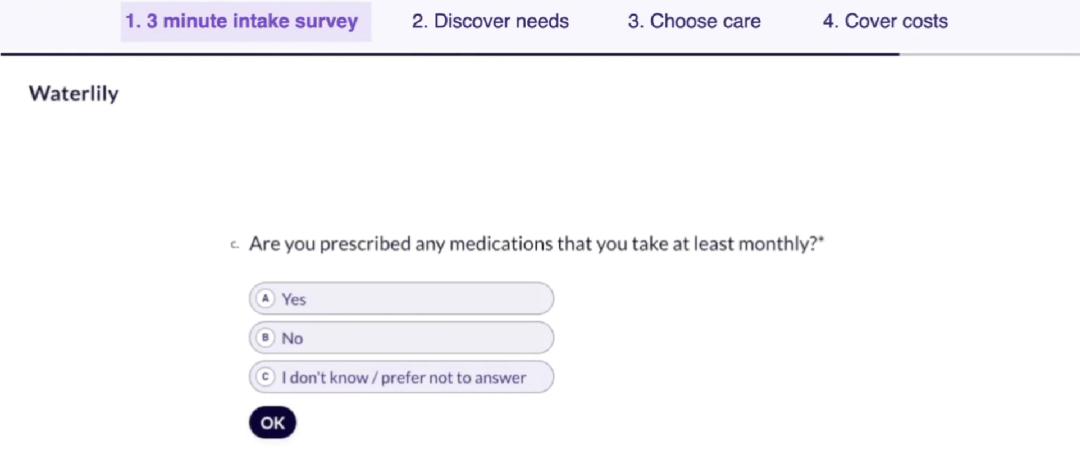
Core Insights - The main challenge in retirement planning is not poverty but uncertainty regarding health and financial needs as individuals age [1] - Waterlily, an AI-driven company, aims to address this uncertainty by providing personalized aging predictions based on extensive health and financial data [1][2] Group 1: Company Overview - Waterlily is not a traditional healthcare or insurance company but acts as an AI actuary to help families calculate retirement needs [1] - The company completed a seed funding round of $7 million, led by Brewer Lane Ventures, and has connected with major insurance firms like Genworth and Nationwide [1] Group 2: Technology and Methodology - Waterlily has developed a long-term care demand prediction model that standardizes the aging process [2] - The company utilizes over 500 million data records to provide personalized predictions about the likelihood of entering a state of disability and the associated costs [3][4] - Users input basic personal information, and the AI calculates the probability of health issues and the expected timeline for care needs [3][4] Group 3: Core Value Proposition - Waterlily translates health risks into financial risks, allowing users to understand the monetary implications of potential health issues [6][7] - The platform assesses not only the care needs of the elderly but also the capacity of family members to provide informal care, predicting when they may need to seek professional help [5] Group 4: Product and Business Model - Waterlily's product is primarily a SaaS platform for financial advisors, with a clear business flow that includes data collection, aging trajectory modeling, and solution matching [8][16] - The platform generates revenue through SaaS subscription fees and commissions from insurance product sales, creating a hybrid business model [17][19] Group 5: Market Impact and Insights - Waterlily addresses a significant pain point in insurance sales by improving conversion rates through data-driven insights, potentially reducing customer acquisition costs by up to 50% [20] - The company is transitioning from a prediction tool to a full-service transaction platform, enhancing its commercial capabilities [21] - The model offers insights that could be transformative for the Chinese market, where there is a need for better communication about retirement planning and financial responsibilities among family members [22][27]
美年健康拟参与棒杰股份预重整,AI医疗业务增长显著
Jing Ji Guan Cha Wang· 2026-02-12 02:54
Core Viewpoint - Meinian Health (002044) plans to participate in the pre-restructuring of Bangjie Co., Ltd. (002634) to integrate the industry chain, while its AI medical business is experiencing rapid revenue growth, benefiting from industry policy expectations [1][2] Recent Events - On January 29, 2026, Meinian Health announced its intention to participate in the pre-restructuring of Bangjie Co., Ltd., designating its wholly-owned subsidiary, Meinian Dake Health, as the restructuring acquirer, aiming to gain control of Bangjie Co., Ltd. This move is intended to integrate industry chain resources and build a "service-hardware-data" triad model to expand new health management business formats. However, the company noted uncertainties regarding its eligibility to participate and the final outcome as a restructuring investor [2] Business Progress - On January 9, 2026, driven by the launch of OpenAI's "ChatGPTHealth" and other features, investment enthusiasm in AI medical themes has surged. Meinian Health's AI products and the "Health Xiaomei" system have been implemented, with AI technology revenue reaching 250 million yuan in Q3 2025, representing a year-on-year growth of 71.02%. The company continues to optimize operational efficiency through AI [3] Industry Policy Status - Market analysis indicates that in the second half of 2026, healthcare industry policies will be intensively implemented, including the expansion of medical insurance payments, promotion of cancer early screening, and support for the scaling of AI medical services. These developments may provide Meinian Health with opportunities for customer growth and revenue increase [4] Recent Stock Performance - On February 10, 2026, Meinian Health's stock price rose by 2.41%, with a net inflow of main funds amounting to 20.914 million yuan and a trading volume of 784 million yuan. Since the beginning of the year, the stock price has accumulated a rise of 36.74%, indicating high investor interest [5]