软银集团

Search documents
黄仁勋,再次驳斥“AI泡沫”论!
Shen Zhen Shang Bao· 2026-01-22 11:50
Group 1 - The core argument presented by Jensen Huang, CEO of Nvidia, is that the current investment in AI is not a bubble but rather the largest infrastructure build-up in human history, requiring trillions of dollars in investment [1][5] - The AI industry is experiencing a significant transformation, moving from a "light asset software industry" to a "heavy asset heavy industry," with substantial investments in hardware and infrastructure [7][8] - The semiconductor market is witnessing a surge, with major companies like Intel and Micron seeing significant stock price increases, indicating strong demand for AI-related hardware [7][8] Group 2 - In 2025, the AI sector is projected to see investments of approximately $1.5 trillion, surpassing expenditures in nearly all other fields [2] - Despite the massive investments, a report from MIT indicates that 95% of organizations in the U.S. have not seen returns on their investments in generative AI, raising concerns about the effectiveness of these expenditures [3] - The AI industry is structured like a "five-layer cake," with each layer requiring substantial investment to ensure the functionality of the layers above it, emphasizing the need for foundational infrastructure [4][5] Group 3 - The global semiconductor market is experiencing unprecedented growth, with companies like TSMC and Micron investing heavily in new factories to meet the rising demand for AI capabilities [7][8] - The price of high-end memory chips has skyrocketed, with some products seeing price increases of over 600%, driven by limited production capacity and growing demand for AI servers [8] - Shenzhen-based company Demingli has projected a net profit increase of 85.4% to 128.2% for 2025, reflecting the strong growth potential in the storage solutions sector [9]


Asian shares rise, tracking Wall Street gains
Michael West· 2026-01-22 08:55
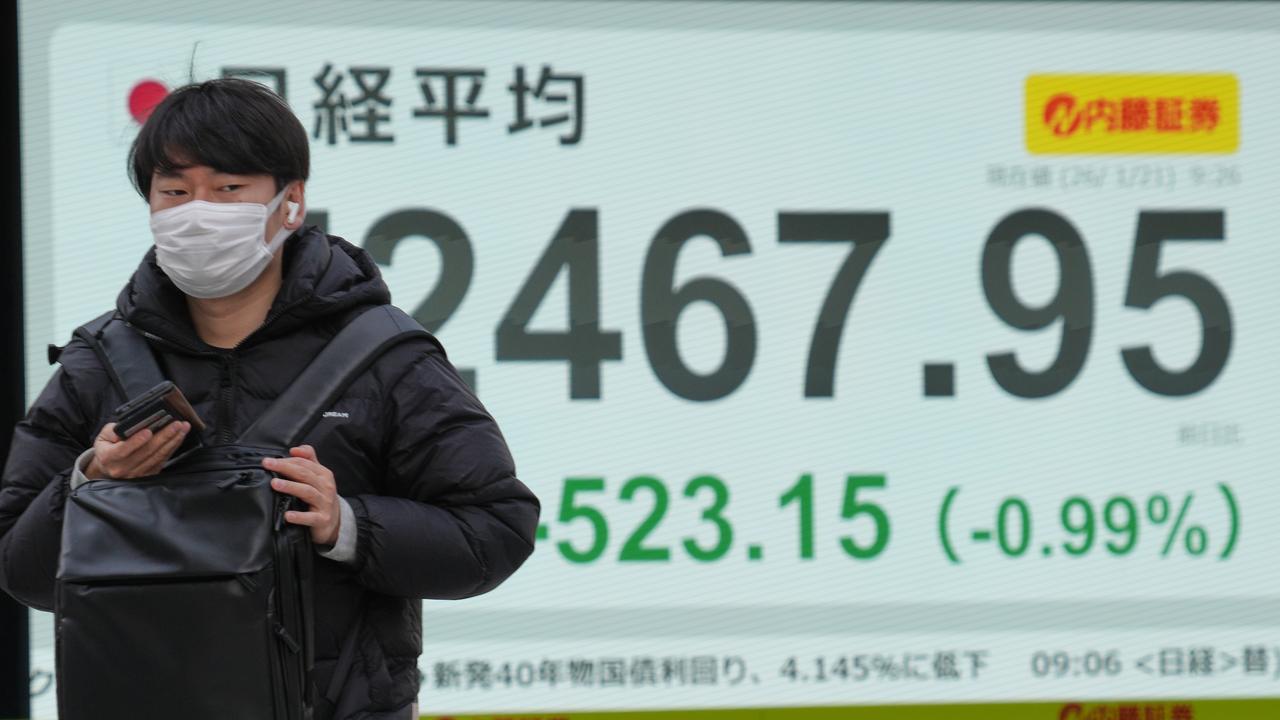
Market Overview - Asian shares have mostly advanced, influenced by Wall Street's performance following US President Trump's decision to retract tariffs on eight European countries regarding Greenland [1][4] - The S&P 500 and Dow Jones Industrial Average futures showed minimal changes, indicating a stable market outlook [1] Regional Performance - Tokyo's Nikkei 225 increased by 1.7% to 53,688.89, driven by technology stocks, with SoftBank Group rising 11.6% and Disco Corp. soaring 17.1% [2] - South Korea's Kospi closed 0.9% higher at 4,952.44, marking a significant milestone by crossing the 5,000 mark for the first time [2] - Technology stocks in South Korea saw gains, with SK Hynix up 2% and Samsung Electronics up 1.9% [3] - The S&P/ASX 200 in Australia gained nearly 0.8% to 8,848.70, while Taiwan's Taiex rose 1.6% and India's Sensex added 0.2% [3] US Market Reaction - US markets experienced their largest losses since October due to Trump's initial tariff threats, which raised concerns about US-European relations [4] - Following Trump's reversal on the Greenland issue, the S&P 500, Dow Jones Industrial Average, and Nasdaq composite all rose by 1.2% [6] Company-Specific Developments - Halliburton's stock jumped 4.1% after reporting stronger-than-expected quarterly profits [7] - United Airlines shares rose 2.2% following better-than-expected quarterly results, while Netflix fell 2.2% despite reporting stronger profits due to concerns over subscriber growth [7] Commodity and Currency Movements - The price of gold fell 0.2% to $4,828.70 per ounce, reflecting reduced investor anxiety [8] - US Treasury yields eased, with the 10-year Treasury yield dropping to 4.25% from 4.30% [8] - The US dollar strengthened against the Japanese yen, rising to 158.75 from 158.27, while the euro increased to $1.1692 from $1.1687 [9]


长久以来最乐观的时候!财报前夜英特尔股价暴涨
硬AI· 2026-01-22 07:34
Core Viewpoint - Intel's stock surged by 11%, reaching a four-year high, driven by booming data center demand and strategic investments from major players like the U.S. government and Nvidia, with a market capitalization exceeding $250 billion [2][3]. Group 1: Data Center Demand and Pricing Power - The resurgence of investor interest in Intel is primarily driven by strong recovery in server chip sales, with expectations of nearly a 29% to 30% revenue increase in Intel's data center and AI business, projected to reach approximately $4.4 billion [8]. - Analysts suggest that Intel's server CPUs may be sold out this year, indicating potential price increases, with expectations of at least double-digit price hikes for server CPUs by 2026 [9]. Group 2: Strategic Investments and Foundry Ambitions - Intel's turnaround is supported by a restructuring of its capital base and ambitions in the foundry business, with significant investments from the U.S. government ($8.9 billion) and Nvidia ($5 billion), enhancing its financial position [11]. - Intel aims to establish itself as the second-largest chip foundry globally, promoting its 18A manufacturing process, which is comparable to TSMC's 2nm process, although it is still seeking major clients [11]. Group 3: PC Market Concerns and Margin Pressures - Despite positive market sentiment, Intel faces challenges, with projected fourth-quarter revenues declining by 6% year-over-year to $13.4 billion, and only a 2.5% revenue growth in the PC segment [13]. - Margin pressures are anticipated due to high costs associated with repairing manufacturing operations, with adjusted gross margins expected to drop by approximately 6 percentage points to 36.5% [14].

这家卖马桶的日企,成了AI概念股?
财联社· 2026-01-22 07:29
Core Viewpoint - Toto's stock price surged by 10.09%, marking its largest intraday increase in five years, driven by rising global demand for storage chips and expectations for growth in its lesser-known chip manufacturing materials business [2][4]. Group 1: Stock Performance - Toto's stock performance on Thursday made the ceramic sector the best-performing segment of the Tokyo Stock Exchange, with a year-to-date increase of approximately 20% [2]. - The surge coincided with a broader rise in AI-related stocks in the Japanese market, including significant gains for SoftBank Group and Disco, both exceeding 10% [4]. Group 2: Analyst Insights - Goldman Sachs analysts upgraded Toto's rating from neutral to buy, anticipating significant profit growth in its silicon wafer handling tools business due to the tight supply-demand environment in the storage chip industry [6]. - The analysts highlighted that the demand for NAND chip manufacturing equipment, particularly electrostatic chucks, is expected to benefit from the global AI infrastructure development [6]. Group 3: Business Operations - Toto, known for its warm water toilet seats, has been involved in the semiconductor and display supply chain for decades, with its electrostatic chucks contributing up to 42% of total operating profit in emerging business areas for the fiscal year ending March 2025 [7]. - The electrostatic chuck is essential in semiconductor manufacturing, ensuring stable and clean silicon wafers during processes like PVD, CVD, and ETCH, while also providing temperature control [7]. Group 4: Industry Context - The global semiconductor supply shortage is being exacerbated by significant investments from companies like Meta and Amazon in AI service data centers, leading to increased demand for products from companies like Toto [7]. - Japan's strong semiconductor manufacturing background has allowed various companies, including those in non-traditional sectors, to expand into semiconductor-related businesses [8].

软银股价涨幅高达10%
Jing Ji Guan Cha Wang· 2026-01-22 02:41
Group 1 - The core point of the article is that SoftBank's stock price has surged by 10%, marking its highest level since December 4 [1] Group 2 - The increase in SoftBank's stock price reflects positive market sentiment and investor confidence in the company's future prospects [1] - This rise in stock price may indicate a potential recovery or growth phase for SoftBank, attracting more attention from investors [1]

软银股价涨幅高达10%,为自12月4日以来的最高水平
Mei Ri Jing Ji Xin Wen· 2026-01-22 02:37
Group 1 - The core point of the article is that SoftBank's stock price increased by 10%, marking the highest level since December 4 [1]
融资14亿美元,Skild AI打造跨任务、跨硬件形态的通用具身大脑
3 6 Ke· 2026-01-21 23:52
Core Insights - The development of AI progresses from specialization to generalization, eventually entering valuable niche scenarios based on general capabilities [1] - Skild AI aims to create a universal robotic brain, Skild Brain, that can adapt to any hardware form and perform various tasks, moving beyond the limitations of previous generations of robots [6][4] Funding and Valuation - Skild AI secured $300 million in Series A funding in 2024 and recently completed a $1.4 billion Series B funding round, led by SoftBank, with a valuation exceeding $14 billion [3] Founders and Team - The founders, Deepak Pathak and Abhinav Gupta, have over 110,000 paper citations and have led significant breakthroughs in robotics over the past decade [4] - The team comprises experts from leading tech companies and universities, enhancing its capabilities in embodied intelligence [4] Technological Advancements - Skild Brain is designed to control various types of robots without prior knowledge of their physical forms, enabling it to handle tasks ranging from simple household chores to complex physical challenges [6] - The architecture of Skild Brain includes a layered structure for operation and navigation strategies, allowing seamless transitions between different tasks [8] Learning and Adaptation - Skild Brain utilizes end-to-end motion control driven by online visual and proprioceptive feedback, enabling real-time adaptation to new environments [9][11] - The model incorporates context learning, allowing robots to learn from failures and adapt to unfamiliar situations, enhancing their versatility [12][15] Data Infrastructure - Skild has built a robust data infrastructure that allows Skild Brain to learn from various sources, including large-scale simulations and real-world deployments [16][17] - The company has achieved significant revenue growth, reaching $30 million in a few months through deployments in security, construction, and warehousing [19] Future Outlook - The company aims to bridge the generalization gap in physical AI, potentially leading to exponential value creation as it matures and expands its applications [20]

印度股市持续“不温不火”
3 6 Ke· 2026-01-21 23:46
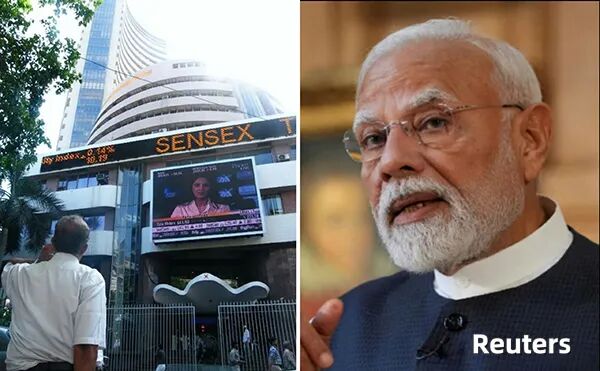
Group 1 - The SENSEX index in India is projected to rise by 9% in 2025, while China's Shanghai Composite Index, which has a higher concentration of tech stocks, is expected to increase by approximately 18%, and South Korea's composite index is forecasted to surge by 75% [2] - Despite a robust Indian economy, overseas funds are shifting focus towards AI and resource stocks, leading to underperformance of the Indian stock market compared to developed and other emerging markets [2][5] - Foreign investors continued to sell Indian stocks into January 2026, with a net sell-off of ₹1.6628 trillion (approximately ¥127.186 billion) in 2025, and an additional net sell of ₹185.8 billion by January 13, 2026 [2] Group 2 - The Indian economy remains strong, with a projected GDP growth of 7.4% for the fiscal year 2025, and an 8.2% year-on-year growth in GDP for the July-September 2025 quarter, significantly exceeding expectations [3] - The decline in sovereign wealth fund investments in India from $20.1 billion in 2024 to $5.7 billion in 2025 represents a staggering 72% drop, with 70% of new investments coming from the Middle East, primarily focused on AI and data centers [5] - The Indian stock market's relative weakness is attributed to a lack of high-tech stocks, with the SENSEX index rising only 9% in 2025 compared to the approximately 13% increase in the Dow Jones Industrial Average and 17% in the S&P 500 [5][6] Group 3 - Investment trends in emerging markets show a divergence, with the Shanghai Composite Index rising by about 18% and South Korea's composite index increasing by 75%, while resource-rich countries like South Africa and Brazil also saw significant index gains [6] - The sentiment among investors is shifting towards markets with better returns, as the view that "it is difficult to profit in the moderately performing Indian stock market" becomes widespread [6] - The positioning of India in the context of global geopolitical changes is increasingly important for overseas investors [6]
3家甬企入围全球榜单!从“瞪羚”企业看产业蝶变
Xin Lang Cai Jing· 2026-01-21 10:20
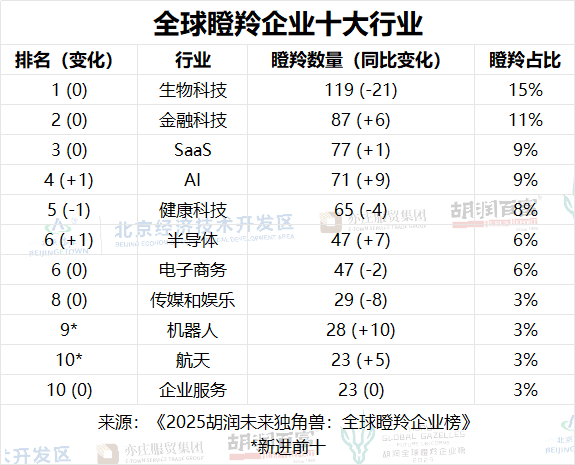
Group 1: Global Trends in "Gazelle" Companies - The report identifies 819 global "gazelle" companies, with 278 from China, indicating a significant presence in the market [2] - The average age of these companies is 9 years, with an average valuation of $700 million, showcasing rapid growth and innovation [4] - AI has become a dominant force, with 35% of "gazelle" companies driven by AI, reflecting its evolution from a niche sector to a foundational system across various industries [5] Group 2: Industry Insights - The top three industries for "gazelle" companies are biotechnology (119), fintech (87), and SaaS (77), with a notable shift in China's focus towards hard technology sectors like biotechnology and semiconductors [5] - The Long Triangle region, particularly Ningbo, has shown strong growth with 134 "gazelle" companies, benefiting from regional collaboration and industrial chain advantages [6] Group 3: Notable Companies in Ningbo - Ningbo's three notable companies—Wanyou Yili, Zhijia Technology, and Lanzhu—represent key advancements in AI, semiconductors, and industrial services, respectively [7][14] - Wanyou Yili focuses on XR chip development, addressing challenges in power consumption and performance for XR devices [8] - Zhijia Technology has achieved mass production of 1 million units and accumulated over 1 billion kilometers of real-world data, enhancing its position in the smart driving sector [10] - Lanzhu has developed an industrial operating system, empowering over 1,500 smart factories, and is recognized as a leader in industrial software [12] Group 4: Investment Landscape - Ningbo is experiencing a vibrant investment climate, with 171 pre-IPO financing events in 2025, averaging three funding rounds per week [15] - Emerging companies in AI and semiconductors, such as Jisuilian Optoelectronics, are positioned to capitalize on global trends in computing power infrastructure [15] - The focus on hard technology and future industries is evident in the city's strategic investments, indicating a strong commitment to innovation and growth [16]
回应特朗普“自费”要求?OpenAI承诺:为5000亿美元AI基建的电力升级买单
硬AI· 2026-01-21 09:19
Core Viewpoint - OpenAI has committed to self-funding the energy infrastructure costs for its Stargate community plans, ensuring that its operations will not increase local electricity prices. This commitment comes in response to recent calls from President Trump for tech companies to bear the costs of new power plants [2][3][6]. Group 1: OpenAI's Commitment - OpenAI will collaborate with local communities to customize solutions based on specific needs, which may include paying additional infrastructure costs or ensuring energy supply independently [5][9]. - The Stargate project is a multi-year AI infrastructure initiative valued at $500 billion, being developed in partnership with SoftBank and Oracle [5][11]. Group 2: Industry Context - The commitment from OpenAI follows a similar initiative announced by Microsoft, highlighting the growing concern over rising energy prices and their impact on local communities [6][14]. - Energy access is becoming a critical bottleneck for AI growth, prompting several tech companies to invest directly in power infrastructure to support larger-scale data center development [7][13].