
浦发银行

Search documents
观察|去年深圳8家银行密集“换将”,新行长们的角色之变
Nan Fang Du Shi Bao· 2026-01-21 06:03
Core Viewpoint - Shenzhen's "15th Five-Year Plan" aims to establish itself as a global "industrial financial center," raising expectations for local financial institutions, particularly banks, in their roles and responsibilities [22][23]. Group 1: Leadership Changes in Shenzhen Banks - Over the past year, at least eight commercial banks in Shenzhen have changed their leadership, including major state-owned banks and leading joint-stock banks [2]. - The appointment of Xiong Tao as the head of the Industrial and Commercial Bank of China (ICBC) Shenzhen branch reflects a strategic move to enhance the bank's focus on technology and innovation [2][4]. - Similarly, Ma Mingjun has been appointed as the head of the Bank of China Shenzhen branch, indicating a strengthened commitment to the Guangdong-Hong Kong-Macao Greater Bay Area [4][7]. Group 2: Key Appointments and Their Implications - Wang Xinghai, a veteran of China Merchants Bank, has taken over as the head of the Shenzhen branch, showcasing the bank's internal talent development strategy [9]. - Ping An Bank has also seen significant leadership changes, with Zhang Chaohui becoming the head of the Shenzhen branch, emphasizing the importance of this branch within the bank's overall strategy [11]. - New leaders at various banks, such as Shang Wencheng of China Everbright Bank and Yuan Rui of Shanghai Pudong Development Bank, are focusing on technology finance and innovative service models to meet the needs of Shenzhen's tech-driven economy [12][15]. Group 3: Strategic Focus on Technology Finance - The new leaders are expected to align their banks' strategies with Shenzhen's identity as a technology innovation hub, emphasizing the importance of "investment-loan linkage" services [12][23]. - The financial institutions are being urged to develop comprehensive service models that support the entire lifecycle of technology enterprises, particularly in critical sectors like semiconductors and advanced manufacturing [12][15]. - The shift towards a more integrated financial service approach reflects a broader trend in which banks are expected to act as "deep partners" and "comprehensive service providers" rather than just capital providers [23]. Group 4: Challenges and Future Directions - The banks in Shenzhen face challenges in transitioning from traditional financing to more complex service models, requiring enhanced risk management and understanding of emerging technologies [23]. - There is a growing need for collaboration with venture capital, insurance, and other financial institutions to meet the comprehensive needs of enterprises [23]. - The emphasis on long-term investment strategies and the establishment of a long-term assessment mechanism are critical for supporting sustainable growth in the technology sector [23].






银行已响应!信用卡分期消费贴息来了
Zhong Guo Zheng Quan Bao· 2026-01-21 04:15
农业银行发布的指引显示,信用卡用户可通过手机银行信用卡贴息专区、拨打信用卡客服热线主动签署 与查询信用卡贴息补充协议;也可在手机银行、客服等渠道办理账单分期时,按提示完成签署。 贴息支持范围扩大,信用卡账单分期业务也可以享受贴息了! "信用卡账单分期财政贴息政策实施期为2026年1月1日至2026年12月31日,在2026年1月1日至政策发布 日之间已办理的信用卡账单分期可致电我行信用卡客服热线申请补贴息。"农业银行(601288)表示。 1月20日,财政部相关负责人在新闻发布会上表示,将信用卡账单分期业务纳入了贴息支持范围。截至 目前,多家银行已经响应该政策,明确贴息举措。此外,去年9月份开始实施的个人消费贷款财政贴息 政策实施期限将延长至2026年底,每名借款人可享受消费贷款和信用卡贴息的上限为3000元。 信用卡账单分期业务可贴息 实施期覆盖2026年全年 多家银行表示,信用卡账单分期业务财政贴息政策实施期为2026年全年。 农业银行表示,新办理的信用卡账单分期业务且于政策实施期内生成的各期账单,经该行识别其真实 性、合规性后,可按规定享受贴息。 "信用卡账单分期年贴息比例是1个百分点,而且最高不超过办 ...




工行、农行等多家银行,“首单”火速落地!
Jin Rong Shi Bao· 2026-01-21 03:18
在新规正式发布后的第二天,建行安徽省分行采用"直接投资+基金投资"相结合的模式,成功为池州市 某国有投资平台投放1亿元并购贷款,专项支持其参股苏州某半导体领域企业。 《商业银行并购贷款管理办法》(以下简称"新规")落地近一个月,多家银行纷纷落地"首单""首批"并 购贷款业务。 《金融时报》记者注意到,紧跟新规导向,工商银行(601398)、农业银行(601288)、中国银行 (601988)、建设银行(601939)等国有大行率先完成了新规发布后的首笔并购贷款。 "在新规印发后,工商银行第一时间推进落实,在山东、福建、安徽等地高效落地全国首单、首批符合 新规导向的并购贷款业务,涵盖参股型与控制型等业务模式。"工商银行表示。 1月5日,工商银行福建省分行为某企业发放并购贷款2.99亿元,专项用于支持该企业收购某产业园核心 资产。据悉,这是新规正式实施后,全国银行业落地的首笔 控制型 并购贷款。 作为服务"三农"的主力军,1月9日,中国农业银行南京分行针对江苏省内某大型粮食集团完善产业链、 提升运营效能的诉求,为企业量身定制并购贷款方案,助力企业提升粮食全链条运营及应急保供能力。 值得一提的是,各家银行在参股型并 ...

中小微企业贷款贴息、民间投资专项担保……财政部连发五项重要政策
Sou Hu Cai Jing· 2026-01-21 03:12
Group 1 - The Ministry of Finance and other departments have released five policy documents aimed at optimizing financial support for personal consumption loans, equipment updates, private investment guarantees, service industry loans, and small and micro enterprise loans [1][9][29] - The personal consumption loan subsidy policy has been extended until December 31, 2026, with adjustments to the subsidy standards and an expanded range of supported financial institutions [4][5][6] - The equipment update loan subsidy policy includes a 1.5% subsidy on fixed asset loans for equipment updates, applicable for up to two years, and has been expanded to include various sectors such as construction, aviation, and digital technology [10][11][12] Group 2 - The private investment guarantee plan has a total quota of 500 billion yuan, to be implemented over two years, focusing on supporting small and micro enterprises in various sectors including technology upgrades and service industry enhancements [17][18] - The plan includes a risk-sharing mechanism where banks will bear at least 20% of the loan risk, while the government guarantee fund will cover up to 80% [19] - The government will also reduce guarantee fees and increase the compensation limit for the guarantee fund to enhance support for private investments [20] Group 3 - The service industry loan subsidy policy has been extended to December 31, 2026, with an increased subsidy cap of 10 million yuan per loan and a 1% annual subsidy rate [23][24] - The policy now includes additional sectors such as digital, green, and retail industries, expanding the scope of financial support [24][25] - The implementation of these policies will involve streamlined processes for fund allocation and enhanced collaboration among financial institutions and regulatory bodies [26][28]


中国太保20260120
2026-01-21 02:57
Summary of China Pacific Insurance Conference Call Company Overview - **Company**: China Pacific Insurance (中国太保) - **Industry**: Insurance Key Points Financial Performance and Taxation - The actual tax rate for Q3 2025 increased mainly due to the higher proportion of property insurance profits and seasonal differences in tax-exempt income from government bonds, but these factors are not expected to have a lasting impact on the company's net profit [2][3] - The overall performance for Q4 2025 is expected to remain stable across life insurance, property insurance, and asset management sectors, with a focus on strict cost control to enhance profit sustainability [3][10] Life Insurance Market Outlook - The 2026 life insurance "opening red" is expected to benefit from increased insurance demand due to macroeconomic conditions and a shift of bank deposits towards insurance products, which are perceived as attractive due to their guaranteed returns and expected income characteristics [2][4] - The aging population and declining birth rates in China are increasing the importance of commercial insurance [4] Sales Strategies - The agent channel employs a "first quarter red" strategy, focusing on segmented customer management to enhance sales efficiency by targeting high-net-worth, mid-to-high-end, and end customers with tailored products [2][5] - The bank insurance channel is progressing steadily, emphasizing the expansion of major bank networks and leveraging resources from joint-stock banks, with both channels performing better than expected [2][7] Value Rate and Product Mix - The value rate is influenced by differences in insurance types, payment methods, and the proportion of bank insurance business. The increase in the proportion of participating products has a lower value rate compared to protection products, but the rise in regular premium business is expected to positively contribute to the overall value rate stability [2][8] Agent Workforce and Capacity - The agent workforce remains stable at approximately 180,000, with core personnel making up less than 30%. The company is focusing on enhancing the quality of new recruits to improve sales capabilities [9] Cost Control and Long-term Strategy - The company has been proactive in managing expenses, reducing non-compliant costs, and ensuring that short-term business growth does not compromise long-term development [10] Bank Insurance Channel Development - The bank insurance channel has seen significant growth since its re-launch in Q4 2021, with a focus on diversifying channels to mitigate risks and capitalize on high-net-worth customer opportunities [11][12] Non-Car Insurance Business - The non-car insurance sector is expected to face challenges in premium growth due to regulatory changes, but improvements in the combined cost ratio are anticipated [20] Investment Strategies - The company plans to adopt a barbell strategy in fixed income asset allocation, exploring innovative assets to enhance interest income, while maintaining a focus on dividend value strategies in equity investments [21][22][23] Future Considerations - The company is adjusting its asset management strategies to account for the unique liability characteristics of floating yield products, aiming to optimize the balance between fixed income and equity investments based on market conditions [24] Conclusion - China Pacific Insurance is navigating a complex market environment with a focus on strategic growth in life insurance, effective cost management, and innovative investment strategies to ensure long-term sustainability and profitability [2][3][10]

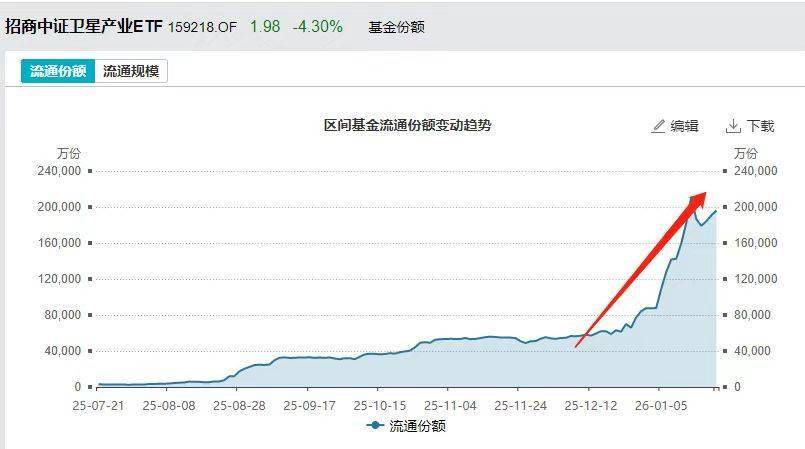
银行卫星纷纷上天!两融标的卫星产业ETF(159218)今年以来累计成交近150亿
Sou Hu Cai Jing· 2026-01-21 01:34
Group 1 - The core viewpoint of the article highlights the unprecedented enthusiasm in the commercial aerospace sector, with significant market activity and investment flowing into satellite industry ETFs, indicating strong investor interest and market liquidity [1][3] - The satellite industry ETF (159218) achieved a remarkable trading volume of over 14.9 billion yuan and a net inflow of nearly 2.2 billion yuan within just 12 trading days at the start of 2026, showcasing the capital market's confidence in the "space economy" driven by both state and market forces [1][3] - Banks are increasingly participating in the commercial aerospace trend, with several banks successfully launching satellites aimed at enhancing their risk control capabilities, utilizing satellite remote sensing technology for real-time monitoring of loan projects and collateral status [3] Group 2 - The satellite industry ETF (159218) has become the first in the market to double its returns, serving as a key financial vehicle for investors to share in the benefits of this new era of certainty [3]
A股银行年度盘点:2025告别普涨,2026拥抱分化
3 6 Ke· 2026-01-21 00:59
Core Insights - In 2025, A-share listed banks in China experienced a significant shift in development logic, moving from scale competition to value creation, focusing on core business and providing precise financial services to support high-quality economic development [1][2] Group 1: Market Performance - The A-share banking sector showed notable structural differentiation in 2025, with the Shanghai Composite Index and Shenzhen Component Index rising by 18.41% and 29.87% respectively, while the banking sector index increased by 12.04% [1] - By the end of 2025, the total market capitalization of A-share banks reached 14.65 trillion yuan, with 35 out of 42 listed banks seeing their stock prices rise, and 19 banks experiencing gains exceeding 10% [1] - In contrast to the broad market rally in 2024, where the banking sector index rose by 43.56%, 2025 marked a transition to a more selective investment environment [1] Group 2: Performance of Major Banks - Agricultural Bank of China led the sector with a stock price increase of 52.66% in 2025, while other major banks like Industrial Bank, China Construction Bank, and Bank of China saw increases of 21.54%, 12.87%, and 10.75% respectively [4] - The total market capitalization of the four major state-owned banks remains dominant, with Industrial Bank at 2.63 trillion yuan and Agricultural Bank at 2.61 trillion yuan [4] - The performance of other major banks was hindered by large capital increases, as several banks announced plans to raise a total of 520 billion yuan through stock issuance [4][5] Group 3: Performance of Joint-Stock Banks - Joint-stock banks exhibited further performance differentiation in 2025, with Shanghai Pudong Development Bank leading with a 24.56% increase, while banks like Huaxia Bank, Everbright Bank, and Minsheng Bank saw declines of 9.82%, 5.59%, and 3.09% respectively [6][7] - The decline in stock prices for these banks can be attributed to poor operating performance, with Huaxia Bank and Everbright Bank reporting revenue and profit declines [8] - Regulatory penalties also impacted these banks, with Huaxia Bank facing over 120 million yuan in fines, indicating ongoing compliance pressures [10][12] Group 4: Regional and Cooperative Banks - City and rural commercial banks showed mixed performance, with Xiamen Bank rising by 35.78%, while others like Zhengzhou Bank and Beijing Bank experienced declines [11] - Regulatory penalties for city commercial banks were significant, with Shanghai Bank and Beijing Bank facing fines exceeding 3.8 million yuan and 3.6 million yuan respectively [12] Group 5: Investment Outlook for 2026 - The investment logic for bank stocks is expected to evolve towards value reassessment, with a focus on performance growth and compliance levels becoming critical for individual stock performance [19] - The banking sector is anticipated to transition from a "growth weak cycle" to a "reform deep water zone," suggesting a dual strategy of holding stable, high-dividend large banks while selectively investing in high-potential regional banks [18][19] - The average price-to-book ratio for the banking sector was approximately 0.73, indicating a structural recovery, with Agricultural Bank exceeding 1.0, while others remained below this threshold [13]



【钛晨报】激发民间投资、促进消费,财政部详解一揽子扩内需政策;交易所紧急出手,调整金银铜铝合约风控参数;丹麦养老基金据悉将退出美国国债投资
Sou Hu Cai Jing· 2026-01-20 23:48
第三项是支持民营企业债券风险分担机制。这也是一项新政策。中央财政专门安排风险分担资金,与央行现有政策协同,为民营企业和私募股权投资机构发 行债券提供增信支持,代偿投资人部分损失。 【钛媒体综合】今年的首场国务院常务会议研究推出财政金融促内需一揽子政策,社会上高度关注。1月20日,财政部副部长廖岷在国新办新闻发布会上介 绍了一揽子政策的要点内容,概括为"一个目标""两个重点""三个原则"和"六项政策"。截至目前,这些政策已经陆续发布。 第一项是中小微企业贷款贴息政策。这是支持中小微民营企业发展的一项新政策。主要是对相关领域企业贷款予以贴息,重点包括新能源汽车、工业机器 人、医疗装备、移动通讯设备等14个重点产业链及上下游产业,以及科技、物流、信息和软件等生产性服务领域,还有农林牧副渔等领域。贴息为贷款总额 的1.5个百分点,最长贴息期2年,可享受贴息政策的单户贷款额度上限是5000万元。 第二项是民间投资专项担保计划。这项新政策主要是为中小微民营企业贷款提供担保,符合条件的中小微民营企业,因为生产场景的拓展、改造、升级,以 及改扩建厂房、店面装修等生产经营活动需要的中长期贷款,均可获得支持。单家企业可享受担保的 ...

银行“开门红”信贷调查: 盛宴下的风险底线
Zhong Guo Zheng Quan Bao - Zhong Zheng Wang· 2026-01-20 23:26
年初历来是银行信贷投放的"黄金窗口期"。为冲刺"开门红"业绩,多家银行通过下调利率、提速审批来 争夺优质客户。在社交平台上,不少贷款中介借此宣称银行"悄然放宽了信贷审批标准"。 中国证券报记者调研发现,尽管银行员工为完成业绩指标(有的银行要求1月完成全年贷款任务的30% 以上)而积极营销,甚至承诺若后续贷款降息可协助客户调整利率,但所谓的审批"放水"仅是贷款中介 的营销话术。银行实际的贷款审批,依然严格遵循大数据风控模型,对客户资质与资金用途进行审慎把 控。 ● 张佳琳 李蕴奇 "这个贷款利率是近期最低价" 从事贷款中介多年的小李告诉记者:"在不同的月份,从银行贷款的'含金量'和'难度'是不同的。每年1 月都是银行'开门红'的关键期,此时从银行贷款能够实现额度放水、利率最低、审批开绿灯。" 小李特意嘱咐,哪怕现在不急着用钱,也要在1月把贷款办下来,别拖到2月。原因在于,经过1月的贷 款投放,很多银行的阶段性额度已经消耗殆尽。到了2月,银行会收紧口子,贷款审批标准也会变得严 格。 随后,记者分别以经营贷客户和消费贷客户身份,咨询了多家银行的客户经理。成都银行个贷经理小于 表示,1月正值银行"开门红"期间,为了争 ...
银行“开门红”信贷调查:利率“探底” 中介喊“放水” 盛宴下的风险底线
Zhong Guo Zheng Quan Bao· 2026-01-20 23:24
Core Insights - The beginning of the year is traditionally a "golden window" for bank credit issuance, with banks lowering interest rates and speeding up approvals to attract quality clients [1][2] - Despite claims from loan intermediaries about relaxed credit approval standards, banks are maintaining strict adherence to big data risk control models for client qualifications and fund usage [1][8] Group 1: Loan Market Dynamics - January is a critical period for banks to achieve "opening red" performance, with some banks potentially relaxing approval standards to attract clients [2][4] - Loan intermediaries are leveraging the perception of relaxed approval standards to market their services, often charging fees between 2% to 7% for low-interest loans [7] - Banks are actively promoting various loan products, with competitive interest rates and promotional activities to enhance customer acquisition [3][5] Group 2: Bank Performance and Strategies - Many banks have initiated project preparations by the end of the previous year to ensure strong performance in January, with some branches reporting significant loan disbursements [4][6] - Retail loan marketing strategies include comprehensive training for staff to ensure they can effectively meet customer needs and provide one-stop services [5] - Banks are focusing on differentiated marketing strategies and performance incentives to achieve their monthly targets, with some branches exceeding their goals significantly [4][6] Group 3: Risk Management and Customer Experience - Banks are maintaining strict loan approval standards, with a focus on customer creditworthiness and the intended use of funds, despite the pressure to meet performance targets [7][8] - The use of big data in loan approval processes is emphasized, ensuring that any discrepancies in customer information are identified [7] - Banks are encouraged to enhance customer experience through tailored repayment plans and personalized services, rather than solely competing on interest rates [8]