银行开门红

Search documents
存20万元送电饭煲 银行鏖战开门红的双面策略
Xin Lang Cai Jing· 2026-02-11 16:40
Core Viewpoint - The traditional "deposit gift" activities in banks are diminishing due to stricter regulations and a shift towards asset management strategies, with banks focusing on enhancing their asset management scale (AUM) rather than merely attracting deposits through gifts [1][7]. Group 1: Changes in Banking Activities - Many banks have reduced traditional "deposit gift" activities, opting instead for incentive mechanisms that comply with regulations, such as point systems for new deposits [1][7]. - The atmosphere for the "opening red" season is less vibrant this year compared to previous years, attributed to regulatory pressures and a lack of urgency in attracting deposits [1][7]. - Banks are increasingly emphasizing asset enhancement strategies, moving away from the concept of merely attracting deposits [1][8]. Group 2: Incentive Programs - Some banks are offering point-based rewards for new deposits, where customers can exchange points for household items and small appliances, but the overall incentive strength is limited [2][3]. - The threshold for receiving gifts varies significantly between banks, with some requiring higher new deposit amounts for more valuable items [3][6]. - Despite the introduction of these incentive programs, customer engagement remains low, with few customers participating in these activities [3][6]. Group 3: Regulatory Environment - The regulatory environment has become stricter, with explicit prohibitions against using gifts to attract deposits, leading to a decline in such practices [6][7]. - Recent regulatory measures have reinforced the ban on deposit gifts, pushing banks to adapt their strategies accordingly [6][7]. - The shift towards compliance has resulted in a transformation of traditional activities into point redemption and rights acquisition, rather than direct gifts linked to deposits [7][8]. Group 4: Market Trends - The banking sector is experiencing a shift towards asset diversification, with customers increasingly considering investments in financial products beyond traditional deposits [8]. - The trend of rising stock market activity is leading to a more dynamic approach to deposits, with customers showing a willingness to diversify their financial portfolios [8].
存20万元送电饭煲,银行开门红从鼓励“薅羊毛”到“配资产”
Di Yi Cai Jing· 2026-02-11 13:51
Core Viewpoint - The banking sector is experiencing a shift in deposit strategies, moving away from traditional gift-giving practices to focus on asset management and customer engagement through incentive programs amid a low-interest-rate environment [1][5][6]. Group 1: Deposit Strategies - Banks are reducing traditional "deposit gift" activities due to stricter regulations and declining deposit interest rates, with a shift towards incentivizing asset management [1][5]. - The "opening red" period, crucial for banks to capture market share, is less vibrant this year due to regulatory pressures and a lack of urgency in deposit acquisition [1][6]. - Many banks are now offering points-based reward systems for new deposits, where customers can exchange points for household items and small appliances [2][3]. Group 2: Regulatory Environment - Regulatory bodies have prohibited banks from using gifts or cash incentives to attract deposits, leading to a significant reduction in such activities [5][6]. - The implementation of stricter internal controls and compliance measures has resulted in a decline in traditional gift-giving practices, with banks adapting to new incentive structures [5][6]. Group 3: Market Trends - The current market environment is characterized by a shift towards non-bank deposits and increased customer interest in diversified financial products, reflecting a change in risk appetite among depositors [6][7]. - Analysts predict an increase in M2 and M1 growth rates, indicating a potential rise in overall liquidity and a shift in consumer behavior towards more active asset management [6][7]. - The trend of banks focusing on enhancing the overall asset scale of customers, including deposits, investments, and insurance products, is becoming more pronounced as they adapt to the changing financial landscape [7].
12家区域性银行迎155家机构调研!“开门红”信贷投放等成关注焦点
Guo Ji Jin Rong Bao· 2026-02-06 03:21
Core Viewpoint - The enthusiasm for institutional research on listed banks has increased since the beginning of the year, with a focus on credit allocation and interest margin management for 2026 [1][3]. Group 1: Institutional Research Activity - As of February 5, 2026, 12 regional banks have received 155 institutional research visits, totaling 327 interactions [1][3]. - Zhangjiagang Rural Commercial Bank has been actively engaging with multiple institutions, receiving five visits in less than a week [2]. - Shanghai Bank has been the most scrutinized, with 75 institutions participating in nine rounds of research since January 12, 2026 [3]. Group 2: Credit Allocation Focus - The "opening red" credit allocation for 2026 is a key focus, with banks reporting a positive start and increased public loan allocations compared to previous years [5]. - Banks like Hangzhou Bank and Zhangjiagang Bank are targeting key industries and projects, including infrastructure and technological upgrades [5][6]. - Analysts expect that new RMB loans in January 2026 will be around 5 trillion yuan, with a growth rate of approximately 6.2% [6]. Group 3: Deposit Structure Adjustments - The net interest margin for banks has been narrowing, with a historical low of 1.42% as of Q3 2025 [7]. - Banks are planning to optimize their liability structures and control deposit costs to stabilize interest margins [7][8]. - Institutions like Zijin Bank and Shanghai Bank are focusing on adjusting deposit sources and terms to manage costs effectively [7][8]. Group 4: Future Outlook on Interest Margins - Shanghai Bank anticipates a continued decline in the Loan Prime Rate (LPR) in 2026, which may lead to a further decrease in interest margins [8]. - Regional banks are expected to maintain stable earnings, although there may be a divergence in performance based on regional economic vitality [8].


多家银行上调存款利率
21世纪经济报道· 2026-02-05 14:17
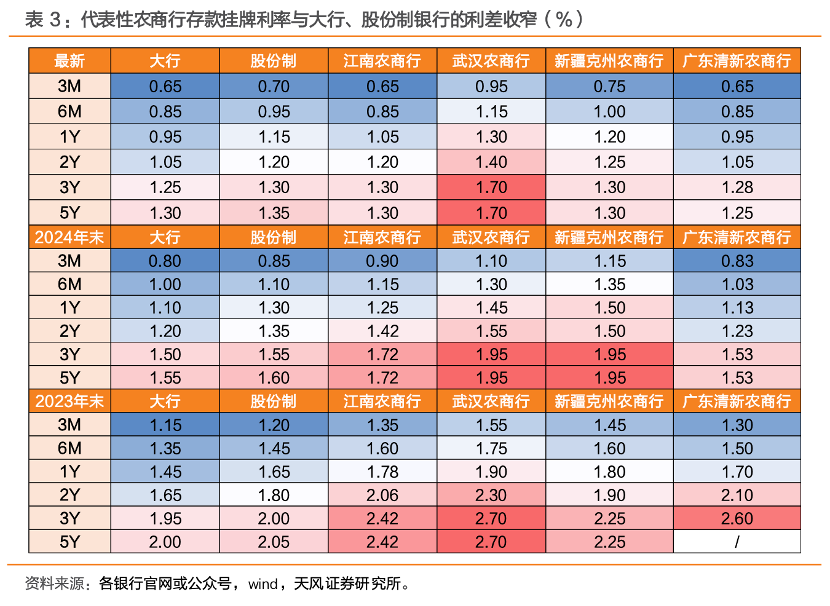
Core Viewpoint - The article highlights the differentiation in the deposit market as state-owned banks reduce high-interest long-term deposits while smaller banks, primarily rural commercial banks, actively adjust strategies to attract market share through new large-denomination certificates of deposit (CDs) and increased interest rates on fixed deposits [1][3]. Group 1: Large-Denomination Certificates of Deposit - Rural commercial banks have become the main force in issuing large-denomination CDs, with total issuance exceeding 30 billion yuan, and a clear trend towards shorter product durations [3][6]. - On February 5, 2026, multiple rural commercial banks released 45 announcements for large-denomination CDs, with Zhuhai Rural Commercial Bank alone issuing 10.5 billion yuan across seven products [6][7]. - The average interest rates for one-year and three-year large-denomination CDs are around 1.5% and 1.8%, respectively, which are higher than those offered by major state-owned banks [7]. Group 2: Interest Rate Adjustments - From January to February 2026, many rural commercial banks raised interest rates on fixed deposits by 10 to 20 basis points to meet the "opening red" deposit demand [9][12]. - For instance, Zhejiang Jiashan Rural Commercial Bank increased its one-year and two-year fixed deposit rates to 1.50% and 1.75%, respectively, while also implementing tiered rates based on deposit amounts [9][12]. - Some banks have set high minimum deposit thresholds and limited promotional periods, indicating a marketing strategy focused on short-term gains [12][13]. Group 3: Market Dynamics and Strategies - The banking sector is facing a narrowing net interest margin, prompting rural commercial banks to seek a balance between controlling liability costs and capturing market share through differentiated deposit products [1][13]. - The strong demand for deposits is driven by the need for banks to support asset expansion amid competitive pressures, particularly for smaller banks lacking brand dominance [13]. - Some banks are employing a strategy of offering competitive rates selectively to attract high-net-worth clients while managing overall liability costs [13].


多家中小银行上调存款利率 农商行上新300亿大额存单
Xin Lang Cai Jing· 2026-02-05 10:08
Core Viewpoint - The deposit market is experiencing differentiation as state-owned banks reduce high-interest long-term deposits while small and medium-sized banks, primarily rural commercial banks, actively adjust strategies to capture market share by launching large-denomination certificates of deposit and raising fixed deposit rates [1][12]. Group 1: Large-Denomination Certificates of Deposit - Rural commercial banks have become the main force in issuing large-denomination certificates of deposit, with a total issuance exceeding 30 billion yuan, and a noticeable trend towards shorter product durations [3][14]. - The average interest rate for 3-year large-denomination certificates of deposit from rural commercial banks is 1.8%, significantly higher than similar products from state-owned banks [3][14]. - As of early 2026, nearly 400 large-denomination certificate issuance announcements have been made, with rural commercial banks accounting for over 90% of the total issuance [16]. Group 2: Interest Rate Adjustments - From January to February 2026, many rural commercial banks have raised fixed deposit rates to meet the "opening red" deposit demand, with adjustments typically between 10 to 20 basis points [7][20]. - Specific banks, such as Zhejiang Jiaxing Rural Commercial Bank, have increased their 1-year and 2-year fixed deposit rates to 1.50% and 1.75%, respectively, while offering tiered rates for 3-year deposits based on the amount deposited [8][20]. - Some banks have set high minimum deposit thresholds and limited promotional periods for these interest rate increases, indicating a short-term marketing strategy [10][22]. Group 3: Market Dynamics and Competition - The banking industry is facing a narrowing net interest margin, prompting rural commercial banks to seek a balance between controlling liability costs and capturing market share through differentiated and regionally tailored deposit products [15][23]. - The competitive landscape is characterized by large banks withdrawing from long-term large-denomination certificates of deposit, while small and medium-sized banks are strategically raising rates to attract local depositors, particularly for large sums [19][23]. - The need for strong deposit acquisition is driven by pressures to support asset expansion, especially for smaller banks lacking brand and network advantages [23].


银行“开门红”信贷调查:利率“探底” 中介喊“放水” 盛宴下的风险底线
Zhong Guo Zheng Quan Bao· 2026-01-20 23:24
Core Insights - The beginning of the year is traditionally a "golden window" for bank credit issuance, with banks lowering interest rates and speeding up approvals to attract quality clients [1][2] - Despite claims from loan intermediaries about relaxed credit approval standards, banks are maintaining strict adherence to big data risk control models for client qualifications and fund usage [1][8] Group 1: Loan Market Dynamics - January is a critical period for banks to achieve "opening red" performance, with some banks potentially relaxing approval standards to attract clients [2][4] - Loan intermediaries are leveraging the perception of relaxed approval standards to market their services, often charging fees between 2% to 7% for low-interest loans [7] - Banks are actively promoting various loan products, with competitive interest rates and promotional activities to enhance customer acquisition [3][5] Group 2: Bank Performance and Strategies - Many banks have initiated project preparations by the end of the previous year to ensure strong performance in January, with some branches reporting significant loan disbursements [4][6] - Retail loan marketing strategies include comprehensive training for staff to ensure they can effectively meet customer needs and provide one-stop services [5] - Banks are focusing on differentiated marketing strategies and performance incentives to achieve their monthly targets, with some branches exceeding their goals significantly [4][6] Group 3: Risk Management and Customer Experience - Banks are maintaining strict loan approval standards, with a focus on customer creditworthiness and the intended use of funds, despite the pressure to meet performance targets [7][8] - The use of big data in loan approval processes is emphasized, ensuring that any discrepancies in customer information are identified [7] - Banks are encouraged to enhance customer experience through tailored repayment plans and personalized services, rather than solely competing on interest rates [8]
中小行“开门红”购债逻辑生变:从博弈利得到锁定票息
Xin Lang Cai Jing· 2026-01-19 12:52
Core Viewpoint - The trend of small banks purchasing bonds is expected to continue, but the underlying logic is changing due to a weakening of their liability advantages and a decrease in deposit attraction, which constrains their demand for bond allocation [1][5][9]. Group 1: Small Banks' Bond Purchasing Trends - Small banks have shown a consistent increase in bond investment, with their bond investment balance reaching 46.41 trillion yuan by the end of May 2025, marking an 11-month continuous rise [2]. - Despite the current volatility in the bond market, many institutions believe that the trend of small banks purchasing bonds will persist during the "opening red" period [3]. - The first quarter has historically seen small banks, particularly rural commercial banks, maintain a high loan-to-deposit spread, leading them to invest heavily in bonds to enhance performance [3][4]. Group 2: Changes in Deposit Attraction - The attractiveness of deposits from small banks has diminished, leading to a reduction in their ability to attract deposits through high-interest rates [5]. - Recent observations indicate that the interest rate gap between small banks and large banks is narrowing, with some small banks resorting to non-price methods such as physical rewards to attract deposits [5]. - The decline in deposit rates for small banks is expected to weaken the deposit diversion effect from large banks, impacting their overall deposit absorption capabilities [5][6]. Group 3: Market Environment and Investment Strategies - The bond market has entered a phase of volatility after two years of a bull market, with the yield on 10-year government bonds rising approximately 25 basis points to 1.852% by the end of 2025 [7]. - Many banks have reported unrealized losses on bond assets due to rising interest rates, affecting their non-interest income [7]. - In response to the changing market conditions, small banks are likely to adopt a more conservative investment strategy focused on holding bonds to maturity for interest income rather than speculative trading [8][9]. Group 4: Future Expectations - The first quarter of 2026 is anticipated to see a concentration of bond purchases by rural commercial banks, driven by seasonal deposit inflows and the need to secure interest income early [8]. - Analysts suggest that the configuration process for bond investments has already begun, supported by favorable conditions such as increased deposit growth and regulatory adjustments [9].
银行“开门红”变奏:揽储氛围有点“冷”,财富业务有些“热”
Mei Ri Jing Ji Xin Wen· 2026-01-14 22:46
Core Viewpoint - The banking industry is shifting its focus from promoting deposit products to recommending wealth management products due to the ongoing pressure on net interest margins [1] Group 1: Industry Trends - Traditionally, banks would engage in "New Year Red" marketing campaigns with abundant gifts and promotions for deposit products [1] - Recent observations indicate that bank staff are no longer prioritizing deposits, instead suggesting clients diversify into wealth management products [1] - The areas that used to be filled with promotional gifts like rice and cooking oil are now noticeably empty, reflecting a significant change in strategy [1]
银行“开门红”变奏:揽储氛围有点“冷” 财富业务有些“热”
Shang Hai Zheng Quan Bao· 2026-01-14 17:51
Core Viewpoint - The banking industry is undergoing a significant shift in marketing strategies, moving away from promoting high-interest deposit products towards recommending wealth management and investment products due to ongoing pressure on net interest margins [2][3][5]. Group 1: Changes in Marketing Strategies - Traditionally, the beginning of the year is a peak marketing season for banks, focusing on high-interest deposit products. However, this year has seen a quieter approach, with banks emphasizing wealth management instead [3][4]. - Banks are adjusting their performance evaluation metrics, reducing the weight of deposit-related indicators and focusing more on total assets under management (AUM), which includes wealth management products [3][4]. - Local banks are also shifting strategies, with many previously high-interest deposit banks lowering their deposit rates, indicating a broader industry trend [3][4]. Group 2: Importance of Deposits - Despite the shift in focus, deposits remain crucial for banks, especially in a competitive environment with narrowing interest margins. Stable and low-cost deposits are essential for business development [4]. - The current strategy aims to reduce high-cost deposits while optimizing the liability structure, moving away from the traditional "deposit-first" approach [4][5]. Group 3: Decline of High-Interest Deposits - The banking sector is experiencing a profound adjustment in its liability structure, with high-interest deposit products being phased out due to cost pressures. Many banks have removed long-term deposit options from their offerings [5][6]. - Major state-owned banks have already eliminated five-year large deposits, and some are experiencing an inverted yield curve where short-term deposit rates exceed long-term rates [5][6]. Group 4: Upcoming Maturity of Deposits - A significant portion of term deposits is set to mature, with predictions indicating that by mid-2025, 38% of total deposits will be due, amounting to approximately 57 trillion yuan [7]. - This maturity wave presents both challenges and opportunities for banks, as it may lead to liquidity pressures while also allowing for the replacement of high-interest deposits with lower-cost liabilities [7][8]. Group 5: Investment Trends - The maturing deposits are expected to be redirected towards wealth management products, public funds, and insurance savings, as these offer more attractive relative returns compared to new deposit rates [8][9]. - Banks are encouraged to introduce tiered deposit products and enhance wealth management services to retain clients' comprehensive assets rather than solely focusing on deposit volumes [9].

银行开门红新风向:大行推“资产提升” 小行逆势提利率
Di Yi Cai Jing· 2026-01-14 13:59
Group 1 - The core focus of major banks has shifted from attracting deposits to enhancing assets under management (AUM) and strengthening wealth management, particularly as they face pressures from declining interest rates and expiring fixed deposits [2][9] - State-owned banks have launched attractive "asset enhancement" activities, offering significant rewards for customers who increase their financial asset holdings, with some rewards exceeding 10,000 yuan [1][4] - Smaller banks are responding to year-end deposit acquisition pressures by temporarily raising deposit interest rates, with increases of up to 20 basis points reported [1][11] Group 2 - Agricultural Bank of China has introduced a structured "asset enhancement activity" from January to March 2026, with various reward tiers based on the increase in monthly average financial assets, allowing customers to earn up to 7.2 million "small beans" for meeting the highest tier [4][5] - Industrial and Commercial Bank of China has also launched similar initiatives, offering rewards based on the increase in monthly average financial assets, with potential rewards ranging from 5,000 to 30,000 "ICBC beans" [6][9] - Other banks, including China Construction Bank and Bank of China, have introduced their own asset enhancement programs, with varying reward structures and incentives for customers [6][8] Group 3 - The upcoming maturity of a significant volume of fixed deposits, estimated at 67 trillion yuan in 2026, presents both challenges and opportunities for banks as they navigate customer retention and interest rate adjustments [9][10] - Some banks are strategically guiding customers with maturing fixed deposits towards wealth management products, as traditional deposit rates are no longer competitive [10][11] - The competitive landscape is intensifying as banks adapt their strategies to maintain customer relationships and mitigate deposit outflows to smaller banks, which may offer more attractive rates [10][11]