
西门子

Search documents
发挥软硬件优势 家电企业加码智慧楼宇业务
Zhong Guo Zheng Quan Bao· 2025-08-13 21:07
Core Insights - The leading home appliance companies are diversifying their businesses and entering new sectors such as robotics, healthcare, photovoltaics, and machine tools to create a second growth curve [1][6] Group 1: Smart Building Sector - Smart buildings have become a focal point for many companies, particularly in the home appliance sector, with Midea rebranding its central air conditioning division to Midea Building Technology to enter this market [2] - Midea Building Technology focuses on providing comprehensive smart building solutions, including HVAC, smart elevators, building automation, and energy management, emphasizing low-carbon and intelligent features [2][4] - Other companies like Haier and Siemens are also entering the smart building market, with Haier developing a smart building ecosystem that offers solutions for the entire lifecycle of buildings [2][3] Group 2: Green and Low-Carbon Development - The construction sector is a significant contributor to national carbon emissions, prompting many smart building companies to prioritize green and low-carbon development [4] - Midea Building Technology aims to enhance building energy efficiency while ensuring comfort through its core business areas, which include HVAC, elevators, building control, and energy management [4] - Successful retrofitting projects, such as the transformation of the Citibank building in Shanghai, demonstrate significant energy savings and carbon emission reductions [5] Group 3: Diversification Strategies - Home appliance companies are actively transforming and entering various sectors, including robotics, energy storage, healthcare, and machine tools, to establish a second growth curve [6][7] - TCL has expanded into smart terminals, semiconductor displays, and new energy photovoltaics, becoming a competitive global smart technology group [7] - Gree Electric Appliances is also pursuing diversification beyond home appliances, entering high-end technology industries through acquisitions and new business ventures [7] - Midea Group has been proactive in expanding beyond home appliances, focusing on robotics, smart buildings, energy storage, and healthcare, with a goal to increase the proportion of B2B business revenue [7]

新华鲜报丨第三届链博会签署协议意向超6000项!全球供应链带来强大“朋友圈”
Xin Hua Wang· 2025-08-12 06:30
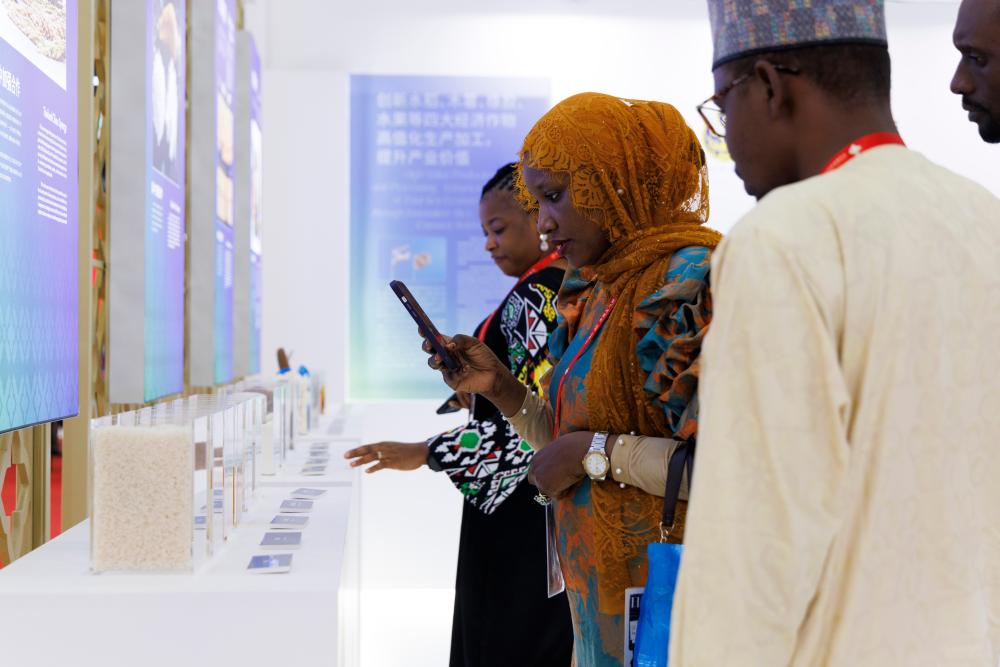
Core Insights - The third Chain Expo has successfully signed over 6000 cooperation agreements, showcasing a strong international collaboration in the global supply chain [1][3][15] - The event attracted 172 foreign delegations, more than double the previous edition, and featured over 21 million online and offline attendees, marking a 5% increase [3][15] - The expo emphasized innovation, with 152 new products and technologies launched, representing a 67% increase from the last event [7][15] Group 1: Event Overview - The Chain Expo, themed "Linking the World, Creating the Future," has become a platform for high-level international cooperation in supply chains [1][15] - The participation of 650 exhibitors from 75 countries and regions highlights the event's global reach and significance [1][3] - The event facilitated connections between 42,000 upstream and downstream enterprises, enhancing collaboration opportunities [1][3] Group 2: Innovation and Technology - The expo featured a dedicated innovation zone showcasing various technologies and solutions aimed at enhancing supply chain efficiency [8][10] - Companies like Honeywell and McDonald's highlighted their local partnerships and innovations, demonstrating the importance of localized supply chains [2][8] - The event served as a platform for transforming innovative ideas into practical applications, fostering collaboration between academia and industry [10][12] Group 3: International Participation - Notable international figures, including NVIDIA's CEO, emphasized the significance of the Chinese market and its role in global innovation [12][15] - Countries such as South Africa and Serbia showcased their industries, indicating a growing interest in collaboration with China [14][15] - The expo's success in attracting diverse international participants reflects China's commitment to building a cooperative global economic network [12][15]

年中经济观察:外贸外资,保稳提质势头好
Xin Hua Wang· 2025-08-12 06:20
Core Viewpoint - China's foreign trade and foreign investment have shown strong resilience and continued stable growth despite challenges such as domestic COVID-19 outbreaks and a difficult global economic recovery, with foreign trade achieving a total value of 19.8 trillion yuan, a year-on-year increase of 9.4% in the first half of the year [1][2]. Group 1: Foreign Trade Performance - China's total foreign trade value reached 19.8 trillion yuan in the first half of the year, marking a 9.4% year-on-year growth [1]. - Foreign trade has achieved positive year-on-year growth for eight consecutive quarters, demonstrating strong development resilience and comprehensive competitiveness [1]. - In May, foreign trade imports and exports grew by 9.5% year-on-year, with June's growth further increasing to 14.3% [2]. Group 2: Foreign Investment Trends - Actual foreign investment in China reached 564.2 billion yuan in the first five months, reflecting a 17.3% year-on-year increase [1]. - High-tech industries saw a 42.7% year-on-year growth in actual foreign investment, with high-tech manufacturing and services growing by 32.9% and 45.4%, respectively [4]. - Contracts for foreign investment projects exceeding 100 million dollars totaled 476.8 billion dollars in the first five months, a 40.3% increase year-on-year [4]. Group 3: Policy Support and Business Environment - The Chinese government has implemented a series of measures to stabilize foreign trade and investment, including streamlining customs processes and enhancing support for foreign enterprises [6][8]. - Companies like Siemens are expanding their operations in China, citing a favorable business environment and robust supply chain ecosystems as key factors for their investment decisions [5]. - The introduction of expedited processes for export tax refunds has significantly alleviated cash flow pressures for many businesses [8]. Group 4: Supply Chain and Innovation - China's supply chain advantages remain significant, with a comprehensive industrial system that is difficult to replace [10][11]. - The innovation-driven development strategy has led to improvements in the quality and structure of foreign trade and investment [4][11]. - The establishment of new projects, such as the Louis Dreyfus food industry park, highlights the ongoing attractiveness of the Chinese market for foreign investment [12][13].
跻身全球一流水平 国产磁共振仪器再上新台阶
Xin Hua Wang· 2025-08-12 05:48
Core Insights - The domestic high-end medical equipment market, particularly MRI machines, has been historically dominated by foreign companies, but this is changing as domestic firms like United Imaging Healthcare are making significant technological breakthroughs [1][2][3] - United Imaging Healthcare has achieved self-sufficiency in core MRI technology, launching China's first 1.5T and 3.0T superconducting MRI machines, and has seen substantial revenue growth in this segment [2][4] - The company has recently broken the long-standing record of 3.0T MRI technology, achieving advancements in 5.0T MRI technology, positioning itself among the top global developers of high-end medical equipment [4][5] Market Dynamics - The global market for high-end MRI machines has been largely monopolized by companies like GE, Siemens, and Philips, leading to high prices and limited availability for hospitals [2][3] - In 2022, United Imaging Healthcare ranked first in the market share for 1.5T MRI machines and third for 3.0T machines, indicating a shift in the competitive landscape [3] Technological Advancements - United Imaging Healthcare has made significant strides in MRI technology, including the development of a 5.0T MRI machine, which is recognized as a cutting-edge medical device globally [4][5] - The company has integrated artificial intelligence into its MRI technology, significantly reducing scan times and improving patient accessibility, with some scans now taking only seconds [6][7] Future Outlook - The global medical imaging equipment market is projected to grow, with estimates suggesting it will reach 108.5 billion RMB by 2030, indicating a substantial opportunity for companies in this sector [8]


5年冲刺300亿元 洗碗机能否洗出中国厨电的未来?
Xi Niu Cai Jing· 2025-08-11 01:45
Core Insights - The Chinese dishwasher market is experiencing intense competition, with major brands launching a "5-year 30 billion yuan growth plan" to increase market size from 132 billion yuan to 300 billion yuan [3][16][17] - Despite the apparent growth potential, the market has shown signs of stagnation, with growth rates dropping significantly since 2021, indicating a volatile market environment [4][9][16] - Consumer skepticism regarding the cleaning efficiency of dishwashers, particularly in relation to Chinese cooking styles, remains a significant barrier to adoption [10][13] Industry Status - The current penetration rate of dishwashers in China is around 4%, compared to over 70% in Western countries, suggesting a large potential market but also highlighting challenges in increasing adoption [9][10] - Recent growth rates have been inconsistent, with a peak of 31% in 2020 followed by a decline to 2.3% in 2023, indicating a need for strategic adjustments in market approach [4][9] Consumer Concerns - A major concern for potential buyers is the perceived inadequacy of dishwashers in cleaning greasy and stubborn residues typical of Chinese cuisine, with 52.6% of surveyed consumers expressing doubts about cleaning effectiveness [10][13] - Additional factors such as installation challenges in smaller kitchens and the overall cost of ownership, including water and electricity usage, contribute to consumer hesitance [13][14] Brand Challenges - Leading brands face unique challenges: - Fotile struggles with market penetration in lower-tier cities due to high price points and diminishing proprietary technology advantages [14] - Midea's extensive brand portfolio complicates management and market positioning, risking internal competition [14] - Siemens, once a market leader, has diluted its premium brand image by lowering prices in response to competition from domestic brands [14][15] - Robam Electric is expanding its dishwasher offerings but lacks product diversity to cater to smaller living spaces [15] Strategic Recommendations - To achieve the ambitious goal of reaching 300 billion yuan in market size, the industry must address product quality, consumer education, market competition, and distribution challenges [16][17] - Collaboration across the industry is essential, focusing on technology development, shared distribution channels, and addressing consumer pain points to drive growth [16][17]

研判2025!中国重型燃气轮机行业发展历程、产业链全景、发展现状、竞争格局及发展趋势分析:自主创新加速突破,2025年百亿市场开启新纪元[图]
Chan Ye Xin Xi Wang· 2025-08-11 01:15
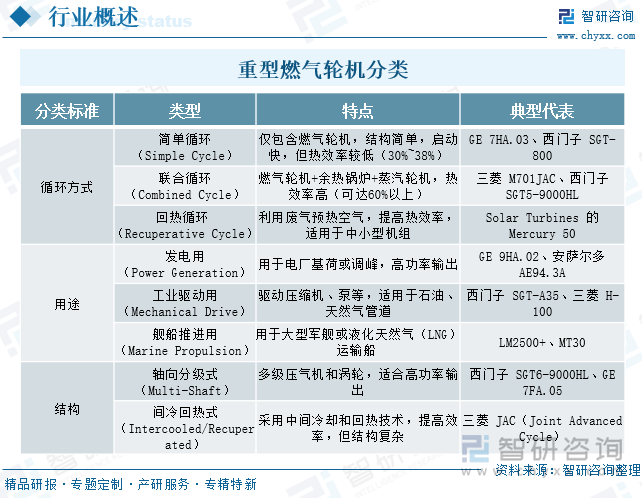
Core Insights - The heavy-duty gas turbine is a key power equipment in modern industry, converting thermal energy into mechanical energy, with a single unit power typically exceeding 50MW, and is widely used in power generation, industrial drives, and marine propulsion [1][4] - China has made significant breakthroughs in the heavy-duty gas turbine sector since launching the R0110 project in 2002, achieving complete self-research capabilities by 2024, with the market expected to reach 100 billion yuan by 2025 [1][16] - The industry is transitioning from being an "energy heart" to a "green engine," contributing to global energy transformation with advancements in hydrogen integration technology and digital twin management [1][22] Industry Overview - Heavy-duty gas turbines are classified based on cycle type (simple, combined, recuperative), application (power generation, mechanical drive, marine propulsion), and structure (multi-shaft, intercooled) [2][3] - The market for heavy-duty gas turbines in China reached 80 billion yuan in 2024, accounting for 10% of the overall market, with a projected growth to over 100 billion yuan in 2025 [16][18] Development History - The heavy-duty gas turbine sector in China has evolved from reliance on foreign technology to achieving significant self-sufficiency, with key milestones including the successful ignition of a 300MW F-class turbine in 2024 [4][16] - The establishment of the China Aviation Engine Group has accelerated technological advancements, enabling China to become one of the top five countries in heavy-duty gas turbine development [4][16] Industry Chain - The industry chain includes upstream material production (high-temperature alloys, titanium alloys), midstream turbine manufacturing led by state-owned enterprises, and downstream applications in power generation and industrial drives [6][8] - Domestic companies have achieved scale in mid-low end production, but high-end materials and precision processing still rely on imports, indicating a need for increased self-sufficiency [6][8] Current Market Status - The heavy-duty gas turbine market in China is characterized by a competitive landscape dominated by foreign giants (GE, Siemens, Mitsubishi) holding over 80% market share, while domestic companies are gradually increasing their market presence [18][19] - The F-class turbines have seen a domestic production rate exceeding 85%, while the H/J-class turbines still rely heavily on imports [18][19] Future Trends - The industry is moving towards low-carbon, intelligent, and diversified development paths, with hydrogen integration and digital twin technologies expected to enhance efficiency and reduce emissions [21][22] - The demand for gas turbines in new applications such as data centers and marine equipment is expected to grow significantly, driven by the need for high-efficiency, compact power solutions [22][24]




2025年中国工控系统行业产业链、发展现状、细分市场、竞争格局及发展趋势研判:政策驱动国产替代加速,2025年市场规模破3200亿[图]
Chan Ye Xin Xi Wang· 2025-08-10 00:36
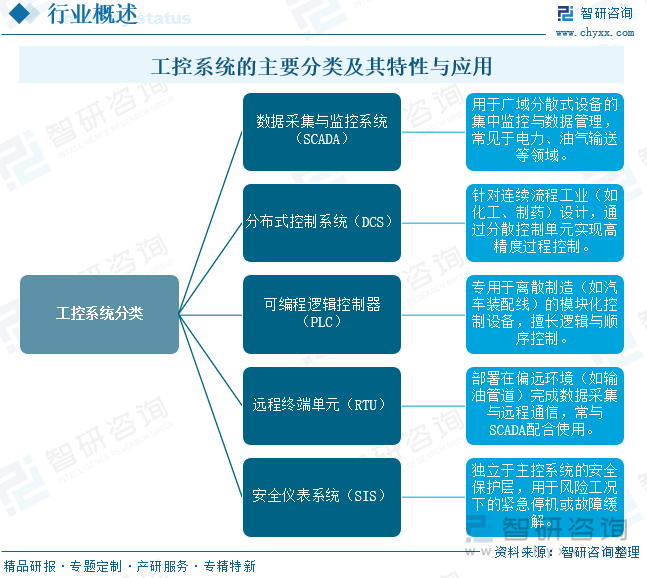
Core Insights - The industrial control system (ICS) industry in China is undergoing a strategic transformation from traditional automation to intelligent and autonomous systems, driven by policy guidance and technological innovation, resulting in a market size of over 300 billion yuan with a compound annual growth rate exceeding 10% [1][6][14] - The market structure shows a clear distinction where foreign companies dominate the high-end market while domestic firms are rising in the mid-range segment, with significant advancements in localization [1][20] Industry Overview - ICS refers to the combination of hardware and software used to monitor, control, and manage industrial production processes, ensuring safety, efficiency, and stability [2] - The main categories of ICS include SCADA, DCS, PLC, RTU, and SIS, with further segmentation by industry and control levels [2] Development Background - The Chinese government has prioritized the development of ICS, implementing various policies to enhance network security, data management, and digital transformation, thereby supporting the industry's shift towards autonomy and intelligence [8][9] Industry Chain - The ICS industry has established a complete ecosystem, with upstream focusing on core components and software, midstream on manufacturing and system integration, and downstream applications in diverse sectors like renewable energy and smart manufacturing [10] Current Market Analysis - The ICS market in China is projected to exceed 300 billion yuan in 2024, with expectations to reach 320 billion yuan by 2025, driven by policy support and technological advancements [14] - The DCS market is expected to reach 14.8 billion yuan in 2024, with over 95% penetration in the petrochemical and power sectors [17] Competitive Landscape - The competitive landscape is characterized by foreign companies leading the high-end market, while domestic firms like Inovance Technology and Zhongkong Technology are gaining ground in the mid-range market [20][21] - Siemens holds a 48% market share in the PLC sector, while domestic companies are achieving significant localization breakthroughs [20] Future Trends - The ICS industry is moving towards intelligent upgrades driven by technology integration, with AI and edge computing enhancing system capabilities [24] - The push for localization and global expansion is accelerating, with domestic companies expected to increase their international market share significantly by 2030 [26] - Safety and sustainability are becoming core competitive factors, with a focus on reducing energy consumption and enhancing cybersecurity measures [27]


扬州上半年签约亿元以上项目九百余个,已开工四百八十个“新质”项目勃发,古城“向新”而兴
Xin Hua Ri Bao· 2025-08-09 23:42
Group 1: Company Developments - Yangzhou Tianfu Long Group successfully listed on the Shanghai Stock Exchange, becoming the 25th listed company in Yangzhou, highlighting its leadership in the differentiated polyester staple fiber sector [1] - The company has been deeply engaged in the new materials field for over 20 years, aligning with the city's project construction momentum [1] Group 2: Economic Performance - Yangzhou's GDP reached 378.22 billion yuan in the first half of the year, with key indicators like industrial sales and foreign investment showing strong growth, ranking among the top in the province [1] - The "613" industrial system saw a 12.2% increase in new emerging industrial chains, indicating a positive cycle of project attraction and industrial chain upgrades [3] Group 3: Investment and Partnerships - European companies, including a Swiss air purifier firm and a German paint group, have signed agreements to establish bases in Yangzhou, with expected annual output exceeding 3 billion yuan [2] - Yangzhou's investment promotion efforts have resulted in 907 signed projects, achieving 75.6% of the annual target, with 82% of these projects in manufacturing [2] Group 4: Infrastructure and Industrial Parks - The city aims to establish around 40 specialized industrial parks by 2026, with industrial sales expected to account for 60% of the total [4] - The aviation industry is a key focus, with significant investments in research and development facilities and a complete industrial chain being developed [4] Group 5: Financial Strategies - Yangzhou has implemented a model combining "industrial chain + fund + supply chain finance" to attract core industry projects, with a 54.1% year-on-year increase in sales for the high postal storage industry park [5] - A 3 billion yuan industrial mother fund has been established to leverage external capital for local industrial upgrades [5] Group 6: Operational Efficiency - Yangzhou has optimized its service mechanisms to enhance project implementation speed, with an average project approval time reduced to 15 working days [7] - The city has seen a 24% increase in industrial profits and a 6.5% growth in high-tech manufacturing output in the first half of the year [7]
从天津走向全球 力争成为精密金属部品隐形冠军
Zhong Guo Zheng Quan Bao· 2025-08-07 21:11
Core Viewpoint - The company aims to expand its international presence, targeting an overseas revenue share of 40%-50% in the future, while maintaining a dual market strategy of "domestic + international" [1][5]. Group 1: Company Development and Strategy - The company has been deeply engaged in precision metal components for 20 years, collaborating with international giants like Schneider, Siemens, and Toyota [1][2]. - The company was founded in Tianjin Binhai and has grown from a small private enterprise to a publicly listed company, with a focus on sustainable growth [2][3]. - The company considers its listing on the Growth Enterprise Market in May 2021 as the beginning of its "second entrepreneurship" [2][3]. Group 2: Internationalization and Market Expansion - The company is advancing its international strategy by establishing production bases overseas, including in Thailand, India, Mexico, and Hungary, to better serve its global clients [4][5]. - The company aims to achieve nearly 22% of its total revenue from overseas by 2024, with plans to increase this to 40%-50% [5][6]. - The overseas factories are entering a stable production phase and are beginning to generate profits, with significant revenue growth reported from the Thailand and India factories [5][6]. Group 3: Technological Innovation and Product Development - The company is focusing on technological innovation in the fields of electrical precision components and new energy vehicles, developing high-quality, cost-effective solutions for its clients [3][6]. - The company has achieved certification from leading global wind power companies and is developing precision components for wind power generation [6]. - The company has also launched a smart energy coordination system for base stations, with over 200 projects in the energy-saving sector [6]. Group 4: Operational Excellence and Customer Service - The company emphasizes the importance of strategic alignment with core clients and maintains high standards in product quality, delivery punctuality, and cost control [3][4]. - The company has a strong commitment to customer service, demonstrated by its proactive response during the 2008 snow disaster, which helped build trust with clients [4]. - The company is implementing a five-year strategy to reduce operational costs, which has contributed to improved profitability [6].
津荣天宇董事长孙兴文: 从天津走向全球 力争成为精密金属部品隐形冠军
Zhong Guo Zheng Quan Bao· 2025-08-07 21:11
Core Viewpoint - The company aims to expand its international presence, targeting an overseas revenue share of 40%-50% in the future, while maintaining sustainable growth through strategic resource allocation and a combination of defensive and offensive strategies [1]. Group 1: Company Development and Strategy - The company has been deeply engaged in precision metal components for 20 years, establishing partnerships with international giants like Schneider, Siemens, and Toyota [1][2]. - The company was founded by a group of experienced individuals in Tianjin Binhai, with a focus on advanced precision manufacturing [2]. - The company went public on the ChiNext board in May 2021, marking a new phase of growth [3]. Group 2: Internationalization and Market Expansion - The company has been enhancing its international layout while increasing technology and product development to create new growth points [4]. - The company has established production bases in various regions, including Zhejiang, Guangdong, and Wuhan, to better serve its clients [6]. - Since 2016, the company has been building overseas production bases in Thailand, India, Mexico, and Hungary to meet local market demands [7]. Group 3: Financial Performance and Growth Projections - The company anticipates that overseas revenue will account for nearly 22% of total revenue by 2024, with plans to increase this to 40%-50% [8]. - The Thai and Indian factories are projected to achieve revenues of 141 million yuan and net profits of 8.67 million yuan in 2024, reflecting significant growth [8]. - The company reported a 48% year-on-year increase in net profit in the first quarter of this year, indicating strong financial performance [9]. Group 4: Innovation and Market Adaptation - The company is focusing on technological innovation in the fields of new energy and wind power, with plans for mass production of new projects by 2025 [9]. - The company has implemented a five-year strategy to reduce labor and variable costs, optimizing its supply chain and cost structure [9]. - The company aims to become a leading player in the precision metal components industry, with a strong emphasis on internationalization and technological development [10].