
永泰能源

Search documents
“反内卷”政策引爆市场 焦煤期货3天飙涨23%
经济观察报· 2025-07-24 12:10
Core Viewpoint - The recent surge in coking coal futures, with a cumulative increase of 23% over three trading days, is primarily driven by a notification regarding "coal mine production inspection," which is seen as the catalyst for this rally [1][5][4]. Group 1: Market Performance - Coking coal futures experienced a dramatic rise, with the main contract reaching a new high of 1135.5 yuan/ton, marking a 60% increase from the low of 709 yuan/ton in early June [6][3]. - The coal sector saw a significant uptick, with coal ETFs rising by 8.25% and major coal stocks like Shanxi Coking Coal and Lu'an Environmental Energy hitting their upper limits [8][5]. - The trading volume for coking coal futures surged to 252.71 million contracts, indicating heightened market activity and investor interest [8]. Group 2: Policy and Supply Dynamics - A notification from the National Energy Administration mandated inspections of coal mines in eight provinces, aiming to stabilize coal supply and curb excessive production [12][11]. - The notification highlighted that some coal mines were exceeding their announced production capacities, which has disrupted market order [12]. - Analysts suggest that the current market sentiment is influenced by expectations of supply tightening and strong downstream demand for inventory replenishment [14][15]. Group 3: Investor Sentiment and Behavior - Investor sentiment has shifted dramatically, with many traders expressing surprise at the rapid price increases and the aggressive market behavior [6][9]. - Some investors have reported significant profits from long positions, while others who took short positions are facing substantial losses due to the unexpected market rally [11][10]. - The market is characterized by a stark contrast in sentiment between bulls and bears, with many investors feeling the pressure of the volatile environment [9][10]. Group 4: Economic Context - The coal industry has been under pressure, with a reported 54% of coal enterprises experiencing losses as of May this year, driven by weak demand and declining prices [18][20]. - The recent "anti-involution" policies initiated by the government are seen as necessary to address the challenges faced by the coal sector, which has been struggling with overproduction and low prices [17][18]. - The overall supply-demand balance in the coal market remains tight, with production cuts in key regions not fully recovering, contributing to the upward price pressure [15][14].

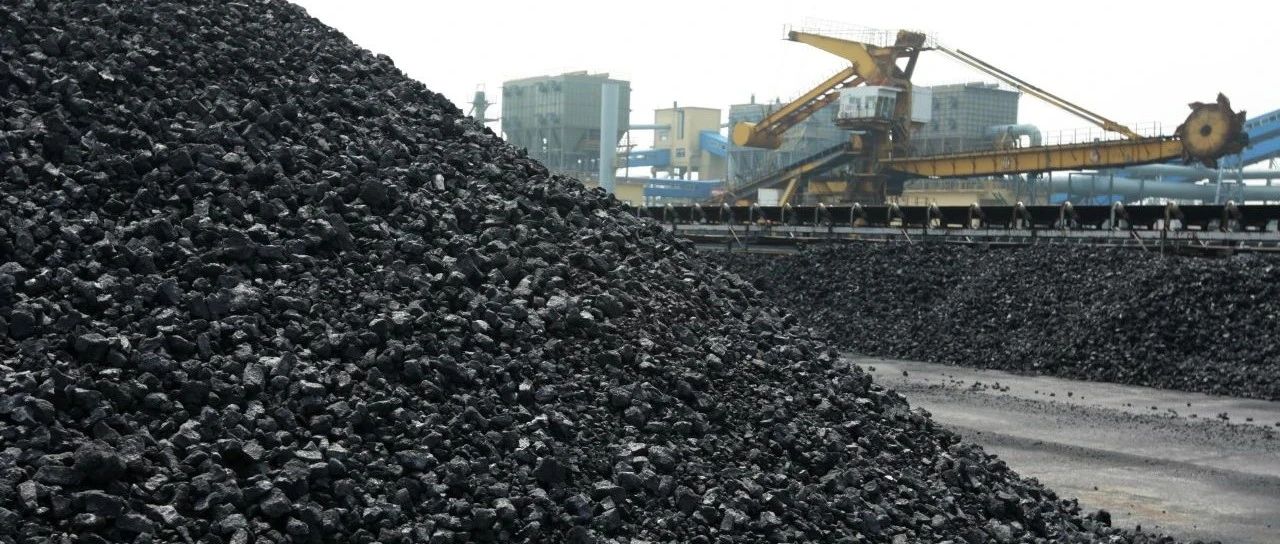
焦煤期货3天飙涨23%:有人浮盈35万元,有人空单仍在“死扛”
Jing Ji Guan Cha Wang· 2025-07-24 05:25
Core Viewpoint - The recent surge in coking coal futures has been driven by a combination of market sentiment, policy expectations, and supply-demand dynamics, leading to significant price increases and heightened trading activity in related stocks and ETFs [1][2][7]. Group 1: Market Performance - Coking coal futures experienced a remarkable increase, with the main contract rising by 22.62% over just three trading days, reaching a new high of 1135.5 yuan/ton [1][3]. - The main contract saw a price increase of 426.5 yuan/ton from a low of 709 yuan/ton in early June, marking a 60% rise in less than two months [2]. - The trading volume for the main coking coal contract surged to 252.71 million lots, indicating strong market activity [3]. Group 2: Policy Impact - A notification from the National Energy Administration regarding coal mine production checks is believed to have triggered the recent price rally, emphasizing the need for production regulation to maintain market order [6][7]. - The "anti-involution" policy signals from the central government have been a significant catalyst for the current market dynamics, promoting speculation and driving demand for coking coal [2][9]. Group 3: Supply and Demand Dynamics - The supply-demand situation for coking coal remains tight, with production reductions in key regions not fully recovered, contributing to upward price pressure [8][10]. - Increased purchasing activity from downstream industries and traders has further fueled the price rise, creating a positive feedback loop in the market [8][12]. Group 4: Investor Sentiment - Investor sentiment has sharply diverged, with some traders profiting significantly from the price surge, while others face substantial losses due to unexpected market movements [5][13]. - The market is currently characterized by extreme emotions, with some analysts warning of potential over-speculation and the risks associated with such volatility [12][13].
中证500沪市指数下跌0.11%,前十大权重包含四川长虹等
Jin Rong Jie· 2025-07-23 10:01
Core Viewpoint - The performance of the CSI 500 Shanghai Index shows mixed results, with a slight decline on the latest trading day but positive growth over the past month, three months, and year-to-date [1]. Group 1: Index Performance - The CSI 500 Shanghai Index closed at 6545.83 points, down 0.11% on the latest trading day, with a trading volume of 155.06 billion yuan [1]. - Over the past month, the index has increased by 8.78%, by 8.04% over the last three months, and by 7.04% year-to-date [1]. Group 2: Index Composition - The top ten weighted stocks in the CSI 500 Shanghai Index include Chifeng Jilong Gold Mining (1.02%), Dongwu Securities (0.93%), Sichuan Changhong (0.93%), Tianfeng Securities (0.87%), and others [1]. - The index is composed entirely of stocks listed on the Shanghai Stock Exchange, with a 100% allocation [1]. Group 3: Industry Breakdown - The industry composition of the CSI 500 Shanghai Index is as follows: Industrial (21.68%), Information Technology (16.96%), Materials (14.27%), Financials (11.00%), and Healthcare (9.92%) [2]. - The index samples are adjusted biannually, with adjustments occurring on the next trading day after the second Friday of June and December [2].

2025《财富》中国500强重磅揭晓,汾酒、永泰能源等山西6家企业荣耀登榜
Sou Hu Cai Jing· 2025-07-23 05:21
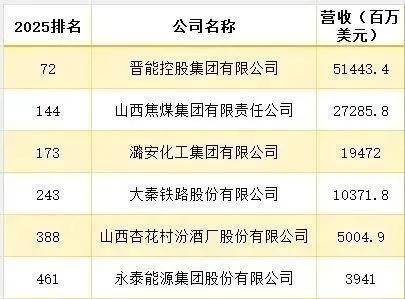
Core Insights - The 2025 Fortune China 500 list reflects the annual performance of Chinese enterprises and serves as an important window to observe economic trends in China [1] - The total revenue of the listed companies in 2024 reached $14.2 trillion, showing a slight decline of approximately 2.7% compared to the previous year, while net profit increased by about 7% to $756.4 billion, indicating resilience in profitability [2] - The threshold for entering the list decreased by 3% to approximately $3.62 billion [2] Company Highlights - Shanxi's Jin Energy Holding Group ranked 72nd with a revenue of $51.44 billion, showcasing its significant influence in the energy sector [4] - Shanxi Coking Coal Group ranked 144th with a revenue of $27.29 billion, recognized as a benchmark in the coking coal industry [4] - Lu'an Chemical Group ranked 173rd, leading in coal-to-oil technology and driving chemical industry upgrades [4] - Datqin Railway Co., Ltd. ranked 243rd, playing a crucial role in the transportation of important materials like coal [4] - Shanxi Xinghuacun Fenjiu Distillery ranked 388th, rising 51 places from last year, demonstrating strong brand building and market expansion [4][5] - Yongtai Energy Group ranked 461st, steadily progressing in the energy sector [4] Industry Overview - The metal products industry had the highest number of companies on the list, with 55 companies and total revenue of $1.27 trillion, highlighting its importance in the economic structure [3] - The internet sector showed strong growth, with companies like JD.com, Alibaba, and Tencent maintaining upward momentum [3] - The new energy vehicle sector saw significant movement, with Sairisi rising 235 places, driven by deep integration with Huawei's ecosystem and a substantial increase in sales and revenue [3] Regional Insights - Shanxi's listed companies are primarily concentrated in the energy and liquor industries, indicating a need for technological innovation and industry upgrades to enhance competitiveness [6] - The performance of Fenjiu sets a benchmark for brand development in traditional industries, emphasizing the importance of innovation and market expansion [6]
公用事业ETF(560190)政策利好叠加基建开工,盘中涨幅近1%
Xin Lang Cai Jing· 2025-07-21 03:28
Group 1 - The core viewpoint of the news highlights the positive market response to the commencement of the Yarlung Tsangpo River downstream hydropower project, which involves the construction of five cascade power stations with a total investment of approximately 1.2 trillion yuan, primarily focusing on power transmission and consumption [1] - The public utility ETF (560190.SH) has seen an increase of 0.91%, with significant gains in major constituent stocks such as Datang Power (up 6.02%) and Huaneng International (up 1.85%), reflecting market optimism regarding industry policy support and infrastructure investment [1] - The Ministry of Industry and Information Technology is set to issue a work plan to stabilize growth in the power equipment sector, which is expected to enhance the quality of supply capacity, further benefiting the public utility sector, especially hydropower and power operators [1] Group 2 - According to GF Securities, the public utility sector has shown a steady upward trend since 2020, outperforming the CSI 300 index by 32.92 percentage points as of July 18, 2025, with current sample stock PE-TTM at 16.99 times, indicating a historical low valuation level [2] - The industry is characterized by strong dividend capabilities due to stable free cash flow, with the latest dividend yield of the CSI All Index Free Cash Flow Index at 4.37%, suggesting that companies in this sector can provide ample cash flow and perform relatively well in volatile markets [2] Group 3 - Related products include the public utility ETF (560190) [3] - Associated stocks in the sector include Yangtze Power, China Nuclear Power, Three Gorges Energy, Guodian Power, Guotou Power, Yongtai Energy, Huaneng International, Chuanwei Energy, China General Nuclear Power, and Zhejiang Energy [3]
身家暴跌253亿,“煤老板”姚俊良失守山西首富
创业家· 2025-07-19 09:43
Core Viewpoint - The wealth of the Yao Junliang family has significantly declined, losing the title of Shanxi's richest family, with their fortune dropping from 329.1 billion to 76 billion yuan, a decrease of 253.1 billion yuan over recent years [6][15][20]. Group 1: Wealth Decline - The Yao Junliang family's wealth has shrunk by 253.1 billion yuan, falling to 76 billion yuan in the 2025 New Fortune 500 list, marking a significant decline from their previous high [6][15]. - The family has been overtaken by Wang Guangxi and Guo Tianshu of Yongtai Energy, as well as Yang Xia of Jinbo Biological, dropping to third place among Shanxi's wealthy [6][15]. - The family's wealth has been on a downward trend since 2022, when they reached a peak of 329.1 billion yuan [6][15]. Group 2: Business Performance - Meijin Energy, the family's main business, has faced declining revenues, with a peak revenue of 24.6 billion yuan in 2022, followed by a drop of 15.4% and 8.55% in subsequent years, leading to a revenue of 19.03 billion yuan in 2024 [15][20]. - The company's net profit has also plummeted, recording a loss of 1.143 billion yuan in 2023 after a profit of 2.541 billion yuan in 2021 [15][20]. - The hydrogen energy business, which the company has heavily invested in, has not yet become a significant revenue contributor, accounting for only 4.16% of total revenue [15][20]. Group 3: Historical Context - The Yao family has a long history in the coal industry, starting with Yao Junliang's father, Yao Juhuo, who founded Meijin Energy in the 1980s [10][12]. - The family has transitioned through three generations, with Yao Junliang currently leading the business and his son Yao Jinlong taking on significant roles [12][20]. - Meijin Energy has evolved into one of the largest independent producers of coking coal and has made strides into the hydrogen energy sector, although it remains heavily reliant on traditional coal and coke operations [12][20]. Group 4: Market Challenges - The company has faced significant challenges, including a structural imbalance between the prices and costs of coal and coke, leading to reduced profit margins [16][20]. - The steel industry's downturn has negatively impacted demand for coking coal, contributing to increased inventory levels and reduced production [18][20]. - The company's gross margin has declined sharply from 30.25% in 2021 to just 0.14% in the first quarter of 2025, indicating severe financial strain [20].

中证公用事业指数下跌0.26%,前十大权重包含永泰能源等
Jin Rong Jie· 2025-07-17 10:42
Group 1 - The Shanghai Composite Index opened lower but rose later, while the China Securities Public Utilities Index fell by 0.26% to 2486.53 points with a trading volume of 9.421 billion yuan [1] - The China Securities Public Utilities Index has decreased by 1.23% over the past month, increased by 0.59% over the past three months, and has declined by 3.17% year-to-date [2] - The top ten weights in the China Securities Public Utilities Index are: Changjiang Electric Power (15.15%), China Nuclear Power (10.46%), Three Gorges Energy (8.35%), Guodian Power (5.66%), State Power Investment (4.81%), Chuanwei Energy (4.29%), Yongtai Energy (4.2%), Huaneng International (4.15%), China General Nuclear Power (3.92%), and Zhejiang Energy Power (2.8%) [2] Group 2 - The China Securities Public Utilities Index consists entirely of public utility companies, with a sample adjustment occurring every six months [3] - The market share of the China Securities Public Utilities Index is 83.15% from the Shanghai Stock Exchange and 16.85% from the Shenzhen Stock Exchange [2] - Adjustments to the index sample occur on the next trading day following the second Friday of June and December each year, with weight factors generally remaining fixed until the next scheduled adjustment [3]


战高温斗酷暑 能源类上市公司全力保供
Shang Hai Zheng Quan Bao· 2025-07-17 00:21
Group 1 - The summer of this year is expected to see higher temperatures than usual, leading to a significant increase in electricity demand, with a projected peak load growth of approximately 100 million kilowatts compared to the previous year [1][2] - National energy companies are ramping up coal and natural gas production to ensure stable electricity supply, with coal inventories at power plants maintaining over 200 million tons, providing more than 30 days of supply [2][3] - The Daqin Railway has increased coal transportation efficiency, with over 1.1 million tons of coal being transported daily [2] Group 2 - Coal is identified as a critical component for stable electricity supply, with significant production efforts underway in Shanxi province to meet summer demand [2][4] - Fire power generation companies are fully operational, with companies like Huayin Power and Yongtai Energy reporting record electricity generation levels during peak demand [4][5] - Companies are also focusing on enhancing renewable energy sources, with significant investments in wind and solar power projects to diversify energy supply [5][6] Group 3 - New energy companies are optimizing equipment management and maintenance to ensure reliable green power supply, with a focus on maximizing output from wind and solar facilities [6][7] - The Shandong power grid has achieved a record high in renewable energy output, with wind and solar contributing significantly to the overall electricity supply [6] - Companies are implementing comprehensive monitoring and maintenance strategies for renewable energy facilities to ensure operational efficiency during peak demand periods [7]

A股平均股价12.00元 43股股价不足2元


Zheng Quan Shi Bao Wang· 2025-07-16 09:07
Summary of Key Points Core Viewpoint - The average stock price of A-shares is 12.00 yuan, with 43 stocks priced below 2 yuan, the lowest being *退市九有* at 0.21 yuan [1]. Stock Price Distribution - As of July 16, the Shanghai Composite Index closed at 3503.78 points, with a total of 43 stocks trading below 2 yuan [1]. - Among the low-priced stocks, 12 are ST stocks, accounting for 27.91% of the total [1]. Market Performance - Out of the low-priced stocks, 16 saw an increase in price, with *退市锦港* leading at a rise of 10.91% [1]. - Conversely, 17 stocks experienced a decline, with *ST天茂* showing the largest drop at 4.98% [1]. Low-Priced Stock Rankings - The table lists various low-priced stocks, including their latest closing prices, daily price changes, turnover rates, price-to-book ratios, and industries [1][2]. - Notable stocks include: - *退市九有* at 0.21 yuan with a price-to-book ratio of 3.49 [1]. - *退市锦港* at 0.61 yuan with a daily increase of 10.91% [1]. - *ST天茂* at 1.91 yuan with a daily decrease of 4.98% [2].
半年盘点|煤价持续下探,多家煤企预告上半年业绩亏损
Di Yi Cai Jing· 2025-07-15 14:39
Group 1: Industry Overview - The coal market is experiencing a significant oversupply, with production increasing while consumption grows at a slower pace, leading to a structural imbalance [3] - The average coal price has been declining, with the spot price for 5500 kcal thermal coal dropping to 623 yuan per ton, a year-on-year decrease of 257 yuan [2] - The total profit of the coal industry in the first five months of the year fell to 126.4 billion yuan, a year-on-year decline of 50.6%, with 53.6% of companies reporting losses [2] Group 2: Company Performance - Yongtai Energy (600157.SH) expects a net profit of 120 to 150 million yuan for the first half of the year, a decline of 89.9% to 87.4% year-on-year, primarily due to a temporary decrease in power generation and falling coal prices [1] - Dayou Energy (600403.SH) anticipates a net loss of 820 million yuan for the first half of the year, an increase in loss of 330 million yuan year-on-year, attributed to a 29% drop in average coal prices [1] - China Shenhua (601088.SH) projects a net profit of 23.6 to 25.6 billion yuan for the first half of the year, a decline of 13.2% to 20% year-on-year, due to decreased sales volume and average selling prices [2] Group 3: Future Outlook - The coal industry is expected to continue facing downward pressure on prices, with a forecast for the third quarter indicating a continued decline, although there may be temporary rebounds during peak electricity demand periods [4] - Companies are planning to respond to the challenging market conditions by improving production quality and implementing refined management practices [4]

