
国家电网

Search documents
中央重磅文件点题四大新兴支柱产业,这些城市已领跑→
第一财经· 2025-10-24 14:33
Core Viewpoint - The article discusses the development of strategic emerging industries in China, including new energy, new materials, aerospace, and low-altitude economy, highlighting the leading cities and regional clusters that are shaping the future economic landscape [3][4]. New Energy - The top cities in the new energy sector are Beijing, Shanghai, Guangzhou, and Shenzhen, with Beijing leading in overall competitiveness due to its strong enterprises and innovation capabilities [6][7]. - Shenzhen ranks first in the production of new energy vehicles, with an output of 2.935 million units in 2024, while West Xi'an excels in photovoltaic and aerospace technologies [7]. - The East China region dominates the new energy city competitiveness list, with 25 cities featured in the top 50 [7]. New Materials - Suzhou ranks first in the new materials industry, supported by significant advancements in advanced metal materials and nanomaterials, contributing to a trillion-yuan industry cluster [9][10]. - The Yangtze River Delta and Pearl River Delta regions are recognized for their innovative applications in new materials, with notable companies in electronic chemicals and automotive materials [10]. Aerospace - Beijing is the leading city in the aerospace sector, benefiting from a concentration of enterprises and financial resources, with 160 commercial aerospace companies receiving funding from 2014 to early 2025 [11][13]. - Other cities like Shanghai, Xi'an, and Chengdu are also emerging as strong competitors in the aerospace industry, forming regional clusters [13][14]. Low-altitude Economy - The low-altitude economy is gaining traction, with Shenzhen, Beijing, and Chengdu leading in development levels, supported by a robust industrial chain [15][16]. - Shenzhen has over 1,900 companies in the low-altitude economy sector, with an expected annual output value exceeding 90 billion yuan in 2024 [17]. - Shanghai focuses on high-end manufacturing and modern services in the low-altitude economy, aiming for a core industry scale of over 50 billion yuan by 2027 [17].


中央重磅文件点题四大新兴支柱产业,这些城市已领跑
Di Yi Cai Jing Zi Xun· 2025-10-24 13:09
Core Insights - The National Development and Reform Commission's proposal for the 15th Five-Year Plan emphasizes the development of strategic emerging industries such as new energy, new materials, aerospace, and low-altitude economy, which are expected to create several trillion-yuan markets [1][2] - Major cities like Beijing, Shanghai, Shenzhen, and Guangzhou are leading in multiple emerging industries, showcasing their comprehensive strengths as first-tier cities [1] - Regional clusters are evident in the development of these industries, with the Yangtze River Delta excelling in new energy and new materials, the Pearl River Delta in low-altitude economy and new materials, and the Beijing-Tianjin-Hebei region in aerospace [1] New Energy - The top five cities in the new energy industry competitiveness ranking are Beijing, Shanghai, Guangzhou, Shenzhen, and Xi'an, with Beijing leading in overall competitiveness [3][4] - Beijing excels in high-efficiency photovoltaic technology and smart energy systems, supported by major state-owned enterprises [3] - Shenzhen leads in the production of new energy vehicles, with an output of 2.935 million units in 2024, while Xi'an has a strong technical foundation in the new energy sector [4] New Materials - Suzhou ranks first in the new materials industry, supported by a strong focus on advanced materials and significant innovation resources [5][6] - The Yangtze River Delta and Pearl River Delta are the leading regions in new materials, with Suzhou's new materials industry becoming a trillion-yuan cluster [6][7] Aerospace - Beijing is the top city in the aerospace industry, benefiting from a concentration of enterprises and financial resources [8][9] - Other cities like Shanghai, Xi'an, Chengdu, and Guangzhou are also showing strong competitiveness in aerospace, with regional clusters forming [8] Low-altitude Economy - The low-altitude economy is a competitive area, with Shenzhen, Beijing, and Chengdu leading in development [10][11] - Shenzhen has over 1,900 companies in the low-altitude economy sector, with an expected annual output value exceeding 90 billion yuan in 2024 [11][12] - Shanghai focuses on high-end manufacturing and modern services in the low-altitude economy, aiming for a core industry scale of over 50 billion yuan by 2027 [12]
2025年国网第三批计量设备招标点评:技术升级明确,新标准电表已开始招标
Minsheng Securities· 2025-10-24 06:01
Investment Rating - The report maintains a "Recommended" rating for key companies in the industry, including Weisheng Information, Haixing Electric Power, and Juhua Technology [4]. Core Insights - The 2025 State Grid third batch of metering equipment bidding shows a clear trend of technological upgrades, with an increase in the number of high-end meter bids and a shift towards supporting international standards [3]. - Price adjustments in the bidding process are expected to alleviate previous price pressures in the industry, as the scoring criteria for price calculations have been modified [2]. - The overall bidding quantity for electric meters has improved on a month-on-month basis, indicating a potential recovery in both volume and profit for domestic smart meters [3]. Summary by Sections Bidding Overview - The third bidding round for metering equipment by the State Grid includes 10 sub-bids and 386 packages, with a total of 217 packages for electric meters, showing a month-on-month increase [1]. - The bidding for collection terminals and metering transformers has decreased compared to previous rounds, indicating a mixed demand landscape [1]. Price Adjustments - The scoring formula for price evaluation has been revised, which is expected to reduce the pressure of continuous price declines in the industry [2]. - The floating coefficient range has been adjusted, and extreme low-price bids have been excluded from the current bidding process [2]. Technological Trends - The bidding for A-level single-phase meters remains stable, with a significant increase in the proportion of low-power models [3]. - The demand for B/C-level three-phase meters has grown, particularly in provinces with strong renewable energy needs [3]. Investment Recommendations - The report suggests focusing on high-quality domestic electric meter companies such as Weisheng Information, Haixing Electric Power, and Juhua Technology, as they are well-positioned to benefit from the upcoming market changes [3].


数字人民币:赋能新能源产业链金融转型升级的核心引擎
Zheng Quan Ri Bao Zhi Sheng· 2025-10-23 11:35
Core Insights - The renewable energy industry has become a strategic pillar for high-quality economic development in China, with a rapidly forming ecosystem in sectors like photovoltaics, wind power, energy storage, and electric vehicles [1][2] - The introduction of digital RMB is positioned as a key tool to bridge "digital finance" and "green finance," addressing financial pain points in the renewable energy industry [1][4] Group 1: Current Challenges in Renewable Energy Industry Chain Finance - The industry faces multiple bottlenecks, including low payment efficiency and slow capital turnover, which hinder effective capital flow and collaborative innovation [2] - Financing difficulties arise due to the predominance of small and medium enterprises with weak credit, making traditional bank lending challenging [2][3] - Risk management is lagging, with insufficient credit transparency and visibility in transactions, leading to issues like "false trade" and "duplicate pledges" [3] Group 2: Empowerment Logic and Technical Advantages of Digital RMB - Digital RMB is not just a payment method but a comprehensive reconstruction of the payment system, credit mechanism, and regulatory framework [4] - Its programmable feature allows for precise financing through smart contracts, ensuring funds are used for their intended purposes [4] - The traceable nature of digital RMB enhances credit transmission by creating a dynamic credit profile based on real transaction data [4] Group 3: Pilot Breakthroughs in Digital RMB Empowering Renewable Energy Industry Chain - Local pilot projects are exploring new "green electricity payment" models, with successful implementations in regions like Suzhou and Qinghai [7][8] - Major state-owned enterprises are actively promoting digital RMB applications in areas such as electricity settlement and carbon trading [8] - Financial institutions are developing "on-chain financing" service systems, integrating digital RMB with supply chain finance solutions [8] Group 4: Future Outlook of Digital RMB in Renewable Energy Finance - The application of digital RMB is expanding from isolated points to a comprehensive integration across the entire industry chain, enhancing payment, financing, risk control, and cross-border settlement [9] - Digital RMB is expected to evolve from a single payment solution to a comprehensive financial service, deeply embedded in various industry chain segments [9] - The global expansion of the renewable energy industry will benefit from digital RMB, reducing cross-border payment costs and enhancing international competitiveness [9][10]

人民日报丨特高压架起电力“闪送通道” 中国已投运40余项特高压交直流工程
国家能源局· 2025-10-23 04:57
Core Viewpoint - China's ultra-high voltage (UHV) transmission projects are rapidly advancing, significantly enhancing the country's energy distribution capabilities and supporting the transition to cleaner energy sources [9][14][17]. Group 1: UHV Projects Overview - China has put into operation over 45 UHV projects, with an expected transmission capacity exceeding 340 million kilowatts by the end of this year, marking a 25% increase from the end of the 13th Five-Year Plan [9][14]. - The Ningxia-Hunan ±800 kV UHV DC transmission project is the first approved project primarily for transmitting renewable energy from large-scale wind and solar bases, capable of delivering over 36 billion kilowatt-hours annually to Hunan, with renewable energy accounting for over 50% [4][17]. - The Gansu-Zhejiang ±800 kV UHV DC project has entered the line construction phase, further expanding the UHV network [6]. Group 2: Energy Distribution and Demand - China's energy production and consumption are inversely distributed, necessitating the "West-East Power Transmission" strategy to efficiently transport energy from resource-rich western regions to consumption-heavy eastern areas [12][14]. - The UHV DC technology allows for long-distance transmission (2000 to 3000 kilometers) with low line losses, effectively connecting energy supply to high-demand regions [12][14]. Group 3: Technological Innovations - The UHV projects have led to significant technological advancements, including the establishment of standardized results for ±800 kV/800 MW UHV DC systems, with over 500 various standards and specifications developed [19][21]. - The Baihetan-Jiangsu ±800 kV UHV DC project is notable for being the first to utilize hybrid cascade transmission technology, integrating conventional and flexible DC transmission advantages [20][21]. - The introduction of domestically produced equipment, such as the tap changer and DC control systems, has broken foreign technology monopolies, enhancing China's electrical equipment manufacturing capabilities [21]. Group 4: Future Outlook - By 2024, the proportion of clean energy transmitted through UHV DC channels is expected to reach nearly 60%, with a total transmission of approximately 420 billion kilowatt-hours, reflecting a 70% increase from the end of the 13th Five-Year Plan [16][17]. - The construction of UHV projects is shifting from primarily coal-based power to prioritizing clean energy, significantly contributing to China's green energy transition [17].
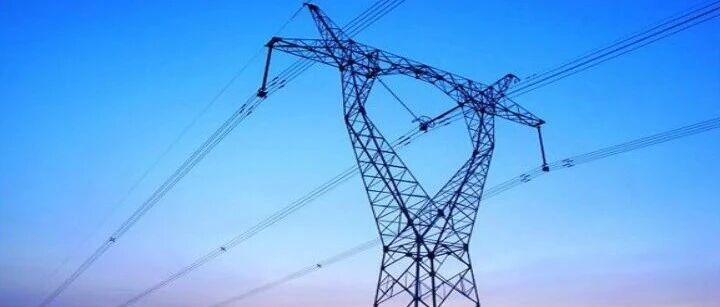
特高压架起电力“闪送通道”(“十四五”,我们见证这些硬核突破④)
Ren Min Ri Bao Hai Wai Ban· 2025-10-22 22:21
Core Insights - The construction of ultra-high voltage direct current (UHVDC) transmission lines in China is accelerating, with a focus on delivering clean energy from western regions to eastern consumption areas [10][11][14] - The Ningxia-Hunan ±800 kV UHVDC project is the first approved transmission corridor primarily for renewable energy from the "desert, Gobi, and barren" wind and solar power bases, capable of delivering over 36 billion kWh annually to Hunan, with more than 50% from renewable sources [12][13] - By the end of 2023, China's UHVDC transmission capacity is expected to exceed 340 million kW, a 25% increase from the end of the 13th Five-Year Plan [7][11] Group 1: Project Developments - The Gansu-Zhejiang ±800 kV UHVDC project has entered the line construction phase, indicating ongoing infrastructure development [4] - The Baihetan-Jiangsu ±800 kV UHVDC project exemplifies the efficiency of UHVDC technology, reducing transmission time to just 7 milliseconds for electricity from Sichuan to Jiangsu [9] - The Lonyang-Shandong ±800 kV UHVDC project, which is the first integrated energy base project, has been completed and is expected to deliver 36 billion kWh annually, with over half from renewable sources [12][13] Group 2: Technological Advancements - The "14th Five-Year Plan" period has seen significant advancements in UHVDC technology, with the total length of UHVDC lines expected to grow from 28,000 km to over 40,000 km [11][15] - The introduction of standardized ±800 kV/800 MW UHVDC technology has led to the creation of over 500 various standards and specifications, enhancing the domestic power equipment manufacturing capabilities [15][17] - Breakthroughs in "bottleneck" technologies have been achieved, including the use of domestically produced equipment, which reduces reliance on foreign technology [17]
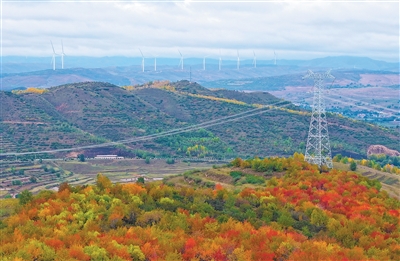
电力设备及新能源行业专题研究:新型储能产业链之河南概况(二)
Zhongyuan Securities· 2025-10-22 10:27
Investment Rating - The report maintains an "Outperform" rating for the electric power equipment and new energy sector [1] Core Insights - The new energy storage industry in China is transitioning from a policy-driven phase to a market-driven phase, with significant growth in installed capacity and supportive government policies [6][15][20] - The installed capacity of new energy storage in China reached 94.91 GW/222 GWh by mid-2025, accounting for over 40% of the global total [25][26] - The report highlights the rapid growth of new energy storage projects globally, with a 62.5% increase in newly installed capacity in 2024 [21][24] Summary by Sections 1. Current Development of China's New Energy Storage Industry - New energy storage, excluding pumped storage, is crucial for building a new power system dominated by renewable energy [13] - The industry is entering a market-driven phase, with policies emphasizing the development of new energy storage [15][16] 2. New Energy Storage Downstream Application Scenarios - The main applications of energy storage in China are categorized into three areas: power source side, grid side, and user side [39][40] - Power source side storage is primarily used in conventional power plants and renewable energy facilities to enhance stability and efficiency [43][44] - Grid side storage provides essential services such as peak shaving and frequency regulation, ensuring the reliability of the power system [48][51] - User side storage focuses on reducing electricity costs and enhancing supply reliability, with applications in commercial and industrial settings [53] 3. Development of New Energy Storage in Henan Province - Henan aims to achieve over 5 million kW of new energy storage capacity by 2025 and over 15 million kW by 2030, with strong government support [9][10] - The province is focusing on grid-side storage and independent storage projects to alleviate renewable energy consumption pressures [9][10] 4. Recommendations for the Development of New Energy Storage Industry in Henan - The report suggests promoting independent storage projects and enhancing price mechanisms to support the growth of the new energy storage sector in Henan [9][10]
2025年电力行业可靠性高质量发展暨电力可靠性管理40周年主题论坛成功举办
Zhong Guo Jing Ji Wang· 2025-10-22 03:50
Core Viewpoint - The forum on high-quality development of power reliability management in China marks the 40th anniversary of the country's efforts in this field, highlighting significant achievements and future directions for enhancing power reliability management [1][2]. Group 1: Achievements in Power Reliability Management - Over the past 40 years, China's power reliability management has evolved significantly, with the average unplanned outages for main coal-fired units decreasing from 6.22 times in 1985 to 0.6 times in 2024 [2]. - The average annual power outage time per user has reduced from 94.55 hours in 1991 to 6.71 hours in 2024, with the national average power supply reliability reaching 99.924% [2]. - The availability coefficient of 220 kV and above transformers remains high, and the energy availability rate of direct current systems has been maintained above 95.6% over the past five years, surpassing international standards [2]. Group 2: Future Directions and Goals - The China Electricity Council (CEC) aims to strengthen its role as a think tank, enhance the innovation of power reliability management measures, and improve the quality control of statistical work and professional talent training [2]. - Emphasis will be placed on building a new reliability management framework that adapts to the new power system, driven by reform and innovation, and focusing on data application and quality [4]. - The conference served as a platform for sharing experiences and insights on energy security, emergency response, and power system reliability, contributing to the high-quality development of the energy sector [5]. Group 3: Key Participants and Contributions - The forum featured speeches from key figures, including Yang Kun, Lu Junling, and Wang Yonggan, who reflected on the historical journey and future aspirations of power reliability management in China [2][3]. - Reports from various experts highlighted the foundational role of power reliability management in ensuring stable electricity supply and safety in production [3][4]. - The event included the announcement of awards for exemplary cases in power reliability management and the release of benchmark units for generator reliability for 2024 [5].
匠心立鼎,诚信通达 信通电子与您共赴2025年世界投资者周
Quan Jing Wang· 2025-10-21 06:28
Core Insights - The 2025 World Investor Week focuses on investor education and protection, with themes including "Technology and Digital Finance," "Artificial Intelligence (AI)," and "Fraud Prevention" [1] - Shandong Xintong Electronics Co., Ltd. emphasizes investor value and aims to discuss investment opportunities in the context of new productivity with its technological strength and transparent governance [1] Group 1: Company Overview - Shandong Xintong Electronics is a leading provider of IoT solutions in China, focusing on the power and communication sectors [1] - The company leverages "IoT + Edge Computing + AI + Big Data" as its core competitive advantage, establishing a solid barrier in the smart operation track [1] - Xintong Electronics actively participates in the digital transformation of the domestic power and communication industries, emphasizing technological innovation and continuous R&D breakthroughs [1] Group 2: Investor Engagement and Protection - The company adheres to the principles of "Transparency, Compliance, and Win-Win," regularly holding online performance briefings to address investor concerns and explain business strategies [2] - Xintong Electronics emphasizes the importance of investor awareness regarding potential risks associated with technology and digital finance, particularly for new investors [3] - The company encourages investors to conduct due diligence and make informed decisions, advocating for rational and long-term investment strategies [3] Group 3: Risk Awareness and Compliance - Investors are advised to be cautious of unlicensed entities and individuals promoting illegal securities and futures activities under the guise of "financial influencers" or "AI technology" [3] - The company highlights the need for small and medium investors to enhance their risk awareness and to be vigilant against fraudulent practices [3] - Xintong Electronics believes that core technology and compliant governance are essential for achieving long-term mutual benefits for the company and its investors [3]
机械ETF(516960)涨超2.3%,电力设备与电池技术突破引关注
Mei Ri Jing Ji Xin Wen· 2025-10-21 05:29
Group 1: Power Equipment Industry - The investment scale of the State Grid is expected to exceed 650 billion yuan for the first time by 2025, with over 420 billion yuan completed in fixed asset investment from January to September, representing a year-on-year increase of 8.1% [1] - The construction of ultra-high voltage projects is accelerating, with significant projects such as the Longdong-Shandong and Hami-Chongqing lines being put into operation, and the Datong-Tianjin South project starting construction, enhancing cross-regional transmission capacity [1] - The focus of the new power system development is on the intelligent and digital transformation of distribution networks, with clear planning and high certainty in the progress of ultra-high voltage line construction [1] Group 2: Battery Industry - China has made several breakthroughs in solid-state battery technology, including a new fluorinated polyether electrolyte developed by Tsinghua University achieving an ultra-high energy density of 604 Wh/kg and passing rigorous safety tests [1] - The interface-integrated flexible materials designed by the Chinese Academy of Sciences can withstand 20,000 bending cycles [1] - Global solid-state battery shipments are expected to increase from 34 GWh in 2026 to 614 GWh by 2030, with the proportion of all-solid-state batteries rising from 10% in 2027 to 30% in 2030 [1] Group 3: Mechanical ETF - The Mechanical ETF (516960) tracks a specialized mechanical index (000812), selecting listed companies involved in industrial automation, engineering machinery, and specialized equipment from the Shanghai and Shenzhen markets [1] - The index reflects the overall performance of companies that represent technological innovation and manufacturing upgrades within the mechanical equipment industry [1] - Component stocks typically possess strong market competitiveness and growth potential [1]