金地集团

Search documents
26.96亿元主力资金今日撤离房地产板块
Zheng Quan Shi Bao Wang· 2025-08-27 09:21
Market Overview - The Shanghai Composite Index fell by 1.76% on August 27, with only one industry, telecommunications, showing an increase of 1.66%. The real estate and beauty care sectors experienced significant declines of 3.51% and 3.86%, respectively [1] Capital Flow Analysis - The main capital flow in the two markets showed a net outflow of 129.75 billion yuan, with all industries under Shenwan experiencing net outflows. The computer industry had the largest net outflow of 16.31 billion yuan, followed by the pharmaceutical and biological sector with a net outflow of 12.32 billion yuan [1] Real Estate Sector Performance - The real estate sector saw a decline of 3.51%, with a total net outflow of 2.696 billion yuan. Out of 100 stocks in this sector, only 4 rose, and 1 hit the daily limit, while 96 fell, with 2 hitting the daily limit down [2] - Among the stocks with net inflows, the top performer was China New Group, with a net inflow of 78.12 million yuan, followed by Huafa Group and Wanye Enterprises with net inflows of 31.61 million yuan and 21.28 million yuan, respectively [2] - The stocks with the largest net outflows included Wantong Development, Poly Development, and Zhangjiang Hi-Tech, with net outflows of 522.48 million yuan, 241.02 million yuan, and 220.43 million yuan, respectively [3]





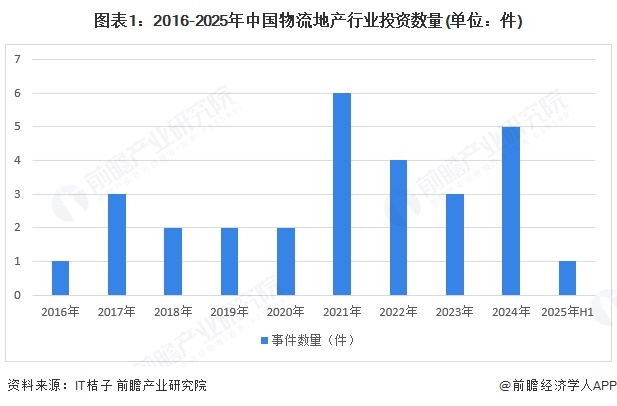
【投资视角】启示2025:中国物流地产行业投融资及兼并重组分析(附投融资事件、产业基金和兼并重组等)
Qian Zhan Wang· 2025-08-27 04:09
Core Insights - The logistics real estate sector has experienced fluctuations in investment activities from 2017 to 2024, with a total of 29 investment events, averaging 2-3 events per year. The peak year for investments was 2021, driven by the recovery of downstream port freight activities, which increased the attractiveness of related enterprises [1][2] - In 2024, a new wave of investment emerged, focusing on port logistics, comprehensive supply chain logistics, and international logistics warehousing [1] Investment Events Summary - Investment events involve various types of enterprises, including logistics service providers, online freight platforms, logistics facility suppliers, and property management service providers. The investment rounds include equity investments, mergers and acquisitions, and Series D funding [2] - Notable financing events include: - 运百物流 received a strategic investment of 2.84 million yuan on August 23, 2024 [4] - 亚太港口 secured a strategic investment of 267 million yuan on February 22, 2024 [4] - 万纬物流 received a strategic investment of 1.15 billion yuan on October 2, 2021 [5] Financing Rounds - Strategic investments are the primary financing round in the logistics real estate sector, accounting for 30% of all investment events, followed by Series A at 17%. There is an increasing trend in Series B to D funding rounds [6] Investment Entities - Private equity (PE) and venture capital (VC) firms account for 50% of the investment entities, indicating short-term profit opportunities in the sector. Industrial companies represent 28% of the investment entities, focusing on integrated supply chain investments [7] Investment Destinations - Investment destinations are concentrated in major cities such as Shanghai (28%), Guangdong (24%), and Jiangsu and Zhejiang (12% each). These regions are attractive due to strong project operational prospects, high order volumes, and mature logistics real estate development [8][11] Fund Management Scale - Various funds are actively investing in the logistics real estate sector, including 杭州嘉锐基金, 嘉实基金, and 顺丰产业基金. These funds are attracted by the long-term value of infrastructure and the synergy effects within the industry [12] Mergers and Acquisitions - Major mergers and acquisitions in the sector reflect vertical integration, such as 时代邻里 acquiring 科箭物业 and 京东 acquiring Chinese logistics assets. These moves aim to enhance operational specialization and scale in logistics real estate [16] Overall Summary - The logistics real estate sector is characterized by strategic financing aimed at expanding business operations and seeking new growth opportunities. The industry has a significant number of large-scale funds, with a focus on technology investments, and mergers are primarily aimed at vertical integration [17][19]

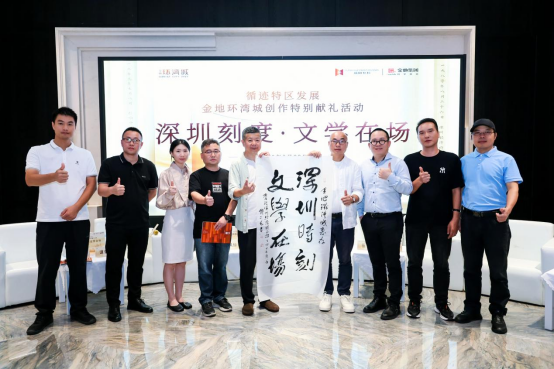
文学赋能城市,彰显深圳精神:金地环湾城打造深圳文化新现场
Sou Hu Wang· 2025-08-27 03:26
Core Insights - The event "Shenzhen Scale: Literature in Place" was successfully held by Jindi Huanwan City, inviting eight writers to create literary works reflecting Shenzhen's urban memory and future vision [1][3] Group 1: Event Overview - The writers participated in activities such as field trips, creative writing, and readings, producing works that reflect Shenzhen's spirit and regional development [3][4] - The literary creations emerged from various dimensions, including urban change, cultural coexistence, and living scenes, showcasing Shenzhen's unique literary style [3][4] Group 2: Writers' Contributions - Writer Zhong Ermao shared insights on the humanistic care and individual destinies amid rapid urban development [4] - Yao Xiankang's piece highlighted Shenzhen's maritime connection and open spirit, while Wan Jun's poetry depicted the resilience of Shenzhen's people [4] - Other writers captured themes of nostalgia, urban struggles, and the city's inclusivity towards diverse age groups [4] Group 3: Project Significance - Jindi Huanwan City is located in Futian District, a core area for administration, finance, and culture in Shenzhen, with significant development potential [6] - The project benefits from the dual engines of innovation and finance, enhancing its value and growth potential as Shenzhen integrates with Hong Kong [6][7] - The project aims to redefine high-end living by integrating literature, art, and culture, providing a new residential experience for high-net-worth individuals [7]
上海出台“沪六条”:外环外购房不限套数,单身视同家庭
Sou Hu Cai Jing· 2025-08-26 20:27
Core Points - Shanghai's real estate market is experiencing a significant policy shift with the introduction of "Hu Liu Tiao," which optimizes and adjusts various aspects of the housing market, including purchase restrictions, housing provident fund, housing credit, and tax policies [1][12] Group 1: Purchase Policy Adjustments - The new policy removes the independent purchase restrictions for single individuals, integrating them into the household category for unified management, thus easing the 15-year-old purchase limits [3][4] - Eligible residents, including both local and non-local families who have paid social insurance or individual income tax for over a year, can now purchase new or second-hand homes without quantity restrictions in areas outside the outer ring [3][4] - Non-local single individuals can now purchase new homes, breaking previous restrictions that limited them to second-hand properties [4] Group 2: Housing Provident Fund Innovations - The maximum loan amount for first-time homebuyers has increased from 1.6 million yuan to 1.84 million yuan, with multi-child families eligible for up to 2.16 million yuan [5][7] - Homebuyers can now withdraw their housing provident fund to pay for the down payment of newly built properties [5][7] - The new policy clarifies that withdrawing the provident fund for down payments will not affect the calculation of housing loan limits [7] Group 3: Credit and Tax Optimizations - The new policy allows banks greater flexibility in determining interest rates for commercial housing loans, which is expected to lower the cost of purchasing improved housing [9][12] - For non-local families purchasing their first home in Shanghai, they will enjoy the same tax exemption benefits as local families, while the second and subsequent homes will have a unified exemption area of 60 square meters per person [9][11] - The adjustments in tax policy aim to reduce disparities between local and non-local families, promoting fairness in the housing market [11] Group 4: Market Reactions and Future Outlook - The introduction of "Hu Liu Tiao" aligns with national efforts to stabilize the real estate market, indicating a gradual exit from the restrictive purchase policies implemented since 2010 [12][14] - The policy changes have led to immediate positive reactions in the stock market, with significant gains in real estate stocks such as Wan Tong Development and Vanke A [14][15] - The upcoming traditional sales peak season ("Golden September and Silver October") is expected to see increased buyer interest and activity, with a notable rise in inquiries for properties in the outer ring areas [15]
房地产行业第34周周报:本周新房成交同比降幅扩大,国务院再提房地产,释放积极信号-20250826
Bank of China Securities· 2025-08-26 05:18
Investment Rating - The report rates the real estate industry as "Outperform" [1] Core Views - The report emphasizes that the current goal of the real estate industry is to stabilize the market and prevent further declines, with a focus on urban renewal as a key task [5][6] - The report highlights that the sales and investment data in the real estate sector have weakened significantly since Q2 2025, indicating a need for policies to support market recovery [6] Summary by Sections 1. Key City New Housing Market, Second-hand Housing Market, and Inventory Tracking - New housing transaction area increased by 14.0% month-on-month but decreased by 11.3% year-on-year, with a notable decline in first-tier cities [18][19] - Second-hand housing transaction area increased by 7.6% month-on-month and rose by 5.1% year-on-year, indicating a positive shift [48] - New housing inventory area increased by 0.3% month-on-month but decreased by 14.7% year-on-year, with an average de-stocking period of 19.0 months [43][49] 2. Land Market Tracking - The total area of land transactions across 100 cities was 760.7 million square meters, down 51.6% month-on-month and 40.5% year-on-year, while the total land price was 199.4 billion, down 20.4% month-on-month and 7.4% year-on-year [62][68] - The average floor price of land was 2,621.8 yuan per square meter, up 64.5% month-on-month and 55.7% year-on-year [64][68] 3. Policy Overview - The report outlines various local government policies aimed at stabilizing the housing market, including measures to support housing loans and improve public fund efficiency [93][94] 4. Investment Recommendations - The report suggests focusing on four main lines of investment: companies with stable fundamentals in core cities, smaller firms with significant breakthroughs, companies with strategic changes, and real estate brokerage firms benefiting from the recovery in the second-hand housing market [6]
上海新政跟进,强化对行业进入中长期修复通道的信心
Orient Securities· 2025-08-26 05:14
Investment Rating - The report maintains a "Positive" outlook for the real estate industry [6] Core Insights - The recent policy adjustments in Beijing and Shanghai align with expectations and are moderate in intensity, which will aid in regional inventory digestion. This series of "city-specific policies" strengthens confidence in the industry's long-term recovery path [1][4] - The recovery of real estate stocks does not solely depend on the timing of policy implementations; rather, the decline in risk-free interest rates and the reduction in industry risk assessments are the primary drivers of this recovery. The market has entered a new bottoming phase, where the impact of the denominator (risk-free rates) outweighs that of the numerator (real estate prices) [2] - The new policies in Shanghai, including the relaxation of purchase restrictions and adjustments to mortgage rates, are expected to stimulate demand in suburban areas, which will help reduce inventory [3] Summary by Sections Policy Developments - On August 25, Shanghai announced new housing policies, including easing purchase restrictions outside the outer ring and enhancing public housing fund support. The adjustments are expected to significantly impact the new housing market, particularly in suburban areas [3] - The report notes that the new policies are similar to those in Beijing, focusing on optimizing public housing fund policies and adjusting commercial loan rates to lower housing costs [3] Market Trends - Since Q2 of this year, the new housing market has shown signs of weakening in both volume and price, increasing the pressure for stabilization. The recent policies from Beijing and Shanghai have reinforced confidence in the industry's long-term recovery, with further policy space anticipated [4] Investment Recommendations - The report suggests focusing on specific stocks: China Merchants Shekou (001979, Buy), Poly Developments (600048, Buy), Beike-W (02423, Buy), Longfor Group (00960, Buy), and Gemdale Corporation (600383, Hold) [5]



上海放开限购,“救人”大于“救市”
吴晓波频道· 2025-08-26 00:30
Core Viewpoint - The recent policy changes in Shanghai's real estate market aim to alleviate liquidity crises by gradually lifting purchase restrictions, thereby providing short-term support to the outer ring housing market [2][29]. Summary by Sections Policy Changes - The new policy allows unlimited purchases for properties outside the outer ring for individuals with one year of social security [3]. - First-time homebuyers from outside Shanghai are exempt from property tax [5]. - The policy treats single individuals and families equally regarding purchasing rules [6]. Market Impact - The outer ring area, referred to as "沪C," has seen significant demand, accounting for 70% of new home sales in Shanghai, with a current inventory pressure and a de-stocking period of about 20 months [10][13]. - The average price of properties in the outer ring has decreased significantly, with some areas seeing prices drop from 41,500 RMB per square meter in 2016 to 37,600 RMB per square meter currently [13]. Demand Dynamics - The policy is expected to release pent-up demand, particularly from middle-class families looking to invest in multiple properties [15]. - The lifting of restrictions is anticipated to lead to a surge in new home sales, as developers prepare for increased demand during the "golden September and silver October" sales period [16]. Historical Context - Comparisons with Beijing's recent policy changes show a similar trend, with a 37% increase in new home transactions following the lifting of restrictions [17]. - However, there are concerns about a potential oversupply in the market, as the number of listings continues to rise despite increased sales [21]. Future Outlook - The long-term effectiveness of the new policy remains uncertain, with fears of potential "panic selling" if the market does not respond positively [23]. - The influx of new properties entering the market in 2026 could lead to significant challenges if demand does not keep pace with supply [26][28]. Expert Opinions - Analysts suggest that while the policy may provide short-term relief, a more comprehensive approach, including further easing of restrictions and adjustments to mortgage rates, may be necessary for sustained market stability [33][34].

万科A盘中罕见涨停 地产板块投资机会怎么看?
Feng Huang Wang· 2025-08-26 00:25
Group 1 - Vanke reported a revenue of 105.32 billion yuan and a net loss of 11.95 billion yuan for the first half of the year, with sales area and amount down 42.6% and 45.7% respectively [2] - The management attributed the losses to a decline in development business settlement scale and low gross margins, alongside impairment provisions for certain assets [2] - Vanke has made progress in debt resolution, repaying 24.39 billion yuan in public market debt and having no due overseas public debt before 2027 [2] Group 2 - Other real estate stocks in A-shares performed well, with multiple stocks rising over 5%, and Hong Kong real estate stocks also saw gains [3] - Shanghai introduced new housing policies aimed at optimizing real estate measures, including reducing housing purchase restrictions and improving housing credit policies [3] - Institutions are optimistic about the investment potential of leading real estate companies with solid fundamentals [3] Group 3 - The real estate industry is expected to stabilize as sales data remains low but shows signs of recovery, with core cities continuing to optimize purchasing policies [4] - Analysts suggest that the real estate sector may present mid-to-long-term investment opportunities, particularly in first and second-tier cities [4] - The market is anticipated to gradually recover, with leading companies benefiting from lower financing costs and high market share in core areas [4]
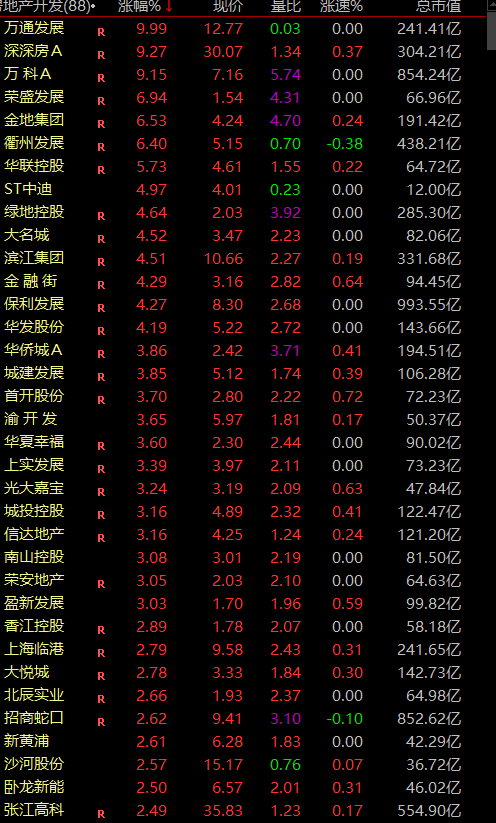
A股地产板块异动,螺纹钢等期价有了想象空间?
Qi Huo Ri Bao· 2025-08-25 23:43
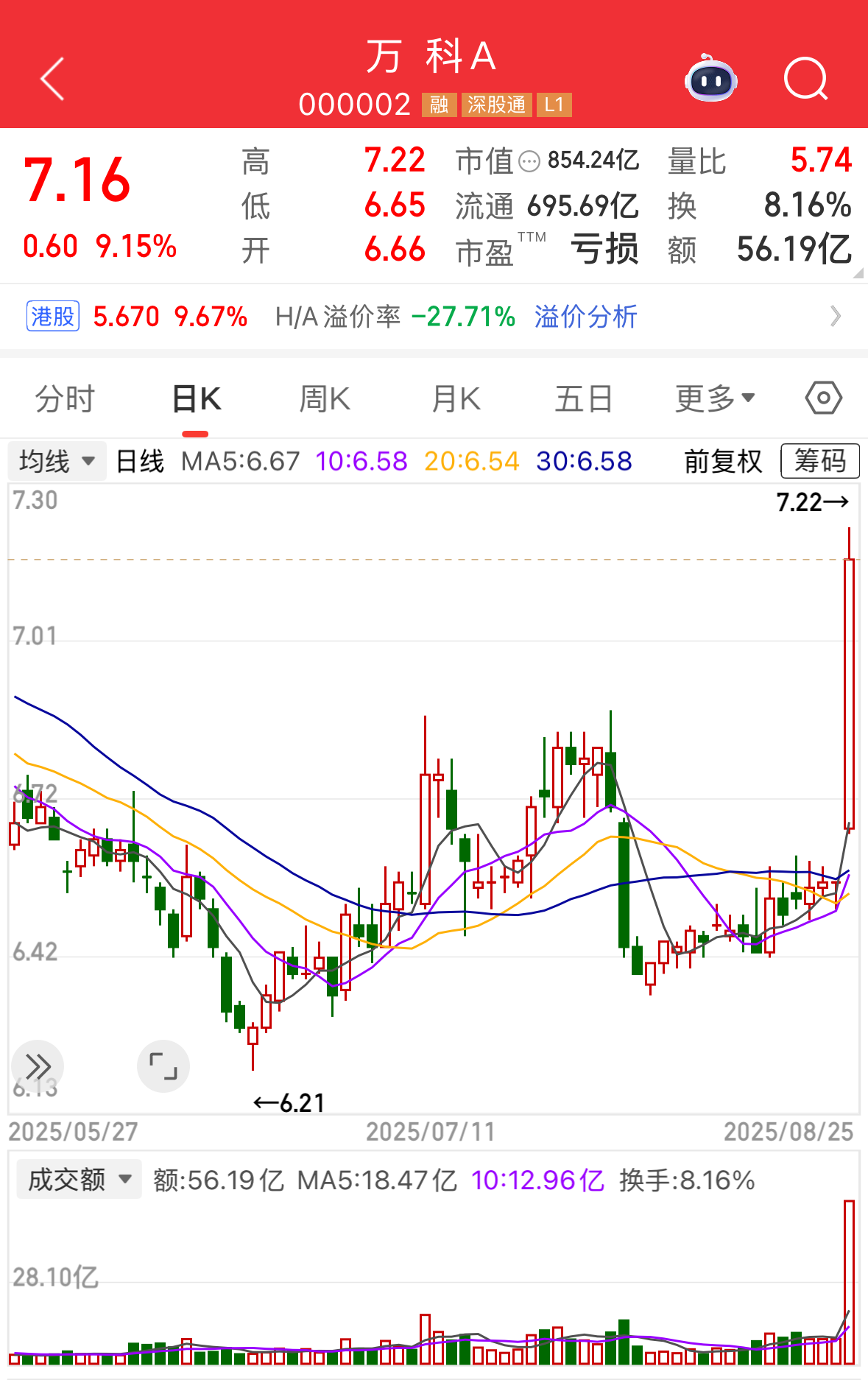
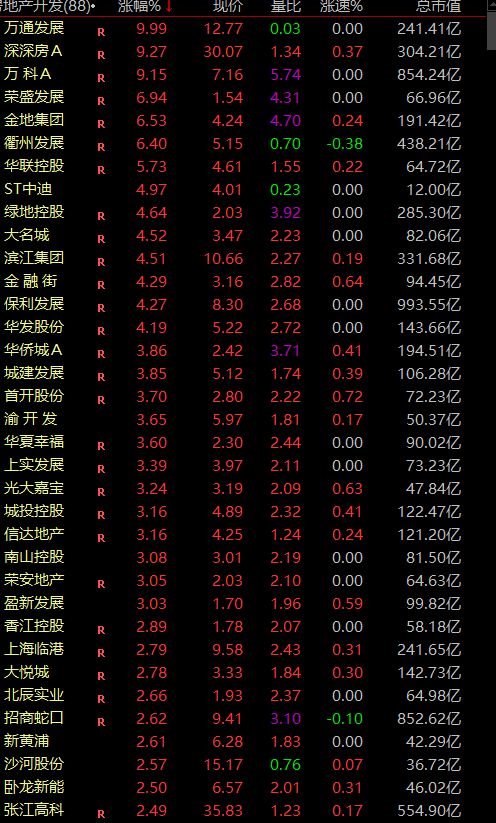
Core Viewpoint - The recent policy adjustments in Shanghai's real estate market, including reduced housing purchase restrictions and increased loan limits, are expected to significantly stimulate demand and improve market conditions, leading to a surge in real estate stock prices [1][3][4]. Policy Adjustments - The new policy allows individuals who have paid social insurance for one year to purchase unlimited housing outside the outer ring road, and single adults are treated as family units for purchasing limits [3][4]. - The maximum housing provident fund loan limit has been increased to 2.16 million yuan, and first-time buyers without local residency are exempt from property tax [3][4]. Market Reaction - Following the announcement, the A-share real estate sector saw significant gains, with companies like Wantong Development and Vanke A experiencing price increases of over 9% [1][2]. - The overall market sentiment shifted positively, with institutional investors increasing their holdings in real estate stocks, leading to a net purchase of over 3 billion yuan in a single day [4][6]. Broader Implications - The policy is seen as a catalyst for a nationwide easing trend, with similar adjustments occurring in other major cities like Beijing and Shenzhen, which may enhance market confidence [4][5]. - The adjustments are expected to lead to a restructuring of supply and demand dynamics in the real estate market, pushing for quality upgrades in housing supply [5][6]. Investment Opportunities - Investors are advised to focus on high-quality real estate companies and sectors benefiting from policy relaxations, such as building materials and home appliances [6]. - Long-term strategies may include tracking urban renewal projects and affordable housing initiatives, which could yield significant returns [6].

A股地产板块异动 螺纹钢等期价有了想象空间?
Qi Huo Ri Bao· 2025-08-25 23:40
Core Viewpoint - The recent policy adjustments in Shanghai's real estate market are expected to significantly stimulate demand and improve market conditions, with a focus on enhancing housing accessibility and financial support for buyers [1][3][4]. Policy Adjustments - The new policies include reducing housing purchase restrictions, optimizing housing provident fund usage, increasing personal housing loan limits to a maximum of 2.16 million yuan, and exempting first-time homebuyers from property tax [3][4]. - The policies will take effect from August 26, 2025, and are seen as a response to similar adjustments made in other major cities like Beijing and Shenzhen [3][4]. Market Reaction - Following the announcement, the A-share real estate sector experienced a significant surge, with stocks like Wantong Development hitting the daily limit and others like Vanke A and Deep Shenzhen A rising over 9% [2]. - The overall market sentiment shifted positively, driven by the expectation of improved fundamentals for leading real estate companies and a recovery in market confidence [4][5]. Economic Impact - The policy changes are viewed as a major regional initiative that could activate substantial latent demand for housing, particularly in the outer areas of Shanghai [4][5]. - The adjustments are expected to create a nationwide easing atmosphere, enhancing market confidence and potentially leading to a recovery in housing transactions [4][5]. Long-term Implications - The Shanghai policy is anticipated to serve as a testing ground for supply-demand restructuring, financial policy innovation, and land market differentiation [5][6]. - Investors are advised to focus on quality real estate firms and sectors benefiting from policy relaxations, such as building materials and home appliances, while also considering long-term opportunities in urban renewal and rental housing [6][7].