古茗

Search documents
大行评级丨高盛:将古茗纳入亚太区确信买入名单 目标价32港元
Ge Long Hui· 2025-11-04 02:53
Core Viewpoint - Goldman Sachs has included Gu Ming in its Asia-Pacific "Conviction Buy" list, assigning a "Buy" rating and a target price of HKD 32, anticipating over 20% year-on-year growth in adjusted net profit over the next two years, supported by increasing penetration of ready-to-drink beverages and market share expansion [1] Group 1 - Gu Ming has demonstrated strong competitiveness, with year-to-date gross merchandise volume (GMV) growth exceeding 20%, significantly outperforming other mid-priced ready-to-drink beverage brands [1] - The growth is attributed not only to delivery subsidies but also to the successful launch of new products and expansion of product categories, such as coffee, along with strong execution capabilities [1]
新华网财经观察丨新茶饮十年,为何再难见爆款?
Xin Hua Wang· 2025-11-03 13:08
Core Insights - The new tea beverage industry has experienced a decline in the emergence of "hit products" over the past few years, with brands struggling to replicate past successes like cheese tea and dirty tea [2][8] - The market has evolved, and new brands are exploring different avenues for growth, while the industry faces challenges such as flavor homogenization and changing consumer preferences [8][9] Industry Growth and Trends - The new tea beverage industry saw a compound annual growth rate of 24.9% from 2017 to 2022, with the market size expected to exceed 354.7 billion yuan by 2024 and over 500,000 stores established [7] - The initial success of brands like Heytea and Naixue's Tea was driven by high-quality, freshly made products that attracted a young consumer base [4][5] Challenges in Product Innovation - The difficulty in creating new hit products is attributed to severe flavor homogenization, with many brands using similar ingredients and supply chains [8] - The rapid replication of successful products by competitors has made it challenging to develop unique offerings that can achieve widespread popularity [8][9] Consumer Behavior and Preferences - Consumers have become more discerning, with 73.09% of them sticking to 1-2 brands and showing reluctance to try new products due to perceived low value [9] - Increased health consciousness has led to a decline in the frequency of purchases, as consumers are more cautious about high-calorie drinks [9] Strategic Responses from Brands - Brands are diversifying their offerings by expanding into food and creating a full-day product ecosystem, with many introducing baked goods and light meals to complement their tea products [10][12] - Some brands are focusing on upgrading core products and optimizing supply chains to enhance cost efficiency and product quality [12] Localization and Emotional Value - Newer brands are adopting localized strategies, emphasizing regional flavors and ingredients to create unique identities [15] - Emotional value is becoming a significant factor in consumer choices, with brands like Luckin Coffee and Bawang Tea Princess successfully connecting with consumers through quality and cultural narratives [17]



宁波梅山保税港区美兴私募基金管理有限公司减持古茗约2378.19万股 每股均价22.54港元
Zhi Tong Cai Jing· 2025-11-03 12:30
Core Viewpoint - Ningbo Meishan Bonded Port Area Meixing Private Fund Management Co., Ltd. has reduced its stake in Gu Ming (01364) by selling 23,781,859 shares at an average price of HKD 22.54 per share, totaling approximately HKD 536 million [1] Group 1 - The reduction in shareholding results in a new total of approximately 150 million shares held, representing a 6.31% ownership stake [1] - The transaction involved an associated party, Zhu Yonghua [1]
宁波梅山保税港区美兴私募基金管理有限公司减持古茗(01364)约2378.19万股 每股均价22.54港元
智通财经网· 2025-11-03 12:27
Core Viewpoint - Ningbo Meishan Bonded Port Area Meixing Private Fund Management Co., Ltd. has reduced its stake in Gu Ming (01364) by approximately 23.78 million shares at an average price of HKD 22.54 per share, totaling around HKD 536 million [1] Summary by Category - **Share Reduction Details** - The company sold 23,781,859 shares of Gu Ming at an average price of HKD 22.54 per share [1] - The total amount from the sale is approximately HKD 536 million [1] - **Post-Transaction Holdings** - After the reduction, the latest number of shares held is approximately 150 million [1] - The new holding percentage is 6.31% [1] - **Related Party Involvement** - The transaction involves a related party: Zhu Yonghua [1]
高光、失血与急转:喜茶加盟800天
首席商业评论· 2025-11-03 03:50
Core Viewpoint - The article discusses the challenges faced by Heytea after its rapid expansion through franchising, highlighting the conflict between brand standards and franchisee profitability, ultimately leading to a strategic pause in new franchise recruitment to reassess its business model and brand positioning [6][7][39]. Group 1: Business Model and Expansion - Heytea was not a typical tea brand, emphasizing product quality and brand image, which led to high operational costs and pressure, especially during the pandemic [6][19]. - In late 2022, Heytea opened its franchise model to accelerate growth and reach lower-tier markets, which initially contributed over 50% of its revenue in 2023 [6][10]. - However, the rapid expansion of franchises created operational challenges, leading to conflicts between the brand's strict standards and the franchisees' operational realities [6][9][29]. Group 2: Franchisee Challenges - Franchisees faced significant operational pressures, including high costs, strict operational processes, and intense market competition, leading to many reporting losses [10][12][13]. - The initial success of franchisees quickly turned into struggles, with many experiencing declining sales and profitability, prompting a wave of store closures [10][13][34]. - Franchisees expressed dissatisfaction with the lack of support from the headquarters, which failed to address their operational challenges effectively [9][10][36]. Group 3: Strategic Adjustments - In early 2024, Heytea announced a pause in its franchise recruitment to reassess its strategy and improve support for existing franchisees [36][39]. - The company shifted its focus back to high-end branding and product differentiation, moving away from aggressive price competition with lower-tier brands [36][39]. - The pause in expansion is seen as an opportunity for Heytea to strengthen its brand image and improve franchisee profitability, which is crucial for long-term sustainability [39][40].

十五五规划,提振消费将是系统性大工程
2025-11-03 02:35
Summary of Key Points from Conference Call Records Industry Overview - The conference call discusses the **Chinese consumer market** and various sectors including **home appliances**, **textiles and apparel**, **food and beverage**, and **high-end consumption** [1][2][3][4][5][6][7][8][9][10][11][12][13][14][15][16][17][18][19][20][21][22][23][24][25][26][27][28][29][30][31][32][33][34][35][36][37][38][39]. Core Insights and Arguments Government Initiatives - The **15th Five-Year Plan** emphasizes enhancing consumer spending through measures such as promoting employment, increasing wage income, stabilizing expectations, and improving the social security system [1][4][6]. - Short-term measures include a **central subsidy** of **300 billion** in 2025, with expectations for continued large-scale subsidies in 2026, albeit with a broader scope to avoid over-reliance on subsidies [1][5][6]. Consumer Market Trends - The consumer market has shifted from a bull market post-2020 to a prolonged bear market starting in 2021, primarily due to weakened purchasing power and consumption downgrade [2]. - The **A-share** consumer sector has lagged, while the **Hong Kong stock market** saw a rise in new consumption sectors in late 2024 and early 2025 [2]. Sector-Specific Insights - **Home Appliances**: Companies like **Midea** and **Haier** are expected to grow due to international competitiveness and channel reforms, despite concerns over subsidy reductions [1][13]. - **Television Industry**: **Hisense** and **TCL** are positioned to benefit from increased Mini LED penetration, enhancing brand positioning and average pricing [1][14]. - **Textiles and Apparel**: The sector is undergoing structural upgrades with rising demand for health-oriented and fashionable clothing. Despite fluctuations in overseas demand, international expansion is expected to improve order situations by 2026 [1][22][24][25]. - **Food and Beverage**: Investment opportunities lie in new consumption channels and health-oriented products, with policy support expected to stimulate demand [3][37][38]. Long-term Market Outlook - The overall market outlook for 2026 is cautious, with expectations of improved overseas business due to China's efficiency in the supply chain and technological advancements [12]. - The **high-end consumption market** is anticipated to benefit from wealth improvements and policy optimizations, particularly in sectors like luxury goods and entertainment [32]. Additional Important Insights - The **service consumption sector** is highlighted as a crucial employment channel, with increased supply in events like concerts and sports benefiting from policy optimizations [3][31]. - The **internationalization of Chinese consumer industries** is progressing, with significant competitiveness in technology and manufacturing sectors, although challenges remain in textiles and apparel [11][24][27]. - The **outdoor apparel market** is emerging as a growth area, with traditional brands expanding their product lines [26]. - The **packaging industry** is experiencing consolidation, with major players like **Aoruijin** and **Baosteel** capturing significant market share [18]. This summary encapsulates the key points discussed in the conference call, providing a comprehensive overview of the current state and future outlook of the Chinese consumer market and related industries.
2.9元咖啡“杀疯了”!低价咖啡挑战库迪和瑞幸,还能撑多久?
Mei Ri Jing Ji Xin Wen· 2025-11-02 22:50
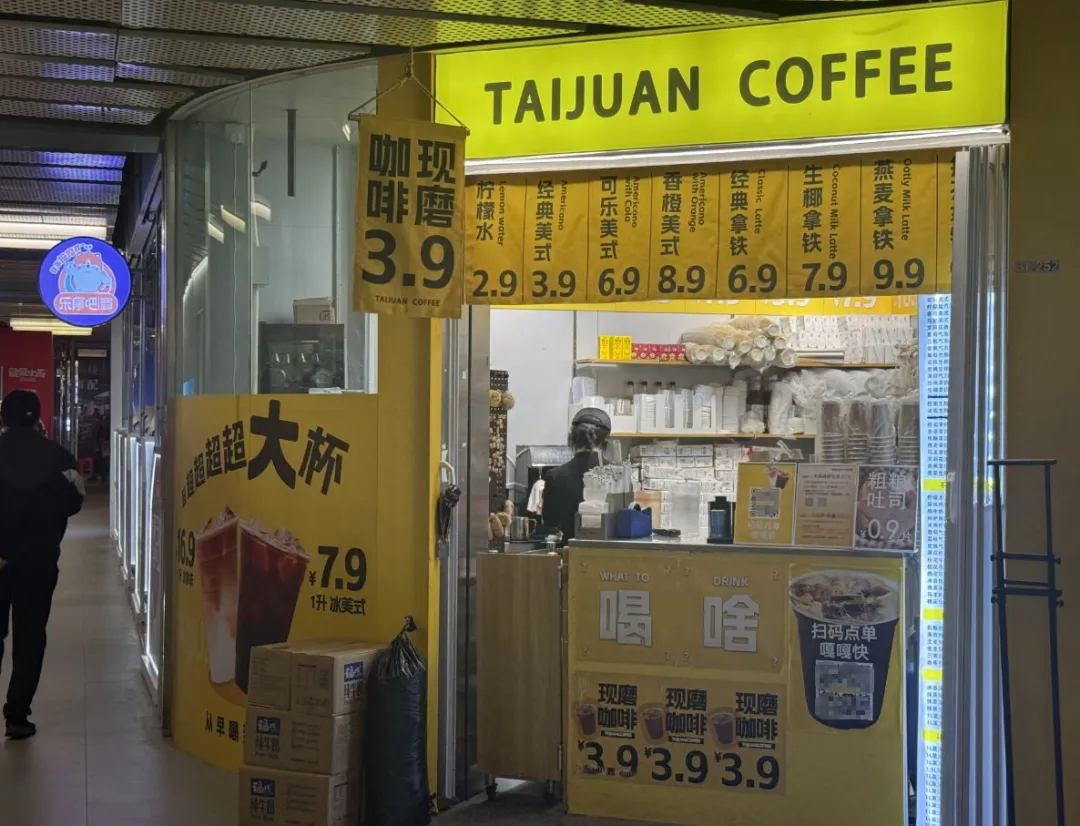
Core Insights - The coffee market in China is experiencing a significant price drop, with prices for coffee reaching as low as 1.9 yuan per cup through promotions and discounts, indicating a shift towards making coffee a daily staple rather than a luxury item [1][3][4] Price Trends - Luckin Coffee and Kudi previously set a price point of 9.9 yuan per cup, but new entrants like TAIJUAN COFFEE are offering prices as low as 2.9 yuan for freshly brewed coffee [1][2] - The trend of low-priced coffee is gaining traction, with some consumers able to purchase coffee for as little as 0.99 yuan per cup through group buying [2][3] Market Dynamics - The coffee market is becoming increasingly competitive, with brands like Kudi and Luckin facing pressure from new low-cost competitors, leading to a potential crisis for their established pricing strategies [1][4] - The cost of coffee production is rising due to global supply chain issues, making it difficult for brands to sustain low prices without incurring losses [4][5] Consumer Behavior - Consumers are increasingly viewing coffee as an affordable daily necessity, with reports of individuals consuming multiple cups a day at low prices [3][4] - The perception of coffee as a high-end product is diminishing, as evidenced by consumers finding low-priced options cheaper than traditional breakfast items [2][3] Supply Chain Considerations - The domestic coffee bean roasting capacity is expected to increase starting in 2024, with more companies investing in local coffee production, which may help stabilize prices in the future [6] - Brands that can streamline their supply chains or leverage local sourcing may have a competitive advantage in maintaining lower prices [5][6]

一杯现磨咖啡只要2.9元,消解“高端象征”
Mei Ri Jing Ji Xin Wen· 2025-11-02 03:19
Core Insights - The coffee market in China is experiencing a significant price drop, with prices for freshly brewed coffee falling to as low as 2.9 yuan per cup, challenging the previous price point of 9.9 yuan set by brands like Luckin Coffee and Kudi [1][4] - The trend indicates that coffee is becoming a daily staple for consumers, moving away from its previous status as a premium product [2][3] Price Dynamics - The recent promotional campaign by the tea brand Guming offered coffee at 2.9 yuan per cup, leading to a surge in consumer interest and social media buzz [2] - TAIJUAN COFFEE has also entered the market with competitive pricing, offering American coffee at 3.9 yuan and espresso at 2.9 yuan [2] - The price of coffee has been driven down by intense competition and promotional strategies, with some consumers reporting prices as low as 0.99 yuan per cup through group buying [3] Market Competition - The competitive landscape is shifting, with brands like Guming and TAIJUAN COFFEE challenging established players like Luckin and Kudi, which previously dominated the 9.9 yuan price point [4][5] - Industry experts suggest that the 9.9 yuan price point is now seen as a low-margin strategy, with costs for coffee beans and other inputs rising, making it difficult for brands to sustain profitability at this level [4][6] Consumer Behavior - Consumers are increasingly prioritizing price over brand prestige, with many expressing surprise at the affordability of freshly brewed coffee compared to traditional breakfast items [2][3] - The perception of coffee as a daily necessity is growing, particularly among working-class individuals who consume multiple cups per day [3] Sustainability of Low Prices - Analysts warn that the current low pricing strategy may not be sustainable without ongoing platform subsidies, as rising costs for coffee beans and other materials are putting pressure on profit margins [6][7] - The future of low-priced coffee may depend on efficient supply chains and the ability to leverage low-cost domestic coffee production [7]
“硬刚”瑞幸、库迪,一杯现磨咖啡只要2.9元,业内人士:9.9元/杯仅留微利!消解“高端象征”,消费者:比煎饼果子还便宜
Mei Ri Jing Ji Xin Wen· 2025-11-01 15:04
Core Insights - The coffee market in China is experiencing a significant price drop, with prices for a cup of coffee falling to as low as 2.9 yuan, driven by aggressive promotional strategies from brands like Gu Ming and TAIJUAN COFFEE [1][3][4] Price Trends - Luckin Coffee and Kudi previously set a price point of 9.9 yuan per cup, but the competition has intensified, leading to prices as low as 1.9 yuan for delivery and 2.9 yuan in-store [1][3][4] - Gu Ming launched a two-week promotion offering coffee at 2.9 yuan, distributing 2 million coupons, which quickly gained popularity on social media [6][4] - TAIJUAN COFFEE opened in Shanghai with prices starting at 3.9 yuan for American coffee, indicating a shift towards lower pricing strategies in the market [6][4] Market Dynamics - The concept of coffee is shifting from a luxury item to a daily staple, with consumers now prioritizing price over brand prestige [4][7] - The competitive landscape is changing, with brands like Gu Ming and TAIJUAN COFFEE challenging established players like Luckin and Kudi, which previously dominated the 9.9 yuan price segment [9][11] Supply Chain and Sustainability - The current low prices are unsustainable without platform subsidies, as rising global coffee bean costs and other operational expenses make it difficult for brands to maintain profitability at these price points [11][12] - The future stability of coffee prices may rely on improved supply chain efficiencies and local sourcing of coffee beans, as seen with brands like Luckin and Starbucks [12][11] Consumer Behavior - Consumers are increasingly drawn to low-priced coffee options, with some reporting that a cup of coffee is now cheaper than traditional breakfast items [4][7] - The trend indicates a broader acceptance of coffee as an everyday beverage among the working population, further driving demand for affordable options [7][9]

高光、失血与急转:喜茶加盟800天
虎嗅APP· 2025-11-01 14:11
Core Viewpoint - Heytea, once a leading brand in the tea beverage industry, faced significant operational pressures due to high costs and declining sales during the pandemic. The company opened franchising in late 2022 to accelerate expansion and reach lower-tier markets, which initially contributed over 50% of its revenue in 2023. However, the rapid expansion led to operational challenges and conflicts with franchisees, ultimately resulting in the suspension of the franchise program after two years [4][5][6][10]. Summary by Sections Franchise Strategy and Initial Success - Heytea's franchise model was seen as a "lifesaver," contributing significantly to revenue growth in 2023, with franchise operations accounting for over 50% of total income [4][10]. - The company initially maintained strict standards and brand integrity in its franchise operations, which provided some brand support during the early stages of franchising [4][5]. Challenges Faced by Franchisees - Franchisees encountered multiple challenges, including cost pressures, operational restrictions, and intense market competition, leading to a deterioration of confidence in the brand [5][6][10]. - Many franchisees reported long-term losses, with some expressing frustration over the lack of support from the headquarters, particularly regarding product launches and cost management [6][10]. Decline in Performance - Franchisees experienced a significant drop in sales, with average daily revenues declining from over 600,000 yuan to as low as 2,000 yuan per store within a year [7][10]. - The competitive landscape intensified, with brands like Gu Ming offering similar products at lower prices, further eroding Heytea's market position [8][10]. Operational Inefficiencies - Heytea's strict operational guidelines, aimed at ensuring food safety and quality, inadvertently increased costs for franchisees, leading to unsustainable business models [9][10]. - The company's franchise model struggled with efficiency, as the lengthy setup process and equipment delivery issues hampered timely openings for new stores [24][25]. Strategic Shift and Suspension of Franchising - In early 2024, Heytea announced the suspension of its franchise program, recognizing the need to reassess its operational strategy and address the underlying issues within the franchise system [10][36]. - The company is now focusing on refining its brand image and product offerings, aiming to return to a higher-end market position while providing better support for existing franchisees [37][38].