
中国重工

Search documents
港股异动 | 中船防务(00317)再涨超7% 预计上半年纯利同比增超两倍 中船系重组步伐加快
智通财经网· 2025-08-06 02:11
Core Viewpoint - China Shipbuilding Defense (00317) has seen a significant stock increase of over 7%, attributed to a positive earnings forecast for the first half of the year, projecting a net profit of RMB 460 million to RMB 540 million, representing a year-on-year increase of 213.25% to 267.73% [1] Company Summary - The company has released an earnings upgrade, with expectations of substantial profit growth in the upcoming period [1] - According to a report from Jianyin International, net profit forecasts for China Shipbuilding Defense for 2025 to 2027 have been raised by 24% to 32% due to seasonal profit factors in the shipbuilding industry and more optimistic gross margin assumptions [1] - The subsidiary, Huangpu Wenchong, currently holds approximately RMB 54 billion in new ship orders, which is expected to support an average annual compound growth rate of 70% in profits from 2025 to 2027 [1] Industry Summary - On August 4, China Shipbuilding Industry Co., Ltd. announced plans to absorb China Shipbuilding Heavy Industry Co., Ltd. through the issuance of A-shares, a move that has received approval from the China Securities Regulatory Commission [1] - This merger is seen as a significant step in the internal resource integration of the China Shipbuilding Group, with potential future consolidation of China Shipbuilding Defense, leading to a "three-ship merger" structure [1]
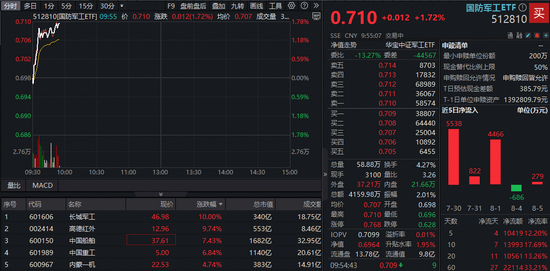
“中国神船”启航在即,国防军工ETF(512810)冲高1.72%再创3 年新高!人气高标股长城军工晋级5天4板
Xin Lang Ji Jin· 2025-08-06 02:08
Group 1 - The defense and military industry sector is experiencing increased activity ahead of the upcoming military parade, with over 5 billion yuan of main capital inflow within the first 20 minutes of trading on August 6 [1] - The defense military ETF (512810) surged by 1.72%, reaching its highest price since March 3, 2022, with constituent stock Changcheng Military Industry hitting a historical high after four consecutive trading days of gains [1] - China Shipbuilding and China Heavy Industry also saw significant increases in their stock prices [1] Group 2 - China Shipbuilding plans to merge with China Heavy Industry through a share swap, with both companies announcing a continuous suspension of their stocks starting August 13, 2025 [3] - The second domestically produced large cruise ship, "Aida Huacheng," has entered the equipment debugging and system functionality verification phase, with over 80% of the construction completed [3] - The financing balance for the defense military ETF (512810) has rapidly increased, reaching a historical high of 29.88 million yuan, indicating heightened market interest [3] Group 3 - Over the past 15 years, the defense military sector has shown a significantly higher probability of rising in August compared to the Shanghai Composite Index [5] - Analysts suggest focusing on the defense military sector for potential opportunities leading up to the military parade on September 3 [5] Group 4 - The defense military ETF (512810) covers a wide range of themes, including commercial aerospace, low-altitude economy, large aircraft, deep-sea technology, military AI, and controllable nuclear fusion [6] - The ETF underwent a share split in June, reducing the investment threshold by half, allowing investors to access core defense military assets for under 70 yuan [6]


中船系板块早盘拉升,中船特气涨超10%
Mei Ri Jing Ji Xin Wen· 2025-08-06 01:53
(文章来源:每日经济新闻) 每经AI快讯,8月6日,中船系板块早盘拉升,中船特气涨超10%,中国船舶、中国重工、中船防务、中 船科技跟涨。 ...


中船系板块早盘拉升 中船特气涨超10%
Xin Lang Cai Jing· 2025-08-06 01:38
中船系板块早盘拉升,中船特气涨超10%,中国船舶、中国重工、中船防务、中船科技跟涨。 ...
特朗普透露两则大消息;国家免一年幼儿园保教费;盒马将关闭所有会员店;两名中国公民在巴厘岛遇难
Di Yi Cai Jing Zi Xun· 2025-08-06 01:25
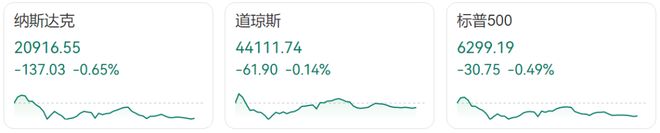
Market Overview - US stock indices experienced a widespread decline as investors assessed corporate earnings statements regarding trade policies and digested signals of economic slowdown from weak service sector data [1][2] - The Dow Jones Industrial Average fell by 61.90 points to 44111.74, a decrease of 0.14%; the S&P 500 dropped 30.75 points to 6299.19, down 0.49%; and the Nasdaq Composite decreased by 137.03 points to 20916.55, a decline of 0.65% [1] Corporate Earnings and Trade Policies - Several companies mentioned the negative impact of trade tariffs in their earnings reports, with Yum Brands reporting second-quarter earnings below expectations, citing "huge tariffs suppressing consumer demand," leading to a 5.1% drop in stock price [2] - Caterpillar warned that US tariffs would pose significant challenges in the second half of the year, potentially resulting in losses of up to $1.5 billion by 2025 [2] - President Trump indicated that new tariffs on semiconductors and chips would be announced soon, hinting at gradual increases in drug tariffs [2] Economic Indicators - The US trade deficit narrowed by 16% in June to $60.2 billion, the lowest level since September 2023, primarily due to a significant reduction in consumer goods imports [2] - The ISM service sector index fell to 50.1 in July, nearing the threshold of contraction, marking the lowest level this year, with the employment sub-index dropping to 46.4, indicating increased layoff pressures [2][3] - New orders index also decreased to 50.3, reflecting weakened business confidence, while backlogged orders have declined for five consecutive months [3] Commodity Prices - International oil prices saw a significant drop, with WTI crude futures falling by $1.13 to $65.16 per barrel, a decrease of 1.70%; Brent crude futures dropped by $1.12 to $67.64 per barrel, down 1.63% [3] - Gold prices showed a slight increase, with COMEX gold futures rising by $8.3 to $3434.7 per ounce, an increase of 0.24% [3] Chinese Stocks - The Nasdaq Golden Dragon China Index fell by 0.56%, with Xpeng Motors and Bilibili rising over 2%, while Baidu and NIO dropped over 2% [2]
专项债发行创年内新高,A股7月新开户增长70.5% | 财经日日评
吴晓波频道· 2025-08-06 00:30
Group 1: Special Bonds and Infrastructure Investment - In July, the issuance of new special bonds reached a record high of 616.936 billion yuan, increasing by 89.842 billion yuan from the previous month [2] - The cumulative issuance progress of new special bonds as of the end of June was 49%, significantly lower than the average level of 63.2% for the same period from 2022 to 2024 [2] - The main direction of special bond funding is expected to shift towards infrastructure and real estate, with a notable project being the 1.2 trillion yuan Yarlung Tsangpo River downstream hydropower project [2] Group 2: Real Estate Market Trends - Shenzhen's second-hand housing market showed signs of recovery, with a 5.2% increase in recorded transactions and a 17% rise in store signing volume [3] - The average listing price for second-hand homes in Shenzhen rose by 0.2% to 62,706 yuan per square meter in July [3] - The overall real estate market remains in a state of fluctuation, with a need for more policy stimulus to stabilize prices [4] Group 3: Hema's Business Adjustments - Hema X membership stores will cease operations, with the last store closing on August 31, indicating a strategic shift to focus on Hema Fresh and Hema NB [5][6] - Hema's overall GMV is projected to exceed 75 billion yuan in the 2025 fiscal year, with plans to open nearly 100 new stores [5] - The membership store model faced challenges due to lack of differentiation and competition with established brands like Sam's Club [6] Group 4: Mergers and Acquisitions in the Shipbuilding Industry - China Shipbuilding intends to absorb and merge with China Shipbuilding Heavy Industry, marking the largest merger in A-share history [7] - Post-merger, China Shipbuilding's total assets are expected to exceed 400 billion yuan, with revenues surpassing 130 billion yuan [7] - The merger is part of a broader trend of state-owned enterprise consolidation in sectors with overlapping businesses [8] Group 5: Nio's Restructuring Efforts - Nio is seeking restructuring investors, with 56 potential investors showing interest after filing for bankruptcy [9] - The company has reported significant losses over the past few years, highlighting its reliance on low-price competition [9] - Despite challenges, Nio's production base and core personnel remain valuable assets for potential investors [10] Group 6: A-share Market Developments - In July, A-share new accounts increased by 70.5% year-on-year, with a total of 1.9636 million new accounts opened [13] - The A-share market experienced significant gains, with major indices showing upward trends, including a 3.74% increase in the Shanghai Composite Index [13] - The current market environment is characterized by a lack of substantial participation from external funds, leading to a different dynamic compared to previous bull markets [14]

“两船”完成合并在即,总资产超4000亿元
2 1 Shi Ji Jing Ji Bao Dao· 2025-08-06 00:00
Core Viewpoint - The merger between China Shipbuilding and China State Shipbuilding has received official approval from the China Securities Regulatory Commission, marking a significant step in the restructuring of China's shipbuilding industry [2][5]. Group 1: Merger Details - The merger involves a share swap where China Shipbuilding will absorb China State Shipbuilding, leading to the latter's delisting [2]. - The stock of both companies will be suspended from trading starting August 13, with no specified date for resumption [2][4]. - Dissenting shareholders have the option to cash out at prices of 30.01 yuan per share for China Shipbuilding and 4.03 yuan per share for China State Shipbuilding, with total values of 5.56 billion yuan and 13.02 billion yuan respectively [5]. Group 2: Financial and Operational Impact - The combined total assets of the two companies will exceed 400 billion yuan by the end of 2024, surpassing the 300 billion yuan asset scale of the previous "South-North Train" merger [7]. - In 2024, China Shipbuilding and China State Shipbuilding are projected to achieve revenues of 78.58 billion yuan and 55.44 billion yuan, respectively, with combined annual revenues exceeding 100 billion yuan [7]. - The order backlog includes 322 vessels for China Shipbuilding valued at 216.96 billion yuan and 216 vessels for China State Shipbuilding valued at 233.77 billion yuan, totaling 15% of the global order backlog [8]. Group 3: Market Context and Future Outlook - The merger is seen as a response to the ongoing consolidation trend in the state-owned enterprise sector, with a streamlined approval process taking only 71 days [8]. - The merger is expected to enhance resource synergy, improve bargaining power, and facilitate the integration of green ship technology and military-civilian fusion experiences [7][11]. - Analysts predict that the Chinese shipbuilding industry will remain busy due to a long-term supply-demand imbalance, benefiting from a new cycle of demand in the global shipbuilding market [11].
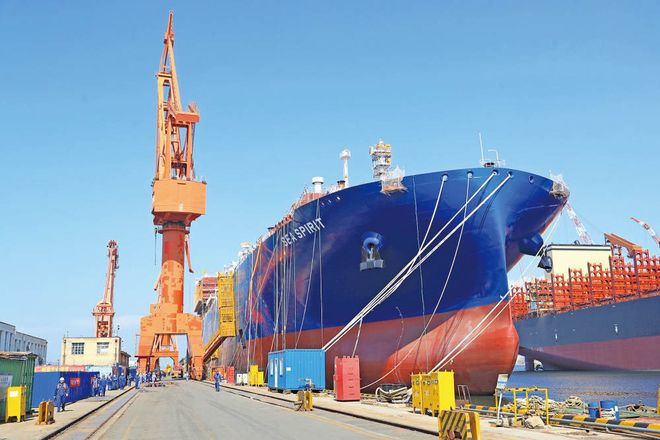
中国船舶拟吸并中国重工总资产超4000亿 披露异议股东行权价格股票将双双停牌
Chang Jiang Shang Bao· 2025-08-05 23:49
Core Viewpoint - The merger between China Shipbuilding Industry Corporation (CSIC) and China Shipbuilding Heavy Industry Company (CSIC) marks a significant development in the shipbuilding industry, aiming to create the largest publicly listed shipbuilding company globally and reshape the competitive landscape of the industry [1][2]. Group 1: Merger Details - On August 4, CSIC and CSIC announced plans to implement a cash option for dissenting shareholders as part of the merger process, with stock trading for both companies set to be suspended on August 13 [1][3]. - The merger involves CSIC absorbing CSIC through a share exchange, with an estimated transaction value of 115.15 billion yuan, and a share exchange ratio of 0.1339 shares of CSIC for each share of CSIC [2][3]. - The merger has received approval from the China Securities Regulatory Commission, marking it as the largest absorption merger in A-share history [1][2]. Group 2: Financial Projections - Post-merger, the combined total assets of CSIC are projected to exceed 400 billion yuan, with annual revenue surpassing 130 billion yuan, positioning it as the largest shipbuilding company globally [1][5]. - For the first half of 2025, CSIC expects a net profit between 2.8 billion to 3.1 billion yuan, representing a year-on-year increase of 98.25% to 119.49%, while CSIC anticipates a net profit of 1.5 billion to 1.8 billion yuan, reflecting a growth of 181.73% to 238.08% [5][6]. Group 3: Market Position and Strategy - The merger aims to consolidate resources, including assets, orders, and technological capabilities, into a more powerful entity, enhancing competitiveness in the global shipbuilding market [1][5]. - As of the end of 2024, CSIC holds 322 civil ship orders valued at 216.96 billion yuan, while CSIC has 216 orders valued at 233.76 billion yuan, indicating a strong order backlog that will support future growth [6][7]. - The merger is expected to resolve internal competition issues within the China Shipbuilding Group and significantly impact the global shipbuilding industry's competitive landscape [7].
“两船”完成合并在即,总资产超4000亿元
21世纪经济报道· 2025-08-05 23:47
Core Viewpoint - The merger between China Shipbuilding and China State Shipbuilding has received regulatory approval, marking a significant step in the restructuring of China's shipbuilding industry, with the aim of enhancing resource synergy and market competitiveness [1][4][8]. Group 1: Merger Details - The merger involves a share swap where China Shipbuilding will absorb China State Shipbuilding, leading to the latter's delisting [1][4]. - The merger has been in the works for over a year, with the approval process taking only 71 days, indicating strong support for state-owned enterprise consolidation [8]. - Following the merger, both companies will halt trading on August 13, with a resumption date yet to be determined [1][3]. Group 2: Financial and Operational Impact - Combined assets of the two companies will exceed 400 billion yuan, surpassing the asset scale of previous major mergers in the industry [7]. - In 2024, the two companies are projected to achieve combined revenues exceeding 1 trillion yuan and net profits over 50 billion yuan [7]. - The order backlog for China Shipbuilding stands at 322 vessels with a total weight of 24.61 million tons, valued at 216.96 billion yuan, while China State Shipbuilding has 216 vessels valued at 233.77 billion yuan, together accounting for 15% of the global order backlog [7]. Group 3: Strategic Advantages - The merger will facilitate the integration of complementary technologies and enhance bargaining power in the market [7][11]. - The consolidation is expected to reduce internal competition and improve supply chain resilience, positioning the new entity to better capitalize on the upcoming shipbuilding cycle [11]. - The merger aligns with the trend of state-owned enterprises leveraging capital markets for integration, potentially leading to more M&A activities in the future [8][11].
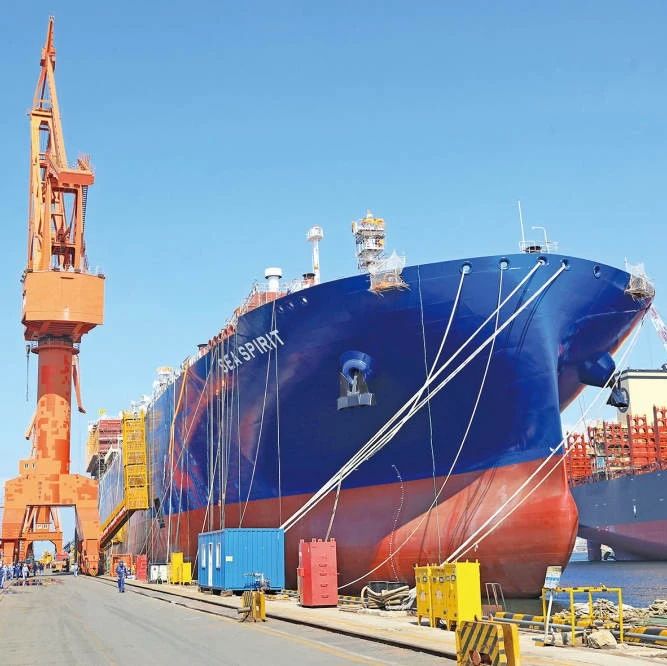
“全球最大上市船企”来了
Mei Ri Shang Bao· 2025-08-05 23:04
Core Viewpoint - The merger between China Shipbuilding (600150) and China Heavy Industry (601989) marks a significant development in the A-share market, with China Shipbuilding set to absorb China Heavy Industry through a share exchange, making it the largest merger in A-share history [1][4]. Group 1: Merger Details - China Shipbuilding will issue A-shares to all shareholders of China Heavy Industry, leading to a continuous suspension of trading for both companies starting August 13, 2025, with the last trading day for China Heavy Industry being August 12, 2025 [1][2]. - The merger is a continuation of the 2019 "South-North Ship" central enterprise restructuring, with the plan announced in September 2024 and approved by the China Securities Regulatory Commission in July 2025 [3]. Group 2: Financial Impact - Post-merger, China Shipbuilding's total assets are expected to exceed 400 billion yuan, with projected revenues over 130 billion yuan and a backlog of orders exceeding 450 billion yuan, positioning it as the largest shipbuilding enterprise globally in terms of asset scale and order volume [4]. - For the first half of 2025, China Shipbuilding anticipates a net profit attributable to shareholders between 2.8 billion and 3.1 billion yuan, reflecting a year-on-year increase of 98.25% to 119.49%, while China Heavy Industry expects a net profit between 1.5 billion and 1.8 billion yuan, representing a growth of 181.73% to 238.08% [4]. Group 3: Market Reaction - Following the merger announcement, shares of China Shipbuilding and related "Chinese character" stocks surged, with over 110 concept stocks rising, indicating strong market sentiment towards the merger [5]. - The stock price of China Shipbuilding increased by 38% over the past three months, reflecting market expectations regarding the merger [4].