
天合光能

Search documents
钧达股份业绩亏损持续扩大,太空光伏概念炒作下控股股东欲减持套现7.8亿
Di Yi Cai Jing· 2026-01-18 03:13
尽管钧达股份在业绩预告中提及了"海外销售占比突破50%""公司成为海外地区光伏电池核心供应商"等 积极的市场布局,但这些举措并未能扭转业绩颓势。 在光伏行业持续低迷的背景下,钧达股份(002865.SZ)发布了业绩预亏公告,公司预计2025年归母净 利润亏损12亿-15亿元,亏损同比进一步扩大的同时,连亏两年"板上钉钉"。 然而,受"太空光伏"概念热炒推动,钧达股份股价去年12月以来累计上涨126%。股价翻倍的背后,钧 达股份的两大动作引人关注:一是公司宣布投资布局尚处早期的"太空光伏"概念企业;二是几乎同步, 公司控股股东抛出了一份最高减持3%股份的计划,拟套现金额超7.8亿元。 在基本面拐点未现、新业务能否带来实质性业绩增长仍存疑之际,钧达股份股价的狂热与重要股东的减 持套现意愿交织,为这波行情蒙上了一层迷雾。 业绩持续承压,亏损金额扩大 根据2025年度业绩预告,钧达股份预计2025年归母净利润亏损12亿元至15亿元,较2024年亏损5.91亿元 进一步扩大;预计扣非后归母净利润亏损14亿元至18亿元,上年同期为亏损11.18亿元。 钧达股份的单季度亏损也在环比扩大。2025年前三季度,公司归母净利润亏 ...

毁约式涨价,光伏组件上演“最后的疯狂”
Ge Long Hui· 2026-01-17 13:22
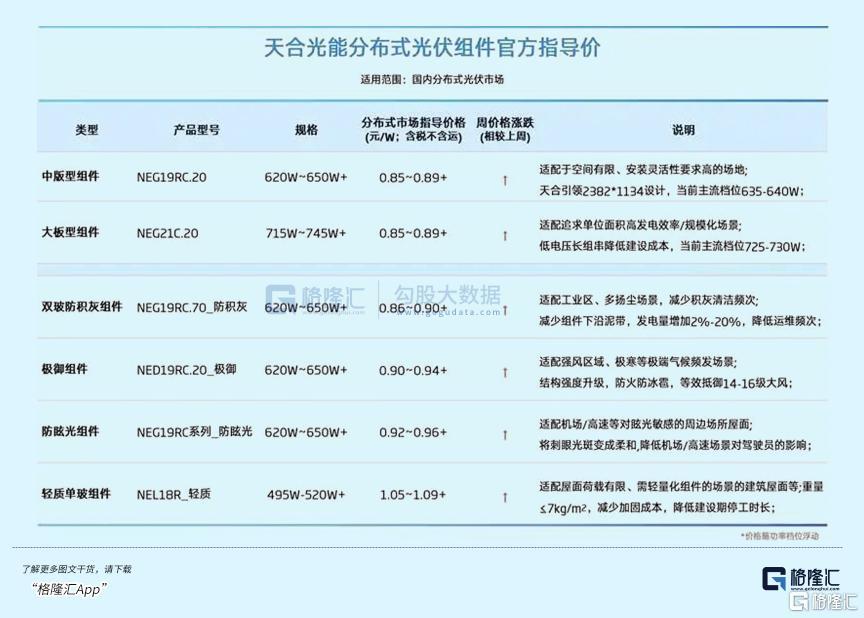
Core Viewpoint - The photovoltaic (PV) module industry is experiencing an unexpected price surge at the beginning of 2026, driven by factors such as the impending cancellation of export tax rebates and rising costs of key materials like silver and aluminum, leading to significant profit compression and potential industry-wide consolidation [1][13][20]. Price Surge and Contract Violations - Several distributed PV investment companies have reported sudden price increases on previously agreed contracts, with some major manufacturers raising prices from 0.73 yuan/W to 0.8 yuan/W [3]. - On January 13, Trina Solar announced collective price increases for various product models, with distributed PV module prices ranging from 0.85 to 0.89+ yuan/W [3]. - A total of 12 module manufacturers raised their prices this week, with increases of 0.04 to 0.15 yuan/W, and some companies have raised prices multiple times within a week [5]. - Reports indicate that some companies are delaying deliveries or demanding price increases, causing significant disruptions in the supply chain for terminal power station installations [5][6]. Causes of Price Increases - The cancellation of export tax rebates, effective April 1, 2026, is a major catalyst for the price surge, as manufacturers rush to ship products before the policy takes effect [6][7]. - The price of silver has skyrocketed, increasing from 7,600 yuan/kg at the beginning of 2025 to 23,688 yuan/kg by the end of the year, resulting in a cost increase of at least 0.16 yuan per watt for PV modules [8][10]. Industry Challenges and Overcapacity - The PV industry is facing severe challenges due to overcapacity, with silicon material production capable of covering more than double the global demand from 2025 to 2027, while actual demand is below 600 GW [13][14]. - Despite the overcapacity, over 40 billion yuan is still being invested in new PV projects, exacerbating supply-demand imbalances [14]. - The cancellation of export tax rebates is expected to be a turning point for the industry, as it has historically provided significant cash flow support to manufacturers [15][16]. Financial Impact on Companies - The removal of export tax rebates will reduce profits for manufacturers significantly, with estimates indicating a loss of 46-51 yuan per 210R module exported [17]. - Many companies are already experiencing negative cash flow, with 41% of listed firms reporting losses, leading to a potential wave of bankruptcies among smaller firms [17][20]. - Major companies like JA Solar and TCL Zhonghuan are reporting substantial losses, with JA Solar expected to lose between 4.5 to 4.8 billion yuan in 2025 [19]. Future Outlook and Industry Consolidation - The anticipated industry consolidation may eliminate over 30% of inefficient capacity, concentrating resources among leading firms with integrated capabilities and advanced technologies [22]. - The industry is expected to emerge healthier post-consolidation, with a focus on identifying valuable investment opportunities in robust companies with strong cash flow and competitive advantages [22].

告别“退税依赖” 中国光伏开启技术与全球化新竞速
Zheng Quan Shi Bao Wang· 2026-01-17 12:29
Core Viewpoint - The recent adjustment in the value-added tax export rebate policy for photovoltaic products has led to an unexpected increase in component prices, despite the typical seasonal demand downturn in the first quarter of the year [1]. Group 1: Policy Impact - The Ministry of Finance and the State Taxation Administration announced the cancellation of the value-added tax export rebate for photovoltaic products starting April 1, 2026, affecting 249 products across the entire industry chain [2]. - The cancellation of the rebate is expected to trigger a "last-minute rush" for exports, as overseas buyers place orders to avoid increased costs after the policy change [2]. - Analysts predict a significant increase in component export volume during this period, potentially boosting short-term industry demand [2]. Group 2: Financial Implications for Companies - Major photovoltaic and energy storage companies are projected to lose between 1 billion to 2 billion yuan in export rebates annually, which could reduce the profit per 210R photovoltaic component by 46 to 51 yuan, leading to a potential decline in export volume by 5% to 10% [3]. Group 3: Strategic Responses from Companies - In response to the policy changes, leading companies like Longi Green Energy, JinkoSolar, Trina Solar, and Canadian Solar are accelerating their global expansion efforts, establishing production bases in regions such as Southeast Asia, the Middle East, and the United States [4]. - Companies are focusing on local production to bypass export rebate losses and enhance supply chain resilience [4]. - The cancellation of the rebate is expected to diminish the cost advantage of Chinese photovoltaic components, prompting a shift towards technological innovation and brand development as key competitive strategies [4]. Group 4: Long-term Industry Outlook - The policy adjustment aims to address the long-standing issue of low-price competition in the photovoltaic industry, which has led to reduced profit margins and increased international trade friction [5]. - The removal of the export rebate is anticipated to redirect financial resources towards domestic technological research and development, thereby improving the efficiency of fund utilization [6]. - The adjustment is likely to accelerate industry consolidation and capacity elimination, with leading battery companies expected to enhance their global competitiveness and market share in the long run [6].

毁约式涨价!光伏组件上演“最后的疯狂”
Ge Long Hui A P P· 2026-01-17 11:23
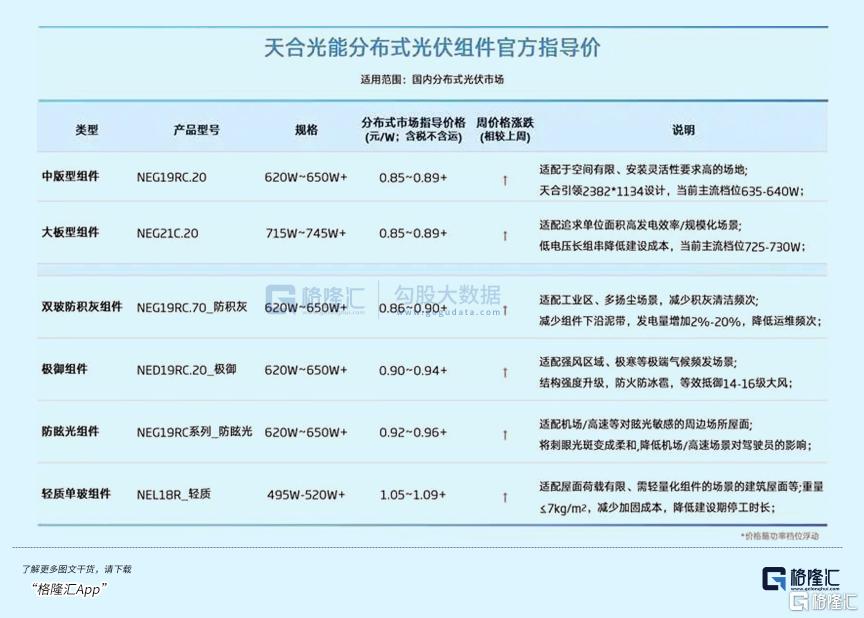
Core Viewpoint - The photovoltaic (PV) module industry is experiencing an unexpected price surge in early 2026, driven by the impending cancellation of export tax rebates and rising costs of key materials like silver and aluminum, leading to significant profit compression and potential industry-wide upheaval [1][7][19]. Price Surge and Market Dynamics - Several distributed PV investment companies have reported sudden price increases on previously agreed contracts, with one leading manufacturer raising prices from 0.73 yuan/W to 0.8 yuan/W [2]. - On January 13, Trina Solar announced a collective price increase for various distributed PV module models, with official guidance prices ranging from 0.85 to 0.89+ yuan/W [2][3]. - A total of 12 module manufacturers raised their prices this week, with increases ranging from 0.04 to 0.15 yuan/W [4]. Cost Factors - The cancellation of export tax rebates, effective April 1, 2026, is a significant catalyst for the price increases, as companies rush to fulfill orders before the policy takes effect [7][8]. - The price of silver has surged over 150% in 2025, increasing its cost share in PV modules from approximately 17% to around 30%, making it the largest cost component [10][13]. - The rising prices of aluminum and other materials have further exacerbated cost pressures, with aluminum's cost share increasing from 8-12% to 12-15% [14][16]. Industry Overcapacity and Challenges - The PV industry is facing severe overcapacity, with silicon production capacity expected to cover more than double the global demand from 2025 to 2027, while actual demand is below 600 GW [17]. - Despite the overcapacity, over 40 billion yuan is still being invested in new PV projects, worsening the supply-demand imbalance [18]. - The cancellation of export tax rebates is anticipated to trigger a brutal industry-wide clearing, with many companies lacking competitive advantages likely to exit the market [19][24]. Financial Impact and Future Outlook - The removal of export tax rebates will significantly reduce profit margins for PV companies, with estimates indicating a profit reduction of 46-51 yuan per 210R module exported [24]. - Many companies are already reporting substantial losses, with projections indicating that the entire PV silicon industry could face losses amounting to hundreds of billions in 2025 [27][28]. - The industry is expected to undergo a significant consolidation, with over 30% of inefficient capacity being eliminated, allowing leading companies with strong technology and global presence to capture over 80% of the market share [29].



毁约式涨价!光伏组件上演“最后的疯狂”
格隆汇APP· 2026-01-17 11:23
Core Viewpoint - The photovoltaic (PV) module industry is experiencing an unexpected price surge at the beginning of 2026, driven by factors such as the impending cancellation of export tax rebates and rising costs of key materials like silver and aluminum, leading to significant profit compression in the industry [2][9][18]. Price Surge and Market Dynamics - Several PV module manufacturers have announced price increases, with some companies raising prices from 0.73 yuan/W to 0.8 yuan/W, and the official guidance price for distributed PV modules now ranges from 0.85 to 0.89 yuan/W [4][6]. - A total of 12 module manufacturers raised their prices this week, with increases ranging from 0.04 to 0.15 yuan/W [6][7]. - Reports indicate that some companies are delaying deliveries and demanding price hikes, causing significant disruptions for downstream companies [7][18]. Reasons for Price Increases - The cancellation of export tax rebates is a major catalyst for the price surge, with the Ministry of Finance announcing the phased removal of VAT export rebates for PV products starting April 1, 2026 [9][10]. - The price of silver has skyrocketed, increasing from 7,600 yuan/kg at the beginning of 2025 to 23,688 yuan/kg by the end of the year, resulting in a cost increase of at least 0.16 yuan per watt for PV cells [11][13]. - The cost share of silver in PV modules has risen from approximately 17% to around 30%, surpassing silicon as the largest cost component [13]. Industry Challenges and Overcapacity - The PV industry is facing severe overcapacity, with silicon production capacity expected to cover more than double the global demand from 2025 to 2027, while actual demand is below 600 GW [19][20]. - The cancellation of export tax rebates is expected to trigger a violent market clearing in 2026, as many companies will struggle with cash flow and rising costs [21][27]. - The industry is projected to experience significant losses, with estimates suggesting that the entire PV silicon industry could face losses amounting to hundreds of billions in 2025 [28][29]. Future Outlook and Investment Strategy - The anticipated market clearing in 2026 is expected to eliminate over 30% of inefficient capacity, concentrating resources among leading companies with vertical integration and core technologies [31]. - Investors are advised to avoid high-debt, non-competitive small and medium enterprises, focusing instead on companies with stable cash flow, strong technology, and global presence [32].

TCL中环或入主一道新能,后者IPO折戟、曾与“宁王”传绯闻
2 1 Shi Ji Jing Ji Bao Dao· 2026-01-17 10:55
Group 1 - TCL Zhonghuan announced an investment in Yida New Energy Technology Co., Ltd. to enhance its integration strategy and optimize its solar cell and module production capacity [3][5] - Yida New Energy has established a production capacity of 30GW for high-efficiency batteries and modules in 2023, with plans to increase to 40GW by the end of 2025, surpassing TCL Zhonghuan's current capacity of 24GW [4] - The investment is seen as a market-driven response to the current challenges in the solar industry, with TCL Zhonghuan aiming to strengthen its competitive position amid a trend of market consolidation [5][6] Group 2 - The investment involves acquiring shares and possibly controlling interest in Yida New Energy, with major shareholders expected to transfer their stakes [6] - Prior to this investment, Yida New Energy had sought to go public but its IPO was terminated in August 2024, leading to speculation about potential acquisition by other companies [7] - TCL Zhonghuan anticipates that this investment will enhance its technological capabilities and support its BC battery business, which is crucial for maintaining a leading position in the global solar industry [8]
2025年1-11月中国太阳能电池(光伏电池)产量为76057.4万千瓦 累计增长9.9%
Chan Ye Xin Xi Wang· 2026-01-17 03:53
Core Viewpoint - The report highlights the competitive landscape and investment recommendations for the solar cell industry in China from 2026 to 2032, indicating a slight decline in production in late 2025 but an overall growth trend for the year [1] Industry Summary - In November 2025, China's solar cell (photovoltaic cell) production reached 73.49 million kilowatts, representing a year-on-year decrease of 3% [1] - From January to November 2025, the cumulative production of solar cells in China was 760.574 million kilowatts, showing a cumulative growth of 9.9% compared to the previous year [1] - The data indicates a mixed performance in the solar cell industry, with a decline in production in November but positive growth over the first eleven months of the year [1] Company Summary - Key listed companies in the solar energy sector include Longi Green Energy, Tongwei Co., Sunshine Power, JA Solar, Trina Solar, TBEA, Chint Electric, and TCL Zhonghuan [1] - These companies are positioned to navigate the competitive landscape as outlined in the report, which provides insights into market dynamics and investment strategies [1]


太空光伏爆火后泡沫预警,200亿龙头年内涨64%
21世纪经济报道· 2026-01-17 02:11
Core Viewpoint - The concept of "space photovoltaic" has gained significant attention in the capital market, driven by Tesla CEO Elon Musk's ambitious plans for solar energy satellites and the growing demand for energy in commercial space and AI computing sectors [1][6][19]. Group 1: Concept and Historical Context - "Space photovoltaic" refers to two levels: narrowly, it involves solar components on spacecraft for self-powering; broadly, it includes large solar arrays in space transmitting energy to Earth [3][4]. - The application of space photovoltaic technology dates back to the 1950s, with the first use in the "Pioneer 1" satellite, establishing its foundation in space exploration [3][4]. Group 2: Advantages and Market Dynamics - Space photovoltaic systems can generate energy 5-10 times more efficiently than ground systems due to the absence of atmospheric interference and the ability to produce energy continuously [4][6]. - The current market enthusiasm for space photovoltaic technology is fueled by the explosive growth of commercial space and the energy demands of AI computing centers [6][9]. Group 3: Market Potential and Predictions - The global low Earth orbit satellite market is projected to exceed 295 billion RMB by 2030, with the space photovoltaic market potentially reaching 500 to 1000 billion USD if the deployment of space data centers accelerates [19][22]. - The capital market's excitement is supported by broker reports predicting a "trillion-level" market for space photovoltaic technology by 2030 [19]. Group 4: Industry Landscape and Competitive Dynamics - Major players in the space photovoltaic sector include state-owned enterprises like the China Aerospace Science and Technology Corporation, which focus on satellite power supply, and private companies like Trina Solar and LONGi Green Energy, which are advancing technology for commercial applications [11][12]. - The competition among technologies—gallium arsenide, silicon, and perovskite solar cells—highlights the trade-off between short-term reliability and long-term economic viability [15][16]. Group 5: Challenges and Future Outlook - Significant challenges remain for the commercialization of space photovoltaic technology, including high costs associated with launch, construction, and operation, as well as the need for breakthroughs in energy transmission efficiency [21][22]. - The current hype in the capital market may lead to a bubble, as many companies lack the engineering experience necessary for practical implementation, despite having strategic plans [23].

科技自立自强引擎持续轰鸣
Jing Ji Ri Bao· 2026-01-16 22:01
"十五五"规划建议提出,加快高水平科技自立自强,引领发展新质生产力。这无疑精准锚定了新一轮科 技革命和产业变革的时代脉搏。在中国式现代化建设的关键阶段,科技自立自强是引领新质生产力发展 的引擎,新质生产力是科技自立自强的载体,二者辩证统一、同向发力,为经济社会发展注入不竭动 能。 (文章来源:经济日报) 筑牢原始创新与核心技术攻关的双基石,是科技自立自强引领发展新质生产力的前提。原始创新是从0 到1的基础跨越,是科技自立自强的源头活水,为关键核心技术攻关提供底层理论支撑与方向指引。这 要求我们聚焦基础学科与前沿领域,加大长期稳定投入,鼓励科研人员自由探索、勇闯"无人区",在基 础科学领域深耕细作,孕育更多原创性突破。关键核心技术攻关是破解"卡脖子"困境的必由之路。需以 国家战略需求为导向,依托创新联合体整合"产学研用"优势资源,打通从实验室到生产线的转化通道, 推动科技成果高效落地。二者协同发力,才能筑牢坚不可摧的科技长城,为新质生产力培育提供坚实的 技术支撑。 推动科技创新与产业创新深度融合,是科技自立自强引领发展新质生产力的关键。科技自立自强的价 值,最终要体现在新质生产力的发展上,而新质生产力的壮大则依 ...
天合光能:在太空光伏相关的晶体硅电池(HJT等)、钙钛矿叠层电池、III-V族砷化镓多结电池三大方向已进行长期完整布局
Ge Long Hui A P P· 2026-01-16 15:02
Core Viewpoint - The company, Trina Solar (688599.SH), is positioned as a leading enterprise in the photovoltaic industry, focusing on space photovoltaic technologies and aiming to become a leader in the space solar energy sector [1] Group 1: Technological Advancements - The company has established a long-term and comprehensive layout in three main areas: crystalline silicon batteries (such as HJT), perovskite tandem batteries, and III-V arsenide multi-junction batteries [1] - The company has achieved leading research and development results in these areas [1] Group 2: Commercial Applications - The company collaborates closely with domestic aerospace institutions and enterprises, as well as with leading overseas aerospace organizations, to promote commercial applications of its technologies [1] - The company has accumulated substantial practical experience in space solar energy [1] Group 3: Market Potential - The company believes that photovoltaic technology has broad prospects in the space sector and anticipates that space photovoltaics could evolve into a trillion-dollar market with the continuous advancement of reusable rocket technology [1]