平安银行

Search documents
多行业联合红利资产12月报:股息率年关盘点-20260104
Huachuang Securities· 2026-01-04 06:46
证 券 研 究 报 告 【策略月报】 股息率年关盘点 ——多行业联合红利资产 12 月报 策略研究 策略月报 2026 年 01 月 04 日 华创证券研究所 证券分析师:姚佩 邮箱:yaopei@hcyjs.com 执业编号:S0360522120004 证券分析师:吴一凡 邮箱:wuyifan@hcyjs.com 执业编号:S0360516090002 证券分析师:徐康 电话:021-20572556 邮箱:xukang@hcyjs.com 执业编号:S0360518060005 证券分析师:欧阳予 邮箱:ouyangyu@hcyjs.com 执业编号:S0360520070001 证券分析师:韩星雨 邮箱:hanxingyu@hcyjs.com 执业编号:S0360525050001 证券分析师:单戈 邮箱:shange@hcyjs.com 执业编号:S0360522110001 证券分析师:马野 邮箱:maye@hcyjs.com 执业编号:S0360523040003 相关研究报告 《【华创策略】杠杆&ETF 资金分化趋势逆转—— 流动性&交易拥挤度&投资者温度计周报》 2025-12-01 《【华 ...
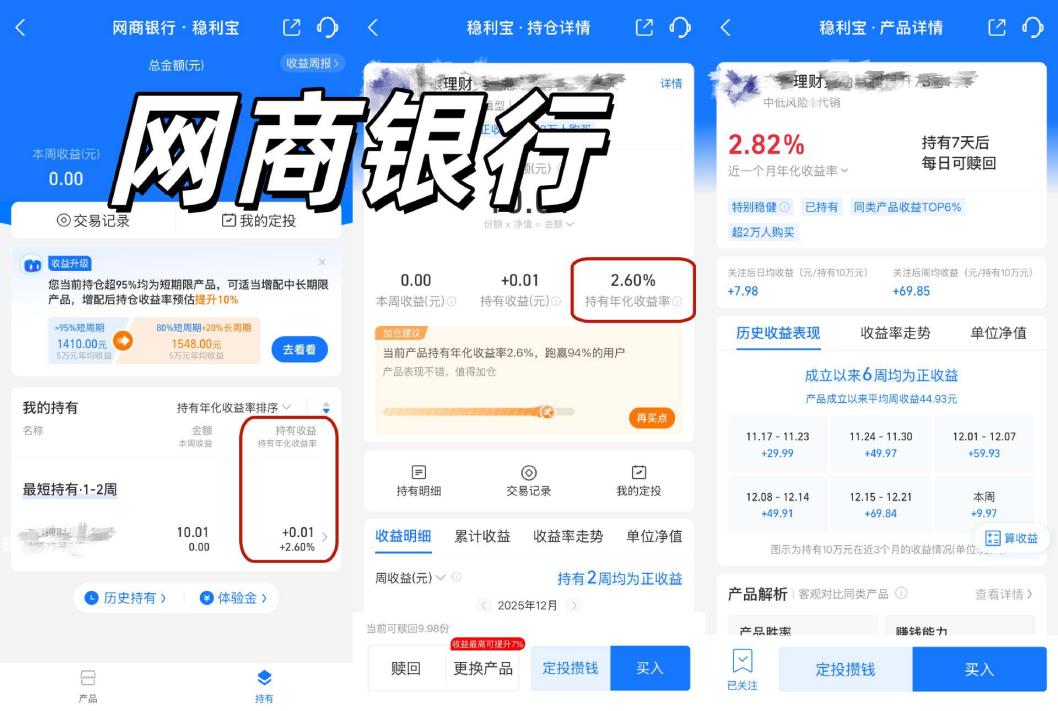
实测8家银行收益展示:多数未展示年化持仓收益率
2 1 Shi Ji Jing Ji Bao Dao· 2026-01-04 04:02
21世资管研究院研究员 杨梦雪 你知道自己购买的理财产品实际收益率,以及实际收益率与理财产品页面所展示的收益率有多少差距吗? 不少银行理财投资者向《21世纪经济报道》反映称,冲着页面展示的高达5%甚至7%的收益率数据买进去,结果发现实际获得的收益并不高,但也不知道是 怎么回事、具体差异有多少。 "当时看到页面展示的收益率还可以就买了,后面也没在意过。我大概能知道我的收益率到不了页面展示的那么高,但实际到底差多少,我不会算也就没关 注过了。"某投资者对记者表示。 《21世纪经济报道》曾多次报道银行理财行业中部分理财公司存在的"打榜"现象,即,通过估值魔法以及其他方式包装出收益数据很高的新产品用于吸引客 户和资金,待"使命"完成便沦为庸常的老产品,前期被高收益数据吸引而来的投资者实际享受不到产品所展示的诱人业绩。 该现象背后,主要成因固然是银行理财产品管理层面的把戏,但是,一些渠道在客户持仓产品业绩展示上是一本糊涂账,导致投资者很难了解到真实情况, 这某种程度上也是推手之一。 银行理财是最具普惠性的财富管理工具,其绝大部分的客户都是个人投资者,产品展示功能和客户服务尤其重要。据银行业理财登记托管中心数据,理财市 ...







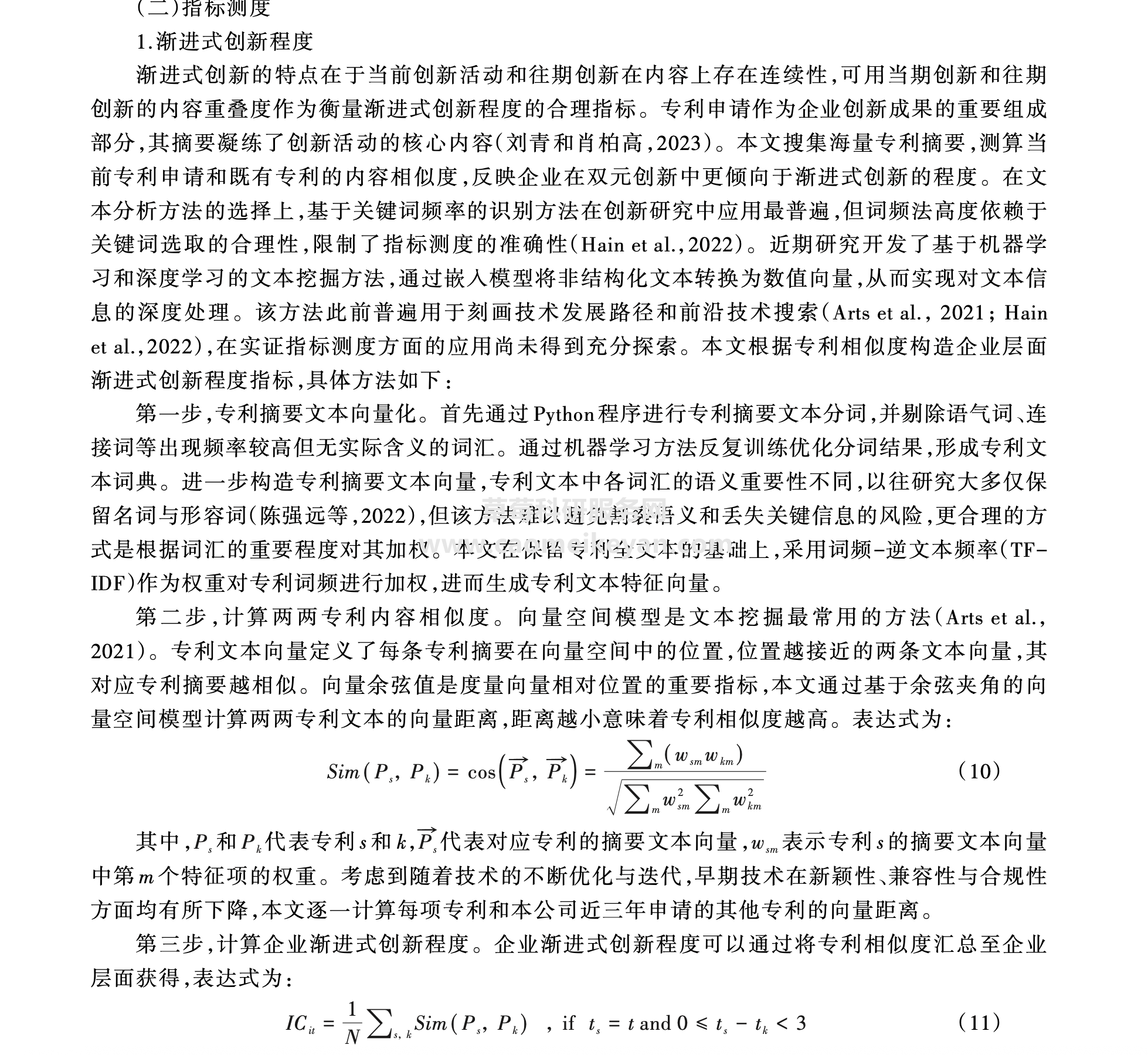
2024-2011年上市公司企业渐进式创新数据、渐进式创新锁定数据
Sou Hu Cai Jing· 2026-01-04 03:16
Core Insights - The article discusses the measurement of incremental innovation in companies from 2011 to 2024, utilizing patent data to assess the degree of similarity between current and past innovations [1][2]. Methodology - The study employs a method based on machine learning and deep learning for text mining, converting unstructured patent abstracts into numerical vectors to analyze innovation [1]. - A significant focus is on the overlap of content in patent applications, which serves as a key indicator of incremental innovation [1]. - The approach includes the use of TF-IDF weighting to enhance the accuracy of the textual analysis, ensuring that important semantic information is retained [1]. Data Scope - The dataset comprises over 60,000 samples from more than 5,300 companies, providing a comprehensive basis for analysis [1]. - The data collection starts from 2011 due to the availability of patent text data, ensuring a reasonable timeframe for the study [1]. Incremental Innovation Metrics - The article presents a formula to calculate the degree of incremental innovation for companies, based on the similarity of patent texts [2]. - Specific incremental innovation levels for various companies in 2024 are provided, indicating a range of values from 0 to 0.2016 [3].
黄金又跌价了,26年1月3日金条降价,国内黄金、金条新价格
Sou Hu Cai Jing· 2026-01-03 23:37
Price Trends - Domestic gold price dropped to 977.7 yuan per gram on January 3, 2026, a decline of over 100 yuan compared to previous days [1] - The selling price for gold is now around 967 yuan per gram, reflecting a significant decrease in market demand [1] - Major brands like Chow Tai Fook and Lao Feng Xiang maintain gold prices above 1350 yuan per gram, but customer traffic has decreased by half [1] Retail Pricing - Various jewelry stores set their gold prices as follows: - Chow Tai Fook and Lao Feng Xiang at 1357 yuan per gram for gold and 823 yuan per gram for platinum [1] - Chenghuang Jewelry at 1355 yuan per gram for gold and 810 yuan per gram for platinum [1] - Xingguangda Jewelry and Jinlan Jewelry both at 1365 yuan per gram for gold and 820 yuan per gram for platinum [1] - Gold bars from JinYinJie Investment priced at 1338 yuan per gram [1] Bank Gold Products - China Construction Bank's "Long Ding Gold Bar" priced at 993.01 yuan per gram [2] - Industrial and Commercial Bank's "Ruyi Gold Bar" priced at 992.36 yuan per gram [2] - Agricultural Bank's "Chuan Shi Zhi Bao Gold Bar" priced at 1010.55 yuan per gram [3] - Ping An Bank's "Harmonious Ping An Gold Bar" priced at 997.5 yuan per gram [4] - Shanghai Pudong Development Bank's "Investment Gold Bar" priced at 1043.5 yuan per gram [5] Market Behavior - The gold market has seen a shift with increased online purchases and DIY gold crafting, as younger consumers prefer to create custom pieces rather than buy from traditional stores [5][7] - The wholesale price in Shui Bei is currently 1136 yuan per gram, significantly lower than retail prices [7] - Many young consumers are opting for DIY gold crafting, utilizing affordable tools and materials, leading to a decline in sales at traditional jewelry stores [7]
重拳出击!近30笔千万级罚单!2025年银行业罚单大盘点
券商中国· 2026-01-03 03:33
Core Viewpoint - In 2025, the Chinese banking industry is undergoing significant regulatory scrutiny characterized by "strict regulation, strong accountability, and zero tolerance," leading to a notable increase in both the quantity and amount of penalties imposed on various banking institutions [1]. Regulatory Penalties Overview - The number of penalties exceeding ten million yuan has reached nearly 30, affecting a wide range of institutions including state-owned banks, policy banks, joint-stock banks, city commercial banks, private banks, and bank-affiliated wealth management subsidiaries [1]. - Penalties are not limited to traditional areas like credit management but also extend to corporate governance, related party transactions, anti-money laundering, data security, and wealth management [2]. Corporate Governance and Compliance - Major state-owned banks such as Bank of China, Industrial and Commercial Bank of China, and Agricultural Bank of China have received substantial fines for issues related to corporate governance and business management [3]. - The largest penalty of the year was imposed on Bank of China, amounting to 97.9 million yuan for various management issues [3]. - Regulatory focus has shifted to deeper issues such as the effectiveness of board responsibilities and the integrity of internal control processes [3]. Compliance and Anti-Money Laundering - There has been an intensified crackdown on compliance, particularly in the anti-money laundering sector, with significant fines imposed on banks for failing to adhere to basic financial management regulations [4]. - For instance, China Merchants Bank was fined 68.07 million yuan for violating 11 regulations related to account management and anti-money laundering [4]. Business Management Issues - The primary reasons for penalties in the banking sector include: - Inadequate management across various business areas such as loans, interbank transactions, and wealth management [6]. - Non-compliance with anti-money laundering responsibilities, including failure to identify customers and report suspicious transactions [7]. - Violations in foreign exchange and investment operations, including illegal currency transactions and improper investment disclosures [8]. - Insufficient implementation of regulatory requirements, leading to non-compliance in data reporting and employee management [9]. Emerging Business Areas - New banking business models, including wealth management subsidiaries and direct banks, have also faced penalties, indicating strict regulatory oversight in these emerging sectors [11]. - For example, a wealth management subsidiary was fined 17.5 million yuan for non-compliance in product information disclosure and post-investment management [12]. Double Penalty System - The implementation of a "double penalty system" has become a significant aspect of regulatory actions, where both institutions and responsible individuals face penalties [13]. - This system aims to link the career prospects of involved personnel directly to the compliance performance of their institutions, thereby enhancing accountability [14]. Summary of Penalties - A detailed overview of penalties reveals that various banks have faced significant fines for a range of compliance failures, with amounts often exceeding ten million yuan [15][16].


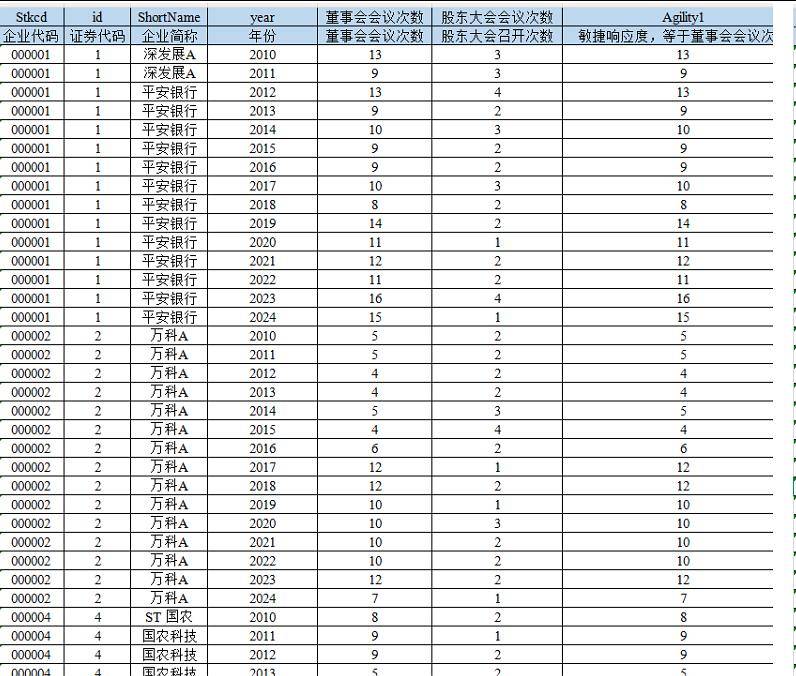
上市公司企业敏捷响应度2010-2024年
Sou Hu Cai Jing· 2026-01-03 02:28
数据简介 企业敏捷响应度是企业适应外部环境变化、迅速调整策略以抓住市场机遇和应对挑战的能力。这种能力在当今快 速变化的市场环境中尤为重要,因为它直接关系到企业的竞争力和可持续发展。 本数据参考C刊《经济管理》范合君(2024)老师的做法,现代企业特别是上市公司重大决策是由董事会讨论做 出的鉴于此,本文采用当期董事会会议次数测度企业敏捷响应度(测算结果为agility_1),次数越多,表明企业 对外界变化的响应速度越快。此外,本文还采用企业当期召开的股东大会会议次数作为敏捷响应度的替代变量进 行稳健性检验。(测算结果为agility_2) | Stkcd | id | ShortName | year | 董事会会议次数 | 股东大会会议次数 | Agility1 | | --- | --- | --- | --- | --- | --- | --- | | 企业代码 | 证券代码 | 企业简称 | 年份 | 董事会会议次数 | 股东大会召开次数 | 敏捷响应度, 等于董事会会议/ | | 000001 | 1 | 深发展A | 2010 | 13 | 3 | 13 | | 000001 | 1 | 深发展A ...
数字人民币正式迈入“计息时代” 六大国有行同步落地新规
Sou Hu Cai Jing· 2026-01-02 15:11
Core Viewpoint - The implementation of interest-bearing digital RMB wallets by six major state-owned banks in China marks the transition of digital RMB from "digital cash" to "digital deposit currency" starting January 1, 2026 [1][2]. Group 1: Digital RMB Wallet Policy - The six major banks will apply interest on personal and corporate wallets (categories 1, 2, and 3) at the current rate of 0.05%, aligning with regular savings account interest rates, while category 4 wallets will not earn interest due to their non-real-name status [2]. - This policy is part of the People's Bank of China's initiative to enhance the management and service system for digital RMB, establishing a new ecosystem for its measurement, management, and operation [2]. Group 2: Digital RMB Usage and Adoption - As of November 2025, digital RMB has processed 3.48 billion transactions with a total transaction value of 16.7 trillion yuan, indicating significant adoption [3]. - The digital RMB app has facilitated the opening of 230 million personal wallets and 18.84 million corporate wallets, with cross-border payment transactions amounting to 387.2 billion yuan, where digital RMB accounts for approximately 95.3% of the total [3]. Group 3: Wallet Opening Process - Users can open digital RMB wallets through various banks, including six major state-owned banks and several joint-stock banks, with pilot programs expanded to multiple provinces and municipalities [6]. - The wallet opening process involves downloading the official app, completing real-name authentication, selecting wallet types, and optionally binding a bank card for transactions [7][9][10].

“慢牛”领跑!估值驱动转向盈利驱动
Sou Hu Cai Jing· 2026-01-01 23:12
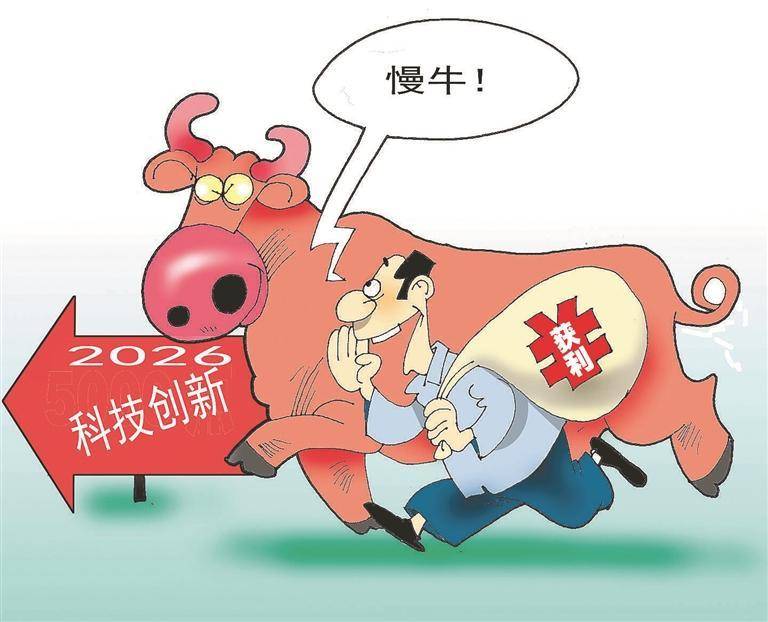
Group 1 - The A-share market is expected to shift from valuation-driven to profit-driven, exhibiting a "slow bull" characteristic in 2026 [2][3] - Investors are advised to focus on four major directions: technology innovation, advanced manufacturing, upstream cycles, and domestic consumption [2][8] - Technology investment difficulty in 2026 will be greater than in 2025, requiring precise grasp of industry rhythms and deep stock selection for excess returns [11] Group 2 - The macroeconomic policy is expected to support resilient growth and structural upgrades, with a GDP growth target of around 5% for 2026 [5][6] - Manufacturing investment is anticipated to receive support from strong export resilience and continued policy backing for advanced manufacturing [5][6] - The focus on expanding domestic demand is crucial for stabilizing growth, with measures including increased consumption subsidies and support for service industries [5][6] Group 3 - A-share earnings are expected to enter a new phase of slow recovery in 2026, driven by technology manufacturing, inventory replenishment, and profit margin recovery [7][9] - The investment strategy should focus on cyclical recovery and technological self-reliance, with an emphasis on sectors like non-ferrous metals, machinery, and social services [7][8] Group 4 - The market is likely to see a convergence of technology and value styles, with structural opportunities emerging in value sectors as the economy stabilizes [12] - The focus on "outbound + technology" is expected to dominate market trends, particularly in the AI industry chain and resource sectors [13] Group 5 - The overall market is anticipated to be balanced between growth and value, with significant opportunities in both large-cap and small-cap stocks [14][16] - The recovery in earnings and return on equity (ROE) levels is expected to support stock market performance, with long-term funds increasingly entering the market [16]
投资于人,聚力“心”征程——上海证券报社举办“证券行业青年从业者心理健康现状及心理韧性提升研究”课题结题会
Sou Hu Cai Jing· 2026-01-01 01:53
12月30日,"证券行业青年从业者心理健康现状及心理韧性提升研究"课题结题会在上海举办。该课题由上海市证券同业公会指导、上海证券报社联合国泰海 通证券共同发起、国泰海通证券提供支持。在沪二十余家证券公司齐聚一堂,与心理学专家共议证券行业青年从业者心理健康现状,探讨提升心理韧性路 径,促进业内青年成长成才方案,助力金融强国建设。 上海国泰海通社会公益基金会理事长毛爱民表示,国泰海通团委组织了3000余名青年员工参与问卷调查、30多位青年参与深入访谈。此次课题聚焦青年心理 资本与心理韧性提升,为青年思想政治工作提供了有价值的方法和启示。国泰海通将用好课题成果,持续深化对青年的关怀和引领,营造更有温度、更富成 长性的发展生态,让每一位青年都能在国泰海通的平台上展现才华,做到心中有梦,脚下有路,眼中有光。 海军军医大学原心理系教授邓光辉介绍,课题组通过对44家券商10260名青年从业者的问卷调查及54人质性访谈,提出心理健康"三因素(刺激因素、中介因 素、结果因素)"传导机制与SOG(Self-help System:自助系统、Organizational-support System:组织支持/他助系统、Guidi ...

2025年度ABS承销排行榜
Wind万得· 2025-12-31 22:50
Core Insights - The ABS market in 2025 showed a robust issuance trend with a total of 2,435 new projects and an issuance scale of 23,250 billion yuan, representing a 14% increase compared to the previous year [1][3]. Segment Summaries Credit ABS - In 2025, 238 new credit ABS projects were issued, totaling 2,915 billion yuan, an 8% increase year-on-year. The largest issuance was in personal auto loans, with 32 projects totaling 1,185 billion yuan, followed by non-performing loans with 178 projects totaling 821 billion yuan [6][1]. Corporate ABS - The corporate ABS segment saw 1,560 projects issued, amounting to 14,133 billion yuan, a 20% increase from the previous year. The largest issuance was in financing lease receivables, with 295 projects totaling 2,891 billion yuan, followed by corporate receivables with 246 projects totaling 2,308 billion yuan [9][1]. Asset-Backed Notes (ABN) - A total of 612 ABN projects were issued, with an issuance scale of 5,731 billion yuan, reflecting a 9% increase year-on-year. The main types of issuance included bank/internet consumer loans (191 projects, 1,685 billion yuan) and general small loan receivables (141 projects, 1,295 billion yuan) [12][1]. Underwriting Rankings - In the 2025 underwriting rankings, CITIC Securities led with 527 projects and a total underwriting amount of 2,809 billion yuan, followed by Guotai Junan with 464 projects totaling 2,329.1 billion yuan, and Ping An Securities with 287 projects totaling 1,749.6 billion yuan [14][16]. Market Accumulated Scale - By the end of 2025, the total accumulated scale of the ABS market reached approximately 35,832 billion yuan, with credit ABS at 4,339 billion yuan, corporate ABS at 22,808 billion yuan, ABN at 6,535 billion yuan, and public REITs at 2,150 billion yuan [1].