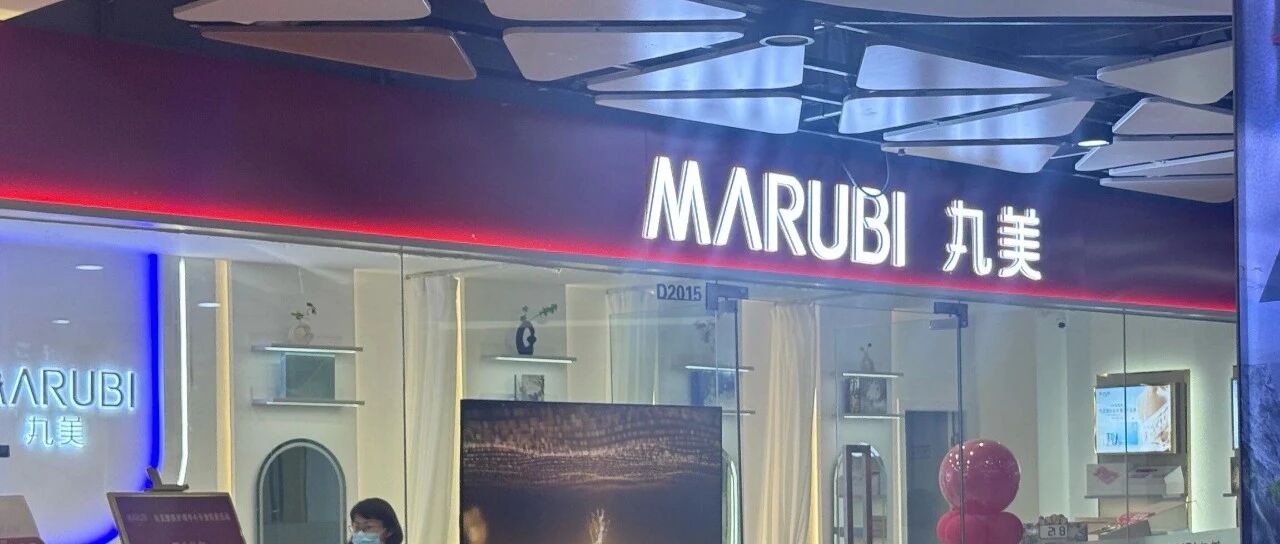
丸美生物

Search documents
从平阴玫瑰到港股IPO:半亩花田上市背后的“国潮崛起”真相
Sou Hu Cai Jing· 2026-01-19 02:06
Core Viewpoint - The domestic beauty brand "Banmu Huatian" has submitted its listing application to the Hong Kong Stock Exchange, aiming to become the first domestic personal care stock in Hong Kong, with CITIC Securities as its sponsor [2] Group 1: Company Overview - Banmu Huatian's parent company, Shandong Huawutang Cosmetics Co., Ltd., was established in 2018 and operates as a full industry chain brand focusing on body care, with R&D centers in Jinan, Shanghai, and Guangzhou [2] - The company has completed two rounds of financing, attracting attention from industry players like Marubi and Lin Qingxuan [2] - According to the prospectus, Huawutang is projected to achieve revenues of 1.199 billion yuan and 1.499 billion yuan in 2023 and 2024, respectively, with adjusted net profits of 23.7 million yuan and 82.8 million yuan [2] Group 2: Product Performance - Banmu Huatian's product lines include body care, hair care, and facial care, with body and facial care accounting for over 80% of revenue in 2024 [3] - Hair care products saw significant growth, with revenue increasing from 80.884 million yuan to 482 million yuan, a 496% increase, and their revenue share rising from 7.5% to 25.4% [3][9] Group 3: Market Trends - In 2023, domestic beauty brands captured 50.4% of the market share, surpassing foreign brands for the first time, and this is expected to rise to 55.2% in 2024 [4] - Over 90% of Gen Z consumers have chosen domestic beauty brands, with nearly all post-2000 consumers having tried domestic brands [4][5] Group 4: Brand Strategy - Banmu Huatian has effectively engaged with young consumers by signing influential celebrity endorsements, which has significantly boosted its brand recognition and sales [5] - The company has established a strong product ecosystem, with standout products like the "Whitening Body Lotion" and "Ice Cream Smooth Body Scrub" achieving substantial sales [8][9] Group 5: Supply Chain and Industry Position - The success of Banmu Huatian is attributed to its deep integration of the supply chain and industry chain, allowing for effective control over raw materials and production standards [6][7] - The company has established raw material plantations across more than 10 locations in China, enhancing its supply chain capabilities [6] Group 6: Future Outlook - The competitive landscape for domestic beauty brands is intensifying, with a focus on deepening supply chain collaboration as a core competitive advantage [7] - The ability to innovate in product development through supply chain synergy will be crucial for brands to succeed in the next market cycle [7][10]


大消费行业周报:细分赛道出现分化-20260118
Ping An Securities· 2026-01-18 12:06
Investment Rating - The industry investment rating is "stronger than the market," indicating an expected performance that exceeds the market by more than 5% within the next six months [25]. Core Insights - The report highlights a divergence in the performance of various segments within the consumer sector, with a stable overall market performance but most sub-sectors underperforming compared to the broader market [4][6]. - There is an expectation for consumer demand to improve ahead of the Lunar New Year, driven by sufficient market liquidity [4]. - The tourism sector is showing potential for growth, with leading companies responding effectively to changing consumer demands [4]. - The beauty industry is experiencing steady growth, with a focus on companies that adapt quickly to market dynamics [4]. - The food and beverage sector is seeing a recovery in supply-demand relationships, particularly in dairy products, while the restaurant supply chain is stabilizing [4]. - In the liquor segment, leading companies are expected to maintain market share despite recent profit adjustments [4]. Market Performance Review - The Shanghai Composite Index fell by 0.57% during the week of January 12-16, with the media sector rising by 3.34% while other sectors like food and beverage and agriculture saw declines of 2.03% and 3.49% respectively [6][8]. Social Services - The report emphasizes the importance of companies that actively respond to changes in consumer demand, particularly in tourism and beauty sectors [4]. Industry Dynamics - The People's Bank of China has introduced measures to enhance structural monetary policy support, which may positively impact consumer spending and economic recovery [10]. - The Philippines has announced visa-free entry for Chinese citizens, which could boost tourism [11]. Company Announcements - Companies like Giant Biological and Proya are making strategic moves, such as product approvals and share buybacks, indicating proactive management in response to market conditions [13][19]. - The report notes significant developments in the liquor industry, including the launch of premium products and partnerships for promotional events [20].

行业周报:钱大妈递表港交所,“折扣日清”打造模式特色-20260118
KAIYUAN SECURITIES· 2026-01-18 08:43
Investment Rating - The industry investment rating is "Positive" (maintained) [1] Core Views - The report highlights the competitive advantage of Qian Dama through its "community small store + daily clearance mechanism + warehouse and cold chain" model, which enhances supply stability and operational efficiency [3][24][35] - The report emphasizes the importance of emotional consumption themes and identifies high-quality companies in high-growth sectors, recommending specific companies across various segments [6][37] Summary by Sections Industry Overview - The retail and social service indices reported a decline of 1.47% and an increase of 1.53% respectively during the week of January 12-16, 2026 [5][13] - The internet e-commerce sector showed the highest growth, with a year-to-date increase of 11.18% [16][19] Company Highlights - Qian Dama has submitted its IPO application to the Hong Kong Stock Exchange, focusing on fresh food retail in the South China market, with a GMV of 9.8 billion yuan in 2024, significantly outperforming its competitors [24][25] - The company operates 2,983 stores, with 2,898 being franchise stores, contributing over 90% of its revenue [25][31] - The report recommends several companies based on their performance and market positioning, including: - Chaohongji, expected to achieve a net profit of 436-533 million yuan in 2025, driven by brand upgrades and channel expansion [39][43] - Meilitiantian Medical Health, projected to see a revenue increase of 28.2% in FY2025H1 [39] - Zhou Dafu, focusing on product structure optimization and store upgrades [39] Investment Themes - Investment Theme 1: Focus on high-end gold and fashion jewelry brands, recommending Chaohongji and Laopu Gold [6][37] - Investment Theme 2: Emphasize retail companies adapting to trends and AI-enabled cross-border e-commerce leaders, recommending Yonghui Supermarket and Aiyingshi [6][37] - Investment Theme 3: Highlight domestic beauty brands that meet emotional value and safety innovation, recommending Maogeping and Pola [6][37] - Investment Theme 4: Focus on differentiated medical beauty product manufacturers and leading medical beauty institutions, recommending Meilitiantian Medical Health and Aimeike [6][37]


毛戈平林清轩们资本市场交锋 但上市仅是开始
2 1 Shi Ji Jing Ji Bao Dao· 2026-01-16 23:38
Core Insights - The surge of Chinese beauty brands aiming for IPOs on the Hong Kong Stock Exchange reflects a strong desire for growth and market expansion within the industry [1][7] - The listing of Lin Qingxuan marks a significant milestone as it aims to enhance its multi-brand and global strategy [1][7] - The performance of beauty stocks varies significantly, with some brands experiencing substantial declines post-IPO [2][8] Industry Trends - Over 41 beauty-related companies have pursued IPOs since 2025, covering various segments of the supply chain [1][7] - Lin Qingxuan's IPO on December 30, 2025, was well-received, with its stock price rising 9.3% on the first day, achieving a market capitalization of over 11.8 billion HKD [2][8] - Conversely, brands like Pechoin have faced stock price declines, with a notable drop in revenue growth, indicating market concerns about sustainability [2][8] Market Challenges - Several previously popular brands, such as Betaini and Huaxi Biological, have seen stock price declines, suggesting a reevaluation of their growth models and valuations [3][8] - The internationalization strategies of these brands are still in early stages, with limited overseas sales contributing to overall revenue [4][11] - Brands face challenges in establishing a strong presence in international markets, often relying heavily on domestic success factors like online marketing and social media [11][12] Strategic Moves - Companies are increasingly focusing on international expansion, with many viewing the Hong Kong listing as a critical step towards building global brand recognition [4][10] - Pechoin has made strategic investments to enhance its capabilities, including acquiring stakes in medical companies to bolster its credibility [12] - Lin Qingxuan and other brands are exploring overseas markets, but their current international sales remain minimal, highlighting the need for stronger brand positioning abroad [11][12]
毛戈平林清轩们资本市场交锋,但上市仅是开始
2 1 Shi Ji Jing Ji Bao Dao· 2026-01-16 13:10
Core Insights - The Chinese beauty industry is experiencing a surge in IPOs, with over 41 beauty-related companies aiming for listings on the Hong Kong Stock Exchange since 2025, indicating a strong desire for growth and market expansion [1] - Lin Qingxuan's listing marks the beginning of its multi-brand and global strategy, while the stock performance of other brands like Maogeping shows significant volatility post-IPO [1][2] Group 1: Market Trends - Lin Qingxuan officially listed on the Hong Kong Stock Exchange on December 30, 2025, with an initial share price of 77.77 HKD, opening at 85 HKD, a 9.3% increase, and achieving a market capitalization of over 11.8 billion HKD [2] - Other companies like Perlay and Marubi are facing challenges, with Perlay's stock experiencing a significant decline and a slowdown in revenue growth, raising concerns about its market position [3][4] Group 2: Internationalization Efforts - Many beauty brands are focusing on internationalization as a core strategy, with companies like Perlay and Natural Hall aiming to enhance their global brand recognition through their IPOs [6][7] - Despite the ambitions, most brands still rely heavily on the domestic market for revenue, with limited success in overseas sales [7][8] Group 3: Investment and Development - Brands are investing in acquisitions and partnerships to strengthen their market presence, such as Perlay's investment in the cosmetic brand Huazhi Xiao and collaborations with private equity firms for global expansion [7][8] - The imbalance between marketing and research and development is a concern, as many brands have low R&D investments compared to their marketing expenditures, which may hinder their competitiveness in international markets [8][9]
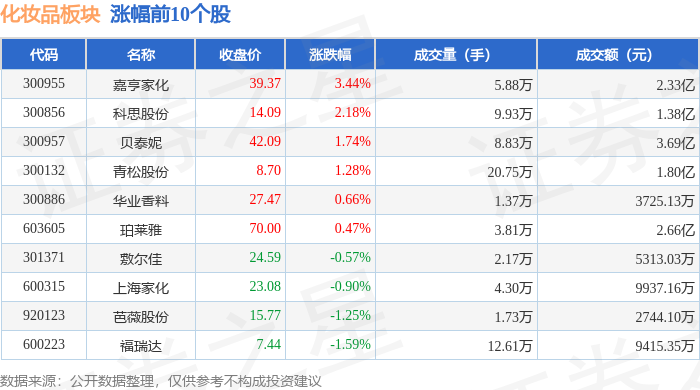
化妆品板块1月16日跌0.63%,锦盛新材领跌,主力资金净流出8996.93万元
Zheng Xing Xing Ye Ri Bao· 2026-01-16 09:03
Group 1 - The cosmetics sector experienced a decline of 0.63% on January 16, with Jinsheng New Materials leading the drop [1] - The Shanghai Composite Index closed at 4101.91, down 0.26%, while the Shenzhen Component Index closed at 14281.08, down 0.18% [1] - Key stocks in the cosmetics sector showed varied performance, with Jiaheng Jiahua rising by 3.44% to a closing price of 39.37, while Jinsheng New Materials fell by 5.09% to 17.54 [2] Group 2 - The net outflow of main funds in the cosmetics sector was 89.97 million yuan, while retail investors saw a net inflow of 82.30 million yuan [2] - The main fund inflow for key stocks included 28.22 million yuan for Proya, while Jinsheng New Materials had a net outflow of 3.97 million yuan [3] - Retail investors showed a significant net inflow in stocks like Jiaheng Jiahua and Beitaini, while Jinsheng New Materials and Shanghai Jahwa experienced outflows [3]
化妆品板块1月15日跌0.36%,水羊股份领跌,主力资金净流出1186.31万元
Zheng Xing Xing Ye Ri Bao· 2026-01-15 08:58
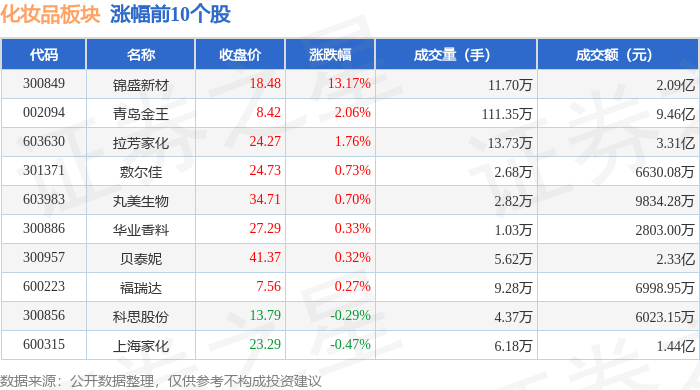
Market Overview - The cosmetics sector experienced a decline of 0.36% on January 15, with Shuiyang Co. leading the drop [1] - The Shanghai Composite Index closed at 4112.6, down 0.33%, while the Shenzhen Component Index closed at 14306.73, up 0.41% [1] Individual Stock Performance - Jinsheng New Material (300849) saw a significant increase of 13.17%, closing at 18.48 with a trading volume of 117,000 shares and a turnover of 209 million yuan [1] - Qingdao Kingway (002094) increased by 2.06%, closing at 8.42 with a trading volume of 1,113,500 shares [1] - Lafang Home (603630) rose by 1.76%, closing at 24.27 with a trading volume of 137,300 shares [1] - Other notable performances include Fulejia (301371) up 0.73%, Marubi Biological (603983) up 0.70%, and Betaini (300957) up 0.32% [1] Capital Flow Analysis - The cosmetics sector saw a net outflow of 11.86 million yuan from institutional investors and 53.27 million yuan from retail investors, while retail investors had a net inflow of 65.13 million yuan [2] - The capital flow for individual stocks indicates that Lafang Home had a net inflow of 77.73 million yuan from institutional investors, while Betaini had a net inflow of 14.81 million yuan [3] - Conversely, Shuiyang Co. experienced a net outflow of 5.39 million yuan from institutional investors [2][3]




“急闯”港股 丸美生物突围还是解困?
Zhong Guo Ji Jin Bao· 2026-01-13 13:56
Core Viewpoint - Marubi Biotechnology is seeking a dual listing on the Hong Kong Stock Exchange to enhance its capital strength and international financing capabilities amid increasing competition in the domestic beauty industry and rising online traffic costs, which have led to a situation of revenue growth without profit increase [2][12]. Financial Status - Marubi plans to issue up to 15% of its total share capital as H-shares in its Hong Kong listing [2]. - The company has faced financial scrutiny due to irregularities in financial accounting and has been ordered to rectify these issues by regulatory authorities [2][12]. - As of the end of 2025, Marubi's short-term borrowings amount to approximately 573 million yuan, with total short-term liabilities around 977 million yuan [8][12]. Dividend Policy - Marubi's dividend payout ratio has surged from 37.77% in 2019 to 202.82% in 2023, with a notable payout ratio of 235.87% in 2024 [7]. - The majority of dividends benefit the founding couple, who hold over 80% of the company's shares, raising concerns among investors about the sustainability of such high payouts amid financial pressures [7][9]. Revenue and Profitability - Marubi reported a revenue of 2.97 billion yuan in 2024, with 2.45 billion yuan generated in the first three quarters of 2025 [12]. - Despite revenue growth, net profit growth has slowed, with a mere 2.13% increase in net profit attributable to shareholders in the first three quarters of 2025, while non-recurring net profit declined by 5.42% [12][11]. Marketing and Sales Strategy - The company's marketing expenses have significantly increased, reaching 1.415 billion yuan in the first three quarters of 2025, with a marketing expense ratio of 57.7% [12]. - A high reliance on online sales channels, which accounted for 87.6% of revenue in the same period, has led to increased operational costs due to platform rules and traffic costs [12]. Research and Development - Marubi is transitioning towards a biotechnology-focused beauty company, with an emphasis on research in areas like recombinant collagen [14]. - However, R&D spending has been insufficient, with only a slight increase in R&D expenses compared to a significant rise in sales expenses [16].
“急闯”港股,丸美生物突围还是解困?
Zhong Guo Ji Jin Bao· 2026-01-13 13:49
Core Viewpoint - Marubi Biotechnology is seeking a dual listing in Hong Kong to enhance its capital strength and international financing capabilities amid increasing competition in the domestic beauty industry and rising online traffic costs, which have led to a situation of revenue growth without profit increase [2][3]. Financial Pressure - Marubi plans to issue up to 15% of its total share capital as H-shares in its Hong Kong listing [3]. - The company reported a net cash outflow of 391 million yuan in Q3 2025, significantly reducing its cash and cash equivalents [5]. - Short-term borrowings reached 573 million yuan, with total short-term liabilities amounting to approximately 977 million yuan [6]. Dividend Policy - Marubi's dividend payout ratio has surged from 37.77% in 2019 to 202.82% in 2023, with a payout ratio of 235.87% in 2024 [10]. - The majority of dividends benefit the founders, who hold over 80% of the shares, raising concerns among investors about the sustainability of high dividends amid financial pressures [10]. Institutional Shareholding - Institutional shareholding has decreased significantly, with the number of shares held by funds dropping from 23.65 million at the end of 2024 to 9.61 million by the end of September 2025 [10][11]. Revenue and Profit Trends - Marubi's revenue grew to 2.97 billion yuan in 2024, with 2.45 billion yuan generated in the first three quarters of 2025 [12]. - However, net profit growth has slowed, with a mere 2.13% increase in net profit attributable to shareholders in the first three quarters of 2025, while non-recurring net profit declined by 5.42% [12]. Marketing Expenses - Marketing expenses for the first three quarters of 2025 reached 1.415 billion yuan, with an expense ratio climbing to 57.7%, primarily due to reliance on online sales channels [12][14]. - The company faced a significant drop in net profit in Q2 2025 despite revenue growth, with sales expense ratios exceeding 60% [14]. Technology Transformation - Marubi officially rebranded to "Marubi Biotechnology" in December 2024, emphasizing its transition to a biotechnology-focused beauty company [18]. - The company has increased its investment in research and development, particularly in recombinant collagen products, which have shown significant market growth potential [18][20]. - However, R&D spending has not kept pace with sales expenses, with only a slight increase in R&D costs compared to a substantial rise in marketing expenses [21].

“急闯”港股,丸美生物突围还是解困?
中国基金报· 2026-01-13 13:38
Core Viewpoint - Marubi Biotechnology is seeking a dual listing in Hong Kong to enhance its capital strength and international financing capabilities, amid concerns over its financial health and high dividend payouts [2][4]. Group 1: Financial Performance and Pressures - Marubi's financial report indicates significant cash flow pressure, with a net cash outflow of 391 million yuan in Q3 2025, leading to a notable decrease in cash and cash equivalents [6]. - The company has short-term borrowings of 573 million yuan and total short-term liabilities of approximately 977 million yuan [8]. - Despite revenue growth, net profit growth has slowed, with a mere 2.13% increase in net profit attributable to shareholders in the first three quarters of 2025, while non-operating profit dropped by 5.42% [16]. Group 2: Dividend Policy and Shareholder Concerns - Marubi's dividend payout ratio has surged from 37.77% in 2019 to 202.82% in 2023, with a staggering 235.87% payout ratio in 2024, raising concerns among investors about the sustainability of such high dividends amid financial pressures [11]. - The majority of dividends benefit the founding couple, who hold over 80% of the shares, leading to investor worries about the prioritization of dividends over business reinvestment [11]. Group 3: Market Position and Competition - The competitive landscape in the domestic beauty industry is intensifying, with rising online traffic costs contributing to Marubi's struggle to increase profitability despite revenue growth [2]. - The company's reliance on online sales channels, which accounted for 87.6% of revenue in the first three quarters of 2025, has made it vulnerable to platform rules and rising costs [18]. Group 4: Technological Transformation and R&D Investment - Marubi is transitioning towards a biotechnology-focused beauty company, with significant investments in research and development, particularly in recombinant collagen products [20]. - However, R&D spending has not kept pace with sales expenses, with only a slight increase in R&D costs compared to a substantial rise in marketing expenses, indicating a potential imbalance in investment strategy [22].