华硕

Search documents
黄仁勋:台积电要加油了
半导体行业观察· 2026-02-01 02:25
公众号记得加星标⭐️,第一时间看推送不会错过。 英伟达首席执行官黄仁勋昨晚宴请供应链伙伴高层,「兆元宴」再度登场。黄仁勋表示,台积电今年 必须要非常努力工作,因为英伟达需要很多晶圆,他预期「未来十年台积电的产能可能会成长超过百 分之百,是非常显著的规模扩张,而光是为英伟达的需求就得翻倍」。 黄仁勋再度选在台北砖窑古早味怀旧餐厅举行「兆元宴」,和供应链伙伴餐叙,出席的包括台积电董 事长魏哲家、联发科首席执行官蔡力行、广达董事长林百里、英业达董事长叶力诚、纬创董事长林宪 铭、鸿海董事长刘扬伟、宏碁董事长陈俊圣、矽品董事长蔡祺文、和硕董事长童子贤、共同首席执行 官郑光志及邓国彦、华硕董事长施崇棠、共同首席执行官胡书宾及许先越、纬颖董事长洪丽寗、台达 电董事长郑平、仁宝董事长陈瑞聪以及云达总经理杨麒令等人。餐叙结束后黄仁勋亲自送魏哲家离 开,显见对台积电的重视程度。 黄仁勋说,台积电今年要非常努力工作,因为英伟达需要很多晶圆和CoWoS,他也说,台积电做得 非常好。英伟达已经全面投产Blackwell、Vera Rubin芯片,而Vera Rubin包含六款不同的芯片,每 款都是世界上最先进的芯片。黄仁勋强调,今年英 ...


“订单排期到了明年” 存储超级周期下的众生相:谁在兑现 谁在挣扎
Zhong Guo Ji Jin Bao· 2026-01-31 23:42
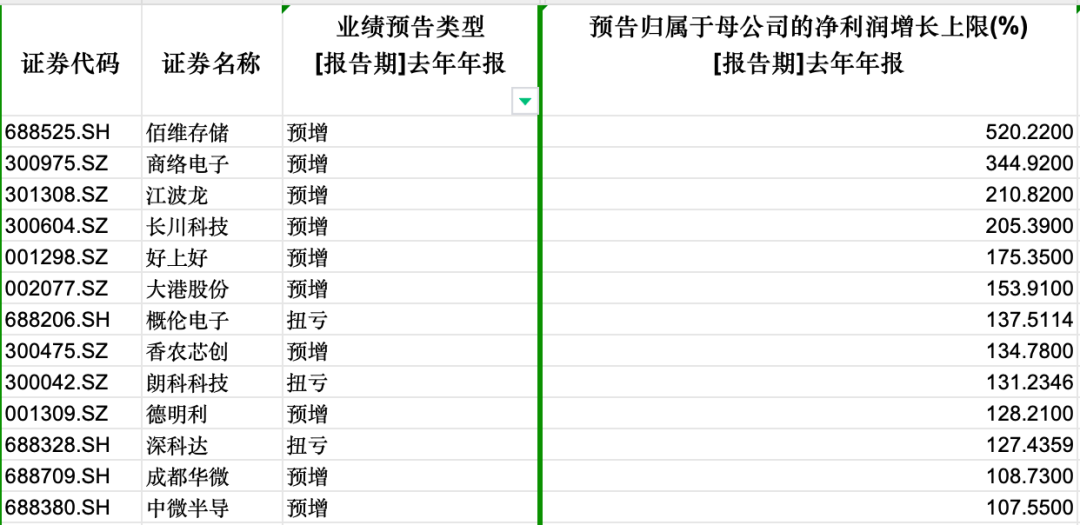
Core Viewpoint - The storage chip market is experiencing a "super cycle" driven by AI, leading to significant price increases and improved profitability for storage companies, while terminal manufacturers face pressure to raise prices or reduce specifications [1][3][7]. Group 1: Market Dynamics - The storage market is emerging from a low point, with many companies reporting substantial profit increases due to stabilizing prices driven by AI demand [1][2]. - As of January 29, 2026, 52 storage-related companies in the A-share market have issued performance forecasts for 2025, with 25 companies expecting profit increases, and 31 companies reporting year-on-year net profit growth [1][2]. - Notable profit increases include Bawei Storage with a projected growth of 520.22%, Shangluo Electronics at 344.92%, and Jiangbolong at 210.82% [2]. Group 2: Price Trends - Market research indicates that storage prices are expected to rise by 40% to 50% in Q1 2026 and by approximately 20% in Q2 2026, surpassing historical highs [3][4]. - Companies like Jiangbolong attribute their recovery to the stabilization of storage prices and increased demand from AI servers, leading to a supply-demand imbalance [2][5]. Group 3: Competitive Positioning - Storage manufacturers are shifting focus from consumer markets to enterprise-level markets, such as data centers and AI servers, where profit margins are higher due to lower price sensitivity [5][6]. - Companies are investing in technology and production capabilities to enhance their competitive edge, with Jiangbolong planning to raise 3.7 billion yuan for technology development and production expansion [6]. Group 4: Impact on Terminal Manufacturers - Terminal manufacturers are facing significant cost pressures due to rising component prices, leading to a projected 14.8% decrease in global laptop shipments in Q1 2026 [7][8]. - Major brands like Lenovo and Dell have begun raising prices on their products, with Lenovo increasing prices by 500 to 1500 yuan on mid-to-high-end models [8][9]. - The rising costs of memory components are impacting the profitability of smartphone manufacturers, with companies like Transsion Holdings reporting a 54.11% decline in net profit due to increased supply chain costs [9].


黄仁勋赞台湾供应链独一无二 新面孔首度出席「兆元宴」
Jing Ji Ri Bao· 2026-01-31 23:03
Group 1 - NVIDIA's CEO Jensen Huang hosted a "trillion-dollar banquet" in Taiwan, attended by key supply chain partners and industry leaders, indicating strong collaboration and networking within the semiconductor industry [1][2] - Huang emphasized the challenges ahead in 2025 with the production of the Grace Blackwell semiconductor system, which has faced significant design modifications and supply chain disruptions [2][3] - The GB300 cabinet has entered the initial production phase, while the GB200 product is in smooth mass production, showcasing NVIDIA's advancements in technology [2] Group 2 - Huang noted a significant shift in the AI industry, highlighting the profitability of tokens as AI technology has become more effective, suggesting a positive outlook for AI-driven business models [3][4] - The banquet featured a diverse array of industry leaders, including representatives from major companies like ASUS, MediaTek, and TSMC, reflecting the importance of NVIDIA's partnerships in the tech ecosystem [3][4] - The event underscored NVIDIA's commitment to innovation and collaboration, with companies like Advantech transitioning to edge AI solutions, indicating a broader industry trend towards integrating AI into various sectors [4][5]
黄仁勋:英伟达需求非常强劲,台积电今年必须要非常努力工作
Xin Lang Cai Jing· 2026-01-31 16:27
在接受采访时,黄仁勋谈到供应链的动态。他表示,今年英伟达需求非常强劲,英伟达正在全力生产 Blackwell芯片,同时生产Rubin芯片。台积电今年必须要非常努力工作,因为英伟达需要很多晶圆和 CoWoS产能,台积电现在做得非常好。他还表示,台积电在未来10年可能会增加100%产能,这是规模 很大的基础设施投资。 格隆汇1月31日|据一财,英伟达CEO黄仁勋春节前访华到达上海、北京、深圳后,近日又到达台湾。 此次行程中,黄仁勋与当地供应商的交流备受关注。1月31日晚间,黄仁勋宴请了英伟达的供应链伙 伴,参加晚宴的包括纬创董事长林宪铭、台积电董事长魏哲家、广达创始人林百里及副董事长梁次震、 和硕集团董事长童子贤、鸿海董事长刘扬伟、仁宝董事长陈瑞聪、联发科执行长蔡力行、华硕创始人施 崇棠等。晚宴结束后,黄仁勋送魏哲家离开。 ...
黄仁勋:投资OpenAI计划没变
第一财经· 2026-01-31 15:18
Core Viewpoint - Huang Renxun's recent visit to Taiwan highlights Nvidia's strong demand and ongoing investments in AI infrastructure, emphasizing the company's commitment to expanding its production capabilities and partnerships in the AI sector [3][4][6]. Group 1: Nvidia's Demand and Production - Nvidia is experiencing robust demand this year and is fully engaged in the production of Blackwell and Rubin chips, indicating a strong growth trajectory for the company [4]. - TSMC is expected to significantly increase its production capacity by 100% over the next decade, which represents a substantial infrastructure investment to meet Nvidia's needs for wafers and advanced packaging technology [4]. Group 2: Competitive Landscape - Huang Renxun asserts that while ASICs (Application-Specific Integrated Circuits) have demand, Nvidia's approach is unique as it encompasses the entire AI infrastructure, producing a range of products including CPUs, GPUs, and networking chips [5]. - The assertion that ASIC shipments will surpass those of GPUs is dismissed, with Huang emphasizing that achieving better ASICs than Nvidia's products requires superior R&D capabilities, which many companies are attempting but have not yet succeeded [5]. Group 3: Investment in OpenAI - Reports suggest that Nvidia's $100 billion investment plan in OpenAI has stalled due to Huang's concerns, but he clarified that the partnership remains intact and Nvidia is considering participating in OpenAI's new funding round [6]. - Huang noted that the AI infrastructure development is at its inception and will take approximately 10 years, necessitating global computing facilities, including new factories in Taiwan, the US, Europe, Japan, and Southeast Asia [6].
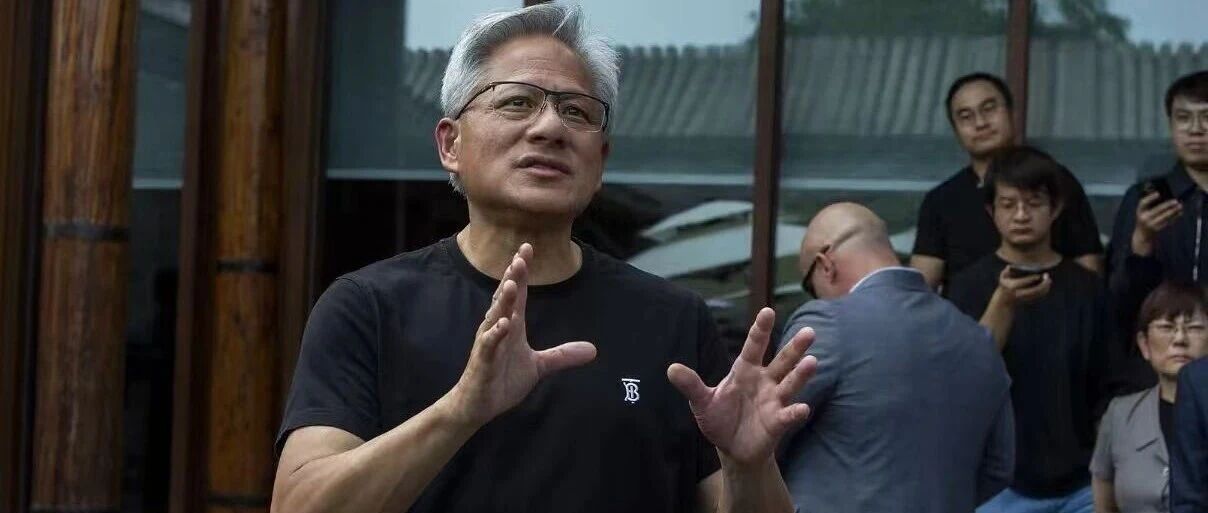
黄仁勋台北“夜宴”:汇聚近40位台企高管,还有1位陆企董事长!
Sou Hu Cai Jing· 2026-01-31 14:56
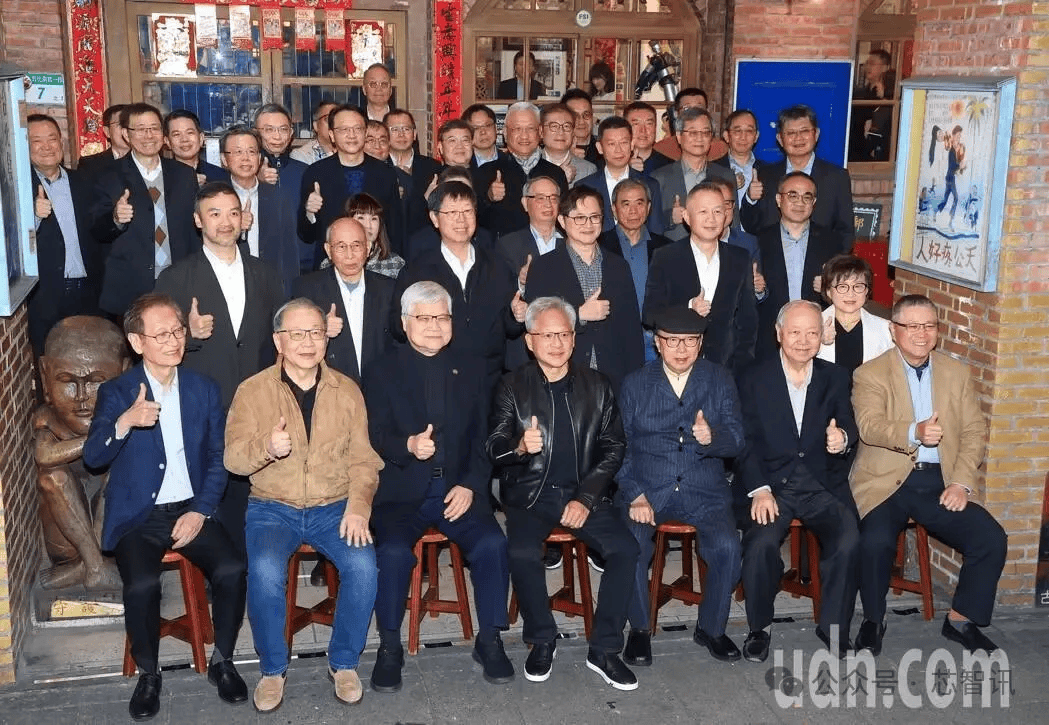
Core Viewpoint - Nvidia's CEO Jensen Huang hosted a dinner in Taipei with key supply chain executives, emphasizing the importance of collaboration and the challenges ahead in AI technology development [1][4][10]. Group 1: Event Details - The dinner included approximately 40 executives from Taiwanese companies, with only one representative from a mainland Chinese firm [1]. - Notable attendees included leaders from Asus, MediaTek, TSMC, Quanta, and Wistron, highlighting the significance of these partnerships [1][3]. Group 2: Nvidia's Future Plans - Huang discussed the upcoming challenges in 2025 with the production of the Grace Blackwell architecture, indicating that it presents more difficulties than previous models [7]. - The GB300 cabinet has entered initial mass production, and the GB200 product is being produced smoothly, while the Vera Rubin platform is expected to simplify future production processes [8][9]. Group 3: AI Industry Insights - Huang noted that AI has become increasingly useful, with large language models now generating revenue, contrasting with previous years when AI was less effective [8]. - He projected that 2026 will be a critical year for the AI industry, with unprecedented demand for high-bandwidth memory (HBM) and LPDDR, leading to significant supply chain pressures [9]. Group 4: Nvidia's Strategic Investments - Nvidia plans to participate in OpenAI's next funding round, potentially marking its largest strategic investment to date, reflecting the company's commitment to AI development [9]. - Huang emphasized that Nvidia's comprehensive AI infrastructure, which includes CPUs, GPUs, and networking chips, cannot be easily replaced by specialized AI chips (ASICs) [9]. Group 5: Importance of Taiwanese Supply Chain - Huang stated that Nvidia's existence is heavily reliant on Taiwan's technological capabilities and engineering culture, particularly praising TSMC's role in advanced manufacturing processes [10]. - He anticipates that TSMC's capacity will grow significantly over the next decade, contributing to a major expansion in global technology infrastructure [10][12].
黄仁勋回应投资OpenAI计划没变
Di Yi Cai Jing· 2026-01-31 14:52
黄仁勋表示,英伟达与OpenAI的合作关系没有改变,正在考虑参与OpenAI的新一轮融资。 针对ASIC(专用集成电路)带来的竞争,黄仁勋表示,ASIC一直有需求,但英伟达做的事情非常不一 样。一方面,英伟达不只做一种芯片,而是参与到整个AI基础设施建设过程,做的产品包括CPU、 GPU、网络芯片、交换器芯片等。另一方面,英伟达与几乎所有AI公司合作,包括谷歌。此外,英伟 达与每一个云都相关,一些云计算厂商在与英伟达竞争,但这样也没有关系,英伟达还是无处不在,在 电脑系统、机器人和车里。 黄仁勋表示,ASIC出货量将比GPU更大是无稽之谈,要做到比英伟达产品更好的ASIC,要有比英伟达 更好的研发人员,许多公司正在尝试,但英伟达仍走在前面。 黄仁勋强调,英伟达年研发成本近两百亿美元。科技变得越来越复杂,英伟达此前的芯片架构Hopper很 简单、Blackwell太难了,现在做Rubin则几乎接近不可能,未来英伟达研发成本每年还会增长50%。 近日有消息称,英伟达千亿美元投资OpenAI的计划陷入停滞,原因是黄仁勋对OpenAI有疑虑。黄仁勋 回应称,双方的合作关系没有改变,英伟达正在考虑参与OpenAI的新一 ...
“产线的机器已经开足了马力,订单排期到了明年,连客户要货的电话都不敢接了,怕得罪人。”存储超级周期下的众生相:谁在兑现,谁在挣扎
Zhong Guo Ji Jin Bao· 2026-01-31 13:05
Core Insights - The storage chip market is experiencing a "super cycle" driven by AI, leading to significant price increases and improved profitability for storage companies, while terminal manufacturers face pressure to raise prices or reduce specifications [1][2][3] Group 1: Market Dynamics - The storage market is emerging from a low point, entering a new upward cycle, with 52 storage-related companies in A-shares reporting positive earnings forecasts for 2025, including 25 companies with expected profit growth [2] - Storage price increases are the primary factor behind the improved performance of these companies, with some reporting profit growth exceeding 100% [2] - Market research indicates that storage prices are expected to rise by 40% to 50% in Q1 2026 and by approximately 20% in Q2 2026, surpassing historical highs [3] Group 2: Competitive Positioning - Storage manufacturers are ramping up production to meet the surging demand from AI applications, with significant increases in memory requirements for AI servers compared to standard servers [4][5] - Companies are shifting focus from consumer markets to enterprise-level markets, where customers prioritize stability and reliability over price, allowing for better profit margins [5] - Companies like Jiangbolong are enhancing their capabilities through partnerships and new product launches, including a 37 billion yuan fundraising plan to invest in core technology and production processes [5][6] Group 3: Challenges for Terminal Manufacturers - Terminal manufacturers are facing significant cost pressures due to rising prices of components, including CPUs and storage, leading to a projected 14.8% decrease in global laptop shipments in Q1 2026 [7][8] - Major brands like Lenovo and Dell have begun to raise prices on their products, with increases ranging from 10% to 30%, while some brands are even canceling low-end models due to cost pressures [8][9] - The financial impact of rising component costs is evident, with companies like Transsion Holdings reporting a 54.11% decline in net profit due to increased supply chain costs [9][10]
“产线的机器已经开足了马力,订单排期到了明年,连客户要货的电话都不敢接了,怕得罪人 ”存储超级周期下的众生相:谁在兑现,谁在挣扎
Zhong Guo Ji Jin Bao· 2026-01-31 12:57
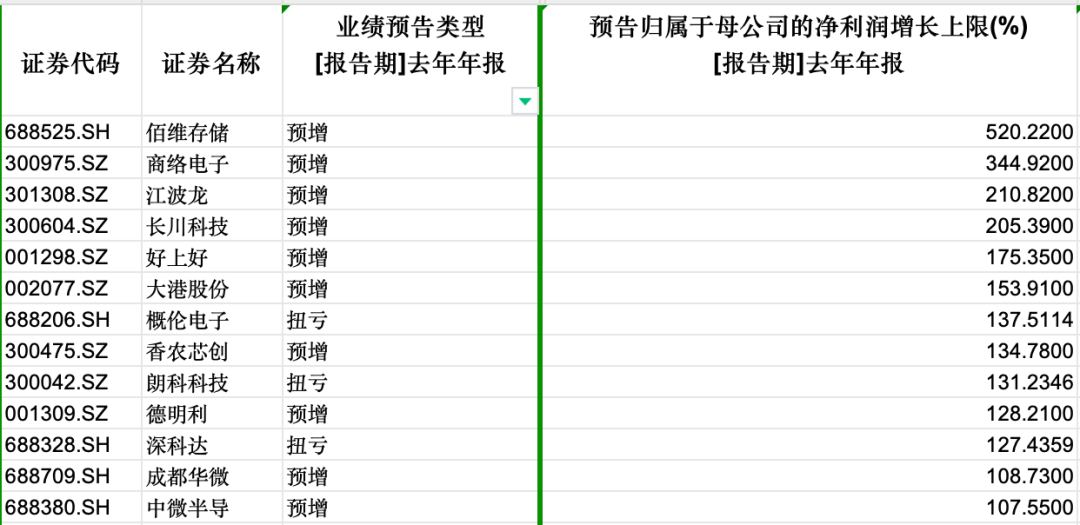
Core Viewpoint - The storage chip market is experiencing a "super cycle" driven by AI, leading to significant price increases and improved profitability for storage companies, while terminal manufacturers face pressure to raise prices or reduce specifications [1][3]. Group 1: Market Dynamics - The storage market is emerging from a low point, with many companies reporting substantial profit increases due to stabilizing prices driven by AI demand [1]. - As of January 29, 2026, 52 storage-related companies in the A-share market have issued performance forecasts for 2025, with 25 companies expecting profit increases, and 31 companies reporting year-on-year net profit growth [1]. - Notably, 13 companies have projected net profit growth exceeding 100% [1]. Group 2: Company Performance - Companies like Bawei Storage and Jiangbolong are forecasting significant profit increases, with Bawei Storage projecting a net profit growth of 520.22% and Jiangbolong 210.82% [2]. - Jiangbolong attributes its turnaround to the recovery of storage prices and increased demand from AI servers, leading to a shift in supply dynamics [2]. - The storage price surge is expected to continue, with predictions of a 40% to 50% increase in Q1 2026 and an additional 20% in Q2 2026 [3]. Group 3: Competitive Positioning - Storage manufacturers are shifting focus from consumer markets to enterprise-level markets, such as data centers and AI servers, which offer higher profit margins due to lower price sensitivity [5]. - Companies are investing in technology and product development to enhance their competitive edge, with Jiangbolong planning to raise 3.7 billion yuan for technology development and production expansion [6]. - The urgency to secure market position is emphasized, as delays in strategic actions could result in missed opportunities during this lucrative period [7]. Group 4: Impact on Terminal Manufacturers - Terminal manufacturers are facing significant cost pressures due to rising prices of storage components, leading to a projected 14.8% decrease in global laptop shipments in Q1 2026 [8]. - Major brands like Lenovo and Dell have begun to raise prices on various product lines, with Lenovo increasing prices by 500 to 1500 yuan for mid-to-high-end models [8][9]. - The rising costs are impacting profit margins, with companies like Transsion Holdings reporting a 54.11% decline in net profit due to increased supply chain costs [9].


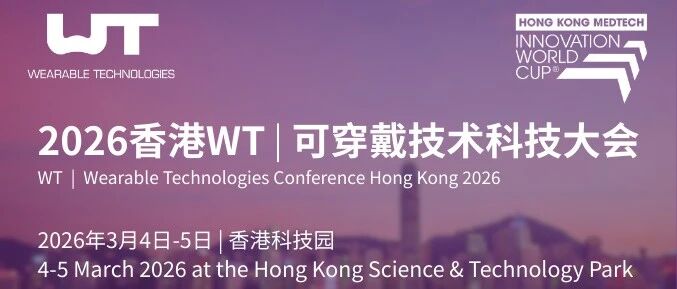
为什么这场可穿戴技术科技大会,值得医疗产业关注?免费门票限量换领!
思宇MedTech· 2026-01-30 01:32
Core Insights - The WT | Wearable Technologies Conference will return to Hong Kong on March 4-5, 2026, focusing on the integration of wearable technology into the medical field, emphasizing practical applications and industry challenges [1][2] - The conference aims to create a platform for dialogue among government, industry, academia, and investment sectors to foster collaboration and innovation in wearable medical technology [1][2] Group 1: Conference Overview - The WT conference will serve as an international B2B platform, emphasizing the industrialization of wearable medical technology from concept validation to large-scale application [1] - The event will feature a diverse lineup of speakers, including leaders in research, engineering, regulation, and industry, highlighting the international and industry-oriented nature of the conference [6][7] Group 2: Agenda and Topics - The two-day agenda will cover interconnected health management, disease prevention, and the role of artificial intelligence in wearable ecosystems [10][12] - Specific topics include continuous monitoring of vital signs, rehabilitation applications, and the engineering challenges in medical device manufacturing [12][14] Group 3: Innovation World Cup - The Innovation World Cup has attracted over 200 medical technology projects, providing a platform for teams to showcase their innovations and connect with industry experts [16][17] - Award-winning projects will have opportunities to access resources from the Hong Kong Science Park and advance commercialization efforts [16][17]