可孚医疗

Search documents
农业股午后持续走强,农发种业涨停
Xin Lang Cai Jing· 2026-01-28 05:31
农业股午后持续走强,农发种业涨停,康农种业涨超9%,秋乐种业、神农种业、亚盛集团、北大荒跟 涨。 ...

股票行情快报:可孚医疗(301087)1月27日主力资金净卖出150.77万元
Sou Hu Cai Jing· 2026-01-27 13:00
Group 1 - The core viewpoint of the article highlights the recent performance and financial metrics of Kefu Medical (301087), indicating a slight decline in stock price and mixed capital flow on January 27, 2026 [1] - Kefu Medical reported a main revenue of 2.398 billion yuan for the first three quarters of 2025, reflecting a year-on-year increase of 6.63%, with a net profit attributable to shareholders of 260 million yuan, up 3.3% year-on-year [2] - In Q3 2025, the company achieved a single-quarter main revenue of 902 million yuan, representing a significant year-on-year increase of 30.72%, and a net profit of approximately 92.83 million yuan, up 38.68% year-on-year [2] Group 2 - The company has a debt ratio of 27.37% and reported investment income of 18.18 million yuan, with financial expenses recorded at -3.77 million yuan, indicating a healthy financial position [2] - The gross profit margin for Kefu Medical stands at 53.35%, showcasing strong profitability within its industry [2] - Over the past 90 days, 8 institutions have provided ratings for the stock, with 7 buy ratings and 1 hold rating, and the average target price set by institutions is 54.56 yuan [2]


股票行情快报:可孚医疗(301087)1月26日主力资金净卖出734.45万元
Sou Hu Cai Jing· 2026-01-26 13:56
证券之星消息,截至2026年1月26日收盘,可孚医疗(301087)报收于55.48元,下跌1.72%,换手率 1.74%,成交量3.38万手,成交额1.86亿元。 1月26日的资金流向数据方面,主力资金净流出734.45万元,占总成交额3.94%,游资资金净流入184.32 万元,占总成交额0.99%,散户资金净流入550.13万元,占总成交额2.95%。 近5日资金流向一览见下表: 该股主要指标及行业内排名如下: 可孚医疗2025年三季报显示,前三季度公司主营收入23.98亿元,同比上升6.63%;归母净利润2.6亿 元,同比上升3.3%;扣非净利润2.22亿元,同比上升1.46%;其中2025年第三季度,公司单季度主营收 入9.02亿元,同比上升30.72%;单季度归母净利润9282.98万元,同比上升38.68%;单季度扣非净利润 8580.27万元,同比上升62.68%;负债率27.37%,投资收益1818.06万元,财务费用-377.36万元,毛利率 53.35%。可孚医疗(301087)主营业务:家用医疗器械的研发、生产、销售和服务。 该股最近90天内共有8家机构给出评级,买入评级7家,增持评级 ...
2026中国创新医疗图景:源头活水何在,产业生态又将如何重塑?
Xin Lang Cai Jing· 2026-01-26 06:56
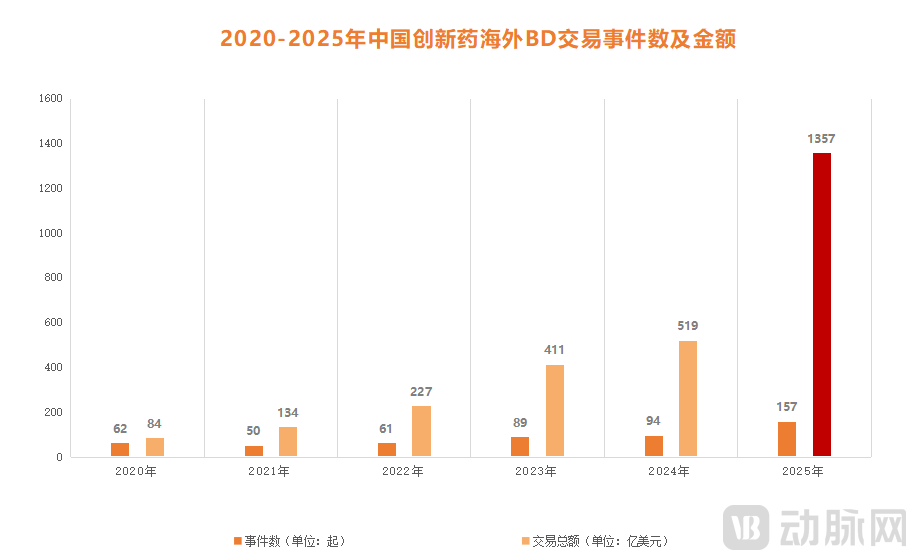
Core Insights - The Chinese healthcare industry experienced a significant surge in 2025, marked by a record number of innovative medical devices and drugs approved for market entry, indicating a growing focus on innovation in the sector [1][3] - The total value of overseas business development (BD) transactions for innovative drugs reached $135.7 billion in 2025, accounting for 49% of the global total, surpassing the United States for the first time [3] - The IPO market for healthcare companies in China saw a revival, with 37 companies successfully listed in 2025, doubling the number from 2024, reflecting strong investor interest in the sector [7] Innovation in Medical Devices and Drugs - In 2025, 109 innovative medical devices were approved, with a 19.67% year-on-year increase in Class III devices, while 76 innovative drugs were approved, focusing on advanced fields like oncology and autoimmune diseases [1] - The rapid growth in innovative drug approvals and medical device registrations highlights China's increasing capabilities in healthcare innovation [1][8] Business Development and Market Dynamics - The number of overseas BD transactions for innovative drugs reached 157 in 2025, with a total transaction value of $135.7 billion, both figures representing historical highs [3] - The increasing recognition of Chinese innovative drugs by global pharmaceutical companies is evident, particularly as they face pressures from patent expirations and global competition [8] IPO Activity and Market Sentiment - The healthcare sector in China saw a resurgence in IPO activity, with 37 companies going public in 2025, compared to 17 in 2024, indicating a robust market sentiment [7] - Over 60 healthcare companies are currently in the IPO pipeline on the Hong Kong Stock Exchange, reflecting sustained investor enthusiasm for the healthcare sector [7] Challenges and Industry Landscape - Despite the growth, challenges persist, including difficulties in financing and market entry for medical companies, exacerbated by domestic healthcare cost controls and intensified competition [7] - The industry is undergoing significant consolidation, presenting both opportunities and challenges for companies navigating this complex landscape [7][11] AI Integration in Healthcare - AI technology is increasingly integrated into the healthcare sector, enhancing the efficiency and safety of medical devices and drug development processes [10] - The shift towards data-driven, proactive healthcare solutions is transforming traditional practices, with AI expected to play a crucial role in future clinical pathways [10] Investment Trends and Future Outlook - The investment landscape in the healthcare sector is shifting towards high-tech, innovative companies, with a notable decrease in the number of financing events but an increase in total investment amounts [16] - The next 5-10 years are anticipated to be a golden period for innovation in Chinese healthcare, with a focus on projects that address unmet clinical needs [17]

医药生物行业报告(2026.1.19-2026.1.23):国家统计局公布各项经济与人口数据,65岁及以上人口占比进一步提升
China Post Securities· 2026-01-26 06:45
Industry Investment Rating - The industry investment rating is "Outperform the Market" and is maintained [1] Core Views - The report highlights the ongoing decline in the national population and birth rates, with a significant increase in the elderly population, which is expected to drive demand for home medical devices and supplies [5][21] - The report emphasizes the long-term positive trend in the innovative drug sector, supported by the strength of China's innovative drug companies in global competition [7] - The medical device sector is showing signs of improvement, with major companies reporting better performance in Q3, indicating a potential recovery in the industry [9] Summary by Relevant Sections Industry Overview - As of January 26, 2026, the closing index stands at 8623.36, with a 52-week high of 9323.49 and a low of 6876.88 [1] Recent Market Performance - During the week of January 19-23, 2026, the A-share pharmaceutical sector fell by 0.39%, outperforming the CSI 300 index by 0.23 percentage points but underperforming the ChiNext index by 0.05 percentage points [6][24] - The medical device sector is expected to attract more investment as the pressure from centralized procurement diminishes [9][30] Population and Demographics - By the end of 2025, the total population of China was 1,404.89 million, with a natural population growth rate of -2.41% [15] - The elderly population (aged 65 and above) reached 22,365 million, accounting for 15.9% of the total population, indicating a trend towards an aging society [18][20] Investment Recommendations - The report suggests focusing on companies in the elderly care medical sector, such as Yuyue Medical, Kefu Medical, and Loxin Medical, due to the anticipated increase in demand for home medical devices [5][22] - In the innovative drug sector, companies like Innovent Biologics and Kintor Pharmaceutical are highlighted as beneficiaries of the growing global participation of Chinese innovative drug firms [7][27] - For the medical device sector, companies such as Mindray and Hunan Aohua are recommended due to their improving performance and market position [9][30] Future Outlook - The report anticipates a recovery in the medical device sector as procurement policies become more reasonable and the pressure from centralized procurement decreases [30] - The innovative drug sector is expected to continue its upward trajectory, with more innovative projects anticipated in 2026 [26][28]
2026年中国无障碍产业政策、产业链、市场规模、竞争企业及发展趋势研判:随着老龄化加速和残障群体需求升级,无障碍产业迎来前所未有的发展机遇[图]
Chan Ye Xin Xi Wang· 2026-01-26 01:40
Core Viewpoint - The accessibility industry is emerging as a significant economic growth point in China, transitioning from a welfare-focused sector to a market-driven one, driven by the aging population and the increasing needs of disabled groups [1][2]. Group 1: Industry Definition and Service Objects - The accessibility industry aims to improve, compensate, or replace human functions for groups such as the disabled, elderly, patients, and pregnant women, enhancing their quality of life and promoting social inclusion [1][2]. Group 2: Current Development Status - The market size of China's accessibility industry is projected to grow from 78 billion yuan in 2020 to 140 billion yuan by 2025, with an expected increase to 163 billion yuan by 2026 [2]. Group 3: Industry Chain - The upstream of the accessibility industry includes raw materials like metals, plastics, and electronic components, while the midstream consists of software systems and hardware products, and the downstream applications are found in homes, public buildings, and rehabilitation institutions [3]. Group 4: Development History - The accessibility industry in China has undergone four stages: the embryonic stage (2001-2007), the regulatory stage (2008-2014), the smart transformation stage (2015-2023), and the service ecosystem stage (2024-present) [3]. Group 5: Policy Environment - Recent national policies, such as the "Barrier-Free Environment Construction Law," have established a legal framework for the development of the accessibility industry, enhancing the construction of urban accessibility facilities [4]. Group 6: Competitive Landscape - Major companies in the accessibility software sector include iFlytek, SenseTime, and Tencent, while hardware companies include Yuyue Medical, Kefu Medical, and Shanghai Construction Group, among others [5][6]. - Kefu Medical reported a revenue of 1.496 billion yuan in the first half of 2025, with rehabilitation aids contributing 563 million yuan, accounting for 37.63% of total revenue [7][8]. - Yuyue Medical is a leading supplier of medical consumables, with a focus on rehabilitation care products, generating 234 million yuan in revenue from these products in the first half of 2025 [6]. Group 7: Future Development Trends - The accessibility industry is expected to expand significantly due to the aging population, with a shift from physical accessibility standards to digital, cultural, and social service areas, indicating a trend towards high-value software services and integrated solutions [9][10].




股票行情快报:可孚医疗(301087)1月23日主力资金净买入861.71万元
Sou Hu Cai Jing· 2026-01-23 14:08
证券之星消息,截至2026年1月23日收盘,可孚医疗(301087)报收于56.45元,上涨2.28%,换手率 1.69%,成交量3.29万手,成交额1.85亿元。 1月23日的资金流向数据方面,主力资金净流入861.71万元,占总成交额4.65%,游资资金净流入764.55 万元,占总成交额4.13%,散户资金净流出1626.25万元,占总成交额8.78%。 该股主要指标及行业内排名如下: 可孚医疗2025年三季报显示,前三季度公司主营收入23.98亿元,同比上升6.63%;归母净利润2.6亿 元,同比上升3.3%;扣非净利润2.22亿元,同比上升1.46%;其中2025年第三季度,公司单季度主营收 入9.02亿元,同比上升30.72%;单季度归母净利润9282.98万元,同比上升38.68%;单季度扣非净利润 8580.27万元,同比上升62.68%;负债率27.37%,投资收益1818.06万元,财务费用-377.36万元,毛利率 53.35%。可孚医疗(301087)主营业务:家用医疗器械的研发、生产、销售和服务。 该股最近90天内共有8家机构给出评级,买入评级7家,增持评级1家;过去90天内机构目标 ...
可孚医疗:截至2026年1月20日股东总户数约1.9万户
Zheng Quan Ri Bao Wang· 2026-01-23 11:12
证券日报网讯1月23日,可孚医疗(301087)在互动平台回答投资者提问时表示,截至2026年1月20日, 公司股东总户数约1.9万户。 ...
长沙企业为何如此热衷赴港上市 | 经济观察
Chang Sha Wan Bao· 2026-01-23 06:15
Group 1 - The core viewpoint of the article highlights the increasing trend of companies from Changsha, such as Hongxing Cold Chain and Mingming Henmang, to list on the Hong Kong Stock Exchange (HKEX) as a strategic move for international expansion and capital acquisition [1][6]. - The differences between A-share and Hong Kong stock markets are significant, particularly in terms of regulatory frameworks, financial requirements, and trading systems. A-shares primarily follow an approval system, while Hong Kong adopts a registration system [3][4]. - Financial requirements for listing differ markedly; A-shares require consistent profitability over three years, while Hong Kong offers multiple pathways for listing based on profitability, market capitalization, and revenue [3][4]. Group 2 - The investor structure and liquidity in A-shares are dominated by domestic retail investors, whereas Hong Kong is led by institutional investors with a higher degree of internationalization [4]. - Companies seeking international financing, special share structures, or faster listings are more inclined to choose the Hong Kong market, as indicated by industry experts [5]. - The recent trend of Changsha companies listing in Hong Kong is seen as a strategic move to leverage international capital and enhance their global presence, as exemplified by Blue Si Technology's listing [6][7]. Group 3 - The investment outlook for Hong Kong remains positive, with significant growth in the Hang Seng Index and a favorable economic backdrop, suggesting that both A-shares and Hong Kong stocks present numerous opportunities for investors [8]. - Ordinary investors can access Hong Kong stocks through the Stock Connect programs, but should be aware of valuation differences and liquidity issues, particularly for non-leading stocks [8].

AI医疗爆发,多股年内涨超30%
21世纪经济报道· 2026-01-23 04:53
Core Viewpoint - The AI healthcare sector is experiencing significant growth and interest in 2026, with the AI healthcare index rising over 11% in just 14 trading days, indicating a clear trend in capital market enthusiasm for this sector [1][2]. Market Performance - As of January 22, 2026, the AI healthcare index increased by over 11%, while the CSI Medical Index and Hang Seng Healthcare Index rose by 7.68% and 10.65%, respectively [1]. - Companies like Di'an Diagnostics and Baolait have seen their stock prices surge over 60%, with others like Weining Health and Chengdu Xian Dao also experiencing gains exceeding 30% [1]. Industry Growth Projections - According to Frost & Sullivan, the AI healthcare market in China is projected to grow from 8.8 billion yuan in 2023 to 315.7 billion yuan by 2033, with a compound annual growth rate (CAGR) of 43.1% [1]. Technological Advancements - Major tech companies are actively entering the AI healthcare space, with OpenAI launching a healthcare version of ChatGPT and other firms like Ant Group, Tencent, JD, and ByteDance developing AI healthcare models and applications [5][6]. - AI drug development is identified as the fastest-growing segment within AI healthcare, with companies like Insilico Medicine and WuXi AppTec significantly reducing drug development timelines [6][7]. Commercialization Challenges - Despite the enthusiasm, the commercialization of AI healthcare products is facing challenges, with many companies reporting losses. For instance, 24 out of 47 biomedicine companies forecasted losses or reduced profits for 2025 [10]. - Companies like KingMed Diagnostics and Anbiping are experiencing significant revenue declines, with Anbiping reporting a 28.29% drop in revenue year-on-year [10][11]. Regulatory Developments - Recent government policies are seen as a positive signal for the AI healthcare sector, with initiatives aimed at promoting and standardizing AI applications in healthcare [15][16]. - The National Healthcare Security Administration has clarified pricing for AI-assisted diagnostic services, which is expected to facilitate the integration of AI into routine clinical practice [15][16]. Future Outlook - Industry experts predict that 2026 will be a pivotal year for AI healthcare, with clearer payment structures and stronger financial backing expected to enhance commercialization prospects [16].