新大陆

Search documents
信创政策深化,金融科技ETF华夏(516100)涨超7.4%
Sou Hu Cai Jing· 2026-01-12 06:57
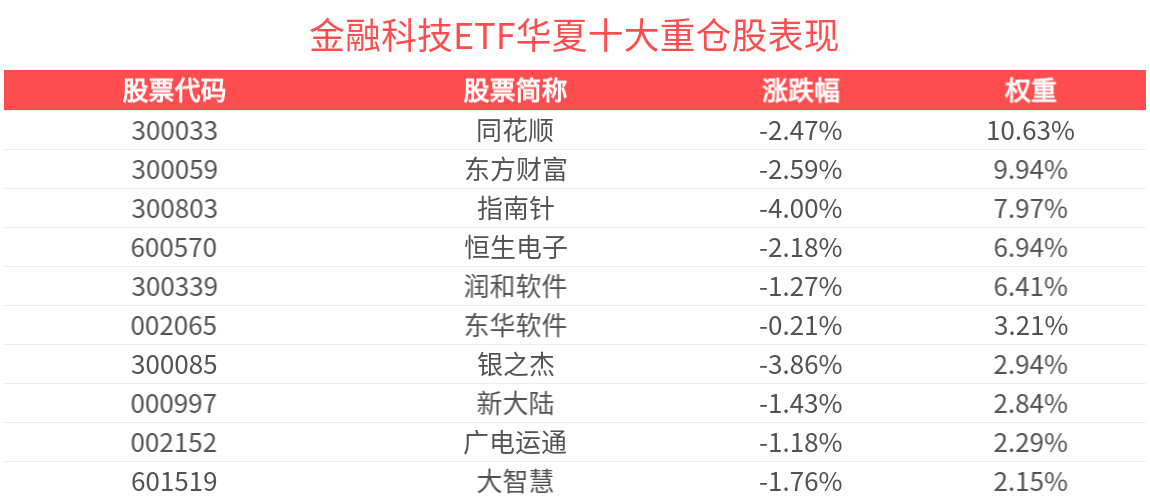
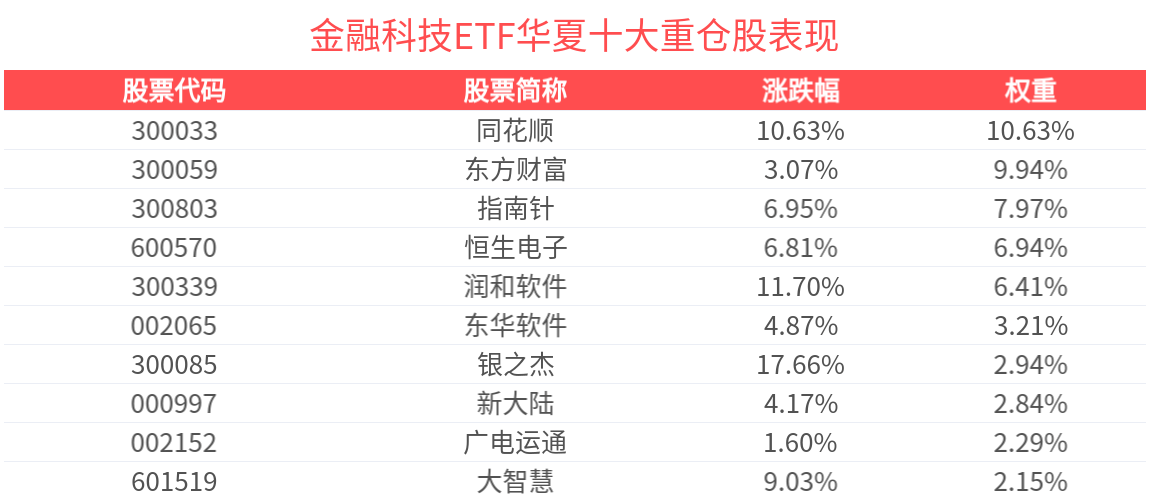
Group 1 - The three major indices are collectively strengthening, with the AI application sector showing continuous growth, as evidenced by the financial technology ETF Huaxia (516100) rising by 7.48% to a latest price of 1.57 yuan [1] - Key stocks such as Tuolisi, Puyuan Information, Xinghuan Technology, Borui Data, and others have hit the daily limit up, indicating strong market performance in the financial technology sector [1] - The central bank's work meeting emphasized the establishment of mechanisms to provide liquidity to non-bank institutions in specific scenarios, aiming to mitigate financial risks in key areas [1] Group 2 - The financial technology ETF Huaxia closely tracks the CSI Financial Technology Theme Index, with the top ten weighted stocks accounting for 51.09% of the index as of December 31, 2025 [2] - The top ten weighted stocks include Dongfang Wealth, Tonghuashun, and others, highlighting the concentration of investment in a few key players within the financial technology sector [2][3] - The performance of individual stocks within the index shows significant increases, with stocks like Tonghuashun and Runhe Software rising by 10.63% and 11.70% respectively [3]

2025年中国第三方支付行业研究报告
艾瑞咨询· 2026-01-12 00:06
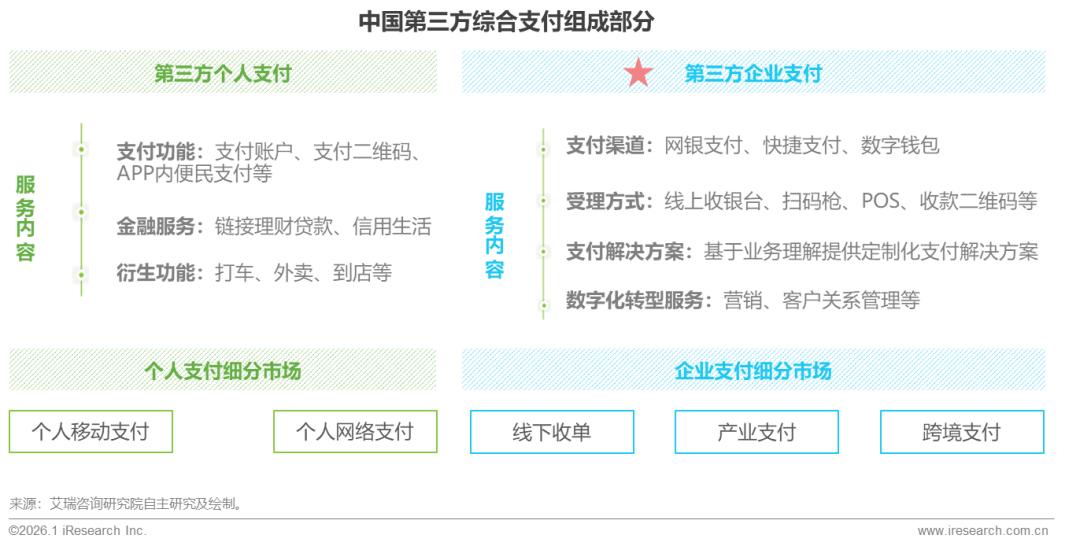
Core Insights - The comprehensive payment transaction scale in China is expected to reach 577 trillion yuan by 2025, with a year-on-year growth of 3.0%, driven by a 2.9% increase in personal payment transactions and a 3.2% increase in enterprise payment transactions, indicating that enterprise payment growth has surpassed personal payment growth [1][13]. Group 1: Industry Overview - The third-party payment industry in China has entered a stage of deepening stock competition, with regulatory normalization and compliance requirements becoming the foundation for industry development [1]. - The industry has evolved from a phase of rapid growth and diversification of services (2010-2019) to a more mature phase characterized by stricter regulations and stable development [4][5]. Group 2: Regulatory Environment - The implementation of the "Non-Bank Payment Institutions Supervision Management Regulations" in 2024 has led to a significant transformation in the industry, with a marked increase in compliance and accelerated consolidation [7]. - The regulatory environment is expected to intensify in 2025, with a notable increase in the number and amount of fines imposed on institutions [7]. Group 3: Payment Trends - The personal mobile payment market is projected to decline by 3.7% in 2025, reflecting a saturation in daily consumption scenarios and a slowdown in transaction growth [19]. - The enterprise payment market is expected to show resilience, driven by the ongoing digital transformation of enterprises and the expansion of cross-border e-commerce payment scenarios [13][33]. Group 4: Technological Integration - The industry is actively embracing AI technology to enhance internal operational efficiency and external service value, focusing on cost reduction and improved customer experience [10]. - AI applications include intelligent risk control, process automation, and personalized services, which are expected to significantly enhance the overall competitiveness of the payment industry [10][12]. Group 5: Market Dynamics - The enterprise payment sector is increasingly important, with a focus on providing integrated solutions that go beyond basic payment services to include cost reduction and efficiency tools [35]. - The cross-border payment market is anticipated to grow significantly, reaching 3.3 trillion yuan by 2025, driven by the expansion of China's cross-border e-commerce market [55]. Group 6: Future Directions - The industry is expected to explore new payment methods, such as NFC and digital currencies, which are anticipated to enhance payment convenience and security [30][67]. - Emerging markets in Southeast Asia, Latin America, and the Middle East are becoming new growth points for cross-border payment services, presenting both opportunities and challenges [60].

数字人民币专题:应用场景空间广阔,2.0时代将加速发展
Xin Lang Cai Jing· 2026-01-09 09:01
Development Overview - Digital Renminbi is a digital form of legal currency issued by the central bank, characterized by legal tender status, security, high convenience, and programmability [1] - As of November 2025, Digital Renminbi has processed a total of 3.48 billion transactions, with a cumulative transaction amount of 16.7 trillion yuan [1][24] - The dual-layer operational system involves the central bank issuing Digital Renminbi and designated operating institutions providing exchange and circulation services [1][19] Future Outlook - The necessity of developing sovereign digital currencies is highlighted due to risks posed by cryptocurrencies and global stablecoins [2] - Approximately 130 countries, accounting for 98% of the global economy, are exploring digital versions of their currencies, with many in advanced development stages [2][28] - Digital Renminbi is expected to enhance the efficiency of monetary policy transmission and support the internationalization of the Renminbi [2][26] Industry Chain - The issuance layer focuses on technologies such as digital encryption, network security, and identity authentication, which are crucial for ensuring transaction data integrity and user privacy [4] - The circulation layer requires banks and third-party payment institutions to upgrade their systems to accommodate Digital Renminbi [4] - The application layer involves upgrading payment terminals and digital wallets to facilitate the use of Digital Renminbi [4] Investment Recommendations - Digital Renminbi plays a significant role in promoting the internationalization of the Renminbi and has numerous application scenarios both domestically and internationally [4] - The demand for technological upgrades and software/hardware modifications across the issuance, circulation, and application layers presents opportunities for relevant technology and product providers [4]

西部证券晨会纪要-20260109
Western Securities· 2026-01-09 02:21
晨会纪要 证券研究报告 2026 年 01 月 09 日 核心结论 分析师 【汽车】奇瑞汽车(09973.HK)首次覆盖报告:五大品牌各有亮点,先发 优势助力出海领先 预计 2025-2027 年公司营业收入分别为 3077 亿元、3570 亿元、3944 亿元, 分别同比增长 14%/16%/10%;归母净利润分别为 181 亿元、214 亿元、248 亿元,同比 28%/18%/16%,当前股价对应 PE 估值为 8.7/7.4/6.4 倍。首次 覆盖,给予"买入"评级。 【计算机】从 Gemini 电视到豆包上车,巨头不断深化 AI 终端布局 从 Gemini 电视到豆包上车,巨头不断深化 AI 终端布局 【计算机】数字人民币开启 2.0 时代:从 M0 向 M1 升维,生态繁荣可期 数字人民币开启 2.0 时代:从 M0 向 M1 升维,生态繁荣可期 【石油石化】石油石化行业点评:石化行业拐点或已出现,26 年长丝供需 格局改善盈利有望增长 1、全球炼化宏观条件逐步改善,石化行业拐点或已出现。2、25 年长丝链 条景气度上行,预计 26 年供需格局将进一步改善。3、反内卷有望带动行业 盈利增长,对应公 ...
数字人民币开启2.0时代:从M0向M1升维,生态繁荣可期
Western Securities· 2026-01-08 06:56
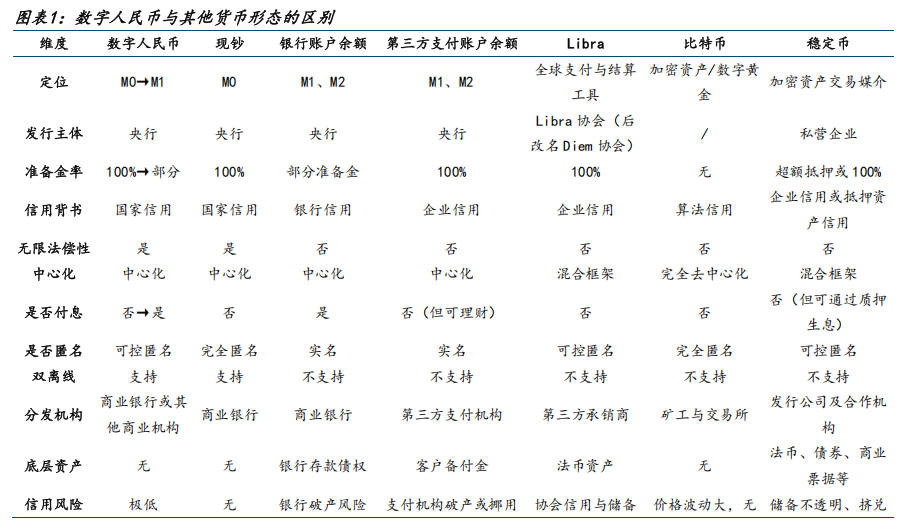
Investment Rating - The industry investment rating is "Overweight" [6] Core Insights - The digital RMB has transitioned from M0 to M1, marking a significant upgrade in its monetary attributes, management model, infrastructure, and incentive mechanisms [3][10] - China is set to become the first major economy to offer interest on central bank digital currency (CBDC), which is expected to enhance user willingness to adopt digital RMB and expand its usage scenarios [4][19] - The upgrade to digital RMB 2.0 is seen as a paradigm shift, embedding it into the banking system and enhancing its role as a financial infrastructure [15][16] Summary by Sections Digital RMB Transition - The digital RMB has evolved from a payment tool to a financial infrastructure, enabling a more complex ecosystem [10] - The new version allows for interest accrual on digital RMB wallets, similar to demand deposits, which is expected to increase user retention and merchant acceptance [4][16] Strategic Importance - The upgrade has significant strategic implications for national financial security, internationalization of the RMB, regulatory capabilities, and inclusive finance [19] - The digital RMB's integration into the existing banking system is designed to balance central control with market efficiency [17][18] Market Performance - The computer industry has shown a relative performance of 33.95% over the past 12 months, outperforming the CSI 300 index [8] - The report maintains an "Overweight" rating, indicating expected growth exceeding the market benchmark by over 10% in the next 6-12 months [21]
2025年中国第三方支付行业研究报告
3 6 Ke· 2026-01-08 01:14
Core Insights - The transaction volume of China's third-party comprehensive payment is expected to reach 577 trillion yuan by 2025, with a year-on-year growth of 3.0%, driven by a 2.9% increase in personal payment transactions and a 3.2% increase in corporate payment transactions [1][16] - The industry has entered a phase of intensified competition, with a focus on compliance and regulatory requirements, making it increasingly difficult to rely solely on transaction fees for profitability [1][7] - The report emphasizes the importance of "payment+" development, analyzing the value of third-party payment segments and predicting future industry trends [1] Industry Overview - The third-party payment industry in China has evolved from a nascent stage in 2000 to a mature and regulated market by 2019, with significant growth in transaction volumes and improved regulatory frameworks [4] - The market is now characterized by a dual focus on personal and corporate payments, with corporate payments gaining traction due to digital transformation and cross-border e-commerce [2][16] Regulatory Environment - The implementation of the "Non-Bank Payment Institutions Supervision Management Regulations" in 2024 has led to a normalization of compliance and accelerated industry consolidation, with increased regulatory scrutiny evident in the number and amount of fines imposed [7] Technological Integration - The industry is actively embracing AI technology to enhance operational efficiency and customer service, with applications in smart risk control, process automation, and personalized services [9][15] - AI is expected to reduce operational costs and improve service quality, thereby enhancing the overall competitiveness of the payment industry [9] Market Dynamics - The personal payment market is nearing saturation, with a projected decline in growth rates, while corporate payments are expected to continue growing at a faster pace due to ongoing digitalization [16][21] - The online commercial payment market is anticipated to grow steadily, with a compound annual growth rate of 4.8% from 2020 to 2025 [25] Payment Segmentation - The offline acquiring market is facing challenges due to saturation, while online industrial payments are expected to maintain stable growth driven by digital transformation [35][47] - Cross-border payments are emerging as a significant growth area, with the market projected to reach 3.3 trillion yuan by 2025, fueled by the expansion of cross-border e-commerce [55] Future Trends - The introduction of new payment methods, such as "look-and-pay," is expected to drive the evolution towards a more seamless payment experience [66] - The promotion of digital currency and stablecoins is anticipated to enhance cross-border payment efficiency and create new growth opportunities [68][74]
除了数字人民币计息,跨境支付系统也迎来变革,央行新规2月将落地
Xuan Gu Bao· 2026-01-08 01:05
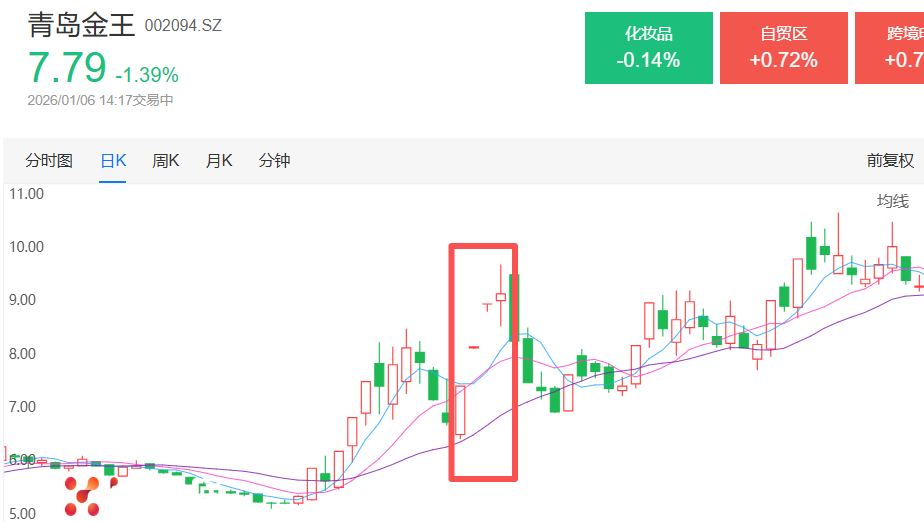
Group 1 - The revised "Rules for the Renminbi Cross-Border Payment System" will be implemented starting February 1, 2026, allowing for more flexible access conditions for system participants [1] - The CIPS system is a crucial financial market infrastructure in China, with a significant increase in cross-border payment volumes, reaching 90.91 trillion yuan in the first half of 2025 [1] - The changes in CIPS rules are expected to attract more global banks and payment institutions, enhancing the global coverage of the Renminbi cross-border payment infrastructure [1] Group 2 - The internationalization of the Renminbi is being advanced through projects like CIPS and mBridge, creating new growth opportunities for fintech companies [2] - Companies involved in cross-border payment services include Newland, New Guodu, and Lakala, which are key targets for investment [5] - Financial IT service providers such as Yuxin Technology, Zhongke Jincai, and others are also highlighted as important players in the cross-border payment ecosystem [6] Group 3 - Qingdao Jinwang and Hailian Jinhui saw significant stock price increases following the announcement of the action plan to enhance CIPS functionality and global network coverage [3] - Companies like Sifang Jingchuang and Xin'an Century are noted for their experience and technology in cross-border payment systems, including CIPS and digital currency solutions [6][7] - Highwei Technology and Jingbeifang have been involved in assisting clients with CIPS system integration and related projects [8][9]
2025年中国第三方支付行业研究报告
艾瑞咨询· 2026-01-08 00:04
Core Insights - The comprehensive payment transaction scale in China is expected to reach 577 trillion yuan by 2025, with a year-on-year growth of 3.0%, driven by a 2.9% increase in personal payment transactions and a 3.2% increase in enterprise payment transactions, indicating that enterprise payment growth has surpassed personal payment growth [1][13]. Group 1: Industry Overview - The third-party payment industry in China has entered a stage of deepening stock competition, with regulatory normalization and compliance requirements becoming the foundation for industry development [1]. - The industry has evolved from a phase of rapid growth and diversification of services (2010-2019) to a mature phase characterized by stricter regulations and stable development [4][5]. Group 2: Regulatory Environment - The implementation of the "Non-Bank Payment Institutions Supervision Management Regulations" in 2024 has led to a significant transformation in the industry, with a marked trend towards compliance normalization and accelerated consolidation [7]. - The regulatory environment has intensified, with the number and amount of penalties for institutions in 2025 approaching those of 2024, indicating a substantial increase in regulatory scrutiny [7]. Group 3: AI Integration - The third-party payment industry is actively embracing AI technology to enhance internal operational efficiency and external service value, focusing on cost reduction and efficiency improvement [10]. - AI is being utilized for smart risk control, process automation, and data decision support, which helps reduce operational costs and improve risk management capabilities [12]. Group 4: Payment Market Dynamics - The personal mobile payment market is projected to decline by 3.7% in 2025, reflecting a saturation in daily consumption scenarios and a slowdown in transaction growth [19]. - In contrast, the enterprise payment market is expected to maintain stable growth due to the ongoing digital transformation of enterprises and the expansion of cross-border e-commerce payment scenarios [33][47]. Group 5: Cross-Border Payment Growth - The cross-border payment market is anticipated to reach 3.3 trillion yuan by 2025, driven by the continuous expansion of China's cross-border e-commerce market, which has a compound annual growth rate of approximately 15.5% from 2020 to 2024 [55]. - Cross-border payment service providers are crucial intermediaries in enhancing the efficiency and compliance of fund settlement between foreign buyers and Chinese sellers [55]. Group 6: Emerging Trends - New payment methods are driving the evolution towards "no-sense" payment experiences, with innovations such as "look-and-pay" using smart glasses [65]. - The promotion of digital RMB is expanding its application in both C-end and B-end scenarios, with significant potential for cross-border payment enhancements [67]. - The implementation of stablecoin regulations in Hong Kong marks a new phase for stablecoins, which are becoming integral to global payment and settlement infrastructure [71].

年收入7.7亿美元,他们说成长大于成功|看不见的新大陆
Sou Hu Cai Jing· 2026-01-07 18:08
Core Insights - The textile industry, particularly home textiles, is highlighted as a sector with significant potential for brand development, with 尚佰环球 leading the market with overseas revenue of $770 million in 2025, far ahead of competitors [1][3] - 尚佰环球's strategy focuses on creating an international brand using global resources, moving away from the traditional low-cost manufacturing model [2][21] Industry Overview - China produces over 100 products that are number one globally, including home textiles, but faces challenges in establishing its own international brands due to low entry barriers and intense competition [3] - The home textile market is characterized by low barriers to entry, leading to a prevalence of white-label sellers and OEMs, which limits the growth of Chinese brands in international markets [3] Company Strategy - 尚佰环球's CEO, 朱兴建, emphasizes the importance of brand creation over quick profits, focusing on long-term growth and sustainability [8][11] - The company has successfully transitioned from a manufacturing-centric model to a brand-focused approach, leveraging insights from market demands and consumer feedback [12][20] Product Innovation - The company prioritizes product innovation by focusing on specific consumer scenarios rather than generic products, leading to unique offerings like cooling bed linens and wearable blankets [16][18] - By identifying niche markets and consumer needs, 尚佰环球 has developed products that resonate with specific demographics, such as pet owners and parents [19][20] Supply Chain Strategy - The supply chain has evolved from a "Made in China" model to a "Global to Global" approach, allowing for production in various countries based on market needs [21][22] - This strategy enhances flexibility and responsiveness to local markets, with production facilities in Egypt, Pakistan, and China, catering to different segments of the global market [21] Organizational Culture - The company values resilience and continuous growth over immediate success, fostering a culture that encourages learning from failures and adapting strategies accordingly [23][24] - 朱兴建 promotes a long-term vision for the brand, focusing on internal motivation and personal growth rather than external validation [24][25]


市场投资热情快速升温,金融科技ETF华夏(516100)回调机会备受关注
Sou Hu Cai Jing· 2026-01-07 07:03
Group 1 - The financial technology sector experienced a significant pullback, with the Huaxia Financial Technology ETF (516100) down by 2.45% as of 14:47 on January 7, 2026 [1] - The market has seen a surge in investment enthusiasm, with the Shanghai Composite Index recording 13 consecutive days of gains since December 17, 2025, marking a record since the implementation of the ±10% price limit system in 1996 [1] - The digital renminbi initiative is expected to benefit financial IT and third-party payment sectors, with increased compliance requirements for financial information services and consumer finance [1] Group 2 - As of December 31, 2025, the top ten weighted stocks in the CSI Financial Technology Theme Index (930986) accounted for 51.09% of the index, including Dongfang Wealth (300059) and Tonghuashun (300033) [2] - The top ten stocks by weight in the index include: - Tonghuashun (300033) with a weight of 10.63% and a decline of 2.47% - Dongfang Wealth (300059) with a weight of 9.94% and a decline of 2.59% - Zhinan Zhen (300803) with a weight of 7.97% and a decline of 4.00% [4]