西门子

Search documents
【太平洋科技-每日观点&资讯】(2026-02-11)
远峰电子· 2026-02-10 12:27
Market Overview - The major indices showed mixed performance with the STAR 50 index up by 0.91%, the Shanghai Composite Index up by 0.13%, and the Shenzhen Component Index up by 0.02%. However, the ChiNext Index fell by 0.37% and the Beijing Stock Exchange 50 Index decreased by 0.61% [1] TMT Sector Performance - The TMT sector led the market with significant gains, particularly in the SW Film and Animation Production sector which rose by 14.39%, followed by SW General Publishing at 10.49%, and SW Communication Cables and Accessories at 5.32% [1] - Conversely, the TMT sector also saw declines, with SW Military Electronics III down by 1.29%, SW Optical Components down by 1.03%, and SW Integrated Circuit Packaging and Testing down by 0.99% [1] Domestic News - New Yi Sheng announced its capability for mass production and delivery of 800G and above optical modules, successfully producing and delivering the latest generation 1.6T optical module products, and is actively advancing the development of next-generation 3.2T, 6.4T, and 12.8T optical modules [2] - Liard announced a price adjustment for most of its LED display products, increasing prices by 3% to 15% due to rising costs of upstream precious metals like gold, copper, and silver, which have significantly impacted the procurement costs of core materials [2] - TSMC has reduced some 6-inch and 8-inch wafer production capacity, with expectations for significant growth in global advanced 8-inch annual capacity in the coming years, enhancing its market share [2] - SMIC plans a capital expenditure of $8.1 billion for 2025, with an expected monthly production capacity of 1.059 million 8-inch wafers by year-end, representing an increase of approximately 110,000 wafers year-on-year, and an average capacity utilization rate of 93.5%, up by 8 percentage points [2] International News - Micron has missed the HBM4 supply order for the Vera Rubin chip platform due to poor technical choices, opting for an internal design strategy that led to inadequate product performance compared to competitors [3] - Siemens has completed the acquisition of Canopus AI, enhancing its semiconductor manufacturing ecosystem with advanced AI capabilities [3] - The Trump administration is considering a chip tariff exemption policy aimed at encouraging TSMC and other semiconductor companies to expand investments in the U.S. in exchange for tariff relief for major tech firms [3] - TrendForce forecasts that the value of the memory and wafer foundry markets will reach new highs in 2026, driven by the AI boom, with the memory industry expected to expand significantly to $551.6 billion due to supply constraints and soaring prices [3] AI Developments - Canva has integrated its Brand Kit with ChatGPT and Claude, allowing users to generate designs that automatically adhere to brand guidelines [4] - ByteDance has launched a new AI video generation model, Seedance 2.0, which supports multi-modal reference generation and allows users to modify unsatisfactory parts directly [4] - Kunlun Wanwei Group has introduced SkyBot, a cloud-based AI assistant designed for ease of use without hardware configuration [4] - The Zhiyu Qingyan app has launched a "Learning Buddy" feature, enabling users to create learning projects easily, with over 12,000 projects created within two weeks of its web launch [4] Industry Tracking - Tianzhihui has announced a tender for the construction of a satellite constellation project, estimating a budget of 1.2 billion yuan for the procurement of 10 remote sensing micro-satellites [5] - A Chinese team has developed a scalable quantum relay module, addressing core technical challenges in fiber-optic quantum communication and achieving significant improvements in transmission efficiency [5] - Geek+ has released the Gino 1, the world's first general-purpose robot for warehouse scenarios, capable of performing multiple tasks through advanced AI integration [5] - A new photoresist developed by Huazhong University of Science and Technology is designed for advanced lithography applications, compatible with 28nm and above processes [5]

益普索中国智能家电市场趋势洞察
益普索· 2026-02-10 08:14
Investment Rating - The report does not explicitly provide an investment rating for the smart home appliance industry. Core Insights - The Chinese home appliance market is transitioning from scale expansion to quality upgrades, with a focus on deep competition driven by changing demand structures [3] - Generation Z is becoming the new consumer driving force, shifting the consumption logic towards emotional value, personalization, and aesthetic appeal [4] - Consumers are moving from external display to internal experience, emphasizing the need for brands to innovate based on local user demands [5] - Companies need to build a forward-looking insight system to identify future opportunities amidst market changes [5] - The focus on sustainable growth and core competitiveness is essential, guiding product innovation and brand communication [6] Summary by Sections Market Trends - The market is experiencing a "micro-segmentation" wave, moving away from universal big-ticket items to innovative product categories that match the evolving lifestyle and spatial needs of Chinese consumers [9][19] - The demand for personalized appliances is increasing, with a significant portion of consumers willing to invest in products that cater to individual preferences [26] Design and Aesthetics - Home appliance design is undergoing a revolution towards "de-industrialization," aiming for seamless integration with home environments and visual subtlety [11][35] - Aesthetic appeal is becoming a key factor in purchasing decisions, with 84% of consumers considering appearance and 69% willing to pay more for aesthetically pleasing products [36] Functionality and User Experience - Functionality remains a critical consideration for consumers, but its definition is evolving to include emotional and experiential aspects [12][86] - The demand for "zero-maintenance" solutions is rising, with consumers seeking appliances that require minimal user intervention [99][101] Health and Wellness - Health has become a core value in home appliances, with consumers increasingly focused on products that enhance both physical and mental well-being [111][113] - There is a growing expectation for appliances to provide proactive health management solutions, moving beyond basic functionality [113] Smart Home Integration - The shift from isolated smart devices to interconnected home ecosystems is a significant trend, with consumers desiring seamless, intuitive interactions [135][138] - AI is expected to play a crucial role in enhancing user experience by predicting needs and providing personalized services [140]




国补淘宝天猫春节不打烊,江苏浙江券量加码,全国220个城市正常送货
Yang Zi Wan Bao Wang· 2026-02-10 05:39
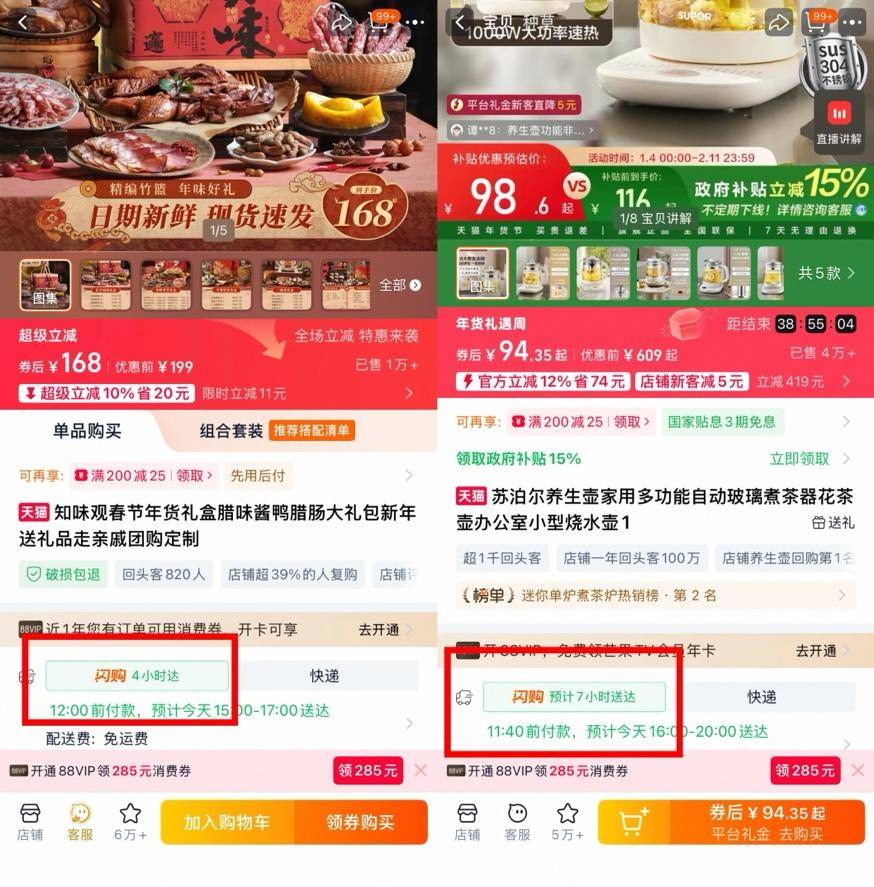
春节期间,天猫超市全国100个重点城市支持正常配送。与去年平均"次日达"的配送效率相比,今年能够至少提前"半天"送到。全国新增34个城市支持天 猫超市闪购,其中,杭州、上海、广州、北京、深圳等13个核心城市,消费者在天猫超市下单后,能够最快4小时送到家。 史上最长春节假期即将到来,淘宝天猫宣布,春节不打烊,闪购快递不放假。 2月12日,淘宝天猫"春节不打烊"活动将正式启动,覆盖整个春节假期。淘宝天猫官方立减商品9折起,全国220个城市正常送货。 值得一提的是,品牌官方旗舰店入驻淘宝闪购,安踏、乔丹、联想、苏泊尔(002032)、倍轻松、良品铺子(603719)、知味观等品牌全力保障应急年货 即时送达,让P人过年也不慌。良品铺子相关负责人介绍,良品铺子全国2000家线下门店均接入了淘宝闪购,春节期间所有门店照常营业,消费者下单 后,最快半个小时就能送货上门。 为点燃春节消费热潮,浙江、江苏、山东等地国补券量加码,消费者购买家电数码等品类,叠加平台大促优惠低至5折,美的、海信、海尔、格力、西门 子、华为、小米等千余品牌参与。此外,天猫送装服务开启"春节不打烊"模式,官方物流、上门安装、售后保障照常运行,确保消费者 ...
燃气内燃机专家交流
2026-02-10 03:24
Summary of Conference Call Records Industry Overview - The records focus on the gas internal combustion engine market, particularly in distributed power stations and peak-shaving power plants, where approximately 82% of the engines used are single combustion chamber reciprocating engines produced by mainstream brands like GE and Siemens. Wärtsilä and other European and American brands dominate the reciprocating engine market [1][5]. Key Insights and Arguments - **Engine Efficiency**: Medium-speed internal combustion engines are more suitable for medium to large distributed power stations, achieving thermal efficiencies of up to 52%, significantly higher than the average 40% for gas turbines [1][4]. - **Data Center Preferences**: Data centers prefer medium-speed generating equipment due to their higher single-unit power output, requiring fewer units for installation and management. Typically, data centers with capacities of 50-400 MW opt for medium-speed engines, while smaller centers (20-100 MW) may still choose high-speed engines [1][7][8]. - **Market Trends**: The North American data center market shows a trend towards larger installations, with mainstream capacities ranging from 100-400 MW. Large orders dominate, reflecting a shift towards larger data center projects [2][10][11]. - **Price Increases**: In 2025, there was a significant price increase for power generation equipment, with some models rising by as much as 30%, primarily due to rising costs of small components in the supply chain affected by metal and material price fluctuations [1][14]. - **Supply Chain Dynamics**: In cases of shortages, North American customers may consider second and third-tier brands, but core certification requirements remain stringent to ensure stability and safety in data centers [1][15]. Additional Important Content - **Technical Differences**: There are significant differences between internal combustion engines and gas turbines in terms of system structure, operation, speed, and maintenance cycles. Medium-speed engines are preferred for larger power stations due to their lower overall costs and longer design life, which can exceed 30 years [3][6]. - **Core Components**: Key components of internal combustion engines include crankshafts, turbochargers, fuel injectors, and control system components, which significantly influence performance and manufacturing costs [6]. - **Hydrogen Technology**: Current developments in hydrogen blending technology allow for up to 25% hydrogen to be mixed with natural gas, although this reduces power output by 9-10%. Future exploration into new fuels like ammonia and methanol is ongoing, but economic viability remains a concern [18]. - **Market Delivery Projections**: In 2025, approximately 2.1 GW of medium-speed internal combustion power generation equipment was delivered in North America, with light gas turbines at about 3.196 GW. The demand for distributed power stations is expected to increase significantly from 2026 to 2030, benefiting all types of gas turbines [2][22]. This summary encapsulates the critical points from the conference call records, highlighting the current state and future outlook of the gas internal combustion engine market and its applications in data centers and power generation.
AIDC燃机-柴发-液冷观点汇报
2026-02-10 03:24
Summary of AIDC Gas Turbine, Diesel Power, and Liquid Cooling Insights Industry Overview - The report focuses on the gas turbine market, diesel power generation, and liquid cooling technology within the data center industry, highlighting the current trends and future opportunities in these sectors [1][3]. Key Insights and Arguments Gas Turbine Market - Gas turbines are identified as the preferred solution for power deployment in data centers due to their short deployment cycle, high reliability, and flexible start-stop capabilities, especially in underdeveloped grid areas [1][3]. - The global gas turbine market is highly concentrated, with GE, Siemens, and Mitsubishi Heavy Industries holding over 80% market share, leading to extended delivery times until 2029 or even 2030 due to limited production capacity [1][4]. - A significant supply-demand gap exists, with global orders exceeding 80 GW by 2025, while current capacity is only about 50 GW, driving expectations for price increases across the industry [4]. Domestic Opportunities - Domestic companies have opportunities in the gas turbine component sector, particularly in hot-end components (like blades and rotors) and cold-end components (like large castings), despite a gap in complete machine manufacturing capabilities [5]. - Companies like Yingliu have entered Siemens' supply chain, marking a breakthrough, while Haomai Technology is a key supplier for the Jiayi gas turbine cylinder [5]. Diesel Power Generation - The diesel power generation market is dominated by international giants such as Caterpillar, MTU, and Cummins, but their willingness to expand production is limited, creating opportunities for domestic firms like Weichai Power and Yuchai Machinery [6]. Liquid Cooling Technology - Liquid cooling technology is gaining traction in data centers, with major investments from companies like Meta and Google, which are significantly increasing their capital expenditures for infrastructure development [7]. - The Nvidia Rubin solution exemplifies advancements in liquid cooling, with single-chip power exceeding 2000 watts and cabinet power exceeding 220 kW, utilizing a fully liquid-cooled design to optimize heat dissipation [2][7]. Competitive Landscape in Liquid Cooling - Companies such as Yingwei have secured high supply permissions and are involved in core component production, while new microchannel cover structures enhance cooling efficiency [8]. - The maturation of self-developed chips by Meta and Google is expected to drive market growth, benefiting companies like Hongchang, Feilong, and Feirongda [8]. - As Nvidia's chip ban is gradually lifted, domestic demand is surging, making companies like Shenling Environment and Gaolan noteworthy solution providers [8]. Additional Important Points - The report emphasizes the long-term potential of renewable energy sources like nuclear, hydro, wind, and solar, but notes their longer construction timelines compared to gas turbines, which can be deployed more rapidly [3]. - The report also highlights the importance of component technology control by upstream suppliers like ABB and Bosch, which affects the supply-demand balance in the diesel power generation market [6].
未知机构:AIDC发电专题报告北美缺电逻辑持续演绎相关投资线索再梳理东吴机-20260210
未知机构· 2026-02-10 02:00
Summary of Conference Call Notes Industry Overview - The report focuses on the North American electricity shortage, driven by the non-linear growth of AI power demand and aging power grid infrastructure [1] - The demand side sees a surge in AIDC projects in the U.S., leading to a significant increase in electricity demand [1] - On the supply side, while total supply is expected to meet short-term demand by 2025, long-term challenges include a decline in stable supply and regional electricity shortages [1] Key Points Supply Challenges - **Decline in Stable Supply**: The aging power grid leads to frequent outages, failing to meet AIDC's requirement for 100% reliable power. The upcoming retirement peak of coal power plants and the instability of wind and solar energy further exacerbate the situation. Only natural gas can currently fill the gap [1][2] - **Regional Electricity Shortages**: By 2024, over 50% of data centers are expected to be located in Texas, California, and Virginia, putting significant pressure on regional power supplies. The fragmented nature of the U.S. power grid and poor interconnections have led to emergency controls due to power imbalances [1] Future Projections - NERC forecasts an average peak gap of over 20 GW in the U.S. from 2027 to 2030, with Texas, the Mid-Atlantic, the Midwest, and California facing significant risks. The DOE predicts an average peak gap of 20-40 GW by 2030 [1] Technology Solutions - **Gas Turbines**: Considered the optimal solution for AIDC self-built power, with efficiency exceeding 60% and the lowest cost per kWh. The global installation of gas turbines is accelerating, with major manufacturers like GE, Siemens, and Mitsubishi Heavy Industries having orders scheduled until 2029 [2] - **Gas Internal Combustion Engines**: Slightly lower efficiency than gas turbines but offer rapid deployment. Leading company Wärtsilä saw a 111% year-on-year increase in new orders for Q1-Q3 2025, with deliveries extending to 2028 [2] - **Solid Oxide Fuel Cells (SOFC)**: High efficiency but currently in early commercialization stages, making it less viable in the short term due to cost and capacity constraints [2] - **Diesel Generators**: Optimal for backup power due to quick start-up capabilities, with Cummins reporting a revenue growth of approximately 20% year-on-year for related products in Q1-Q3 2025 [2] Investment Recommendations - Investment opportunities are expanding from gas turbines to gas internal combustion engines and SOFCs, as the current electricity shortage in North America exceeds the total production capacity of various technologies [3] - **Gas Turbines**: Recommended companies include Jerry Holdings, Yingliu Co., Dongfang Electric, Linde Co., and Haomai Technology [3] - **Gas Internal Combustion Engines**: Focus on Linde Co., with additional attention to Weichai Power and Eagle Precision [3] - **SOFC**: Suggested to monitor Weichai Power [3] - **Diesel Generators**: Recommended companies include Linde Co., with additional focus on KOTAI Power, Weichai Power, and Eagle Precision [3] Risk Factors - Potential risks include lower-than-expected investment in AI data centers, international trade tensions, and slower-than-anticipated capacity ramp-up [4]


北美缺电逻辑持续演绎,相关投资线索再梳理
Zhong Guo Neng Yuan Wang· 2026-02-10 01:48
Core Viewpoint - The report from Dongwu Securities highlights significant regional power supply pressures in the U.S. due to the increasing establishment of data centers, particularly in Texas, California, and Virginia, with projections indicating a substantial power gap by 2030 [1][2]. Group 1: Supply and Demand Dynamics - Over 50% of data centers are projected to be built in Texas, California, and Virginia by 2024, leading to considerable regional power supply stress [1][2]. - The North American Electric Reliability Corporation (NERC) anticipates an average peak power gap of over 20 GW from 2027 to 2030, with Texas, the Mid-Atlantic, the Midwest, and California facing significant risks [1][2]. - The U.S. Department of Energy (DOE) forecasts an average peak power gap of 20-40 GW by 2030 [1][2]. Group 2: Supply Challenges - The U.S. power supply is facing long-term challenges, including a decline in stable supply due to aging infrastructure and frequent outages, which cannot meet the 100% reliability demands of AI data centers [2]. - The upcoming retirement of coal power plants and the instability of wind and solar energy further exacerbate the supply issues, necessitating reliance on natural gas for current gaps [2]. Group 3: Technology Solutions - Gas turbines are identified as the optimal solution for self-built power generation in AIDC, with combined cycle gas turbines achieving over 60% efficiency and the lowest cost per kilowatt-hour [3]. - Gas internal combustion engines, while slightly less efficient, offer rapid deployment capabilities, with a significant increase in orders reported by leading companies [3]. - Solid Oxide Fuel Cells (SOFC) have high efficiency but are still in early commercialization stages, making them less viable in the short term [3]. - Diesel generators are noted for their quick start-up advantages, serving as optimal backup power solutions [3]. Group 4: Investment Recommendations - Investment opportunities are shifting from gas turbines to gas internal combustion engines and SOFCs, as the current power deficit in North America exceeds the total production capacity of various technologies [4]. - Recommended companies for gas turbines include Jerry Holdings, Yingliu Co., Dongfang Electric, Linde Co., and Haomai Technology [4]. - For gas internal combustion engines, Linde Co. is recommended, with additional attention to Weichai Power and Weichai Heavy Machinery [4]. - SOFC investments should focus on Weichai Power, while diesel generator investments recommend Linde Co. and other related companies [4].



AIDC发电专题报告:北美缺电逻辑持续演绎,相关投资线索再梳理
Soochow Securities· 2026-02-09 08:24
Investment Rating - The report suggests a positive investment outlook for the North American electricity sector, particularly focusing on gas turbines and related technologies due to the ongoing electricity shortage driven by AI data center demands [2][6][30]. Core Insights - The North American electricity shortage is characterized by a contradiction between the non-linear growth of AI electricity demand and the aging infrastructure of the power grid. The demand side sees a surge in AIDC projects, while the supply side faces challenges with declining stable supply and regional electricity shortages [2][6][24]. - The report highlights that gas turbines are currently the optimal solution for AIDC self-built power generation, with gas internal combustion engines, SOFC, and diesel generation serving as effective supplements [2][37]. - The North American Electric Reliability Corporation (NERC) predicts an average peak electricity gap of over 20GW from 2027 to 2030, with significant risks in Texas, the Mid-Atlantic, the Midwest, and California [2][32]. Summary by Sections Section 1: Current Electricity Shortage in North America - The electricity shortage is driven by the non-linear growth of AI demand and the aging power grid infrastructure. The electricity consumption in the U.S. is expected to reach historical highs in 2025-2026, with data centers' planned installed capacity increasing from 5GW in early 2023 to over 245GW by October 2025 [6][19]. - The average lifespan of power infrastructure in the U.S. is around 35-40 years, leading to frequent outages and an inability to meet the reliability demands of AIDC [15][19]. Section 2: Power Source Selection - Gas turbines are identified as the primary power source, with gas internal combustion engines, SOFC, and diesel generation as supplementary options. The report emphasizes the efficiency and cost-effectiveness of gas turbines, which can achieve over 60% efficiency and have the lowest cost per kilowatt-hour [2][37]. - The report also discusses the expected increase in gas turbine installations, with global new installations projected to approach previous cycle peaks by 2025, driven by the surge in AIDC electricity demand [48][52]. Section 3: Investment Recommendations - The report recommends focusing on various technologies due to the ongoing electricity shortage, suggesting investments in gas turbines, gas internal combustion engines, SOFC, and diesel generation. Specific companies are highlighted for potential investment opportunities, including Jerry Holdings, Yingliu Co., Dongfang Electric, and others [2][37][39].
AIDC发电专题报告:北美缺电逻辑持续演绎,相关投资线索再梳理-20260209
Soochow Securities· 2026-02-09 08:04
Investment Rating - The report suggests a focus on investment opportunities in the North American electricity sector, particularly in gas turbines and complementary technologies like gas internal combustion engines, SOFC, and diesel generators [2][6]. Core Insights - The North American electricity shortage is driven by the non-linear growth of AI power demand and the aging of the power grid. The demand side sees a surge in AIDC projects, while the supply side faces challenges with declining stable supply and regional shortages [2][6][24]. - The report highlights that the total electricity supply in the short term can meet demand, but long-term projections indicate a significant peak gap of over 20GW annually from 2027 to 2030, particularly in Texas, the Mid-Atlantic, the Midwest, and California [2][30]. - Gas turbines are identified as the optimal solution for AIDC self-built power generation, with gas internal combustion engines, SOFC, and diesel generators serving as effective supplements [2][37]. Summary by Sections Section 1: North American Electricity Shortage - The current electricity shortage in North America stems from the contradiction between the non-linear growth of AI electricity demand and the aging infrastructure of the power grid. The electricity consumption in the U.S. is expected to reach historical highs in 2025-2026, driven by a significant increase in data center projects [6][15]. - The report notes that the share of electricity consumption from data centers will rise from 2% in 2018 to over 10% by 2028 [6][19]. Section 2: Power Source Selection - Gas turbines are recommended as the primary power source due to their efficiency and cost-effectiveness. The report outlines the advantages of various technologies, including gas internal combustion engines and SOFC, while emphasizing the need for a diversified approach to meet the growing electricity demand [2][37][39]. - The report provides a comparative analysis of different power generation technologies, highlighting gas turbines' high reliability and low emissions as key factors for their selection in AIDC projects [38][39]. Section 3: Investment Recommendations - The report suggests that investment opportunities in North America are expanding from gas turbines to include gas internal combustion engines and SOFC, as the current electricity shortage exceeds the total capacity of various technologies [2][6]. - Specific companies are recommended for investment based on their involvement in gas turbine production and related technologies, including Jerry Holdings, Yingliu Co., Dongfang Electric, and others [2][6].
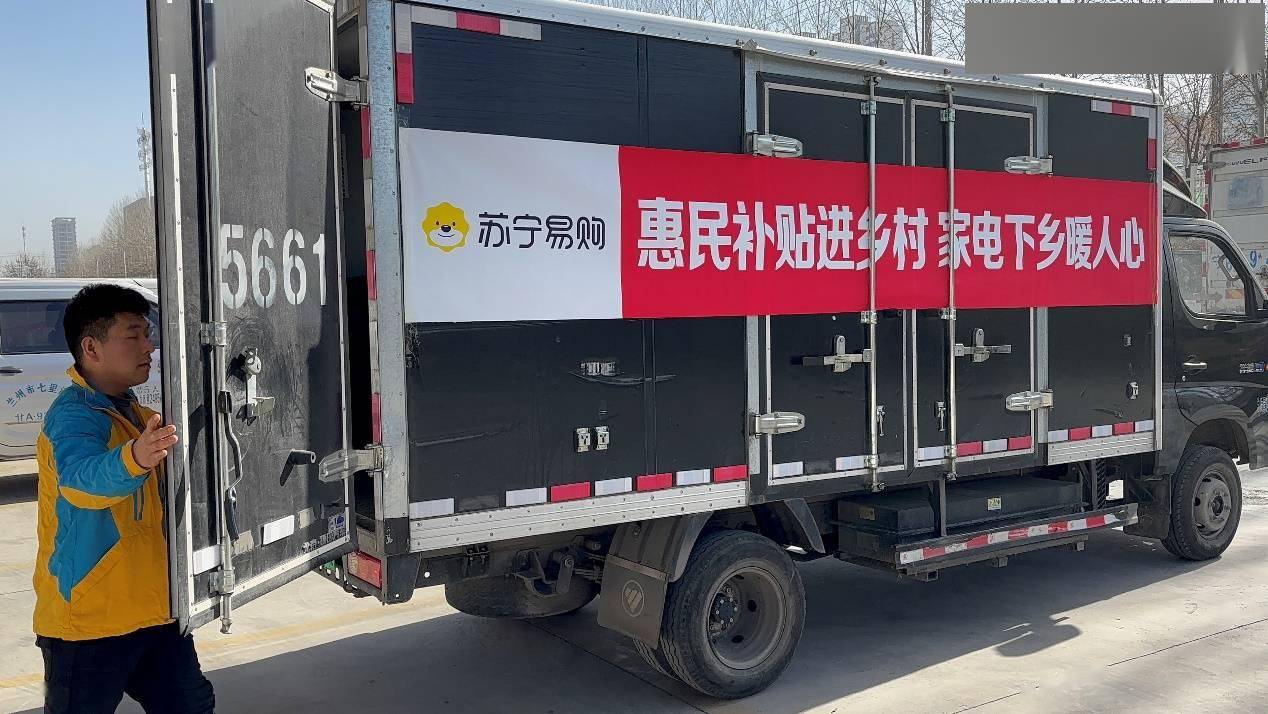
增长51%!苏宁零售云新智家电下乡迎“开门红”
Sou Hu Cai Jing· 2026-02-09 07:39
Core Insights - The 2026 Central Document emphasizes the modernization of agriculture and rural areas, supporting rural consumption upgrades and the recycling of old appliances [1] Group 1: Company Initiatives - Suning Retail Cloud plans to leverage the upcoming New Year Festival to launch the "Subsidy for Rural Areas" initiative across over 10,000 stores, enhancing rural consumer access to smart appliances [1][4] - The company is focusing on a "walk into villages" service model to facilitate the exchange of old appliances and promote consumption policies [1][4] Group 2: Market Trends - The county market is experiencing a generational shift in consumer demographics, with younger consumers prioritizing quality and digital experiences [3] - There is a transition in household consumption from basic appliances to a demand for smart, healthy, and comfortable home experiences [3] Group 3: Sales Performance - In January 2026, Suning Retail Cloud reported a 51% year-on-year increase in sales, with significant growth in "burden-reducing" and "atmospheric" appliances [6] - Specific product sales saw remarkable increases: robotic vacuum sales up 147%, dishwashers up 83%, and large-screen TVs up 75% [6] Group 4: Strategic Developments - Suning Retail Cloud is enhancing its large store strategy, with 24.10% of new franchise stores being large format, providing ample space for experiential retail [3] - The integration of local cultural elements into the "Subsidy for Rural Areas" initiative aims to create a festive atmosphere while facilitating consumer engagement [4][8] Group 5: Future Outlook - The comprehensive rollout of the "Subsidy for Rural Areas" initiative is expected to amplify the synergy between policy and market, invigorating the New Year consumption market [8] - The deep service model being explored by Suning Retail Cloud is anticipated to unlock further potential in rural consumption and improve residents' quality of life through smart appliance adoption [8]