发电设备

Search documents
北美缺电加剧-燃气发电机与SOFC迎机遇
2026-03-24 01:27
Summary of Conference Call Records Industry Overview - **North American Power Demand**: The AIDC (Artificial Intelligence Data Center) power demand in North America is expected to non-linearly explode from 2025 to 2030, with a cumulative new installed capacity exceeding 200 GW. However, the slow expansion of the power grid and lengthy approval cycles (18-30 months) are leading to a significant power gap, pushing off-grid power solutions to become mainstream [1][3][4]. Key Insights - **Gas Turbine Supply-Demand Gap**: By 2025, a supply-demand gap of 10-20 GW is anticipated in the global gas turbine market. Major manufacturers have order backlogs extending to 2029, with available capacity for AIDC expected to be only 20-25 GW, significantly lower than the annual new demand of 50-70 GW [1][6]. - **Gas Internal Combustion Engines (ICE)**: Gas ICEs are positioned as a core solution to fill the power gap due to their quick delivery and low cost per kilowatt-hour. Caterpillar leads the market with a 55% share, followed by Wärtsilä and Jenbacher, with orders expected to surge from Q1 2026 [1][7]. - **Solid Oxide Fuel Cells (SOFC)**: SOFCs offer high efficiency (60%-90%) and short delivery times (approximately 55 days). Bloom Energy holds a 60% market share, with major cloud companies like Oracle beginning large-scale deployments [1][10]. Market Dynamics - **North American Electricity Market**: The market is experiencing a significant mismatch between supply and demand, particularly driven by data centers and extreme weather conditions. The peak summer load is expected to reach approximately 760 GW by 2025, with data centers showing explosive growth in power demand [3][4]. - **Electricity Pricing**: The price of electricity is expected to rise significantly, particularly in regions like PJM, where five of the top ten areas for price increases are located [4]. Competitive Landscape - **Gas Turbine Market**: The global gas turbine market is projected to see a significant increase in orders, with a rise from 40-50 GW to 70-80 GW in 2025. However, the total production capacity from leading manufacturers will only be slightly above 50 GW, indicating a substantial backlog [6]. - **Gas ICE Market**: The market for gas ICEs is expanding rapidly, with major players like Wärtsilä and Caterpillar significantly increasing their order volumes in the AIDC sector. Caterpillar has secured over 7.4 GW in projects, indicating strong future growth potential [8][9]. Emerging Opportunities - **Domestic Manufacturers**: Companies like Weichai Power, Yuchai, and others are actively pursuing exports to North America, with Weichai leading in terms of progress and market positioning. New products in the gas ICE segment are expected to launch by mid-2026, potentially capturing additional market share [9][10]. - **SOFC Developments**: Weichai Power is also advancing in the SOFC space, with plans to establish a 10 MW production capacity by the end of 2026, following the acquisition of production rights from Ceres Power [11]. Conclusion The North American power market is facing significant challenges due to increasing demand from data centers and slow grid expansion. Gas turbines, gas ICEs, and SOFCs are emerging as key solutions to address the impending power shortages. Major manufacturers are ramping up production and securing substantial orders, indicating a robust growth trajectory in the coming years. Domestic manufacturers are also positioning themselves to capitalize on these opportunities, particularly in the gas ICE and SOFC markets.

【重磅深度】AIDC电源系列01:北美缺电加剧,燃气发电机与SOFC迎机遇
东吴汽车黄细里团队· 2026-03-22 15:07
Group 1: AIDC Power Demand Surge - AIDC electricity demand is expected to grow explosively, with U.S. AIDC electricity consumption projected to increase from 180 TWh in 2024 to 420 TWh by 2030, accounting for half of the total electricity growth in the U.S. during this period [2][7][11] - The U.S. power grid is experiencing slow growth in installed capacity, with aging thermal power plants being retired at an accelerated pace, leading to instability in the grid [7][20] - There is a regional imbalance in data center construction, primarily concentrated in PJM, Texas, and California, resulting in severe local power shortages [7][29] Group 2: Supply Side Challenges - The average waiting time for power project interconnection approvals in the U.S. is currently about 18-30 months, contributing to the electricity shortage [7][24] - By 2025, AIDC electricity demand is expected to drive an average increase of 6.9% in U.S. electricity prices, with the PJM region accounting for half of the states with the highest price increases [7][38] Group 3: Emerging Power Sources - The trend towards off-grid power solutions is gaining momentum, with gas turbines, gas internal combustion engines, and SOFCs (Solid Oxide Fuel Cells) emerging as key power sources [3][4] - A global gas turbine supply-demand gap is projected to reach 10-20 GW by 2025, with major manufacturers facing significant order backlogs [3][49] - Gas internal combustion engines are becoming widely adopted for AIDC power supply, with major manufacturers signing contracts for substantial capacity [3][4][62] Group 4: Investment Recommendations - In the context of North America's electricity shortage, gas turbines are in short supply, and gas generators and SOFCs are expected to see rapid growth [4][5] - Recommended companies for gas generators include Weichai Power and Yinlun Holdings, while SOFC recommendations focus on Weichai Power and other leading firms [4][5]





AIDC发电设备:燃气轮机领衔,多方案百花齐放
ZHESHANG SECURITIES· 2026-03-09 12:29
Investment Rating - The industry investment rating is positive [1] Core Views - The demand for diverse power generation solutions is surging due to the rapid growth of AI and data centers in North America, leading to a shift from reliance on public grids to self-built power stations by tech giants [3][25] - Gas turbines are the preferred primary power solution for American AIDC, with significant order backlogs extending to 2029-2030, presenting opportunities for domestic manufacturers [4][45] - Multiple power generation technologies, including gas turbines, modified aviation fuels, internal combustion engines, and solid oxide fuel cells (SOFC), are emerging as key solutions for data centers [5][29] - The backup power solution of choice is diesel generators, with a projected market size of 10.8 billion yuan in China by 2027, benefiting from domestic replacements and international expansion [6] Summary by Sections North American Data Centers - The capital expenditure of major North American cloud service providers is expected to increase significantly, with a projected 72% year-on-year growth in 2025 [15] - The aging power grid, long interconnection times, and significant power shortages are major challenges facing data center construction in the U.S. [19][24] - The shift towards self-built power stations is driven by high industrial electricity prices and regulatory requirements from the government [25] Gas Turbines - Gas turbines are the leading choice for primary power in U.S. data centers, with a market dominated by GE, Mitsubishi Heavy Industries, and Siemens Energy [4][45] - The global gas turbine market is experiencing a surge in demand, with significant order growth reported by major manufacturers [46][50][63] Modified Aviation Fuels, Internal Combustion Engines, and SOFC - Modified aviation fuels are gaining traction due to their short delivery cycles and flexible deployment [5] - Internal combustion engines are benefiting from lower costs and quick delivery, with companies like Wärtsilä securing large orders [5] - SOFC technology is being commercialized, with companies like Bloom Energy leading the way [5] Diesel Generators - Diesel generators are a core backup power choice, with a projected compound annual growth rate (CAGR) of 13% from 2024 to 2027 in China [6] - Domestic companies are breaking the monopoly of foreign firms in the high-end market, presenting growth opportunities [6]
电力设备行业点评报告:CSP自主供电协议落地&北美特高压规划超预期,聚焦电网设备/燃机/高压直流电源三大主线
Soochow Securities· 2026-03-09 05:24
Investment Rating - The industry investment rating is maintained at "Overweight" [1] Core Insights - The report highlights the implementation of the CSP self-supply agreement and the North American ultra-high voltage planning exceeding expectations, focusing on three main lines: grid equipment, gas turbines, and high-voltage direct current power supply [1][6] - The demand for transformers is expected to remain high due to the growth of large data centers, with orders for transformers from leading overseas companies already booked for three years ahead [6] - The report anticipates significant market opportunities in the global market for SST and HVDC power systems, with projections indicating a market size exceeding 100 billion yuan by 2030 [6] Summary by Sections Industry Trends - The North American grid expansion projects have been approved, totaling $75 billion, focusing on 765 kV ultra-high voltage lines, which will expand the total new line mileage to 10,000 miles, quadrupling the existing mileage [6] - The trend towards self-supply in data centers is confirmed by major companies like Microsoft and Google, which will drive demand for gas turbines as the primary power generation equipment [6] Investment Recommendations - For transformers and grid equipment, the report recommends companies such as Si Yuan Electric, Jin Pan Technology, and Igor, while also suggesting to pay attention to companies like Shima Power, Baiyun Electric, and TBEA [6] - In the power generation equipment sector, Oriental Electric is highlighted for its gas turbine products, with a focus on G50 and G15 models, which have secured export orders to high-profit markets in North America and the Middle East [6] - For AIDC direct current power supply, the report recommends companies like Sifang Co., Sunshine Power, and others involved in HVDC technology [6]




未知机构:燃气轮机观点更新地缘政治冲突加大电力需求重视国内HALO资产配置价值-20260304
未知机构· 2026-03-04 02:35
Summary of Conference Call Notes Industry Overview - The focus is on the **gas turbine** industry, particularly in the context of geopolitical tensions affecting energy security and electricity demand [1][3]. Core Insights and Arguments - The **Iran conflict** has heightened concerns over energy security, emphasizing the strategic value of electricity safety [1][2]. - Globally, oil and gas power generation accounts for an average of **25%**, with the Middle East and the United States having significantly higher shares of **90%** and **45%** respectively, indicating the critical role of oil and gas in the global power generation structure [1][3]. - The conflict has led to **oil and gas pipelines being damaged**, putting pressure on oil and gas transportation, which will directly impact global electricity supply security [2][4]. - Gas turbines are identified as an ideal solution for electricity safety due to their ability to provide independent power, rapid deployment, and reliability, with demand expected to increase due to geopolitical conflicts [4]. - The **AIDC** in the United States is experiencing a surge in electricity demand, which is also reliant on gas turbines, further exacerbating the supply-demand imbalance in the gas turbine market [4]. Supply Chain and Production Insights - There is a significant **supply-demand imbalance** in the gas turbine market, with major manufacturers like **GE**, **Siemens**, and **Mitsubishi Heavy Industries** facing challenges in expanding upstream component production. By **2030**, their combined capacity is expected to reach approximately **90 GW**, which will still fall short of total demand, limiting future profit margins in overseas supply chains [4]. - Domestic gas turbine leaders, such as **Dongqi**, have begun expanding into markets in the Middle East and Central Asia, with a recent surge in inquiries from the U.S. and Europe, indicating a growing demand for their products that have already been commercially validated [4]. Investment Recommendations - There is a significant growth opportunity for domestic manufacturers compared to overseas competitors, which is expected to drive supply chain growth and offer better growth prospects [5]. - Investment suggestions include: - **Jereh** for the North American market expansion trend - **Dongfang Electric** as a leading domestic manufacturer - **Yingliu Technology**, **Liande**, and **Haomai Technology** in the casting segment [5].
北美缺电持续演绎-燃气机组迎-主电-新机遇
2026-03-01 17:23
Summary of Conference Call Notes Industry Overview - The conference call discusses the North American power shortage, particularly driven by the surge in data center installations, which is expected to reach approximately 65GW under neutral scenarios and up to 200GW in optimistic scenarios by 2030, leading to a potential power gap of 200GW, with an annualized shortfall nearing 40GW [1][3] Key Points and Arguments Power Supply Challenges - Traditional power grid integration has long lead times (3-6 years for thermal power, 3-8 years for geothermal, and 2-3 years for nuclear), making it difficult to meet the rapid demand growth from data centers [1][3] - Off-grid/distributed generation is becoming a crucial solution, projected to account for nearly 25% by 2027 and close to 30% by 2030 [1][3] Distributed Generation Technologies - The main technologies for distributed generation include: - Gas turbines (approximately 60% share) - Gas generator sets (approximately 30% share) - Solid oxide fuel cells (SOFC, approximately 10% share) [1][4] Economic Viability - Gas generator sets are more economically viable than gas turbines, with shorter delivery times (approximately six months) [1][6] - Major overseas players like Wärtsilä and Caterpillar are facing capacity constraints, with orders extending to 2028-2029, creating market opportunities for Chinese companies [1][8] Demand Projections - By 2026, there is an estimated demand gap of about 40GW for gas turbines, with data centers accounting for approximately 13GW of this gap, which will be shared by gas generator sets and SOFCs [2][8] - The demand for gas generator sets is projected to be around 9GW, translating to approximately 14GW of equipment demand, equating to thousands of units [2][8] Market Opportunities for Chinese Companies - Companies like Weichai are positioned to benefit from the North American market due to their existing capacity and technological foundation in diesel power generation [2][11] - Weichai has already exported 1.1MW gas generator sets to North America and plans to mass-produce M170 equipment by 2027 [2][12] Additional Important Insights Regulatory and Market Acceptance - Weichai's subsidiary has received North American certification, alleviating concerns about market entry barriers for AI data center-related equipment [2][14] - The company has established a solid customer base in the North American backup power sector, which could facilitate expansion into primary power generation [2][14] Supply Chain and Industry Dynamics - The gas generator set market is dominated by Caterpillar (approximately 55% market share), followed by Yanmar and others, with significant supply constraints [1][8] - The overall supply-demand gap in gas turbines is expected to drive demand for gas generator sets and SOFCs, with a projected need for around 9GW of gas generator sets by 2026 [8][19] Financial Projections - Weichai's market valuation is projected to reach approximately 350 billion, with significant contributions from gas generator sets and SOFCs expected to yield substantial profits [2][16] - The gas generator set segment is anticipated to generate around 150 billion in revenue, with a profit margin of 20%-30%, translating to approximately 40 billion in profits [2][16] Key Industry Players - Other notable companies in the supply chain include Silver Wheel, Tianrun Industrial, and Bohai Automobile, which are also expected to benefit from the growing demand for gas generator sets [2][19] Conclusion - The North American power shortage presents significant opportunities for distributed generation technologies, particularly gas generator sets, with Chinese companies like Weichai poised to capitalize on the market dynamics and supply constraints faced by established players. The ongoing demand for data centers and the shift towards cleaner energy solutions will drive growth in this sector.

中信建投:发电设备产业链投资机遇
Xin Lang Cai Jing· 2026-02-26 23:59
Group 1 - AIDC construction is entering a high growth phase, with projected CAGR of approximately 55% for power capacity demand in the US from AI needs between 2025-2028, leading to a cumulative demand exceeding 150GW in the next three years [2][33] - The current electricity shortage in North America is prompting a trend towards self-built power sources, with gas turbines being favored due to their rapid response, high power adaptability, lower generation costs, and high reliability [2][3][35] - The global gas turbine market is experiencing a significant supply-demand mismatch, with leading companies having order backlogs that exceed current production capacity, leading to opportunities for domestic gas turbine manufacturers and core component suppliers [4][36] Group 2 - The demand side of AIDC construction is driving the need for supporting equipment, with AI model parameter increases necessitating higher computing power, thus accelerating the growth of the AIDC market [3][34] - Major AI companies are accelerating their investments in self-built power sources due to the electricity shortage in North America, with companies like xAI, Google, and Meta ordering gas turbines for AIDC power construction [3][35] - The domestic gas turbine industry is transitioning from long-term reliance on imports to self-research and commercialization, with a focus on filling supply gaps in aviation and marine fuel applications [5][36] Group 3 - The AIDC power revolution is officially underway, with four key areas of investment opportunity identified: power supply units (PSU), energy storage, power semiconductors, and core components [8][40] - The trend towards high power, high voltage, and direct current in AIDC power supply is being driven by the continuous increase in power requirements for AI chips and computing cabinets [40][42] - Energy storage is becoming a critical solution for addressing the electricity capacity gap in North America, with projections indicating a need for 18-73GWh of new storage capacity from 2026 to 2028 [21][53]


财信证券晨会纪要-20260227
Caixin Securities· 2026-02-26 23:34
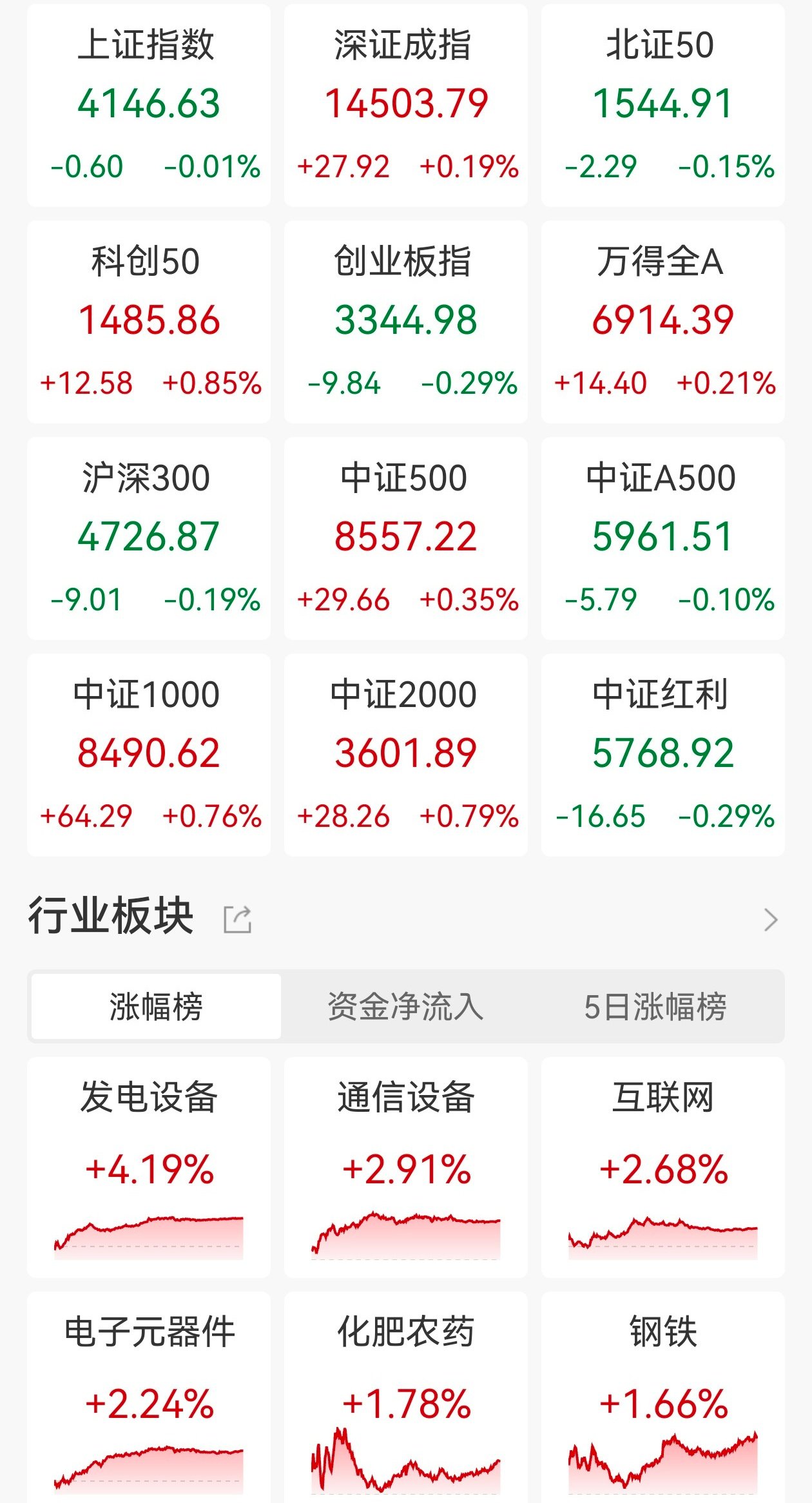
Group 1: Market Strategy and Economic Insights - The market is experiencing a volatile trading environment with the computing hardware sector leading the gains [6][9] - The overall A-share market saw a slight increase with the Wind All A Index rising by 0.21% to 6914.39 points, while the Shanghai Composite Index fell by 0.01% to 4146.63 points [6][7] - The trading volume across the market reached 25,566.39 billion, an increase of 757.47 billion from the previous trading day [7] Group 2: Industry Dynamics - Zimbabwe has announced an immediate suspension of all raw mineral and lithium concentrate exports, impacting global supply chains [25] - In March 2026, China's battery production is expected to increase by 16.5% month-on-month, with energy storage cells leading the demand growth [27] - The global smartwatch market is projected to rebound in 2025, with a 4% increase in shipments and a 5% rise in average selling price [29] Group 3: Company Performance - Tongli Co., Ltd. is expected to achieve a revenue of 6,597.45 million yuan in 2025, a year-on-year increase of 7.37%, driven by strong demand for new energy products and expansion in overseas markets [31][33] - Wens Foodstuff Group reported a 44% decline in net profit for 2025, attributed to falling prices in the pig farming sector, and plans to repurchase shares worth 800 million to 1.2 billion yuan [34] - Zhujiang Brewery's revenue for 2025 is projected to grow by 2.56% year-on-year, with net profit increasing by 11.42% [35]
科技指数单日跌近3% 加密货币与光通信强势突围
Xin Lang Cai Jing· 2026-02-26 08:41
Market Overview - The Hong Kong stock market indices experienced a collective decline, with the Hang Seng Index falling by 1.44% to 26,381.02 points, the Tech Index dropping by 2.87% to 5,109.32 points, and the National Enterprises Index decreasing by 2.44% to 8,814.29 points [2]. Sector Performance - The market showed a clear distinction between strong performance in new productivity sectors and a pullback in traditional cyclical sectors. Sectors such as electric power equipment, cryptocurrency, and optical communication saw significant gains, while solar energy, building materials, lithium batteries, and gold jewelry faced notable declines [3]. Electric Power Equipment - The construction of Artificial Intelligence Data Centers (AIDC) is entering a phase of explosive growth, with companies like Dongfang Electric rising by 15.52%, Harbin Electric by 7.15%, and Goldwind Technology by 5.56%. The demand for power capacity driven by AI development in the U.S. is projected to have a compound annual growth rate (CAGR) of approximately 55% from 2025 to 2028, with cumulative demand exceeding 150 gigawatts over the next three years [4][3]. Cryptocurrency Market - Jin Yong Investment surged by 29.28%, and Blue Ocean Interactive rose by 20%, reflecting a bullish outlook on the cryptocurrency market. JPMorgan's latest report upgraded the 2026 cryptocurrency market rating to "bullish," citing that Bitcoin prices are nearing the production cost line of approximately $77,000, which is expected to accelerate healthy industry consolidation [5][6]. Technology Upgrades - Hong Teng Precision saw an increase of 11.48%, driven by its transition from precision parts to system-level interconnected solutions. The company is benefiting from high growth in the global optical module market and has introduced products for high-speed interconnects and CPO solutions to core North American clients [7][8]. Cement Industry - The cement sector is facing challenges, with companies like Conch Cement dropping by 6.97% and China National Building Material by 3.68%. Despite predictions of industry profits reaching 18-20 billion yuan in 2025, the improvement is primarily attributed to high baseline prices and declining coal costs rather than a genuine recovery in demand from new construction projects [11]. Lithium Battery Sector - The lithium battery sector is under pressure due to resource disruptions, with companies like Zhongxin Innovation falling by 9.26% and CATL by 6.49%. A recent export ban on lithium ore by Zimbabwe is expected to tighten supply, leading to increased lithium prices, but battery manufacturers are facing cost transmission pressures, raising concerns about profit margins [12][14]. Gold Jewelry Market - The demand for gold jewelry is declining, with companies like Luk Fook Holdings dropping by 5.95%. According to the China Gold Association, gold consumption in 2025 is expected to decrease by 3.57%, with gold jewelry consumption falling by 31.61% [15][16]. Individual Stock Movements - MINIMAX saw a rise of 4.64% following the introduction of its upgraded features, while Tian Shizhi Xin surged by 20.27%, driven by the increasing demand for computing power due to advancements in AI and large language models [17][18].

A股收评:三大指数涨跌不一,沪指接近平收,CPO概念、PCB板块爆发
Ge Long Hui· 2026-02-26 07:09
Market Overview - The A-share market showed mixed performance today, with the Shanghai Composite Index down 0.01% to 4146 points, the Shenzhen Component Index up 0.19%, and the ChiNext Index down 0.29% [1] - The total market turnover reached 2.56 trillion yuan, an increase of 75.7 billion yuan compared to the previous trading day, with over 2800 stocks declining [1] Sector Performance - Nvidia's earnings exceeded expectations, leading to a surge in AI hardware sectors, including CPO concepts, copper cable high-speed connections, and liquid-cooled servers, with stocks like Fenghuo Communication, Hengtong Optic-Electric, and Zhongtian Technology hitting the daily limit [1] - The PCB and electronic components sectors also saw gains, with stocks like Huhua Electronics reaching the daily limit [1] - The controllable nuclear fusion sector strengthened, with stocks like Dongfang Electric hitting the daily limit [1] - Fertilizer, wind power, and rare metals sectors performed well, showing significant gains [1] - Conversely, the real estate sector opened high but closed low, with Hualian Holdings dropping over 6% [1] - The film and media sector continued to decline, with Bona Film Group hitting the limit down [1] - The aquaculture, tax refund stores, and oil and petrochemical sectors experienced the largest declines [1] Capital Inflow - The top sectors by capital inflow included power generation equipment, communication equipment, and the internet, with respective five-day gains of 4.19%, 2.68%, and 2.91% [2] - Other notable sectors with positive performance included electronic components, fertilizers and pesticides, and steel, with gains of 1.78%, 2.24%, and 1.66% respectively [2]