
石药集团

Search documents
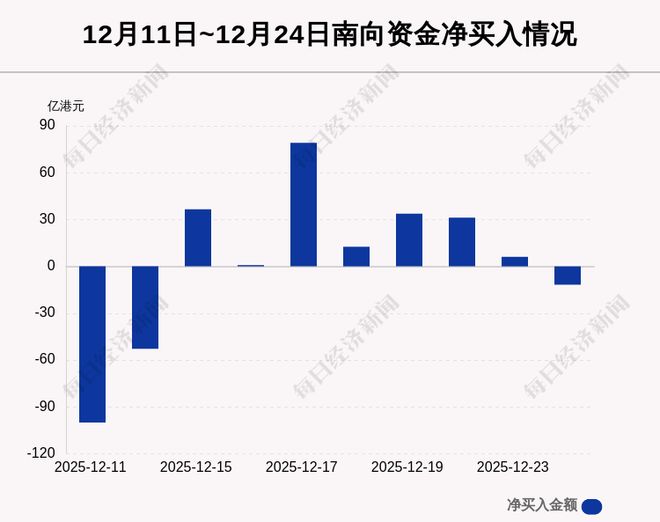
港股通(深)净卖出6.24亿港元
Zheng Quan Shi Bao Wang· 2025-12-24 15:31
Group 1 - The Hang Seng Index rose by 0.17% to close at 25,818.93 points on December 24, with a total net sell of HKD 1.175 billion through the southbound trading channel [1] - The total trading amount for the southbound trading was HKD 45.799 billion, with a net sell of HKD 1.175 billion [1] - In the Shanghai-Hong Kong Stock Connect, the top traded stock was SMIC with a trading amount of HKD 29.39 billion, followed by Alibaba and China Mobile with HKD 19.46 billion and HKD 10.41 billion respectively [1] Group 2 - In the Shenzhen-Hong Kong Stock Connect, SMIC also led with a trading amount of HKD 16.78 billion, followed by Alibaba and Tencent with HKD 10.74 billion and HKD 9.16 billion respectively [2] - The highest net buy was for SMIC at HKD 4.25 billion, with a closing increase of 3.12% [2] - Tencent had the highest net sell at HKD 5.53 billion, closing with a slight increase of 0.17% [2]





净流出约11亿港元 加仓中芯国际流出中移动和腾讯
Xin Lang Cai Jing· 2025-12-24 11:38
Core Viewpoint - Southbound funds experienced a net outflow of approximately 1.175 billion HKD today, marking a continued trend of selling pressure in the Hong Kong stock market [2]. Group 1: Southbound Fund Activity - Southbound funds accounted for about 49.51% of the total turnover of the Hang Seng Index, with a half-day transaction volume of approximately 45.799 billion HKD [2]. - The net outflow from the Shanghai-Hong Kong Stock Connect was around 0.551 billion HKD, while the Shenzhen-Hong Kong Stock Connect saw a net outflow of approximately 0.624 billion HKD [2]. - Southbound funds have recorded a cumulative net outflow of about 7.2 billion HKD from China Mobile over the past nine days [2]. Group 2: Individual Stock Performance - SMIC (00981.HK) saw a significant net buy of 0.491 billion HKD and an increase in stock price by 3.12% [2][3]. - Hua Hong Semiconductor (01347.HK) experienced a net buy of 0.106 billion HKD, with a stock price increase of 1.64% [2][3]. - Tencent Holdings (0700.HK) had a net outflow of 0.611 billion HKD, with a slight stock price increase of 0.17% [2][3]. - China Mobile (00941.HK) faced a net outflow of 0.711 billion HKD, with a minor decline in stock price of 0.06% [2][3]. Group 3: Recent Trends - Over the past five days, SMIC has seen a reduction of 3.74 million shares, indicating a short-term trend of outflow [2]. - Hua Hong Semiconductor has had a reduction of 6.02 million shares in the same period, also reflecting a short-term outflow trend [2]. - Tencent Holdings has seen an increase of 3.07 million shares over the last five days, suggesting a potential short-term inflow [2]. - China Mobile has had an increase of shares over the last five days, but the overall trend remains one of outflow [2].


智通港股通活跃成交|12月24日
智通财经网· 2025-12-24 11:01
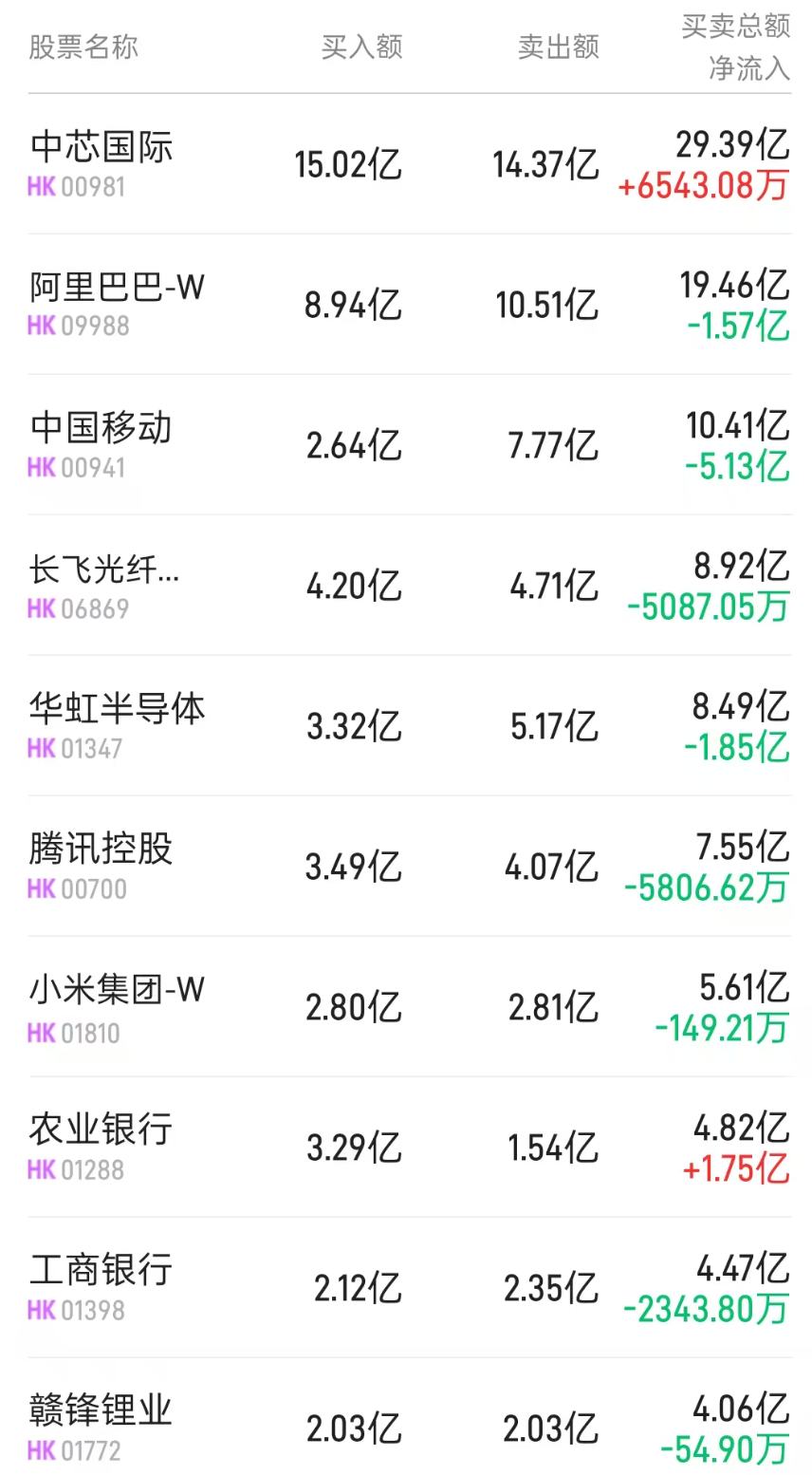
Group 1 - On December 24, 2025, SMIC (00981), Alibaba-W (09988), and China Mobile (00941) were the top three companies by trading volume in the Southbound Stock Connect, with transaction amounts of 2.939 billion, 1.946 billion, and 1.041 billion respectively [1][2] - In the Shenzhen-Hong Kong Stock Connect, SMIC (00981), Alibaba-W (09988), and Tencent Holdings (00700) also ranked as the top three companies by trading volume, with transaction amounts of 1.678 billion, 1.074 billion, and 0.916 billion respectively [1][2] Group 2 - In the Southbound Stock Connect, the top ten active trading companies included SMIC (00981) with a net buying amount of 65.43 million, while Alibaba-W (09988) and China Mobile (00941) had net selling amounts of 1.57 billion and 513 million respectively [2] - In the Shenzhen-Hong Kong Stock Connect, SMIC (00981) had a net buying amount of 425 million, while Alibaba-W (09988) and Tencent Holdings (00700) recorded net selling amounts of 1.31 billion and 553 million respectively [2]
最新出炉!12月24日港股通净流出11.75亿港元,这只龙头被逆势买入4.906亿港元!
Mei Ri Jing Ji Xin Wen· 2025-12-24 10:43
| 南向资金今日成交活跃个股榜单 | | --- | | 代码 | 简称 | 收盘价 (港元) | 准庆帽 (%) | 净买入金额 (亿港元) | | | --- | --- | --- | --- | --- | --- | | 0981.HK | 中芯国际 | 71.05 | 3.12 | 4.91 | . | | 1288.HK | 农业银行 | 5.61 | 0.18 | 1.75 | . | | 1347.HK | 华虹半导体 | 71.45 | 1.64 | 1.06 | . | | 1093.HK | 石药集团 | 8.77 | -1.24 | 1.00 | . | | 6869.HK | K K K J 光 J J K J J K J J K L H H J J | 56.3 | 3.11 | 0.27 | | | 1772.HK | 赣锋锂业 | 56.05 | -0.18 | 0.26 | . | | 1810.HK | 小米集团-W | 39.22 | 0.05 | 0.04 | . | | 1398.HK | 工商银行 | 6.13 | -0.49 | -0.23 | . | | 13 ...
资本涌入、合作爆发,AI制药迈入加速发展期|记“医”2025
2 1 Shi Ji Jing Ji Bao Dao· 2025-12-24 10:32
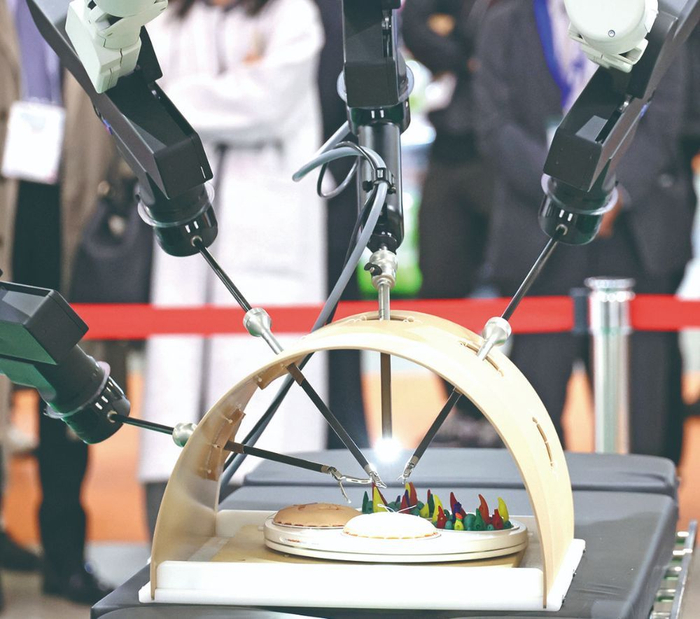
Core Insights - The pharmaceutical industry is experiencing a transformation driven by artificial intelligence (AI), which is reshaping drug discovery and development processes, making it a focal point for global technological and pharmaceutical innovation [1][4][14] - AI-driven drug development is moving from concept validation to early value realization, attracting significant attention from capital markets, policymakers, and research institutions [1][5][14] Investment and Financing Activity - The global AI pharmaceutical sector has over 350 companies, with at least 101 based in China, most of which are in the early stages of development [5] - In 2023, there were nearly 80 investment events related to AI pharmaceuticals globally, with at least 31 occurring in China, indicating a growing interest from investors [5][6] - The trend of increasing investment in AI pharmaceuticals has been consistent over the past three years, with the number of financing events rising from 19 in 2023 to 31 in 2024, matching previous years' levels [5] Technological Advancements - AI technologies, particularly large language models and generative AI, are redefining traditional drug development paradigms, which have historically been time-consuming and costly [4][7] - New AI models are capable of generating drug molecules with potential biological activity tailored to specific diseases, significantly enhancing the drug design process [4][8] Collaboration and Partnerships - The AI pharmaceutical landscape is witnessing an increase in collaborations, with over 30 partnerships established in 2023 between multinational companies and AI-related firms, valued at approximately $10 billion [10][11] - Major pharmaceutical companies are shifting from solely in-house AI tool development to a mixed strategy that includes external collaborations, reflecting a significant change in industry mindset [10] Data Challenges - The success of AI in drug development is heavily reliant on the availability of high-quality data, which remains a challenge due to proprietary data restrictions within pharmaceutical companies [12][13] - The concept of "data capitalization" is proposed as a solution to enhance data sharing among companies, which could facilitate more effective AI model development [13] Future Outlook - As AI pharmaceutical models improve and data governance frameworks become more robust, AI-driven drug development is expected to become a key indicator of national pharmaceutical innovation competitiveness [14]
资本涌入、合作爆发,AI制药迈入加速发展期
2 1 Shi Ji Jing Ji Bao Dao· 2025-12-24 10:13
Core Insights - The pharmaceutical industry is experiencing a transformation driven by artificial intelligence (AI), which is reshaping drug discovery and development processes, making it a focal point for global technological and pharmaceutical innovation [1][3] - AI-driven drug development is moving from concept validation to early value realization, attracting significant attention from capital markets, policymakers, and research institutions [1][4] - The integration of AI technologies, particularly generative AI and multimodal models, is expected to overcome traditional drug development challenges, enhancing the efficiency and success rates of new drug candidates [3][4] Investment and Financing Activity - The global AI pharmaceutical sector has over 350 companies, with at least 101 based in China, most of which are in the early stages of development [4] - In 2023, there were nearly 80 investment events related to AI pharmaceuticals globally, with at least 31 occurring in China, indicating a strong upward trend in investment activity [4][5] - The financing round for InSilico Medicine raised $123 million, marking a significant investment in the AI pharmaceutical space [5] Collaboration and Partnerships - The trend of collaboration in AI drug development is increasing, with over 30 partnerships established between multinational corporations and AI companies in 2023, valued at approximately $10 billion [7][8] - Major pharmaceutical companies are shifting from solely developing in-house AI tools to exploring hybrid strategies and external solutions, reflecting a significant change in industry mindset [7][8] Data Challenges - The AI pharmaceutical sector faces challenges related to data scarcity, as high-quality data necessary for effective model development is often locked within proprietary corporate databases [9][10] - The concept of "data capitalization" is proposed as a solution to enhance data sharing among companies, which could facilitate better AI model development [10][11] Technological Advancements - The rapid development of cloud computing capabilities by tech giants like Amazon, Google, and Microsoft is providing essential computational power for pharmaceutical companies, alleviating some constraints on data and model development [11] - Continuous improvements in model performance and data governance are expected to position AI pharmaceuticals as a key measure of national pharmaceutical innovation competitiveness [11]
北水动向|北水成交净卖出11.75亿 中芯国际(00981)通知下游客户涨价 北水全天加仓近5亿港元
智通财经网· 2025-12-24 10:01
Summary of Key Points Core Viewpoint - The Hong Kong stock market experienced significant net selling from Northbound funds, totaling HKD 11.75 billion, with notable net selling in major stocks like China Mobile, Tencent, and Alibaba. Conversely, stocks such as SMIC and Agricultural Bank saw net buying, indicating a mixed sentiment among investors. Group 1: Northbound Fund Activity - Northbound funds recorded a net selling of HKD 11.75 billion, with HKD 5.52 billion from Shanghai Stock Connect and HKD 6.24 billion from Shenzhen Stock Connect [1] - The most bought stocks included SMIC (00981) and Agricultural Bank (01288), while the most sold stocks were China Mobile (00941), Tencent (00700), and Alibaba-W (09988) [1] Group 2: Stock Performance Details - SMIC had a net inflow of HKD 654.31 million, with a total trading volume of HKD 29.39 billion [2] - China Mobile faced a net outflow of HKD 5.13 billion, with total trading volume of HKD 10.41 billion [2] - Tencent experienced a net outflow of HKD 580.66 million, with total trading volume of HKD 7.55 billion [2] Group 3: Sector Insights - SMIC and Huahong Semiconductor saw net buying of HKD 4.9 billion and HKD 1.05 billion respectively, driven by price increases in the 8-inch BCD process platform due to high demand for AI server power chips [5] - Agricultural Bank received a net inflow of HKD 1.74 billion, while Industrial and Commercial Bank faced a net outflow of HKD 234.3 million, with expectations of improved bank performance in the coming years [5] - Stone Pharmaceutical saw a net inflow of HKD 1 billion following management changes, indicating potential stability in leadership [6] Group 4: Market Trends and Predictions - The demand for optical fibers is expected to rise due to the growth of AI, with limited production capacity leading to a supply-demand imbalance [6] - The lithium market may face upward price pressure due to delays in the resumption of a major lithium mine, which could affect supply during the peak demand season [7] - Alibaba and Tencent's significant net outflows reflect short-term liquidity concerns, but the long-term outlook for the Hong Kong market remains positive due to the ongoing AI industry cycle [7]
千亿石药集团“二代接班”!砸4.5亿“押注”减重赛道
Xin Lang Cai Jing· 2025-12-24 09:57
Core Viewpoint - Starting in 2024, the performance of CSPC Pharmaceutical Group has shown a "double decline" in profits and revenues [1][23]. Group 1: Company Developments - CSPC Pharmaceutical Group has been active recently, establishing a joint venture named "CSPC Runshi Biotechnology" with a total investment of 450 million yuan, focusing on the development and commercialization of GLP-1 target-related drugs for diabetes and weight loss [2][17]. - A significant management reshuffle occurred on December 19, with Zhang Cuilong stepping down as CEO and being replaced by Cai Lei, who is the son of the company's chairman and major shareholder, Cai Dongchen [3][9][28]. - Cai Lei's appointment is seen as adding a family business dynamic to the leadership, as he is part of the next generation of the Cai family involved in the company [3][10]. Group 2: Financial Performance - CSPC's revenue for 2024 is reported at 29.009 billion yuan, a decrease of 9.56% year-on-year, while the net profit attributable to shareholders fell by 25.9% to 4.328 billion yuan [13][33]. - The company has continued to experience revenue and profit declines into the first three quarters of 2025, with revenues of 19.891 billion yuan, down 12.32% year-on-year, and a net profit of 3.511 billion yuan, down 7.06% [13][33]. Group 3: Strategic Shifts - The decline in performance is attributed to the impact of national drug procurement policies on the pricing of core products [15][35]. - CSPC is accelerating its transition towards innovative drugs, with nearly 90 products in various stages of clinical trials and a focus on external partnerships to enhance market access and cash flow [15][35]. - The company is also pushing into the GLP-1 market, with at least five related products in the application or licensing stages, indicating a competitive strategy in a growing therapeutic area [17][37]. Group 4: Leadership and Governance - The new leadership structure, characterized by a "brotherly division of labor" model, aims to leverage individual strengths, mitigate operational risks, and ensure a balanced governance structure [5][25]. - Cai Lei's previous experience in the U.S. R&D division is expected to enhance CSPC's international strategy and innovation capabilities [17][37]. - The company has faced scrutiny due to insider trading issues involving former executives, which has influenced recent management changes [10][31].
别猜了!这家制药巨头换帅的真相是……
Xin Lang Cai Jing· 2025-12-24 09:52
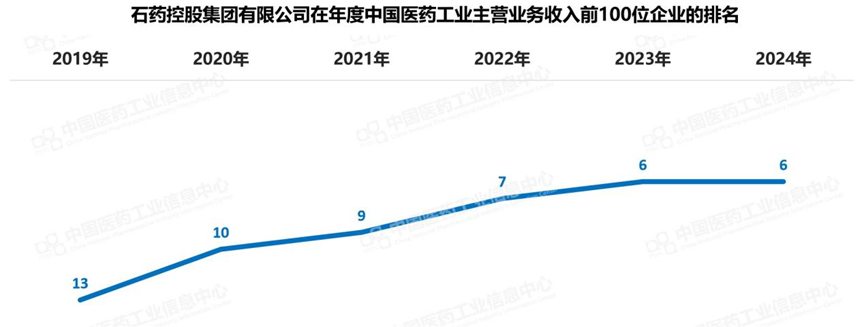
Group 1 - The core point of the article is the significant management reshuffle at CSPC Pharmaceutical Group, with Zhang Cuilong transitioning to an executive director role while Cai Lei is appointed as the new CEO and vice chairman, and Wei Qingjie as vice chairman and COO [1][19]. Group 2 - CSPC Pharmaceutical Group has shown a strong upward trajectory in its ranking among the top 100 pharmaceutical companies in China, reflecting its robust strategic positioning and growth in innovative drug revenue [3][21]. - The company has received approval for five Class 1 innovative drugs, with a significant increase in the proportion of innovative drug revenue compared to the same period in 2019 [5][24]. - CSPC has a total of 83 new drugs in various stages of clinical trials globally, and its licensing out transactions have reached a total of $9.71 billion this year [5][24]. Group 3 - CSPC has established eight major technology platforms, including ADC, dual antibodies, and mRNA, with a large pipeline of 178 projects, of which approximately 10% are in Phase 3 clinical trials [12][29]. - The company’s R&D expenses are projected to be 4.83 billion RMB in 2023, 5.191 billion RMB in 2024, and approximately 4.19 billion RMB in the first three quarters of 2025, indicating a 7.9% year-on-year growth [32][34]. Group 4 - The new management team is expected to navigate the dual drivers of "innovation" and "internationalization," which are critical for CSPC's growth at this stage [18][35]. - The management's ability to efficiently convert scientific achievements into marketable products and their understanding of both domestic and global markets will be crucial for the company's success [18][35].
恒指跌27點,滬指升2點,標普500升31點
宝通证券· 2025-12-24 03:48
Market Performance - The Hang Seng Index (HSI) fell by 27 points or 0.11%, closing at 25,774 points after a brief rise to 25,927 points[1] - The National Index dropped by 25 points or 0.29%, ending at 8,913 points[1] - The Hang Seng Tech Index decreased by 37 points or 0.69%, closing at 5,488 points[1] - Total market turnover was HKD 157.131 billion[1] Currency and Economic Indicators - The RMB/USD central parity rate was adjusted up by 49 points to 7.0523, marking a 15-month high[2] - The Shanghai Composite Index rose by 2 points or 0.07%, closing at 3,919 points with a turnover of CNY 806.85 billion[2] - The Shenzhen Component Index increased by 36 points or 0.3%, closing at 13,368 points with a turnover of CNY 1.09 trillion[2] - The ChiNext Index gained 13 points or 0.4%, closing at 3,205 points with a turnover of CNY 493.7 billion[2] U.S. Economic Data - The U.S. GDP annualized growth rate for Q3 was reported at 4.3%, significantly higher than Q2's 3.8% and the previous forecast of 3.3%[3] - The U.S. government announced plans to increase tariffs on semiconductor imports from China by June 2027, with initial rates set to zero for the first 18 months[4] Automotive Market Trends - In November, new car sales in Europe rose by 2.4% year-on-year to 1.1 million units, marking the fifth consecutive month of growth[4] - BYD's new car registrations surged by 221.8%, achieving a market share of 2%, slightly behind Tesla's 2.1%[4]