
荣耀

Search documents
智能手机的2025:厮杀、阵痛与价值重塑
投中网· 2026-01-09 01:50
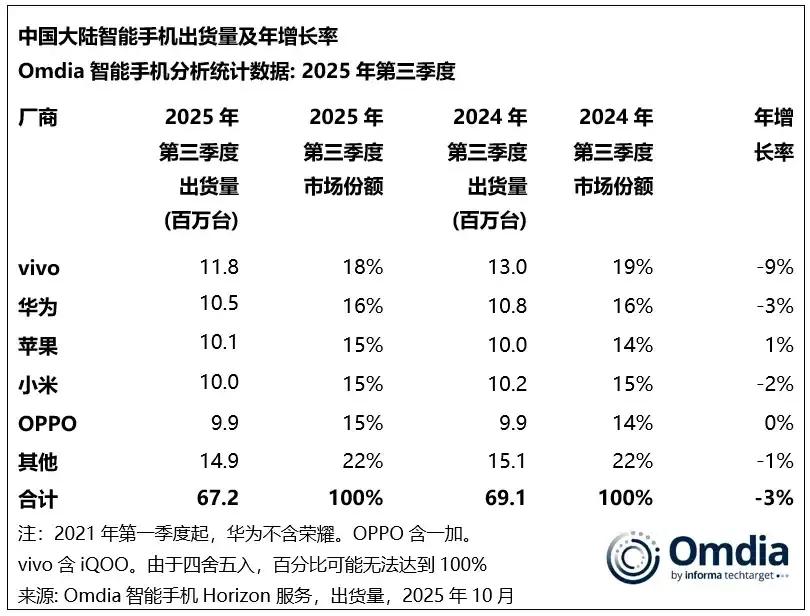
Core Viewpoint - The Chinese smartphone market in 2025 is experiencing a shift from a "quantity" competition to a "quality" battle, driven by fierce competition and changing consumer behavior [5][9]. Market Performance - In the first half of 2025, the market was pessimistic due to saturation and rational consumer decisions, but by the fourth quarter, smartphone sales increased by 11% year-on-year, with Apple iPhone sales up by 29% [6][7][8]. - The top five smartphone manufacturers in Q3 2025 saw a slight decline in overall shipments, with a total of approximately 68.4 million units shipped, down 0.6% year-on-year [13][14]. Competitive Landscape - The competition is characterized by a struggle within a defined market boundary, with limited growth opportunities and increasingly difficult user acquisition [11][12]. - Vivo led the market with 11.8 million units shipped, followed closely by Apple with 10.8 million units, and Huawei with 10.4 million units [14]. Strategic Shifts - Apple adopted a disruptive strategy of "increasing volume while lowering prices," significantly impacting the mid-to-high-end market of domestic brands [15]. - Domestic brands like Xiaomi and OPPO are focusing on high-end markets, launching products priced above 6000 yuan to differentiate themselves [17]. Technological Evolution - The focus of competition has shifted from hardware specifications to user experience, particularly in imaging technology, where brands are emphasizing software capabilities over mere hardware [19][20]. - AI technology is becoming a practical solution in smartphones, with features like automatic scene recognition and enhanced photography being integrated into devices [22]. User Experience Innovations - New features addressing specific user pain points, such as motion sickness modes, are emerging, reflecting a deeper understanding of consumer needs [23]. - The average smartphone replacement cycle has extended from 24 months in 2020 to 36 months in 2024, indicating a shift in consumer behavior towards longer device usage [25]. Future Directions - The smartphone industry is expected to rely more on internal innovation and structural changes, with major players moving towards vertical integration to enhance product differentiation and profit margins [26]. - The foldable smartphone market is evolving, with multiple manufacturers entering, suggesting a potential for new applications and high-value markets [26]. Conclusion - The 2025 smartphone market represents a duality of challenges and opportunities, with competition now focused on enhancing user experience and addressing specific pain points, indicating a need for brands to build emotional connections with consumers [27][28].




早报|雷军:小米将会在今年推出一款重磅产品/「全球首款」可量产全固态电池遭质疑/Google逆袭成功,母公司市值超苹果
Sou Hu Cai Jing· 2026-01-09 01:42
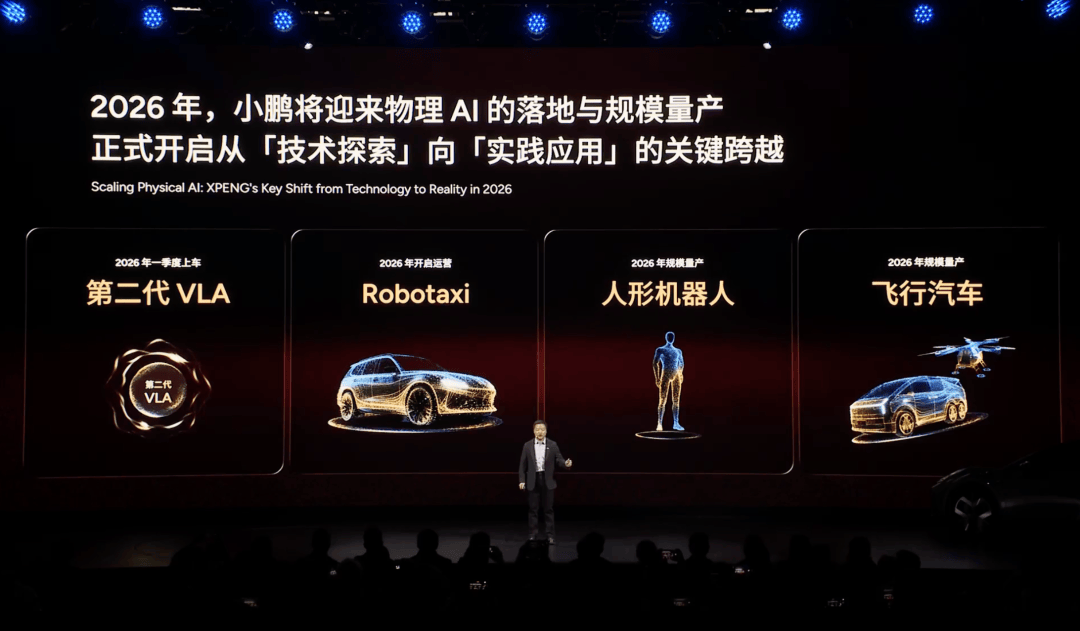
Group 1 - Xiaopeng Motors plans to achieve mass production of humanoid robots in 2026, alongside the launch of Robotaxi and flying cars [3][5] - The company showcased its latest humanoid robot, IRON, at a previous event, which sparked skepticism about its authenticity [5] - The 2026 global product launch introduced several new electric and range-extended models, including the P7+ and G7, featuring advanced AI chips and various configurations [5][6][7] Group 2 - Google’s parent company, Alphabet, has surpassed Apple in market capitalization for the first time in seven years, reaching $3.89 trillion [17] - This achievement is attributed to Google's AI strategy, which includes technology development, resource integration, and commercial application [17] - The Gemini AI application has gained significant traction, outperforming ChatGPT in various metrics and achieving a 20% market share in global web traffic [18] Group 3 - Faraday Future's founder, Jia Yueting, unveiled the FX Super One MPV at CES 2026, with plans for mass production this year [20] - The vehicle emphasizes space, AI, and comfort, targeting the luxury market [20] - The company aims to leverage its identity as a U.S. automaker to assemble vehicles using parts from Chinese manufacturers [20] Group 4 - Alibaba Cloud launched a multimodal interaction development suite at the CES 2026, integrating various AI models and tools for hardware developers [26][31] - The suite aims to provide a low barrier to entry for developers, enhancing the speed and richness of AI applications across multiple sectors [31] Group 5 - Donut Lab introduced what it claims to be the world's first mass-producible solid-state battery at CES 2026, featuring high energy density and rapid charging capabilities [28][29] - However, the company faces skepticism due to a lack of independent verification of its claims and the novelty of its technology [28][29] Group 6 - MiniMax, an AI company, is set to break records for institutional subscriptions in its upcoming IPO, with over 460 institutions participating and a subscription rate exceeding 70 times [33] - The company’s revenue is primarily derived from AI-native products, which accounted for over 70% of its income by mid-2025 [34] Group 7 - Zhiyuan Technology, a company focused on AGI, has recently gone public, marking a significant milestone in the AI sector [41] - The CEO emphasized the importance of pursuing AGI and not solely focusing on commercial applications, highlighting the high costs and risks involved in this exploration [41][44]



贾跃亭携新车亮相CES:很快回国/雷军:小米今年或推出自研重磅产品/商务部回应审查Meta收购Manus
Sou Hu Cai Jing· 2026-01-09 01:42
Group 1 - Xiaopeng Motors plans to achieve mass production of humanoid robots in 2026, alongside launching Robotaxi and flying cars [1][3] - The company showcased its latest generation humanoid robot, IRON, at a previous event, which sparked skepticism about its authenticity [3] - The 2026 global product launch introduced several new electric and range-extended models, including the P7+ and G7, featuring advanced battery technology and AI integration [3][5][6][7] Group 2 - Xiaomi awarded its self-developed chip "Xuanjie O1" the highest honor at the 2025 Xiaomi "Ten Million Technology Award" for its innovative design and performance [12] - The company aims to integrate self-developed chips, operating systems, and AI models in a single terminal by 2026, while also pushing forward its robotics business [12] - Xiaomi's new products include the Xiaomi 17 Pro series and various innovative technologies recognized at the award ceremony [13] Group 3 - Donut Lab introduced what it claims to be the world's first mass-producible solid-state battery at CES 2026, boasting high energy density and rapid charging capabilities [37][38] - The battery is reported to maintain performance across extreme temperatures and has a long cycle life, although independent verification of its claims is pending [38][43] - The company plans to scale production significantly in the coming year, aiming to capitalize on its technological advancements [43] Group 4 - Alibaba Cloud launched a multimodal interaction development kit, integrating various AI models to enhance hardware interaction capabilities [34] - The kit is designed to support a wide range of hardware platforms and aims to facilitate rapid deployment of AI solutions across different applications [34] Group 5 - The establishment of JD.com's "Chameleon Business Unit" aims to accelerate the commercialization of AI technologies and enhance market responsiveness [53][54] - The unit will focus on developing core AI products and integrating technological resources to improve efficiency [54] Group 6 - Zhizhu Technology, a company focused on AGI, officially listed on the Hong Kong Stock Exchange, emphasizing its commitment to exploring foundational models for general intelligence [56] - The CEO highlighted the importance of maintaining a focus on AGI development amidst the competitive landscape of AI models [56][57]

直击 CES 2026 谁将成为超级硬件?
Shen Zhen Shang Bao· 2026-01-08 18:05
Group 1: CES 2026 Overview - The International Consumer Electronics Show (CES 2026) is being held in Las Vegas from January 6 to 9, featuring over 4,100 exhibitors and an expected attendance of over 150,000 [1] - CES serves as a key platform for technology giants to launch products and offers insights into future technology trends and industry opportunities [1] Group 2: Smart Glasses as a Hot Category - Smart glasses are highlighted as a popular category at CES 2026, with multiple AI and AR glasses manufacturers showcasing their latest products [2] - Experts predict that by 2026, smart glasses equipped with holographic displays will become mainstream consumer products [2] - Companies like Thunderbird Innovation, INMO, and XGIMI are presenting new smart glasses, including the eSlM smart glasses and Memo One, which features Micro LED dual display technology [2][3] Group 3: Market Projections for Smart Glasses - IDC forecasts that the smart glasses market will reach a significant turning point in 2026, with global shipments expected to exceed 23.687 million units, and China's market projected to surpass 4.915 million units [3] Group 4: Broader Trends in Smart Hardware - Smart hardware, including smart glasses, robots, chips, PCs, and smart home devices, is receiving considerable attention at CES 2026 [4] - Honor showcased the Robot Phone, which integrates AI capabilities and robotics for enhanced user experience [4] - Lenovo's Tech World event featured discussions on the future of enterprise intelligence, with NVIDIA and AMD leaders sharing insights on AI deployment and collaboration [4]



realme重回OPPO“襁褓”,陈明永不再执着高端化
3 6 Ke· 2026-01-08 13:13
Core Viewpoint - OPPO is shifting its strategy from aggressive high-end market expansion to consolidation and cost reduction, as evidenced by the return of its sub-brand realme under its umbrella [1][2][12]. Group 1: Market Performance - OPPO's global shipment volume in Q1 2025 was approximately 23.5 million units, with a market share of 7.7%, ranking fifth [3]. - By Q3 2025, OPPO's shipment volume in mainland China dropped to 9.9 million units, also ranking fifth [4]. - The company faced significant challenges in maintaining its market position, with a notable decline in performance compared to competitors [3][4]. Group 2: Strategic Shift - OPPO's high-end strategy, initiated in 2020, aimed to elevate its brand through significant investments in technology and product development, including self-developed chips and premium devices [5][11]. - The company has recognized the unsustainable nature of its high-end focus, leading to a strategic pivot towards more practical market survival and share acquisition [10][12]. - The return of realme is seen as a critical move to enhance overall sales and consolidate resources, allowing OPPO to leverage its strengths in the mid-range and budget segments [12][13]. Group 3: Organizational Changes - Significant personnel changes occurred in late 2025, indicating a fundamental shift in OPPO's strategic direction, with key executives reassigned to focus on overseas markets rather than high-end domestic competition [8][10]. - The restructuring reflects OPPO's need to adapt to external pressures and prioritize market share over high-end aspirations [9][10]. - The integration of realme into OPPO's brand matrix aims to streamline operations and enhance competitiveness against rivals like Xiaomi and Honor [12][14].
荣耀绝不倒下
3 6 Ke· 2026-01-08 11:57
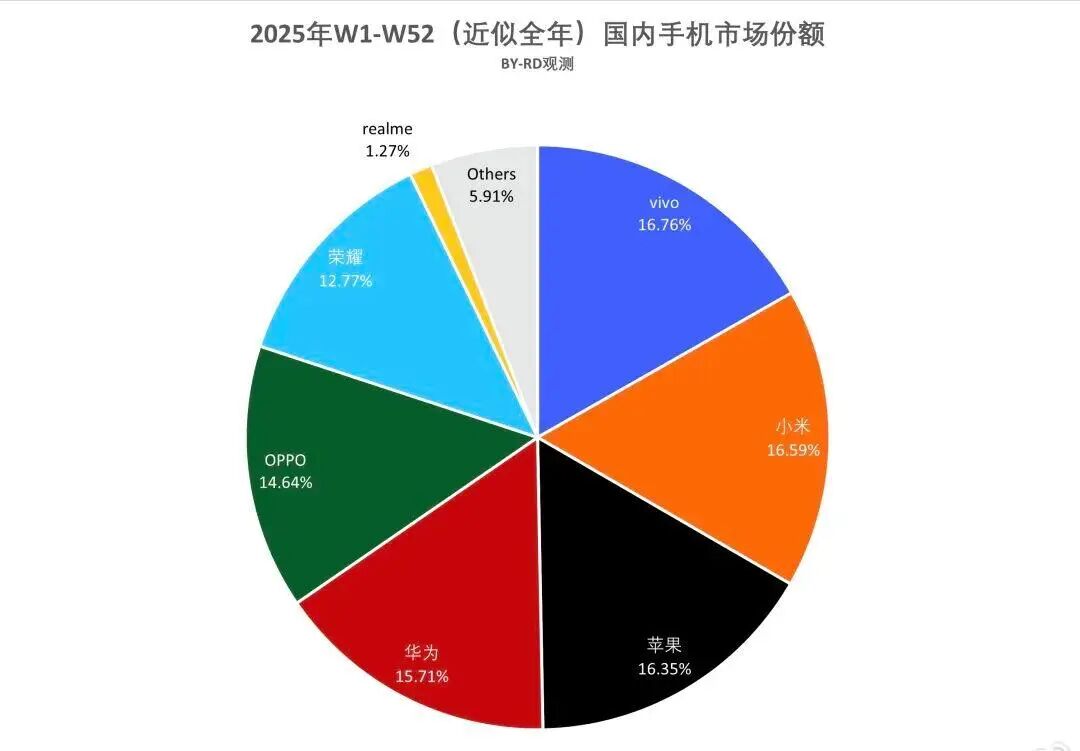
Core Viewpoint - Honor, once a market leader in China, is now facing a "mid-life crisis" characterized by intense price competition and struggles in the high-end market, while its transformation efforts appear to replicate Huawei's strategies rather than establish a unique identity [1][2]. Group 1: Market Performance - Honor's market share in China dropped to 12.77% in 2025, down approximately 2 percentage points from 14.79% in 2024, marking the largest decline among the top six brands [2]. - In Q1 2024, Honor reached a peak market share of 17.1%, but by 2025, it had decreased by 4.3 percentage points, equivalent to a 25% reduction [4]. - Honor's reliance on low-end products is evident, with 58% of its offerings priced below 2000 yuan, a 12 percentage point increase from the previous year [4]. Group 2: Brand Positioning and Challenges - Honor's market share in the high-end segment (priced above $600) is only 1.58%, significantly lower than Apple's 34% and Huawei's 16.4%, indicating severe marginalization [6]. - The company's gross margin in H1 2025 was 13.2%, down 2.8 percentage points year-on-year, and below the industry average of 15.6% [6]. - Honor's branding struggles stem from its historical ties to Huawei, leading consumers to view it as a "substitute" rather than a distinct brand [7][9]. Group 3: AI Transformation and Strategic Initiatives - Honor aims to transition into an AI-centric smart terminal ecosystem, with over 10 billion yuan invested in AI technology development [12]. - The "1×3×N" ecological strategy is designed to integrate AI capabilities across various sectors, but the company faces significant competition from established tech giants [12][13]. - Despite challenges, Honor's international sales have seen over 50% growth in emerging markets, with a notable 377% increase in foldable phone sales in Europe [15]. Group 4: Financial Outlook and Future Prospects - Honor's Pre-IPO valuation is approximately 200 billion yuan, a 23% decrease from its 2020 valuation of 260 billion yuan, reflecting cautious market sentiment regarding its competitiveness [17]. - The company must balance short-term shareholder returns with long-term investments in R&D to achieve a successful transformation [18]. - The year 2026 is critical for Honor to navigate the AI landscape and redefine its market position [18].
2025年中国智能手机市场排名出炉:vivo第一,小米第二,苹果增速领跑
Xin Lang Cai Jing· 2026-01-08 11:48
从竞争态势来看,头部品牌在2025年依然保持显著优 势,vivo、小米与苹果在激烈的市场竞争中稳居第一梯 队。具体到市场份额,全年第1周至第52周的数据显示, vivo凭借主品牌与子品牌的协同效应,以16.76%的市场 份额位居首位,相较2024年全年略有下降,后者为 17.43%。 小米以16.60%的份额排名第二,较上年提升0.71个百分 2025年中国智能手机市场激活量排名日前揭晓,前五大品牌依次为vivo、小米、苹果、OPPO和华为。 数据显示,vivo(含iQOO)、小米(含REDMI)、OPPO(含一加、realme真我)、苹果与华为共同占 据全年国内市场激活量前五位置,各品牌激活量均超过4000万部。其中,苹果、小米和OPPO实现同比 增长,展现出较强的增长动力。 这一市场格局与2025年整体行业走势保持一致。统计数 据显示,当年1月至11月,国内手机市场出货总量达2.82 亿部,同比增长0.9%。其中,5G手机出货量约为2.44亿 部,同比增长1.3%,占整体出货量的比重达到86.6%, 持续主导市场发展方向。 这一市场格局与2025年整体行业走势保持一致。统计数据显示,当年1月至11月,国内 ...
安凯微:思澈专注于AIoT领域高性能SoC芯片的研发与销售
Zheng Quan Ri Bao Wang· 2026-01-08 11:40
Core Viewpoint - Ankai Micro focuses on the development and sales of high-performance SoC chips in the AIoT field, primarily targeting smart wearable devices and expanding into smart home and industrial applications [1] Group 1: Company Overview - Ankai Micro's subsidiary, Siche, specializes in AIoT high-performance SoC chip solutions, offering ultra-low power heterogeneous IoT platform chips with integrated Bluetooth communication and graphics engines [1] - Siche's technology is advanced, showing competitive advantages in key metrics such as RF performance and power consumption compared to similar products in niche markets [1] Group 2: Market Adoption - Siche's products are adopted by well-known domestic and international brands, including Xiaomi, Honor, Keep, OnePlus, Pebble, and Xiaoxun [1] - The recent launch of the Pebble Round 2 smartwatch, based on Siche's chips, highlights the company's growing presence in the smart wearable market [1]

涨疯了,一盒内存条堪比上海一套房!
Jin Tou Wang· 2026-01-08 09:35
Core Viewpoint - The rising cost pressure in the automotive industry is primarily driven by memory prices rather than metal raw materials, with significant price increases in memory components impacting the overall cost of smartphones, computers, and cars [1][4]. Group 1: Memory Price Increases - The price of a 265G DDR5 server memory module has reached 40,000, with a box of 100 costing 4 million, comparable to the price of a house in some areas of Shanghai [4]. - The price of 16GB DDR4 memory modules surged by 1800% last year, while DDR5 modules increased by over 500% [1][5]. - The demand for memory in AI applications is significantly higher, with a single AI server requiring 8-10 times more memory than a standard server, leading to a supply shortage [5][7]. Group 2: Impact on Consumer Electronics - The increase in memory prices is expected to lead to higher prices for smartphones and computers, with memory accounting for 10%-20% of hardware costs [4]. - Smartphone manufacturers like Xiaomi, OPPO, and others have already raised prices by 100 to 600 yuan for new models since last October due to rising costs [7]. - The global smartphone shipment volume is projected to decline by 2.1% in 2026 due to these price increases [7]. Group 3: PC Market Dynamics - Major PC manufacturers such as Dell and Lenovo are planning price increases ranging from 10% to 30% for commercial PCs [9]. - The domestic memory manufacturers like Yangtze Memory Technologies and ChangXin Memory are gaining market share due to their price advantages of 15%-20% [9]. Group 4: AI Infrastructure and Market Competition - Tech giants like Apple, Google, and Amazon are aggressively competing for memory supply, with procurement teams stationed in South Korea to secure long-term contracts [11]. - Samsung and SK Hynix are maintaining a strong stance on pricing, opting for quarterly pricing rather than long-term contracts, which has led to significant price increases [11]. - The current memory price surge is expected to persist until 2026, with predictions of price hikes of up to 70% from major manufacturers [9][11].


芯海科技(688595.SH):压力触控产品已经应用于夸克AI眼镜
Ge Long Hui· 2026-01-08 08:34
Core Viewpoint - The company is focusing on the development of artificial intelligence technology, particularly in the AI consumer terminal sector [1] Group 1: Company Developments - The company has announced its attention towards AI technology advancements [1] - The company's EC chips will be featured in the upcoming AI PC MagicBook Pro 16, set to launch in March 2024, and the AI PC MagicBook Pro 14 series, scheduled for February 2025 [1] - The company's pressure touch products have already been applied in Quark AI glasses [1]
