软银集团

Search documents
AI催生存储价格狂飙!日韩股市齐创新高,三星涨近5%、SK海力士涨近3%,
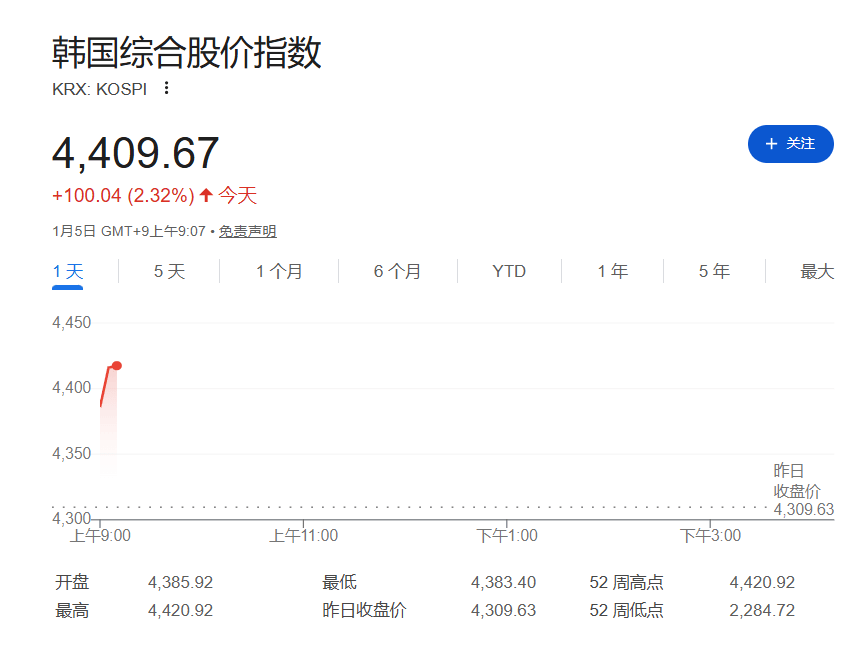
Sou Hu Cai Jing· 2026-01-05 01:30
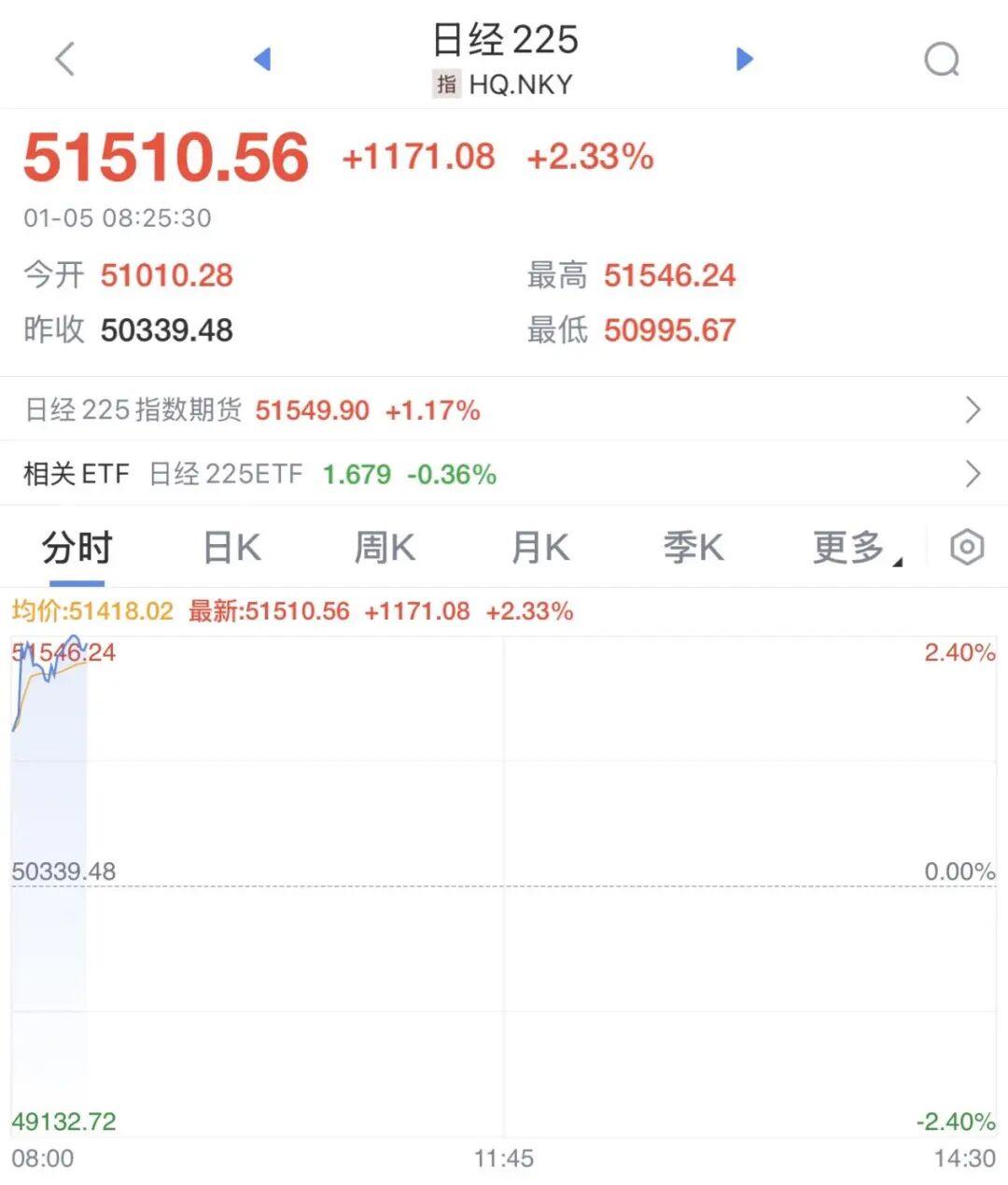
Group 1 - The core driver of the recent market rally is the surge in global AI computing demand and the strong rebound in storage chip prices, leading to significant gains in Asian stock markets, particularly in Japan and South Korea, where major indices reached historical highs [1][3] - The South Korean market saw the Seoul Composite Index open up by 1.8% and later rise by 2.6%, with Samsung Electronics' stock increasing nearly 5% to a record high, and SK Hynix also showing strong performance with a nearly 3% rise [1][3] - The Nikkei 225 index in Japan rose by 2.2%, reaching 51,442.83 points, driven by gains in chip and heavy industry stocks, with notable increases in companies like Kioxia (up 8.4%) and Tokyo Electron (up 4.6%) [3] Group 2 - The volatility in storage chip prices is a key factor supporting this market trend, with recent data from Wells Fargo indicating a week-over-week increase of approximately 23% in DDR4 spot prices and a 1% increase in DDR5 prices [5] - The average price of DDR4 is expected to rise by 139% quarter-over-quarter in Q4, with contract prices projected to increase by about 65% quarter-over-quarter and 175% year-over-year [5] - The competition for high-bandwidth memory (HBM) capacity has intensified, with Samsung Electronics' co-CEO announcing that their HBM4 products have gained customer recognition, indicating a significant competitive shift against SK Hynix [8][9] Group 3 - Samsung's stock surged by 7.2% last Friday, reaching a closing historical high, which contributed to a 2.3% increase in the Seoul Composite Index, surpassing 4,300 points [13] - Samsung's HBM4 products are reported to have demonstrated "differentiated competitiveness," boosting investor confidence and narrowing the gap with SK Hynix in the high-bandwidth memory market [13] - South Korea's semiconductor exports in December saw a year-on-year increase of 43%, highlighting the critical role of Samsung and SK Hynix in the global AI hardware boom [13] Group 4 - Major tech companies like Microsoft, Google, and Meta have stationed procurement teams in South Korea to secure limited HBM and DRAM production capacity from Samsung and SK Hynix, reflecting the intense competition for high-performance memory [14] - Both companies' advanced production lines are operating at full capacity, with their HBM and DRAM output for next year already fully booked, leading to a supply chain crunch [14] - In response to the "chip shortage" challenge, tech giants are accelerating the relocation of procurement and supply chain management roles from Silicon Valley to Asia, aiming to build supply advantages by being closer to manufacturing [14]

日韩股市,开盘大涨!
Zhong Guo Ji Jin Bao· 2026-01-05 01:17
Market Overview - The Japanese and South Korean stock markets opened significantly higher, driven by gains in chip and heavy industry stocks, with the Nikkei 225 index rising over 2% to surpass 51,000 points, marking a new high since December 12, 2025 [1] - The KOSPI index in South Korea also increased by over 2%, reaching a historical high [3] Key Stock Performances - Notable gains in Japanese AI-related stocks include SoftBank Group, Tokyo Electron, and Advantest, each rising over 4% [1] - Mitsubishi Heavy Industries saw a stock price increase of 5.7%, while Kawasaki Heavy Industries rose by 5.01% [1] - In South Korea, Samsung Electronics' stock price increased by over 5%, achieving a historical high, with SK Hynix, LG Energy, Hyundai Motor, and Doosan Energy also experiencing gains [4][5] Market Capitalization - The market capitalization of key companies includes: - Samsung Electronics: 802.70 trillion KRW [5] - SK Hynix: 507.42 trillion KRW [5] - Mitsubishi Heavy Industries: 13.70 trillion JPY [2] - Tokyo Electron: 16.96 trillion JPY [2] Export Projections - According to the Ministry of Trade, Industry and Energy in South Korea, the country's exports are projected to grow by 3.8% in 2025, reaching 709.7 billion USD, with semiconductor exports expected to hit a record 173.4 billion USD, a 22.2% increase year-on-year [6]
日韩股市,开盘大涨!
中国基金报· 2026-01-05 01:09
Market Overview - The Japanese Nikkei 225 index opened significantly higher, rising over 2% to surpass 51,000 points, marking a new high since December 12, 2025 [2][3] - The South Korean KOSPI index also increased by over 2%, reaching a historical high [5][6] Key Stock Performances - Notable gains in Japan include SoftBank Group, Tokyo Electron, and Advantest, each rising over 4% [3] - Mitsubishi Heavy Industries saw a stock price increase of 5.7%, while Kawasaki Heavy Industries rose by 5.01% [3][4] - In South Korea, Samsung Electronics surged by 5.53%, reaching a market capitalization of 802.70 trillion won [7] - Other significant performers in South Korea include SK Hynix (up 2.95%), LG Energy (up 2.22%), and Hyundai Motor (up 3.02%) [7] Export Projections - According to the South Korean Ministry of Trade, Industry and Energy, the country's exports are projected to grow by 3.8% in 2025, reaching $709.7 billion [8] - The semiconductor sector is expected to achieve record exports of $173.4 billion, reflecting a year-on-year growth of 22.2% [8] - The automotive export sector is anticipated to grow by 1.7%, reaching $72 billion [8]

日本AI概念股走高,东京电子涨近5%
Mei Ri Jing Ji Xin Wen· 2026-01-05 00:27
Group 1 - Japanese AI concept stocks experienced an upward trend, with Tokyo Electron rising nearly 5% [1] - Advantest and SoftBank Group both saw increases of nearly 4% [1]


日经指数上涨2.2% 受芯片和重工业股带动
Xin Lang Cai Jing· 2026-01-05 00:26
日本股市早盘走高,受芯片和重工业股带动,尽管美国罢免委内瑞拉领导人马杜罗一事带来了能源价格 的不确定性。日经指数上涨2.2%,报51,442.83点。铠侠上涨8.4%,东京电子上涨4.6%,软银集团上涨 3.9%。与此同时,三菱重工业上涨5.7%,川崎重工业上涨4.8%。投资者正在关注日元走势、油价以及 美国治理委内瑞拉计划的任何明朗化迹象。 日本股市早盘走高,受芯片和重工业股带动,尽管美国罢免委内瑞拉领导人马杜罗一事带来了能源价格 的不确定性。日经指数上涨2.2%,报51,442.83点。铠侠上涨8.4%,东京电子上涨4.6%,软银集团上涨 3.9%。与此同时,三菱重工业上涨5.7%,川崎重工业上涨4.8%。投资者正在关注日元走势、油价以及 美国治理委内瑞拉计划的任何明朗化迹象。 责任编辑:王永生 MACD金叉信号形成,这些股涨势不错! 责任编辑:王永生 MACD金叉信号形成,这些股涨势不错! ...
日本AI概念股走高
Di Yi Cai Jing· 2026-01-05 00:20
Group 1 - Japanese AI concept stocks have risen, with Tokyo Electron increasing nearly 5% [1] - Advantest and SoftBank Group both saw an increase of nearly 4% [1]
【兴证计算机】OpenAI深度:大模型王者,引领AGI之路
兴业计算机团队· 2026-01-04 05:48
Core Viewpoint - OpenAI has established itself as a global leader in the large model era, with a decade of development that continues to shape the AI large model industry trends [1][2]. Group 1: Review of OpenAI - OpenAI was founded in 2015 as a non-profit organization, leveraging a top-tier founding team to secure a leading position in the industry. The team has expanded significantly while maintaining a flat organizational structure, with over 5,000 employees expected by April 2025 and a median salary of $630,000, which is above the national average [2][3]. - The company's revenue is projected to reach $13 billion in 2025, representing a 2.5 times year-on-year growth, with expectations to exceed $100 billion by 2028. Revenue sources are diversifying from ChatGPT to APIs and Agents [2][3]. - OpenAI's valuation has risen to $750 billion by the end of 2025, following over ten rounds of financing, with continued investments from major players like Microsoft, SoftBank, and NVIDIA [2][3]. Group 2: Future Outlook - OpenAI maintains a high-frequency model release schedule, with the GPT-5 series leading in areas such as mathematical reasoning and programming, transitioning products from "tool-like assistants" to "productivity partners" [3][4]. - The Sora 2 model has shown significant performance improvements, with a notable partnership with Disney involving a $1 billion equity investment, which is expected to enhance user engagement and retention [3][4]. - ChatGPT has surpassed 1.2 billion monthly active users, leading the industry, with a weekly user conversion rate of approximately 5%, indicating substantial potential for future monetization [3][4]. - The company is expanding its product line based on its models, with innovations like the Atlas AI browser and advanced Codex code tools, while also planning to enter the AI hardware space [3][4]. Group 3: Vision and Ecosystem - OpenAI's core mission is to ensure that AGI benefits all of humanity, with a dual-track structure established in October 2025 to align commercial development with its mission [4]. - The company is building a differentiated competitive barrier by leveraging its technological lead and user base of 800 million weekly active users, collaborating with giants like Microsoft, NVIDIA, Oracle, and Amazon AWS to create an AI infrastructure network [4]. - OpenAI plans to launch a ChatGPT application store in December 2025, integrating various applications to enhance its capabilities and transition ChatGPT towards an operating system-like platform [4]. - As of November 2025, OpenAI has surpassed one million global enterprise customers, with over 7 million commercial user seats for ChatGPT for Work [4].
AI周报|Meta斥资数十亿美元收购Manus;梁文锋署名DeepSeek新论文
Di Yi Cai Jing· 2026-01-04 02:26
Group 1: Meta's Acquisition of Manus - Meta has acquired the AI startup Manus for a price reported to be in the billions, marking it as Meta's third-largest acquisition after WhatsApp and Scale.ai [1] - Manus will continue its operations in Singapore and maintain its product offerings through its app and website without changes to its decision-making processes [1] - The acquisition reflects Meta's urgency to enhance its AI capabilities, especially in light of competition from Google's Gemini 3 [1] Group 2: SoftBank's Investment in OpenAI - SoftBank has completed a $40 billion investment commitment to OpenAI, making it one of the largest private financings in history [2] - The final tranche of the investment, amounting to $22 billion to $22.5 billion, has been sent recently [2] - SoftBank's divestment of Nvidia shares for $5.83 billion indicates a strategic shift to fund AI projects, including the partnership with OpenAI [2] Group 3: DeepSeek's New Research - DeepSeek has introduced a new network architecture called mHC (manifold-constrained hyperconnection) aimed at improving model training stability and efficiency [3] - The research addresses issues related to the scalability and memory access costs of existing hyperconnection models [3] - Industry experts view this innovation as a foundational advancement that could lead to significant updates in future versions of DeepSeek's technology [3] Group 4: Moonlight's Financing and Market Position - Moonlight, a large model unicorn, has completed a $500 million Series C financing, significantly exceeding its target, and currently holds over 10 billion yuan in cash [4] - The funds will be used to aggressively expand GPU resources and accelerate the training and development of its K3 model [4] - Moonlight aims to surpass competitors like Anthropic to become a leading AGI company [4] Group 5: Upcoming IPOs in the AI Sector - Companies including OpenAI, Anthropic, and SpaceX are preparing for potential IPOs this year, with total fundraising expected to reach hundreds of billions [6] - OpenAI is negotiating a new valuation of $750 billion, while Anthropic's valuation may exceed $300 billion [6] - The combined valuation of these companies could approach 13 trillion yuan, indicating a significant market impact [6] Group 6: MiniMax's IPO Plans - MiniMax has initiated its IPO process, aiming to raise up to 4.19 billion HKD (approximately $538 million) with a share price range of 151 to 165 HKD [7] - The company is set to list on the Hong Kong Stock Exchange on January 9, 2026, shortly after its competitor, Zhipu AI [7] - MiniMax's cornerstone investors include major financial institutions and investment funds, highlighting strong market interest [7] Group 7: Baidu's Kunlun Chip IPO - Baidu has submitted a confidential application for its AI chip subsidiary Kunlun to independently list on the Hong Kong Stock Exchange [8] - This move follows Baidu's earlier evaluation of the potential for a spin-off, indicating a strategic shift in its business model [8] - The competitive landscape for Kunlun includes major players like Nvidia and AMD, as well as domestic competitors [8] Group 8: Wall Street's Response to Wall Street's IPOs - Wall Street analysts predict that if any of the aforementioned companies successfully go public, it could overshadow the total fundraising of approximately 200 companies in the U.S. in 2025 [6] - The anticipated IPOs are expected to generate significant returns for venture capitalists and investment bankers involved in the transactions [6] Group 9: Wall Street's Response to Wall Street's IPOs - Wall Street analysts predict that if any of the aforementioned companies successfully go public, it could overshadow the total fundraising of approximately 200 companies in the U.S. in 2025 [6] - The anticipated IPOs are expected to generate significant returns for venture capitalists and investment bankers involved in the transactions [6] Group 10: xAI's Expansion - xAI, led by Elon Musk, has purchased a third building to enhance its training capabilities, aiming for nearly 2 gigawatts of computing power [15] - The new facility is set to be transformed into a data center by 2026, supporting xAI's growth and operational needs [15] - xAI's previous investments in data centers indicate a strong commitment to expanding its AI infrastructure [15]




战略制胜 百年变局谋未来——二○二五年世界科技发展回顾·科技政策篇
Xin Lang Cai Jing· 2026-01-03 23:23
Group 1: Global Technology Trends - The year 2025 sees significant advancements in technology, with AI, quantum computing, gene editing, and renewable energy leading the way in transforming various industries and improving societal conditions [1] - AI is advancing across all sectors, pushing society from information-based to intelligence-based systems [1] - Renewable energy has become the largest source of global electricity, contributing to environmental restoration [1] Group 2: Russia's Technology Policy - Russia's technology policy emphasizes "technological sovereignty," banning foreign software in critical infrastructure sectors and mandating local alternatives [2][3] - The introduction of the "Technology Policy Law" establishes a framework for long-term technology development, including budget support and incentives for domestic technology developers [2] - Russia's "National Project" initiative focuses on key technology areas such as automation, materials chemistry, and healthcare [2][4] Group 3: France's Technological Strategy - France aims to enhance its technological competitiveness through strategic investments in AI, energy transition, and research sovereignty [5][6] - The "France 2030" investment plan supports key sectors like health, agriculture, and low-carbon energy, seeking technological breakthroughs [5] - France's national AI strategy focuses on building a comprehensive ecosystem and attracting top talent to strengthen its position in AI [6] Group 4: United States' AI Development - The new U.S. administration is prioritizing AI development by revoking previous regulatory orders and launching significant funding initiatives [7][8] - The "Genesis Project" aims to leverage federal scientific data to accelerate research breakthroughs using AI [7] - The U.S. Department of Energy is investing $625 million to establish national quantum information science research centers [8] Group 5: United Kingdom's Innovation Policies - The UK government is actively promoting AI applications across various sectors, including defense and healthcare [10] - Significant investments are being made in quantum technology, supercomputing, and hydrogen energy infrastructure [10] - The UK is focusing on attracting global talent to enhance its research capabilities [10] Group 6: Germany's Strategic Focus - Germany's technology policy concentrates resources on AI, quantum technology, and hydrogen economy, with a budget of approximately €22.3 billion for 2025 [11][12] - The "High-Tech Agenda Germany" aims to ensure technological sovereignty and innovation in key strategic areas [11] - Germany plans to invest €5.5 billion in AI "super factories" to enhance applications in health and industrial sectors [12] Group 7: South Korea's Research Investment - South Korea is expanding its budget for strategic technologies, with a focus on AI, quantum, and biotechnology, allocating approximately 6.8 trillion KRW (around $49 billion) for R&D [14][15] - The government is integrating humanoid robotics and aircraft engine components into its national strategic technology framework [14] - South Korea aims to achieve advanced levels in AI and humanoid robotics by 2027 through systematic support [15] Group 8: South Africa's Innovation Initiatives - South Africa is implementing several key technology innovation policies, including the second phase of its national AI strategy [16][17] - The country is focusing on sustainable energy transitions and digital sovereignty through a new comprehensive technology policy framework [16] - South Africa is launching a national hydrogen energy roadmap to align with its energy transition goals [16] Group 9: Japan's Comprehensive Innovation Strategy - Japan's "Comprehensive Innovation Strategy 2025" addresses structural issues in its research and innovation system, emphasizing stable funding and reducing competition [19][20] - The strategy highlights the importance of technological security in key areas such as semiconductors, AI, and quantum technology [20] - Japan aims to enhance its research capabilities and societal impact through long-term investments in foundational research [19]
吴恩达定调AI工业时代,马斯克痛批疯狂,5.2万亿基建引爆人才战
Sou Hu Cai Jing· 2026-01-03 11:37
Core Insights - The article highlights the escalating competition for AI talent among major tech companies, with Meta's aggressive recruitment strategies leading the charge, and Elon Musk criticizing the exorbitant salaries being offered [1][3][5]. Group 1: AI Talent War - The AI talent market has reached unprecedented heights, driven by significant investments in infrastructure and technological advancements, with Meta officially igniting the talent war in July 2025 [3][9]. - Meta's CEO Mark Zuckerberg has personally engaged in recruiting efforts, offering compensation packages that exceed industry norms, including a notable $1.5 billion offer to OpenAI's former CTO [5][7]. - The competition intensified as other tech giants, including Microsoft and Musk's xAI, began poaching talent from each other, leading to a chaotic environment characterized by high salaries and aggressive recruitment tactics [7][9]. Group 2: Industry Investment and Growth - The AI industry is experiencing a massive capital expenditure surge, with spending exceeding $300 billion in 2025, primarily directed towards computational infrastructure [9][11]. - Major projects, such as OpenAI's $500 billion "Interstellar Gateway" initiative and Meta's $72 billion infrastructure investment, underscore the scale of investment in AI capabilities [9][11]. - Economic data indicates that nearly all GDP growth in the U.S. during the first half of 2025 is attributed to AI and data center investments, marking AI infrastructure as a core driver of the new industrial era [11][14]. Group 3: Talent Development and Challenges - The demand for AI talent is exacerbated by the rapid evolution of model inference capabilities and the widespread adoption of programming agents, which have increased the complexity of required skills [11][13]. - Wu Enda emphasizes the need for structured learning paths in AI, warning against hasty approaches that lead to inefficiencies and wasted efforts [14]. - The evolution of compensation for AI professionals reflects their rising value, with salaries for top talent projected to reach hundreds of millions by 2025, indicating a shift towards "star player contracts" in the industry [14].