石头科技

Search documents
扫地机鼻祖,被谁卷死了?
创业邦· 2025-12-17 03:18
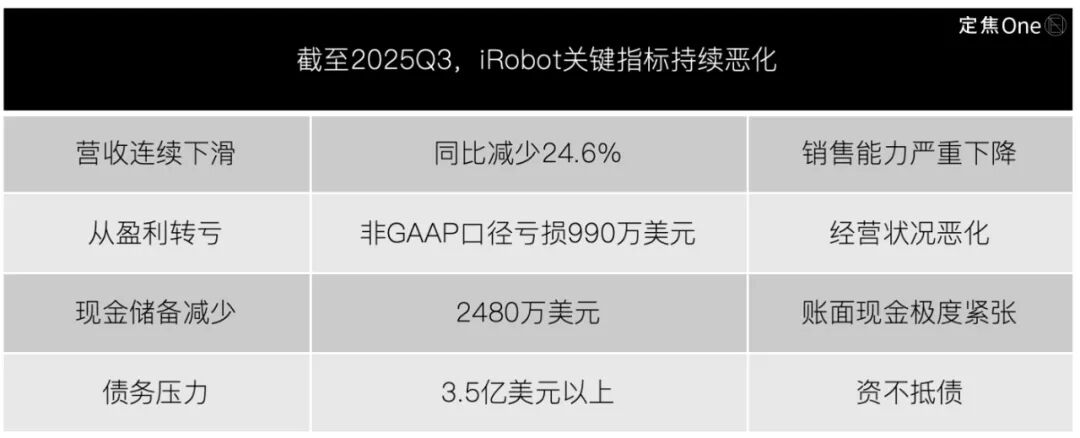
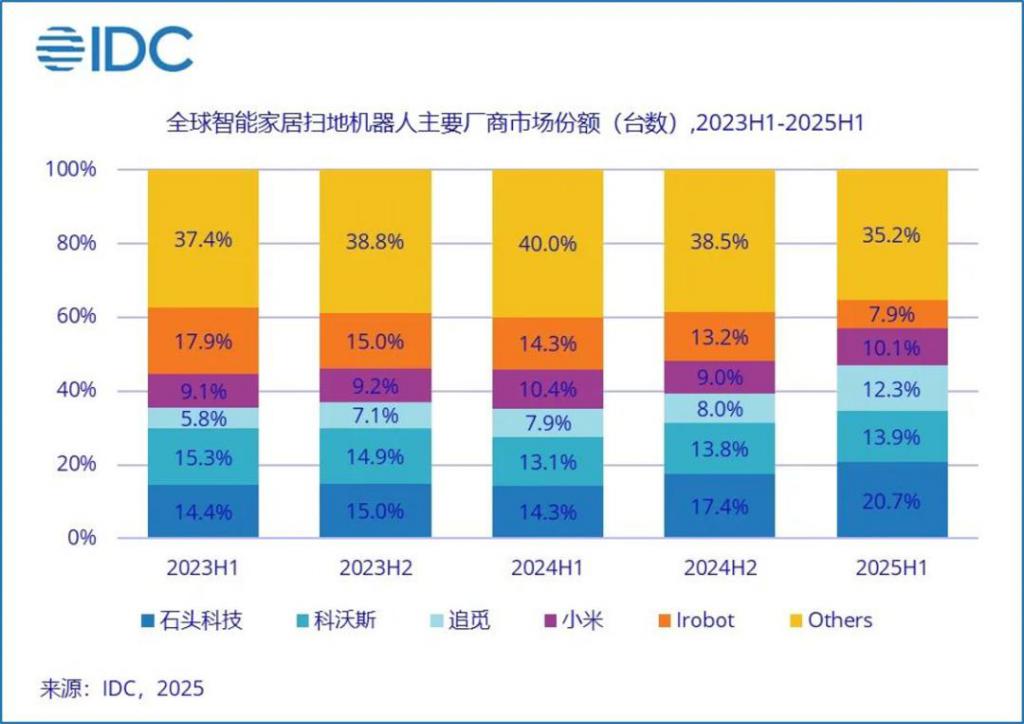
Core Viewpoint - The article discusses the downfall of iRobot, a pioneer in the robotic vacuum industry, which has filed for Chapter 11 bankruptcy protection and is being acquired by its Chinese manufacturing partner, Shenzhen Sanchuan Robotics, due to overwhelming debt and declining market share [4][5][16]. Financial Performance - iRobot's revenue has continuously declined, with a year-on-year decrease of 24.6% [6]. - The company has shifted from profitability to a non-GAAP loss of $9.9 million, indicating deteriorating operational conditions [6]. - Cash reserves have dwindled to $24.8 million, highlighting severe financial strain [6]. - Total debt exceeds $350 million, leading to insolvency [6][14]. Market Position and Competition - iRobot's global market share has plummeted to 7.9% by Q2 2025, ranking fifth, as it faces fierce competition from Chinese brands like Roborock and Ecovacs [20]. - In North America, iRobot's revenue from robotic vacuum products fell by 33% year-on-year in Q3 2025, marking a significant loss in its primary market [21]. - The company has lost substantial market share to Chinese brands, which have effectively captured the market through advanced product features and competitive pricing [22][24]. Supply Chain Dynamics - iRobot's reliance on Shenzhen Sanchuan as its sole manufacturer has created significant supply chain risks, especially as the company faced financial difficulties [10][14]. - The relationship between iRobot and Sanchuan has evolved from a partnership to one where Sanchuan has become the largest creditor, leading to a "debt-for-equity" acquisition [13][16]. - iRobot's inability to manage its supply chain effectively has contributed to its downfall, as it failed to adapt to market changes and technological advancements [39][42]. Technological Disparities - iRobot's commitment to visual navigation technology has hindered its competitiveness against Chinese brands that have adopted laser radar technology, which has become standard in the market [35][36]. - The slower innovation cycle of iRobot, taking 2-3 years for product iterations compared to 6-8 months for Chinese brands, has further exacerbated its market position [40]. Industry Implications - The decline of iRobot reflects a broader shift in the global supply chain dynamics, where control and innovation are increasingly in the hands of Chinese companies [43]. - The article suggests that the traditional model of brand dominance is being replaced by a new order where supply chain efficiency and responsiveness are critical for success in the smart hardware sector [43].


科技消费崛起,大疆、影石争锋相对
2025-12-17 02:27
Summary of Key Points from Conference Call Records Industry Overview - The global consumer drone market is projected to reach approximately $4.27 billion in 2024, with an expected growth to $5.23 billion by 2030, reflecting a compound annual growth rate (CAGR) of about 3% [7][1] - The smart imaging device market, particularly the panoramic camera segment, is estimated to be around ¥6 billion, with a future CAGR of approximately 10% [11][1] Company Insights: DJI - DJI holds a dominant position in the global consumer drone market with a market share of 76%, covering over 170 countries. In the U.S., DJI's market share ranges from 70% to 90%, with an 80% share in agricultural drones [5][1] - DJI's competitive edge is attributed to its vertical integration of key technologies, including flight control systems, gimbal technology, and transmission systems, which create high technical barriers [1][9] - The company has continuously upgraded its transmission technology, evolving from public WiFi protocols to LightBridge and now to OcuSync 4.0, significantly enhancing transmission distance, anti-interference capabilities, and latency [1][10] - DJI's product lineup includes the Mini, Air, and Mavic series, targeting different market segments from entry-level to professional users [8][1] Competitive Landscape - DJI faces competition from Insta360 in the smart imaging market, with DJI capturing a 43% market share in panoramic cameras by Q3 2025, while Insta360's share has decreased to 49% [13][1] - In the action camera segment, DJI's Action 4 has significantly increased its market share to 66% by Q3 2025, challenging GoPro, which has historically led the market [13][1] - The sweeping robot market is highly concentrated, with leading brands like Roborock and Ecovacs. DJI's Romo series has underperformed due to high costs and lack of significant differentiation in obstacle avoidance technology [14][1] Emerging Trends - The rise of technology consumption in China is driven by technological innovation and the engineer dividend, contrasting with new consumption trends influenced by demographic changes and youth preferences [2][1] - The competition in the smart imaging market is expected to intensify, reminiscent of the 1980s when Japanese companies fiercely competed in handheld imaging devices [4][1] Additional Insights - DJI's entry into the sweeping robot market has been met with challenges, including high pricing and limited consumer acceptance of its design innovations [14][1] - The overall consumer drone market is expected to see increased penetration as technology matures and costs decrease, leading to sustained growth [7][1]
扫地机鼻祖,被谁卷死了?
3 6 Ke· 2025-12-17 01:00
Core Viewpoint - iRobot, a pioneer in the robotic vacuum industry, has filed for Chapter 11 bankruptcy protection and will be fully acquired by its largest Chinese manufacturer, Shenzhen Sanchuan Robotics, due to overwhelming debt and declining market share [1][2][5]. Financial Situation - iRobot's revenue has continuously declined, with a year-on-year decrease of 24.6% [2]. - The company reported a non-GAAP loss of $9.9 million, indicating worsening operational conditions [2]. - Cash reserves have dwindled to $24.8 million, highlighting severe financial strain [2][5]. - Total debt exceeds $350 million, with over 70% of this owed to Shenzhen Sanchuan [5][6]. Market Position - iRobot's global market share has plummeted to 7.9% by Q3 2025, ranking fifth in the market [10]. - The company has lost significant ground in its core North American market, where revenue from robotic vacuum products fell by 33% [10][13]. - Competitors, particularly Chinese brands like Roborock and Ecovacs, have rapidly gained market share, effectively pushing iRobot out of the leading tier [10][12][14]. Competitive Dynamics - iRobot's decline is attributed to its inability to compete with Chinese brands that offer advanced features and better pricing [8][18]. - The shift in technology preference from camera-based navigation to laser radar (Lidar) has left iRobot at a disadvantage, as it continued to rely on its older technology [18][19]. - Chinese brands have established a more efficient supply chain and product development cycle, allowing them to respond quickly to market demands [21][24]. Supply Chain and Manufacturing - iRobot's reliance on Shenzhen Sanchuan as its sole manufacturer has created significant risks, culminating in the latter becoming its largest creditor [3][4]. - The relationship between iRobot and Sanchuan has evolved from a partnership to one where Sanchuan now controls iRobot due to its debt acquisition [7][18]. - iRobot's attempts to negotiate new funding or debt relief were unsuccessful, leading to the decision to file for bankruptcy protection [6][24].
昔日巨头宣布破产!深圳代工厂或接盘
Nan Fang Du Shi Bao· 2025-12-17 00:35
曾将机器人送上火星 定义了全球第一台家用扫地机器人的 美国科技巨头iRobot 在2025年的岁末走到了终章 美东时间12月14日,iRobot正式申请破产保护。然而,这场科技企业的"陨落"并未以清算了结,而是上演了一出戏剧性的反转——这家昔日的扫地机器人 鼻祖,或将被其位于中国深圳的长期代工合作伙伴、其目前最大的债权人——杉川机器人全资收购。 图:IC photo iRobot"坠落" 然而,科技行业的残酷在于,在技术快速迭代的战场,稍不留神,昨日的"护城河"或将成为今日的"墓志铭"。 南都.湾财社记者梳理发现,iRobot的衰落并非一日之寒。当中国厂商如科沃斯(603486)、石头科技、追觅等在2018年前后迅速转向"激光雷达+AI避 障"的高效技术路线时,iRobot仍固守其视觉导航(vSLAM)的传统方案;当中国供应链将产品迭代周期压缩至6-8个月时,iRobot推出一款新品仍需耗时2-3 年。 技术路线的误判与迭代效率的低下,iRobot市场份额在2025年已跌至不足8%,连续11个季度亏损,直至此次资不抵债,申请破产。 在iRobot宣布破产重组的方案中,其原本的代工方杉川机器人通过收购债务并转股 ...

扫地机鼻祖iRobot破产重组,中国代工厂接盘还要过几道关?
2 1 Shi Ji Jing Ji Bao Dao· 2025-12-17 00:13
21世纪经济报道记者 吴立洋 号称"扫地机器人"鼻祖的iRobot破产重组一事迎来阶段性进展。 当地时间12月14日,iRobot宣布已与担保贷款方及主要代工制造商深圳杉川及其子公司Santrum达成《重组支持协议》(RSA),杉川将通过法院 监督程序收购iRobot。公司预计将于2026年2月完成该预先安排的破产重组程序。 其进一步表示,该协议是加强iRobot财务基础、助力公司实现长期增长和创新的重要一步。 根据重组支持协议(RSA)的条款,杉川将获得iRobot公司100%的股权。交易完成后,iRobot将成为杉川全资拥有的私营公司,其普通股将不再 于纳斯达克或任何其他国家证券交易所上市。 今年12月上旬,iRobot 发布公告,深圳杉川机器人旗下子公司 Santrum 收购了 iRobot 此前从凯雷集团贷款的 1.907 亿美元(约合12.43亿元人民 币)本金及利息,加上此前iRobot欠杉川的1.615亿美元(约合11.37亿元人民币)货款,杉川共计持有iRobot超3.5亿美元(约合24.65亿元人民币)债 务,并成为其最大债券人。 多位业内人士在与记者交流时指出,作为iRobot的独家代工厂 ...
知名巨头宣布破产,被中国代工厂收购!明星产品家喻户晓,很多人曾抢着买
Qi Lu Wan Bao· 2025-12-16 12:06
Core Viewpoint - iRobot, a pioneer in the robotic vacuum cleaner industry, has filed for bankruptcy, marking a significant decline from its previous market dominance as it faces intense competition from Chinese manufacturers [1][11]. Company Overview - iRobot was founded in 1990 by three MIT graduates with the goal of creating useful robots, leading to the launch of the Roomba in 2002, which sold 50,000 units in its first year and over 2 million by 2005 [5][7]. - The company achieved a peak market share of over 80% in the U.S. and over 60% globally by 2015, establishing itself as the industry leader [5][7]. Recent Performance - In 2022, iRobot reported a net loss of $286 million, continuing a trend of losses for 11 consecutive quarters, with its global market share plummeting to below 8% by Q3 2025 [7][11]. - The global market for robotic vacuum cleaners is growing rapidly, with a nearly 19% year-on-year increase in shipments in the first three quarters of 2025, while iRobot's market position deteriorated [7][10]. Competitive Landscape - Chinese manufacturers, including Ecovacs, Roborock, and Xiaomi, have captured the top five spots in global shipments, significantly impacting iRobot's market share [7][10]. - The competitive edge of Chinese brands lies in their faster product iteration cycles and lower pricing, with similar products priced at approximately $295 compared to iRobot's $399 [10]. Bankruptcy and Restructuring - iRobot filed for Chapter 11 bankruptcy protection on December 15, 2023, and has entered into a restructuring support agreement with its main creditor, Shenzhen Sijia Robotics, which will acquire 100% of iRobot's shares [11][13]. - The company has accumulated debts of $350 million, with overdue manufacturing payments to Shenzhen Sijia reaching $90.9 million [13][15]. - Following the restructuring, iRobot will continue to operate under the Sijia brand, retaining its product support and brand identity [15].
机器人再回调!拓普集团跌近2%,机器人ETF基金(159213)连续4日强势吸金超1000万元!大摩:2050年我国将掌控全球超60%人形机器人供应链!
Sou Hu Cai Jing· 2025-12-16 10:10
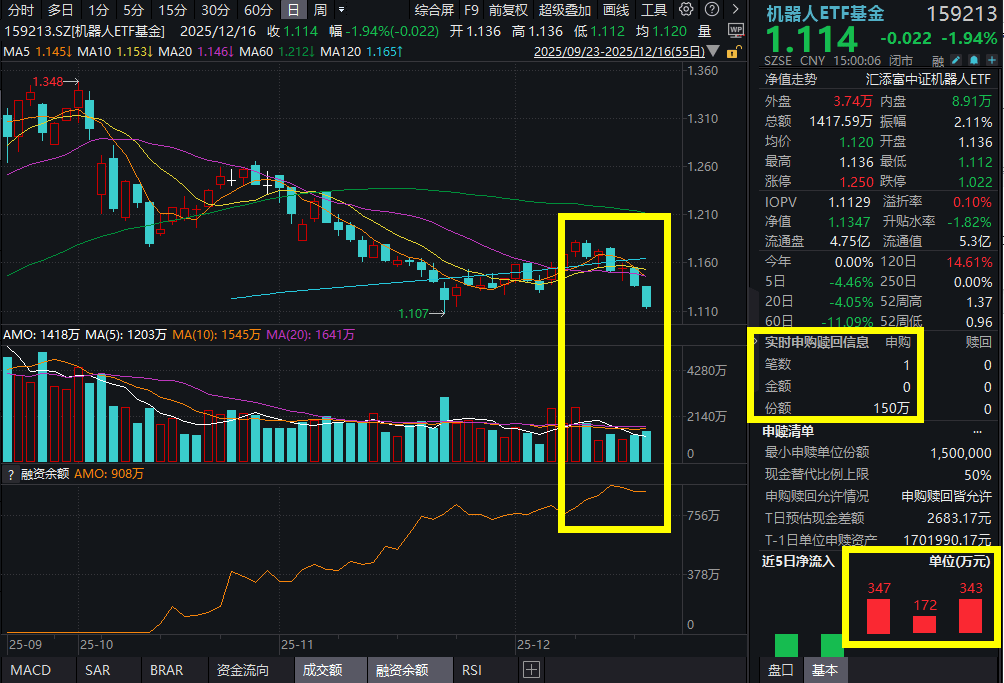
Core Viewpoint - The A-share market experienced significant declines, particularly in the robotics sector, with the Robotics ETF (159213) falling by 1.94% and continuing a downward trend for two consecutive days. Despite this, the ETF attracted nearly 2 million yuan in net subscriptions, marking over 10 million yuan in inflows over the past four days [1][3]. Group 1: Market Performance - The Robotics ETF (159213) has seen a decline, with major component stocks like Zhongkong Technology dropping over 3%, and others such as Dazhu Laser and Keda Xunfei falling more than 2% [3][4]. - The ETF's top ten component stocks mostly experienced declines, with Keda Xunfei down by 2.25% and Huichuan Technology down by 1.69% [4]. Group 2: Industry Growth and Projections - According to the National Bureau of Statistics, China's industrial robot production saw a growth of 20.6% in November, indicating a robust industrial performance [5]. - Morgan Stanley forecasts that global sales of robotics hardware will surge from $100 billion in 2025 to $5 trillion by 2030, and eventually exceed $25 trillion by 2050. China is expected to capture 26% of the global robotics market by 2050, with a dominant position in industrial robots and drones [5]. Group 3: Technological Advancements - Yushutech launched the world's first humanoid robot-specific "AppStore," allowing users to easily install skill packages for robots, which lowers the technical barriers for robot functionality development [5]. - The humanoid robot industry is accelerating its implementation, with policies and standards being established to support commercialization and B-end order validation [6][7]. Group 4: Market Dynamics and Opportunities - The market is witnessing a shift towards standardized technology and industrialization, with companies like Ubtech securing significant contracts, such as a 143 million yuan project for a humanoid robot data collection and training center [7]. - The industry is focusing on various application scenarios, including industrial logistics, elderly care, and specialized environments, indicating a broadening of market opportunities [8].



吃下iRobot的深圳隐形王者浮出水面
机器人大讲堂· 2025-12-16 09:30
Core Viewpoint - The acquisition of iRobot by Shenzhen-based company Shanjun is seen as a strategic move to revitalize the brand and leverage its legacy, despite skepticism regarding Shanjun's ability to manage a historically significant brand with substantial debt [2][4][10]. Group 1: iRobot's Decline - iRobot, founded in 1990, was a pioneer in the robotic vacuum industry, achieving over 80% market share at its peak with the Roomba model [5][6]. - The company faced challenges as Chinese brands advanced in technology, leading to a significant decline in market share, dropping to 7.9% by 2025 [9][10]. - Financially, iRobot was in dire straits with only $24.8 million in cash against $508 million in debt by September 2025, ultimately leading to its bankruptcy filing [9][10]. Group 2: Shanjun's Strengths - Shanjun, backed by strategic investments from major firms, has evolved from a contract manufacturer to a "hidden champion" with a valuation exceeding $1 billion and a revenue of 4.06 billion yuan in 2024 [12][14]. - The company boasts over 1,100 patents and a strong R&D team, allowing it to produce core components in-house, reducing costs by approximately 30% compared to iRobot [12][14]. - Shanjun's successful partnerships with international brands like Dyson and its rapid growth in the domestic market highlight its competitive position [14][18]. Group 3: Strategic Acquisition Benefits - The acquisition provides Shanjun access to iRobot's extensive patent portfolio, which includes over 2,000 patents, facilitating quicker product development and legal protection in international markets [15][16]. - iRobot's established brand and distribution channels in the U.S. and Japan offer Shanjun a valuable platform to expand its own brand, 3i, into global markets [16][18]. - The integration of Shanjun's advanced technology into iRobot's product line is expected to enhance product competitiveness and reduce costs, allowing for more aggressive pricing strategies [19][20]. Group 4: Future Outlook - Shanjun aims to revitalize iRobot through technological upgrades, cost-effective manufacturing, and a dual-brand strategy targeting different market segments [22][23]. - The acquisition signifies a shift in global manufacturing power, with Chinese companies increasingly taking control of technology and brand integration, as seen in Shanjun's strategic moves [24][25]. - The evolving landscape of the robotic vacuum market indicates that companies with core technology and supply chain advantages will emerge as leaders in the future [28][29].
扫地机鼻祖被中国厂商 “卷” 出局,代工厂抄底收购,成最大赢家?
3 6 Ke· 2025-12-16 03:46
没有永恒的护城河,只有持续的自我革新! 美国当地时间12月14日,曾被誉为全球扫地机器人行业"开山鼻祖"的美国公司iRobot,正式官宣了一则震动业界的重大重组动态。这家由麻省理工学院专 家创立、曾手握全球70%市场份额的行业巨头,已与中国深圳杉川机器人及其子公司Santrum(统称"PICEA")签署重组支持协议,将通过美国特拉华州 法院监督的"预先打包第11章破产程序",接受PICEA的全面收购。根据协议,PICEA将获得iRobot100%股权,整个破产重组流程预计于2026年2月前完 成。 这则消息看似是一场财务危机引发的破产重组,实则是全球扫地机产业主导权的系统性转移。iRobot的发展曲线映照出老牌科技企业在快速迭代市场中的 挣扎,而深圳杉川从代工龙头到跨境收购者的身份转变也凸显出中国制造业在全球产业竞争中的角色进阶。一场围绕技术、渠道与行业话语权的再分配, 已然启动。 一、扫地机鼻祖跌落神坛!中国品牌重塑全球竞争版图 观望二十余年的发展历程,扫地机器人最早在欧美市场进行销售,彼时,美国iRobot是扫地机领域的先驱。iRobot于1990年由三位麻省理工学院的机器人 专家联合创立,早期以生产国防 ...
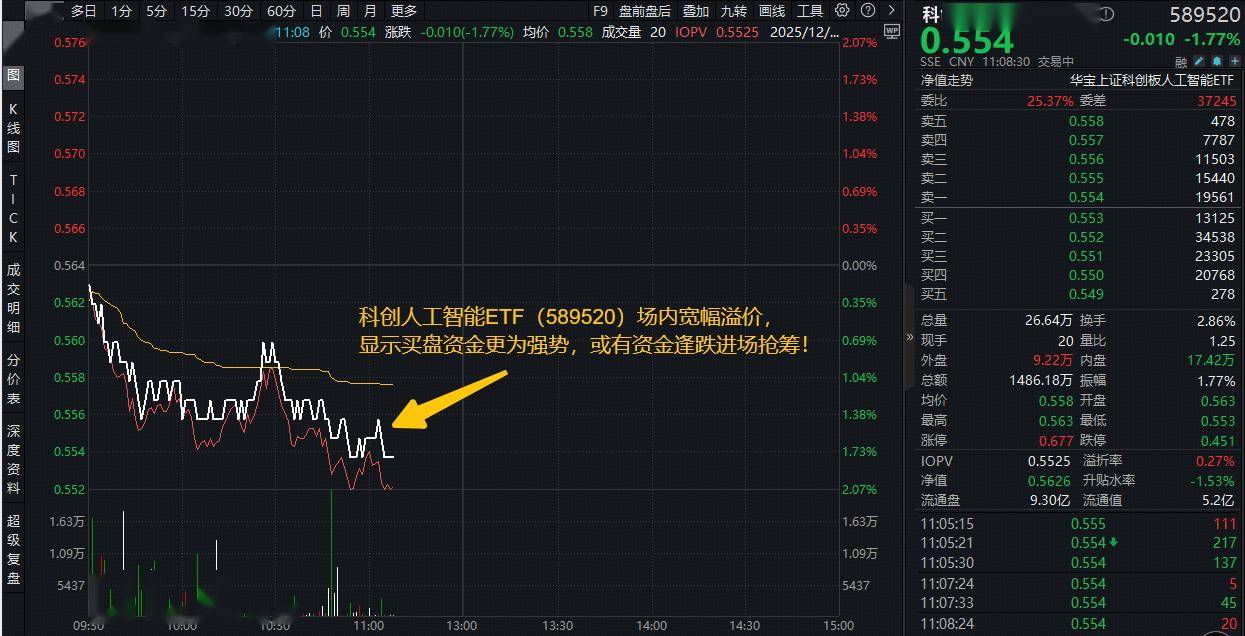
ETF盘中资讯|寒王大动作!资本公积金弥补亏损!如何解读?科创人工智能ETF(589520)宽幅溢价,资金积极进场!
Sou Hu Cai Jing· 2025-12-16 03:29
Group 1 - The core point of the news is that AI chip manufacturer Cambricon plans to use 2.778 billion yuan from its capital reserve to offset accumulated losses, which will improve its financial condition by turning its retained earnings from negative to positive by the end of 2024 [1] - Market analysts indicate that the capital reserve adjustment is an internal accounting measure that does not affect the company's net assets or cash flow, thus posing no operational risks [1] - Cambricon has shown strong performance, with significant revenue and net profit growth expected in the first three quarters of 2025, driven by the substantial release of cloud products like the Siyuan 590 [1] Group 2 - The AI industry is shifting focus from hardware and infrastructure ("selling shovels") to practical applications and commercialization ("mining for gold"), indicating a growing potential in AI applications [2] - The Sci-Tech Innovation AI ETF (589520) is strategically positioned to invest in the AI industry chain, which is transitioning from cloud-based solutions to edge computing, emphasizing self-sufficiency in technology [2] - On December 16, the Sci-Tech Innovation AI ETF experienced a price drop of 1.77%, but it attracted significant investment, indicating strong buying interest despite market fluctuations [2] Group 3 - The importance of information and industrial security has been highlighted in the context of technological friction, with AI being a core technology for achieving self-sufficiency [4] - The Sci-Tech Innovation AI ETF and its connected funds focus on the domestic AI industry chain, with a high concentration in semiconductor stocks, indicating a strong offensive strategy [4]