思元590

Search documents
2025年中国企业级AI应用行业研究报告
艾瑞咨询· 2026-02-28 00:06
Core Viewpoint - The enterprise-level AI application industry is transitioning from a technology exploration phase to a large-scale application phase, driven by advancements in large language models and the need for systematic, end-to-end implementation capabilities [1][14]. Application Layer - Agents are becoming the core vehicle for enterprise-level AI applications, facilitating deep integration with business processes through task decomposition and various operational methods [1][29]. - The focus is on enhancing efficiency in processes, amplifying knowledge, and innovating value through AI applications [17][27]. Supporting Layer - A data-centric approach is essential for model selection, emphasizing the construction of a Data+AI foundation and a data security system tailored for AI [1][41]. - High-quality datasets are crucial for AI development, enabling the transformation of business data into unique competitive advantages [42][45]. Infrastructure Layer - AI computing infrastructure is evolving towards a multi-dimensional and heterogeneous model, highlighting the importance of deep collaboration between software and hardware in the context of domestic substitution [1][50][53]. - The dominance of GPU chips in AI applications is solidifying, with domestic manufacturers focusing on optimizing interconnectivity and inference capabilities to achieve differentiation [50][51]. Organizational Layer - The success of AI applications is heavily influenced by top management's commitment and strategic involvement, which is critical for driving AI investment returns [56]. - Employees must transition from being passive users to active collaborators in AI processes, necessitating a shift in organizational roles and capabilities [60]. Vendor Landscape - The enterprise-level AI application market consists of four main categories: application software, technical services and solutions, cloud services, and AI model providers, creating a dynamic competitive landscape [2][65]. - Established companies leverage their industry expertise to extend AI applications, while startups focus on specific scenarios to complement existing systems [65][66]. Development Trends - The evolution of large models is moving from single Transformer architectures to multi-architecture parallel iterations, allowing for flexible and efficient adaptation to various scenarios [2]. - AI is expected to deeply intervene and reconstruct enterprise processes, leading to a transformation in human-machine collaboration models [2][8].


寒武纪、摩尔线程与沐曦同日“快报”年度成绩单,国产算力芯片厂商营收规模普遍实现倍增
Jing Ji Guan Cha Wang· 2026-02-27 14:43
Core Viewpoint - The domestic computing chip industry is experiencing significant revenue growth, with major players like Cambricon, Moore Threads, and Muxi achieving triple-digit increases in their annual revenues for 2025, marking a shift from technology validation to commercial scale replacement in the market [2][10]. Group 1: Cambricon's Performance - Cambricon reported a total revenue of 6.497 billion yuan for 2025, an increase of 4.532 billion yuan year-on-year, representing a growth of 453.21% [3]. - The company achieved a net profit of 2.059 billion yuan, recovering from a loss of 452 million yuan in the previous year [3]. - In Q4 2025, Cambricon's revenue was 1.89 billion yuan, with a quarter-on-quarter growth of 9.4%, although net profit decreased by 19.8% compared to the previous quarter [3][4]. Group 2: Moore Threads' Performance - Moore Threads reported a total revenue of 1.505 billion yuan for 2025, up 243.37% from 438 million yuan in the previous year [6]. - The net loss narrowed to 1.024 billion yuan from a loss of 1.618 billion yuan year-on-year, a reduction of 36.70% [6]. - The MTT S5000 GPU, a key product, has achieved mass production and is designed for high AI computing performance [6][7]. Group 3: Muxi's Performance - Muxi reported a total revenue of 1.644 billion yuan for 2025, an increase of 121.26% from 743 million yuan in the previous year [9]. - The net loss was 781 million yuan, reduced from a loss of 1.409 billion yuan year-on-year, representing a 44.53% improvement [9]. Group 4: Nvidia's Performance - Nvidia's Q4 2026 revenue reached $68.127 billion, a year-on-year increase of 73% and a quarter-on-quarter increase of 20% [11]. - The company's net profit for the same quarter was $42.96 billion, up 94% year-on-year [11]. - Over 90% of Nvidia's revenue comes from its data center business, which saw a 75% year-on-year growth [11][12]. Group 5: Market Trends - The demand for computing power continues to rise, benefiting both domestic chip manufacturers and Nvidia, as global capital expenditures for large-scale data centers remain high [10]. - Nvidia's procurement obligations surged to $95 billion, indicating strong future demand for its products [15]. - The shift in software development towards real-time generation is expected to further drive revenue growth in the AI sector [16].


上市以来首次年度盈利!寒武纪2025年净利超18亿元
Huan Qiu Lao Hu Cai Jing· 2026-02-02 05:21
Core Viewpoint - The company, Cambricon, is expected to achieve significant revenue growth in 2025, with projected revenues between 6 billion to 7 billion yuan, marking an increase of 410.87% to 496.02% year-on-year, and a turnaround from previous years of losses [1] Group 1: Financial Performance - Cambricon anticipates a net profit attributable to shareholders of 1.85 billion to 2.15 billion yuan, with a non-recurring net profit of 1.6 billion to 1.9 billion yuan [1] - The company reported a substantial revenue increase starting from Q4 2024, achieving a quarterly net profit of 272 million yuan, with continued revenue growth in 2025 [1] - The net profit attributable to shareholders rose from 272 million yuan in Q4 2024 to 567 million yuan in Q3 2025, reflecting a steady improvement in profitability [1] Group 2: Market Position and Capital Performance - As of February 2, Cambricon's stock price reached 1263.88 yuan per share, with a total market capitalization of 533 billion yuan, and a cumulative stock price increase of over 92% since the beginning of 2025 [2] - The company has been included in major indices such as the Sci-Tech Innovation 50, CSI 300, SSE 50, and CSI A50, indicating strong market recognition [2] - Notable investor Zhang Jianping increased his holdings in Cambricon to 6.4065 million shares, representing 1.53% of the total share capital, making him the fifth-largest circulating shareholder [2] Group 3: Product and Market Strategy - Cambricon has established a comprehensive product layout across "cloud-edge-end" scenarios, with cloud products contributing over 99% of its revenue [2] - The company holds approximately 69.9% market share in the GPU market, indicating a strong competitive position [2] - To address the rapid growth in intelligent computing demand, Cambricon raised 3.985 billion yuan through a private placement, focusing on projects related to large model chip platforms and software platforms [2] Group 4: Industry Outlook - According to Frost & Sullivan, China's AI chip market is projected to grow from 142.537 billion yuan in 2024 to 1,336.792 billion yuan by 2029, with a compound annual growth rate of 53.7% from 2025 to 2029, suggesting ongoing opportunities for Cambricon [2]
寒武纪首年盈利 营收暴增400%+
是说芯语· 2026-01-30 23:53
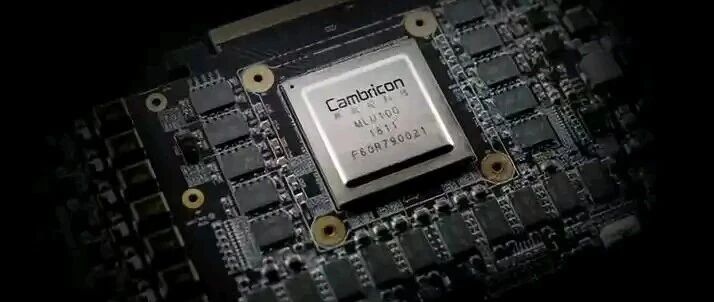
Core Viewpoint - The leading domestic AI chip company, Cambricon, has reported a significant turnaround in its financial performance for the year 2025, achieving substantial revenue growth and profitability for the first time in its history [1][4]. Financial Performance - Cambricon is expected to achieve an operating revenue of between 6 billion to 7 billion yuan in 2025, representing an increase of 4.826 billion to 5.826 billion yuan compared to 1.174 billion yuan in 2024, with a year-on-year growth rate of 410.87% to 496.02% [4]. - The net profit attributable to the parent company is projected to be between 1.85 billion to 2.15 billion yuan, a significant recovery from a net loss of 0.452 billion yuan in 2024 [4]. - The net profit after deducting non-recurring gains and losses is expected to reach between 1.6 billion to 1.9 billion yuan, indicating strong core business competitiveness [4]. - In Q1 2025, the company reported a revenue increase of 4230.22% year-on-year, with both net profit and net profit excluding non-recurring items turning positive, setting a solid foundation for the annual performance [4]. - By the end of Q3 2025, cumulative revenue reached 4.607 billion yuan, a year-on-year increase of 2386.38%, with net profit of 1.605 billion yuan, nearing the lower limit of the annual forecast [4]. Growth Drivers - The substantial growth and turnaround in profitability are primarily attributed to the continuous rise in demand for computing power in the AI industry, alongside the company's focus on research and development in AI chip products and technological innovation [5][6]. - Cambricon has established a comprehensive product system covering cloud, edge, and end devices, meeting various AI computing needs across different scales [6]. - The company’s core products, such as the Siyuan 590 and Siyuan 370, have become mainstream market choices, while the edge product Siyuan 220 has also seen significant growth [6]. Industry Context - The remarkable performance of Cambricon reflects broader opportunities within the domestic AI chip industry, driven by the explosive demand for AI computing power and the acceleration of domestic substitution processes [7]. - The Chinese AI chip market is experiencing rapid growth, with increasing space for domestic alternatives, positioning Cambricon favorably to capitalize on these industry trends [7].
寒武纪上市5年首度扭亏,有望摘“U”
Xin Lang Cai Jing· 2026-01-30 14:55
Core Viewpoint - The company, Cambricon Technologies, has reported significant growth in revenue and net profit, marking a turnaround from previous losses, with expectations to achieve revenue of 6 to 7 billion yuan in 2025, representing a year-on-year increase of 410.87% to 496.02% [1][2] Revenue and Profit Growth - The company anticipates a substantial increase in revenue, projecting a growth of over four times year-on-year for 2025 [3] - The net profit attributable to the parent company is expected to be between 1.85 billion and 2.15 billion yuan, a significant recovery from a loss of 450 million yuan in the previous year [1][3] Market Dynamics - The growth in performance is attributed to the rising demand for AI computing power, as the company has expanded its market presence and facilitated the implementation of AI applications [3] - A structural shortage in global AI computing power supply, exacerbated by U.S. export controls affecting high-end products from companies like NVIDIA, has created a significant market opportunity for domestic chip manufacturers [4] Product Portfolio and Market Position - As the first publicly listed AI chip design company in China, Cambricon's product range includes cloud, edge, and terminal chips, with significant procurement from key industries such as internet, finance, and telecommunications [5] - The company is on track to potentially remove the "U" designation from its stock name, which has been associated with continuous losses since its listing in July 2020, contingent on achieving positive audited net profit and net profit excluding non-recurring items [5][6] Valuation and Market Sentiment - Despite impressive annual data, there are concerns about a potential decline in revenue for the fourth quarter, with estimates suggesting a range of 1.393 billion to 2.393 billion yuan, indicating a possible sequential drop [7][8] - The company's market capitalization reached 530.9 billion yuan, leading to a static price-to-earnings ratio of approximately 247 to 287 times, raising questions about the sustainability of its growth amidst high valuations [8][9] - Recent stock performance has shown volatility, with a decline of 7.13% since the beginning of the year, as some investors opted to take profits ahead of the earnings forecast announcement [8][9]
特朗普一句话令美损失5万亿,而这位“中国天才”在制裁中崛起
Sou Hu Cai Jing· 2026-01-08 01:26
Group 1 - The core argument of the article revolves around the impact of U.S. policies on the semiconductor industry, particularly focusing on the competition with China and the implications of Trump's potential return to power [2][4][5] - The U.S. government has implemented significant measures to restrict high-end chip equipment exports to China, collaborating with allies like the Netherlands and Japan to tighten the technology supply chain [4][9] - Trump's approach to the semiconductor industry emphasizes tariffs over subsidies, proposing to impose tariffs ranging from 25% to 100% to encourage domestic production, which has led to significant market reactions, including a sharp decline in U.S. stock indices [5][7][9] Group 2 - The article highlights the resilience of China's semiconductor industry, which has accelerated its self-reliance and innovation in response to U.S. sanctions, with companies like Huawei and Cambrian Technology making significant advancements [9][20] - The narrative includes the story of Chen Yunqi and his brother, who have made notable contributions to AI chip development in China, showcasing how domestic firms have adapted and thrived despite external pressures [12][18][20] - The emergence of new AI models and frameworks, such as DeepSeek, is reshaping the global semiconductor landscape, allowing Chinese companies to gain recognition and market share, further solidifying their position in the industry [21][25]

国产AI芯片:推理赛道起飞,谁能再破寒武纪神话?
Nan Fang Du Shi Bao· 2026-01-07 23:14
Core Insights - The domestic AI chip industry is experiencing a significant transformation in 2025, driven by the launch of DeepSeek, which has accelerated the demand for AI computing power and domestic alternatives [2][3] - Major domestic companies like Cambrian, Moore Threads, and Muxi are making headlines with their stock performances and upcoming IPOs, indicating a capital market boom for domestic AI chips [2][5] - The market is witnessing a shift in focus from training to inference, with a projected market size for AI inference chips in China expected to grow from 162.6 billion yuan in 2024 to 310.6 billion yuan in 2025 [3][4] Trend 1: Domestic AI Chip Opportunities - The launch of DeepSeek has ignited enthusiasm for domestic AI chips, particularly in the inference sector, as companies like Huawei and Cambrian quickly adapt to support this new model [2][3] - The inference chip market is expected to see explosive growth, with significant contributions from companies focusing on inference applications, such as Huawei, Cambrian, and Muxi [3][4] Trend 2: IPO Surge of Domestic AI Chip Manufacturers - 2025 marks a pivotal year for domestic AI chip manufacturers, with several companies successfully listing on the stock market, including Moore Threads and Muxi, which saw substantial initial stock price increases [5][6] - Despite the IPO successes, the market share of domestic chip manufacturers remains low, with major players like Nvidia and AMD dominating the market [6][7] Trend 3: Nvidia's Market Dynamics - Nvidia has faced challenges in the Chinese market, including export restrictions and security concerns, which have opened opportunities for domestic chip manufacturers [9][10] - The approval of Nvidia's H200 chip for sale in China could impact the domestic market, as it offers competitive performance, although concerns about dependency on foreign technology persist [10][11] Trend 4: Advanced Process Limitations - Domestic AI chip manufacturers are constrained by limitations in advanced process technologies, with most using 7nm or 14nm processes compared to Nvidia's 4nm technology [12][13] - Companies are exploring alternative solutions, such as switching to domestic supply chains and developing "super nodes" to enhance performance despite process limitations [13][14] Outlook: Future Opportunities for Domestic AI Chips - The domestic AI chip market is expected to exceed 300 billion yuan by 2026, driven by the rapid development of intelligent computing centers and increasing AI demands from internet companies [15][16] - The industry is anticipated to split into two main directions: self-developed ASICs by CSPs and local suppliers, with a focus on lower-spec AI inference chips presenting significant growth opportunities [16]

八部门发文强化人工智能算力供给,AI芯片及操作系统等关键领域公司受益
Xuan Gu Bao· 2026-01-07 15:09
Group 1 - The Ministry of Industry and Information Technology and eight other departments issued the "Implementation Opinions on the Special Action of 'Artificial Intelligence + Manufacturing'" which emphasizes strengthening the supply of artificial intelligence computing power [1] - The opinions promote the development of intelligent chips and support breakthroughs in key core technologies such as high-end training chips, edge inference chips, AI servers, high-speed interconnection, and intelligent cloud operating systems [1] - By 2027, China's key core technologies in artificial intelligence are expected to achieve safe and reliable supply, with the industry scale and empowerment level remaining among the world's top [1] Group 2 - The analysis indicates that the safe and reliable supply of key artificial intelligence technologies is crucial for achieving a fully autonomous and controllable industrial ecosystem, reducing dependence on external technologies [2] - The focus has shifted from "technology selection" to "strategic necessity," which will accelerate the replacement of domestic computing power, algorithms, and security technologies in the short term [2] - In the long term, this will reshape the global AI industry landscape and provide a "secure foundation" and "innovation engine" for the high-quality development of China's digital economy [2] Group 3 - Haiguang Information is a leading enterprise in the domestic high-end processor R&D field, with its CPU and DCU driving growth, and the upcoming release of the next-generation Haiguang 5 and Deep Computing 4 is expected to maintain rapid revenue growth [3] - Cambrian is a leading company in the domestic AI chip sector, focusing on AI chip R&D and technological innovation, with a product matrix covering cloud, edge, and terminal scenarios [3] - Cambrian's products include the Siyuan 590 and Siyuan 370 cloud training and inference chips, which meet the AI application needs across various industries such as internet, finance, transportation, and energy [3]

北京人工智能第一城“炼金术”
Bei Jing Shang Bao· 2026-01-05 15:10
Group 1 - The core viewpoint of the article highlights Beijing's rapid development as a leading hub for artificial intelligence (AI), showcasing significant advancements in AI technology, particularly in chip development and large model applications [1][2][3] - As of the first half of 2025, Beijing's AI core industry is projected to reach a scale of 215.2 billion yuan, with an expected annual growth rate of 25.3%, potentially reaching 450 billion yuan by the end of the year [1] - Beijing has established a "chip matrix" in the AI chip sector, featuring leading domestic products such as Kunlun, Cambricon, and Moore Threads, which are now integral to real business applications [3][8] Group 2 - The article emphasizes the importance of a cohesive ecosystem that integrates algorithms, chips, and data, enabling AI technologies to transition from laboratories to everyday applications [2] - The launch of the FlagOS 1.6 system software stack by Zhiyuan Research Institute aims to unify various AI chips and frameworks, addressing the compatibility challenges faced by large models [7][8] - Beijing is home to 209 registered large models, accounting for nearly 30% of the national total, with notable models like Doubao and Kimi being developed locally [9][10] Group 3 - The article discusses the innovative capabilities of Beijing's AI models, such as the GLM-4.7-flash, which enhances training efficiency while reducing resource consumption [10][11] - The MiniCPM-o 4.5 model, developed by Mianbi Intelligent, is highlighted for its unique features, including full-duplex and multimodal capabilities, showcasing advancements in human-computer interaction [12][13] - The "density law" of large models, which suggests that their capability density doubles approximately every 3.5 months, has been validated by recent research and is a key aspect of Beijing's AI development [13] Group 4 - Beijing plans to implement nine major actions to further establish itself as a global AI innovation hub, focusing on technology innovation, data quality, and application empowerment [14][19] - The RoboFinals platform, introduced by Guanglun Intelligent, represents a significant advancement in industrial-grade evaluation for embodied intelligence, creating a closed-loop system for data generation, model training, and capability assessment [18][19] - The article concludes by emphasizing the collaborative efforts of various stakeholders in Beijing's AI ecosystem, which have contributed to its sustainable growth and resilience [20]

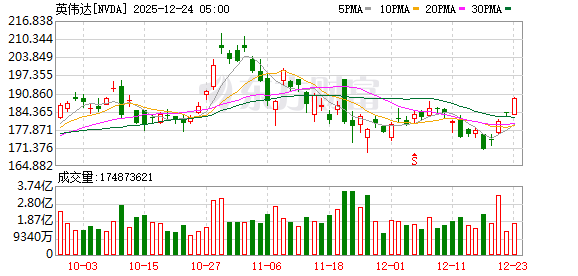
英伟达H200重返中国:精心计算的“次优解”博弈
Zhong Guo Jing Ying Bao· 2025-12-24 13:25
Core Insights - Nvidia plans to deliver AI chip H200 to Chinese customers by mid-February 2026, marking its first official permission to supply high-performance AI products to approved clients in China since the U.S. tightened export controls in October 2023 [2][3] - The H200 chip, which offers a performance increase of 6.7 times compared to the previous H20 model, is seen as a strategic compromise in the ongoing U.S.-China tech rivalry, providing a temporary boost to Nvidia's performance while also serving as a catalyst for China's domestic chip innovation [3][5] Nvidia's Market Strategy Evolution - Over the past three years, Nvidia's supply strategy for the Chinese market has gradually retreated, starting with the ban on A100/H100 exports in September 2022, followed by the introduction of lower-performance models like A800/H800 and H20, which faced criticism for their limited capabilities [4] - The introduction of the H200 chip is viewed as a nuanced move to fill a market gap while adhering to U.S. government restrictions on more advanced chips like Blackwell and Rubin [5][6] Implications for the Industry - The limited return of the H200 chip is expected to have significant short-term impacts on Chinese GPU and chip manufacturers, pushing them towards innovation and domestic alternatives [6][7] - Companies like Baidu and Zhipu AI are already adopting a mixed training model using both Nvidia and domestic chips, indicating a shift in strategy to mitigate reliance on foreign technology [6][7] Nvidia's Balancing Act - Nvidia's actions reflect a balancing act between maintaining revenue from the Chinese market, which accounted for $5.4 billion in Q3 2025, and navigating geopolitical risks [7] - The H200's return is seen as a strategic signal that highlights the need for China to develop its own technology solutions rather than relying on external sources [6][7] Recommendations for Chinese Enterprises - Chinese companies are advised to adhere strictly to national security reviews when procuring H200 chips and to diversify their technology sources to avoid over-reliance on a single supplier [8] - There is a call for increased investment in software ecosystems and the formation of domestic alliances to enhance bargaining power and share technological advancements [8]