福田汽车

Search documents
宇通/安凯争冠 中车/福田涨超6成 中通大涨2倍 11月新能源客车销量看点 | 头条
第一商用车网· 2025-12-25 07:08
Core Viewpoint - In November 2025, the sales of large and medium-sized new energy buses in China experienced significant growth, with a total of 9,924 units sold, marking a 39.05% month-on-month increase and a 56.60% year-on-year increase, indicating a robust market performance [1][2]. Sales Performance of Leading Companies - Ankai Bus achieved the highest sales with 2,274 units, reflecting a staggering month-on-month growth of 501.59% and a year-on-year growth of 1,676.56%, capturing a market share of 22.91% [2][5]. - Yutong Bus ranked second with 1,786 units sold, showing a month-on-month increase of 45.80% and a year-on-year increase of 42.99% [5][7]. - CRRC Electric ranked third with 1,142 units sold, with a month-on-month growth of 23.86% and a year-on-year growth of 66.47% [5][7]. - Other notable performers included Xiamen Golden Dragon and Geely Far Star, with sales of 767 and 557 units respectively, both showing significant growth [5][7]. Market Share Insights - The top three companies accounted for a combined market share of 52.42%, an increase from 39.30% in October, while the top five companies held nearly 70% of the market [11][12]. - The total market share of the top ten companies reached 89.03%, up from 86.72% in September [11]. Cumulative Sales Data - From January to November 2025, a total of 49,103 units were sold, representing a year-on-year increase of 37.13% [1][11]. - Ankai Bus and Suzhou King Long were the only two companies among the top ten to achieve cumulative sales growth exceeding 100%, with increases of 257.01% and 153.15% respectively [11][21]. Segment Performance - In the bus segment, 6,390 units were sold in November, with a market share of 64.39%, while the seat bus segment saw sales of 3,218 units, reflecting a month-on-month increase of 197.41% and a year-on-year increase of 210.62% [14][22]. - The "other buses" category, including school buses, sold 316 units, with a remarkable year-on-year growth of 532.00% [14][15]. Conclusion - The November performance of the new energy bus market in China indicates a competitive landscape with several brands showing significant growth, setting the stage for a strong finish to the year as companies prepare for the annual competition [26].



中国市场 L3 自动驾驶车型量产准入许可:象征性举措还是重大产业机遇?
Counterpoint Research· 2025-12-25 06:14
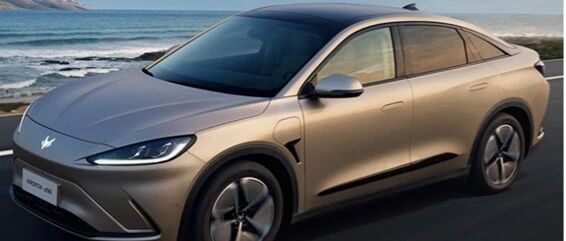
Core Insights - The article discusses the approval of L3-level conditional autonomous driving vehicles in China, specifically the Changan Deep Blue SL03 and BAIC Arcfox αS6, highlighting their operational limitations and the significance of this regulatory milestone [4][6]. Group 1: Regulatory Approval and Market Impact - On December 15, 2025, the Ministry of Industry and Information Technology of China approved Changan and BAIC's applications for L3-level autonomous vehicles, allowing them to operate under specific conditions [4][6]. - The approval is seen as a symbolic milestone that exceeds the immediate production value, with the first half of 2026 expected to be a critical window for mass production of L3-level autonomous vehicles in China [6][7]. Group 2: Competitive Landscape - Tesla's Full Self-Driving (FSD) 14.2 system is anticipated to enter mass production in China between Q2 and Q3 of 2026, increasing competitive pressure on local automakers [6]. - Joint ventures represented by companies like BMW, GM, and Mercedes are likely to miss the approval window for L3-level autonomous production in 2026 due to internal communication and localization compliance challenges [6]. Group 3: Technical Analysis of Approved Models - Both approved models, Changan Deep Blue SL03 and BAIC Arcfox αS6, are based on L2-level hardware but have been adapted for specific L3 operational design domains (ODD) [7]. - Changan's solution relies on pure visual perception and a rule-based planning and control system, reflecting the company's ongoing advancements since 2020 [10]. - BAIC's approach utilizes multi-sensor fusion and an end-to-end software architecture, optimized for L3 highway scenarios based on Huawei's commercial autonomous driving system [10]. Group 4: Future Projections - Additional models from companies such as BYD, FAW, GAC, NIO, and SAIC are expected to receive L3-level approval, with models from XPeng, Tesla, and those equipped with Huawei ADS 4.0 anticipated to launch in the latter half of 2026 [7].


试驾混动巨兽——悍途PHEV,不只拉货,更是生活!| 头条
第一商用车网· 2025-12-25 03:32
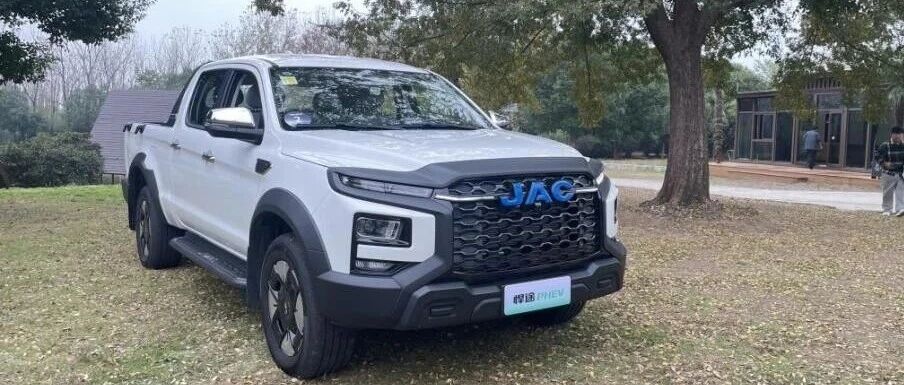
Core Viewpoint - The article discusses the launch of the Jianghuai Hantu PHEV, the world's first "thousand-torque hybrid pickup," which aims to redefine the utility and versatility of pickups in diverse driving scenarios, addressing the limitations of traditional fuel pickups and pure electric pickups [1][20]. Group 1: Product Features - The Hantu PHEV features a "three-source power" structure, combining a 2.0T GDI hybrid engine with front and rear electric motors, and an innovative 4DHT decoupled hybrid transmission, allowing for seamless switching between multiple driving modes [3][5]. - The vehicle can operate in pure electric, range-extending, direct drive, and hybrid modes, providing a versatile driving experience tailored to various conditions, with a cost of approximately 0.1 yuan per 100 kilometers in pure electric mode [5][7]. - The Hantu PHEV achieves a peak torque of 1000 N·m and can accelerate from 0 to 100 km/h in just 5.9 seconds, showcasing its powerful performance capabilities [5][9]. Group 2: Driving Experience - The driving experience of the Hantu PHEV is likened to that of an SUV, with excellent power performance, chassis tuning, and overall comfort, making it suitable for both urban commuting and off-road adventures [7][9]. - The vehicle's cabin noise levels are impressively low, with a quietness of 38 decibels at rest, and superior wind noise control during high-speed driving, enhancing the overall driving experience [9][11]. - The Hantu PHEV offers two rear suspension options, catering to different user needs, with the tested model featuring a leaf spring suspension that performs well in off-road conditions [11][12]. Group 3: Smart Features - The Hantu PHEV is equipped with advanced smart features, including a 10.25-inch digital instrument panel and a 10.4-inch central control screen, providing a modern and tech-savvy user experience [16][18]. - It includes 18 L2-level driver assistance functions, significantly reducing the driving burden on highways [16]. - The vehicle's V2L (Vehicle-to-Load) capability allows for external power supply up to 15 kW, making it a mobile workstation for various applications, such as charging drones or powering outdoor equipment [18]. Group 4: Conclusion - The Hantu PHEV successfully combines the ruggedness and practicality of traditional pickups with advanced hybrid technology and smart features, offering a comprehensive solution for urban commuting, outdoor adventures, and as a mobile power station [20].

企业竞争或进入技术、盈利、商业落地等全面比拼新阶段
Xin Hua Wang· 2025-12-25 02:33
Core Insights - The intelligent driving industry is entering a "survival of the fittest" phase, where competition will focus on technology, profitability, and commercial viability [1][5][6] Market Restructuring - The intelligent driving company Haomo Zhixing has reportedly come to a complete halt, with many employees not receiving salaries for months. The company, backed by Great Wall Motors, once had a valuation exceeding 10 billion yuan but is now facing layoffs and executive departures [2] - Other companies like Zongmu Technology and Qingyan Weishi have also faced bankruptcy or deep restructuring despite previous funding rounds [2] Resource Concentration - The Ministry of Industry and Information Technology has conditionally approved two L3 autonomous driving models for trial operations in specific areas, marking a shift from "practice allowed" to "official road use" [3] - Companies like Yuanrong Qihang and Zhuoyue Technology have secured significant investments, indicating a trend of resource concentration towards leading firms [3] International Competition - Global giants like General Motors are seeking expertise from former employees of failed ventures to enhance their autonomous vehicle initiatives, reflecting a diverse technological approach in the industry [4] - The investment landscape has cooled significantly since its peak in 2021, with a notable shift towards funding established players rather than startups [4][5] Industry Challenges - Companies face significant challenges in establishing sustainable business models, with only a few profitable among the major listed intelligent driving firms [6][7] - The focus has shifted from merely technological capabilities to include cost control, compliance, and mass production capabilities as essential criteria for success [7] Future Outlook - The industry is expected to consolidate further, with independent autonomous driving companies facing increased pressure and potential mergers or acquisitions [5][6] - Predictions indicate a shift towards fully autonomous driving solutions in the next 5 to 10 years, driven by advancements in data and AI technologies [7][8]

银行年末加码汽车消费金融
Jing Ji Wang· 2025-12-25 02:12
Core Viewpoint - Banks are intensifying support for automotive consumer finance to stimulate the automotive market and align with national consumption policies, utilizing various loan schemes to meet consumer needs [1][4]. Group 1: Bank Initiatives - Multiple banks are launching targeted year-end purchase incentives, such as Ping An Bank's "minimum 0% interest" campaign with loan amounts ranging from 30,000 to 5 million yuan, and Postal Savings Bank's financial plan offering up to 4,500 yuan in subsidies for specific new models [2][3]. - Credit card installment plans are becoming a key focus for banks in automotive consumer finance, with ICBC offering up to 60 months of financing at minimum 0% interest for specific models purchased with their credit card [2]. Group 2: Customer Experience Enhancements - Some banks are upgrading automotive benefits for credit card holders to enhance customer experience, such as Industrial Bank's "monthly rewards" program for cardholders, allowing them to save up to 1,800 yuan annually [3]. Group 3: Industry Trends - The increase in automotive consumer finance by banks is a response to policy directives and a proactive measure to address slowing retail credit growth and the scarcity of quality assets [4]. - Experts predict a shift towards refined operations in automotive consumer finance, moving away from high-interest models to compliance-based, demand-driven service models, with a focus on electric vehicles and used car transactions [4][5].



2025年中国车载毫米波雷达行业发展历程、产业链、市场规模、竞争格局及未来趋势研判:国产替代进程加速,车载毫米波雷达规模将达99.29亿元[图]
Chan Ye Xin Xi Wang· 2025-12-25 01:33
Core Insights - The automotive millimeter-wave radar market is currently dominated by international leaders such as Bosch, Continental, and Aptiv, but domestic manufacturers are accelerating the localization process due to improved technology and product competitiveness [1][9] - The Chinese automotive millimeter-wave radar industry is experiencing strong growth, with the market size projected to increase from 2.318 billion yuan in 2015 to 8.822 billion yuan in 2024, representing a compound annual growth rate (CAGR) of 16.01% [1][10] - By 2025, the market size is expected to reach 9.929 billion yuan, driven by a more complete domestic supply chain, increased R&D investment, and growing demand for self-controlled solutions from downstream vehicle manufacturers [1][10] Industry Overview - Automotive millimeter-wave radar operates in the millimeter-wave frequency band, providing critical environmental perception data for autonomous and assisted driving by measuring distance, speed, and angle of targets [1][6] - The radar is categorized into corner radars and front radars, with corner radars used for cross-vehicle warnings and blind spot detection, while front radars are utilized for automatic emergency braking and adaptive cruise control [1][6] Industry Development History - The Chinese automotive millimeter-wave radar industry has undergone five development stages: the initial stage before 2013, preliminary development from 2014 to 2015, scale development from 2016 to 2020, high-quality development from 2021 to 2024, and technological equality from 2025 onwards [4][5] Market Trends - The global automotive millimeter-wave radar market is projected to grow from $2.262 billion in 2020 to $3.482 billion in 2024, with a CAGR of 11.39% [7][9] - By 2025, the global market size is expected to reach $4.195 billion, with front radars accounting for $2.181 billion and corner radars for $2.014 billion [7][9] Competitive Landscape - The industry features a diversified competitive landscape with international giants like Bosch, Continental, and Aptiv leading in high-end markets, while domestic companies such as Desay SV and Huayu Automotive are rapidly gaining market share through R&D and localized services [11][12] - Desay SV has maintained the largest market share in the domestic smart driving sector, achieving a revenue of 4.147 billion yuan in the first half of 2025, a year-on-year increase of 55.49% [12][13] - Huayu Automotive has a strong presence in various automotive components and has integrated millimeter-wave radar and other sensors to provide solutions for different levels of driving assistance [12][13] Future Development Trends - The future of automotive millimeter-wave radar is expected to focus on perception fusion and functional expansion, integrating with cameras and LiDAR for enhanced environmental perception [14] - The industry is also moving towards chip integration, with a trend towards single-chip solutions that reduce size, power consumption, and costs [15] - Additionally, the evolution of radar technology is shifting from hardware functionality to software-defined capabilities, allowing for customizable and upgradable perception models [16]


中国汽车智能化步入全新攻坚期
Zhong Guo Qing Nian Bao· 2025-12-24 22:15
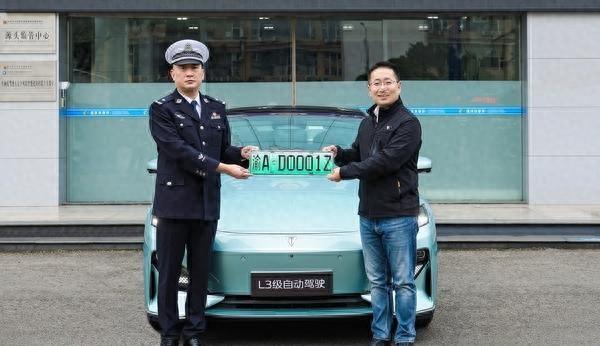
Core Insights - The issuance of the first L3-level autonomous driving license plate "渝AD0001Z" to Changan Automobile marks a significant milestone in China's progress in the autonomous driving sector, reflecting the company's commitment to safety and innovation [2][3] - The approval of L3-level conditional autonomous driving products by the Ministry of Industry and Information Technology indicates a critical advancement in the management practices of strategic technologies in China, serving as a catalyst for the industry's intelligent transformation [2][3] Industry Developments - Changan Automobile has undergone seven iterations of technology since establishing its intelligent research and development team in 2009, showcasing its deep-rooted automotive manufacturing experience and successful transition to smart technology [3] - The penetration rate of L2-level advanced driver assistance systems (ADAS) in new passenger cars in China exceeded 60% in the first three quarters of this year, with expectations to rise to 90% by 2030, indicating a shift from technology validation to large-scale commercial application [3] Collaborative Innovation - The achievement of L3-level autonomous driving is attributed to collaborative innovation across the industry chain, with leading domestic brands and new car manufacturers investing heavily in intelligent driving as a core strategy [4] - Domestic chip companies have made significant breakthroughs in high-performance AI computing chips, reducing reliance on foreign suppliers and providing a "digital foundation" for China's smart vehicles [4] Data Advantage - The rapid proliferation of L2-level assistance driving has established a strong foundation for the advancement of higher-level intelligent driving, creating a unique data advantage through millions of smart connected vehicles operating in complex road environments [5] - This data-driven approach enhances the iterative capabilities of autonomous driving algorithms, making it difficult for other countries to replicate [5] Regulatory Framework - The approval of L3-level products does not equate to mass production, as it serves as a "permit" for specific models to conduct road tests under strict conditions, emphasizing safety and regulatory compliance [6][10] - The initial speed limit of 50 km/h for L3-level autonomous driving reflects a cautious approach to ensure safety during testing in complex urban traffic environments [7] Future Outlook - Achieving safe and rapid deployment of L3-level autonomous driving requires a collaborative effort from government, enterprises, research institutions, and society [9] - A clear and stable regulatory framework is essential to define the legal identity of L3 vehicles and clarify responsibilities in the event of accidents [10] - Continuous investment in technology and infrastructure, along with public trust and understanding of autonomous driving, will be crucial for the industry's long-term success [11]
【客车12月月报】11月内外需同环比修复,期待年底翘尾行情
东吴汽车黄细里团队· 2025-12-24 15:28
Core Viewpoint - The bus industry represents China's automotive manufacturing sector becoming a global leader in technology output, with overseas market contributions expected to recreate a market equivalent to China within 3-5 years [4][15]. Group 1: Driving Factors for the Bus Industry Cycle - Timing: The bus sector aligns with the national strategy of "China's Special Valuation" and is a strong proponent of the "Belt and Road" initiative, having over a decade of overseas experience [4][15]. - Location: The technology and products of Chinese buses are at a world-class level, leading in new energy buses and competitive in traditional buses [4][15]. - People: The end of the domestic price war is expected to resonate positively, with demand recovering due to tourism and public transport renewal needs [4][15]. Group 2: Profitability Outlook - The absence of a price war domestically, an oligopolistic market structure, and better profit margins in overseas markets contribute to the potential for high profitability [5][16]. Group 3: Market Value Potential - The short-term goal is to challenge the market value peak from 2015-2017, while the long-term goal is to establish a new ceiling for the world's bus industry [6][16]. Group 4: Investment Recommendations - Yutong Bus is highlighted as a "model student" with high growth and dividend attributes, with projected net profits of 4.94 billion, 5.92 billion, and 7.03 billion yuan for 2025-2027, reflecting year-on-year growth of 20%, 20%, and 19% respectively [7][13]. - King Long Automobile is noted as the "fastest improving student," with significant profit elasticity, projected net profits of 440 million, 640 million, and 830 million yuan for 2025-2027, with year-on-year growth of 182%, 45%, and 28% respectively [8][13]. Group 5: Industry Performance Data - In November 2025, the overall bus production in China was 55,000 units, with a year-on-year increase of 14.90% and a month-on-month increase of 10.47% [19][21]. - The wholesale volume for the same month was 53,000 units, reflecting a year-on-year increase of 15.78% and a month-on-month increase of 7.28% [21]. - The terminal sales for buses reached 49,000 units, with a year-on-year increase of 7.91% and a month-on-month increase of 4.60% [22][21].


L3级自动驾驶车辆专用号牌落地京渝!北京立法“铺路” 重庆试点“探路” 车企:明年1月以后可打车体验
Mei Ri Jing Ji Xin Wen· 2025-12-24 14:27
Core Viewpoint - The issuance of L3-level autonomous driving vehicle special license plates in Beijing and Chongqing marks a significant transition from testing to formal approval for commercial use, indicating advancements in technology and regulatory frameworks [2][4][5]. Group 1: License Plate Issuance - Beijing has issued special license plates for the first batch of L3-level autonomous vehicles, specifically three vehicles from Beijing Outing Automobile Service Co., Ltd. [2] - Chongqing has also announced the issuance of an L3-level autonomous driving special license plate for a vehicle from Changan Deep Blue Automobile [2]. Group 2: Regulatory Framework - Beijing's regulations, effective from April 1, 2025, provide a comprehensive legal framework for L3-level and higher autonomous vehicles, supporting their use in various urban transport services [5][6]. - In contrast, Chongqing's current regulations focus on testing phases and lack the comprehensive legislative support seen in Beijing [5]. Group 3: Technical and Operational Insights - The L3-level vehicles are still in a conditional autonomous driving phase, requiring a driver to be present and ready to take control [2][7]. - The distinction between L2 and L3 levels is critical, as L3 allows for conditional automation where the system can take control under specific conditions, but the driver must remain vigilant [7][8]. Group 4: Market and Commercialization - The L3-level vehicles are not yet available for personal sale; however, consumers will be able to experience them through ride-hailing services starting in January [9][10]. - The competition for L3-level technology is intensifying, with major automotive companies setting 2025-2026 as key production timelines [10][11]. Group 5: Future Outlook - The successful issuance of L3-level license plates is expected to lead to a rapid expansion of L3-level technology across multiple models and companies, moving from pilot projects to broader commercial applications [11][12].
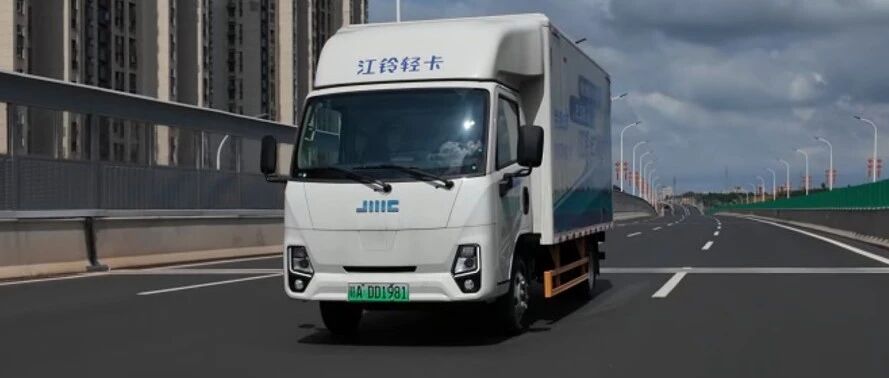
跑城配怕麻烦?江铃E顺达:装得爽、开得顺,一年省4万还能再减1万!| 头条
第一商用车网· 2025-12-24 14:18
Core Viewpoint - The article emphasizes the practicality and efficiency of the Jiangling E Shun Da vehicle for urban distribution, highlighting its features that address common challenges faced by delivery drivers in narrow streets and high cargo platforms [1][9]. Group 1: Vehicle Features - The Jiangling E Shun Da has a cargo platform height of 866mm, which is 29-59mm lower than many competitors, making it easier to load and unload goods without bending or straining [2][3]. - The vehicle's cargo box width of 1940mm is the widest in its class, allowing for the transportation of more goods, which can reduce the number of trips needed for deliveries [2][3]. Group 2: Operational Efficiency - The vehicle is designed for easy maneuverability in narrow streets, allowing drivers to turn with minimal effort, even when fully loaded [5]. - With a single charge, the vehicle can cover four to five delivery locations, maintaining a remaining range of over 70 kilometers, alleviating concerns about running out of power during the day [5]. Group 3: Cost Savings - Transitioning from a fuel vehicle to the Jiangling E Shun Da can save drivers over 130 yuan per day on fuel costs, translating to an annual savings of over 40,000 yuan [7]. - The vehicle purchase includes incentives such as a 6,000 yuan subsidy and an additional 4,000 yuan for trade-ins, totaling a potential savings of 10,000 yuan [7]. Group 4: Market Positioning - The Jiangling E Shun Da focuses on essential needs for urban delivery drivers: capacity, ease of use, and cost-effectiveness, without unnecessary features [9].