大疆

Search documents
影石刘靖康,拒绝失败者叙事
Tai Mei Ti A P P· 2025-12-11 02:54
Core Viewpoint - The release of the Yingling A1 drone by Yingshi has faced significant criticism and skepticism regarding its sales performance, leading to a notable decline in the company's stock price following the launch [1][2][4]. Group 1: Product Launch and Market Response - Yingshi launched the Yingling A1, the world's first 8K panoramic drone, with a starting price of 7,999 yuan, which can be reduced to 6,799 yuan with government subsidies [1]. - Following the launch, Yingshi's stock price fell over 6% the next day, accumulating a decline of more than 8% by December 9, attributed to concerns over disappointing sales figures [1][2]. - In the first three days post-launch, the Yingling sold over 1,500 units, generating approximately 10 million yuan in revenue, which is significantly below the company's annual sales target of 300,000 units [6][9]. Group 2: Competitive Landscape - The ongoing competition between Yingshi and DJI has intensified, particularly with DJI's recent entry into the panoramic camera market and aggressive pricing strategies [2][10]. - Yingshi's internal communications suggest that the company is facing external pressures from industry giants, with claims of supply chain disruptions and negative media coverage impacting their sales [2][8]. - Despite the challenges, Yingshi reported that the Yingling sold over 500 units in its first week, outperforming DJI's Neo 2 model, which sold only 100 units [2]. Group 3: Financial Performance and Strategic Direction - Yingshi's revenue from consumer imaging products was 3.159 billion yuan in the first half of the year, accounting for 86.06% of total revenue, with panoramic cameras being the main product line [8]. - The company has invested heavily in research and development, with R&D expenses reaching 524 million yuan in Q3, a year-on-year increase of 164.81%, representing 17.81% of total revenue [11]. - Yingshi's management emphasizes the importance of these investments for long-term growth, despite a reported decline in net profit of 5.95% year-on-year [11].

大摩闭门会:机器人、金融、保险行业更新行业更新
2025-12-11 02:16
Summary of Key Points from the Conference Call Industry Overview - The conference covered updates on the robotics, finance, and insurance industries, with a focus on the global embodied intelligence market and its future outlook [1][3][30]. Robotics Industry Insights - A comprehensive report on embodied intelligence predicts the market will reach $25 trillion by 2050, up from $100 billion in 2025, indicating a growth of 250 times over 25 years [7]. - The humanoid robotics market is expected to reach $7.5 trillion by 2050, with autonomous vehicles projected at $5.6 trillion, and service robots at $5 trillion [7]. - Key components in the robotics sector are forecasted to see significant growth: cameras (95x), radar (300x), lidar (300x), motors (260x), and batteries (1400x) over the next 25 years [9][10]. Humanoid Robots - The average price of humanoid robots in the U.S. is projected to decrease from $180,000 to $75,000 by 2050, while demand is expected to grow cautiously, with an estimated 5,000 units in 2024 [11][12]. - In China, the humanoid robot market is expected to double from 7,000 units in 2023 to 15,000 units in 2024, with a long-term outlook of 30-40% of global demand by 2050 [14][15]. Market Adoption and Challenges - A survey of 86 executives indicated a high willingness to adopt humanoid robots, with 62% expecting to test them by 2027. However, concerns about product maturity and cost sensitivity were noted [16][17]. - 92% of respondents believe humanoid robots should not exceed 200,000 RMB in price, with 50% preferring a price below 100,000 RMB [17]. Automotive Industry Insights - The report predicts that the number of L4/L5 autonomous vehicles will increase from 3 million in 2030 to nearly 700 million by 2050, with China leading in growth [20][21]. - By 2050, China is expected to have over 165 million L4/L5 autonomous vehicles, accounting for about 25% of the global market [22]. Challenges and Opportunities - The focus is shifting from whether autonomous vehicles can operate to whether they can be profitable, with significant attention on safety, cost, and operational efficiency [23][24]. - The development of electric vertical takeoff and landing (eVTOL) aircraft is anticipated to create a new low-altitude economy, with China expected to lead in commercial operations by 2030 [26][27]. Insurance Industry Insights - The report on Ping An Insurance highlights three major market opportunities: continuous growth in household wealth, increasing demand for healthcare and retirement services, and the integration of insurance products with financial services [31][32]. - Ping An's stock has seen a 60-70% increase, outperforming the market, despite concerns about real estate exposure and the need for risk management [34][35]. Financial Performance and Outlook - The insurance sector is expected to benefit from a recovering real estate market, with Ping An's asset management division projected to return to profitability by 2027 [38][39]. - The company is also leveraging AI applications and technology to enhance its service offerings, maintaining a strong capital position [40][41]. Fund Management Industry Insights - The public fund industry in China has seen AUM exceed 38 trillion RMB, with a projected growth rate of 10-11% in the coming years [48][55]. - The industry is undergoing a transformation towards healthier fee structures, with a significant reduction in reliance on sales-driven models [53][54]. Future Growth Drivers - The growth of household financial assets and the increasing demand for diversified investment options are expected to drive the public fund market [56][57]. - The report suggests that the public fund sector will continue to gain market share in the non-deposit portion of household financial assets, with a rebound in equity allocations anticipated [59][60]. Conclusion - The conference provided a comprehensive overview of the robotics, automotive, insurance, and fund management industries, highlighting significant growth opportunities and challenges ahead. The insights gathered will be crucial for investors looking to navigate these evolving markets.


大摩闭门会:机器人、金融、保险行业更新行业更新 _AI 纪要
2025-12-11 02:16
Summary of Key Points from Conference Call Records Industry Overview Embodied Intelligence Market - The global embodied intelligence market is projected to reach $25 trillion by 2050, growing from approximately $100 billion in 2025, indicating a 250-fold increase over 25 years [3][1] - Key segments include humanoid robots ($7.5 trillion), autonomous vehicles ($5.6 trillion), service robots ($5 trillion), aircraft and drones ($4.7 trillion), and non-humanoid robots ($2.2 trillion) [3][1] Humanoid Robots in China - The humanoid robot market in China is expected to double by 2026, with potential sales reaching 50 million units by 2050, accounting for 30%-40% of global demand [1][7] - Current testing willingness among enterprises is high, with 62% expected to test humanoid robots by 2027 [1][8] - Price sensitivity is significant, with most enterprises preferring prices below 200,000 RMB, and 50% wanting prices under 100,000 RMB [1][9] Autonomous Driving - China is leading in the autonomous driving sector, with L4/L5 vehicles expected to exceed 165 million units by 2050, representing about 25% of the global market [1][10] - The focus in 2026 will shift to the profitability of autonomous ride-hailing services [1][11] Low-altitude Economy - China is making strides in the eVTOL (electric Vertical Take-Off and Landing) sector, expected to be the first country to achieve large-scale commercial operations by 2030, supplying over 60% of global demand [1][12] Company Insights Ping An Insurance - Ping An is benefiting from the growth in resident wealth, increasing demand for retirement and healthcare services, with a projected compound annual growth rate (CAGR) of 8% from 2024 to 2030 [4][15] - The asset management sector is gradually recovering from losses, with expectations of profitability by 2027 [4][15] - The company is reducing real estate exposure and optimizing asset structure to mitigate risks associated with declining property prices [4][15] Public Fund Industry - The public fund industry is facing transformation pressures, with expected management scale growth of 10%-11% in the coming years, driven by increasing resident financial assets [4][21] - The industry has seen a decline in income by 28% despite a 28% increase in management scale from 2021 to 2024 [4][19] - The sales channel income is shifting from being heavily reliant on sales volume to being more performance-based [4][20] Key Components and Growth Projections Core Components for Embodied Intelligence - Significant growth is anticipated in key components: visual cameras (95x), radar and lidar (300x), motors (260x), bearings (200x), and batteries (1,400x) [5][1] Market Dynamics - The public fund industry is expected to see a rebound in equity allocation, with a projected recovery in the proportion of actively managed equity products [4][26] - The shift towards mixed products is anticipated, with a focus on fixed income to meet the demand for stable returns among domestic investors [4][28] Conclusion - The embodied intelligence and autonomous driving sectors present substantial growth opportunities, particularly in China, while Ping An Insurance is well-positioned to capitalize on demographic trends and market demands. The public fund industry is undergoing significant changes, with a focus on performance-based income and a shift in investment strategies.
宇瞳光学20251210
2025-12-11 02:16
Summary of Yutong Optical Conference Call Company Overview - Yutong Optical has maintained the leading position in the global security lens market for 10 consecutive years, with a market share of 38.1% in 2024, and together with Sunny Optical, they hold over 65% of the domestic market share [2][3][4] - The company is expected to achieve revenue of 1.85 billion RMB in 2025, with a stable gross margin of around 25% [2][4] Industry Insights - The overseas market is experiencing significant growth, driven by increasing demand for high-definition and intelligent security solutions [2][4] - The global market for aspheric optical glass molded lenses is projected to reach approximately $4.4 billion in 2024, with an expected compound annual growth rate (CAGR) of over 6% until 2030-2031 [9] Key Business Segments Security Lens Business - Security lenses are the core business of Yutong Optical, with a diverse product matrix including ultra-low light series, all-in-one series, 4K series, and zoom series [3] - The company has established long-term strategic partnerships with leading domestic security firms such as Hikvision and Dahua [2][3] Automotive Optical Sector - Yutong Optical is actively expanding into the automotive optical field, developing a product matrix that includes vehicle lenses, HUDs, and LiDAR systems [2][5] - The demand for vehicle cameras is significantly increasing due to advancements in autonomous driving technology, with the number of cameras required per vehicle rising from 3-5 for L1 to 15-18 for L5 levels [5] - The automotive business is expected to generate revenue of 334 million RMB in 2024, representing a year-on-year growth of 51.8% [5] New Consumption Optical Business - The new consumption optical business achieved revenue exceeding 300 million RMB in the first three quarters, with approximately 300 million RMB in the third quarter alone [3][11] - Yutong has a close partnership with DJI, providing molded glass for various camera and drone models, with an average selling price (ASP) of around 20 RMB [11] Technological Advancements - Yutong Optical has made significant advancements in molded glass technology, achieving mass production capabilities that enhance competitiveness and provide substantial growth potential [6][8] - The company has reduced production costs by over 30% compared to traditional grinding methods, while maintaining industry-leading yield rates [8] Strategic Partnerships and Future Growth - Yutong has established collaborations with major automotive manufacturers such as BYD, Geely, Toyota, and Volkswagen, integrating into their supply chains [5] - The company is also involved in projects with Apple, focusing on AI glasses camera components, which are expected to begin small-scale production in the second half of 2026 [12] Growth Drivers - Short-term growth will be driven by the rapid expansion of the automotive business and the realization of new consumption orders [13] - Long-term growth is anticipated across various business segments, including security, with a clear path for future expansion supported by robust R&D investments and a strong customer base [13]

同兴达(002845.SZ):公司客户有三星、小米、OPPO、荣耀及大疆等企业
Ge Long Hui· 2025-12-11 00:42
格隆汇12月11日丨同兴达(002845.SZ)在投资者互动平台表示,公司客户有三星、小米、OPPO、荣耀及 大疆等企业。 ...

8点1氪|大使馆回应网红蓝战非被胁迫转账:确有此事;湖北一地:试管婴儿补贴10000元;“特朗普黄金卡”签证开始接受申请
3 6 Ke· 2025-12-11 00:01
Group 1 - The Chinese Embassy in South Africa confirmed an incident where a Chinese citizen was coerced into transferring 1.088 million RMB due to a robbery [2][3] - The local police are actively investigating the case, and the embassy is following up on the situation [2][3] Group 2 - Jingmen City in Hubei Province announced a new fertility support policy, which includes a subsidy of up to 10,000 RMB for in vitro fertilization [3][4] - The policy aims to reduce the costs associated with childbirth, parenting, and education, and will take effect on January 1, 2026 [3][4] Group 3 - Coupang's CEO resigned following a data breach incident, with the company's legal counsel appointed as the interim head [10] - CATL plans to issue bonds not exceeding 10 billion RMB for project construction and operational funding [10][11] Group 4 - Xiaomi has applied for a patent related to fuel level display methods for vehicles, aimed at improving user experience [11] - Alibaba's CTO, Zhou Jingren, has been appointed as a partner in Alibaba Group, reflecting his contributions to the company's AI initiatives [12] Group 5 - SpaceX is preparing for an IPO in 2026, targeting to raise over 30 billion USD with an estimated valuation of 1.5 trillion USD [15] - The Federal Reserve announced a 25 basis point rate cut, bringing the federal funds rate target range to 3.5% to 3.75% [15]
3D打印产业,爆发了!
Zheng Quan Shi Bao· 2025-12-10 12:16
Core Insights - Since 2025, the Chinese 3D printing industry has entered a phase of capital frenzy, marked by significant investments and IPO attempts, indicating a shift towards large-scale and capitalized growth [1][2]. Group 1: Capital Influx - On December 10, consumer-grade 3D printing brand Kuaizao Technology announced it completed a multi-hundred million yuan Series B financing led by Hillhouse Capital and Meituan, with funds allocated for multi-color printing technology development and global talent acquisition [2]. - Kuaizao Technology, founded in 2016 and headquartered in Shenzhen, has a product line that includes multifunctional printers and high-efficiency multi-color printers, with its flagship product U1 achieving a crowdfunding record of 150 million yuan, reflecting strong market demand [2]. - DJI, a drone giant, invested several hundred million yuan in Smart Pie, indicating confidence in the growth potential of consumer-grade 3D printing technology [2]. - Other major players, including Tencent and Shenzhen Capital Group, are also backing companies like Chuangxiang Sanwei, which plans to raise funds through an IPO to enhance R&D and expand into overseas markets [2][3]. Group 2: Industry Growth and Trends - The number of investment and financing events in the industry reached a near five-year high since 2025, with over 40 occurrences, showing a clear trend of capital concentrating on leading projects [4]. - Shenzhen has emerged as a hub for the 3D printing industry, with significant contributions from consumer-grade products, as evidenced by 3D printer exports reaching 3.7777 million units in 2024 [5]. - In Q1 2025, global shipments of entry-level 3D printers (priced below $2,500) surpassed 1 million units, with Chinese suppliers accounting for 95% of the market share, led by Chuangxiang Sanwei with a 39% share [5]. Group 3: Company Performance - Tuo Zhu Technology, founded in 2020 by former DJI engineers, achieved revenue between 5.5 billion to 6 billion yuan in 2024, with a net profit nearing 2 billion yuan and a net profit margin exceeding 30% [5]. - Smart Pie, established in 2015, initially focused on STEM education kits but pivoted to 3D printing, launching its first resin printer at a competitive price, thus capturing the mid-to-low price market [6]. - Zongwei Lifang has expanded its business globally, generating over 1 billion yuan in annual revenue since 2016 [6]. Group 4: Industry Ecosystem and Demand - The industry's growth is driven by a confluence of technological advancements, policy support, and rising demand, with AI integration lowering usage barriers and enhancing user experience [7][8]. - The demand for 3D printing is surging, particularly among Gen Z consumers seeking personalized products, with sales of 3D printing-related categories during the 2025 JD 618 shopping festival increasing over threefold year-on-year [8]. - Policies supporting the industry, such as subsidies for desktop 3D printing devices, are expected to drive down entry-level equipment prices to around 1,000 yuan [8].
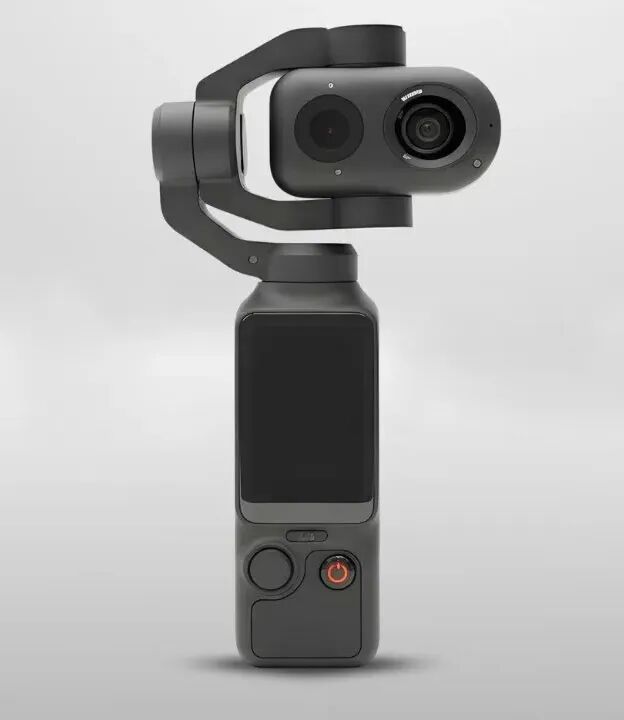
大疆Pocket 4爆料汇总:下个月发布,更强也更难抢?
3 6 Ke· 2025-12-10 12:12
Core Insights - The article discusses the upcoming release of DJI's Osmo Pocket 4, expected to be unveiled in December or January, following the success of its predecessor, Pocket 3 [4][16] - Pocket 3 has become a symbol in the handheld gimbal camera market, indicating strong brand recognition and consumer interest [2] Product Development - The Osmo Pocket 4 has completed SGS testing and registration, moving closer to its official launch [4] - The new model is expected to feature a significant battery capacity increase from Pocket 3's 1300mAh to approximately 1600mAh, enhancing its operational longevity [5] - Pocket 4 is likely to adopt a multi-camera setup, with speculation about a new wide-angle sensor and the introduction of a long-focus camera to improve vlogging capabilities [6][10] Design and Specifications - The design of Pocket 4 will see a reduction in dimensions, with a thickness decrease of 3.5mm, width reduction of 4mm, and an overall length decrease of about 5mm, making it more portable [13] - The weight of Pocket 4 is expected to drop by nearly 35%, potentially weighing around 115-120g, which would enhance its portability [15] - There are indications that the new model may include a depth sensor for improved focus capabilities, although this remains speculative [13] Market Positioning - The article suggests that while Pocket 4 is anticipated to be a strong contender in the market, the immediate focus for December may be on the Avata 360 drone, which has also been leaked with specifications and is expected to launch sooner [16][18] - The potential for Pocket 4 to redefine the compact camera market is highlighted, especially as flagship smartphones reach a saturation point in camera capabilities [19]

长江存储起诉美国防部、商务部
Guan Cha Zhe Wang· 2025-12-10 06:10
Core Viewpoint - Yangtze Memory Technologies Co., Ltd. (YMTC) has filed lawsuits against the U.S. Department of Defense and the U.S. Department of Commerce regarding its inclusion on the "Entity List," claiming significant financial and reputational damage due to outdated and inaccurate information used for its designation [1] Group 1: Legal Actions - YMTC has initiated legal proceedings in the U.S. Federal Court to challenge its classification as a military-related entity by the Department of Defense, which was reaffirmed in early 2023 [1] - The company also filed a lawsuit against the Department of Commerce for being placed on the Entity List in 2022, asserting that it has a robust export compliance program and has not been accused of violating U.S. export control laws [1] Group 2: Company Background and Valuation - Established in July 2016, YMTC specializes in 3D NAND flash memory and storage solutions, with a retail brand named Zhitai [2] - The company has a valuation of 160 billion yuan and ranks as the 9th unicorn in China and the 21st globally according to the Hurun Research Institute's 2025 Global Unicorn List [2] Group 3: Market Position and Growth - YMTC achieved a 10% share of global NAND shipments in Q1 2025, increasing to 13% by Q3 2025, reflecting a 4 percentage point year-on-year growth [2] - Although currently holding an 8% market share by revenue, analysts predict that YMTC's share will reach 10% by 2027 [2] Group 4: Recent Developments - The company has initiated its Phase III expansion and established a joint venture named Changcun Phase III (Wuhan) Integrated Circuit Co., Ltd. with a registered capital of 20.72 billion yuan [3]

两天卖出3000多万 供应商遭“排他”压力
Nan Fang Du Shi Bao· 2025-12-09 23:14
Core Viewpoint - The company Insta360's first panoramic drone, Yingshi A1, faced significant negative publicity shortly after its launch, leading to claims of poor sales performance, which the CEO Liu Jingkang refuted by providing sales data indicating strong initial performance in the Chinese market [2][3] Sales Performance - The Yingshi A1 achieved over 30 million yuan in sales within 48 hours of its release in China, showcasing its market potential against established competitors [3][4] - The company's average daily sales in the handheld imaging business exceeded 24 million yuan in the third quarter, indicating a strong growth trajectory for the new drone [3][4] Supply Chain Challenges - The company faced external pressures from suppliers, with seven optical lens module suppliers, eight structural component suppliers, and others experiencing "exclusion" pressures simultaneously [4] - The company has proactively developed a secondary supply chain to mitigate risks and has successfully restructured its supply chain under tight timelines, ensuring product availability [4] Competitive Landscape - The competition between DJI and Insta360 has intensified, with DJI quickly responding to the launch of the Yingshi A1, indicating a strong competitive awareness [5] - DJI's potential to leverage its supply chain and cost advantages for low-price competition could significantly impact Insta360's valuation and market position [5] - The ongoing competition reflects a shift in the Shenzhen hardware industry from a single dominant player to a multi-competitive landscape, with both companies expanding their product lines and exploring new market segments [5]