万辰集团

Search documents
福建90后,又要拿下一个百亿IPO
投中网· 2025-10-09 06:47
Core Viewpoint - The article discusses the transformation of Wancheng Group from a mushroom cultivation company to a leading snack retail empire, highlighting its upcoming IPO on the Hong Kong Stock Exchange and the role of the new generation of leadership in driving this change [3][4][10]. Company Overview - Wancheng Group, founded in 2011 in Fujian, initially focused on mushroom cultivation and became a stable supplier for major retailers like Walmart and Carrefour [5]. - The company went public on the ChiNext board in 2021, achieving a revenue of over 400 million yuan in 2020 and earning the title of "the first stock in edible fungi" [6]. Market Dynamics - The edible fungi market faced saturation and increased competition, leading to a 15%-20% year-on-year price drop, prompting Wancheng Group to pivot towards the snack retail sector [6][7]. - The snack retail market is experiencing rapid growth, with a projected market size of approximately 1.04 trillion yuan in 2024, reflecting a year-on-year growth of 28.6% [10]. Strategic Expansion - Wancheng Group launched its snack brand "Liu Xiaochan" in August 2022 and subsequently acquired several brands to form a dual-brand matrix with "Haoxianglai" and "Wife Daren" [8][10]. - By June 2025, the number of snack stores exceeded 15,365, with "Haoxianglai" accounting for 14,334 of these locations [8]. Competitive Landscape - The main competitor for Wancheng Group is the merged entity "Mingming Hen Mang," which has a projected GMV of 55.5 billion yuan in 2024 and over 14,394 stores nationwide [10]. - Wancheng Group's GMV for 2024 is estimated at 32.33 billion yuan, with a net profit of 611 million yuan [10]. Leadership Transition - The leadership of Wancheng Group is transitioning to the next generation, with Wang Zening, born in 1993, taking over as general manager after his father stepped down [13][14]. - Wang Zening has a strong educational background, holding degrees from the University of Michigan and Columbia University, and has been instrumental in expanding the company's snack retail business [14]. Branding and Marketing Strategy - Wancheng Group is shifting from a price-focused strategy to a brand-oriented approach, leveraging popular IP collaborations to enhance customer engagement and brand appeal [11][12]. - The company aims to create a unique shopping experience that combines affordability with entertainment, similar to the strategy employed by MINISO [12][11]. Financial Performance - The company reported a significant increase in revenue and net profit, with revenue growing by 106% and net profit increasing by 503 times in the first half of 2025 [15]. - The stock price of Wancheng Group was around 173 yuan prior to the National Day holiday, with a market capitalization of approximately 32.5 billion yuan [14].


社区商业新战事:硬折扣超市“巷战”最后一公里
Hua Xia Shi Bao· 2025-10-09 00:28
Group 1 - The gift market is experiencing a sales peak due to the overlap of the National Day and Mid-Autumn Festival, prompting supermarkets to initiate price reductions to attract customers [1][2] - The competition among local supermarkets is intense, with stores like Wang Ge and Da Zui offering lower prices to draw in consumers, with price differences of 1-2 yuan compared to competitors [2][3] - Major retail players such as Wumart and Yonghui are also joining the price-cutting trend to prepare for the holiday season, indicating a shift towards hard discount strategies in the retail market [3][4] Group 2 - The rise of hard discount supermarkets is becoming a key trend in the retail sector, with many brands focusing on community locations and targeting lower-tier markets [5][6] - Wumart has opened eight hard discount stores, with four located in community areas, while other brands like Hema and JD are also expanding their community store presence [6][4] - Experts suggest that retailers need to adopt strategies such as precise target audience identification, differentiation in product offerings, and a focus on cost-effectiveness to maintain competitiveness in the evolving market landscape [7]
社区商业新战事:硬折扣超市“巷战”最后一公里|华夏双节观察
Hua Xia Shi Bao· 2025-10-08 03:37
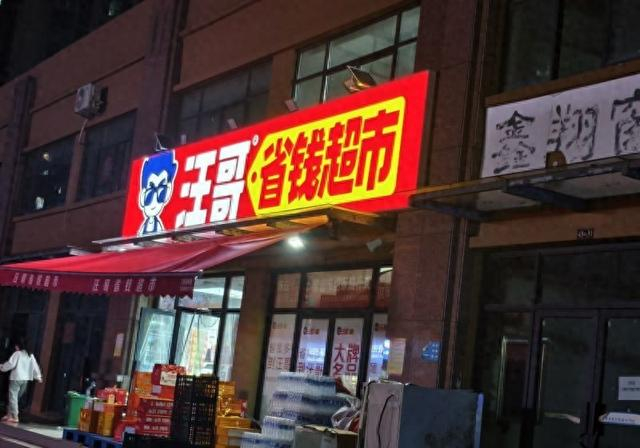
Core Insights - The gift market is experiencing a sales peak due to the overlap of the National Day and Mid-Autumn Festival, prompting supermarkets to initiate price reductions to attract customers [2][3] - The rise of hard discount supermarkets is notable, with major retail players like Wumart, Meituan, and JD entering the market, intensifying competition [4][5] Price Reduction Strategies - Supermarkets in the community are engaging in price wars, with stores like Wang Ge Supermarket and Da Zui Supermarket offering prices lower than competitors by 1-2 yuan, with specific examples such as a 24-pack of Wahaha AD Calcium Milk priced at 35 yuan [3][4] - Wumart has upgraded its hard discount stores and reduced prices on over 70 popular items in preparation for the holiday season [4] Market Trends - The hard discount supermarket sector is rapidly growing, with new brands and expansions announced, such as the launch of "Love Discount" by Three Squirrels and the opening of multiple stores by Wumart and Hema [5][6] - Community-focused retailing is becoming a key strategy, with many hard discount brands targeting local neighborhoods to capture market share [6][7] Competitive Landscape - Traditional supermarkets are also adapting to the competitive environment by enhancing their offerings and ensuring price stability during peak shopping periods [4][6] - Experts suggest that retailers need to focus on precise target audience identification, differentiated product offerings, and competitive pricing to maintain market relevance [7]




悄然调仓!重仓算力的基金,筹码松动
证券时报· 2025-10-01 14:08
Core Viewpoint - The A-share market has experienced significant fluctuations since September, with a shift from a focus on AI computing power to sectors like solid-state batteries, robotics, non-ferrous metals, and gaming, indicating a rapid rotation of market themes [1] Group 1: Fund Adjustments - Some public funds have shown significant deviations between net value and holdings, suggesting early "leaks" of fund managers' latest adjustments [2] - Funds heavily invested in computing power have begun to show signs of adjustment, with examples like the Xin'ao Advantage Industry Mixed Fund, which saw a net value increase of 1.91% on a day when its major holdings fell [4] - The Yongying Technology Smart Mixed Fund, despite a drop in its major overseas computing stocks, only fell 0.94% on a day when a larger decline was expected, indicating a divergence from its holdings [4][5] Group 2: Consumer Sector Shifts - The previously underperforming consumer sector is showing signs of "stop-loss" and "defensive switching," with funds like Nanhua Ruiying experiencing significant declines despite their major holdings rising [6] - Fund managers are expressing optimism about sectors like humanoid robots and solid-state batteries, suggesting a shift in focus towards technology and innovation [7][8] Group 3: Market Dynamics - The unusual movements in fund net values reflect the extreme structural characteristics of the current A-share market, where rapid sector rotations pose challenges for fund managers [10] - Fund managers are advised to dynamically adjust their strategies in response to changing market conditions, moving away from underperforming sectors towards those with higher growth potential [11] - There is a growing interest in new marginal changes and investment directions, particularly in AI-related assets and the semiconductor sector, as the market evolves [11]

十倍牛股冲刺港股,还能涨吗
Ge Long Hui· 2025-10-01 09:49
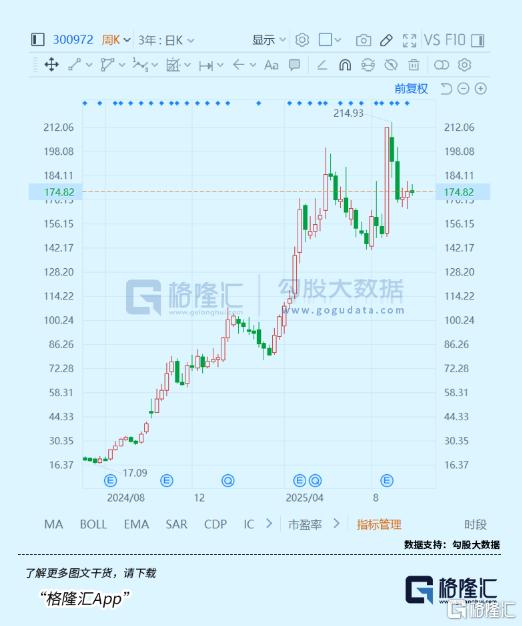
Core Viewpoint - Wancheng Group has experienced explosive growth, with its stock price increasing over tenfold since last July, driven by significant revenue and profit growth in the snack retail sector [2][4]. Group 1: Financial Performance - In the first half of this year, Wancheng Group reported revenue of 22.583 billion yuan, a year-on-year increase of 106.89%, and a net profit of 472 million yuan, soaring by 50,358.80% [4]. - For 2024, the company expects revenue to grow by 247.86% to 32.329 billion yuan, with net profit increasing by 453.95% to 294 million yuan, marking a turnaround from losses [12]. - The snack retail business generated 31.790 billion yuan in revenue, accounting for 98.33% of total revenue, reflecting its dominance in the company's operations [13]. Group 2: Expansion Strategy - Wancheng Group, originally focused on edible mushrooms, has rapidly expanded into the snack retail market, launching the "Liu Xiaochan" brand and acquiring several companies to enhance its market presence [9][10]. - The company opened nearly 10,000 new stores in 2024 alone, although the pace of new store openings has slowed significantly in the first half of this year [10][16]. - As of this year, the total number of stores exceeded 15,000, with a significant increase in the number of stores under the "Mingming Hen Mang" brand [29][30]. Group 3: Industry Challenges - The rapid expansion has led to concerns about store density, declining single-store profitability, and conflicts of interest between the company and franchisees [18][20]. - Wancheng Group's high leverage, with a debt ratio reaching 79.9% in 2024, raises concerns about financial stability, especially in a competitive market [22][26]. - The snack retail industry is becoming increasingly saturated, with major competitors entering the market, which may limit Wancheng Group's growth potential [28][31]. Group 4: Management and Governance - Recent management changes, including the resignation of the chairman amid legal investigations, have introduced uncertainty into the company's governance structure [40][42]. - The family-run nature of the company, now under a "cousin-aunt" governance model, may further complicate decision-making and strategic direction [44][45]. Group 5: Market Outlook - Wancheng Group's IPO application on the Hong Kong Stock Exchange comes at a time when investor interest in the consumer sector is high, potentially providing a boost for further expansion [5][46]. - The company's ability to address internal challenges and external market pressures will be crucial for maintaining its leadership position in the snack retail industry [48].
十倍牛股冲刺港股,还能涨吗
格隆汇APP· 2025-10-01 09:48
Core Viewpoint - The article highlights the explosive growth of Wancheng Group, with its stock price increasing over tenfold since July of last year, driven by significant revenue and profit growth in the snack retail sector [2][4]. Group 1: Company Performance - In the first half of this year, Wancheng Group reported revenue of 22.583 billion yuan, a year-on-year increase of 106.89%, and a net profit of 472 million yuan, soaring by 50,358.80%, ranking first in net profit growth among A-shares [4]. - The company plans to list on the Hong Kong Stock Exchange, aiming for further capital influx [5]. - Wancheng Group's rapid expansion in the snack retail market has led to a revenue of 32.329 billion yuan in 2024, a year-on-year growth of 247.86%, with net profit turning positive at 294 million yuan [11]. Group 2: Business Model and Expansion - Originally focused on edible mushrooms, Wancheng Group shifted to the snack retail sector in 2021, launching the "Liu Xiaochan" brand and acquiring several companies to enhance its market presence [6][8]. - The company opened nearly 10,000 new stores in 2024, but the pace of expansion has slowed significantly in the first half of this year, with only 1,467 new stores opened and 259 closed [10][14]. - The majority of Wancheng Group's 15,000 stores are franchise-operated, which raises concerns about profitability and operational control [15][16]. Group 3: Financial Health and Risks - Wancheng Group's asset-liability ratio surged to 79.9% in 2024, significantly higher than the healthy range of 40%-60% for the snack industry [20]. - By mid-2025, the total liabilities reached 5.144 billion yuan, a year-on-year increase of 39.69%, with the asset-liability ratio projected to rise to 90.97% after a recent acquisition [22][25]. - The company's high leverage and reliance on store sales for cash flow may pose risks, especially as the snack retail market becomes increasingly saturated [28][29]. Group 4: Market Competition and Challenges - The snack retail market has seen explosive growth, with the market size increasing from 7.3 billion yuan in 2019 to 129.7 billion yuan in 2024, but competition is intensifying as major retailers enter the space [29][31]. - Wancheng Group faces competition from established players like Mingming Hen Mang, which reported higher revenue and profit figures [34]. - The company's low profit margins, attributed to aggressive pricing strategies and high operational costs, reflect a broader trend in the snack retail sector [36][38]. Group 5: Management and Governance Issues - Recent management changes, including the resignation of Chairman Wang Jiankun amid legal investigations, have raised concerns about governance and stability within the company [44][47]. - The family-run nature of the company may introduce additional uncertainties as it navigates challenges in a competitive market [47]. Group 6: Future Outlook - The potential for Wancheng Group to leverage its IPO to alleviate financial pressures exists, but its future success will depend on addressing internal governance issues and external market challenges [50][51].
休闲食品板块9月30日涨0.66%,ST绝味领涨,主力资金净流出9141.32万元
Zheng Xing Xing Ye Ri Bao· 2025-09-30 08:42
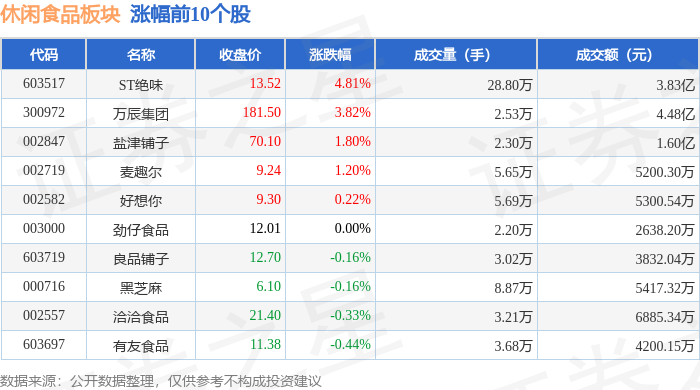
Core Insights - The leisure food sector experienced a rise of 0.66% on September 30, with ST Juewei leading the gains [1] - The Shanghai Composite Index closed at 3882.78, up 0.52%, while the Shenzhen Component Index closed at 13526.51, up 0.35% [1] Stock Performance Summary - ST Juewei (603517) closed at 13.52, with a gain of 4.81% and a trading volume of 288,000 shares, amounting to a transaction value of 383 million [1] - Wanchen Group (300972) closed at 181.50, up 3.82%, with a trading volume of 25,300 shares [1] - Yanjin Puzhou (002847) closed at 70.10, up 1.80%, with a trading volume of 23,000 shares [1] - Other notable performances include Maiqu'er (002719) at 9.24 (+1.20%) and Haoxiangni (002582) at 9.30 (+0.22%) [1] Capital Flow Analysis - The leisure food sector saw a net outflow of 91.41 million from institutional investors, while retail investors contributed a net inflow of 82.63 million [2] - The main capital inflow and outflow for specific stocks include: - Wanchen Group: 11.84 million inflow from main capital, with a net outflow of 15.09 million from speculative capital [3] - Jinzai Food (003000): 3.33 million inflow from main capital, with a net outflow of 3.21 million from speculative capital [3] - Good Products (603719): 2.33 million inflow from main capital, with a net inflow of 1.02 million from speculative capital [3]




食品饮料行业周报(2025.09.22-2025.09.27):蜜雪、幸运咖双品牌共振,万辰港股IPO展示规模壁垒,白酒中秋动销本周起速-20250929
China Post Securities· 2025-09-29 12:11
Investment Rating - The industry investment rating is "Outperform" and is maintained [2] Core Insights - The new tea and coffee market in China has become an important consumption sector, with Mixue Group emerging as a significant player due to its unique market positioning and strong supply chain capabilities [2][16] - Mixue Group's brands, Mixue Ice City and Lucky Coffee, have distinct market positions and clear development strategies, indicating long-term growth potential [2][16] - The group effectively leverages the synergy between its tea and coffee brands, with Mixue Ice City focusing on mass tea consumption and Lucky Coffee targeting the coffee market with a beverage-oriented product strategy [3][22] Summary by Sections Industry Overview - The food and beverage sector's performance this week saw a decline of 2.49%, ranking 26th among 30 sectors, underperforming the CSI 300 index by 3.56 percentage points [10][31] - Only the soft drink segment experienced an increase, with a rise of 0.86% [10][32] Company Developments - Mixue Group has a total of 53,014 stores globally, with 48,281 in China and 4,733 overseas, focusing on lower-tier markets [16][23] - Lucky Coffee has rapidly expanded, surpassing 8,000 stores by August 2025, targeting entry-level coffee consumers [16][23] - Wanchen Group submitted its IPO application in Hong Kong, reinforcing its leading position in the Chinese snack retail sector, with plans to use the funds for network expansion and product diversification [25][26] Market Dynamics - The competitive landscape in the coffee sector shows Lucky Coffee adopting a beverage-oriented strategy, differentiating itself from specialized coffee brands [3][22] - The potential for expansion in lower-tier cities remains significant, with Mixue Ice City and Lucky Coffee poised to capture unmet demand in these markets [4][23] - The overall market sentiment is cautious, with expectations of a significant decline in sales during the Mid-Autumn Festival, although some brands are showing signs of recovery [27][30]





9月21-27日港股IPO观察:25家递表,其中12家企业冲刺A+H
Sou Hu Cai Jing· 2025-09-29 10:29
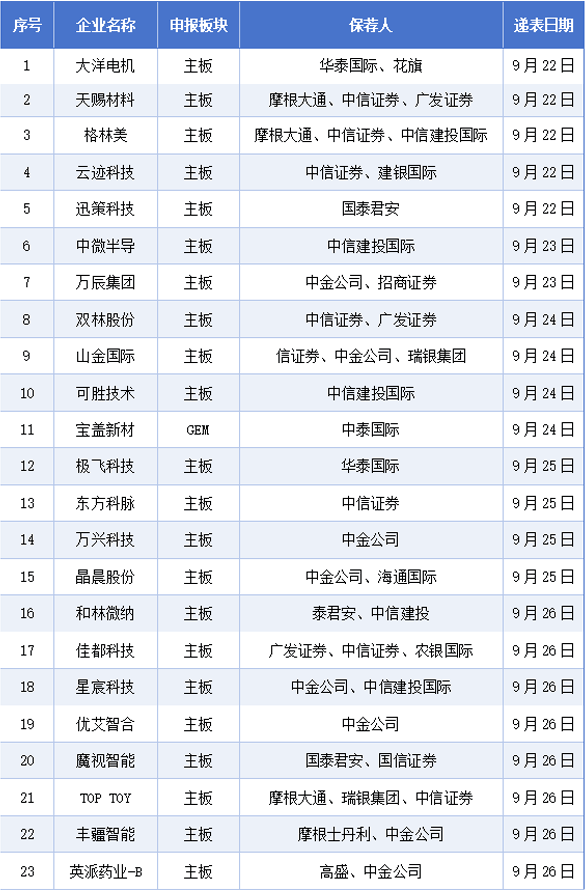
Summary of Key Points Core Viewpoint The Hong Kong stock market has seen significant activity from September 21 to September 27, with 25 companies submitting prospectuses, 3 companies passing hearings, and 2 new stocks successfully listed. Group 1: Companies Submitting Prospectuses - A total of 25 companies submitted listing applications to the Hong Kong Stock Exchange during the specified period, including major players like 大洋电机, 天赐材料, and 格林美 [2][4][5] - Notably, 12 of these companies have already listed on the A-share market, indicating a trend towards dual listings in both A and H shares [2][4] Group 2: Companies Passing Hearings - Three companies successfully passed hearings: 长风药业, 挚达科技, and 金叶国际 [30] - 长风药业 focuses on biopharmaceuticals for respiratory diseases, with projected revenues of 6.08 billion RMB in 2024 [31] - 挚达科技 is the largest provider of home electric vehicle charging stations globally, with revenues of 5.9 billion RMB in 2024 [32] - 金叶国际 is a long-established electromechanical engineering contractor, specializing in HVAC systems [33] Group 3: Companies in the IPO Process - Five companies are currently in the IPO process, including 长风药业, 紫金黄金国际, 西普尼, 博泰车联, and 奇瑞汽车 [34] - 奇瑞汽车 successfully listed on September 25, with a first-day stock price increase of 13.75% [41][43] Group 4: Financial Performance of Companies - 大洋电机 reported total revenues of approximately 109.3 billion RMB in 2022, with a projected increase to 121.13 billion RMB in 2024 [5] - 天赐材料's revenues were approximately 223.17 billion RMB in 2022, expected to decline to 125.18 billion RMB in 2024 [6] - 格林美's revenues were around 293.92 billion RMB in 2022, projected to reach 332.00 billion RMB in 2024 [7] - 万辰集团, a leading snack and beverage retailer, reported revenues of 5.49 billion RMB in 2022, with a significant increase to 323.29 billion RMB in 2024 [10] Group 5: Market Trends and Insights - The trend of companies seeking dual listings in both A and H shares is becoming more prevalent, reflecting a strategic move to access broader capital markets [2][4] - The overall activity in the Hong Kong IPO market indicates a robust interest from companies looking to capitalize on the favorable market conditions [2][30]





休闲食品板块9月29日跌0.7%,ST绝味领跌,主力资金净流出8615.89万元
Zheng Xing Xing Ye Ri Bao· 2025-09-29 08:39
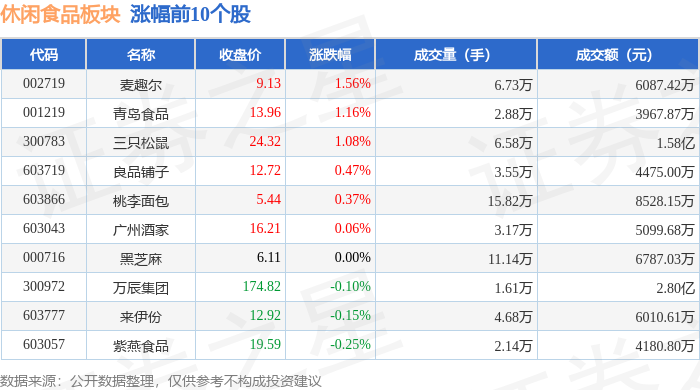
Market Overview - The leisure food sector experienced a decline of 0.7% on September 29, with ST Juewei leading the drop [1] - The Shanghai Composite Index closed at 3862.53, up 0.9%, while the Shenzhen Component Index closed at 13479.43, up 2.05% [1] Individual Stock Performance - Notable gainers included: - Maiqu'er (002719) with a closing price of 9.13, up 1.56% and a trading volume of 67,300 shares [1] - Qingdao Food (001219) closed at 13.96, up 1.16% with a trading volume of 28,800 shares [1] - Three Squirrels (300783) closed at 24.32, up 1.08% with a trading volume of 65,800 shares [1] - Major decliners included: - ST Juewei (603517) closed at 12.90, down 3.37% with a trading volume of 235,800 shares [2] - Ximai Food (002956) closed at 20.06, down 3.14% with a trading volume of 64,700 shares [2] - Huang Shang Huang (002695) closed at 12.66, down 2.54% with a trading volume of 81,300 shares [2] Capital Flow Analysis - The leisure food sector saw a net outflow of 86.16 million yuan from institutional investors, while retail investors had a net inflow of 90.67 million yuan [2][3] - Specific stock capital flows indicated: - Ximai Food (002956) had a net inflow of 7.40 million yuan from institutional investors [3] - Qingdao Food (001219) saw a net inflow of 5.42 million yuan from institutional investors [3] - Three Squirrels (300783) experienced a net inflow of 4.47 million yuan from institutional investors [3]