
艾力斯

Search documents
A股利好!吴清官宣,释放重要趋势信号
21世纪经济报道· 2025-06-18 06:35
Core Viewpoint - The article discusses the recent announcement by the China Securities Regulatory Commission (CSRC) regarding the "1+6" policy measures aimed at enhancing the inclusivity and adaptability of the capital market, particularly focusing on the reintroduction of the fifth listing standard for unprofitable companies on the Sci-Tech Innovation Board (STAR Market) [1][2]. Group 1: Reintroduction of the Fifth Listing Standard - The reintroduction of the fifth listing standard allows unprofitable companies to list on the STAR Market, breaking the rigid profit requirement traditionally seen in A-shares, thus supporting innovative companies with significant R&D investments and promising market prospects [3][4]. - As of June 18, 2023, 37 companies are planning to list under the fifth standard, with 20 already successfully listed, indicating a growing interest and potential for unprofitable tech firms [4][6]. - The CSRC aims to support high-tech companies with strong innovation capabilities and market potential, suggesting that the approval process for unprofitable companies may accelerate significantly in the coming years [5][6]. Group 2: Optimization of the Fifth Standard's Applicability - The core indicators for the fifth listing standard include a minimum expected market value of RMB 4 billion and the requirement for the main business or product to be approved by relevant authorities, with a focus on companies demonstrating significant market potential [8]. - There is a call for clearer guidelines on the applicability of the fifth standard, especially for sectors like artificial intelligence and commercial aerospace, to ensure a comprehensive multi-tiered capital market service system [8][9]. - Suggestions include raising the clinical trial requirements for pharmaceutical companies and introducing business development as a measure of commercial viability [9]. Group 3: Selecting Quality Unprofitable Companies - Evaluation of unprofitable companies should consider core technology, market potential, business model, and team strength, focusing on sustainable and disruptive technologies [12][13]. - The assessment of market potential should include the size and growth prospects of the target market, while the business model must clearly outline how value is created and profitability achieved [12][14]. - Financial health is crucial, with an emphasis on cash flow management and capital adaptability to support ongoing R&D and market expansion [15].


重磅!科创板将设置科创成长层!科创成长ETF(588110)午后应声拉升上涨1.20%
Sou Hu Cai Jing· 2025-06-18 06:30
Group 1 - The China Securities Regulatory Commission (CSRC) Chairman announced plans to enhance the STAR Market's demonstration effect, including the establishment of a STAR Market Growth Tier and the reintroduction of the fifth listing standard for unprofitable companies [1] - The STAR Market Growth ETF (588110) saw a strong increase of 1.20% as of June 18, 2025, with notable gains in constituent stocks such as Shengyi Electronics (688183) up 16.63% and Tiande Yu (688252) up 9.28% [1] - The STAR Market Growth ETF has experienced a significant increase in trading volume, with a turnover rate of 4.74% and a daily average transaction of 15.45 million yuan over the past week [1] Group 2 - The STAR Market Growth ETF has achieved a net value increase of 38.29% over the past year, ranking 185 out of 2854 index equity funds, placing it in the top 6.48% [2] - The ETF's highest monthly return since inception was 25.02%, with an average monthly return of 7.25% during the months it increased [2] Group 3 - The management fee for the STAR Market Growth ETF is 0.50%, and the custody fee is 0.10%, making it one of the lowest in its category [3] - The STAR Market Growth Index consists of 50 high-growth companies selected based on revenue and net profit growth rates, reflecting the overall performance of high-growth stocks on the STAR Market [3] - The top ten weighted stocks in the STAR Market Growth Index account for 53.67% of the index, including companies like Haiguang Information (688041) and Hengen Technology (688608) [3] Group 4 - The introduction of new indices in the STAR Market is positively impacting domestic index investment development by enriching the investment target pool and providing more diverse underlying assets for ETFs [4] - The emergence of thematic and industry indices is guiding investors to accurately allocate resources in emerging industries, enhancing the capital market's effectiveness in serving new productive forces [4]




吴清官宣未盈利企业上市利好 释放哪些趋势信号?
2 1 Shi Ji Jing Ji Bao Dao· 2025-06-18 06:13
未盈利企业上市,历来是市场关注的焦点。 在6月18日召开的2025陆家嘴论坛上,中国证监会主席吴清表示,将聚焦提升制度的包容性和适应性, 以深化科创板、创业板改革为抓手,更好发挥科创板"试验田"作用,加力推出进一步深化改革 的"1+6"政策措施,统筹推进投融资综合改革和投资者权益保护,加快构建更有利于支持全面创新的资 本市场生态。 21世纪经济报道记者 崔文静 张赛男 实习生张长荣 北京、上海报道 吴清提出的"1+6"政策,意味着什么?系列政策利好背后,哪些企业将更多受益?将对资本市场带来哪 些影响? 一、重启未盈利企业适用科创板第五套标准上市,意味着什么? 科创板创立之初,率先确立多元包容的上市标准,打破A股对企业盈利门槛的刚性约束,中芯国际、百 利天恒等新质生产力领域的行业领军企业得以在境内上市。第五套上市标准开创境内资本市场允许无收 入、未盈利企业上市先河,仅对市值、主要业务或产品的研发进展、市场空间等提出要求,为艾力斯、 神州细胞等一批具备核心研发实力、亟需突破资金瓶颈的创新药企业提供融资支持。 具体来看"1+6"政策措施,"1"是在科创板设置科创成长层,并且重启未盈利企业适用于科创板第五套标 准上市 ...
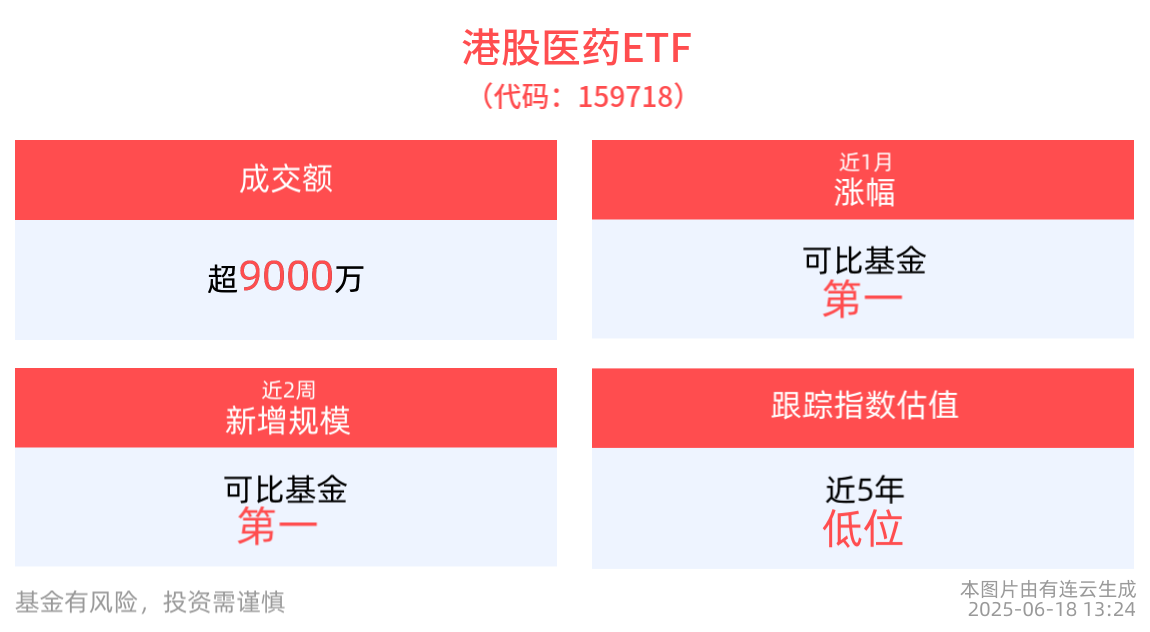
美国药监局宣布新方案,药品审查时间大幅缩短,港股医药ETF(159718)、医疗创新ETF(516820)助力把握全球创新药高速发展机遇
Xin Lang Cai Jing· 2025-06-18 06:12
Group 1 - The core viewpoint of the news highlights the recent decline in the 中证港股通医药卫生综合指数 and the mixed performance of its constituent stocks, with 美中嘉和 leading the gains at 11.76% and 微创机器人-B experiencing the largest drop at 3.63% [1] - The 港股医药ETF has seen a recent decline of 0.84%, but over the past two weeks, it has accumulated a rise of 7.24%, ranking in the top 25% among comparable funds [1] - The liquidity of the 港股医药ETF is strong, with a turnover rate of 39.77% and a trading volume of 99.7363 million yuan, indicating active market participation [1] Group 2 - The FDA's introduction of the "Director's National Priority Review Voucher" program is expected to significantly shorten drug review times from the usual 10-12 months to 1-2 months, presenting unprecedented opportunities for the biopharmaceutical industry [2] - 中信建投证券 notes that China's innovative drugs are gaining global competitiveness, with the NewCo model emerging as a new choice for innovative drug companies to expand internationally [2] Group 3 - The 中证医药及医疗器械创新指数 has also seen a decline of 0.50%, with 艾力斯 leading the gains at 1.55% and 智飞生物 experiencing the largest drop at 2.63% [5] - The 医疗创新ETF has a recent trading price of 0.35 yuan and has accumulated a rise of 2.63% over the past month [5] - The latest scale of the 医疗创新ETF has reached 1.428 billion yuan, with continuous net purchases from leveraged funds over the past three days [5] Group 4 - The 中证医药及医疗器械创新指数 consists of 30 listed companies with good profitability and growth potential, reflecting the overall performance of the pharmaceutical and medical device sectors [7] - The top ten weighted stocks in the 中证医药及医疗器械创新指数 account for 66.57% of the index, with companies like 恒瑞医药 and 药明康德 being prominent [7] - The 港股医药ETF tracks the 中证港股通医药卫生综合指数, which includes 50 liquid and large-cap healthcare companies, with the top ten weighted stocks comprising 60.77% of the index [8]
“科创板八条”一周年: 配套制度有序推出 典型案例渐次落地
Zheng Quan Shi Bao· 2025-06-17 18:15
6月18日,《关于深化科创板改革服务科技创新和新质生产力发展的八条措施》(以下简称"科创板八 条")发布满一周年。一年来,"科创板八条"各项改革举措已基本落地,配套制度有序推出,典型案例 渐次落地,政策效应日益显现。 配套制度有序推出 一年来,监管与市场协同发力,推动"科创板八条"从纸面走向实践,8方面30余项改革举措有序推出, 涉及发行承销、再融资、并购重组等制度创新。 其中,发行承销方面,上交所即明确在科创板试点统一执行3%的最高报价剔除比例,进一步加大网下 报价约束。一位市场人士向记者表示,规则实施后,剔除了部分策略性报价的投资者,并对买方整体报 价心理产生影响,减少了网下投资者"搭便车"报高价冲动。 截至目前,已有15只科创板新股适用3%的最高报价剔除比例。从报价来看,整体审慎合理,极端高价 行为有所缓解。 科创板新股网下认购须持有600万元科创板市值、优化未盈利企业新股发行网下配售与锁定安排等规则 也陆续推出,有助于引导资金长期持有科创板公司股票,进一步引导树立价值投资、长期投资理念。 再融资方面,"轻资产、高研发"认定标准正式落地,鼓励科创企业加大研发投入。目前,已有9家科创 板企业适用该标准披露 ...


平衡风险与包容性,科创板“0 营收”企业IPO重启
2 1 Shi Ji Jing Ji Bao Dao· 2025-06-17 03:21
Core Viewpoint - The implementation of the "K8 Measures" has led to a renewed focus on the fifth listing standard for unprofitable biotech companies on the STAR Market, aiming to enhance the financing environment for innovative drug firms and shift A-share valuation logic towards "technological value" and "commercial prospects" [1][5][15] Group 1: K8 Measures and STAR Market - The "K8 Measures" were introduced by the China Securities Regulatory Commission (CSRC) to support high-quality, unprofitable tech companies with key technologies and market potential to list on the STAR Market [1] - Since the introduction of the K8 Measures, two unprofitable hard tech companies have been accepted for listing, but the specific "Standard Five" for unprofitable innovative drug companies has yet to be activated [1][3] - The CSRC has reiterated its commitment to promoting the new cases under the fifth listing standard, which is expected to accelerate the financing pace for biotech companies [1][3] Group 2: Impact on Biotech Companies - Biotech companies, particularly innovative drug firms, face longer investment periods and greater uncertainty due to strict approval processes, making them highly dependent on capital [1][5] - The fifth listing standard has previously allowed 20 unprofitable biotech companies to list, with 19 of them successfully bringing 45 self-developed drugs/vaccines to market [3][5] - The introduction of the fifth standard has significantly shortened the capital cycle for these companies and has contributed to the prosperity of the biopharmaceutical primary market [3][5] Group 3: Commercialization and Financial Performance - As of 2024, the 20 companies that listed under the fifth standard collectively achieved revenues of 14.21 billion yuan, a year-on-year increase of 44.17%, with four companies expected to surpass 1 billion yuan in revenue in the coming years [12] - Companies like Ailis and Shenzhou Cell have reported significant revenue growth and profitability, attributing their success to continuous R&D investment and effective commercialization strategies [12][13] - The revised "STAR Market Attribute Evaluation Guidelines" for 2024 emphasize the importance of commercialization capabilities and revenue growth for companies seeking to list [11] Group 4: Future Prospects and Challenges - The market is keenly observing which companies will benefit first from the reactivation of the fifth listing standard, with five companies currently under review [14] - Companies with strong technological innovation capabilities and significant market potential are expected to be the first beneficiaries of the new standard [14][15] - The fifth listing standard presents both opportunities and challenges for unprofitable companies, requiring them to demonstrate their technological strengths and market potential despite not being profitable [15]
“第五套上市标准”蓄新能 科创板制度包容性不断提升
Shang Hai Zheng Quan Bao· 2025-06-16 18:27
Group 1 - The establishment of the Sci-Tech Innovation Board (STAR Market) has enabled 20 innovative biopharmaceutical companies to list under the fifth set of listing standards, shaping the landscape of China's biopharmaceutical industry [1][2] - The fifth set of listing standards is designed for unprofitable but high-growth technology companies, allowing them to raise funds during the research and development phase [1][2] - The China Securities Regulatory Commission (CSRC) has emphasized the importance of supporting high-quality unprofitable technology companies to list on the STAR Market, enhancing the inclusiveness of the listing system [1][2] Group 2 - Since the launch of the STAR Market, 20 innovative biopharmaceutical companies have utilized the fifth set of listing standards, with significant fundraising efforts directed towards advanced technologies such as antibody drugs and ADCs [2][3] - In 2024, these 20 companies collectively achieved revenue of 14.21 billion yuan, a year-on-year increase of 44.17%, with several companies expected to surpass 1 billion yuan in revenue in the coming years [2][3] - Companies like Elysium and Zhenzhong Cell have demonstrated remarkable growth, with revenues reaching 3.5 billion yuan and 2.5 billion yuan respectively, showcasing the potential of unprofitable companies to achieve significant revenue post-listing [2][3] Group 3 - The STAR Market has provided a diversified financing channel for innovative drug companies, enabling them to secure substantial funding for their R&D projects [3][4] - Companies like Junshi Biosciences have raised over 8 billion yuan through the STAR Market, facilitating the advancement of clinical projects and the development of new research initiatives [3][4] - The innovative listing standards have proven beneficial for companies like Elysium, which transitioned from unprofitable to profitable status within a short period, validating the effectiveness of the STAR Market's framework [4] Group 4 - The STAR Market has activated an innovation ecosystem by enhancing the flow of capital and increasing recognition of innovative technologies, thereby encouraging investment in R&D and talent cultivation [5][6] - Companies have leveraged their STAR Market listings to enhance their visibility and credibility in both domestic and international markets, leading to increased investment in R&D [5][6] - The collaborative efforts between companies and academic institutions have fostered technology transfer and improved innovation capabilities, contributing to the overall growth of the industry [5][6] Group 5 - The STAR Market has facilitated the transition of companies from having no products or revenue to successfully launching multiple products and achieving significant sales [6][7] - Companies like Mankang Pharmaceutical have effectively resolved financing bottlenecks through STAR Market fundraising, allowing for increased investment in innovative drug development [6][7] - The STAR Market is fostering a closed-loop ecosystem driven by innovation, with companies focusing on R&D and creating a virtuous cycle of development [7][8]
“科八条”落地一周年,百利天恒、芯原股份等掌门人为进一步深化改革献策
2 1 Shi Ji Jing Ji Bao Dao· 2025-06-16 04:41
Core Insights - The "Eight Articles" of the Sci-Tech Innovation Board have revitalized the capital market ecosystem, with significant growth in M&A activities and IPOs for unprofitable companies [1] - Since the release of the "Eight Articles," there have been 106 new M&A transactions on the Sci-Tech Innovation Board, with 60 completed and a total transaction value exceeding 140 billion yuan [1] - Institutional innovations are strengthening the connection between "hard tech" companies and the capital market, enhancing the flexibility of capital to promote technological advancements [1] Group 1: Company Responses to "Eight Articles" - Baili Tianheng's chairman highlighted that the "Eight Articles" have deepened reforms and increased support for high-quality development of unprofitable companies, allowing for successful IPOs even before profitability [1] - Jinghe Integrated's chairman noted that the "Eight Articles" have improved financing efficiency and innovation mechanisms, enabling the company to issue 2 billion yuan in technology innovation bonds [2] - Chip Origin's chairman mentioned that the "Eight Articles" support refinancing for R&D, allowing the company to accelerate its strategic layout in Chiplet technology [3] Group 2: Recommendations for Future Reforms - Tianyue Advanced's chairman expressed the need for more long-term capital to focus on outstanding Sci-Tech Innovation Board companies and suggested enhancing the inclusivity of capital operations for hard tech companies [7] - Du Jinhao from Ailis proposed increasing liquidity by attracting more long-term funds and promoting international connectivity for quality Sci-Tech enterprises [7] - The emphasis on improving corporate governance and enhancing profitability through cash dividends was also highlighted as a key area for development [4]


强化“硬科技”定位 科创板拥抱优质未盈利企业
Zheng Quan Ri Bao· 2025-06-15 16:08
本报记者 吴晓璐 科创板又一家未盈利企业IPO获受理。6月13日,上交所受理上海超硅半导体股份有限公司(以下简称"上海超硅")科创板 IPO申请。根据招股说明书,上海超硅去年营业收入13.27亿元,归母净利润为-12.99亿元。 去年6月19日,证监会发布的《关于深化科创板改革服务科技创新和新质生产力发展的八条措施》(以下简称"科创板八 条")提出,"支持具有关键核心技术、市场潜力大、科创属性突出的优质未盈利科技型企业在科创板上市,提升制度包容 性"。近一年来,科创板共受理12家企业IPO申请,其中3家是未盈利企业。 目前,科创板有54家上市时未盈利企业,支持20家第五套标准企业上市。据Wind资讯数据统计,截至6月15日,上述54家 企业A股总市值合计1.4万亿元。需要说明的是,目前588家科创板上市公司总市值为6.78万亿元。不难看出,科创板不仅为未盈 利科技企业开辟了一条融资渠道,还重塑了市场定价逻辑,推动科技、资本和产业深度融合,助力科技企业聚焦重点领域加快 科技攻关,加速科技成果转化为现实生产力,服务新质生产力发展和国内经济转型升级。 持续支持"硬科技"企业发展 "科创板八条"实施近一年来,配套制度 ...
“科创板八条”一周年,多位科创板公司掌门人发声!
Zheng Quan Shi Bao· 2025-06-15 11:34
Core Viewpoint - The "Eight Measures for Deepening the Reform of the Sci-Tech Innovation Board" have shown initial results in supporting technology innovation and enhancing the quality of capital markets for innovative companies since their release nearly a year ago [1][2][3][4][5] Group 1: Company Responses and Initiatives - Ailis has actively responded to the "Eight Measures" by increasing R&D investment and expanding international collaborations, particularly in the global rollout of its product, Furmetin [1] - Baillie Tianheng has initiated a private placement to raise funds for innovative drug R&D, benefiting from the supportive policies for unprofitable companies [2] - Crystal Integration has successfully registered a 2 billion yuan technology innovation bond to enhance financing efficiency and has implemented a second phase of its equity incentive plan to attract and retain talent [2][3] - Tianyue Advanced has launched the world's first 12-inch silicon carbide substrate, achieving profitability with a net profit of 179 million yuan in 2024 [3] - Chip Origin has progressed with its refinancing project under the "light asset, high R&D investment" standard, aiming to accelerate its strategic layout in Chiplet technology [4][5] Group 2: Suggestions for Further Reform - Ailis suggests introducing more long-term capital and enhancing international connectivity for quality sci-tech companies [1] - Baillie Tianheng calls for an optimized regulatory mechanism for unprofitable companies and a diversified refinancing toolset to support long-term R&D enterprises [2] - Tianyue Advanced recommends increasing the institutional inclusivity for core technology companies in capital operations like refinancing and mergers [3] - Chip Origin emphasizes the importance of mergers and acquisitions to enhance industry collaboration and strengthen competitive positioning [4][5]