SpaceX

Search documents
智能制造行业周报:宇树科技IPO获受理,出货放量可期
Shanghai Aijian Securities· 2026-03-24 12:24
Investment Rating - The report gives a "Strong Buy" rating for the mechanical equipment sector, indicating a positive outlook compared to the market [2]. Core Insights - The mechanical equipment sector has underperformed, with a decline of 6.26% compared to the Shanghai Composite Index's drop of 2.19% during the week of March 16-20, 2026 [2][19]. - The price-to-earnings ratio (PE-TTM) for the mechanical equipment sector is 39.93x, which is at the 20.60% percentile over the past three months, indicating a relatively high valuation [2][24]. - The report highlights the IPO acceptance of Yushu Technology, which is expected to significantly increase its production capacity for humanoid and quadruped robots, with a projected annual output of 75,000 humanoid robots and 115,000 quadruped robots [5][6]. Summary by Sections Industry Performance - The mechanical equipment sector ranked 25 out of 31 in the Shenwan industry rankings, reflecting its underperformance [2][19]. - The sector's PE-TTM shows significant variation among sub-sectors, with automation and robotics leading at 189.37x and 167.04x respectively, while rail transportation and engineering machinery lag behind at 18.17x and 18.54x [2][24]. Company Highlights - Yushu Technology's IPO aims to raise 4.202 billion yuan, with 85% of the funds allocated to R&D, focusing on advanced robotic models and manufacturing capabilities [5][6]. - The company has achieved a self-research rate of over 95% for core components, which supports its competitive edge in performance and cost [2][5]. - Yushu Technology's revenue is projected to grow significantly, with expected revenues of 3.92 billion yuan in 2024 and 17.08 billion yuan in 2025, reflecting a year-on-year growth of 146.57% and 335.36% respectively [6][8]. Sub-sector Insights - The semiconductor equipment and components sector is experiencing growth driven by new demands from AI and high-performance chips, leading to increased capital expenditures in both domestic and international markets [2][40]. - The PCB equipment sector is expected to benefit from the expansion of high-end PCB production, with companies like Pengding Holdings investing heavily in new manufacturing bases [2][40]. - The report emphasizes the importance of technological advancements in PCB equipment, particularly in high-layer and high-reliability applications, which are expected to drive demand [2][45].


Musk says Tesla, SpaceX to build advanced chip manufacturing facility
Fox Business· 2026-03-24 12:04
Core Viewpoint - Tesla and SpaceX are establishing an advanced chip facility named Terafab in Austin, Texas, to address the growing demand for AI chips amid a global chip shortage [1][5]. Group 1: Facility and Production - Terafab will consist of two separate fabs, each dedicated to a specific chip design [1]. - One facility will focus on AI chips for Tesla's electric vehicles and Optimus humanoid robots, while the other will cater to AI chips for SpaceX's space-based data centers [1]. - The facility is projected to produce one terawatt of computing capacity annually, significantly surpassing the current U.S. output of approximately half a terawatt [10]. Group 2: Demand and Supply - Musk emphasized that the demand for computing power from Tesla and SpaceX will exceed what can be sourced from existing suppliers, necessitating the establishment of Terafab [2][5]. - Current global chip production is insufficient to meet the future needs of these companies, which has prompted the decision to build the new facility [5]. Group 3: Special Requirements for Space Chips - The AI chips designed for SpaceX's data centers will require special characteristics to endure the harsh conditions of space, including high energy ions and elevated temperatures [6][7]. - Musk highlighted the need for chips that can operate effectively in a hostile space environment, optimizing for higher operational temperatures to reduce radiator mass [7].


Amazon Is Ready to Take on StarLink in Space-Based Broadband
247Wallst· 2026-03-24 11:43
Core Insights - Amazon has launched its Amazon Leo satellite broadband service, with over 200 low-Earth-orbit satellites already in orbit and plans for more than 400 additional satellites through multiple launches, targeting download speeds of up to 1 Gbps and commercial service within months [1][5][6] Company Overview - Amazon Leo is positioned to compete directly with established players like Starlink, which currently leads the market with over 11,500 satellites and 10 million customers [1][13] - The service is designed with enterprise-focused capabilities, including private networking that integrates directly with AWS infrastructure, appealing to business users amid growing cybersecurity concerns [11][12] Launch and Deployment Strategy - Amazon has successfully completed 11 launches since April 2025 and plans to double its launch cadence over the next year, securing over 100 additional launches with providers like SpaceX and Blue Origin [7][14] - Initial ground stations have been activated in key northern and southern latitude zones, with plans to expand coverage toward equatorial regions as the satellite constellation grows [9][10] Competitive Landscape - The satellite broadband market is characterized by established players like EchoStar and Viasat, which operate slower geostationary systems, while Amazon Leo aims to leverage its financial resources and AWS integration to rapidly capture market share [2][13][14] - Amazon's entry into the market is expected to intensify competition, as it combines its retail distribution capabilities with a significant financial investment of $10 billion for its rollout plan [5][14]

智能制造行业周报:宇树科技IPO获受理,出货放量可期-20260324
Shanghai Aijian Securities· 2026-03-24 10:52
Investment Rating - The report gives a "Strong Buy" rating for the mechanical equipment sector, indicating a positive outlook compared to the market [2]. Core Insights - The mechanical equipment sector has underperformed recently, with a decline of 6.26% compared to the Shanghai Composite Index's drop of 2.19% during the week of March 16-20, 2026 [2][19]. - The price-to-earnings ratio (PE-TTM) for the mechanical equipment sector is 39.93x, which is at the 20.60% percentile over the past three months, indicating a relatively high valuation [2][24]. - The report highlights the IPO acceptance of Yushu Technology, which is expected to significantly increase its production capacity for humanoid and quadruped robots, with a projected annual output of 75,000 humanoid robots and 115,000 quadruped robots [5][6]. Summary by Sections Industry Performance - The mechanical equipment sector ranked 25 out of 31 in the Shenwan industry rankings, reflecting its recent struggles [2][19]. - The sector's performance is driven by various sub-sectors, with automation and robotics leading in PE ratios, while rail transportation and engineering machinery lag behind [2][24]. Company Highlights - Yushu Technology's IPO aims to raise 4.202 billion yuan, with 85% of the funds allocated to research and development, focusing on advanced robotic technologies [5][6]. - The company has achieved a significant reduction in losses, with a projected net profit of 0.95 billion yuan in 2024, marking a turnaround from previous losses [6][8]. - Yushu Technology's sales of quadruped robots have exceeded 30,000 units, maintaining a leading global market share, while humanoid robots are entering mass production [8][6]. Semiconductor Equipment & Components - The demand for high-performance chips and AI infrastructure is driving investments in semiconductor equipment, with significant capital expenditures expected in both domestic and international markets [2][40]. - Companies like Xianzhong Technology are expected to benefit from the ongoing trend of domestic substitution and high-end upgrades in semiconductor equipment [2][40]. PCB Equipment - The report emphasizes the strong growth potential in the PCB equipment sector, driven by the expansion of high-end PCB production and the increasing demand for advanced manufacturing technologies [2][40]. - Companies such as Yanmian Technology and Dazhu CNC are highlighted as key players in this space, with expected revenue growth driven by the demand for high-layer count and high-reliability PCBs [2][40].
马斯克芯片厂开建,年产能是全球50倍、服务太空任务
阿尔法工场研究院· 2026-03-24 09:26
Core Viewpoint - Elon Musk has announced the launch of the TERAFAB project, aiming for an annual production capacity of 1 terawatt (TW) of computing chips, which is approximately 50 times the current global chip production capacity. About 80% of this capacity will directly serve space missions [3][5]. Group 1: Project Overview - The TERAFAB project is a joint strategic initiative led by Tesla, SpaceX, and xAI, located in Austin, Texas, and is the largest public manufacturing plan in human history [4]. - Musk emphasized the necessity of building TERAFAB, stating that existing suppliers like TSMC and Micron cannot meet the accelerating demand for chips in robotics, autonomous driving, and AI [4][5]. - The project aims to create a closed-loop system for design, production, testing, and packaging of chips within a single facility, integrating logic chips, memory chips, and advanced packaging [4][10]. Group 2: Demand and Supply Dynamics - Musk predicts that the demand for chips will be extreme, with the Optimus humanoid robot alone requiring 100 to 200 gigawatts (GW) of computing power, and space solar AI satellite clusters needing terawatt-level capacity [8]. - The current global chip production is about 20 gigawatts (GW), which is only about 2% of the projected demand for TERAFAB [4][8]. - The existing suppliers are unable to fill the demand gap, as the semiconductor industry is expanding but not at a sufficient pace to meet Musk's expectations [8]. Group 3: Technological and Structural Aspects - The factory will produce two types of chips: one optimized for edge inference, primarily for the Optimus robot and Tesla vehicles, and another designed for space environments to withstand high-energy particle bombardment and extreme temperatures [11][12]. - Musk claims that the integration of chip manufacturing processes in a single building is unprecedented globally, with an expected iteration speed that is an order of magnitude faster than current methods [11]. Group 4: Strategic Implications and Financing - The announcement of TERAFAB coincides with SpaceX's plans for a large-scale IPO, which is expected to raise up to $50 billion, with a valuation potentially exceeding $1.75 trillion [5][13]. - The chips produced by TERAFAB are expected to be primarily consumed by xAI for space AI model training and satellite data processing, indicating a strong synergy among the three companies [13][14]. - Musk envisions TERAFAB as a critical step for humanity to become a multi-planetary civilization, with future plans including the construction of an electromagnetic mass driver on the Moon [16]. Group 5: Challenges and Concerns - Analysts express skepticism regarding the feasibility of the project, highlighting the significant financial investment required, estimated to be around $30 billion to $45 billion for a factory capable of producing 100,000 advanced logic chips per month [17]. - The supply chain for high-end extreme ultraviolet (EUV) lithography machines is heavily reliant on ASML, with long delivery times, complicating the project further [17]. - There are concerns about the availability of skilled talent, as the semiconductor manufacturing process is complex and requires specialized expertise [17].

Here's Everything Investors Need to Know About the Upcoming SpaceX IPO
Yahoo Finance· 2026-03-24 09:20
Core Viewpoint - SpaceX is preparing for an initial public offering (IPO) this year, with a targeted valuation between $1 trillion and $1.75 trillion and the potential to raise up to $50 billion in new capital [1][2]. Group 1: IPO Details - The IPO is expected to be one of the most significant in recent years, driven by favorable market conditions and the company's strong financial performance [2][3]. - SpaceX generated a profit of $8 billion on revenues between $15 billion and $16 billion last year, showcasing an impressive profit margin for a capital-intensive company [3]. - If valued at $1.5 trillion, SpaceX would become the second most valuable IPO in history, following the Saudi Arabian Oil Co's IPO at $1.7 trillion [4]. Group 2: Capital Utilization - The anticipated fresh capital from the IPO will likely be used to scale SpaceX's Starlink internet service, which is a significant revenue generator for the company [7]. - Each satellite launch for Starlink costs billions, and the investment in this segment is crucial for SpaceX's plans to provide global cellphone service through its network [7].
伊朗逮捕一批叛国分子,并查获“星链”设备
第一财经· 2026-03-24 09:15
Core Viewpoint - Iranian law enforcement has arrested 30 individuals accused of being hired traitors by Israel, highlighting ongoing tensions and security concerns in the region [3]. Group 1 - Iranian intelligence reported that 24 of the arrested individuals had sent coordinates of military and security installations in Hamadan province to foreign entities, which were subsequently targeted by the US and Israel [3]. - Law enforcement also seized 11 "Starlink" devices along with a cache of firearms and cold weapons during the arrests, indicating a potential link to advanced communication technologies [3].

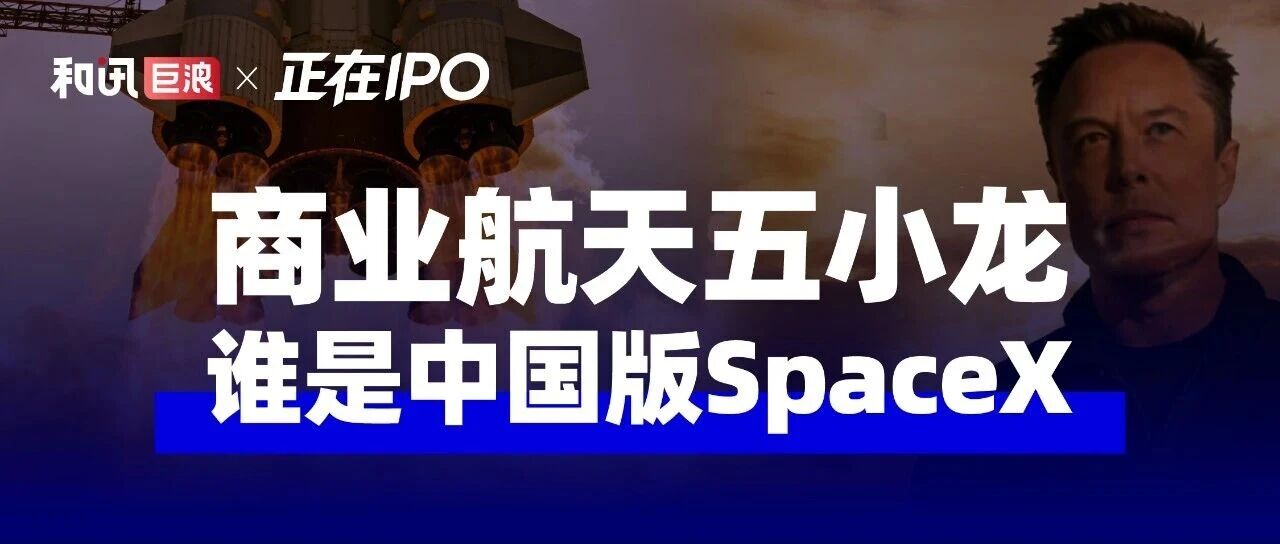
商业航天五小龙,谁会成为中国版SpaceX?
和讯· 2026-03-24 08:55
Core Viewpoint - SpaceX's valuation is approaching $1.8 trillion, significantly outpacing China's five private rocket companies, which collectively exceed 100 billion RMB, highlighting a stark disparity in the commercial space industry [1][2]. Group 1: Challenges in the Rocket Business - The commercial space industry faces three major challenges: high cash burn rates, technological bottlenecks, and capital market perceptions [3][5]. - For instance, Blue Arrow Aerospace reported revenue of 36.43 million RMB in the first half of 2025, but incurred a net loss of 635 million RMB, with R&D expenses alone consuming 360 million RMB, nearly ten times its revenue [4]. Group 2: SpaceX's Success Factors - SpaceX's success is attributed to its ability to create a profitable ecosystem through its Starlink satellite service, which is projected to generate $15.6 billion in revenue by 2026, significantly contributing to its valuation [13]. - The company has also innovated in cost reduction, achieving a marginal launch cost of approximately $15 million through complete rocket reuse, which allows for a gross margin of around 68% after five missions [14]. Group 3: China's Five Dragons' Potential - The five private rocket companies in China, referred to as the "Five Dragons," have a combined valuation that is only 0.8% of SpaceX's, indicating a need for significant advancements to close this gap [2][9]. - These companies are focusing on developing reusable liquid rockets, with Blue Arrow aiming for a launch cost below 20,000 RMB per kilogram, which is one-fifth of traditional rocket costs [16]. Group 4: Market Dynamics and Future Outlook - The Chinese market is characterized by a clear demand for satellite launches, with government projects like the "National Network Constellation" and "Thousand Sails Constellation" expected to create a launch market worth approximately 26.8 billion RMB by 2026 [9]. - The unique advantages of China's supply chain may allow for competitive pricing, with costs potentially decreasing by 50% in the next 3-5 years as reusable technology matures [16][17]. Group 5: Competitive Landscape - The competition among China's private rocket companies is not just about speed but also about who can establish a sustainable business model akin to SpaceX's [18]. - Each company has its unique strengths, such as Blue Arrow's full control over the production chain, Tianbing's use of 3D printing technology, and Zhongke Aerospace's deep technical expertise [19].
2026年建筑春季投资策略:寻找科技产业链中高价值/高通胀/高壁垒环节的高弹性引领者
GUOTAI HAITONG SECURITIES· 2026-03-24 08:27
Investment Rating - The report provides a positive investment rating for the AI industry, indicating strong growth potential and opportunities for investment [12][28]. Core Insights - The AI industry is projected to grow significantly, with an expected market size of 1.2 trillion by 2030, reflecting a compound annual growth rate (CAGR) of 19% from 2026 [5][12]. - The report highlights the increasing demand for AI chips, servers, and related infrastructure, driven by advancements in AI applications across various sectors such as finance, telecommunications, and healthcare [6][20]. - The integration of AI technologies in industries like autonomous driving, smart logistics, and entertainment is expected to enhance operational efficiencies and create new revenue streams [6][20]. Summary by Sections Industry Overview - The AI industry is characterized by a robust supply chain, including upstream components like AI chips and servers, midstream infrastructure such as data centers, and downstream applications across multiple sectors [6][20]. - The report emphasizes the importance of IT infrastructure and cooling systems in supporting AI operations, which are critical for maintaining performance and efficiency [6]. Market Trends - The AI market is witnessing a shift towards more energy-efficient solutions, with a focus on reducing power consumption in AI operations, projected to decrease from 8 kW to 5 kW by 2026 [5][12]. - The report notes a significant increase in the adoption of AI technologies, with IDC services expected to grow by 149.1% by 2025, indicating a strong market demand [12]. Financial Projections - The report forecasts substantial revenue growth for key players in the AI sector, with some companies expected to achieve net profit margins exceeding 30% by 2025 [12][28]. - Specific companies within the AI industry are highlighted for their strong financial performance, with projected revenues reaching billions, showcasing the lucrative nature of the market [12][28].
2 High-Flying Space Stocks Are Expected to Plunge Up to 56% in 2026, According to Select Wall Street Analysts
The Motley Fool· 2026-03-24 08:06
Industry Overview - The space economy is projected to grow from $630 billion in 2023 to approximately $1.8 trillion by 2035, indicating a significant investment opportunity [1] - Retail investors are increasingly interested in space stocks, with AST SpaceMobile and Intuitive Machines being particularly popular [2] AST SpaceMobile - AST SpaceMobile's shares have seen a dramatic increase of 3,070% over the past two years, but analysts predict a potential downside of 56%, with a lowered price target of $41.20 from Scotiabank [2][4] - The company offers a competitive advantage with its BlueBird satellites that are compatible with existing smartphone technology and has partnerships with over 50 mobile network operators globally [5] - AST SpaceMobile's valuation is contingent on timely and cost-effective satellite launches, with inflationary pressures previously increasing cost estimates and delaying launch dates [9] Intuitive Machines - Intuitive Machines has experienced a share price increase of 256% over the last two years, but analysts forecast a potential decline of 50%, with a price target of $9.50 from Bank of America Securities [2][10] - The company secured a Near Space Network contract with NASA, potentially worth up to $4.82 billion, which has bolstered investor interest [12] - Despite government contracts, Intuitive Machines faces challenges as an early-stage company with a net loss of $83.3 million and cash burn of $14.3 million last year, raising concerns about its financial stability [13][14]