
万华化学

Search documents
万华化学今日大宗交易折价成交31.21万股,成交额2334.51万元
Xin Lang Cai Jing· 2026-01-14 09:33
1月14日,万华化学大宗交易成交31.21万股,成交额2334.51万元,占当日总成交额的0.7%,成交价74.8 元,较市场收盘价77.8元折价3.86%。 | 交易日期 | 证券简称 | 证券代码 | 成交价(元) 成交金额(万元) 成交量(*) 买入营业部 | | | | 卖出营业部 | 是否为专场 | | --- | --- | --- | --- | --- | --- | --- | --- | --- | | 026-01-14 | 万华化学 | 600309 | 74.8 2334.51 | 31.21 | 發音量發酵與鬼鬼 | 發覺是和醫與鬼園 | | ко | ...



万华化学烟台乙烯一期装置复产
Zhong Guo Hua Gong Bao· 2026-01-14 06:55
Core Viewpoint - Wanhua Chemical Group Co., Ltd. has announced the resumption of its ethylene phase I facility at the Yantai industrial park after completing a raw material diversification upgrade aimed at optimizing production efficiency [1] Group 1 - The ethylene phase I facility, with a capacity of 1 million tons per year, was shut down for upgrades on June 3, 2025 [1] - The upgrade allows for a flexible feedstock approach, enabling the switch between ethane and propane as raw materials [1] - The facility has successfully completed the raw material transformation and is now producing qualified products from ethane cracking [1]
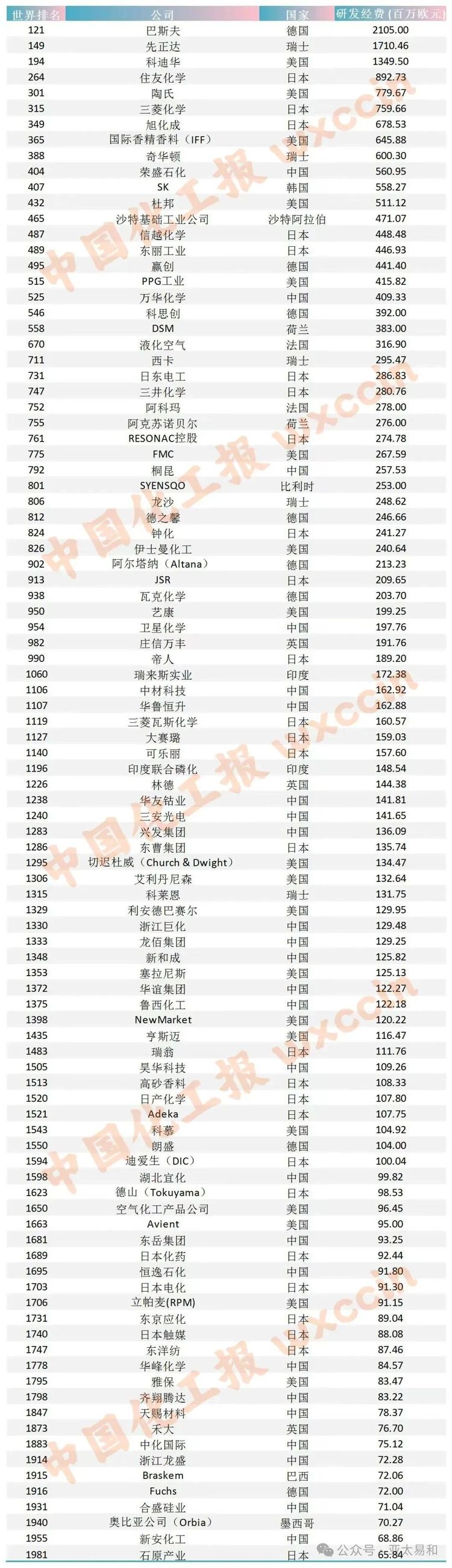
巴斯夫、三菱化学、万华化学等上榜全球研发投入2000强
Zhong Guo Hua Gong Bao· 2026-01-14 06:26
Core Insights - The European Commission released the "2025 EU Industrial R&D Investment Scoreboard" report, highlighting that 25 Chinese chemical companies are among the top 2000 global industrial R&D investors [1] - The total R&D investment of the top 2000 companies is projected to reach €144.6 billion in 2024, accounting for over 90% of global corporate R&D investment [1] Group 1: R&D Investment Rankings - BASF leads the chemical industry with an annual R&D investment of €2.1 billion, ranking 121st overall [1][3] - Syngenta follows with €1.71 billion, ranking 149th, while Corteva ranks 194th with €1.35 billion [1][3] - The top ten chemical companies by R&D investment include Sumitomo Chemical, Dow, Mitsubishi Chemical, Asahi Kasei, IFF, and Firmenich [1] Group 2: Country Distribution - Japan has the highest number of chemical companies on the list with 27, followed by China with 25, the USA with 19, Germany with 8, and Switzerland with 5 [1] - The report indicates that the USA has 674 companies in the top 2000, while China has 581, and the EU and Japan contribute 318 and 192 companies, respectively [1]


石化化工行业AI+进展点评:政策指引推动AI+转型,三大路径驱动化工企业智能化落地
EBSCN· 2026-01-14 06:22
Investment Rating - The report maintains an "Overweight" rating for the basic chemical industry [1] Core Insights - The chemical and new materials industry is set to drive the comprehensive "AI + manufacturing" transformation, as outlined in the State Council's policy document released in August 2025, which aims for deep integration of AI across six key sectors by 2027 [3][4] - The focus for the petrochemical industry is on "quality improvement and efficiency enhancement" through AI, utilizing large models and digital twin technologies to optimize various processes [5] - The report identifies three main pathways for chemical companies to implement AI: self-developed large models, third-party model integration, and investment in AI startups [13][14] Summary by Sections Policy Guidance - The State Council's document emphasizes the necessity for AI integration in the chemical industry, marking it as a compulsory aspect for achieving high-quality development [3] - The Ministry of Industry and Information Technology's implementation opinions further detail goals for AI technology and its application in manufacturing by 2027 [4] AI Empowerment in Petrochemical Industry - AI's role in the petrochemical sector focuses on enhancing operational efficiency and safety through predictive maintenance and process optimization [5] - The establishment of high-quality data sets and infrastructure is crucial for supporting AI applications in the industry [5] AI Empowerment in New Materials Industry - The new materials sector aims to leverage AI for deep integration in research and development, enhancing capabilities in material design and synthesis [5] Implementation Pathways - **Self-Developed Large Models**: Companies like China National Petroleum Corporation (CNPC) and China National Offshore Oil Corporation (CNOOC) are developing proprietary AI models to enhance their operational capabilities [9][10] - **Third-Party Model Integration**: WanHua Chemical collaborates with Huawei Cloud to implement AI solutions for predictive maintenance and operational efficiency [11] - **Investment in AI Startups**: Companies like Qicai Chemical are investing in AI startups to accelerate innovation in materials science [12][13] Investment Recommendations - The report suggests focusing on leading companies that excel in data utilization and AI integration, such as CNPC, Sinopec, and WanHua Chemical [14] - Attention is also drawn to companies involved in new materials and fine chemicals, which are expected to benefit significantly from AI-driven R&D advancements [14]



化工ETF(159870)盘中净申购近4.4亿份,供需改善与减产共振驱动聚酯产业链利润修复
Xin Lang Cai Jing· 2026-01-14 03:54
Group 1 - The PX supply-demand pattern continues to improve, with no new production capacity expected before the end of 2026. Limited domestic PX capacity increase is anticipated next year, with Huajin's 2 million tons facility not expected to be operational until the end of next year, maintaining a rigid supply before then. Overseas refineries are experiencing strong oil product demand, with some chemical products being converted to refined oil, further squeezing PX supply [1] - On the demand side, two PTA facilities in India are gradually coming online, with one recently starting PX external procurement, contributing to demand growth. Recent futures and spot prices have surged, reflecting expectations of an optimized supply-demand pattern [1] - The reduction in long filament production has enhanced collaboration among leading companies, coupled with a gradual recovery in demand and smooth cost transmission. Last week, leading long filament companies reached a consensus on production cuts, planning a 10% reduction in POY and a 15% reduction in FDY, with price increases of 50 yuan/ton followed by another 100 yuan/ton. The current long filament operating rate is 89%, with POY/FDY inventory decreasing to 13-14 days, a reduction of about 4 days month-on-month, indicating strong demand [1] Group 2 - As of January 14, the chemical ETF (159870.SZ) rose by 1.18%, and its associated index, the segmented chemical index (000813.CSI), increased by 1.19%. Among major constituent stocks, Baofeng Energy rose by 5.52%, Junzheng Group by 10.10%, Tongkun Co. by 6.52%, Satellite Chemical by 3.85%, and Wanhua Chemical by 0.67%. During the trading session, net subscriptions exceeded 440 million shares, marking a push for 10 consecutive days of net subscriptions [2] - Related products include the chemical ETF (159870) and linked funds (Class A 014942, Class C 014943, Class I 022792). Related stocks include Wanhua Chemical (600309), Yilake Co. (000792), Cangge Mining (000408), Tianci Materials (002709), Hengli Petrochemical (600346), Juhua Co. (600160), Hualu Hengsheng (600426), Yuntianhua (600096), Baofeng Energy (600989), and Jinfat Technology (600143). A MACD golden cross signal has formed, indicating a positive trend for these stocks [3]
2025年化工产品涨跌榜(上)
Zhong Guo Hua Gong Bao· 2026-01-14 02:57
Group 1: Overall Market Trends - In 2025, the chemical industry experienced significant structural differentiation, moving away from uniform price fluctuations to a more segmented market [1][17] - The overall market showed a "more declines than increases" pattern, with 22.6% of monitored products experiencing price increases, primarily in inorganic chemicals [17][18] - The market's recovery was supported by government policies, demand from emerging industries, and accelerated domestic substitution [17][18] Group 2: Price Movements of Key Chemicals - Sulfur, sulfuric acid, and bromine saw substantial price increases of 116.50%, 111.86%, and 64.84% respectively, driven by strong demand in agriculture, pharmaceuticals, and new energy sectors [15][18] - Conversely, organic chemicals faced significant price declines, with refrigerant R22 dropping by 49.22% and propanol by 40.23%, primarily due to environmental regulations and weak traditional demand [18][19] Group 3: Specific Chemical Market Analysis - The styrene market entered a deep adjustment phase with an average annual decline of 25%, driven by oversupply and weak demand [2][4] - Pure benzene prices fell by 27.17%, attributed to a supply-demand imbalance, with production capacity expected to reach 27 million tons in 2025 [5][6] - The ABS market experienced a 30.31% decline, influenced by increased supply and weak domestic demand, leading to heightened competition [11][18] Group 4: Future Outlook - The chemical industry is expected to recover with distinct structural characteristics, with traditional sectors like titanium dioxide and pesticides likely to see cyclical rebounds [19] - New materials such as electronic chemicals and high-performance fluorinated materials are anticipated to benefit from industry upgrades and domestic substitution trends, expanding market opportunities [19]
化工板块全线猛攻!龙头股飙涨超7%,化工ETF(516020)直线拉升,近10日吸金超9亿元!
Xin Lang Cai Jing· 2026-01-14 02:10
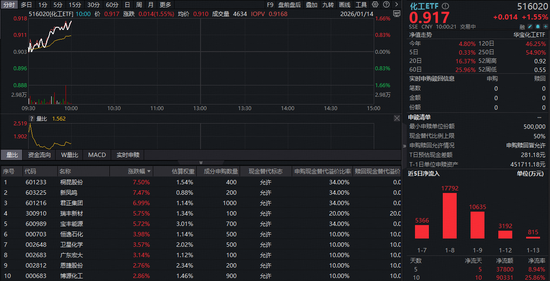
Group 1 - The chemical sector continues to show strong performance, with the chemical ETF (516020) rising by 1.55% as of the latest report [1][7] - Key stocks in the sector include Tongkun Co. and New Fengming, both of which have surged over 7%, while Junzheng Group increased by over 6% [1][7] - Recent inflows into the chemical ETF have been significant, with a net subscription of 378 million yuan over the past five trading days and over 900 million yuan in the last ten days [1][8] Group 2 - The National Development and Reform Commission has highlighted the need for structural reforms in traditional industries, including steel and petrochemicals, to improve supply-demand balance and product structure [3][9] - Guotai Junan Securities suggests that the large chemical industry is likely to be revalued, as the current profitability does not match its industry position, indicating potential for recovery [3][9] - The chemical ETF (516020) has been included in the Stock Connect program, which is expected to attract new capital and enhance liquidity [4][11] Group 3 - The chemical ETF tracks a specialized index covering various themes, with nearly 50% of its holdings in large-cap leading stocks like Wanhua Chemical and Salt Lake Potash [4][11] - Investors can also access the chemical sector through the chemical ETF linked funds, which provide an efficient way to invest in this sector [4][11]



石化ETF(159731)连续5天获得资金净流入,合计“吸金”超9466万元
Xin Lang Cai Jing· 2026-01-14 02:04
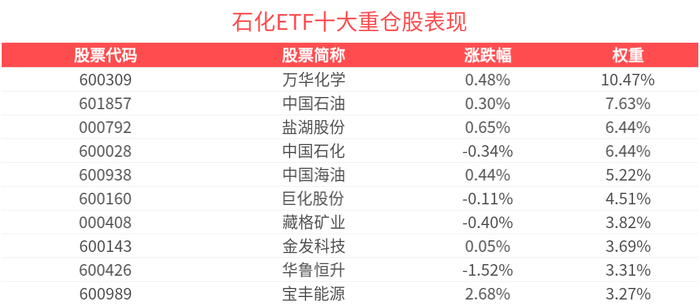
截至2026年1月14日9:40,中证石化产业指数(H11057)上涨0.67%,成分股桐昆股份上涨7.38%,新凤鸣 上涨6.46%,广东宏大上涨4.33%,恒逸石化上涨3.40%,宝丰能源上涨2.68%。石化ETF(159731)上涨 0.74%,最新价报0.95元。从资金净流入方面来看,石化ETF近5天获得连续资金净流入,合计"吸 金"9466.42万元。石化ETF最新份额达3.67亿份,最新规模达3.48亿元,创近1年新高。 (以上所列股票仅为指数成份股,无特定推荐之意) 截至1月13日,石化ETF近2年净值上涨51.59%。从收益能力看,截至2026年1月13日,石化ETF自成立 以来,最高单月回报为15.86%,最长连涨月数为8个月,最长连涨涨幅为41.60%,上涨月份平均收益率 为5.25%。截至2026年1月13日,石化ETF近1年超越基准年化收益为2.19%。 银河证券认为,当前原油市场在区域冲突、供需过剩预期之间博弈,预计短期Brent 原油价格将在60-65 美元/桶区间运行。建议后续密切关注区域局势、OPEC+产量政策、全球贸易争端指引等。 石化ETF(159731)紧密跟踪中证石化产 ...
有色金属,真的是“闷声发财”的典范
Xin Lang Cai Jing· 2026-01-14 01:15
Core Viewpoint - The current market risks are more about the specific sectors investors are involved in rather than the overall market itself, with a focus on long-term opportunities in sectors like non-ferrous metals and chemicals [1][38]. Group 1: Market Sentiment and Risks - The market sentiment is currently stable, with indicators suggesting a balanced state [39]. - A-shares are viewed as a safe haven amid global turmoil, attracting significant investment even during anticipated market corrections [3][41]. - Investors are concerned about missing out on bullish trends while being cautious about entering certain sectors [3][41]. Group 2: Non-Ferrous Metals Sector - The non-ferrous metals sector is expected to perform well due to increasing demand driven by AI infrastructure and energy needs [44][51]. - The supply of copper is becoming increasingly constrained, with average copper ore grades declining from 1.2% in 2010 to 0.8% by 2025, while demand from sectors like electric vehicles and AI data centers is surging [49]. - The geopolitical landscape is fostering resource nationalism, leading countries to prioritize control over their natural resources, which could benefit the non-ferrous metals sector [51][56]. Group 3: Chemical Sector - The chemical sector is quietly attracting investment, with significant growth in the chemical ETF, which is nearing 50 billion in size [62][63]. - The sector is expected to benefit from supply-demand dynamics, policy changes, and technological advancements, with new industries driving demand for high-end chemical materials [68]. - The chemical sector is anticipated to enter a favorable cycle by 2026, with current valuations remaining reasonable compared to other industries [70].
中国化工:碳纤维、MDI、电解液、硅专家电话会纪要-China Chemical Sector Carbon fibre_MDI_electrolyte_silicone expert call takeaways
2026-01-13 11:56
Summary of Key Points from the Conference Call on the China Chemical Sector Industry Overview - The conference call focused on the China Chemical Sector, specifically discussing carbon fibre, MDI (Methylene Diphenyl Diisocyanate), electrolytes, and silicone products for the year 2026. Carbon Fibre (CF) - **Capacity Projections**: China's new carbon fibre capacity planned for 2026 is estimated at 110,000 tons, bringing the total capacity to 280,000 tons. However, the actual capacity expected to come online is between 220,000 to 230,000 tons due to uncertainties with smaller enterprises and industrial parks [2][2]. - **Demand Drivers**: Wind turbine blades are projected to remain the primary application, accounting for 40% of CF demand in 2025, with potential growth in 2026-2028. The mass production of China's homegrown aircraft is expected to further increase demand for high-performance carbon fibre in the aerospace sector [2][2]. - **Price Trends**: Prices for high-performance carbon fibre products (>T800) are expected to remain stable, while lower-end products (T300) may face price pressures due to sufficient capacity [2][2]. MDI (Methylene Diphenyl Diisocyanate) - **Supply Outlook**: New MDI capacity in Asia for 2026-2027 is anticipated from expansions at Wanhua Fujian (700,000 tons per annum), BASF Shanghai (160,000 tons per annum), and Kumho in South Korea (100,000 tons per annum), with most expected to launch in the second half of 2026 [3][3]. - **Demand Growth**: MDI demand is expected to grow by 4-5% in 2026, with domestic demand remaining resilient despite weaker exports to the US in 2025. A mild recovery in exports is anticipated year-over-year [3][3]. - **Price Stability**: MDI prices are expected to stabilize with potential increases of RMB 500-1,000 per ton in the first half of 2026, with a focus on peak-season demand and new capacity launches in the second half [3][3]. Electrolytes - **Price Forecast**: Electrolyte prices are projected to rise to RMB 32,000 per ton in 2026 from RMB 22,000 per ton in 2025, with a midpoint forecast of RMB 33,000-36,000 per ton for 2027-2030 [4][4]. - **Demand Growth**: China's electrolyte demand is expected to grow by 24% in 2026 and 30% in 2027, driven by increasing shipments of power and energy storage batteries [4][4]. - **Capacity Utilization**: Overall electrolyte capacity utilization is expected to improve in 2026 compared to 2025, with attention needed on how new LiPF6 capacity launches will impact supply-demand dynamics in the second half of 2026 [4][4]. Silicone - **Profitability Outlook**: The average selling price (ASP) of Silicone DMC is expected to increase to RMB 12,570 per ton in 2026 from RMB 12,113 per ton in 2025, with profits likely to rise by approximately RMB 300 per ton to RMB 680 per ton [5][5]. - **Capacity Management**: No new DMC capacity is expected in 2026, and industry self-discipline efforts have led to coordinated production cuts among mainstream producers to balance supply and demand [5][5]. - **Utilization Rates**: Industry capacity utilization is projected to be 60.5% in 2026, down 1.5 percentage points from 2025, as producers aim to defend prices through production control [5][5]. Risks and Considerations - **Market Risks**: The chemical sector faces risks including large price fluctuations due to volatile international oil prices, potential demand risks from macroeconomic uncertainties, and the possibility of new capacity coming online faster than expected, which could weaken chemical fundamentals [7][7].