华硕

Search documents
CPU、存储器等零部件价格同步上涨 致笔记本电脑出货量下降
Zhong Guo Jing Ying Bao· 2026-01-29 11:45
核心零部件价格飙升正成为全球笔电(笔记本电脑)市场的"拦路虎"。近日,TrendForce集邦咨询最新 发布的产业调查显示,受CPU阶段性缺货涨价、存储器价格暴涨双重冲击,叠加PCB、电池等多类零部 件成本同步上行,2026年第一季度全球笔电出货量预计将环比减少14.8%,远未达到品牌厂商的初始预 期。与此同时,全年出货预估已从先前的年减5.4%下修至年减9.4%,行业短期面临显著不确定性。 深度研究院院长张孝荣指出,从基本面来看, 零部件价格普涨,一是因为原材料涨价(如铜、锂、金 银等);二是需求变大,AI电脑和企业换新机需求正在增大;三是工厂产能跟不上,再加上国际炒家 囤积居奇,这些原因叠加,导致内存、CPU、电路板、电池等出现全线涨价的预期。 在天使投资人、人工智能专家郭涛看来,本轮多品类零部件同步涨价,核心驱动是AI算力需求的结构 性冲击与产业链资源再分配。在存储端,头部厂商将大量产能转向高利润的AI服务器专用存储产品, 导致消费级存储供应大幅减少;在CPU端,先进制程产能向AI芯片倾斜,消费级CPU出现阶段性供给缺 口。同时,PCB、电池等零部件受上游基础材料涨价影响,而AI数据中心建设进一步推升了 ...
机构:笔记本电脑出货估季减14%
Jing Ji Ri Bao· 2026-01-26 23:09
Group 1 - TrendForce warns that global notebook PC shipments are expected to decline by 14.8% this quarter, which is worse than manufacturers' expectations [1] - The annual decline in global notebook PC shipments has been revised from an initial forecast of 5.4% to 9.4%, indicating significant pressure on brands like Asus and Acer [1] - CPU prices are increasing, and supply shortages are expected to persist until at least March, adding extra pressure on notebook brands' product configurations and shipment schedules [1] Group 2 - Contract prices for DRAM and SSD used in notebooks are projected to increase by over 80% and 70% respectively this quarter, exceeding expectations [2] - The fulfillment rate from storage suppliers is declining, limiting the flexibility in sourcing storage components, which affects production schedules and shipment rhythms [2] - Rising costs for PCBs are driven by increased design complexity and soaring copper prices, leading to a structural trend of higher costs [2] - Upgraded specifications for notebooks are raising battery costs, while the prices of lithium battery materials are also increasing, contributing to higher overall costs for brands [2] - Increased power consumption from CPUs and NPUs is driving demand for more power management ICs, while new specifications like WiFi 7 and USB 4 are raising costs for related chips and connectors [2]
传英伟达暂停生产RTX 50系列显卡
半导体行业观察· 2026-01-23 01:37
Core Viewpoint - The rapid development of artificial intelligence is causing significant challenges for PC assemblers, leading to a surge in DDR5 memory prices and a new round of GPU shortages [1] Group 1: GPU Production Cuts - NVIDIA plans to reduce the production of the RTX 50 series GPUs by 15% to 20% until at least Q3 2026 due to increased demand from AI data centers [1] - This production cut will affect all RTX 50 series graphics cards, including the flagship RTX 5090, resulting in a more limited supply than before [1] - The RTX 5070 Ti will see a significant drop in production, while the RTX 5080 and RTX 5060 Ti 8GB will continue to be in limited supply [1] Group 2: Market Impact and Supply Issues - Reports indicate that NVIDIA has ceased production of consumer-grade graphics cards due to overwhelming sales of AI products, with the RTX 5060 expected to be out of production for at least six months [1][2] - A large retailer has confirmed that the supply of the RTX 5060 is nearly exhausted, with recovery not expected until Q4 [2] - The shortage of GPUs is part of a broader trend affecting the PC hardware market, including SSDs and HDDs, with ASUS previously announcing the discontinuation of the RTX 5070 Ti but later retracting the statement after NVIDIA assured continued supply [2] Group 3: Price Increases and Future Projections - The surge in DRAM prices is impacting the broader consumer electronics market, with expectations of smartphone prices rising this year [2] - IDC's recent report suggests that if the DRAM shortage persists, prices for PCs and smartphones could increase by nearly 10% by 2026 [2]


全新华硕无畏酷睿Ultra AI PC开启预约 向芯而行 破界共生
Xin Lang Cai Jing· 2026-01-22 15:07
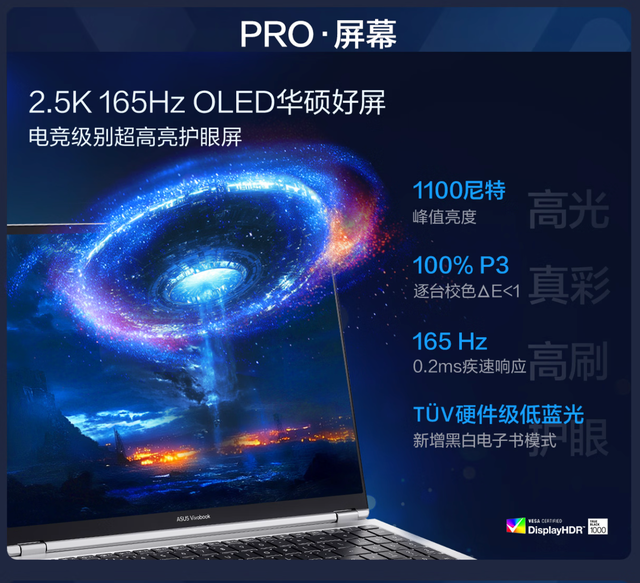
Core Viewpoint - Intel launched the third-generation Core Ultra processors, codenamed Panther Lake, at CES 2026, showcasing significant advancements in performance and AI capabilities [1]. Group 1: Product Launch and Features - The Panther Lake processors are built on Intel's advanced 18A process node, achieving up to 77% improvement in integrated graphics performance and providing a total AI computing power of up to 180 TOPS [1]. - ASUS introduced new AI PCs, including the Zenbook and Vivobook series, featuring the third-generation Core Ultra processors, emphasizing energy efficiency and innovative design [1]. - The ASUS Vivobook Pro 16 2026 is equipped with the Intel Core Ultra X7 processor, featuring a 16-core CPU and the new Iris Xe3 graphics architecture, significantly enhancing graphics performance [2]. Group 2: Display and User Experience - The Vivobook Pro 16 2026 features a 2.5K 165Hz OLED display with 100% P3 color gamut, 1,000,000:1 contrast ratio, and peak brightness of 1,100 nits, ensuring excellent visual quality for various tasks [2]. - The laptop's display specifications include a 165Hz refresh rate and 0.2ms response time, reducing motion blur and screen tearing for a smoother experience [2]. Group 3: Hardware and Performance - The Vivobook Pro 16 2026 comes standard with 32GB LPDDR5X memory and a 1TB PCIe 4.0 SSD, along with a comprehensive range of connectivity options [3]. - The device features an AI assistant, "Xiao Shuo Zhi Dao," which enhances productivity through various smart functions, including document summarization and AI drawing [3]. - The laptop weighs approximately 1.65kg and is 17.9mm thick, with an 80Wh battery providing up to 20 hours of battery life [3]. Group 4: Additional Product Offerings - The Vivobook Pro 14 2026 is also available, featuring the third-generation Core Ultra 7 processor, a 2.8K 120Hz OLED display, and an 80Wh battery offering up to 33 hours of battery life [5]. - Both models are designed to meet the demands of multitasking and local AI content creation, showcasing significant upgrades in performance and usability [5].

华硕发布2026 AMD锐龙AI PC全能本产品阵容:五款AI PC亮相
Xin Lang Cai Jing· 2026-01-22 13:37
Core Viewpoint - ASUS has launched a new series of AI PCs powered by the latest AMD Ryzen AI platform, focusing on various user needs including professional creation, high-end office work, and youth trends, while enhancing AI capabilities across its product lineup [1][48]. Group 1: Product Launch Overview - The launch event introduced the ProArt 创13 2026, 灵耀16 Air 2026, a豆14 Air 2026, and 无畏Pro14/16 2026, showcasing a comprehensive ecosystem approach [1][48]. - The event featured a narrative structure titled "Four Acts of Life," emphasizing the integration of technology and emotional resonance in user experiences [7][55]. Group 2: ProArt 创13 2026 Features - ProArt 创13 2026 is designed for outdoor creators, weighing approximately 1.39 kg and measuring 15.8 mm in thickness, with a 360-degree convertible design for versatile usage [10][58]. - It is equipped with the AMD Ryzen AI Max+ 395 processor, featuring a 16-core, 32-thread design with a maximum frequency of 5.1 GHz, and supports up to 64GB LPDDR5X memory [14][62]. - The device includes a 13.3-inch 2.8K OLED touchscreen, enhancing color accuracy and creative inspiration collection [12][60]. Group 3: 灵耀16 Air 2026 Features - 灵耀16 Air 2026 weighs about 1.5 kg and is 1.1 cm thick, utilizing a high-tech ceramic aluminum material for durability and aesthetics [19][66]. - It features a 2.8K 120Hz OLED display with a peak brightness of 1100 nits, ensuring visibility in bright environments, and offers up to 25 hours of battery life [21][69]. - The device is powered by the AMD Ryzen AI 9 H 465 processor, supporting multi-threaded tasks and featuring advanced cooling technology for optimal performance [23][71]. Group 4: a豆14 Air 2026 Features - a豆14 Air 2026 is designed for Gen Z users, weighing only 990g and measuring 14.9 mm thick, with a battery life of up to 29.6 hours for local video playback [28][78]. - It is powered by the AMD Ryzen AI 9 H 465 processor, balancing performance and portability, and includes a 2.8K 120Hz OLED display with high color accuracy [30][81]. - The device features the "豆叮AI助手," providing various AI functionalities to enhance user productivity [30][81]. Group 5: 无畏Pro14/16 2026 Features - The 无畏Pro series is designed for diverse use cases, featuring the AMD Ryzen AI 9 H 465 processor and advanced cooling technology for high performance [32][85]. - Both models are equipped with OLED displays, offering professional-grade color performance and peak brightness of 1100 nits [34][85]. - The 无畏Pro14 weighs approximately 1.39 kg and offers up to 27 hours of battery life, while the 无畏Pro16 weighs about 1.65 kg with a battery life of up to 20 hours [38][89].

存储涨疯了,终端厂商开始扛不住了
芯世相· 2026-01-22 08:09
Core Viewpoint - The article discusses the significant price increase in storage components, particularly DRAM and NAND Flash, driven by rising demand from AI applications and the resulting impact on various consumer electronics and automotive industries [3][16][20]. Group 1: Impacted End Products - By Q4 2025, various manufacturers across mobile phones, PCs, laptops, and even the automotive sector began to publicly acknowledge the cost pressures from rising storage prices, leading to price hikes or reduced shipment forecasts [3][5]. - Xiaomi has signed long-term supply agreements to mitigate cost increases and has raised the price of its new model, Xiaomi 17 Ultra, by 500 yuan due to increased memory costs [5][6]. - Other smartphone manufacturers, including Redmi, iQOO, Lenovo, and OPPO, have also raised prices by up to 20% and some have canceled product launches due to memory price surges [6][7]. - Major PC manufacturers like Lenovo, Dell, and HP are also planning price increases, with Dell's commercial PCs seeing price hikes of up to 30% [8][9][10]. Group 2: Price Trends and Market Dynamics - Storage prices have been on a significant upward trend since August 2023, with major manufacturers like Samsung and Micron announcing price increases and even pausing quotes [13][14]. - In December 2025, storage module prices continued to rise, with fluctuations ranging from 10.42% to 68.42%, while DRAM prices surged significantly [15][19]. - The market is experiencing a "seller's market" dynamic, where the balance of power is shifting towards suppliers due to limited availability and rising costs [18][19]. Group 3: Future Outlook and Industry Challenges - The ongoing shortage of high-end storage chips is expected to persist until at least 2028, driven by AI demand, which is reshaping the storage market [20]. - The structural changes in production capacity are leading to reduced availability for consumer electronics, with potential impacts on automotive electronics and home appliances [16][20]. - The article warns that if storage prices exceed a certain threshold, demand may decline, leading to a challenging environment for manufacturers who must balance profit margins with market share [19][20].

上网本,为何消失了?
3 6 Ke· 2026-01-21 11:02
Core Viewpoint - The rise and fall of the ASUS Eee PC, which pioneered the netbook category, illustrates the rapid evolution of consumer electronics and the impact of market dynamics on product lifecycle [1][10][43] Group 1: Rise of the Netbook - In 2006, ASUS became the world's second-largest OEM, primarily manufacturing computers and servers for Dell and HP, but faced anxiety over its heavy reliance on OEM business [1] - The launch of the ASUS Eee PC in 2007 marked a significant shift, creating a new product category known as netbooks, which peaked at nearly 40 million units sold globally [1][10] - The Eee PC was priced at $299, significantly lower than traditional laptops, which contributed to its rapid adoption [4][10] - By 2008, netbook sales reached 10.8 million units, and by 2010, they exceeded 39 million units, capturing over 10% of the PC market [3][10] Group 2: Market Dynamics - The global financial crisis in 2007 led to decreased consumer spending, further enhancing the appeal of low-cost netbooks as alternatives to traditional laptops [7] - The entry of various manufacturers, including Acer and numerous smaller companies, drove down production costs and increased competition in the netbook market [6][10] - Netbooks found a niche in the education sector, particularly in developing countries, where their affordability made them an attractive option for governments looking to enhance educational resources [9][10] Group 3: Decline of the Netbook - Despite initial success, netbook sales began to decline sharply after 2010, with sales dropping to 2.94 million units in 2011 and further to 1.41 million in 2012 [10][12] - The rapid evolution of technology and consumer preferences, including the rise of tablets and smartphones, contributed to the decline of netbooks, as these devices offered better performance and portability [30][34] - By 2013, major manufacturers, including ASUS and Acer, ceased production of new netbook models, marking the end of the product category [12][13] Group 4: Legacy and Impact - The netbook's brief existence highlighted the importance of price, portability, and internet connectivity in consumer electronics, influencing the design and marketing of future devices [41][43] - Innovations inspired by the netbook, such as ultrabooks and Chromebooks, emerged as manufacturers sought to fill the gaps left by the decline of netbooks [43] - The netbook phenomenon serves as a case study in how market needs and technological advancements can rapidly change the landscape of consumer electronics [43]

遭遇股债汇“三杀”,“抛售美国”交易再现
Jing Ji Guan Cha Wang· 2026-01-21 05:53
美东时间周二(20日),美国遭遇股债汇"三杀"。在特朗普威胁要对八个欧洲国家加征新关税后,市场剧 烈震荡。美国三大股指全线收跌,道指跌1.76%,标普500指数跌2.06%,纳指跌2.39%,"抛售美国"交 易再现。 科技股普遍承压,美国科技七巨头指数跌3.06%。个股方面,英伟达跌超4%,特斯拉跌逾4%,苹果跌 超3%,亚马逊跌逾3%,META跌超2%,谷歌跌逾2%,微软跌超1%。但,存储芯片板块逆势走强。闪 迪、美光科技盘中均创下历史新高,收盘分别上涨9.55%、0.62%。希捷科技收跌0.07%,盘中同样刷新 历史高点。 1月20日美股收盘,多家美国硬件科技公司股票遭遇大幅抛售,股价出现明显下跌。其中NetApp股价下 跌超9%,惠普股价下跌近3%,戴尔股价下跌近5%,罗技股价下跌约4.5%。 此前,摩根士丹利下调硬件科技行业评级并发出警告,认为受经济不确定性和零部件成本上升影响,企 业正削减硬件支出,行业需求正在放缓。摩根士丹利在报告中指出,"需求放缓、投入成本通胀和估值 过高正在形成一场'完美风暴',促使我们在2026年之前采取更加防御性的策略。" 摩根士丹利最新调查显示,2026年全球企业硬件预算 ...
暴跌超9%!美硬件科技股遭遇抛售潮,“完美风暴”将席卷2026年硬件市场?
Jin Rong Jie· 2026-01-21 03:56
Group 1 - Major US hardware tech companies experienced significant stock sell-offs, with NetApp down over 9%, HP down nearly 3%, Dell down nearly 5%, and Logitech down about 4.5% [1] - Morgan Stanley downgraded the hardware tech sector rating, citing economic uncertainty and rising component costs leading to reduced hardware spending and slowing industry demand [1] - Morgan Stanley's report predicts that global enterprise hardware budgets will grow by only 1% year-on-year by 2026, marking the weakest growth in nearly 15 years, excluding the COVID-19 pandemic period [1] Group 2 - A survey indicated that 30% to 60% of customers might reduce their planned purchases of PCs, servers, and storage devices if component inflation persists [1] - The International Workplace Group's report shows that 95% of CEOs are optimistic about market performance in 2026, but all respondents prioritize cost control as a core focus [2] - Companies are reducing their 2026 budgets by an average of 10%, with many leaders adopting AI technologies and flexible work arrangements to enhance operational efficiency [2] Group 3 - IDC forecasts that global PC shipments could decline by up to 9% in 2026, with a moderate scenario predicting a 5% decrease [2] - The current industry landscape is expected to concentrate market share among leading manufacturers like Dell, HP, Lenovo, and Asus, which have better risk management capabilities compared to smaller firms [2] - Despite some growth support from AI-driven demand, uncertainties from US tariff policies add to the concerns surrounding the hardware tech sector [3]
美国硬件科技股遭大幅抛售
Di Yi Cai Jing Zi Xun· 2026-01-21 03:29
Group 1 - The core viewpoint of the articles indicates a significant downturn in the hardware technology sector, with major companies experiencing substantial stock price declines due to reduced corporate spending amid economic uncertainty and rising component costs [2][3][4] - Morgan Stanley downgraded the hardware technology industry's rating, warning of a "perfect storm" caused by slowing demand, input cost inflation, and overvaluation, leading to a more defensive strategy until 2026 [2][3] - The latest survey by Morgan Stanley predicts that hardware technology budget growth will only increase by 1% in 2026, marking the weakest growth in nearly 15 years, excluding the COVID-19 pandemic period [2] Group 2 - According to the International Workplace Group's report, 95% of CEOs are optimistic about 2026, but CFOs are planning to cut budgets by an average of 10% to control costs, leveraging AI and flexible work solutions to enhance operational efficiency [3] - A separate Morgan Stanley survey indicates that if component inflation continues, 30% to 60% of customers may reduce their planned purchases of PCs, servers, and storage devices, increasing the risk of downward adjustments in profit expectations for 2026 [3][4] - Citigroup analysts noted that hardware companies and distributors are facing fluctuations in enterprise demand, rising memory costs, and a projected decline in PC shipments by up to 9% in 2026, with a moderate scenario predicting a 5% contraction [4]