
箭元科技

Search documents
【早报】商务部发声!事关稀土出口管制;两大GPU龙头一申购一上市
财联社· 2025-12-04 23:09
Macro News - China supports all efforts conducive to peace regarding the Ukraine crisis and aims to play a constructive role in political solutions [1] - Japan's Prime Minister reiterated the country's stance on Taiwan, which China disputes as an inadequate response [1] - China's Ministry of Commerce confirmed that it conducts export controls on rare earths in accordance with laws and regulations, facilitating compliant trade [2] - The European Union has announced the termination of a trade restriction case against China at the WTO, which China views as a correct decision [2] - The People's Bank of China will conduct a 1 trillion yuan reverse repurchase operation to maintain liquidity in the banking system [2] Company News - Cambrian Technology issued a statement denying misleading information regarding its products and market predictions [8] - Yunzhu Technology announced that its consumer electronics are primarily used in major smartphone brands like Huawei and Xiaomi [9] - Feiwo Technology's controlling shareholder increased its stake during a period of stock price volatility [9] - Junya Technology's PCB products are utilized in humanoid robots, although they represent a small portion of the company's revenue [10] - Moer Thread debuted on the STAR Market with an issue price of 114.28 yuan per share, while Muxi shares began subscription at 104.66 yuan per share [10] Global Market - US stock indices closed mixed, with the Dow down 0.07%, the Nasdaq up 0.22%, and the S&P 500 up 0.11% [11] - TikTok plans to invest over $37 billion in building its first data center in Brazil [12] - ST Xianhe announced the removal of risk warnings and a name change to "Xianhe Environmental Protection" [12] - Country Garden's bond restructuring plan was approved by creditors, involving a total principal amount exceeding 13.8 billion yuan [12] Investment Opportunities - The commercial aerospace industry is rapidly developing, with a new rocket recovery base established in Hangzhou, involving a total investment of 5.2 billion yuan [17] - IDC predicts that Apple's iPhone shipments will reach a record 247.4 million units by 2025, reflecting a growth of over 6% [18]


中国民营火箭急了!密集上天、扎堆上市
Jing Ji Guan Cha Bao· 2025-10-25 06:02
Core Viewpoint - The Chinese commercial space industry is experiencing a "capacity spring," with advancements in technology, capital, and policy potentially accelerating the development of satellite launch capabilities faster than expected [2][5]. Group 1: Recent Developments in Satellite Launch Capabilities - On October 17, 2025, Shanghai Yuanxin Satellite Technology Co., Ltd. successfully launched the sixth batch of satellites for its "Qianfan Constellation," bringing the total number of satellites in orbit to 108 [3]. - Major telecommunications operators in China, including China Telecom, China Mobile, and China Unicom, have received licenses for satellite mobile communication services, enabling direct satellite connections for mobile phones [3]. - The domestic satellite internet market is reaching a significant milestone, but the "capacity" segment remains constrained, necessitating the involvement of private rocket companies to alleviate the bottleneck [3][4]. Group 2: Progress of Private Rocket Companies - Beijing Tianbing Technology Co., Ltd. announced the successful sea test of its "Tianlong-3" large liquid rocket, which has a near-Earth orbit capacity of 17 to 22 tons and can launch up to 36 satellites in one go [4][7]. - Blue Arrow Aerospace successfully completed the first phase of its "Zhuque-3" rocket's launch preparations, including static ignition tests, and is preparing for its official orbital launch [4][9]. - Beijing Zhongke Aerospace Technology Co., Ltd. reported progress on its "Liqian-2" liquid rocket, which is designed for medium payloads and aims to support China's space station logistics [9][10]. Group 3: Market Dynamics and Investment Trends - The demand for satellite launches is increasing, with estimates suggesting that the "Qianfan Constellation" requires at least 200 to 300 satellite launches annually, necessitating multiple rockets with capacities exceeding 10 tons [6]. - Recent funding rounds have seen significant investments in private rocket companies, with Star River Dynamics raising 2.4 billion yuan in its D round and Tianbing Technology securing nearly 2.5 billion yuan in Pre-D and D rounds [13][14]. - The Chinese Securities Regulatory Commission has opened a window for IPOs in the commercial space sector, prompting several companies to initiate IPO preparations [14][15]. Group 4: Technological Innovations and Cost Reduction Strategies - The use of 3D printing technology in the manufacturing of rocket components is being explored to reduce costs, with Tianbing Technology's "Tianlong-3" rocket utilizing this approach to achieve significant cost savings [21][22]. - The focus on reusable rocket technology is seen as a key strategy for cost reduction, with companies like Arrow Technology aiming for high reuse rates to lower overall launch costs [19][20]. - The competitive landscape is expected to intensify as more private companies successfully launch their rockets, with cost efficiency becoming a critical factor for securing future contracts [22].

国产商业火箭 “批量上天” 背后……
3 6 Ke· 2025-10-20 07:23
Core Insights - The frequency of domestic commercial rocket launches is accelerating, with a "batch launch" trend emerging, as evidenced by the successful launch of the Yao-8 rocket carrying three satellites [1] - In August alone, China completed nine commercial launch missions, with a total of at least 20 planned for the year, indicating a significant increase in launch activity [1][2] - However, the industry faces multiple underlying challenges, particularly in technology, supply chain support, and ecosystem development [1][2] Technology and Development - The commercialization of reusable rocket technology has not yet formed a closed loop, with domestic companies still in the single-use technology validation stage [2][7] - The current gap in rocket payload capacity between China and the U.S. is approximately four to six times, with SpaceX's Starship capable of carrying around 150 tons compared to China's Long March 5's 25 tons [3] - China is actively developing heavy-lift rocket technology, with the Long March 9 expected to achieve a low Earth orbit capacity of 150 tons by 2035, aligning with international heavy-lift capabilities [3] Cost and Pricing - The launch costs for domestic solid rockets are currently around 60,000 to 70,000 RMB per kilogram, with expectations that future liquid rockets could reduce costs to over 20,000 RMB per kilogram [3][4] - The average cost of launching a Long March 3B rocket is approximately 39 million RMB per mission, translating to about 70,900 RMB per kilogram [4] - In contrast, SpaceX's Falcon 9 rocket has a launch cost of about 14,000 to 18,000 RMB per kilogram in a fully reusable state, highlighting the cost disparity [5][6] Industry Challenges - The severe shortage of launch capacity is identified as a core issue hindering the industry's scalable development, rather than merely high launch costs [2][8] - The industry requires the development of high-frequency, low-cost, and reliable launch vehicles to support large-scale satellite constellations [7][8] - The current state of domestic rocket production and reliability is insufficient to meet the anticipated explosive demand in the next 2-3 years, necessitating increased investment in R&D and production capabilities [8][12] Future Prospects - The focus on liquid reusable rockets is seen as a key pathway to addressing the challenges of launch capacity and cost [9][10] - Several companies are making rapid progress in vertical recovery technology, with plans for multiple reusable rocket launches and recoveries by 2026 [10][11] - Achieving a transition from single-test launches to scalable production capabilities is crucial for companies to seize industry opportunities [12]
全球最大固体火箭海阳再问天,山东海上火箭发射能力与频次稳居全国前列
Da Zhong Ri Bao· 2025-10-12 01:26
Core Viewpoint - The article highlights the significant advancements in the commercial aerospace industry in Shandong, particularly focusing on the successful launch of the "Yingli No. 1" rocket from the Haiyang offshore launch site, which positions Shandong as a leading player in China's commercial space sector [1][3][11]. Group 1: Launch Capabilities - The "Yingli No. 1" rocket successfully launched on October 11, 2025, marking the 20th offshore launch supported by the Dongfang Aerospace Port [3][4]. - The Dongfang Aerospace Port is the only commercial offshore launch mother port in China, capable of compressing the entire rocket launch process within a 6-kilometer radius, allowing for a rapid 2-hour response from factory to ship [4][5]. Group 2: Strategic Advantages - Shandong's geographical advantages include a long coastline and low shipping density in the eastern sea area, making it an ideal natural launch site with high safety and flexible orbital options [5]. - The province has a strong industrial foundation in equipment manufacturing, new materials, and electronic information, supporting a comprehensive aerospace industry chain [5][8]. Group 3: Industry Development - Shandong aims to establish a full industry chain from rocket manufacturing to satellite applications, with plans to achieve an annual capacity of over 30 commercial launches [7][8]. - The province has already launched 96 satellites from 14 local entities, with ongoing projects in satellite constellations and advanced satellite manufacturing capabilities [8][9]. Group 4: Collaborative Ecosystem - The recent Shandong Commercial Aerospace Industry Innovation Development Conference showcased a collaborative approach among cities, each focusing on different aspects of the aerospace industry, creating a complementary ecosystem [10]. - Financial investments have been made through the province's new and old kinetic energy conversion funds, totaling over 8 billion yuan in commercial aerospace projects [10]. Group 5: Future Goals - Shandong aims to achieve an annual production capacity of 100 launch vehicles and 150 commercial satellites by 2027, with the commercial aerospace industry projected to reach a scale of 50 billion yuan [11].
一枚火箭冲天起,“链”成山东商业航天新棋局
Qi Lu Wan Bao Wang· 2025-10-11 23:36
Core Viewpoint - The article highlights the successful launch of the "Gravity No. 1 (Remote II) Hailan Home" rocket from the Dongfang Spaceport in Haiyang, Shandong, marking a significant milestone in China's commercial space industry and the development of a comprehensive aerospace ecosystem in the region [3][11]. Group 1: Launch Event - The rocket launch occurred on October 11, 2025, at 10:20 AM, with the payload successfully entering orbit 10 minutes later, generating applause from the command center and attendees [3][5]. - This launch was part of the 20th sea launch supported by the Dongfang Spaceport, which has streamlined the entire rocket launch process within a 6-kilometer radius, enabling a rapid response time of 2 hours from factory to ship [5][6]. Group 2: Strategic Location and Infrastructure - Haiyang's geographical advantages, including a long coastline and low shipping density, make it an ideal natural launch site, enhancing safety and flexibility for various satellite launch angles [6]. - Shandong has established a complete aerospace industry chain, integrating rocket manufacturing, satellite production, launch services, and data applications, supported by significant policy initiatives since 2019 [6][10]. Group 3: Industry Development and Goals - The province aims to achieve an annual production capacity of 100 launch vehicles and 150 commercial satellites by 2027, with the commercial aerospace industry projected to reach a scale of 50 billion yuan [11]. - Shandong's aerospace sector includes 14 entities that have launched a total of 96 satellites, with ongoing projects in satellite constellations and advanced manufacturing capabilities [8][9]. Group 4: Collaborative Ecosystem - The Shandong province is fostering a collaborative ecosystem among its cities, each focusing on different aspects of the aerospace industry, such as sea launches, rocket manufacturing, and satellite research [10]. - Financial investments have been made through the establishment of commercial aerospace funds, totaling over 8 billion yuan, to support various aerospace projects and enhance the region's industrial vitality [10].
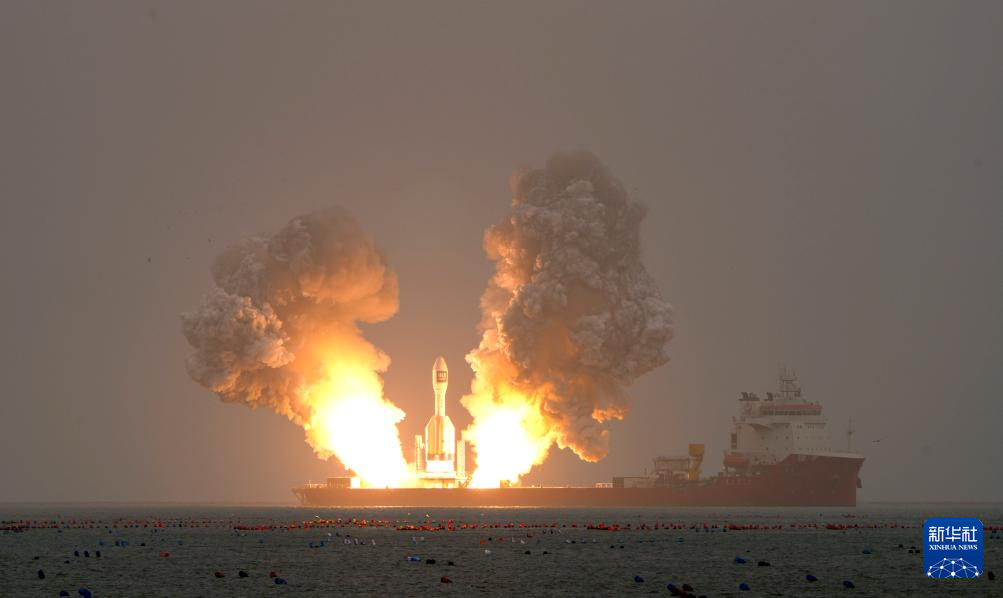
全球最大固体火箭海阳再问天!山东的“航天一盘棋”下得有多大?
Qi Lu Wan Bao Wang· 2025-10-11 07:12
Core Viewpoint - The successful launch of the "Gravitational No. 1" rocket marks a significant step for Shandong in establishing itself as a major player in the commercial aerospace industry, showcasing its ambitions and plans for development [4][16]. Group 1: Launch and Event Highlights - The "Gravitational No. 1" rocket was successfully launched, with the payload entering orbit within 10 minutes, generating applause from the command center and attendees [2][3]. - This event coincided with the first provincial-level conference on commercial aerospace in Shandong, highlighting the province's commitment to developing this industry [4]. Group 2: Infrastructure and Capabilities - The "Oriental Aerospace Port" has successfully supported 20 sea launches, placing Shandong at the forefront of maritime launch capabilities in China, with 127 satellites successfully deployed [5][6]. - The port features a comprehensive layout that includes various functional zones, allowing for a rapid response time of 2 hours from factory to launch [5]. Group 3: Industry Development and Policy Support - Shandong has established a complete aerospace industry chain, integrating rocket manufacturing, satellite production, and launch services, supported by favorable policies initiated since 2019 [6][10]. - The province aims to achieve a commercial launch capacity of over 30 launches per year by the end of the year, with plans for four additional launches in 2023 [6][10]. Group 4: Technological Innovations and Market Impact - The "Gravitational No. 1" rocket has set multiple records, including being the largest solid rocket globally and the largest commercial rocket in China, which will facilitate future mass production and high-frequency launches [7][8]. - The aerospace industry in Shandong is expected to generate a significant economic impact, with a projected output ratio of 1:10 for investments, leading to a rapid increase in the number of aerospace companies in the region [15]. Group 5: Talent and Ecosystem Development - The influx of talent from established aerospace experts has created a robust workforce in Shandong, enhancing the region's technological capabilities and fostering a collaborative environment among various aerospace enterprises [15]. - The establishment of multiple aerospace funds has attracted significant investment, further strengthening the ecosystem and supporting the growth of the commercial aerospace sector [14][13]. Group 6: Future Goals and Vision - By 2027, Shandong aims to produce 100 rockets and 150 commercial satellites annually, with the commercial aerospace industry projected to reach a scale of 50 billion yuan [16]. - The province is focused on advancing liquid rocket capabilities and developing reusable rocket technologies, marking the next milestones in its aerospace journey [16].
商业航天为什么都在拿县城的钱?
Hu Xiu· 2025-09-30 03:23
Core Viewpoint - The commercial space industry is recognized as a trillion-dollar market, with significant developments and investments, yet it still faces challenges in achieving profitability and operational stability [1][2]. Group 1: Industry Overview - The term "hard technology" has gained traction, with commercial space being a highly regarded sector due to its technological advancements and existing successful cases like SpaceX, which has raised a total of $9.8 billion since its inception [1]. - The commercial space sector has been included in various development plans, such as Chengdu's strategic initiatives to strengthen its aerospace industry [1]. - Despite initial excitement, attention has shifted towards other sectors like smart driving and embodied intelligence, indicating a potential stagnation in commercial space developments [2]. Group 2: Investment and Financing - Star River Dynamics, a leading private rocket company in China, recently completed a Series D financing round totaling 2.4 billion, setting a new record for private rocket financing in the country [2]. - The overall financing scale for the commercial space industry exceeded 20 billion last year, marking a significant increase in capital inflow [26]. Group 3: Market Dynamics - The commercial space industry is characterized by a cycle of optimism and disappointment, often referred to as "every year is the first year, yet no profits are made" [12][13]. - The emergence of the "Star Network" project has provided a clear target for companies in the industry, fostering a more defined market narrative [16]. Group 4: Technological Advancements - The industry has seen advancements in rocket technology, with 12 successful launches by private companies in 2023, and a focus on developing reusable rocket technology to significantly reduce launch costs [28][36]. - The satellite internet sector is rapidly advancing, with projects like "Star Network" and "G60" pushing for large-scale satellite deployments, which require a shift towards mass production and automation in satellite manufacturing [31]. Group 5: Future Outlook - The next two years are expected to witness significant developments in the commercial space sector, including the potential for the first successful recovery of an orbital rocket, which would mark a major technological breakthrough [54][55]. - The industry is anticipated to undergo a consolidation phase, where weaker companies may be eliminated, leading to a more mature market structure [59].
东方航天港:逐梦星辰的“海上摇篮”
Zhong Guo Zi Ran Zi Yuan Bao· 2025-08-25 07:43
Core Viewpoint - The successful launch of the Jielong-3 rocket marks a significant advancement in China's commercial space capabilities, particularly in maritime rocket launches, indicating a shift towards efficient mass production of rockets [3][4][11]. Group 1: Launch Achievements - The Jielong-3 rocket successfully launched 11 satellites into LEO, marking the 17th maritime launch from the Dongfang Spaceport in Shandong Province [3]. - The Dongfang Spaceport is China's fifth rocket launch site and the only maritime launch port, having successfully supported 17 maritime launch missions [3][4]. - The Jielong-3 rocket's transition from customized to mass production is expected to enhance capacity and reduce costs, catering to the demand for low-cost, high-frequency commercial launches [4][11]. Group 2: Technological Innovations - The Jielong-3 rocket has entered a phase of intensive launches, with three missions scheduled within two months, showcasing its adaptability and operational efficiency [4]. - The successful maritime recovery test of the Yuanzheng-1 rocket represents a milestone in reusable rocket technology, making China the second country globally to achieve this capability after the United States [11][12]. - The Yuanzheng-1 rocket utilized a stainless steel body and anti-corrosion coatings to withstand harsh maritime conditions, demonstrating significant advancements in materials science [11][12]. Group 3: Industry Implications - The development of reusable rockets like the Yuanzheng-1 is projected to lower launch costs significantly, potentially bringing costs down to below $3,000 per kilogram, comparable to SpaceX's Falcon 9 [11][12]. - The successful integration of various technologies, including liquid oxygen-methane engines and intelligent navigation systems, is fostering the growth of a maritime aerospace industry cluster in regions like Qingdao and Yantai [12]. - The maritime recovery approach offers risk diversification advantages, as the designated splashdown area is away from shipping lanes and populated areas, aligning with international green aerospace trends [12][13]. Group 4: Competitive Landscape - The global maritime recovery landscape is characterized by the United States leading with SpaceX, while China is rapidly advancing with the Yuanzheng-1 and other technologies [13]. - Compared to the U.S., China is still in the verification phase for maritime recovery, but the Yuanzheng-1's technology path presents a potential latecomer advantage [12][13]. - Future developments in active stabilization technology are expected to further mitigate the impact of platform motion on launch precision, enhancing the capabilities of the Dongfang Spaceport [13].
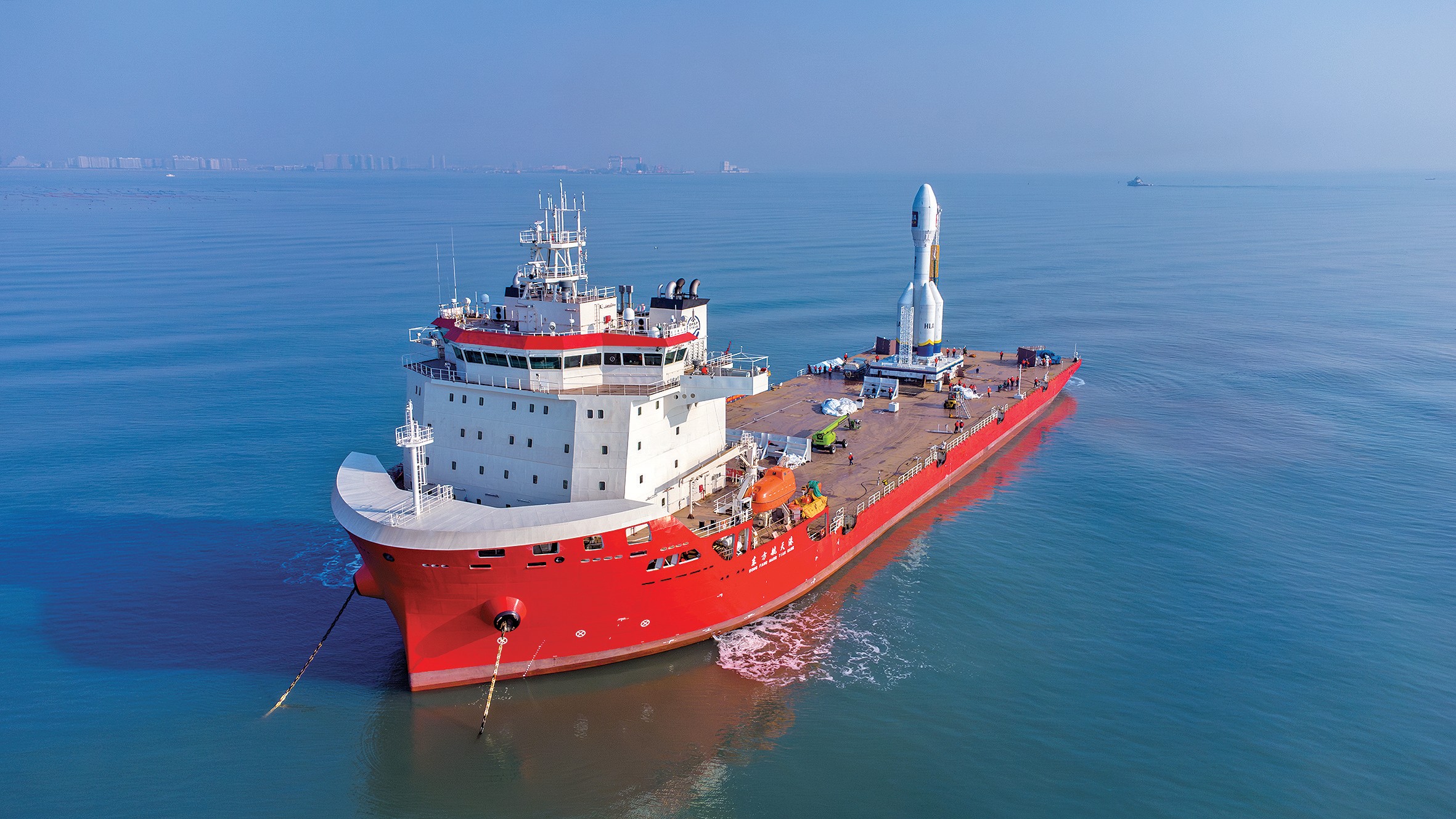
“航天+海工”的技术融合,推动青岛、烟台等地形成海上航天产业集群——东方航天港:逐梦星辰的“海上摇篮”
Zhong Guo Zi Ran Zi Yuan Bao· 2025-08-25 01:25
Core Insights - The successful launch of the Jielong-3 rocket marks a significant milestone for China's commercial space industry, indicating a shift towards efficient mass production of rockets [3][4] - The development of the Yuyuan-1 rocket and its successful sea recovery trial positions China as a key player in reusable rocket technology, second only to the United States [10][11] Group 1: Launch Achievements - The Jielong-3 rocket successfully launched 11 satellites into LEO, marking the 17th sea launch from the Dongfang Spaceport [3][4] - The Dongfang Spaceport is China's only sea-based rocket launch site, enhancing the flexibility and safety of launch operations [3][4] - The Jielong-3 rocket's transition from customized to mass production is expected to lower costs and increase launch frequency, catering to commercial demands [4][10] Group 2: Technological Innovations - The Yuyuan-1 rocket, made of thin-walled stainless steel and using liquid oxygen and methane propellants, successfully completed a sea recovery test, filling a gap in China's liquid rocket capabilities [5][10] - Advanced technologies such as "sea-based launch dynamic compensation" and real-time monitoring systems have been developed to address the challenges of sea launches [6][9] - The integration of aerospace dynamics, marine engineering, and artificial intelligence is crucial for the success of sea launch and recovery operations [9][10] Group 3: Industry Implications - The reusable rocket technology is projected to significantly reduce launch costs, with potential costs dropping below $3,000 per kilogram, comparable to SpaceX's Falcon 9 [10][11] - The successful sea recovery of the Yuyuan-1 rocket is expected to drive the development of related industries, including liquid oxygen and methane engines and smart navigation systems [11] - China's advancements in sea recovery technology provide a competitive edge in international space endeavors, particularly in low Earth orbit satellite networks and deep space exploration [10][12]
星地量子直接通信技术首试“飞天”
Huan Qiu Wang Zi Xun· 2025-06-06 01:51
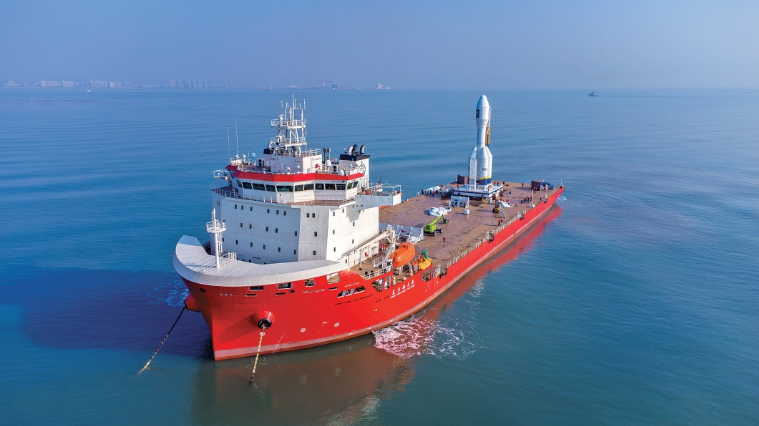
Group 1 - The core viewpoint of the article highlights the successful completion of the module-level verification of China's star-ground quantum direct communication technology, marking a significant step towards the construction of an integrated quantum direct communication network in space and on Earth [1] - The verification was conducted using the "Yuanxingzhe No.1" rocket developed by Beijing's commercial aerospace company, which successfully completed its first sea recovery test [1] - The two key modules developed by the Beijing Quantum Institute are essential for the star-ground quantum direct communication system, enabling information transmission and decoding [1] Group 2 - The rapid development of the commercial aerospace sector in Beijing presents more opportunities for innovation and cost reduction in the design of aerospace standard components [2] - The recent test involved the modules flying to an altitude of approximately 2.5 kilometers, where they faced the highest acceleration and vibration, successfully passing the test [2] - The team has optimized the quantum direct communication system's size from approximately the size of five computer hosts to that of one, aiming to meet the stringent weight and volume requirements for space missions [2]