
罗氏

Search documents
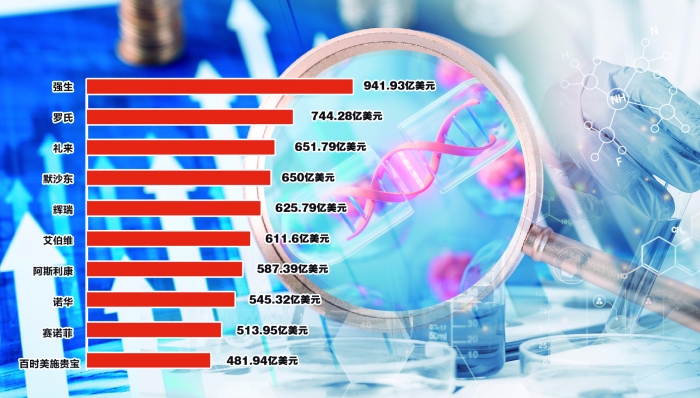
强生蝉联第一 跨国药企2025年“成绩单”揭晓
Shang Hai Zheng Quan Bao· 2026-02-10 18:09
Core Insights - Major multinational pharmaceutical companies are showing robust revenue growth and increased sales of core products as they release their 2025 performance results [1][2] - Johnson & Johnson leads with nearly $94.2 billion in revenue, while Eli Lilly's weight loss drug, tirzepatide, shows a remarkable 45% year-over-year growth [1][2] Group 1: Revenue Performance - Johnson & Johnson reported total revenue of $94.193 billion for 2025, marking a 6% increase year-over-year [2] - Roche follows with revenue of $74.428 billion, while Eli Lilly, Merck, Pfizer, and AbbVie each exceeded $60 billion in revenue [2] - Eli Lilly's revenue reached $65.179 billion, a 44.7% increase, driven by strong sales of tirzepatide, which generated $36.5 billion [6] Group 2: Product Performance - Johnson & Johnson's innovative pharmaceuticals and medical technology segments both achieved revenue growth, with $60.401 billion and $33.792 billion respectively, both up by approximately 6% [2] - The CAR-T therapy, ciltacabtagene autoleucel, contributed significantly to Johnson & Johnson's growth, with revenue of $1.887 billion, a 95.9% increase [2] - Eli Lilly's tirzepatide sales reached $36.5 billion, with the weight loss version generating $13.542 billion, a 175% increase [6] Group 3: Market Trends and Challenges - The pharmaceutical industry faces a looming "patent cliff," with an estimated $236 billion in revenue at risk from patent expirations between 2025 and 2030 [8] - Companies are increasingly engaging in business development transactions to replenish their R&D pipelines, with Chinese innovative pharmaceutical companies gaining prominence [8][9] - In 2025, Chinese companies achieved record-breaking business development deals, totaling $135.655 billion, with significant collaborations involving major multinational firms [9]


分子还没成熟、合作已先落地:信达生物与礼来最高超80亿美元战略合作释放了哪些信号?
Mei Ri Jing Ji Xin Wen· 2026-02-10 14:57
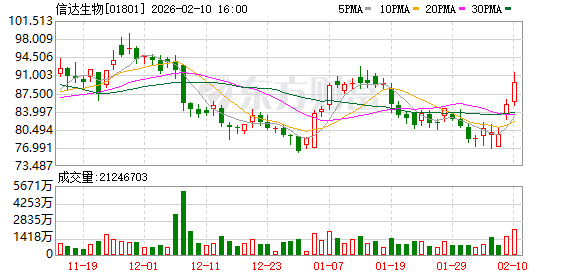
Core Viewpoint - The strategic collaboration between Innovent Biologics and Eli Lilly marks their seventh partnership, focusing on the development of innovative drugs in oncology and immunology, with significant financial implications for Innovent [2][5]. Financial Aspects - Innovent will receive an upfront payment of $350 million and may earn up to approximately $8.5 billion in milestone payments related to research, regulatory, and commercialization achievements [2]. - The company’s stock price rose by 7.42% to HKD 85.4 per share, with a market capitalization nearing HKD 150 billion as of February 9 [3]. Historical Context - The partnership dates back to 2015, yielding successful products such as the PD-1 antibody, Sintilimab, and the GLP-1 receptor agonist, MaShidu [4]. - Sintilimab has been a cornerstone of Innovent's commercialization strategy, rapidly entering the domestic market and becoming a key product in their portfolio [4]. Strategic Development - The collaboration emphasizes a new model of business development, focusing on entirely new targets and molecules rather than existing products [2][5]. - Innovent will lead the projects from drug discovery to clinical validation in China, while Eli Lilly retains global rights outside of Greater China [5]. Industry Trends - The partnership reflects a broader trend where multinational pharmaceutical companies are increasingly interested in early-stage innovative assets from Chinese firms, moving away from established clinical pipelines [6]. - This shift is seen as a necessary evolution in the research paradigm, allowing for systematic validation of technologies across multiple targets while managing costs [6]. Future Outlook - Innovent's product revenue is projected to reach approximately CNY 11.9 billion in 2025, marking a 45% year-on-year increase, with significant contributions from its oncology and chronic disease product lines [8]. - The company has three core assets expected to enter or are already in international Phase III clinical trials, with a combined market potential exceeding $60 billion [8][9]. Product Pipeline - The new generation IO therapy, IBI363, is anticipated to have a market potential exceeding $40 billion, while IBI343 and IBI324 are also expected to contribute significantly to revenue, with market potentials of over $8 billion and $15 billion, respectively [9][10].
Here's What Will Drive AbbVie's Top-line Growth in 2026
ZACKS· 2026-02-10 14:35
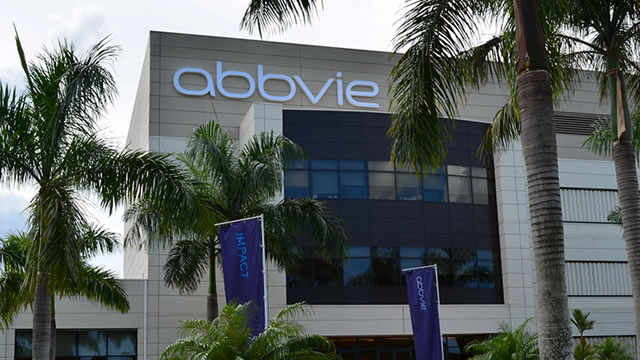
Core Insights - AbbVie experienced a sales growth of approximately 8.5% year over year in 2025, despite facing biosimilar erosion of its flagship drug Humira, which lost exclusivity in early 2023 [2] - For 2026, AbbVie projects revenues to reach $67 billion, indicating a growth of about 9.5% over 2025, primarily driven by newer immunology drugs Rinvoq and Skyrizi [3][10] Immunology Segment - AbbVie expects to generate over $31 billion from sales of Skyrizi and Rinvoq in 2026, with both drugs anticipated to grow more than 20% year over year [4][5][10] - Skyrizi is projected to achieve sales of approximately $21.5 billion, while Rinvoq is expected to reach around $10.1 billion [5] Neuroscience Segment - The neuroscience franchise is expected to contribute $12.5 billion in sales for 2026, reflecting a 16% growth over 2025 [7][10] - AbbVie anticipates Vyalev, a new Parkinson's disease therapy, to surpass $1 billion in global sales [7][10] - The company is also seeking FDA approval for a new oral therapy for Parkinson's disease, tavapadon, which could further enhance its neuroscience portfolio [8] Oncology Segment - AbbVie faces near-term challenges in its oncology segment, particularly with the J&J-partnered Imbruvica, which is expected to see sales decline to $2.2 billion, a drop of over 23% from 2025 [11][12][10] - Despite this decline, other oncology drugs are expected to partially offset the impact, including Venclexta, Epkinly, Elahere, and Emrelis [12] Valuation and Market Performance - AbbVie shares have underperformed the industry over the past year and are currently trading at a P/E ratio of 15.25, below the industry average of 18.75 [13][14] - The bottom-line estimate per share for 2026 and 2027 has seen a decline in the past 30 days [16]

全球在研新药月报-20260210
摩熵咨询· 2026-02-10 14:24
Investment Rating - The report does not explicitly provide an investment rating for the industry. Core Insights - The report highlights significant advancements in the pharmaceutical industry, particularly in the development and approval of innovative drugs, with a focus on oncology and immunotherapy [5][6][10]. Summary by Sections 1. Latest Policy Updates - The National Medical Products Administration (NMPA) has issued several key announcements, including guidelines to strengthen the supervision of entrusted drug production and the release of the 2025 Clinical Application Guidelines for Antitumor Drugs [10][15][18]. - New regulations aim to support the development of innovative drugs and ensure the quality and safety of pharmaceuticals through enhanced management practices [11][12][14]. 2. Domestic New Drug Approvals - In January 2026, a total of 172 new drugs were approved for clinical trials, a decrease of 55 from the previous month. Among these, 78 were chemical drugs, 88 were biological products, and 6 were traditional Chinese medicines [22][23]. - The majority of new drug approvals were in the fields of oncology and immune modulation, accounting for 53% of the total [22]. 3. Global Innovative Drug Development - The report lists several drugs that have shown positive clinical results, including Neumora Therapeutics' NMRA-511 and GSK's new hepatitis B drug, which achieved success in phase 3 studies [6][10]. - Notable approvals include the BCL-2 inhibitor from BeiGene, which received dual indications for chronic lymphocytic leukemia and mantle cell lymphoma [40][41]. 4. New Drug Listings - The report details new drug listings, including the approval of the combination drug for ADHD treatment by Aikobai, which has shown significant efficacy in clinical trials [41][43]. - The approval of Merck's drug for pulmonary arterial hypertension represents a new treatment option that addresses the underlying causes of the disease rather than just symptomatic relief [40].




驱动基因阴性NSCLC专题:下一代治疗范式:双抗、IO+ADC
Southwest Securities· 2026-02-10 03:06
Investment Rating - The report does not explicitly state an investment rating for the industry Core Insights - The proportion of driver gene-negative non-small cell lung cancer (NSCLC) patients is approximately 31% in both China and the United States, indicating a significant market opportunity for treatments targeting this demographic [2][15] - The estimated market size for immune drugs used in first-line treatment of driver gene-negative NSCLC is projected to be around 7.5 billion CNY (approximately 1.1 billion USD) in China and 18 billion CNY (approximately 2.7 billion USD) in the United States by 2030 [2] - The current first-line treatment for advanced driver gene-negative NSCLC primarily relies on PD(L)-1 inhibitors combined with chemotherapy, but there are limitations in long-term efficacy and options for patients intolerant to chemotherapy [3] Summary by Sections Section 1: NSCLC Global Overview - Lung cancer is the leading cancer type globally, with new cases accounting for approximately 12% of all cancer cases in 2022, translating to about 2.5 million new lung cancer cases [10] - In China, lung cancer represents about 22% of new cancer cases, with approximately 1.06 million new cases in 2022 [10] Section 2: Market Potential for Driver Gene-Negative NSCLC - The report highlights the significant market potential for immune therapies in treating driver gene-negative NSCLC, with a focus on the limitations of current treatment options [2][3] Section 3: Next-Generation Immunotherapy Approaches - The report discusses the advancements in dual (multi) antibody therapies and immune-oncology (IO) combined with antibody-drug conjugates (ADC), emphasizing their potential to improve treatment outcomes for patients with driver gene-negative NSCLC [5][8] - The clinical data supporting these new therapies is expected to catalyze further investment and development in this area [5] Section 4: Treatment Guidelines Comparison - The report compares treatment guidelines for driver gene-negative NSCLC between the United States and China, noting differences in treatment stratification and recommended therapies [32][34] - The U.S. guidelines emphasize PD-L1 expression levels, while Chinese guidelines focus more on performance status (PS) [32][34] Section 5: Future Catalysts - Key upcoming clinical data releases and studies are highlighted as potential catalysts for investment opportunities in the sector, particularly regarding dual antibodies and ADC therapies [5][8]


成都苑东生物制药股份有限公司关于自愿披露EP-0210单抗注射液I期临床试验完成首例受试者给药的公告
Shang Hai Zheng Quan Bao· 2026-02-09 18:39
Core Viewpoint - Chengdu Yuandong Biopharmaceutical Co., Ltd. has announced the completion of the first dosing of the EP-0210 monoclonal antibody injection in a Phase I clinical trial for treating inflammatory bowel disease, indicating progress in its drug development pipeline [1][3]. Group 1: Drug Overview - EP-0210 monoclonal antibody injection is a humanized IgG1 monoclonal antibody targeting TNF-like ligand 1A (TL1A), aimed at treating inflammatory bowel disease by blocking TL1A-mediated pro-inflammatory signaling pathways [1][2]. - Preclinical studies have shown that EP-0210 has a clear mechanism of action and significant efficacy in various inflammatory bowel disease models, demonstrating better target activity and efficacy compared to the foreign competitor RVT-3101 [2]. Group 2: Clinical Trial Details - The Phase I clinical trial for EP-0210 received formal approval from the National Medical Products Administration in January 2026, with the trial focusing on safety, tolerability, pharmacokinetics, and immunogenicity in healthy adult participants [3]. - As of the announcement date, the first dosing in the single-dose administration phase of the trial has been completed [3].

苑东生物EP-0210单抗注射液I期临床试验完成首例受试者给药
Bei Jing Shang Bao· 2026-02-09 12:12
Core Viewpoint - Yuan Dong Bio (688513) announced that its wholly-owned subsidiary Chengdu Youluo Biotechnology Co., Ltd. has initiated Phase I clinical trials for its monoclonal antibody EP-0210 injection, targeting inflammatory bowel disease, with the first patient dosing recently completed [1] Company Summary - EP-0210 is a humanized IgG1 monoclonal antibody that targets TNF-like ligand 1A (TL1A), aiming to treat inflammatory bowel disease by effectively binding to TL1A and blocking pro-inflammatory signaling pathways [1] - The development of TL1A antibody drugs is one of the most closely watched emerging targets in the field of inflammatory bowel disease, with no similar drugs currently available on the market globally [1] Industry Summary - The fastest global development progress for TL1A-targeting drugs is being made by Merck, Sanofi, and Roche/Pfizer, all of which have TL1A antibody drugs in Phase III clinical trials [1] - In China, companies such as 3SBio, ZhiXiang JinTai, and HuaShen ZhiYao have also entered Phase I clinical trials for similar TL1A-targeting drugs [1]
速递|默沙东入局小分子GLP-1:减重竞赛进入口服与BD新阶段
GLP1减重宝典· 2026-02-09 11:16
整理 | GLP1减重宝典内容团队 2026年2月5日,默沙东在 ClinicalTrials.gov 上注册了其小分子GLP-1受体激动剂MK-4082的全球一期临床试验,标志着这家在DPP-4时代占据 统治地位的跨国药企,正式加入新一轮GLP-1减重药物的技术竞赛。 根据注册信息,该一期临床计划入组120例健康受试者,主要评估安全性、耐受性及药代动力学特征,预计将于2026年8月完成。这一时间表显 示,默沙东当前对该项目的定位仍处于"快速验证可行性"的早期阶段,但在GLP-1赛道整体高度拥挤的背景下,其战略信号意义远大于临床阶 段本身。 ▍ GLP-1热潮之下,MNC走向分化布局 过去数年,GLP-1类药物在减重领域掀起的热潮,几乎吸引了所有主流跨国药企(MNC)入场,但不同公司的切入路径已出现明显分化。作为 该领域的先驱,礼来 与 诺和诺德 选择了"全维度覆盖"的策略,从注射型到口服制剂、从GLP-1单靶点到双靶点及多靶点激动剂,力图构建系 统性护城河。 而后进入者则更多采取差异化切口。罗氏 通过收购Carmot获得GLP-1/GIP及小分子GLP-1资产,同时引进Zealand Pharma的Amyl ...

Avacta appoints Francis Wilson as Chief Scientific Officer
Globenewswire· 2026-02-09 07:00
Core Viewpoint - Avacta Therapeutics has appointed Francis Wilson as Chief Scientific Officer, recognizing his significant contributions to the development of the pre|CISION oncology delivery platform and his leadership in medicinal chemistry [1][5]. Company Leadership - Francis Wilson joined Avacta in September 2022 as Vice President of Chemistry and has been pivotal in advancing the pre|CISION platform, particularly the FAP-Exd (AVA6103) program, which is expected to enter clinical testing soon [2][4]. - Former CSO Michelle Morrow will be leaving the company to pursue other opportunities, and the company expresses gratitude for her contributions [4]. Expertise and Background - Francis Wilson has extensive experience in medicinal chemistry, having held various positions at Roche, Xenova, Cellzome, and Summit Therapeutics, where he led multiple programs from discovery to clinical development [3]. - He holds a chemistry degree and a Doctor of Philosophy from Oxford University, and is a Chartered Chemist and Fellow of the Royal Society of Chemistry [4]. Strategic Direction - CEO Christina Coughlin emphasized Wilson's deep knowledge of the pre|CISION platform and his ability to foster innovation, which will be crucial as the company enters a significant phase of preclinical development and intellectual property generation [5]. - Wilson expressed enthusiasm for his new role and the opportunity to advance the AVA6103 program, highlighting the importance of developing novel intellectual property around the pre|CISION platform [6]. Technology Overview - The pre|CISION platform is a proprietary tumor-activated delivery system designed to concentrate potent cancer therapies in the tumor microenvironment while minimizing exposure to healthy tissues [9][11]. - It utilizes a tumor-specific protease (fibroblast activation protein or FAP) to release active payloads in the tumor, optimizing dosing and reducing systemic toxicity [11].
长江证券首次研报覆盖联化科技:多业务协同高增 医药CDMO与新能源打开长期成长空间
Quan Jing Wang· 2026-02-09 06:16
Core Insights - Longhua Technology (联化科技) is positioned as a leading player in the agricultural and pharmaceutical CDMO sectors, with significant achievements in small nucleic acid CDMO and potential in functional chemicals [1][2] Business Overview - Longhua Technology has established a collaborative development framework across four core industrial segments: agricultural protection, pharmaceuticals, functional chemicals, and equipment & engineering services [2] - The agricultural protection segment generated revenue of 1.702 billion yuan in the first half of 2025, with a gross margin increase of 9.48% year-on-year [2] - The pharmaceutical segment, focusing on APIs and intermediates, achieved revenue of 1.018 billion yuan in the first half of 2025, reflecting a year-on-year growth of 42.80% [2] Small Nucleic Acid CDMO - The company is leveraging small nucleic acid CDMO to tap into new growth opportunities, with advantages over traditional small molecule and antibody drugs, including broader target selection and higher success rates [3] - Since 2022, the market for small nucleic acid drugs has seen significant activity, with 32 transactions totaling 29.022 billion USD in 2025, indicating strong commercial value [3] - Longhua Technology has developed scalable production processes for modified nucleotides and has established a high-efficiency delivery system for nucleic acid drugs, enhancing its competitive edge [3] Functional Chemicals and Market Potential - The functional chemicals segment reported revenue of 0.265 billion yuan in the first half of 2025, marking a year-on-year doubling [4] - The company is focusing on lithium battery materials, including lithium hexafluorophosphate and LiFSI, with ongoing product development in various testing phases [4] - The National Development and Reform Commission's new storage action plan aims for over 1.8 million kilowatts by 2027, which is expected to drive significant market demand in the energy storage sector [4] Financial Performance - For the first three quarters of 2025, Longhua Technology reported total revenue of 4.718 billion yuan, an increase of 8.25% year-on-year, and a net profit of 316 million yuan, surging by 871.65% [1] - The projected net profit for 2025 is estimated to be between 350 million and 420 million yuan, representing a year-on-year growth of 239.35% to 307.22% [4]

