金赛药业

Search documents
长春高新(000661):业绩简评经营分析盈利预测、估值与评级风险提示
SINOLINK SECURITIES· 2025-09-02 11:19
Investment Rating - The report maintains a "Buy" rating for the company, with expected earnings per share (EPS) of 5.46, 6.06, and 6.78 yuan for the years 2025, 2026, and 2027 respectively, corresponding to price-to-earnings (P/E) ratios of 21, 19, and 17 times [4]. Core Insights - The company reported a slight decrease in revenue of 0.54% year-on-year for the first half of 2025, totaling 6.603 billion yuan, while net profit attributable to shareholders fell by 42.85% to 983 million yuan [2]. - The core subsidiary, Jinsai Pharmaceutical, achieved revenue growth of 6.17% year-on-year, amounting to 5.469 billion yuan, but net profit decreased by 37.35% to 1.108 billion yuan [2]. - The company has significantly increased its R&D investment, reaching 1.335 billion yuan, a 17.32% increase year-on-year, which now constitutes 20.21% of its revenue [2]. Revenue and Profit Analysis - For the second quarter of 2025, the company reported revenue of 3.605 billion yuan, a year-on-year increase of 4.16%, while net profit attributable to shareholders decreased by 40.75% to 510 million yuan [2]. - The report forecasts a decline in net profit for 2025 to 2.225 billion yuan, a 13.85% decrease from the previous year, with a gradual recovery expected in subsequent years [4]. R&D and Product Development - Jinsai Pharmaceutical is focusing on innovative treatments in various therapeutic areas, including immunology and oncology, with new products like the IL-1β monoclonal antibody and GenSci120 injection entering clinical trials [3]. - The company is actively enhancing its R&D capabilities and talent acquisition to support the development of new products, which is reflected in the increased R&D expenses [2][3]. Financial Projections - The company is expected to achieve net profits of 2.225 billion yuan in 2025, 2.471 billion yuan in 2026, and 2.766 billion yuan in 2027, with corresponding EPS of 5.455, 6.056, and 6.779 yuan [4]. - The projected revenue for 2025 is 12.364 billion yuan, reflecting a decline of 8.18% from the previous year, with a gradual recovery anticipated in the following years [9].

长春高新急了!释放重磅单品、BD、港股IPO三重利好
Sou Hu Cai Jing· 2025-09-01 15:08
Core Viewpoint - Changchun High-tech's stock surged to a six-month high despite disappointing half-year results, driven by optimistic management forecasts regarding innovative drug revenues and potential business development opportunities [1][2]. Group 1: Financial Performance - Changchun High-tech reported a revenue of 6.603 billion yuan, a slight decrease of 0.54% year-on-year, and a net profit of 983 million yuan, down 42.85% year-on-year [1]. - Its subsidiary, Jinsai Pharmaceutical, achieved a revenue of 5.469 billion yuan, an increase of 6.17% year-on-year, but net profit dropped significantly by 37.35% [2]. Group 2: Product Development and Market Position - The company anticipates that revenues from innovative drugs and overseas licensing will exceed 1 billion yuan this year and 1.5 billion yuan next year, with other revenues surpassing traditional growth hormone business by 2027 [1]. - The recently approved drug, Fuxin Qibai monoclonal antibody, is expected to generate peak sales of 5 billion yuan, with a current market price of 8,988 yuan per unit [1][6]. - Jinsai Pharmaceutical is facing increased competition in the long-acting growth hormone market, particularly from Teva Pharmaceutical's newly launched product priced at 1,798 yuan per unit [4][5]. Group 3: Future Outlook and Strategic Plans - The company plans to initiate a Hong Kong IPO in 2026 and aims to add 10-15 new INDs annually from 2025 to 2030, targeting overseas licensing revenues of 5-8 billion yuan by 2030 [1][9]. - Jinsai Pharmaceutical is also preparing for the market entry of three new products, including the promising Fuxin Qibai monoclonal antibody, which is expected to generate 1 billion yuan in sales this year and 6-10 billion yuan next year [6][7].


长春高新20250831
2025-09-01 02:01
Summary of Conference Call Notes Company and Industry Overview - **Company**: 长春高新 (Changchun High-tech) - **Industry**: Pharmaceutical and Biotechnology Key Points and Arguments Strategic Transformation and R&D Investment - 长春高新 is undergoing a strategic transformation with increased R&D investment, which has led to short-term performance pressure but is showing innovation results, particularly in AI-assisted R&D and products in the women's and children's health sectors [2][5][4] - The company has invested over 1.3 billion yuan in R&D in the first half of 2025, a 13% year-on-year increase, accounting for over 20% of revenue [4] Growth Logic of 金赛药业 (Jinsai Pharmaceutical) - The future growth logic of 金赛药业 includes three main drivers: overseas licensing of innovative drugs, new revenue sources, and traditional growth hormone business [2][6] - The company aims for overseas revenue to exceed 50% within 3-5 years, transitioning from a domestic focus to an international market [6] Product Developments and Market Potential - 福星 700单抗 (Fuxing 700 monoclonal antibody) has been approved for gout treatment, with a broad application range and high compliance, showing significant market potential [2][8] - The women's health business is expected to grow rapidly, with sales projected to approach 1.5 billion yuan next year, supported by the launch of long-acting follicle-stimulating hormone [10] - 美施亚 (Meishiya) products for cancer cachexia treatment are expected to have a market value of approximately 25 billion yuan, with good market response [2][13] Competitive Landscape and Pricing Strategy - The growth hormone market faces increased competition, prompting the company to adjust pricing strategies to cover a broader market and maintain a competitive edge [16][48] - The company is proactively addressing challenges posed by economic conditions and competition, ensuring continued leadership and cash flow stability [16][48] Future Profit Growth Trends - 金赛药业 anticipates profit growth in the next three years, with overseas licensing and new business profits expected to surpass contributions from growth hormones by 2027 [7] - The company plans to leverage new product launches and overseas licensing to offset any declines in growth hormone sales [48] R&D Pipeline and Clinical Trials - 金赛药业 has a robust pipeline with 35-36 molecules expected to enter the IND stage by the end of 2027, focusing on innovative drug development [3][43] - The company is committed to maintaining high-quality R&D through strong clinical operations and technology platforms [22][25] Market Position and Future Outlook - 金赛药业 holds a leading position in China's innovative drug market, being one of the first companies to scale up innovative drug development [20][21] - The company aims to ensure its innovative drugs remain industry leaders through continuous R&D investment and strategic partnerships [24][25] Financial Guidance and Strategic Adjustments - The company expects a significant adjustment in performance for 2025, with a focus on stabilizing cash flow through new business profits and overseas licensing [53] - Future strategies will emphasize clinical operations to maximize the success rate of IND submissions and enhance product value [62] Conclusion and Leadership Vision - Company leadership expresses confidence in the strategic adjustments made over the past few years, aiming for a stable growth trajectory driven by innovative drugs and a diversified product portfolio [68] Additional Important Information - The company plans to enter the gynecology market with a series of diagnostic and therapeutic products, enhancing its women's health business [10] - The development of ADC (antibody-drug conjugates) products is a key focus, with several innovative candidates in the pipeline targeting various cancers [29][55]
双目录初审公示:6个药品发生变化 多款创新药、罕见病药引关注
2 1 Shi Ji Jing Ji Bao Dao· 2025-08-28 11:41
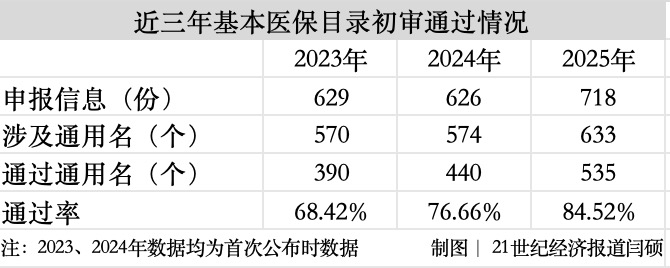
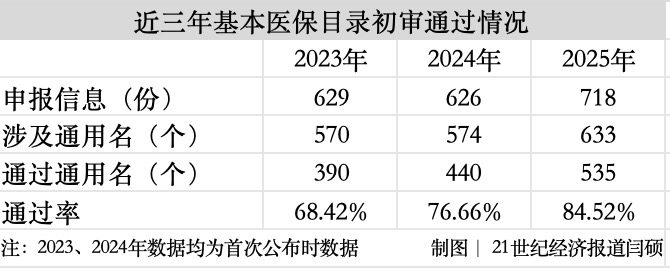
Core Insights - The National Healthcare Security Administration (NHSA) has published the preliminary review results for the 2025 medical insurance and commercial insurance innovative drug directory, with significant changes in the approval status of six drugs compared to the previous version [1][2]. Summary by Categories Drug Approval Changes - Six drugs have had their approval status changed, with two drugs (Injectable Risperidone Microspheres and Injectable Triptorelin Acetate) being disapproved, while two others (Levodopa Injection and Calcium Gluconate Sodium Chloride Injection) have been approved [1][3]. - The oral suspension of Ursodeoxycholic Acid remains approved, but the conditions for approval have been adjusted [1][3]. Application Statistics - For the 2025 directory adjustment, the NHSA received 718 applications, involving 633 drug generic names, with 535 passing the preliminary review [1][2]. - The approval rate has increased significantly, reaching 84.52% this year, compared to 68.42% in 2023 and 76.66% in 2024 [2]. Notable Drugs - Levodopa Injection, used for Parkinson's disease, has been approved and is not an exclusive product, indicating its potential for broader market access [4]. - Injectable Ceftriaxone Sodium Sulbactam, another approved drug, is noted for its broad antibacterial spectrum and safety profile [4]. - The oral suspension of Ursodeoxycholic Acid has had its approval conditions modified to include rare disease categories [6]. Innovative Drug Directory - The commercial insurance innovative drug directory has been introduced alongside the basic medical insurance directory, with 141 applications received, of which 121 passed the preliminary review [2]. - A significant number of drugs in both directories are new, with 303 in the basic medical insurance directory meeting specific conditions for approval [7]. Rare Disease Drugs - The directories include a total of 37 rare disease drugs in the basic medical insurance directory and 35 in the commercial insurance innovative drug directory, with 19 drugs approved in both [10][11]. - Notable rare disease drugs include those from Merck and other companies, which have gained attention for their potential market impact [11][12]. Market Trends - The introduction of the commercial insurance innovative drug directory is expected to enhance market access for several high-profile drugs, including CAR-T therapies that have previously struggled to gain approval [9][12]. - The performance of rare disease drug companies has seen significant stock price increases, indicating strong market interest and potential for growth [13].
双目录初审公示:6个药品发生变化,多款创新药、罕见病药引关注
2 1 Shi Ji Jing Ji Bao Dao· 2025-08-28 11:19
Core Viewpoint - The National Healthcare Security Administration (NHSA) has officially announced the preliminary review results for the adjustment of the 2025 medical insurance and commercial insurance innovative drug catalog, indicating an increase in the number of drugs passing the review and the overall approval rate compared to previous years [1][2]. Summary by Relevant Sections Drug Review Changes - Six drugs underwent changes in their review status, with two drugs, injectable risperidone microspheres and injectable triptorelin, being disapproved, while injectable levodopa and calcium gluconate sodium injection were approved [1][5][6]. - The injectable risperidone microspheres, an exclusive product of Shengzhao Pharmaceuticals, was first launched in mainland China in February 2025 for treating mental disorders [6][7]. - The injectable triptorelin, also an exclusive product, was launched in 2023 for treating prostate cancer and precocious puberty [7]. Approval Statistics - A total of 718 applications were received for the 2025 catalog adjustment, involving 633 drug generic names, with 535 passing the preliminary review, resulting in an approval rate of 84.52% [1][2]. - The approval rates have shown a significant increase over the past three years, with 68.42% in 2023, 76.66% in 2024, and 84.52% in 2025 [2]. Innovative Drug Catalog - The commercial insurance innovative drug catalog was introduced for the first time, with 141 applications received, involving 141 drug generic names, and 121 passing the review [3]. - Among the drugs, 79 were submitted for both the basic medical insurance catalog and the commercial insurance innovative drug catalog [3]. Notable Products - Several notable products are highlighted, including CAR-T products that have previously failed to enter the medical insurance catalog but are now included in the commercial insurance innovative drug catalog [11][12]. - Unique products such as the first and only AKT inhibitor and the only Trop-2 ADC for breast cancer treatment are also included in the catalogs, indicating a focus on innovative therapies [13][14]. Rare Disease Medications - The review process has also included rare disease medications, with 37 drugs in the basic medical insurance catalog and 35 in the commercial insurance innovative drug catalog, of which 19 are approved in both [15][16]. - The approval of rare disease drugs is seen as a significant development, with companies like Beihai Kangcheng gaining attention for their innovative products [20].
长春高新:子公司GenSci134注射液临床试验申请获受理
Zheng Quan Shi Bao Wang· 2025-08-26 12:17
Group 1 - The core point of the article is that Changchun High-tech (000661) announced that its subsidiary, Gensci Pharmaceutical, has received the acceptance notice from the National Medical Products Administration for the clinical trial application of GenSci134 injection, a biopharmaceutical developed for treating growth hormone deficiency (GHD) [1] - GenSci134 is intended for the treatment of both adult growth hormone deficiency (AGHD) and pediatric growth hormone deficiency (PGHD), as well as non-GHD conditions such as idiopathic short stature (ISS) [1] - The application specifically targets children experiencing growth retardation due to endogenous growth hormone deficiency (PGHD) and idiopathic short stature (ISS) [1]
突破安全性困局,国产新药逆袭这个MNC忽视的市场
Xin Lang Cai Jing· 2025-08-13 05:51
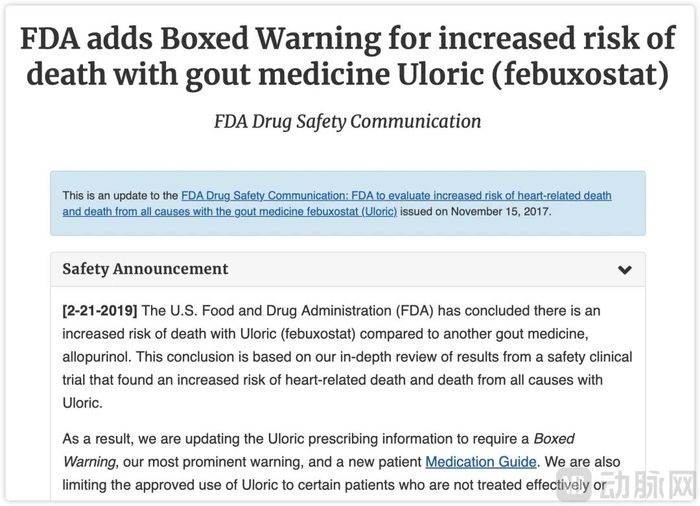
Core Viewpoint - The recent approvals of domestic gout drugs indicate a revitalization of the relatively overlooked gout treatment market, highlighting the potential for innovation in this area due to unmet clinical needs and minimal investment from multinational corporations (MNCs) [1][2][21]. Industry Overview - The global prevalence of gout is rising, yet MNCs have been conservative in their investments in this field, unlike the diabetes sector, which has seen multiple successful drug launches [3][4]. - The market for gout medications is projected to reach approximately $3.3 billion by 2024, significantly smaller than the diabetes drug market, which is expected to exceed $100 billion [3][4]. Clinical Demand - There is a pressing clinical need for effective gout treatments, as many patients experience poor adherence to existing therapies, with over half stopping medication within six months of achieving target uric acid levels [3][4]. - Current treatments have significant safety concerns, leading to a high demand for new therapies that can address these issues [5][6][9]. Recent Developments - The approval of Fuxin Qibai monoclonal antibody marks a significant milestone as the first domestically developed IL-1β inhibitor for acute gouty arthritis, offering a long-acting treatment option [11][12]. - Fuxin Qibai has demonstrated rapid pain relief and a significant reduction in the risk of recurrence, with no serious adverse events reported [12][13]. Market Dynamics - The domestic market for gout treatments is characterized by a lack of MNC involvement, creating opportunities for local companies to establish a foothold and innovate [14][21]. - Several domestic pipelines are advancing, focusing on safety and efficacy, with multiple candidates in late-stage clinical trials [16][20]. Competitive Landscape - The URAT1 inhibitor segment is particularly competitive, with numerous domestic candidates showing promising safety profiles and efficacy [16][18]. - Companies like Hengrui and Yipin Hong are making significant progress with their URAT1 inhibitors, with Hengrui's SHR4640 showing superior results in clinical trials compared to existing treatments [18][20]. Future Outlook - The domestic gout treatment market is expected to grow as companies leverage unmet clinical needs and safety concerns of existing therapies to introduce innovative solutions [21]. - The increasing prevalence of hyperuricemia and gout in China, with an estimated 26 million gout patients, presents a substantial market opportunity for domestic pharmaceutical companies [21].

长春高新:长效生长激素持续领跑全球 10年15万例临床验证安全壁垒
Zheng Quan Shi Bao· 2025-08-06 14:49
Core Insights - Multiple long-acting growth hormones are nearing market approval, breaking the trend of only one product being launched in the past decade, which enhances the diversity of growth hormone options [1] - The safety, efficacy, and quality of new drugs, along with sufficient clinical feedback, are critical for competition in the market [1] Group 1: Product Development and Innovation - Long-term growth hormone technology involves modifying or protecting the hormone to extend its retention time in the body, addressing issues of short-acting formulations [2] - The core subsidiary of Changchun High-tech, Jinsai Pharmaceutical, has focused on developing domestic long-acting formulations after successfully launching short-acting growth hormones [2] - Jinsai Pharmaceutical has optimized the PEG modification process, achieving a half-life extension to 32 hours, allowing for weekly dosing and improved efficacy over short-acting formulations [2][3] Group 2: Quality and Safety Assurance - Ensuring efficacy and safety is paramount for long-acting growth hormones, with individual differences in pediatric patients necessitating long-term monitoring [4] - Jinsai Pharmaceutical has achieved a PEG purity of 100%, significantly higher than the typical 95% standard from suppliers, ensuring product quality and safety [6] - The company has invested heavily in developing a comprehensive production process to maintain high purity levels, overcoming challenges in production quality control [5][6] Group 3: Market Position and Future Strategy - Jinsai Pharmaceutical's long-acting growth hormone, Jinsai Zeng, is currently the only product approved for multiple indications, including GHD, ISS, and TS, setting it apart from competitors [7] - The company aims to expand its international presence and enhance patient care in the pediatric health sector, focusing on continuous improvement in drug formulation [7][8] - The establishment of a positive feedback loop between clinical breakthroughs and patient confidence is essential for driving further innovation in the growth hormone sector [8]
长春高新1700亿元市值蒸发,集采、人口、竞品冲击如何击溃生长激素神话|创新药观察
Hua Xia Shi Bao· 2025-07-31 08:05
Core Viewpoint - Changchun High-tech has experienced a significant decline in stock price and market value, reflecting the challenges faced by the Chinese pharmaceutical industry as it transitions from reliance on "miracle drugs" to comprehensive innovation [1] Financial Performance - In 2024, Changchun High-tech reported its first revenue decline in nearly 20 years, with revenue of 13.466 billion yuan, a year-on-year decrease of 7.55%, and net profit of 2.708 billion yuan, down 43.01% [2] - The company's performance continued to deteriorate in Q1 2025, with net profit of 469 million yuan, a year-on-year decline of 47.36% [3] - From 2020 to 2023, the company's revenue grew from 8.577 billion yuan to 14.566 billion yuan, and net profit increased from 3.308 billion yuan to 4.776 billion yuan, but 2024 marked a turning point with revenue dropping to 13.466 billion yuan and net profit plummeting to 2.583 billion yuan, nearly a "halving" [4] Factors Contributing to Decline - The decline in performance is attributed to three main factors: centralized procurement policies, a decrease in birth rates, and price wars with competitors [5] - The inclusion of growth hormone in centralized procurement significantly impacted the company's core subsidiary, Jinsai Pharmaceutical, which contributed over 75% of revenue. The price of its main product dropped from approximately 1,000 yuan to 300 yuan, a reduction of 70%, leading to a 40.67% profit drop for Jinsai in 2024 [6] - The declining birth rate has reduced the potential user base for growth hormones, with newborn numbers dropping from 17.23 million in 2017 to 9.02 million in 2023 [6] Competitive Landscape - The long-acting growth hormone market, previously dominated by Jinsai, has seen increased competition with new entrants like Teva and Novo Nordisk, leading to a price war that further squeezed profit margins [7] - To capture market share, Changchun High-tech increased its sales team by 58% in 2024, raising sales expenses by 11.8% to 4.439 billion yuan [7] Employee Compensation and Workload - Despite the expansion of the sales team, average employee compensation decreased by approximately 15,000 yuan in 2024, reflecting increased workload and pressure on sales personnel [8][9] Vaccine Business Challenges - Changchun High-tech's subsidiary, Baike Biotechnology, faced significant challenges, with 2024 revenue dropping to 1.229 billion yuan, a year-on-year decline of 32.64%, and net profit halving to 232 million yuan [10] - The decline in demand for its shingles vaccine, which saw a 69.8% drop in sales volume, significantly impacted overall revenue [10] Innovation and Future Outlook - The company is attempting to explore new growth channels through its innovation pipeline, but it lags behind competitors in the number of clinical projects, with only 24 key products in clinical stages compared to over 300 by peers [11] - Key projects have faced delays, with the completion date for a significant product pushed back from June 2025 to June 2026, indicating challenges in maintaining a competitive edge [11]

全球首款干眼鼻喷药物走进中国医院 临床专家:不要把这个病当绝症
Mei Ri Jing Ji Xin Wen· 2025-07-25 10:56
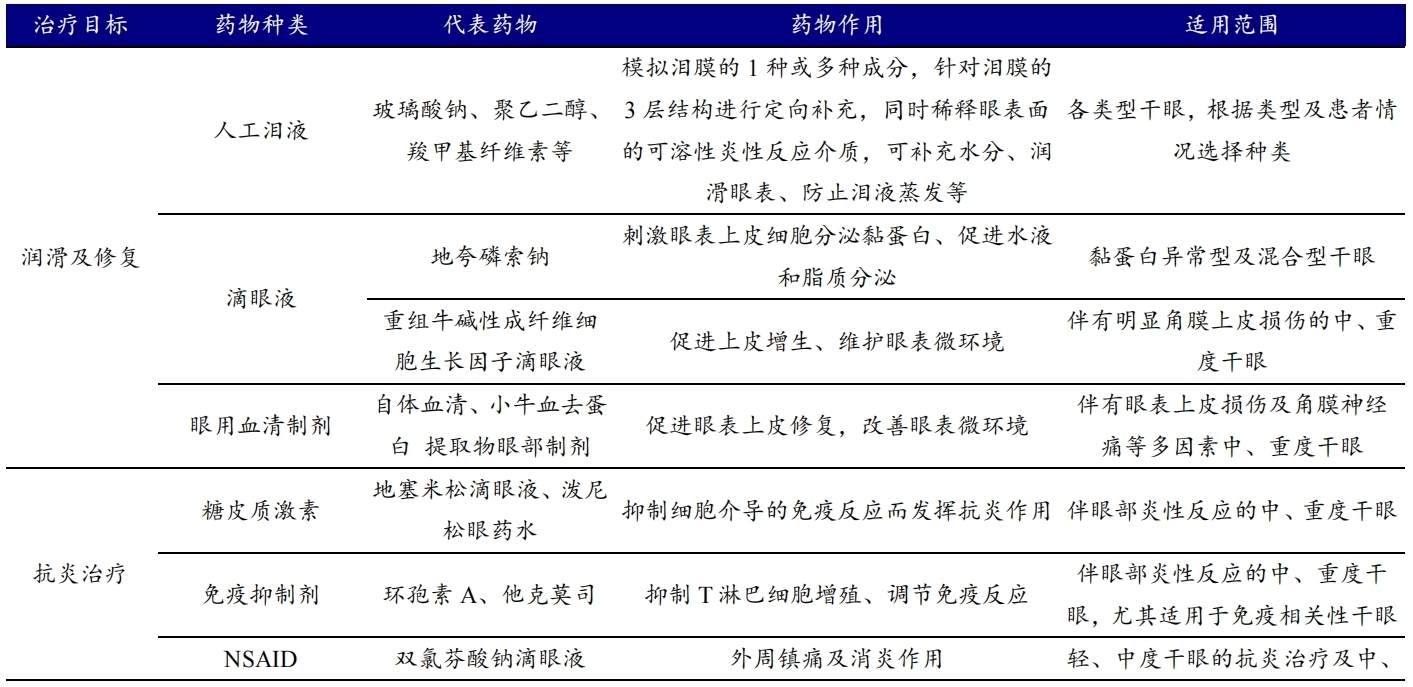
Core Viewpoint - The introduction of the first dry eye nasal spray, OC-01, in China marks a significant advancement in the treatment of dry eye syndrome, which has seen a rising prevalence among younger populations due to increased screen time [1][2][3]. Group 1: Product Introduction and Market Potential - OC-01 is priced at 599 yuan per unit and aims to reduce the frequency of medication for dry eye patients, who often struggle with the inconvenience of traditional eye drops [1][3]. - The nasal spray has shown promising clinical results, with 52% of patients experiencing a significant increase in tear production after four weeks of treatment [3][4]. - The market for dry eye medications in China has grown from 2.196 billion yuan in 2019 to 4.053 billion yuan in 2023, indicating a strong demand for effective treatments [4]. Group 2: Patient Demographics and Treatment Trends - The prevalence of dry eye syndrome in China is projected to rise to 52.4% by 2024, with young professionals being the most affected demographic [2][4]. - There is a growing trend of early diagnosis among younger patients, who often self-identify symptoms through online resources [2][4]. - The treatment landscape includes a variety of medications, with a focus on personalized and stepwise approaches based on the severity of the condition [8][11]. Group 3: Competitive Landscape and Innovation - Numerous pharmaceutical companies, including Yuan Da Pharmaceutical and Heng Rui Pharmaceutical, are actively developing new treatments for dry eye, indicating a competitive market environment [9][10]. - Innovations in drug formulation are focusing on improving the composition of artificial tears and developing targeted anti-inflammatory medications to enhance treatment efficacy [10][11]. - The nasal spray delivery method of OC-01 is highlighted as a significant advantage over traditional eye drops, potentially improving patient compliance and reducing side effects [3][8].