阿里云

Search documents
OpenClaw爆火两周后,它的用法已经比科幻世界还离谱了
虎嗅APP· 2026-02-11 09:38
Core Insights - The article discusses the emergence and capabilities of OpenClaw, an AI agent that operates on personal computers and interacts through messaging platforms like WhatsApp, Telegram, and Discord, allowing users to automate various tasks seamlessly [6][7]. Group 1: OpenClaw Overview - OpenClaw is an AI agent that runs locally on users' computers, providing system-level permissions for tasks such as file management, terminal commands, and email handling [6]. - It features persistent memory, allowing it to retain context across sessions and remember user preferences and past interactions [6]. - The project gained significant traction, with over 170,000 stars on GitHub shortly after its launch, indicating strong community interest and support [3]. Group 2: Use Cases - A software engineer utilized OpenClaw to negotiate the purchase of a Hyundai Palisade, resulting in a savings of approximately $4,200 by automating the communication with multiple dealerships [9][10]. - Another developer reported that OpenClaw autonomously decided not to send notifications on his wife's birthday, showcasing its ability to understand social contexts [12][13]. - Users have employed OpenClaw for various tasks, including managing emails, booking flights, and even negotiating restaurant reservations, demonstrating its versatility [13][19]. Group 3: Community and Market Response - The rapid rise of OpenClaw has led to concerns among major tech companies, prompting them to restrict its use within their organizations [7]. - Following OpenClaw's popularity, a new platform called RentAHuman.ai emerged, allowing users to hire individuals to perform physical tasks that AI cannot complete [22][24]. - The article highlights a growing interest in developing infrastructure around AI agents, including security systems and credit systems for autonomous agents [27][28]. Group 4: Risks and Challenges - The article notes potential risks associated with AI agents, including the possibility of malicious code in plugins and unauthorized installations in corporate environments [26]. - There are concerns about the unpredictability of AI behavior when given broad permissions without clear boundaries, leading to unintended consequences [20][21]. - Despite the excitement surrounding OpenClaw, there are calls for more robust security measures and oversight as the technology evolves [26][27].


重视token的巨大需求
2026-02-11 05:58
Summary of Conference Call Notes Industry Overview - The focus is on the AI industry, particularly the role of cloud service providers and the implications of large models like CloudBot and C-DAS 2.0 on token consumption and software industry dynamics [1][2][5][12]. Key Points and Arguments Demand for Tokens - There is a significant demand for tokens due to high-frequency calls to AI models, with weekly consumption potentially reaching tens of millions [1][4][13]. - The transition from dialogue-based interactions to tool invocation has increased token usage, necessitating more computational power [2][12]. Role of Cloud Service Providers - Cloud providers are crucial in the AI era, offering mirrored services that lower user entry barriers and determining which large models can be accessed [1][5]. - Renting cloud services, such as Tencent Cloud, allows users to utilize complex models without significant changes to their infrastructure [5]. Risks Associated with AI Tools - There are potential security risks when installing plugins or skills, as some may disguise malicious software that can consume server resources [6]. - Users must be cautious to avoid issues similar to those seen in the early internet era, such as virus infections [6]. Impact on Software Industry - AI technology is diminishing the value of traditional software entry points, particularly in the SaaS sector, where Chinese companies lag behind their U.S. counterparts [7][8][9]. - The software industry is expected to face new challenges and opportunities as AI-based platforms gain prominence [7]. Advantages of Chinese Software Companies - Chinese A-share software companies focus on customized development and customer service, making them suitable partners for AI technology [11]. - These companies possess industry-specific knowledge that complements AI's general capabilities, allowing for a synergistic relationship [11]. Future of Cloud Computing and Token Consumption - The importance of cloud providers will increase as models like C-DAS 2.0 require substantial computational resources and token consumption [12][20]. - Major companies like ByteDance and Alibaba anticipate a tenfold increase in token consumption in the coming years, indicating that charging for large model usage will become standard [14]. Recommendations for Investment - Infrastructure-related companies, such as NetSpeed, are recommended due to the growing demand for efficient data transmission in AI applications [15]. - In the AI video production sector, companies like Zhao Chi and Wanxing Technology are highlighted for their innovative tools that enhance production efficiency [18]. - IDC firms should focus on partnerships with major platforms, with recommendations for companies like Dongyangguang and Runze in the ByteChain ecosystem, and Century Internet Data Port in the AliChain ecosystem [19]. Prospects for Domestic Computing Chips - Domestic computing chips like Haiguang and Cambrian are expected to have a positive long-term outlook despite current market pessimism [20]. - The increasing demand for computational power due to rising token consumption presents a buying opportunity for stocks in these companies [20]. Other Important Insights - The transition to AI tools is reshaping the software landscape, with a shift away from reliance on single software applications towards integrated AI solutions [9][10]. - The response time of CloudBot is noted to be longer compared to other models, indicating a need for improvement in processing speed [16].





杭州243项成果获浙江省科学技术奖
Hang Zhou Ri Bao· 2026-02-11 05:13
获奖数量排名前四的单位分别是:浙江大学(41项)、浙江工业大学(15项)、中国计量大学(9 项)、杭州电子科技大学(7项),浙江省农业科学院、浙江大学医学院附属第一医院和浙江大学医学 院附属第二医院则以各获6项的成绩并列第五。 之江实验室已连续3年荣获省科技进步奖一等奖。同时,阿里云、支付宝、恒逸石化研究院、云深 处科技、国网电力等5家科技企业牵头的8个项目获得省科技进步奖一等奖,获奖项目数较上年度增加2 项。 2月9日,省委、省政府召开全省建设一流创新生态打造最具竞争力营商环境大会,对2024年度省科 学技术奖进行表彰,杭州共243项成果获奖。 "杭州获奖项目围绕基础研究和关键核心技术攻关,在科技创新道路上勇闯无人区,在前沿探索中 抢占新机遇,提出新理论,开辟新领域,为打造更高水平创新活力之城提供重要支撑。"杭州市科技局 相关负责人说。 从创新能力看,杭州展现出显著的科研优势。在杭单位牵头完成的成果中,有46项荣获一等奖,占 全省一等奖获奖总数的81%。高校、企业、科研院所(医院)等各类创新主体牵头完成的获奖成果数量 分别为102项、39项和48项,这三类主体的获奖数量均位列全省第一。 从创新主体观察,我市 ...
飞络24小时前沿AI快报|2月11日:字节跳动发布图像生成模型Seedream5.0
Sou Hu Cai Jing· 2026-02-11 03:00
AI Industry Updates - ByteDance released the image generation model Seedream 5.0, capable of generating images up to 4K resolution, emphasizing intelligent understanding and knowledge-driven capabilities, showcasing intense competition with Alibaba in the AI image generation sector [2] - Alibaba Cloud launched the next-generation image generation model Qwen-Image-2.0, a 7B model that supports 2K resolution image generation and excels in Chinese text rendering, marking a significant advancement in domestic AI image models for professional design and content creation [2] - OpenAI introduced the advanced code-specific AI agent model GPT-5.3-Codex, which shows significant performance improvements in benchmark tests and faster response times, representing a key evolution from code assistants to autonomous engineering agents [2] - The Chinese Academy of Sciences and other institutions released the world's first AI model "Feiyu-1.0" for the South China Sea, capable of intelligently analyzing complex interactions between the ocean and atmosphere, enhancing typhoon forecasting accuracy [3] - Google Chrome integrated AI features to transform the browser into a personal AI assistant, introducing a sidebar experience for direct interaction with Gemini for tasks like shopping comparisons and comment summaries [3] - Xmax AI launched the world's first real-time interactive video generation model X1, allowing users to interact with characters in images through their mobile cameras, marking a new phase in AI video generation [3] Cloud Services Updates - Amazon AWS introduced the "Climate Smart Cloud" service, achieving a PUE of 1.08, a new industry low, through innovations like immersion liquid cooling and AI dynamic temperature adjustment [4] - Alibaba Cloud and Saudi Telecom (STC) announced a $500 million investment to build the first "cloud-edge-end collaborative industrial cloud" in the Middle East, focusing on the energy and manufacturing sectors [5] - Baidu Smart Cloud launched "Wenxin AI Cloud Service 8.0," enhancing the training efficiency of 300 trillion parameter models by 250% and achieving a resource utilization rate of 97% [6] - Microsoft Azure partnered with Unilever to upgrade the "Consumer Insight Cloud Brain 3.0," optimizing supply chains across 200 countries with AI predictions achieving a 98% accuracy rate [7] Cybersecurity Updates - IBM announced a breakthrough in quantum computing with its 127-qubit processor "Eagle," successfully cracking the RSA-4096 encryption algorithm, prompting financial and governmental institutions to reassess encryption risks [8] - A new AI phishing attack method combining voice cloning and social engineering has emerged, leading to significant financial losses for banks in the U.S. [9] - The Ministry of Industry and Information Technology in China issued guidelines for AI security in industrial internet systems, mandating physical isolation of OT and IT networks and requiring AI models to undergo backdoor injection testing [9] - Qihoo 360 launched "Industrial Security Brain 3.0," reducing the false positive rate of AI protocol analysis to 0.2%, enhancing security for industrial control systems [10] - A cross-border data flow security alliance was established among the U.S., EU, and China to share intelligence on AI training data leaks and develop a whitelist for cross-border data flow [11]

未知机构:西部郑宏达重视token的巨大需求260210一Clawd-20260211
未知机构· 2026-02-11 01:55
Summary of Conference Call Notes Industry and Company Overview - The discussion centers around the AI and technology industry, specifically focusing on tools like Clawd Bot and multi-modal models such as Seedance 2.0, which are pivotal in the current AI landscape [1][2]. Key Points and Arguments 1. **Clawd Bot Usage and Token Consumption** - Clawd Bot serves as a model tool calling platform, allowing users to select large models (e.g., OpenAI, Google, MINIMAX, KIMI) and plugins (SKILLS) - The entry barrier for users has significantly lowered due to services from cloud providers like Alibaba Cloud and Tencent Cloud, with monthly rental costs as low as 30 yuan - The functionality has shifted from interactive dialogue to task-oriented tool calling, supporting local or cloud data storage [1][1][1]. 2. **Token Consumption in Different Scenarios** - In pure text interaction scenarios, high-frequency tool calls can lead to a surge in token consumption, with usage potentially reaching tens of millions of tokens weekly - Seedance 2.0 can generate videos in 15 seconds and supports simultaneous processing of video and audio, significantly increasing token consumption due to the complexity of multi-modal interactions [2][2][2]. 3. **Trends in Token Consumption and Necessity for Charging** - Since 2026, token consumption has seen explosive growth, with actual demand possibly exceeding initial expectations - For instance, ByteDance's original plan to increase daily token consumption from 40 trillion to 400 trillion (a tenfold increase) may be underestimated due to the prevalence of high-frequency tool calls and multi-modal applications [2][3][3]. 4. **Driving Factors for Token Consumption** - The proliferation of tools like Clawd Bot necessitates paid API calls for large models, as there are no free APIs available - Multi-modal models like Seedance 2.0 further amplify token consumption, leading to a shift away from the traditional free model towards a paid API model, indicating significant revenue potential for providers [3][3][3]. Additional Important Content 1. **Recommended AI Infrastructure Companies** - The surge in token consumption is driving demand for computing power, acceleration, and cloud services - Key recommendations include: - **Acceleration Services**: Wangsu Technology, which can optimize interaction delays for tools like Clawd Bot - **Cloud Providers**: Alibaba Cloud and Tencent Cloud, which hold significant influence in the AI ecosystem - **Domestic Computing Chip Companies**: Haiguang and Cambrian, which are positioned for long-term growth despite short-term market pessimism [3][3][3]. 2. **AI Animation Development and Related Stocks** - The efficiency of AI animation production has significantly improved, with a four-person team able to produce 120 minutes of high-quality content in just 10 days - Multi-modal models like Seedance 2.0 are further lowering production barriers [3][4][4]. 3. **Specific Stock Recommendations** - **Zhaochi Co., Ltd.**: Expected to benefit from the growing demand for AI video content production - **Wondershare Technology**: Launched AI video tools that support script generation and efficient content creation through external model calls [4][5][5].


云、AI与制造,中国出海的新三要素
吴晓波频道· 2026-02-11 00:20
Core Viewpoint - The article emphasizes that the combination of the global wave and the artificial intelligence revolution presents significant opportunities for Chinese entrepreneurs, marking a new era of "AI+ going global" as a crucial theme for the future [3][5]. Group 1: AI and Global Expansion - The popularity of generative AI in China surpassed 35% in early 2024, indicating a significant breakthrough in AI technology adoption [3]. - The emergence of humanoid robots during the Spring Festival has brought attention to embodied intelligence, which is expected to become a trillion-dollar industry in China, succeeding the electric vehicle sector [3]. - The demand for cloud services has surged as Chinese companies increasingly view international expansion as a necessity rather than an option, with Alibaba Cloud projected to surpass AWS in growth index by 2025 [5]. Group 2: Stages of Chinese Companies Going Global - Chinese companies have undergone four waves of international expansion, with the current phase being characterized as "full-factor going global," where companies are not just exporting products but also relocating equipment, technology, talent, and capital [11][14]. - The first wave in the mid-1990s involved component manufacturers, followed by the second wave in the late 1990s with "Made in China" products. The third wave in the mid-2010s was marked by the rise of cross-border e-commerce [12][13]. - The current fourth wave sees AI companies inherently designed for global markets, diverging from previous models of internationalization [15]. Group 3: New Challenges for AI Companies - AI companies face unique challenges in their global expansion, as their initial setup is already geared towards international markets, unlike previous generations of companies [15]. - New entrepreneurs are leveraging AI technology to create products aimed at global markets from the outset, with companies like MiniMax achieving rapid success in overseas markets [16][18]. - Established companies like Meitu are also accelerating their international presence, with significant user growth driven by AI features [21][22]. Group 4: Complexities of Global Operations - Companies expanding internationally must navigate a complex landscape characterized by geopolitical tensions and a shift towards a multi-core world, which complicates standardization and compliance [28][29]. - The operational challenges include adapting to diverse regulatory environments and cultural differences across regions, necessitating flexible and adaptive strategies [30][35]. - AI companies require robust cloud infrastructure to support their global operations, with a focus on seamless deployment and compliance with local regulations [36][38]. Group 5: Role of Cloud Services - Alibaba Cloud has emerged as a leading choice for over 80% of Chinese companies going global, providing standardized global technology architecture and support [42]. - The company is investing significantly in AI infrastructure, with plans to establish data centers in multiple countries to support international operations [44]. - The future of cloud services will be critical for AI companies as they seek to establish a competitive edge in global markets, with a focus on operational efficiency and technological support [45][50].

以现代科技助力深刻重塑奥运会运行方式——中国元素闪耀米兰冬奥会
Ren Min Ri Bao· 2026-02-10 22:35
Group 1: Event Overview - The Milan-Cortina Winter Olympics commenced on February 6, showcasing a blend of Chinese elements and global participation in sports [1] - The event is characterized by its decentralized nature, with 18 venues spread over 22,000 square kilometers in Northern Italy, presenting significant logistical challenges [3] Group 2: Technological Innovations - Alibaba Cloud's upgraded technology, initially used in the Beijing Winter Olympics, is now applied in Milan-Cortina, featuring a 360-degree real-time replay system that enhances athlete performance analysis [2] - The integration of AI models into the Olympics' core operations marks a significant advancement, facilitating event management, resource coordination, and global broadcasting [2][3] Group 3: Sustainability Efforts - The "Energy Consumption Treasure" system developed by Alibaba Cloud monitors energy usage across venues, aiming for precise tracking of the event's carbon footprint [4] - The International Olympic Committee (IOC) emphasizes that the cloud computing and AI technologies provided by Chinese companies significantly enhance operational efficiency and sustainability [4] Group 4: Media and Broadcasting - The International Broadcast Center in Milan is equipped to serve nearly 3 billion viewers globally, ensuring high-quality and continuous coverage of the events [4] - TCL, as a global Olympic partner, supplies advanced display technologies for various venues, enhancing the viewing experience for both athletes and audiences [5][6] Group 5: Chinese Brand Participation - Chinese sports brands like Anta and Berghaus are actively involved, providing specialized equipment for various national teams, showcasing China's advancements in winter sports technology [8] - TCL's presence at the Olympics serves as a platform for Chinese companies to integrate into global supply chains and showcase technological innovations [7] Group 6: Cultural Exchange - The "China House" at the Winter Olympics features cultural displays that blend traditional Chinese elements with the Olympic spirit, promoting cultural exchange among visitors [9] - Events such as the "Italy and China: Olympic Spirit and Artistic Heritage" cultural exchange highlight the role of sports in fostering international friendship and collaboration [10]
大模型产业化最好的时代,中国AI「杀死」了参数崇拜
3 6 Ke· 2026-02-10 13:58
Core Insights - The "Chinese solution" is positioned to lead in the AI industrialization era due to a long-term approach [2][5] - 2025 is seen as a pivotal year for large models, shifting from mere technical exploration to practical commercial applications [3][4] - Chinese large models are moving from a focus on parameters to industry-centric solutions, demonstrating resilience against computational restrictions [4] Market Adaptation - The market's adaptability has significantly compressed the iteration cycle of models from years to months or even weeks, creating an opportunity for China to "overtake" in AI [3] - Major companies like OpenAI and Google are pivoting towards cost-effective reasoning models for enterprise markets [3] Industrialization Trends - Large models are becoming "super supporting roles" in various industries, particularly in smart driving, where they operate behind the scenes [7] - Chinese automakers, supported by companies like Alibaba Cloud, are rapidly implementing AI in vehicles, achieving impressive speeds in smartization [9] Technological Advancements - Xiaopeng Motors has built a 10 EFLOPS AI computing cluster, enabling rapid iteration cycles of about five days [9] - The integration of large models into manufacturing processes is evident, with companies like Sany Heavy Industry utilizing AI agents across their operations [10] Efficiency and Cost-Effectiveness - The focus has shifted from merely achieving high scores in benchmarks to ensuring that technology is practical and cost-effective for businesses [14] - The emphasis on return on investment (ROI) for computational power is driving the evolution of AI in China, prioritizing efficiency over sheer intelligence [14] Open Source Ecosystem - The open-source strategy adopted by Alibaba Cloud is a key competitive advantage, allowing for rapid iteration and ecosystem development [22][25] - The Qwen architecture is emerging as a de facto standard in the global AI industry, with many developers leveraging it for their applications [26][28] Global Impact - Chinese AI is set to redefine global industrial standards through practical applications and open-source collaboration, positioning itself as a leader in the upcoming industrial revolution [28]

大模型产业化最好的时代,中国AI「杀死」了参数崇拜
36氪· 2026-02-10 13:30
Core Viewpoint - The "Chinese solution" is more likely to lead in the AI industrialization era than ever before, driven by a long-term perspective [2][5]. Group 1: Market Dynamics and Model Evolution - 2025 is seen as the year of "demystifying" large models, as the focus shifts from mere parameter competition to practical industrial challenges [3]. - Major companies like OpenAI and Google are pivoting towards high-cost performance inference models for the enterprise market, indicating a shift in the competitive landscape [3]. - The model iteration cycle has drastically shortened from years to months or even weeks, creating an opportunity for China to "overtake" in AI [4]. Group 2: Practical Applications and Industry Integration - Large models are becoming "invisible" in product forms, reflecting the pragmatic approach of Chinese companies in industrial iterations [7]. - In the automotive sector, large models are driving intelligent driving evolution, acting as a "super base" behind the scenes [8]. - Chinese automakers, supported by companies like Alibaba Cloud, are achieving rapid industrialization of large models, exemplified by XPeng Motors' AI computing cluster [10]. Group 3: Efficiency and Cost-Effectiveness - The focus on efficiency and cost-effectiveness is reshaping the competitive landscape, with companies prioritizing practical applications over technical showmanship [16][18]. - The evolution of large model efficiency is crucial for future productivity, with Chinese AI emphasizing practical outcomes over theoretical benchmarks [21][23]. - The ability to process large volumes of data quickly is becoming a key differentiator in industries like finance and human resources [20]. Group 4: Open Source and Ecosystem Development - The open-source strategy adopted by Alibaba Cloud is a significant competitive advantage, fostering a collaborative ecosystem that enhances model evolution [26][28]. - The "Qwen Architecture" is emerging as a de facto standard in the global AI industry, with Chinese models influencing international development [28][29]. - The collaborative nature of the ecosystem allows for rapid innovation and adaptation, positioning Chinese AI as a leader in global industrialization [29].

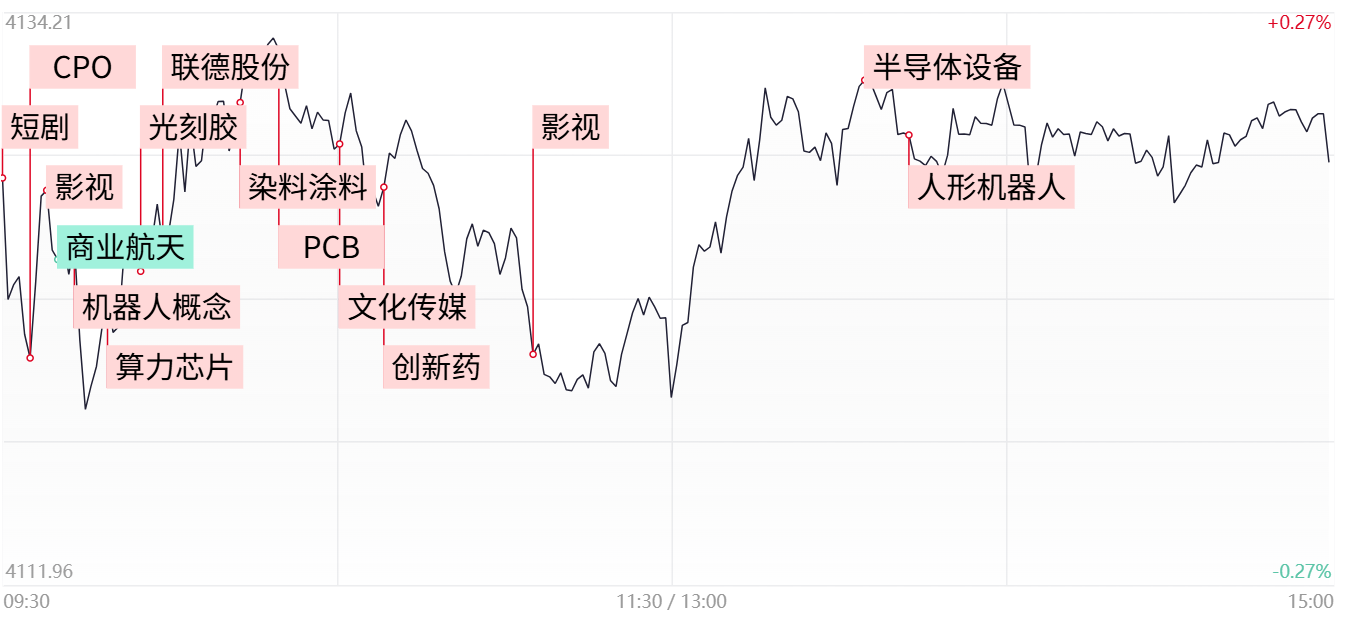
【每日收评】三大指数缩量震荡涨跌不一,影视、传媒概念股批量涨停,机器人板块午后异动
Xin Lang Cai Jing· 2026-02-10 08:44
智通财经2月10日讯,市场全天窄幅震荡,三大指数涨跌不一,科创50指数涨近1%。沪深两市成交额2.11万亿,较上一个交易日缩量1439亿。盘面上,全市 场超3100只个股下跌。从板块来看,传媒板块持续全天领涨,万达电影、读客文化、捷成股份、荣信文化、横店影视、上海电影、博纳影业、中国电影、光 线传媒等多股涨停。人形机器人概念表现活跃,万向钱潮涨停。PCB概念震荡拉升,南亚新材、宏和科技双双创历史新高。下跌方面,商业航天概念下挫, 顺灏股份触及跌停。大消费板块震荡下跌,杭州解百跌停。截至收盘,沪指涨0.13%,深成指涨0.02%,创业板指跌0.37%。 板块方面 传媒板块全天强势,读客文化、捷成股份、荣信文化、横店影视、上海电影、博纳影业、中国电影、光线传媒等多股涨停。 近日,字节跳动旗下即梦AI发布新一代视频生成模型Seedance 2.0,实现多项质变,其多镜头叙事与导演级控制、精准的音画同步与口型匹配,以及大幅增 强的角色与场景一致性,共同使AI视频具备了长篇叙事能力,正朝影视工业级别迈进。 机构研报认为,2026年AIGC行业进入规模化落地期,文生视频成为核心爆发点,整体呈现需求高速增长、供给结构性偏紧 ...