
三生制药

Search documents
药企豪赌,肺癌下一代免疫“新药王”争夺赛已打响
第一财经· 2025-11-12 10:43
Core Insights - Merck's PD-1 monoclonal antibody, Keytruda, has achieved over $20 billion in annual sales for both 2023 and 2024, solidifying its position as a leading drug in the lung cancer treatment market [2] - A competitive race is underway among pharmaceutical companies to establish the next generation of immune therapies for lung cancer, with significant advancements being made in the field [3][4] Group 1: Company Developments - Jun Zhu, CEO of Junshi Biosciences, announced promising results for their PD-L1 ADC HLX43 in treating non-small cell lung cancer (NSCLC), with an objective response rate (ORR) of 33.3% and a disease control rate (DCR) of 75.8% in squamous NSCLC patients [3] - HLX43 demonstrated even better efficacy in non-squamous patients, achieving an ORR of 48.6% and a DCR of 94.3% [3] - Junshi plans to advance at least eight Phase III clinical trials for HLX43 in the lung cancer domain [3] Group 2: Industry Trends - Lung cancer remains the leading malignancy globally, with 2.4 million new cases annually, and is a critical area for pharmaceutical breakthroughs [4] - The rise of targeted and immune therapies has transformed the treatment landscape for lung cancer, with new modalities such as ADCs, bispecific antibodies, and tumor vaccines expanding treatment options [4] - Several domestic companies, including Junshi Biosciences, CanSino Biologics, and Innovent Biologics, are competing to develop next-generation immune therapies, focusing on PD-(L)1 combinations with ADCs or PD-1 bispecific antibodies [4][5] Group 3: Clinical Research and Development - CanSino Biologics is conducting eight Phase III clinical trials for their PD-1/VEGF bispecific antibody, Ivoris, in lung cancer [6] - Innovent Biologics announced a collaboration with Takeda Pharmaceutical to co-develop a new generation immune therapy, IBI363, which targets PD-1 and IL-2α-bias [7] - Junshi's HLX43 is currently leading in global development for PD-L1 ADCs, with plans for clinical studies in cervical cancer, esophageal squamous cancer, and colorectal cancer [8]


调整结束,大反攻开始?
Sou Hu Cai Jing· 2025-11-12 08:33
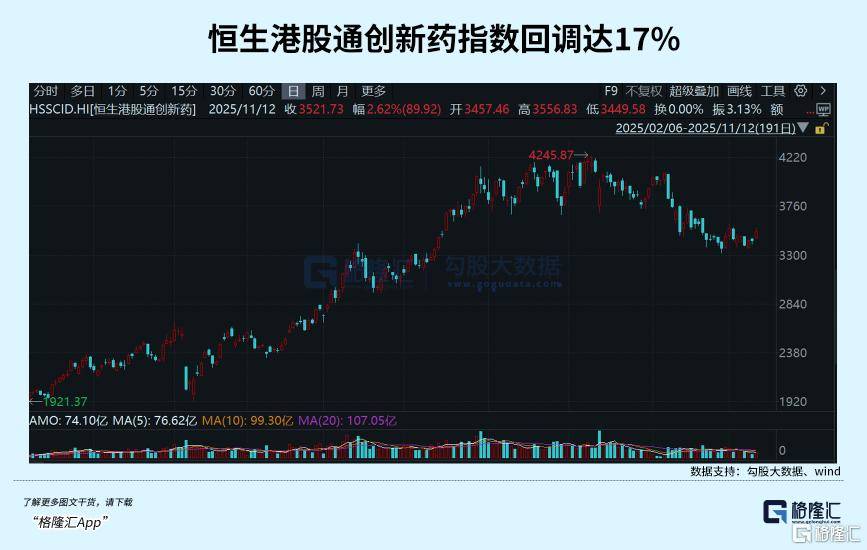
Core Viewpoint - The innovative drug sector has regained market attention after a two-month adjustment period, driven by macroeconomic liquidity easing and strong Q3 earnings reports from key companies [1][3]. Group 1: Performance and Financials - The Hang Seng Innovative Drug ETF (159316) rose by 2.52%, while the low-fee Innovative Drug ETF from E Fund (516080) increased by 31% year-to-date [2]. - BeiGene reported Q3 revenue of 27.595 billion yuan, a 44.21% year-on-year increase, with a net profit of 1.562 billion yuan, reversing previous losses [3]. - Innovent Biologics announced over 3.3 billion yuan in product revenue for Q3 2025, maintaining approximately 40% growth [3]. - Other leading companies like WuXi AppTec, Hengrui Medicine, Shanghai Pharmaceuticals, and Fosun Pharma reported revenues of 32.857 billion yuan, 23.188 billion yuan, 21.507 billion yuan, and 2.939 billion yuan respectively, with net profits of 12.076 billion yuan, 5.751 billion yuan, 5.147 billion yuan, and 2.523 billion yuan [3]. Group 2: Industry Trends - A total of 81 innovative drug companies reported a 13.84% year-on-year increase in net profit, with 9 companies turning losses into profits, indicating a shift towards commercialization in the sector [4]. - The total value of outbound licensing transactions for Chinese innovative drugs exceeded 101.24 billion USD, significantly surpassing the projected 51.9 billion USD for 2024 [5]. - Notable licensing deals include Hengrui's collaboration with GSK valued at up to 12 billion USD and a deal between 3SBio and Pfizer worth over 1 billion USD [6]. Group 3: Market Dynamics - The innovative drug sector has experienced a 17% correction since early September, suggesting it may be nearing a bottom [8]. - Historical data indicates that corrections of 15%-20% often signify deep pullbacks, but current macroeconomic conditions are not as extreme as in previous downturns [11]. - The likelihood of a significant market drop exceeding 20-30% is low, given the improving macroeconomic environment and corporate earnings recovery [12]. Group 4: Future Growth Drivers - The domestic policy environment has shifted to a more stable and supportive framework for innovative drug development, with recent healthcare negotiations enhancing commercial prospects [18]. - China's biotech sector ranks second globally in clinical pipelines, with over 20% of global clinical projects, indicating strong future product launches [20]. - Chinese companies are transitioning from "me-too" drugs to "First-in-Class" and "Best-in-Class" innovations, leveraging lower costs and faster clinical trial processes [23]. Group 5: Conclusion - The innovative drug sector is entering a favorable phase characterized by policy improvements, international expansion, and strong earnings, suggesting a potential market rebound [25]. - The increasing interest in innovative drug ETFs reflects the challenges of direct stock investment in this complex sector, with products like the Hang Seng Innovative Drug ETF providing a focused investment vehicle [25].


百济神州领涨,创新药“纯度”100%的恒生创新药ETF(159316)涨2.59%,近20日资金净流入超13亿元
Ge Long Hui A P P· 2025-11-12 06:27
Group 1 - The innovative drug sector is experiencing an upswing, with companies like BeiGene rising over 7% and 3SBio increasing over 4%, contributing to a 2.59% rise in the Hang Seng Innovative Drug ETF (159316) [1] - BeiGene announced a total revenue of $1.4 billion for Q3 2025, representing a 41% year-on-year growth, while the global revenue for its drug, Brukinsa, reached $1 billion, marking a 51% increase [1] - Pfizer's acquisition of Metsera for nearly $10 billion is seen as a positive development for China's innovative drug industry, indicating a growing openness from multinational pharmaceutical companies towards innovative drugs [1] Group 2 - In the first half of 2025, the total value of "going abroad" transactions for Chinese innovative drugs reached $48 billion, surpassing the total for the entire year of 2024, with the $11.4 billion deal between Innovent Biologics and Takeda setting a new high for this year [1] - The Hang Seng Innovative Drug ETF (159316) is currently the only product tracking the Hang Seng Hong Kong Stock Connect Innovative Drug Index, focusing on core enterprises in the innovative drug industry, excluding CXO companies [2] - The ETF provides a convenient tool for investors to access leading innovative drug companies in the Hong Kong stock market, with major holdings including BeiGene, Innovent Biologics, WuXi Biologics, and CanSino Biologics [2]

“创新药一哥”飙涨8%创三年新高!高人气港股通创新药ETF(520880)急速放量,成交逾5亿元翻倍激增
Xin Lang Ji Jin· 2025-11-12 05:52
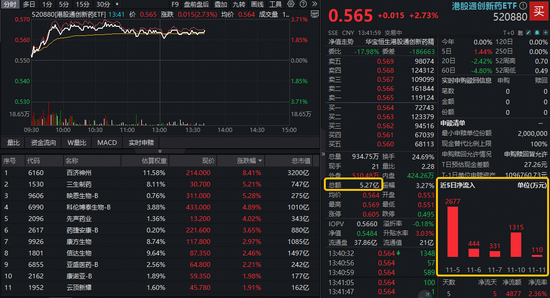
Core Viewpoint - The innovative drug sector in Hong Kong is experiencing a resurgence, with significant trading activity and price increases among leading companies, indicating a potential investment opportunity in this market [1][3]. Market Performance - The Hong Kong Stock Connect innovative drug ETF (520880) has seen a stable increase of over 2.5%, with trading volume exceeding 520 million yuan, a 130% increase compared to the previous day [1]. - Leading innovative drug stocks such as BeiGene have reached a three-year high with an 8.8% increase, while other companies like 3SBio and Kelun-Bio have also shown strong performance with gains exceeding 5% and 4% respectively [1][3]. Industry Trends - The acquisition of Metsera by Pfizer highlights the intensifying competition among multinational corporations for innovative drug pipelines [3]. - The upcoming release of the first commercial insurance innovative drug directory in early December is expected to provide a new growth engine for the innovative drug sector [3]. Company Performance - BeiGene recently reported impressive earnings, and CanSino Biologics announced significant results from its HARMONi-A study, reinforcing the positive trends in the industry [3]. - The ETF manager, Feng Chen Cheng, noted that the end of the year is typically a peak season for mergers and acquisitions in the biopharmaceutical sector, with the JPMorgan Healthcare Conference in early January serving as a catalyst for further developments [3]. Investment Strategy - The recommended investment approach is to actively accumulate shares in the Hong Kong Stock Connect innovative drug ETF (520880) and its associated funds, which track the Hang Seng Hong Kong Stock Connect Innovative Drug Select Index [3][4]. - The index is characterized by three unique advantages: it exclusively includes innovative drug companies, has a high concentration of leading firms, and employs measures to control risks associated with less liquid stocks [4][5]. Index Composition - The top ten holdings in the ETF account for over 71% of the index, showcasing the dominance of leading innovative drug companies [5][6]. - The ETF has surpassed a fund size of 2 billion yuan and has the highest liquidity among similar ETFs since its inception [6].
港股午评|恒生指数早盘涨0.63% 农行AH再创历史新高
智通财经网· 2025-11-12 04:07
Group 1 - The Hang Seng Index rose by 0.63%, gaining 168 points to close at 26,865 points, while the Hang Seng Tech Index fell by 0.41% [1] - The banking sector showed strong performance, with Agricultural Bank of China rising nearly 3% to reach a new high, closing up 1.77%, and other banks like Chongqing Rural Commercial Bank and Industrial and Commercial Bank of China also seeing gains [1] - The Hang Seng Biotechnology Index rebounded over 2.5%, with notable increases in stocks such as BeiGene, which rose by 7.7%, and 3SBio, which increased by over 6% [1] Group 2 - China National Offshore Oil Corporation (CNOOC) reached a new high, supported by geopolitical tensions that are likely to sustain oil prices, with CNOOC rising by 2.95% and PetroChina by 3.1% [1] - China Hongqiao Group saw a rise of over 2% to a new high, attributed to its significant power cost advantages, leading to an upgrade in earnings estimates and target price by Bank of America [1] - Anji Food's stock increased by over 6% to a new high, with strong third-quarter revenue performance and expectations for continued improvement during the peak season [2] Group 3 - The photovoltaic sector experienced declines, with companies like Xinte Energy and Fuyao Glass dropping by over 7.4% and 6.8% respectively, due to price reductions from multiple silicon wafer companies [2]

创新药强势回归!港股通医疗ETF富国(159506)盘中大涨3.51%
Sou Hu Cai Jing· 2025-11-12 03:58
Core Viewpoint - The Hong Kong stock market's healthcare sector is experiencing significant gains, driven by innovative drugs, biopharmaceuticals, and medical services, with notable increases in specific ETFs and stocks [1]. Group 1: Market Performance - The Hong Kong healthcare ETF, 富国 (159506), saw an intraday increase of 3.17%, with key stocks like 百济神州 rising over 7% and 平安好医生 and 三生制药 both increasing over 6% [1]. - The innovative drug ETF, 富国 (159748), also reported a 2.52% rise [1]. Group 2: Regulatory Approvals and Financial Performance - Since November, the National Medical Products Administration has approved two innovative drugs and two innovative medical devices for market entry, along with seven first-class innovative drugs receiving clinical trial approvals in China [1]. - A report indicates that the A-share innovative drug sector achieved a 36% year-on-year revenue growth in Q3, with net profit turning from a loss of 500 million yuan to a profit of 1.5 billion yuan, and a 7.7% year-on-year increase in net profit for the third quarter [1]. Group 3: Market Sentiment and Future Outlook - The innovative drug sector has undergone a significant correction over the past three months, with adjustments reaching a certain level, leading to lowered market expectations [1]. - There are multiple catalysts expected in the short term, including continued revenue growth in Q3, potential business development opportunities, and a global trend of central banks lowering interest rates, which may support ongoing improvements in the financial performance of innovative drug companies [1].
药企豪赌 肺癌下一代免疫“新药王”争夺赛已打响
Di Yi Cai Jing· 2025-11-12 03:48
Core Insights - Merck's PD-1 monoclonal antibody, Keytruda, has achieved global sales exceeding $20 billion in both 2023 and 2024, solidifying its position as the leading drug in the lung cancer market [1] Industry Overview - Lung cancer remains the leading cause of cancer globally, with 2.4 million new cases each year, and China reporting significantly higher new cases than other countries [3] - The rise of targeted and immunotherapy treatments has transformed the treatment landscape for lung cancer, with new therapies such as ADCs, bispecific antibodies, and tumor vaccines expanding treatment options [3] Competitive Landscape - A race is underway among pharmaceutical companies to establish the next generation of immunotherapy leaders in lung cancer, with companies like Junshi Biosciences, Kintor Pharmaceutical, and Innovent Biologics actively competing [2][3] - Junshi Biosciences has reported promising results for its PD-L1 ADC, HLX43, showing an objective response rate (ORR) of 33.3% in squamous non-small cell lung cancer (NSCLC) patients and 48.6% in non-squamous patients [2] - Kintor Pharmaceutical's PD-1/VEGF bispecific antibody, Ivoris, is currently undergoing eight pivotal phase III clinical trials [5] - Innovent Biologics has announced a collaboration with Takeda Pharmaceutical to co-develop a new generation of immunotherapy, IBI363, which targets PD-1 and IL-2α [6] Clinical Development - Junshi Biosciences plans to initiate at least eight phase III clinical trials for HLX43 in the lung cancer space, with additional studies planned for cervical cancer, esophageal squamous cancer, and colorectal cancer [2][7] - The cost of each global phase III clinical trial is estimated to be around $200 million, presenting a significant financial challenge for companies [7] Financial Performance - Junshi Biosciences reported revenue of 2.82 billion yuan in the first half of the year, a year-on-year increase of 2.7%, with net profit remaining stable at 390 million yuan [7]

肺癌下一代免疫“新药王”争夺赛已打响
第一财经· 2025-11-12 03:41
Core Viewpoint - Merck's PD-1 monoclonal antibody, Keytruda, has achieved over $20 billion in annual sales in both 2023 and 2024, solidifying its position as the global leader in the lung cancer treatment market [3]. Group 1: Company Updates - Jun Zhu, CEO of Junshi Biosciences, announced plans for at least eight Phase III clinical trials for HLX43, a PD-L1 ADC targeting non-small cell lung cancer (NSCLC) [5]. - HLX43 demonstrated an objective response rate (ORR) of 33.3% and a disease control rate (DCR) of 75.8% in squamous NSCLC patients, with ORR rising to 48.6% and DCR reaching 94.3% in non-squamous patients [4]. - Junshi Biosciences reported a revenue of 2.82 billion yuan in the first half of the year, a 2.7% increase year-on-year, with a net profit of 390 million yuan, remaining stable compared to the previous year [10]. Group 2: Industry Trends - The competition for the next generation of immune therapies in lung cancer is intensifying, with companies like Junshi Biosciences, Kintor Pharmaceutical, and Innovent Biologics all vying for leadership [6]. - The rise of targeted and immune therapies has reshaped the treatment landscape for lung cancer, expanding the boundaries of treatment options from ADCs to bispecific antibodies and tumor vaccines [5]. - Kintor Pharmaceutical is advancing its PD-1/VEGF bispecific antibody, Ivorin, with plans for eight Phase III clinical studies, while Innovent Biologics is collaborating with Takeda Pharmaceutical on a new generation immune therapy, IBI363 [8].

药企豪赌,肺癌下一代免疫“新药王”争夺赛已打响
Di Yi Cai Jing· 2025-11-12 03:27
Core Insights - The competition for the next generation of immune therapies in lung cancer is intensifying, with various pharmaceutical companies vying for leadership in this lucrative market [2][3]. Group 1: Market Dynamics - Merck's PD-1 monoclonal antibody, Keytruda, has achieved over $20 billion in annual sales in both 2023 and 2024, solidifying its position as a market leader in lung cancer treatment [1]. - Lung cancer remains the leading cause of cancer globally, with 2.4 million new cases each year, and China contributing significantly to this figure [3]. Group 2: Clinical Developments - Jun Zhu, CEO of Junshi Biosciences, highlighted the promising results of HLX43, a PD-L1 ADC, showing an objective response rate (ORR) of 33.3% in squamous non-small cell lung cancer (NSCLC) and 48.6% in non-squamous patients [2]. - The company plans to initiate at least eight Phase III clinical trials for HLX43, indicating a strong commitment to advancing its development in lung cancer [2][7]. Group 3: Competitive Landscape - Other companies, including Kintor Pharmaceutical, 3SBio, and Innovent Biologics, are focusing on PD-1 bispecific antibodies, while Junshi Biosciences is leading in the PD-L1 ADC space [4][5]. - Kintor plans to submit its PD-1/VEGF bispecific antibody for FDA approval by Q4 2025, while Innovent is collaborating with Takeda on a new generation immune therapy [6]. Group 4: Financial Considerations - Junshi Biosciences reported a revenue of 2.82 billion yuan in the first half of the year, a 2.7% increase, with a net profit of 390 million yuan, raising concerns about funding future clinical trials which could cost around $200 million each [7].
百济神州业绩超预期!港股创新药精选ETF(520690)涨2.79%,资金持续买入
Ge Long Hui A P P· 2025-11-12 02:37
Core Viewpoint - The Hong Kong innovative drug sector is experiencing a rise, with notable increases in stock prices for companies like 3SBio and BeiGene, which has positively impacted the Hong Kong Innovative Drug Selected ETF [1] Company Performance - BeiGene reported a total revenue of 27.595 billion yuan for the first three quarters of 2025, marking a year-on-year increase of 44.2% [1] - The net profit attributable to the parent company was 1.139 billion yuan, driven by sales growth from self-developed products and licensed products [1] - The company plans to submit a listing application in Japan for marginal zone lymphoma in the first half of 2026, with expectations of obtaining orphan drug designation [1] Market Trends - Despite recent adjustments in the innovative drug sector, there has been a counter-trend influx of funds, with a net inflow of 114 million yuan into the Hong Kong Innovative Drug Selected ETF over the past 20 days [1] - The ETF tracks the Hang Seng Hong Kong Stock Connect Innovative Drug Selected Index, focusing on leading innovative drug companies and those with high R&D attributes, suitable for aggressive investment strategies [1] Industry Outlook - According to Industrial Securities, the sentiment in the innovative drug sector has recently declined, but the sustainability of the sector's prosperity remains intact due to ongoing business development [1] - The trend of "innovation + internationalization" in the innovative drug industry is expected to continue, with improved fundamentals observed in the industry chain [1] - Positive trends are noted in investment and financing data, orders, and performance metrics within the sector [1]