
南京银行

Search documents
银行股增持潮起股东用资本投票
Zhong Guo Zheng Quan Bao· 2025-11-25 20:27
Core Viewpoint - The recent surge in share buybacks by shareholders and executives in A-share banks, particularly city commercial banks like Nanjing Bank and Chengdu Bank, reflects strong confidence in the banks' fundamentals and a market preference for high-dividend assets [1][2]. Group 1: Shareholder and Executive Buybacks - Nanjing Bank announced that BNP Paribas (QFII) increased its stake by 12.8 million shares, raising its total holding from 17.02% to 18.06% [1]. - Chengdu Bank's major shareholders, Chengdu Industrial Capital Group and Chengdu Xintianyi, collectively spent 611 million yuan to buy 3.4247 million shares, with plans for further purchases [2]. - Executives from Changshu Bank and Shanghai Rural Commercial Bank also announced their intentions to buy shares, indicating a commitment to their banks' long-term value [2]. Group 2: Market Conditions and Valuation - The increase in buybacks is attributed to expectations of economic recovery, improved performance, and valuation corrections, with 38 out of 42 A-share listed banks seeing stock price increases this year [2][3]. - The banking sector's overall price-to-book ratio remains at historical lows, suggesting potential for valuation recovery [2][3]. Group 3: Investment Outlook - Analysts express optimism regarding the banking sector, highlighting the appeal of high-dividend, low-valuation characteristics of bank stocks, especially during periods of economic stagnation [4]. - Investment strategies focus on banks with regional advantages and strong performance certainty, particularly in areas like Jiangsu, Shanghai, Chengdu, Shandong, and Fujian [4].

银行股增持潮起 股东用资本投票
Zhong Guo Zheng Quan Bao· 2025-11-25 20:26
Core Viewpoint - The recent surge in share buybacks by shareholders and executives in the A-share banking sector reflects strong confidence in the banks' fundamentals and a preference for high-dividend assets in the market [1][4]. Group 1: Shareholder and Executive Buybacks - Several city commercial banks, including Nanjing Bank and Chengdu Bank, have announced significant share buybacks, indicating a robust trend among mid-sized banks [1][2]. - Nanjing Bank reported that BNP Paribas increased its stake by 1.28 million shares, raising its total holding from 17.02% to 18.06%, marking its second buyback this year [2]. - Chengdu Bank's major shareholders have invested 611 million yuan to buy back 3.4247 million shares, with plans for further purchases [2][3]. Group 2: Management Buybacks - Management teams at smaller banks are also participating in buybacks, with Changshu Bank's executives planning to purchase at least 550,000 shares over the next six months [3]. - Shanghai Rural Commercial Bank's executives have already bought 259,100 shares at prices between 9.02 and 9.08 yuan, committing to a two-year lock-up [3]. Group 3: Market Dynamics and Valuation - The recent buyback trend is attributed to expectations of economic recovery, improved performance, and valuation corrections, with 38 out of 42 A-share listed banks seeing stock price increases this year [4]. - The banking sector's overall price-to-book ratio remains at historical lows, despite a positive cycle of performance recovery and increased dividends [4]. - Analysts note a shift in strategy, with recent buybacks occurring during price increases, indicating a proactive approach to guiding valuation recovery [4]. Group 4: Future Outlook - Analysts maintain an optimistic outlook for the banking sector, suggesting that the time window for reallocating investments in bank stocks has opened [5][6]. - The high dividend yield and low valuation characteristics of bank stocks are expected to attract more capital, particularly from insurance institutions and asset management companies [6]. - Key investment themes include focusing on banks with regional advantages and strong performance certainty, as well as those offering high dividends [6].
银行招聘青睐“金融+科技”复合型人才
Zheng Quan Ri Bao· 2025-11-25 16:43
Core Insights - The recent recruitment initiatives by several Chinese banks, including Bank of China, China Construction Bank, Nanjing Bank, and GF Securities, emphasize the urgent need for "financial + technology" interdisciplinary talents, indicating a strategic shift towards technology-driven high-quality development [1][2][4] Recruitment Focus - The banks are prioritizing candidates with experience in artificial intelligence, financial technology, and related fields, reflecting a preference for practical skills over purely academic qualifications [2][4] - Nanjing Bank's recruitment announcement specifies that applicants must have obtained a PhD within the last three years or be graduating by July 2026, with a focus on candidates under 35 years old [2] - GF Securities is also targeting PhD graduates from January 2024 to August 2026, with similar age and qualification requirements, emphasizing backgrounds in computer science, artificial intelligence, big data, and quantitative finance [2][3] Strategic Shift - The banks are transitioning from traditional scale expansion to a focus on efficiency and risk management, driven by the need to adapt to a challenging financial environment characterized by narrowing net interest margins [4][5] - The research topics set by these banks highlight their commitment to integrating advanced technologies like AI into their operations, with specific areas of focus including digital transformation, risk management, and enhancing customer service [3][4] Talent Demand Transformation - There is a notable shift in the banking sector's talent requirements from "single skill" to "cross-disciplinary integration," emphasizing the need for professionals who can bridge finance and technology [4][5] - The banks are increasingly valuing practical experience and the ability to produce actionable research outcomes, contrasting with the traditional academic focus of universities [4][5] Future Directions - The banks aim to leverage AI for smart risk control, intelligent operations, and inclusive finance, marking a significant evolution in their business models from service providers to intelligent solution providers [5]
增持不停歇!银行股成“香饽饽”,大股东、高管“真金白银”组团力挺
Bei Jing Shang Bao· 2025-11-25 13:37
Core Viewpoint - A surge in share buybacks by listed banks in China's A-share market is observed, driven by strong confidence from major shareholders and management teams in the banks' future prospects and the current undervaluation of bank stocks [1][5][6] Group 1: Share Buyback Activities - Numerous listed city commercial banks and rural commercial banks, including Nanjing Bank, Suzhou Rural Commercial Bank, Chengdu Bank, and others, have disclosed their share buyback progress since November [1][3] - Chengdu Bank reported that its major shareholders, Chengdu Industrial Capital Holding Group and Chengdu Xintianyi Investment, have cumulatively increased their holdings by 14.04 million shares, amounting to 253 million yuan [3][4] - Nanjing Bank's major shareholder, BNP Paribas, increased its stake by 128 million shares, raising its total holding from 17.02% to 18.06% [4] Group 2: Financial Performance and Market Sentiment - The banking sector's fundamentals remain robust, with commercial banks achieving a net profit of 1.9 trillion yuan in the first three quarters, and 24 listed banks announcing a total cash dividend of 263.79 billion yuan [5][6] - The stock prices of several banks have reached historical highs, with Agricultural Bank of China seeing a year-to-date increase of nearly 60% [6][7] - Analysts suggest that the current buyback trend reflects internal confidence in the banks' future and signals to the market that their value is underestimated [5][7] Group 3: Future Outlook - The ongoing recovery in the macroeconomic environment is expected to support the banking sector's performance, with analysts highlighting the importance of sustained economic recovery, interest rate changes, and long-term capital inflows for future stock performance [7][8] - Investors are advised to maintain a long-term perspective and focus on banks with strong fundamentals, emphasizing the importance of asset quality, profitability, and dividend policies [7][8]




高息优先股密集退场 银行优先股投资逻辑生变
Zhong Guo Jing Ying Bao· 2025-11-25 13:12
Core Viewpoint - Recent announcements from multiple commercial banks regarding the redemption of preferred shares indicate a shift in capital management strategies within the banking sector [1][2]. Group 1: Redemption of Preferred Shares - Several banks, including Ping An Bank and Nanjing Bank, have announced plans to redeem preferred shares issued over five years ago, with Ping An Bank set to redeem 200 million shares worth 20 billion yuan by March 2026 and Nanjing Bank planning to redeem 49 million shares worth 4.9 billion yuan by December 2025 [1]. - Since July, at least nine banks, including Industrial and Commercial Bank of China and Bank of Beijing, have disclosed similar redemption plans, creating a notable trend in the market [1]. Group 2: Reasons for Redemption - The high dividend rates set at the time of issuance, combined with declining market interest rates, incentivize banks to redeem high-cost preferred shares and replace them with lower-cost perpetual bonds [2]. - Regulatory changes and the need for banks to optimize their capital structures are also significant factors driving the decision to redeem high-cost preferred shares [2]. Group 3: Capital Management Strategies - The banking sector is transitioning from a focus on scale expansion to a cost-efficiency-centered model, emphasizing the need for banks to balance the redemption of high-interest preferred shares with the issuance of low-cost capital tools [3]. - Banks are adopting more diversified and flexible capital supplement tools, allowing them to respond to market conditions effectively, such as redeeming high-interest preferred shares when interest rates are low [3].




大变局!票据中介行业或将洗牌
Zhong Guo Jing Ying Bao· 2025-11-25 10:39
Core Insights - The Shanghai Bill Exchange has launched a comprehensive service platform aimed at creating a "one-stop" service system for bill transactions, enhancing efficiency and convenience for enterprises seeking financing [3][4][5] - The platform integrates various bill-related processes into a unified digital entry point, marking a significant step towards digitalization and transparency in China's bill market [3][5] Group 1: Platform Features and Impact - The platform allows real-time viewing of discount rates, enabling enterprises to inquire online with multiple financial institutions and select the best partners for transactions [5] - On the first day of operation, 21 financial institutions connected to the platform, facilitating the first market bill discount transaction, which enhances accessibility for small and medium-sized enterprises [4][5] - As of November 24, the platform registered 2,201 new users and processed transactions amounting to 21.11 billion yuan, indicating strong initial engagement [4] Group 2: Effects on Banks and Intermediaries - The platform is expected to disrupt the bill intermediary industry by diminishing the information asymmetry that intermediaries have relied on, as the platform offers transparent pricing and efficient matching [6][7] - Banks will need to adapt their systems and processes to integrate with the platform, which may lead to reduced profit margins in bill discounting due to increased market transparency [6][7] - Intermediaries are encouraged to provide value-added services to maintain client loyalty and attract new customers, as their traditional roles may be challenged by the platform's capabilities [6][7]

城商行板块11月25日涨0.99%,南京银行领涨,主力资金净流入3.66亿元
Zheng Xing Xing Ye Ri Bao· 2025-11-25 09:09
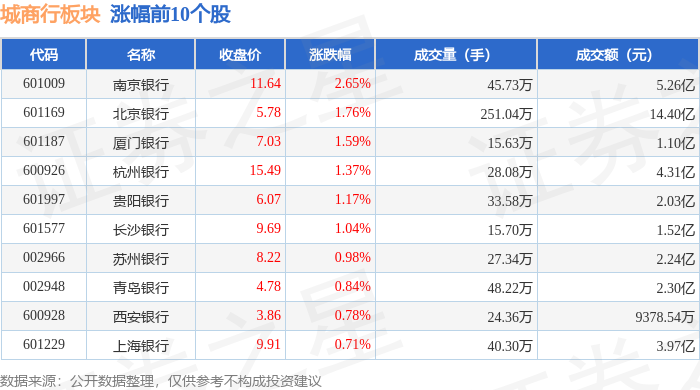
Core Insights - The city commercial bank sector experienced a rise of 0.99% on November 25, with Nanjing Bank leading the gains [1] - The Shanghai Composite Index closed at 3870.02, up 0.87%, while the Shenzhen Component Index closed at 12777.31, up 1.53% [1] Stock Performance - Nanjing Bank (600T009) closed at 11.64, with a gain of 2.65% and a trading volume of 457,300 shares, amounting to a transaction value of 526 million [1] - Beijing Bank (601169) closed at 5.78, up 1.76%, with a trading volume of 2,510,400 shares [1] - Xiamen Bank (601187) closed at 7.03, up 1.59%, with a trading volume of 156,300 shares [1] - Hangzhou Bank (600926) closed at 15.49, up 1.37%, with a trading volume of 128,080 shares [1] - Guiyang Bank (601997) closed at 6.07, up 1.17%, with a trading volume of 335,800 shares [1] - Other notable performances include Changsha Bank (601577) at 69.6 (+1.04%), Suzhou Bank (002966) at 8.22 (+0.98%), and Qingdao Bank (002948) at 4.78 (+0.84%) [1] Capital Flow - The city commercial bank sector saw a net inflow of 366 million in main funds, while retail funds experienced a net outflow of 305 million [2] - The main funds' net inflow for Hangzhou Bank was 97.67 million, while retail funds saw a net outflow of 48.86 million [3] - Qilu Bank (601665) had a main fund net inflow of 67.32 million, with retail funds experiencing a net outflow of 50.62 million [3] - Jiangsu Bank (601009) reported a main fund net inflow of 38.10 million, while retail funds had a net outflow of 45.88 million [3]

年底彩蛋!上市公司回购增持踊跃,年内金额约达 2275亿元
Sou Hu Cai Jing· 2025-11-25 09:01
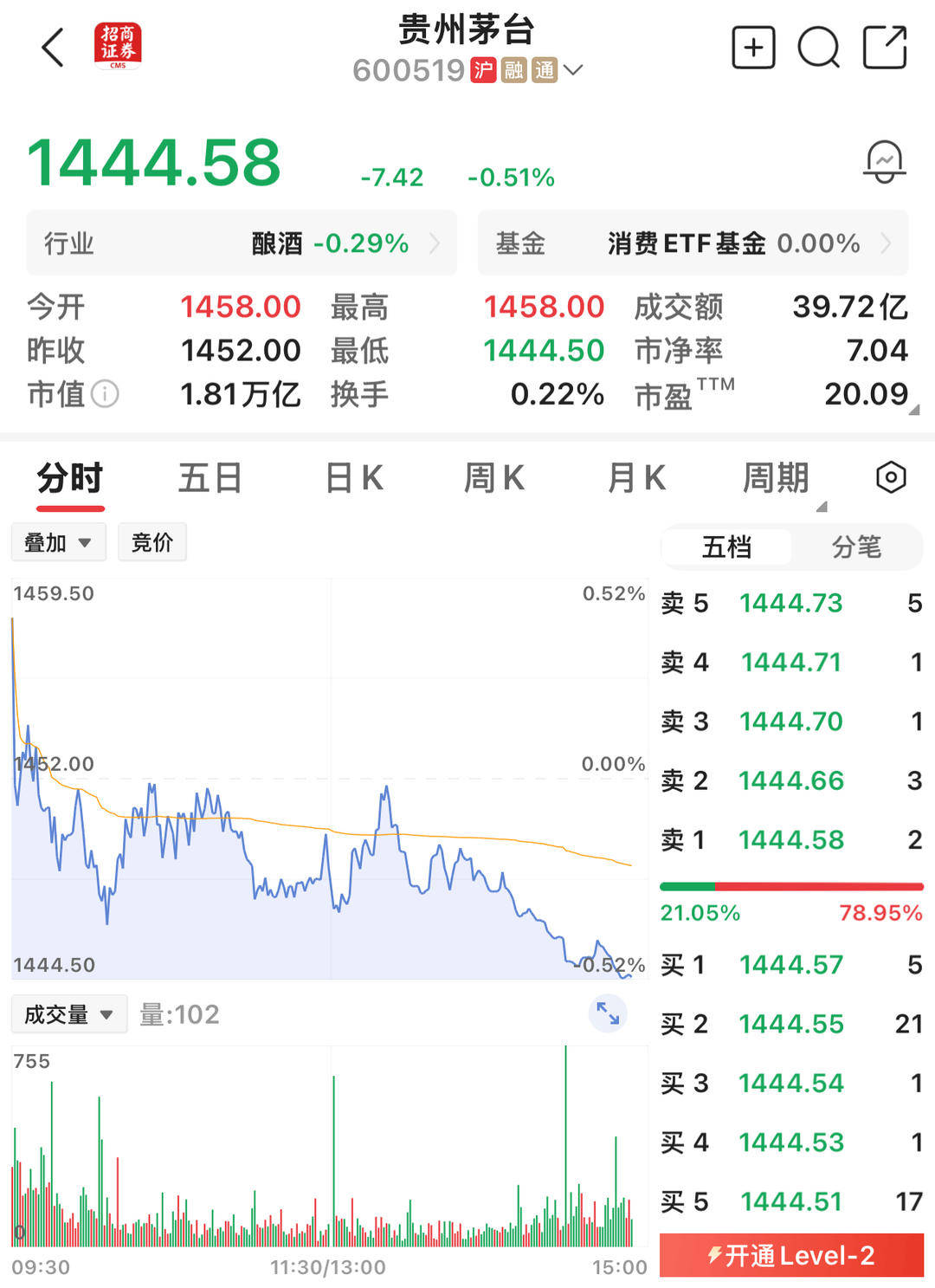
Group 1 - A total of 1859 share repurchase plans have been implemented this year, involving 1365 companies, with 365 companies completing repurchases exceeding 100 million yuan [1] - The total repurchase amount for the year is approximately 227.5 billion yuan, signaling a positive market sentiment from listed companies [1] - In November, 35 listed companies announced repurchase plans, including Kweichow Moutai planning to repurchase shares worth 1.5 to 3 billion yuan [3] Group 2 - Midea Group has updated its repurchase progress, with 1.51 billion yuan completed out of a planned 1.5 to 3 billion yuan repurchase, and 8.065 billion yuan out of a 5 to 10 billion yuan plan [8] - Other companies like GoerTek and BOE Technology have also made significant progress in their repurchase plans, with GoerTek completing 9.4 billion yuan and BOE 704 million yuan [8] - The trend of share repurchases and increases by shareholders is seen as crucial for the long-term healthy development of the capital market, improving investor sentiment and stabilizing market expectations [8]
银行板块普涨,股东增持与中期分红提振市场信心
Huan Qiu Wang· 2025-11-25 07:52
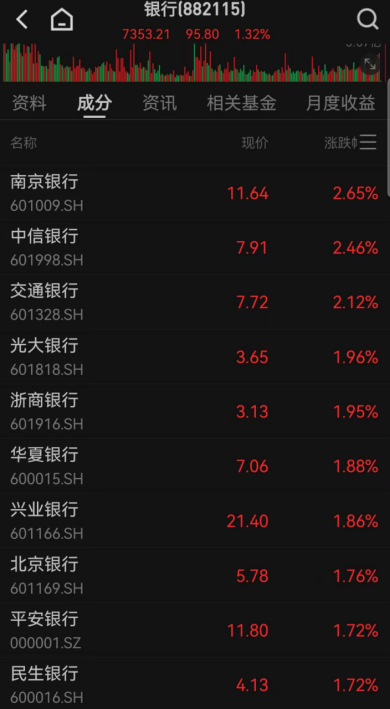
| 序号 代码 | | 名称 | O | 最新 | 总市值 | 涨幅% 1 | 年初 | | --- | --- | --- | --- | --- | --- | --- | --- | | 1 | 601009 | 南京银行 | 1 | 11.64 | 1439亿 | 2.65 | | | 2 | 601998 | 中信银行 | 1 | 7.91 | 4402亿 | 246 | | | 3 | 601328 | 交通银行 | 1 | 7.72 | 6822亿 | 2.12 | | 农业银行此前走出"14连阳"行情,截至11月25日收盘,收盘价为8.07元/股。据东方财富choice数据,农行年初至今涨幅近58%,居板块首位。对于农业银行 本轮行情,资深金融监管政策专家周毅钦曾向记者分析谈到,其核心逻辑仍以估值修复为主,尚未切换为成长属性定价。一方面当前仍以低估值与高股息的 吸引力为主。农行股息率显著高于国债收益率,叠加市场避险情绪升温,险资、公募等长期资金持续加仓,推动估值向合理区间回归。 "另外一方面是基本面韧性提供支撑。农行上半年财报数据稳健,存款成本低、不良率可控的护城河优势强化了安全垫,但成长属性 ...


曹中铭:银行股掀增持潮 估值空间还有多大?
Xin Lang Cai Jing· 2025-11-25 07:19
Core Viewpoint - The recent surge in bank stock purchases by major shareholders indicates strong confidence in the potential and long-term investment value of bank stocks, particularly among city commercial banks in China [1][2]. Group 1: Bank Stock Performance - Bank stocks have shown impressive performance, with a significant index increase from 2535.75 points on October 31, 2022, to a peak of 4632.44 points on July 11, 2023, marking a maximum increase of 82.69% [2]. - Agricultural Bank of China has been a standout performer, with its stock price rising from 2.07 yuan on October 31, 2022, to a high of 8.68 yuan by November 14, 2023, representing a growth of over 300% [2]. Group 2: Reasons for Shareholder Purchases - Major shareholders are increasing their stakes in bank stocks due to their attractive dividend yields, which are often higher than one-year deposit rates, making bank stocks a preferred investment over traditional savings [2]. - The strong dividend-paying capability of bank stocks, often referred to as "cash cows," is appealing to investors seeking cash returns, with many banks implementing annual and even mid-year dividends [3]. Group 3: Profitability and Valuation - The profitability of bank stocks is robust, as demonstrated by Agricultural Bank's non-GAAP net profit growth from 216.5 billion yuan in 2020 to an expected 281.6 billion yuan in 2024, indicating a consistent upward trend [3]. - The valuation of bank stocks is closely tied to their profitability; despite previous neglect by large funds, a re-evaluation of bank stocks is underway, transforming them from "market orphans" to desirable investments [4]. Group 4: Market Trends - The valuation of individual bank stocks is influenced not only by their earnings but also by overall market trends; in a bullish market, bank stock valuations tend to rise, while they may decline in a bearish market [4].
