大疆

Search documents
大疆前副总裁袁某,被公安机关刑事拘留!曾在大疆任职5年,全面负责销售工作
Xin Lang Cai Jing· 2026-02-15 05:40
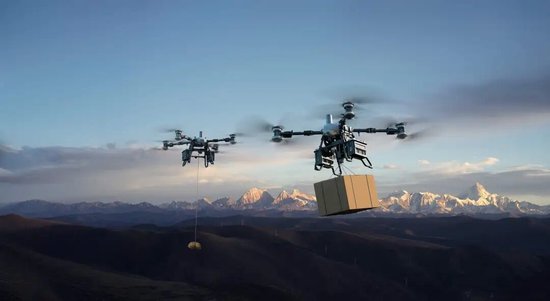
据智通财经2月15日报道,2026年2月,大疆前销售副总裁袁某因涉嫌非国家公务人员受贿罪被公安机关 刑事拘留。 公开资料显示,袁某于2019年5月至2024年5月担任大疆副总裁,全面负责销售工作。其任职期间,被指 控利用职务便利获取巨额不当利益。 据悉,目前案件正在司法程序中。 自2006年成立以来,大疆凭借其在无人机领域的技术优势和市场占有率,持续扩大影响力。其消费级无 人机全球市占率超70%,稳坐全球无人机行业的头把交椅。根据胡润发布的《2025全球独角兽榜》,大 疆估值为840亿元。 图片来源:大疆官网 据悉,目前案件正在司法程序中。 自2006年成立以来,大疆凭借其在无人机领域的技术优势和市场占有率,持续扩大影响力。其消费级无 人机全球市占率超70%,稳坐全球无人机行业的头把交椅。根据胡润发布的《2025全球独角兽榜》,大 疆估值为840亿元。 此外,大疆近期还在运动相机等领域发力,2月13日,第三方咨询机构洛图科技(RUNTO)发布了《中 国运动相机线上零售市场周度追踪》报告。大疆以63.6%的累计品牌整体销量份额,牢牢锁定中国运动 相机线上市场冠军宝座,更在可穿戴及全景相机等新兴细分赛道确立了绝对 ...

VC投资人:苦熬三年,我终于拿到年终奖了
投中网· 2026-02-15 01:29
Core Insights - The investment landscape for VC firms has significantly improved in 2025, with many firms experiencing a "harvest season" after a challenging previous year [3][5][6] - Successful IPOs and high returns from investments in sectors like AI and commercial aerospace have revitalized investor confidence and led to substantial year-end bonuses [4][6][7] - The number of companies supported by VC/PE firms that successfully went public reached 164 in 2025, with over 900 investment institutions involved [6][7] Group 1: Investment Performance - Lee, a VC investment director, reported a turnaround in fortunes with a successful AI edge computing company leading to significant returns after two years of losses [3][5] - Notable companies like Moer Technology and Muxi Co. saw their valuations soar, with Moer Technology's market cap exceeding 280 billion yuan after a 425% surge on its IPO [7][10] - The overall sentiment among VC partners is optimistic, with many reporting nearly 100% success rates in their investments, particularly in the chip sector [6][7] Group 2: Market Dynamics - The resurgence in the VC market is attributed to a combination of successful IPOs and a favorable regulatory environment, particularly in the commercial aerospace sector [11][12] - Investment strategies are evolving, with a growing emphasis on aligning with national strategic goals and recognizing the value of projects that may not have been previously considered viable [13] - The influx of capital from high-net-worth individuals and institutional investors is evident, with many LPs actively seeking opportunities in trending sectors [7][12] Group 3: Future Outlook - The expectation for 2026 is positive, with predictions of continued strong performance driven by the interconnection of primary and secondary markets [7][10] - The current investment climate encourages a reassessment of what constitutes valuable projects, with a shift towards understanding the implications of national policies on market opportunities [13] - The narrative of a "visible hand" guiding market dynamics suggests that strategic investments aligned with government initiatives will be crucial for future success [12][13]

加强易拥堵路段监测 确保早发现早化解
Xin Lang Cai Jing· 2026-02-14 21:57
(来源:河北日报) 转自:河北日报 我省高速交警全力做好春节假期保安全保通畅工作 在提升管控预防能力方面,我省高速交警应用无人机等设备与人工巡检、数据分析相结合,联合业主单 位对辖区路段开展全覆盖排查。重点针对44处易积雪结冰、88处团雾多发等恶劣天气路段开展专项巡 查,确保应急物资充足、取用便捷。同时会同路政、业主等单位成立隐患治理联合小组,对高速公路互 通立交、服务区等分合流路段及施工路段开展隐患排查整改,按照"提前发现、提前预防、提前处置"的 思路,将工作措施前置。 为提升疏堵保畅能力,春节假期,高速交警将加强易拥堵路段监测,流量高峰期间实行小区段、快巡逻 勤务模式,发现缓行拥堵、交通事故以及交通违法等异常事件后第一时间进行处置,提高见警率与管事 率,确保拥堵早发现、早化解。 同时,密切与气象、医疗、交通、消防、地方交警、清障救援等部门联系,做到联动接警处警、警医合 作救治,提升应急处置能力。持续推进无人机应用,优化拓展实战应用场景,完善无人机管理机制,深 化与大疆等企业战略协同,搭建技术共享平台,开展常态化实战应用,提升智能管控能力。 针对高速公路服务区、收费站人员车辆聚集、易发生"两抢一盗"等案件的 ...
美国防部1260H清单更新:78家中企被列入,12家被移除及影响解析
制裁名单· 2026-02-14 05:07
Group 1 - The U.S. Department of Defense released the latest "China Military Enterprises List" (1260H List) on February 13, 2026, including 78 Chinese companies while removing 12 others, marking the fifth update since its initial release in June 2021 [1] - The newly listed companies span critical sectors such as internet, new energy, semiconductors, aerospace, and telecommunications, including major firms like Alibaba, Baidu, Tencent, BYD, CATL, NIO, SMIC, Huawei, DJI, AVIC, and CASIC [1] - Alibaba has publicly stated that its inclusion is baseless, asserting it is not a military enterprise and may consider legal action in response [1] Group 2 - The 12 companies removed from the list include Changxin Storage (CXMT) and Yangtze Memory Technologies (YMTC), primarily involved in electronics, chemicals, and transportation [2] - Being listed does not trigger comprehensive sanctions directly, but it will significantly impact the operations of Chinese companies, particularly with the U.S. Department of Defense prohibiting new procurement contracts with listed companies starting June 30, 2026 [2] - The indirect effects include potential capital market volatility, restricted financing channels for Chinese companies, and challenges in global supply chains due to the risk of technology supply cuts and reduced cooperation from partners [2] Group 3 - Companies on the list may face further inclusion in more stringent U.S. sanctions lists, leading to stricter financial and technological restrictions [3] - The U.S. legislation requires consideration of including other companies from existing U.S. sanctions lists in future updates, potentially expanding the scope of sanctions [3] - The Chinese government has repeatedly opposed the U.S. approach, viewing the list as a continuation of efforts to curb China's technological and economic growth, while Chinese companies are actively seeking to mitigate the negative impacts through appeals and legal actions [3]







63.6% !领跑2026开年影像市场,大疆稳居中国运动相机零售销量榜首
Xin Lang Cai Jing· 2026-02-14 01:55
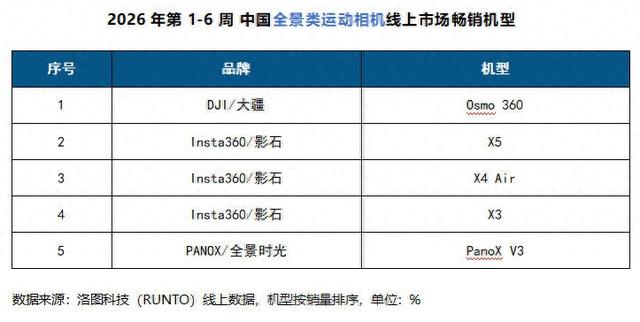
Core Insights - DJI maintains a strong position in the drone market and has also secured the top spot in the action camera sales, with a cumulative brand market share of 63.6% in China's online action camera market [1] Group 1: Market Performance - In the first six weeks of 2026, the online action camera market in China saw sales of 331,000 units and revenue of 790 million yuan [1] - Traditional action cameras accounted for 66.9% of the market share, with DJI leading at 70.0% [2] - The Osmo Action 5 Pro from DJI ranked first among the top-selling models, with DJI holding three out of the top five positions [2] Group 2: Emerging Segments - In the emerging wearable camera segment, DJI's Osmo Nano captured a 49.9% market share, making it the top choice for consumers [7] - The growth in high-end imaging devices is driven by "self-consumption" trends and increased interest in winter sports and long-distance travel [10] - DJI's comprehensive product lineup across various scenarios (sky, ground, and wearable) has effectively captured the demand surge [10] Group 3: Competitive Landscape - The Osmo 360 has emerged as a leading product in the panoramic camera segment, achieving a 45% share of single product sales [1] - Insta360 follows DJI in the market, with a 21.4% share in traditional action cameras and a 30.3% share in wearable cameras [2][7]
影石创新2025年营收逼近百亿,“Pocket”新品蓄势待发
Hua Er Jie Jian Wen· 2026-02-13 21:41
Core Insights - The company reported a total revenue of 9.858 billion yuan for the fiscal year 2025, marking a significant year-on-year growth of 76.85%. However, the net profit attributable to shareholders decreased by 3.08% to 964 million yuan, indicating pressure on profitability despite strong revenue growth [1]. Group 1: Financial Performance - Total revenue for 2025 reached 9.858 billion yuan, reflecting a year-on-year increase of 76.85% [1] - Net profit attributable to shareholders was 964 million yuan, showing a decline of 3.08% compared to the previous year [1] - The company acknowledged challenges in profitability due to raw material price fluctuations and intensified market competition [1] Group 2: Strategic Focus - The company is focusing on building a growth curve by investing in strategic initiatives, particularly in new products like handheld gimbal cameras [1] - The strategic shift is moving from a singular focus on panoramic sports imaging to a more mainstream market, with products like the Pocket series camera becoming a key focus [1] - The upcoming handheld gimbal camera, Luna, is set to launch in the first half of the year and is expected to differentiate itself with long-focus capabilities [2][3] Group 3: Market Positioning - The launch of Luna is seen as a direct challenge to industry giants, particularly targeting the market dominance of DJI's Pocket series [3] - The introduction of Luna with long-focus technology aims to create a differentiated product offering in the handheld gimbal camera market [3] - The company's ability to successfully penetrate the mass consumer market with new products like Luna is under scrutiny [4]

智能硬件公司觉得自己无所不能
Jing Ji Guan Cha Wang· 2026-02-13 12:41
Core Insights - The technology and internet sectors are experiencing rapid changes in 2025, with companies facing intense competition in computing power and large model applications, while e-commerce is reshaping its foundations amid regulatory pressures [1] - The hardware industry is characterized by a collective illusion of being "omnipotent," with companies diversifying into various product categories, including smart glasses and drones, driven by the demand for AI to find physical world applications [2][3] Industry Trends - Major hardware manufacturers are expanding beyond their core businesses, with companies like DJI venturing into vacuum robots and other sectors, reflecting a trend of "disruptive diversification" [3] - The rise of smart hardware has led to a belief that all categories are worth re-exploring in the AI era, resulting in a surge of innovative products, including smart rings and AI toys [2] Investment Landscape - The venture capital scene is increasingly favoring hardware startups, particularly those emerging from established companies like DJI, with high valuations being achieved based on the founders' previous experiences [4][5] - After the disillusionment with purely software-based AI models, investors are now focusing on hardware as essential for AI applications, leading to a significant influx of capital into the hardware sector [5] Competitive Dynamics - The competition in the imaging sector has intensified, with companies employing unconventional strategies, including negative marketing tactics and patent disputes, to gain market share [6] - The smart ring market has seen over 200 brands enter within six months, leading to fierce price wars and diminishing profit margins, while the AI glasses market has also faced similar challenges due to technological homogeneity [7]
智能硬件公司觉得自己无所不能|TMT年度盘点
Jing Ji Guan Cha Wang· 2026-02-13 12:40
Core Insights - The technology and internet sectors are experiencing rapid changes in 2025, with companies aggressively competing in computing power and large model applications, while e-commerce is reshaping its foundations amidst regulatory pressures [2][3] - The era of easy financing through simple presentations is over; companies must demonstrate technological, commercial, and ecological advantages to survive in the TMT industry [3] Industry Dynamics - The smart hardware industry is characterized by a collective confidence among manufacturers, leading to innovations such as multifunctional cleaning robots and cross-industry expansions by companies like DJI and others [4][6] - The underlying logic for the explosive growth in the smart hardware sector is the urgent need for AI to find physical world applications, prompting a re-evaluation of all product categories in the AI era [5][6] Strategic Shifts - Major hardware companies are increasingly diversifying their product lines, with firms like DJI and others venturing into new markets, including automotive and robotics, reflecting a trend of "not sticking to one's main business" [6][7] - The competitive landscape is marked by a rush to establish ecosystems, with companies striving to integrate their core technologies into various electronic devices [6][7] Investment Trends - The influx of capital into the smart hardware sector is driven by a belief that hardware is essential for AI applications, leading to a surge in investments from various funding sources [8][9] - Startups emerging from established companies are attracting significant investment, with former employees of leading firms being particularly sought after for their experience and potential [8][9] Competitive Environment - The competition in the smart hardware industry has intensified, with companies employing unconventional strategies, including aggressive marketing tactics and patent disputes [10][11] - The market for smart rings and AI glasses has become saturated, leading to fierce price wars and diminishing profit margins, with some products seeing prices drop significantly [11]





重庆探路低空“总师模式”
Feng Huang Wang Cai Jing· 2026-02-13 12:28
Core Insights - 2026 is a critical turning point for China's low-altitude economy, transitioning from policy frameworks to commercial realities [1] - Chongqing has introduced a unique strategy in the low-altitude economy, highlighted by the successful first flight of its eVTOL and the establishment of a significant industrial fund [2] - The competitive landscape in China's low-altitude economy is characterized by three distinct paths: Shenzhen's vertical integration, Guangzhou/Hefei's lead firm model, and Chongqing's system capability output [3] Group 1: Policy and Governance - The new Civil Aviation Law mandates provincial governments to enhance supportive policies, leading cities like Jinan and Huangshi to develop local governance frameworks for low-altitude flight services [1] - Chongqing's low-altitude economic development is marked by a focus on systematizing governance and operational standards, moving beyond mere product competition [2] Group 2: Competitive Landscape - The three paths in the low-altitude economy include Shenzhen's focus on vertical integration with over 15,000 industry chain enterprises, Guangzhou/Hefei's lead firm approach with companies like EHang, and Chongqing's emphasis on system capability output led by the Aerospace Science and Technology Group [3] - Chongqing's model is gaining value as it demonstrates effective airspace utilization and rapid administrative processes, contrasting with Guangdong's challenges in infrastructure [3] Group 3: Structural Framework - The establishment of the Chongqing Low Altitude Economic Development Company is part of a four-tiered structure involving national strategic interests and local operational management [4][5] - The first tier involves the China Aerospace Science and Technology Group, focusing on national security and economic growth, while the second tier is represented by the Aerospace Ninth Academy, which manages system operations [4][5] Group 4: Capital Dynamics - The 20 billion yuan Aerospace Industrial Fund in Chongqing represents a complex structure of financial and industrial capital, indicating a shift from project-based funding to asset-based investment [6] - This model suggests a market-driven expansion of the low-altitude economy, moving away from reliance on government subsidies [6] Group 5: Future Outlook - The low-altitude sector is expected to face challenges post-2026, including diminishing advantages in airworthiness and the need for robust infrastructure [8] - The ability to provide comprehensive solutions for airspace management and operational standards will become a critical competitive advantage [8][9] - The 2026 timeline is pivotal for defining the industry's structure, with a shift from product competition to comprehensive urban airspace management [10]

年会折叠:有人狂撒黄金,有人食堂吃自助餐
凤凰网财经· 2026-02-13 12:05
Core Viewpoint - The article discusses the changing landscape of corporate annual meetings, highlighting a significant decline in traditional large-scale events and a shift towards more cost-effective and simplified gatherings [4][5]. Group 1: Decline of Traditional Annual Meetings - The proportion of companies hosting large annual meetings for over 100 people has dropped from 68% in 2019 to 31% in 2024, with projections indicating that by the end of 2025, less than 20% will maintain this tradition [4]. - By 2026, it is expected that 80% of hotel-based annual meetings will have effectively disappeared, indicating a major shift in corporate culture [4]. Group 2: Polarization of Meeting Formats - Companies are increasingly polarizing their annual meeting formats, with some opting for extravagant celebrations while many others are downsizing to departmental dinners, online raffles, or outright cancellation [4][5]. - Notable examples include a lavish event by Chasing Technology, which featured performances by multiple celebrities and gold rewards for employees, contrasting sharply with the austerity seen in other companies [6][8]. Group 3: Cost-Cutting Measures - Many companies are now hosting meetings in-house or at minimal cost venues, with some opting for self-catered events, significantly reducing expenses from previous years [10][11]. - The average budget for annual meetings has decreased, with some companies reporting a drop from 120,000 yuan to 30,000 yuan, reflecting a broader trend of cost-cutting [11][12]. Group 4: Changing Employee Expectations - Younger employees (post-90s and post-00s) are increasingly valuing personal boundaries and pragmatic work relationships, viewing traditional annual meetings as burdensome rather than beneficial [16][19]. - There is a growing sentiment among employees that the effort put into annual meetings does not justify the outcomes, leading to a preference for simpler, more meaningful gatherings [16][18].