
NEC

Search documents
Transgene to Present 24-month Disease-Free Survival Data from All Patients in Phase I Part of Trial of Individualized Cancer Vaccine, TG4050, at ASCO 2025
Globenewswire· 2025-05-22 15:45
Core Insights - Transgene will present two-year disease-free survival data from the Phase I part of the TG4050 trial at ASCO 2025 [1][3] - TG4050 is an individualized neoantigen therapeutic cancer vaccine developed using Transgene's myvac® platform and NEC's AI capabilities [2][10] - The Phase I/II trial is focused on HPV-negative head and neck cancers, with the Phase II part currently enrolling patients internationally [3][12] Company Overview - Transgene is a biotechnology company specializing in virus-based immunotherapies for cancer treatment [5][7] - The company’s lead asset, TG4050, is the first individualized therapeutic vaccine based on the myvac® platform [5][10] - Transgene is also developing other viral vector-based immunotherapies, including TG4001 for HPV-positive cancers [7] Clinical Trial Details - The Phase I/II trial evaluates TG4050 as a single agent in the adjuvant treatment of HPV-negative head and neck cancers [3][12] - The trial includes a randomized study design with 32 evaluable patients in the Phase I part [12] - The Phase II extension is currently enrolling patients, indicating ongoing development and potential for future data [3][12] Presentation and Recognition - The rapid oral presentation at ASCO will take place on June 1, 2025, highlighting the clinical data and collaborative efforts in the trial [1][3] - Transgene's findings on TG4050 were selected for presentation among numerous high-quality submissions, reflecting the significance of their work [3]


莫邦富:经济泡沫破裂后,日本做了两件大事
Huan Qiu Shi Bao· 2025-05-20 22:42
Core Insights - The article discusses Japan's economic challenges and its efforts to enhance soft power during the "lost thirty years" following the economic bubble burst in the early 1990s [1][4]. Economic Context - Japan's economy peaked in the late 1980s, with a notable cultural phenomenon referred to as the "thousand yen husband," indicating a relatively high cost of living [2]. - The Plaza Accord in 1985 led to a rapid appreciation of the yen, prompting Japanese investments abroad, particularly in real estate [2]. - The economic bubble burst in 1992 resulted in a significant drop in property prices, with many apartments becoming available for under 50 million yen [3]. Soft Power Development - During the "lost thirty years," Japan focused on promoting its culinary culture globally and enhancing its entertainment industry, particularly through companies like Sony [4]. - The rise of the dollar store phenomenon in Japan, featuring affordable Chinese goods, helped mitigate the economic downturn's impact on living standards [3]. Youth and Economic Sentiment - The stagnation of the economy has led to a pessimistic outlook among Japanese youth, with a trend of "lying flat" and a lack of motivation to strive for success [5][6]. - The older generation retains a sense of energy and innovation, contrasting sharply with the younger generation's experiences of failure and economic hardship [5]. International Relations and Economic Position - The article highlights Japan's declining status in the international economic landscape, particularly in comparison to China's rising economic power [7]. - The perception of Japan's economic position has shifted, with a notable comment from a Japanese economic leader indicating that Japan's second-place status was achieved after reaching a peak, while China's second place is seen as a continuing development [7]. Challenges for Chinese Enterprises - The article notes the challenges faced by Chinese companies in expanding overseas, emphasizing the need for innovation and the development of proprietary products to sustain long-term growth [8].
抱团取暖的日本AI半吊子们
创业邦· 2025-05-10 02:59
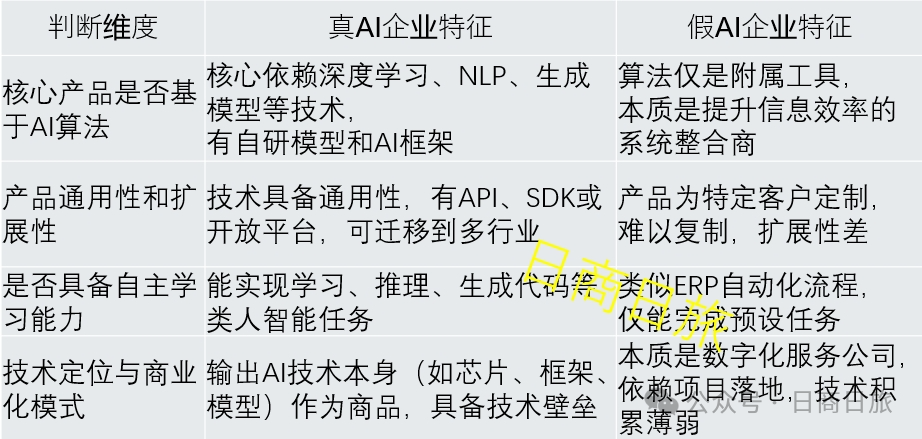
Core Viewpoint - The article discusses the current state of the Japanese AI industry, highlighting the challenges faced by companies like Preferred Networks in achieving internationalization and the tendency towards a closed-loop system within Japan, which limits global competitiveness [3][6][36]. Group 1: Characteristics of AI Companies - True AI companies possess self-developed models and frameworks, while false AI companies primarily enhance information efficiency without genuine AI capabilities [5]. - Preferred Networks is identified as a true AI company due to its strong technology and product versatility across various industries [5][10]. Group 2: Preferred Networks Overview - Preferred Networks was established in 2014 and developed the deep learning framework Chainer, which initially garnered high expectations within the industry [7]. - The company has a strong patent portfolio with 435 patents globally, indicating its technological strength [9]. - Despite its capabilities, Preferred Networks has shifted towards a more localized approach, focusing on serving major Japanese corporations rather than pursuing international expansion [12][13]. Group 3: Financial Performance of PKSHA Technology - PKSHA Technology, founded in 2012, has shown strong profitability, with revenues increasing from 15 billion yen in 2018 to 169 billion yen in 2024 [21]. - The company has a diverse client base across various sectors, including retail and finance, indicating its robust market presence [21][22]. Group 4: Role of Major Corporations and Government - Major Japanese corporations like NEC and NTT have established AI departments primarily serving government and B2B sectors, contributing to a self-sufficient ecosystem [31][32]. - The Japanese government plays a significant role in AI development through organizations like NEDO, which focuses on funding technology research but often overlooks the growth of individual companies [25][26]. Group 5: Cultural and Structural Challenges - The Japanese AI industry is characterized by a conservative culture that limits open sharing of technology and collaboration, impacting innovation [11][23]. - The reliance on corporate venture capital (CVC) rather than traditional venture capital (VC) restricts the growth potential of startups, as they remain tied to the interests of large corporations [38].

抱团取暖的日本AI半吊子们
Hu Xiu· 2025-05-09 10:07
Group 1 - Preferred Networks is recognized as a "true AI" company due to its reliance on deep learning, NLP, and generative models, along with its self-developed models and AI frameworks [1][3][4] - The company has a strong product versatility, offering solutions across various sectors including industrial automation, healthcare, and education, with over 435 global patents [5][6] - Despite its initial ambitions for international expansion, Preferred Networks has reverted to a domestic focus, raising concerns for other Japanese tech firms considering overseas ventures [2][10] Group 2 - Preferred Networks was founded in 2014 and developed the deep learning framework Chainer, which was once positioned alongside TensorFlow and PyTorch [3][11] - The company has shifted its strategy to collaborate with major Japanese corporations like Toyota and Nissan, focusing on customized AI systems rather than pursuing a broader international presence [13][18] - The company has established a new subsidiary, Preferred Elements, aimed at foundational technology development, indicating a potential shift towards a more open approach [14][16] Group 3 - PKSHA Technology, another prominent Japanese AI firm, has shown strong profitability with significant revenue growth, serving various industries including retail and finance [24][25][26] - Unlike Preferred Networks, PKSHA retains ambitions for international collaboration, partnering with companies like Microsoft and Tencent [26] - The early establishment of AI companies in Japan, such as PKSHA and Preferred Networks, was driven by a combination of engineering talent and industry demand for automation [28][30] Group 4 - The Japanese AI industry is characterized by a closed-loop system where startups primarily serve large domestic corporations, limiting their growth potential and innovation [44][45] - The government and large companies emphasize project-based AI solutions, which diminishes the drive for exploratory or innovative AI developments [44][45] - Cultural factors contribute to the lack of ambition for developing universal AI platforms, contrasting with the more aggressive approaches seen in other countries [30][43]
中美日6G专利占比差距犹如断崖!美国35.2%,日本9.9%,中国多少
Sou Hu Cai Jing· 2025-05-05 05:08
Core Viewpoint - The recent satellite launch by China and the military exercises in the Taiwan Strait highlight the competitive landscape in wireless internet technology, particularly in the race towards 6G development, where China is making significant strides in patent acquisition and technology advancement [1][3][5]. Group 1: Patent and Technology Comparison - The patent distribution in 6G technology shows a stark contrast, with the United States holding 35.2%, Japan at 9.9%, and China leading with over 32.3% [1][5][9]. - China has a comprehensive satellite system that includes the Beidou navigation system and a mobile internet system, enhancing its wireless communication capabilities [5][11]. - The competition in 6G technology is intensifying, with countries like South Korea and Europe lagging behind, holding only 4.2% and 8.9% of patents respectively [5][9]. Group 2: Competitive Landscape - The U.S. is investing heavily in 6G research, with universities and companies collaborating to advance technology, exemplified by the establishment of a 6G research center by AT&T and the University of Texas [7][9]. - Japan is also positioning itself to compete, with plans to launch 6G technology by 2030 and the development of a high-speed 6G prototype capable of 100 Gbps [9][11]. - China's advantages in 6G development include a complete industrial chain and abundant rare earth resources, which are crucial for technological advancement [11][13]. Group 3: Future Prospects and Challenges - The successful launch of satellites for internet technology signifies China's commitment to becoming a leader in the 6G space, potentially setting international standards and enhancing its influence [5][13][14]. - Despite its strengths, China faces challenges in high-end chip production, which could hinder its progress in 6G technology if not addressed [9][11]. - The integration of artificial intelligence in 6G development could accelerate China's technological advancements, leveraging its unique advantages in this field [14].
英国芯片,谋求复苏
半导体行业观察· 2025-04-30 00:44
来源:内容 编译自 theconversation ,谢谢。 硅微芯片支撑着我们的现代生活。它们是我们智能手机和笔记本电脑的核心。它们也在电动汽车和 可再生能源技术中发挥着关键作用。 这使得 SiC 芯片的厚度比同等硅芯片薄九倍。这反过来又降低了其所用设备中的电流阻力,从而 提高了效率。 如果你知道手机或笔记本电脑充电器的发热有多大,你肯定经历过低效的电源转换。这种发热是由 于硅芯片每秒进行数千次切换,将一种电流(交流电)转换为另一种电流(直流电)造成的。 如今,超过四分之三的微芯片(也称为半导体)产自亚洲。但在20世纪90年代,芯片生产分布在 全球各地更为广泛,而英国的表现更是超乎寻常。 苏格兰中部地带是人口密度最高的地区,包括格拉斯哥、爱丁堡及其周边城镇,被称为"硅谷",在 鼎盛时期电子行业从业人员达 5 万人。 该地区出口从个人电脑到PlayStation芯片等各种产品。NEC、摩托罗拉和德州仪器等跨国公司都 在那里运营着重要的工厂。21世纪初,互联网泡沫破裂引发了整个行业的整合,并促使制造业向 东亚低成本工厂转移。英国国内产能几乎被摧毁。 但英国半导体行业正在悄然复苏。新一波公司正专注于清洁能源技术微 ...
摩根大通:跨行业_关税对关键行业的影响_美国关税对关键行业影响的自下而上分析
摩根· 2025-04-27 03:56
Investment Rating - The report provides a short-term investment focus on specific companies across various sectors, highlighting preferred and risk names based on tariff impacts [7][30]. Core Insights - The report analyzes the implications of the Trump administration's tariffs on nine major sectors, emphasizing the direct and indirect impacts on individual companies and their stock performance [6][30]. - The automotive sector is expected to face significant price increases due to tariffs, with an estimated 11.5% rise in US auto prices, translating to approximately $5,100 per vehicle [9][17]. - The report identifies key companies within each sector that are likely to be affected by tariffs, providing a detailed analysis of their potential performance [4][30]. Sector Summaries Autos and Auto Parts - Tariffs on automobiles could lead to a gross impact on operating profit ranging from 30% to over 100% for various automakers, with Toyota and Honda facing a manageable impact while Nissan and Mazda are at higher risk [4][9]. - Focus is placed on Toyota Motor for its resilience and ability to raise prices, while Bridgestone is noted for its high local production ratio [30][31]. Banks - The impact of tariffs on banks remains uncertain, but concerns over worst-case scenarios have eased, with a potential downside risk of slightly over 10% to sector earnings forecasts in a bearish scenario [4][33]. - Japan Post Bank is highlighted as a relatively stable option amidst tariff uncertainties [4][33]. Pharmaceuticals and Medical Devices - Major pharmaceutical companies like Takeda and Astellas are expected to be heavily impacted by tariffs, while companies with lower US sales ratios may benefit from tariff avoidance [4][30]. - The report emphasizes the potential for increased costs of goods sold (CoGS) affecting operating profits for medical device companies [4]. Technology - The technology sector's tariff impact is complex, with companies like NEC and Fujitsu expected to perform well due to limited exposure to tariffs [5][30]. - Sony Group is under close observation for potential price hikes on its products, particularly the PlayStation 5 [5][30]. Chemicals and Steel - In the chemicals sector, companies like Nippon Paint are expected to benefit from lower raw material prices, while the steel sector is anticipated to experience limited direct tariff impacts [5][30]. - Kobe Steel is noted for its resilience due to a significant earnings contribution from its machinery business [5][30]. Retail - The retail sector is advised to focus on drugstores and discount retailers, with companies like Asics and Fast Retailing facing risks from declining sales due to high tariff exposure [5][30]. - Seven & i Holdings is highlighted as particularly vulnerable due to its significant exposure to the US market [5][30].
花旗:日本电子_关税影响 - 关注长期经济效应
花旗· 2025-04-27 03:56
Investment Rating - The report assigns a positive outlook on the Japan Electronics sector, indicating that sector stocks are attractive following an average decline of approximately 10% over the past month [1]. Core Insights - The report anticipates that US tariffs will be revised before causing a recession, with minimal to moderate impact on Japan's industrial and consumer electronics sectors compared to other export industries [1][2]. - Company-specific catalysts such as restructuring and buybacks are highlighted as potential growth drivers [1]. - The focus is on upcoming results from Hitachi and NEC, which are expected to be less affected by tariffs, while long-term growth prospects are emphasized for Mitsubishi Electric, Panasonic, and Fujitsu [1]. Summary by Sections Tariff Impact - The report suggests that tariffs could depress the sector's operating profit (OP) by 21% in gross terms for FY3/26, with varying impacts across companies: Sharp (174%), Yamaha (67%), Hitachi (5%), and Fujitsu (7%) [4][6]. - In a best-case scenario, the average impact on OP across the sector is estimated to be 9% [4]. Company-Specific Analysis - **Sony**: Expected to face the largest impact due to tariffs on PS5 sales, with a significant portion of production in China [8][9]. - **Panasonic**: Anticipated to be heavily affected due to its US sales of white goods and batteries, although some operations may mitigate tariff impacts [10][11]. - **Mitsubishi Electric**: Projected to experience a major impact primarily on air conditioner sales, with 17% of sales coming from North America [12]. - **Hitachi**: Expected to have a minimal impact with a 5% reduction in OP, potentially decreasing to 3% with strategic responses [15]. - **NEC**: Anticipated to be largely unaffected due to its low US sales weighting [16]. - **Casio and Yamaha**: Projected to see significant profit reductions of 47% and 67% respectively, as both companies are in a post-restructuring phase [17][19].
为什么日本出不来DeepSeek?
Hu Xiu· 2025-04-24 03:32
上世纪90年代,日本曾是全球科技经济的核心:全球市值前十的公司中有一半来自日本——NTT、住友银行、东京电力、松下、日立……而今 天的AI时代,主角却几乎都来自中美两国。 能跑出一家DeepSeek,本就是小概率事件;但对于曾经的创新中心日本来说,为什么连这样的希望都看不见?日本的AI企业,都跑哪儿去 了? 提起这个话题,常见的回答有几种套路: 中美如火如荼的AI 战局之中,日本几乎是AI 荒漠,没几个能拿得出手的产品; 日本犄角旮旯的小创新源源不断,却没有一个ChatGPT或DeepSeek这种世界级的2C爆款; 听说小日子程序员短缺,AI人才就更不够了; 日系VC 保守,烧不起大模型的钱…… 如此这般,对日本科技商业的"奚落"甚至可以写成一篇爽文。但今天我想换个问法:日本,需要DeepSeek吗? 还有,日本这片土壤,非得长出个DeepSeek吗? 听起来像句废话:哪个国家不需要明星企业呢?况且是如此突破性的企业,为国家增光,带动整个AI行业的发展,引导资金流入,推动技术 渗透到制造、医疗、金融等传统行业,帮助企业提效降本、实现自动化……这不正是很多AI企业的"终极使命"吗? 制造业的数据预测、医疗的自动 ...


高盛:投资者报告-信息技术投资需求激增
Goldman Sachs· 2025-04-22 05:42
Investment Rating - The industry investment rating is Attractive, with a strong appeal due to growth potential in IT and software sectors [5][9]. Core Insights - IT spending for digital transformation (DX) is booming, driven by the declining working-age population in Japan, which necessitates increased IT investment as a manpower substitute [9][24]. - The report highlights several investment themes, including cloud services (SaaS/data centers), Windows 10 upgrade demand, increased defense spending, and government digitalization initiatives [10][35][39]. Summary by Sections Industry Overview - The report anticipates minimal direct impact from the increase in US tariffs on the industry [2]. - Cash flow levels at firms have risen significantly, indicating strong financial health [3]. - The working-age population decline is exacerbating labor shortages, prompting a greater focus on digitalization among management [7]. Investment Themes - Key investment themes include: - Cloud business (SaaS/data centers) [10]. - Demand for Windows 10 upgrades as support ends in October 2025 [38]. - Increased defense budget, projected to rise to approximately ¥43.5 trillion [39]. - Government initiatives for digital transformation in public administration [39]. Financial Performance - The report notes that valuations in the industry do not appear overheated, allowing for a focus on fundamentals and thematic stocks [9]. - The expected growth in IT spending is projected at a 5-year CAGR of 8% through 2028, with software investment growing at 10% and IT services at 7% [23][26]. Company Focus - Preferred stocks include: - OBIC Business Consultants (OBC), with a strong shift to cloud business and high recurring revenue [11][40]. - NTT Data, expected to see significant profit increases from its data center business [47]. - NEC, benefiting from the defense budget expansion and government digitization projects [51]. Market Trends - The report indicates that cloud spending in Japan is only 12% of total IT spending, compared to 37% globally, suggesting substantial growth potential [38]. - The overall IT spending in Japan is projected to reach ¥8,491 billion by 2025, reflecting a growth of 9.5% [33].